Cottontail and Snowshoe Hare Range in New York
There's a special kind of satisfaction that comes from hunting small game in New York, and for many, that means chasing cottontails and snowshoe hares. But if you've ever spent a crisp fall or winter morning busting brush only to come up empty-handed, you know the frustration. These elusive little guys don't just hang out anywhere; they're masters of blending into their environment, and knowing where to look is half the battle. This guide is all about helping you understand the unique ranges and preferred habitats of New York's rabbit and hare populations, so you can increase your odds and enjoy more successful hunts.
Understanding New York's Hare and Rabbit Species
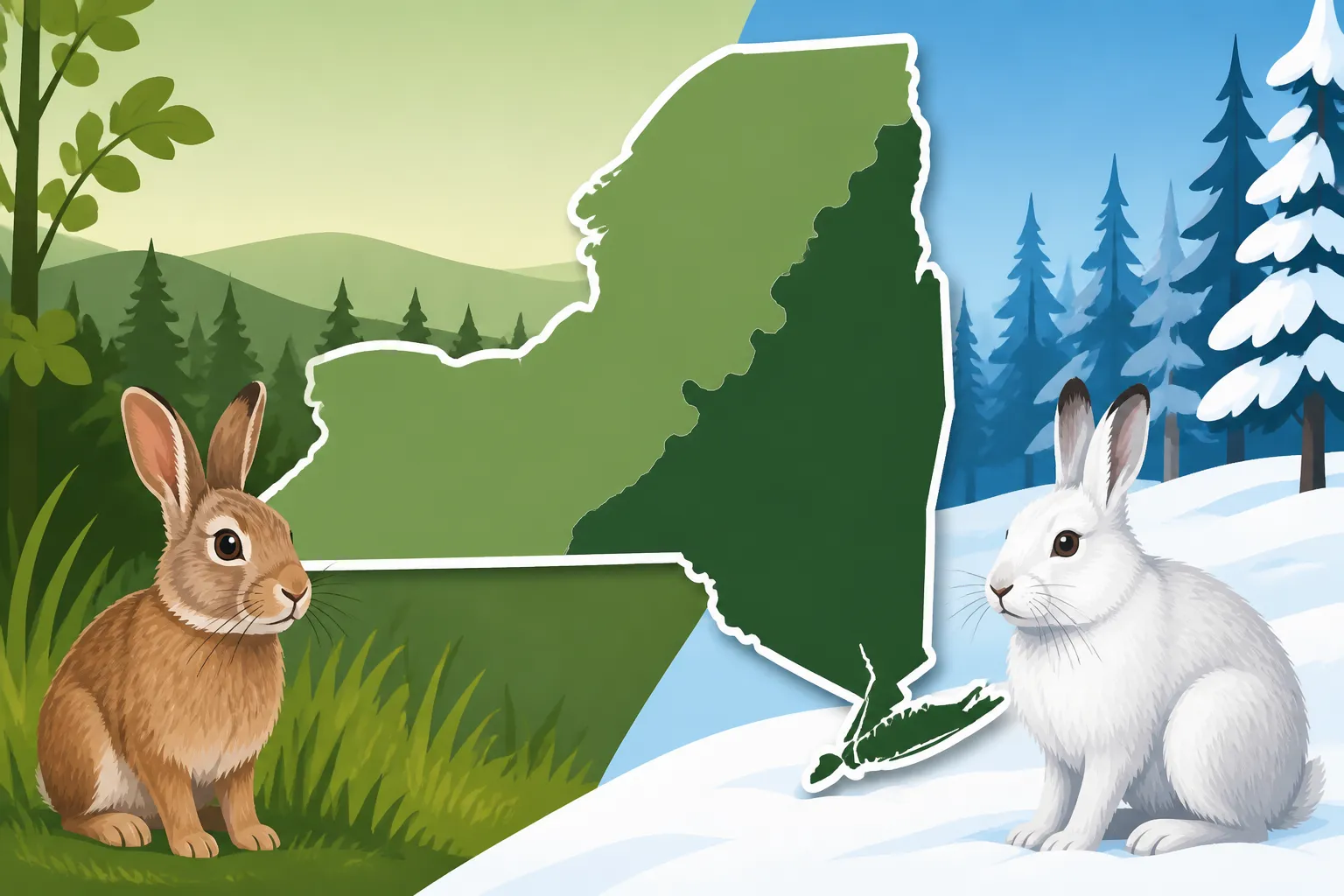
Before we dive deep into where you can find them, it's really important to distinguish between the two primary species you'll encounter in New York: the Eastern Cottontail and the Snowshoe Hare. While both offer fantastic hunting opportunities, their ecological niches and the types of cover they call home are remarkably different. Treating them as interchangeable will definitely lead to some long, unproductive days in the field.
Eastern Cottontail: The Backyard Bunny Hunter's Delight
The Eastern cottontail ( Sylvilagus floridanus ) is probably the rabbit most New Yorkers are familiar with, even if they're not hunters. These are the cute, fluffy-tailed bunnies you see nibbling clover in suburban lawns, scurrying across golf courses, or darting into a brush pile near a farm field. They are prolific breeders and adaptable creatures, thriving in disturbed habitats that offer a mix of open ground for feeding and dense cover for escape. Their populations tend to be robust across most of the state, particularly in the Southern Zone.
Hunting cottontails is often a social affair, best enjoyed with a few friends and, ideally, a pack of eager beagles. They rely heavily on their speed and intimate knowledge of their small home range to evade predators, often circling back to familiar cover. For a more detailed look at how to pursue them, you might want to check out our guide on Rabbit and Hare Hunting in New York. Their reliance on dense, low-growing vegetation means that if you're hunting without dogs, you'll need to be ready to push through some seriously thick stuff. They're not going to be out in the open waiting for you, that's for sure.
Snowshoe Hare: The Ghost of the Northwoods
In stark contrast, the snowshoe hare ( Lepus americanus ) is a creature of the wilder, colder climes of New York. Known for its incredible ability to change its fur color from brown in summer to brilliant white in winter, these hares are perfectly camouflaged against the snow-covered landscapes they inhabit. Their oversized hind feet, which act like natural snowshoes, allow them to navigate deep snow with ease, something a cottontail just can't do.
Snowshoes are more solitary and elusive than their cottontail cousins. You won't find them in your backyard garden. Instead, you'll track them through dense conifer swamps, young clearcuts, and remote northern forests. Their range is predominantly in the Northern Zone, places like the Adirondacks and the Tug Hill Plateau. Hunting snowshoes often involves trudging through deep snow, either still-hunting slowly or, again, with specialized hounds that can handle the cold and rough terrain. Spotting a white hare against a snowy backdrop is a challenge, even when you know they're there; they truly live up to their "ghost" nickname.
Eastern Cottontail Range and Preferred Habitats
The Eastern cottontail is New York's most widespread rabbit species, found practically everywhere south of the Adirondack foothills. Their success comes from their incredible adaptability and their ability to thrive in areas shaped by human activity, as long as there's enough cover and food.
Southern Tier Farmlands and Brushy Edges
If you're looking for cottontails, your best bet is often the agricultural heartlands of the Southern Tier, the Finger Lakes region, and Western New York. These areas offer a mosaic of open fields – corn, soybeans, hay – interspersed with critical pockets of dense cover. Think about the edges of these fields, especially where they meet hedgerows, old fencelines choked with briars and multiflora rose, or thickets of dogwood and sumac. These brushy edges provide both food and immediate escape cover.
A common scenario might involve a sunny fall morning, with cottontails basking near the edge of a standing cornfield, ready to bolt into a dense patch of honeysuckle at the first sign of danger. The key here is not just finding the fields, but finding the transition zones – those messy, tangled areas that hunters often walk past on their way to deer stands. These neglected spots, often bordering woodlots or abandoned pastures, are prime rabbit habitat. Pay close attention to areas that look too thick for deer but just right for a rabbit to disappear into.
Suburban and Urban Green Spaces
It might surprise some, but cottontails are incredibly common, and often abundant, in suburban and even some urban green spaces across New York. Parks, large private properties, golf courses, cemeteries, and undeveloped lots can hold impressive numbers of rabbits. The trick here, of course, is legality and access. While hunting might be restricted in many of these areas, it highlights the cottontail's ability to live cheek-by-jowl with humans.
For the hunter, this translates to seeking out permissible hunting grounds near developed areas, perhaps through specific local regulations or by securing permission on larger private tracts that border these suburban havens. The habitat in these spots is often manicured in some areas but interspersed with overgrown sections, dense shrubbery, and landscaping that provides perfect cover. Always double-check local ordinances and be absolutely certain of your legal right to hunt, as rules for New York Firearms Discharge Setback Rules are particularly strict in populated areas. It’s also worth considering that rabbits here might be more accustomed to human presence, which can make them either bold or incredibly wary.
Old Fields and Early Successional Growth
Beyond active farmlands and suburban fringes, vast tracts of New York are dotted with old fields, abandoned farmsteads, and areas undergoing early successional growth. These are goldmines for cottontails. When a field is left untended, it quickly reverts to brushy growth – goldenrod, asters, brambles, young saplings like aspen, grey dogwood, and sumac. This creates a dense, low canopy that provides excellent protection from aerial and ground predators.
Logging operations also create fantastic cottontail habitat. A recently clearcut parcel, for example, will quickly sprout with new growth, offering an abundance of browse and cover. These areas can be found in many of New York's State Forests, providing accessible public land opportunities. Knowing how to Scouting New York Public Land Before Season will be crucial for identifying these transient but productive habitats. These are dynamic landscapes, constantly changing, so what was a hot spot two years ago might be mature timber today, and vice-versa.
Snowshoe Hare Strongholds: Adirondacks, Catskills, and Tug Hill
Switching gears entirely, if you're looking for snowshoe hares, you're going to need to embrace the rugged beauty and often challenging terrain of New York's more remote northern and high-elevation regions. These areas are characterized by harsh winters, deeper snowfalls, and a predominance of conifer forests.
Conifer Swamps and Spruce-Fir Forests
The quintessential snowshoe hare habitat in New York is the dense conifer swamp or the vast spruce-fir forests of the Adirondacks and, to a lesser extent, higher elevations in the Catskills. These areas are often wet, boggy, and incredibly thick, making travel difficult for hunters but providing ideal cover for hares. The dense canopy of spruce, fir, and hemlock offers protection from snow, cold winds, and predators.
Look for areas with a mix of mature conifers and younger regeneration underneath. The hares need the dense understory for hiding and feeding on twigs and bark, especially in winter. Think about those dark, brooding swamps that most deer hunters avoid – that's often where the snowshoes are hiding. They are less common in the Catskill Forest Preserve compared to the Adirondacks, but pockets exist in the higher elevations where conditions mimic the northern forests. Using topographic maps and aerial imagery, perhaps with a tool like GoHunt, can help you pinpoint these distinct habitat types across the landscape.
Regenerating Clearcuts and Logging Operations
Similar to cottontails, but on a grander, colder scale, regenerating clearcuts and areas of active logging are prime snowshoe hare habitat. The difference here is often the species of trees. Instead of sumac and goldenrod, you'll find thickets of young conifers, dense stands of aspen and birch saplings, and a tangled mess of slash piles left over from timber operations. This creates an impenetrable fortress where snowshoes can browse and hide.
These areas provide an explosion of food sources and cover, crucial for hares in the deep snow of winter. When scouting these areas, look for fresh tracks around these dense pockets of young growth. The deeper the snow, the more concentrated the hares will be in the densest cover. The Tug Hill Plateau, known for its extreme lake-effect snow, is an excellent example of an area where you might find these regenerating cuts holding strong snowshoe populations. Don't be afraid to put on your snowshoes and bust through the thick stuff; that's where the action is.
Tug Hill Plateau and Other Northern Enclaves
While the Adirondack Forest Preserve holds significant snowshoe hare populations, the Tug Hill Plateau often gets overlooked, but it's a true snowshoe haven. Located between Lake Ontario and the Adirondacks, the Tug Hill is notorious for massive amounts of lake-effect snow, which can accumulate to depths of several feet. This deep, persistent snow creates perfect conditions for snowshoe hares. The plateau is characterized by extensive conifer forests, bogs, and areas of dense regenerating timber.
Other smaller, northern enclaves throughout the Northern Zone, like parts of the St. Lawrence River Valley or higher elevations within more mixed forests, can also hold snowshoes. The common thread for all these areas is persistent snow cover, dense coniferous or mixed forest habitat, and generally wilder, less disturbed landscapes. Accessing these remote areas often means being prepared for challenging conditions, sometimes even requiring specialized gear like snowmobiles for deep penetration, though you'll always have to hike in from designated parking areas on public land.
Key Habitat Features for Both Species
While their preferred regions differ, there are some universal habitat features that both cottontails and snowshoe hares rely on for survival. Understanding these common denominators can help you identify high-potential hunting spots regardless of the specific species you're targeting.
Importance of Dense Cover and Escape Routes
This is perhaps the single most critical factor for both species. Rabbits and hares are prey animals, and their primary defense mechanism is concealment and a quick escape. They need incredibly dense cover that allows them to disappear from predators – be it a coyote, a bobcat, a hawk, or a human hunter. For cottontails, this means briar patches, honeysuckle thickets, dense hedgerows, brush piles, fallen trees, and heavy, low-growing shrubs. For snowshoes, it's typically thick stands of young conifers, spruce bogs, and regenerating clearcuts with a high stem count.
Without this security cover, neither species will thrive. When you're scouting, look for those patches that seem impenetrable. These aren't just hiding spots; they also serve as critical travel corridors and escape routes. A rabbit will often run a short distance into thicker cover, circle back, or burst out the other side. Understanding these patterns is key to positioning yourself for a shot or directing dogs effectively. Tools like the GoHunt app, with its detailed satellite imagery, can be invaluable for identifying these pockets of dense vegetation even before you set foot in the woods.
Food Sources and Seasonal Preferences
Both cottontails and snowshoe hares are herbivores, but their diets vary seasonally and by available forage. Cottontails are generalists, feeding on a wide variety of grasses, forbs, clover, and young succulent plants in warmer months. In winter, they switch to woody browse, bark, and buds of shrubs and young trees like sumac, apple, or blackberry canes. Their winter diet is why they are often found near brushy field edges and old orchards.
Snowshoe hares, particularly in winter, rely heavily on the buds, twigs, and bark of conifers (like balsam fir and spruce) and deciduous shrubs (like willow, aspen, and birch). You'll often see distinct "clippings" – small, cleanly cut twigs – in areas where hares have been feeding. These clippings, especially from deciduous saplings in a clearcut, are a clear indicator of active hare use. Knowing what they're eating and when can help you pinpoint specific areas to hunt. For more about their specific habits, consider reading Rabbit and Hare Hunting in New York.
Water Access and Microclimates
While not as critical as dense cover, access to water and the presence of favorable microclimates can also influence where you find rabbits and hares. Cottontails will often be found near swamps, creek bottoms, or damp depressions, especially in drier periods. These areas often support more lush vegetation and provide slightly cooler temperatures.
For snowshoes, particularly in the deep winter, microclimates provided by dense conifer swamps are vital. The thick canopy insulates the ground, keeps snow from accumulating as deep, and offers protection from brutal winds and extreme cold. You might find them congregating in specific areas within a larger forest, often on the leeward side of a ridge or in a sheltered depression where the conditions are slightly more hospitable. These sheltered spots are worth noting when you're considering Cold-Weather Sitting Strategy in New York.
Scouting and Locating Hares and Rabbits
Finding these elusive game animals isn't just about knowing their general range; it's about meticulous scouting. Before the season opens, and even during the season, you need to be actively looking for signs of their presence.
Reading Sign: Tracks, Droppings, and Clippings
This is fundamental to successful small game hunting. Fresh tracks in snow or mud are the most obvious indicators. Cottontail tracks are smaller, often clustered, and show a distinct hop. Snowshoe hare tracks are much larger, especially the hind feet, and in deep snow, they appear as distinct "snowshoe" prints. Learning to identify and differentiate them is essential. Also, look for runways – beaten paths through thick cover that hares and rabbits repeatedly use. These can be faint, but they're there.
Droppings are another key indicator. Cottontail droppings are small, round, and hard pellets, often found in feeding areas. Snowshoe hare droppings are similar but can be slightly larger and more fibrous. As mentioned, clippings are also critical, especially for snowshoes. Look for twigs that have been neatly nipped off at an angle, particularly on young saplings or branches within their feeding height. The fresher the sign, the better your chances.
Leveraging Technology and Topographic Maps
In today's hunting world, technology is your friend. Apps like GoHunt can be incredibly useful. They provide detailed topographic maps, aerial imagery, and property boundary overlays that allow you to identify potential rabbit and hare habitat from the comfort of your home. You can zoom in on state forests, WMAs, or even private land (if you have permission) and look for those tell-tale dense cover patches, clearcuts, swamps, and brushy field edges.
Cross-referencing satellite imagery with topographic lines can reveal hidden swamps or depressions that might hold rabbits. Marking potential spots on your app before you even leave the house saves a tremendous amount of time in the field. This digital scouting allows you to strategize entry routes and identify specific pockets of cover that warrant a closer look on the ground. Don't underestimate the power of these tools for Scouting With the New York HuntFishNY App.
Early Season Scouting and Pre-Season Observation
The best time to scout for rabbits and hares is often before the season, or at least early in the season before heavy hunting pressure. This allows you to identify areas that are actively being used. In late summer or early fall, before heavy leaf-drop, you can often spot rabbits feeding in fields at dawn or dusk, giving you an idea of their home range.
Once the leaves fall, the cover might seem thinner, but it also makes seeing tracks and identifying travel corridors easier. If you're targeting snowshoes, a fresh snowfall is your best friend for scouting; it highlights all their movements and tells you exactly where they're concentrating. Take notes, mark waypoints on your GPS or phone, and pay attention to patterns of movement. Rabbits and hares are creatures of habit, and finding those habits is key.
Hunting Strategies Tailored to Each Habitat
Knowing where rabbits and hares live is just the beginning. The next step is understanding how to effectively hunt them in their specific environments. Different species and different habitats often call for different approaches.
Driving and Kicking Brush for Cottontails
When hunting cottontails, particularly in the dense, brushy habitats of the Southern Tier or old fields, one of the most effective methods is driving or "kicking" the brush. This typically involves a small group of hunters (two or more) systematically walking through thick cover, pushing the rabbits out towards waiting shooters, or simply getting them to flush.
The strategy involves one or two hunters acting as "drivers," slowly and loudly moving through the thickest parts of the briar patches and hedgerows. Other hunters position themselves quietly at the downwind end or along known escape routes, ready to intercept the flushed rabbits. This can be an exciting, fast-paced hunt, often requiring quick reflexes and accurate shooting at moving targets. Remember, cottontails will often circle back, so if one gets past you, it might come around again. Being aware of Deer Drives With Three or Four Hunters can offer some transferable tactics, though rabbits require a much smaller, denser push.
Still-Hunting and Snowshoeing for Hares
Hunting snowshoe hares, especially without dogs, often demands a more solitary and stealthy approach: still-hunting. This involves moving incredibly slowly and deliberately through their dense conifer and clearcut habitats, pausing frequently to scan the cover ahead. Your goal is to spot the hare before it spots you, often when it's hunkered down, relying on its camouflage.
In areas with deep snow, snowshoes are essential for efficient travel. This method requires patience and a keen eye. Look for subtle movements, a flash of black eye against the white, or an outline that just doesn't quite look like a stump. Focus on the densest cover, the edges of swamps, or thickets within clearcuts where hares are most likely to be bedded down. Knowing how to Hunting Deer in Deep Tug Hill Snow provides valuable context for navigating these challenging conditions, and many of the same principles apply. This is a quiet, meditative hunt, a true test of observation skills.
Using Dogs: Beagles and Snowshoe Hounds
For many, rabbit and hare hunting isn't complete without the baying of hounds. Beagles are the classic choice for cottontails, their small size and tenacity perfect for burrowing into briar patches and flushing rabbits. Once a beagle jumps a rabbit, it will often run a predictable circle, allowing the hunter to anticipate its return to familiar cover. The music of a beagle pack on a hot trail is one of the joys of small game hunting.
For snowshoe hares, larger, more cold-hardy hounds, often mixes like harriers or dedicated snowshoe hounds, are preferred. These dogs can handle the deep snow and rugged terrain of the northern forests. They work similarly to beagles, trailing the hare until it circles back. Using dogs significantly increases your chances of success, especially for snowshoes, which are incredibly hard to find without them. This method also means you're almost guaranteed a fun, active day in the woods, even if the shooting isn't fast and furious.
Here's a quick comparison of our two main quarry:
| Feature | Eastern Cottontail ( Sylvilagus floridanus ) | Snowshoe Hare ( Lepus americanus ) |
|---|---|---|
| Size | Smaller, generally 2-4 lbs | Larger, generally 3-5 lbs |
| Ear Length | Shorter ears | Longer ears |
| Foot Size | Smaller hind feet | Large, "snowshoe" hind feet |
| Winter Coat | Stays brown/grey year-round | Changes to white in winter |
| Primary Range | Statewide, but concentrated in Southern Zone | Northern Zone (Adirondacks, Tug Hill, Catskill high elevations) |
| Preferred Habitat | Brushy fields, hedgerows, old farms, suburban edges, dense thickets | Conifer swamps, spruce-fir forests, dense regenerating clearcuts |
| Typical Behavior | Circles back to familiar cover, often burrows in winter | Runs wider circles, rarely burrows, relies on camouflage |
| Hunting Method | Driving brush with small groups, beagles | Still-hunting, snowshoeing, larger hounds |
Disclaimer
Hunting regulations and land access rules in New York can change. Always consult the most current New York State Department of Environmental Conservation (DEC) hunting regulations guide before heading afield. This article is intended for informational purposes only and does not supersede official regulations.