Canada Geese on Long Island
Long Island presents a truly unique landscape for hunters, especially when it comes to pursuing Canada geese. While these adaptable birds have found a way to thrive amidst the suburban sprawl, their sheer numbers and the limited, often pressured, hunting access can make harvesting them a real head-scratcher. This guide is here to untangle the complexities of hunting Canada geese on Long Island, from deciphering their behavior in developed areas to mastering the tactics that actually work.
Understanding Long Island's Resident Canada Goose Population
The Rise of Geese on Long Island
Long Island has witnessed an almost unbelievable surge in its resident Canada goose population over the past few decades. These aren't the transient, wild-flushing migratory birds that stop over during their long journey south; these are the homebodies, the ones that hatched here and largely stay here year-round. They've become remarkably adept at exploiting the human-modified landscape, finding sanctuary and sustenance in places like golf courses, corporate parks with retention ponds, athletic fields, and even suburban lawns that offer vast expanses of short, nutritious grass. The availability of food and safe, open water sources, often devoid of natural predators, has allowed their numbers to swell to a point where they are often considered a nuisance by landowners and residents alike.
For the Long Island hunter, this means shifting your mindset away from traditional migratory bird strategies. You’re primarily dealing with a localized, often highly habituated population. Their daily patterns, while predictable in terms of moving between roosting and feeding areas, are heavily influenced by human activity and local pressures. They've learned to recognize threats, and they've developed a keen sense for anything out of the ordinary, making them incredibly wary, even if they appear nonchalant grazing by the roadside. This familiarity with humans, ironically, makes them harder to hunt than their truly wild counterparts, as they’ve seen it all before.
The Balancing Act: Hunters, Landowners, and Urban Environments
The abundance of Canada geese on Long Island creates a fascinating, albeit sometimes incredibly frustrating, dynamic. From a hunter's perspective, having such a large, accessible population nearby seems like a dream come true. However, the reality of Long Island’s dense urbanization means that much of the land these geese frequent is private, residential, or subject to strict local ordinances. This forces hunters into a delicate balancing act, navigating not just wildlife behavior but also human perceptions and legal limitations. Landowners, whether they are farmers battling crop destruction, golf courses trying to maintain pristine greens, or homeowners tired of goose droppings, often welcome responsible hunters who can help manage these populations.
This necessity for population control can open doors for hunters, but it demands an exceptional level of professionalism and respect for property rights and non-hunting residents. You'll need to be hyper-aware of safety zones, local firearm discharge laws, and public sentiment. A careless or disrespectful action can quickly shut down access for everyone. Successfully hunting geese on Long Island isn't just about calling and decoys; it's about being a superb ambassador for hunting, understanding the socio-ecological landscape, and often, offering a service to landowners who are looking for solutions to their goose problems. It's a testament to the dedication required that many hunters invest significant time into building relationships with private property owners.
Hunting Seasons and Regulations for Long Island Geese
Leveraging Long Island's Early Goose Season
The early Canada goose season is often the most anticipated and productive time for Long Island hunters. This season is specifically structured to target the burgeoning resident goose population before the bulk of the migratory birds start their journey south. This early window typically features more generous bag limits, reflecting the management objective to reduce local goose numbers. It's an excellent opportunity to get out in the field, practice your calling and decoy setups, and enjoy some exciting action before the intensity of the regular waterfowl seasons. Many hunters cherish this time as it often coincides with pleasant weather and less competition.
Timing your hunts and scouting during this early period is absolutely crucial. Resident geese are often still locked into their summer patterns, frequenting freshly cut hayfields, manicured grassy areas, and larger water bodies where they feel secure. They haven't been subjected to widespread hunting pressure yet, which can make them slightly less wary, although they remain incredibly intelligent birds. Your success will hinge on setting up well before dawn, identifying their regular flight paths between roosting and feeding sites, and having a good understanding of their daily routines. This is also a fantastic time to experiment with new gear or refine your calling techniques without the added complexity of migratory bird movements. For a deeper dive into these strategies, you might find valuable insights in Early Goose Season Tactics in New York.
Navigating the Regular Season and Special Restrictions
As the early season winds down, and the calendar flips closer to fall, the regular waterfowl season begins, bringing with it a different set of rules and challenges for Canada geese on Long Island. This is when migratory populations begin to intermingle with the resident birds, and regulations often become more conservative to protect these transient flocks. Hunters will quickly notice that geese, both resident and migratory, become significantly warier due to increased hunting pressure across their flight paths. Your strategies will need to adapt, focusing on even more meticulous concealment, highly realistic decoy spreads, and perfectly timed, persuasive calling.
Long Island falls within its own distinct waterfowl zone, meaning its season dates, bag limits, and specific regulations can vary compared to other regions of New York. It's absolutely imperative to consult the official New York State Department of Environmental Conservation (DEC) hunting guide each year for the precise dates, legal shooting hours, and daily/possession bag limits for Canada geese. Beyond state regulations, remember that federal mandates apply to all migratory bird hunting. This includes the requirement for a valid New York Federal Duck Stamp Requirement and registering for the New York HIP Certification for Bird Hunters. Additionally, local town ordinances regarding firearm discharge setbacks or specific hunting closures in densely populated areas are non-negotiable and must be adhered to strictly. You’ll often find yourself doing extensive research just to pinpoint legal hunting grounds. For an overall picture of waterfowl regulations across the state, be sure to read New York Waterfowl Zones and Seasons.
Effective Tactics for Hunting Long Island Canada Geese
Field Hunting: Mastering the Setup in Open Areas
Field hunting remains one of the most consistently productive methods for harvesting Canada geese on Long Island, particularly in areas with agricultural fields, large grassy corporate campuses, or expansive open spaces. These birds are primarily grazers and are drawn to fields offering young, tender grasses or waste grain. The cornerstone of success in field hunting is absolutely impeccable concealment and a highly convincing decoy spread. Geese possess extraordinary eyesight; they can spot an out-of-place hunter or a shiny patch on a blind from remarkable distances, often flaring well out of shooting range. Therefore, investing in quality, full-body decoys that accurately mimic feeding and resting birds is often a superior choice over flatter shell decoys, and your layout blind must be meticulously brushed in with natural vegetation from the field you're hunting.
When setting up, always consider the prevailing wind. Geese, like most birds, prefer to land into the wind for better control, so position your decoy spread and your blinds upwind of their expected approach, creating a clear landing strip right in front of your shooting position. A classic spread might include a large cluster of feeding decoys, simulating a contented flock, with a few "sentry" decoys standing alert on the fringes. Adding a smaller, separated "family group" can enhance the illusion of a natural, relaxed environment, further enticing wary birds. Watch how birds approach; they typically circle several times, examining the scene below. Soft clucks, moans, and feeding murmurs can be incredibly effective in those final moments, coaxing them into range. To learn more about effective field setups, check out Layout Blind Hunting a Cut Cornfield.
Water Hunting: Adapting to Ponds, Lakes, and Bays
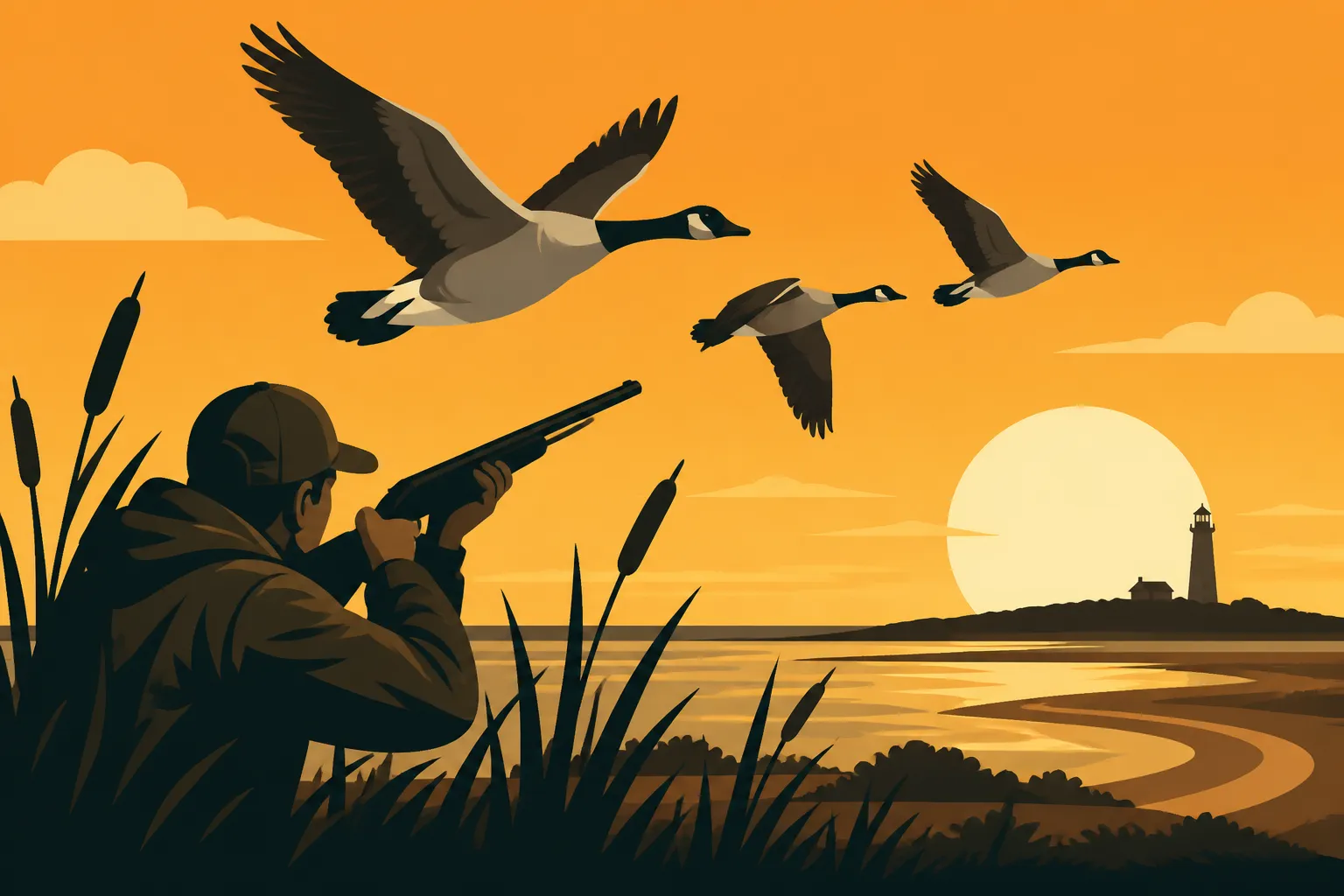
While fields are undeniably attractive, a significant portion of Long Island's geese spend their time on water bodies, ranging from secluded freshwater ponds to expansive saltwater bays and marshes. Water hunting for geese presents a distinct set of challenges and necessitates different gear and strategic thinking. For smaller ponds or lakes, your focus shifts to constructing well-hidden blinds along the shoreline, utilizing natural cover like cattails, dense brush, or specialized pop-up blinds that blend seamlessly. Decoys here should replicate a flock that is either resting peacefully or actively preening, and again, realism is paramount to fool these sharp-eyed birds. The challenge often lies in accessing these waters without spooking birds, which might mean pre-dawn wades or carefully planned boat entries.
When you venture into larger bays and the intricate network of salt marshes along Long Island's coastline, the hunting dynamics transform considerably. Here, you'll contend with tidal flows, strong currents, and vast expanses of open water. Specialized equipment like layout boats or larger, robust blinds integrated into the marsh grass becomes indispensable. Your decoy placement should strategically mimic geese loafing on exposed mud flats or sandbars, or feeding in shallow, vegetated areas. This is also where a high-quality pair of chest waders is not merely helpful but essential, allowing you to traverse deeper water to set and retrieve decoys and recover downed birds efficiently and safely. Understanding the geese's movements in relation to tidal changes and the time of day is a critical factor for success in these estuarine environments. For detailed advice on this unique hunting environment, consider reading Hunting the Long Island Salt Marshes.
The Art of Decoy Spreads and Calling
Regardless of whether you're hiding in a field or tucked into marsh grass on Long Island, your mastery of decoy spreads and your calling ability are two of the most critical elements for consistent success. Geese are inherently social creatures, and a well-executed decoy spread acts as a powerful visual invitation, signaling safety and food. A diverse spread that includes a mix of feeding, resting, and sentry-posture decoys creates a lifelike tableau. Don't hesitate to incorporate motion decoys or flagging, especially on calm, windless days, as even subtle movement can add a critical layer of realism that static decoys lack. This dynamic element can often be the difference between birds flaring and birds committing to your spread.
Calling serves as the auditory complement to your visual setup. While aggressive "hail calls" can certainly grab the attention of distant flocks, the true art of goose calling on Long Island lies in the subtle, reassuring sounds as birds approach. Soft clucks, moans, and contented murmurs communicate a sense of security and well-being, encouraging wary geese to lower their guard and drop into range. Practice developing a full range of calls, from excited greeting calls for incoming birds to the quiet, subtle sounds that replicate a feeding flock. Remember, once birds are committed and working your spread, less is often more with calling; overdoing it can quickly alert them to danger. Many hunters find that utilizing a combination of a short-reed call for its aggressive versatility and a deeper, more mellow flute call provides the most comprehensive range of sounds for any given situation. Tools and resources found through platforms like GoHunt can be excellent for learning regional calling nuances and getting advice on effective decoy strategies that account for local goose behavior and hunting pressure, truly helping you hone your skills.
Essential Gear for Long Island Goose Hunting
Shotguns and Ammunition: Making the Right Choice
Selecting the appropriate shotgun and ammunition is a fundamental decision for any serious goose hunter on Long Island. Most experienced waterfowl hunters universally gravitate toward 12-gauge shotguns, largely due to their exceptional versatility, wide range of available loads, and formidable knockdown power needed for large, tough birds like Canada geese. Whether you prefer a reliable pump-action or a fast-cycling semi-automatic, ensure it's chambered for 3-inch or, even better, 3.5-inch magnum shells. This capability allows you to utilize heavier loads, which pack more pellets and offer greater range and striking energy, crucial for bringing down high-flying geese. While barrel length often comes down to individual preference and fit, many hunters find that a 26-28 inch barrel offers an ideal balance of swing speed, maneuverability in blinds, and effective pattern density.
When it comes to ammunition, the law strictly mandates the use of non-toxic shot for all waterfowl hunting, and Canada geese are no exception. Steel shot remains the most widely used and budget-friendly option, but discerning hunters often invest in premium alternatives such as bismuth, tungsten-iron, or tungsten-matrix. These denser materials retain energy better, provide tighter patterns, and offer superior penetration, albeit at a higher cost. For Canada geese, common shot sizes favored by hunters typically range from BB to BBB or even T. These larger pellet sizes ensure that each shot carries enough kinetic energy to humanely harvest these robust birds. Crucially, before the season begins, take the time to pattern your chosen shotgun, choke, and ammunition combination at various ranges. Understanding your shotgun's effective range will prevent frustrating misses and ensure clean kills.
Blinds, Waders, and Other Field Essentials
Beyond your trusty shotgun, a suite of specialized gear is absolutely essential for a comfortable, effective, and safe goose hunt on Long Island. Top-tier concealment is non-negotiable. For field hunting, a high-quality layout blind is paramount, one that offers maximum stealth and comfort while allowing you to shoot effectively. For hunts along water edges or in marsh environments, a well-camouflaged pop-up blind or panel blind that blends seamlessly with the natural surroundings is critical. These blinds must be robust enough to endure the often-harsh coastal weather and provide excellent, unseen cover. For those venturing into the extensive salt marshes, tidal flats, or deeper freshwater ponds, a reliable pair of waders is not just recommended, but an absolute necessity. Chest waders, ideally insulated for those colder late-season hunts, will keep you dry and warm, allowing you to confidently retrieve downed birds and adjust your decoys in challenging aquatic environments. Carefully consider the wader material; neoprene provides superior warmth, while breathable fabrics offer lighter weight and comfort for longer walks to your spot.
Don't overlook the seemingly minor details that contribute significantly to your overall hunting experience. A dependable headlamp with a red-light setting is invaluable for navigating in the dark before dawn and safely retrieving game after sunset. A comfortable, portable seat is a godsend for longer sits if you're not in a layout blind. And, a sturdy game bag or a specialized sled is crucial for efficiently hauling out your harvest, especially if you have a successful day. Lastly, investing in a comprehensive layering system for your clothing, including waterproof and windproof outerwear, is vital for maintaining warmth and comfort during prolonged, static sits, particularly as Long Island's weather turns colder later in the season. Consider materials like merino wool or high-quality synthetics for base and mid-layers, as they excel at retaining warmth even when wet. For more detailed advice on dressing for various weather, refer to Clothing for a New York November.
Navigating Access and Public Land on Long Island
Finding Public Hunting Opportunities on Long Island
Hunting public land for Canada geese on Long Island presents a unique set of challenges due to the dense human population and relatively limited accessible acreage. However, it is certainly not an impossible feat for the persistent and well-prepared hunter. Several New York State Parks and specific Wildlife Management Areas (WMAs) on Long Island do offer waterfowl hunting opportunities, though these often come with very specific rules, designated hunting zones, and sometimes even require special permits or participation in a lottery system. It is absolutely crucial to consult the official DEC hunting regulations publication, along with the specific rules for any state park or WMA you intend to visit, for the most current information regarding access points, permitted activities, and any required registrations or permits. Areas along the south shore bay systems, including some parcels managed by the DEC or town parks that explicitly permit hunting, are often excellent starting points for your research.
Success on public land often boils down to patience, extensive pre-season scouting, and a willingness to explore. Walk the boundaries of potential areas, meticulously search for goose sign such as droppings or grazed grass, and spend time observing flight patterns from a distance. Be aware that public areas will likely experience significant hunting pressure, especially on weekends. This means that finding less-pressured pockets, being the first one in, or simply being willing to walk further than most other hunters can dramatically improve your chances. Leveraging modern mapping tools, such as the New York HuntFishNY App or private mapping services, can be invaluable for identifying potential public hunting grounds, understanding property boundaries, and planning your approach and escape routes. Remember, these birds are smart, and they quickly learn to avoid obvious pressure points.
Securing Private Land Permission on Long Island
Given the often-limited and highly pressured nature of public hunting land, securing private land permission is frequently the most effective and rewarding path for consistent goose hunting success on Long Island. Many private landowners—ranging from agricultural farmers to golf course superintendents, and even corporate property managers—are actively seeking solutions for the problems caused by large resident Canada goose populations. These birds can cause significant damage to crops, meticulously maintained turf, and create unsanitary conditions with their droppings. This scenario creates a prime opportunity for responsible hunters to offer a valuable service. The key to unlocking these opportunities is a respectful, professional, and well-articulated approach. Begin by systematically identifying properties that consistently hold geese; quiet drives during early mornings or late evenings can often reveal their preferred feeding or loafing spots.
Once you’ve identified a promising property, make a positive first impression. Dress neatly, introduce yourself politely, and clearly explain your intentions – for example, "I'm a local hunter, and I'd like to help manage the Canada goose population on your property, which I've noticed can be quite numerous." Emphasize your commitment to safety, ethical hunting practices, and respect for their property. Offering to share some of your harvest or even assist with minor tasks around their property can be a powerful way to build rapport and demonstrate your goodwill. Building a foundation of trust is paramount; a long-term relationship with a landowner can provide incredible, consistent hunting opportunities year after year. Additionally, connecting with local hunting clubs, conservation organizations, or even agricultural extension offices might open doors to existing private land access programs. For hunters looking to streamline this process, various online resources and mapping tools can assist in identifying property owners and navigating the initial steps of requesting permission. This due diligence and respectful engagement can transform a hunting dream into a reality.
Addressing Common Challenges in Long Island Goose Hunting
Dealing with Hunting Pressure and Wary Birds
One of the most significant hurdles for any goose hunter on Long Island is the pervasive hunting pressure, particularly in publicly accessible areas. The dense human population means that geese, especially the resident flocks, become highly educated and extremely wary very quickly. They learn to recognize common ambush points, habitually fly at higher altitudes, and become acutely sensitive to any unusual movement, sound, or unnatural element in a decoy spread. This can be profoundly frustrating, as you might meticulously plan a setup, only to have flocks flare and disappear at a hundred yards, seemingly without cause.
To effectively counteract this constant pressure, you must adopt an exceptionally mindful and adaptable approach. First and foremost, unparalleled concealment is non-negotiable; every square inch of your blind must be blended seamlessly into the environment. Secondly, invest heavily in scouting to identify less-pressured areas, or to pinpoint flight patterns and feeding habits that other hunters might overlook. If your schedule allows, consider hunting during mid-week rather than just on crowded weekends. When birds are approaching, often less is more with calling; subtle, soft clucks and moans can be more effective than aggressive hailing calls, which pressured birds associate with danger. Furthermore, be prepared to walk greater distances or utilize less conventional access points to reach secluded spots that others bypass. Constantly observing and adapting to how the geese are reacting to current pressure is absolutely key. Sometimes, simply waiting for adverse weather – a strong cold front, high winds, or a snowstorm – can dramatically improve your chances, as these conditions often make geese more predictable and less choosy about where they land.
Overcoming Weather and Water Conditions
Long Island's unique coastal geography means that weather and water conditions can shift rapidly and drastically, presenting both significant challenges and incredible opportunities for goose hunters. Strong winds, heavy rain, dense fog, and even accumulating snow are all distinct possibilities during the lengthy waterfowl seasons. While such conditions can certainly make for a miserable hunt, they often concentrate geese and force them into more predictable flight patterns, creating some of the most memorable hunting experiences. The more severe the weather, the less discerning the birds often become, making them more susceptible to well-placed blinds and decoys.
However, successfully navigating these challenging conditions requires thorough preparation and a strong emphasis on safety. Always, and I mean always, check the marine forecast if you plan to hunt on the bays or open water, paying close attention to wind advisories, potential storm surges, and changing tides. Dressing in layers is crucial, with a waterproof and windproof outer shell being non-negotiable. Insulated chest waders and waterproof boots are essential for staying warm and dry when dealing with cold water, mud, or snow. If using a boat, ensure it is seaworthy and that you have all necessary safety equipment, including properly fitting life vests for everyone aboard. Don't let a bit of nasty weather deter you; some of the most successful and exciting goose hunts on Long Island occur when fair-weather hunters stay home. For hunters seeking specific advice on adapting to varying conditions, resources from platforms like GoHunt often include articles and forum discussions where experienced hunters share their strategies for dealing with challenging New York weather, which can be immensely helpful in refining your own approach.
| Season Type | Typical Long Island Dates (Approx.) | Bag Limit (Geese/day) | Primary Target | Key Tactics |
|---|---|---|---|---|
| Early Goose Season | Early September | More liberal | Resident Geese | Field hunting, patterning local movements |
| Regular Waterfowl | Late Oct. – Mid-Feb. (often split) | More conservative | Resident/Migr. | Field & water hunting, enhanced concealment, calling |
| Late Season (Special) | January – February | Often liberal | Resident Geese | Field hunting waste grain, cold-weather strategies, less pressure |
This table provides a general overview, but always consult the most current New York DEC hunting regulations for precise dates and limits, as these can change year to year. For comprehensive details on overall New York Waterfowl Hunting by Zone, it’s always best to check the official DEC guide.
Disclaimer
This article is for general informational purposes only and does not constitute professional advice. Laws, prices and regulations vary by location and change over time. Consult a qualified professional for guidance on your specific situation.