New York Boone and Crockett Whitetails
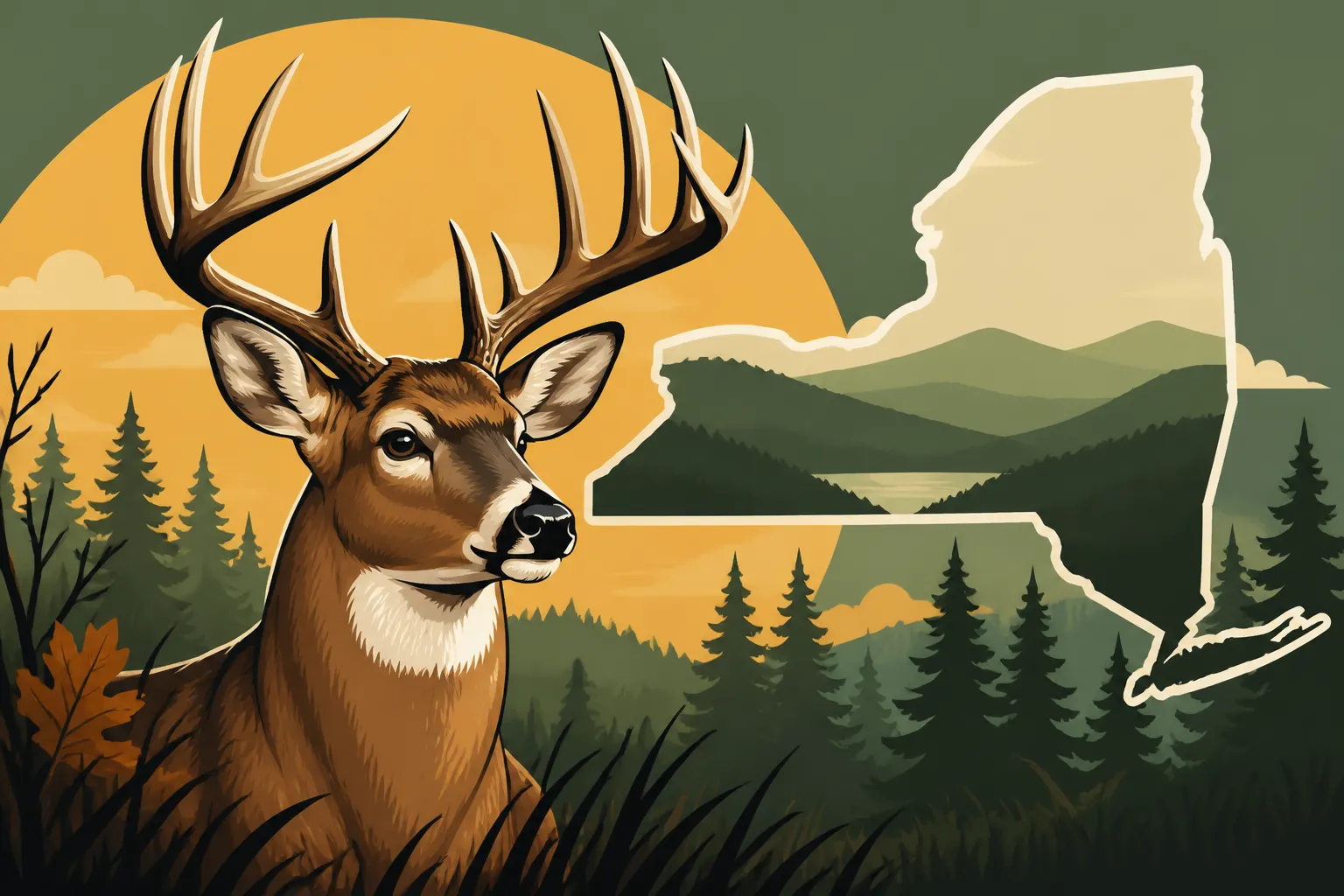
Every New York deer hunter, deep down, harbors the dream of encountering that truly magnificent whitetail buck, the kind that makes your heart pound and your hands tremble. We're not just talking about any nice buck; we're talking about a deer that pushes the limits, a genuine New York Boone and Crockett whitetail. It’s a challenge that feels almost mythical for many of us, often obscured by stories and whispers rather than concrete information. This guide will walk you through what it really means to chase a record book buck in New York, where you might find them, and the dedicated strategies that go into pursuing such an elusive trophy.
Understanding the Boone and Crockett Club and New York's Potential
For those new to the official world of trophy records, the Boone and Crockett Club is the oldest wildlife conservation organization in North America, established over a century ago by Theodore Roosevelt. Beyond its conservation legacy, the club maintains records of North American big game animals, including white-tailed deer, based on strict scoring methods. Achieving a "Boone and Crockett" score means your buck has met or exceeded a specific minimum measurement, often indicating a deer of exceptional antler growth and maturity. It’s a benchmark of genetic potential, age, and nutrient availability.
New York might not be nationally famous for churning out B&C entries every year like some Midwestern states, but let me tell you, the potential is absolutely here. We have healthy deer populations, diverse habitats, and, in certain regions, the right combination of factors for bucks to reach impressive antler size. It requires patience, keen observation, and often, hunting areas with less pressure where bucks can simply grow old. The pursuit of a record-class buck isn't just about the score; it's about the journey, the habitat, and the mature animals that represent the best of what our state's deer herd has to offer.
Boone and Crockett Scoring Basics
The scoring system is incredibly precise, measuring various antler dimensions to arrive at a total score. Deer are categorized as either "typical" or "non-typical," which essentially means standard antler configuration versus those with abnormal points or variations. For a typical deer, symmetry is key, with deductions for differences between corresponding points. Non-typical scores, on the other hand, embrace all those wild, unique antler characteristics, adding them to the main frame.
It's a complex system, but at its heart, it rewards antler mass, length, and spread. Think about those heavy beams, long tines, and wide racks. Many hunters get overwhelmed by the specific rules, but the core idea is simple: a truly impressive, mature whitetail with robust antlers has a good chance of making the book. While the exact minimum scores can vary slightly by species category, aiming for a buck with a significant inside spread, long main beams, and healthy tines is a good starting point. You're looking for a deer that has, quite simply, lived a long, healthy life and reached its peak.
New York's Place in the Record Books
While we may not lead the nation, New York absolutely produces record book whitetails. These aren't just one-off flukes; they come from specific regions and often from properties or public lands where deer have the chance to age. Historically, some of the most impressive bucks have come from the agricultural landscapes of western and central New York, where nutrient-rich soils and ample food sources contribute to superior antler development. Counties in the Genesee Valley and Finger Lakes regions have a history of putting up some real giants.
The real challenge for the average hunter, especially those of us focused on public land, is finding an area where bucks consistently reach that older age class. It's often a combination of good genetics, high-quality forage, and reduced hunting pressure. Understanding New York's Deer Population Estimate and localized herd health can give you a significant edge in identifying these potential hot spots. It's not about magic, but about recognizing the conditions that foster exceptional antler growth.
Where New York's Giants Come From
Finding a Boone and Crockett caliber buck isn't just about luck; it's about understanding habitat, deer behavior, and identifying those unique pockets within New York that offer the best opportunities. While giants can theoretically come from anywhere, certain areas consistently produce larger, older bucks due to a confluence of factors.
Hotbeds for Trophy Potential
When we talk about where the big bucks live in New York, a few regions consistently rise to the top. The Western New York agricultural belt, stretching from the Finger Lakes westward, is often cited as a prime area. Rich farmlands provide abundant, high-quality nutrition, which is crucial for antler development. These areas often have a patchwork of woodlots, creek bottoms, and thick cover interspersed with corn, soybean, and alfalfa fields – a perfect recipe for a buck to grow old and pack on inches. Many hunters specifically focus on hunting Western New York farmland deer for this very reason, knowing the potential is high.
Another region with incredible potential is the Finger Lakes, particularly those areas with steep gorges and dense pockets of cover near productive farmlands. These geographical features can provide sanctuaries where mature bucks can escape pressure and reach their full potential. You can learn a lot about what makes this area special by checking out Hunting Finger Lakes Region Deer. Even parts of the Southern Tier, especially those bordering Pennsylvania with their mix of timber and small farms, can be sleeper cells for trophy deer, though they often require more intense scouting to pinpoint these pockets.
Key Factors in Growing Trophy Bucks
It’s not just about a specific county; it's about a combination of environmental factors that allow bucks to reach their genetic potential:
- Age Structure: This is arguably the most critical factor. Bucks simply need time to grow big antlers. A 1.5-year-old buck might have spikes or a small 6-point rack, but a 4.5-year-old or 5.5-year-old buck, given good nutrition, can be truly impressive. Areas with lower hunter density or certain antler restrictions (where allowed) can help foster an older age class. Understanding New York Buck Age Structure is fundamental to this pursuit.
- Nutrition: High-quality forage is essential. Areas with agricultural crops (corn, soybeans, alfalfa), mast crops (oaks, beech), and diverse browse provide the protein, minerals, and energy needed for antler growth. This is why farmland edges and diverse timber stands are so productive.
- Genetics: While you can't control a deer's genetics, regions that consistently produce large-bodied, big-antlered deer often have a strong genetic base. Over generations, certain populations simply carry the traits for bigger racks.
- Cover and Security: Mature bucks are masters of survival. They need thick, inaccessible cover where they feel safe to bed, travel, and escape hunting pressure. Swamps, dense timber blocks, steep ravines, and remote public land parcels often serve as these sanctuaries. Even relatively small, overlooked woodlots adjacent to major food sources can harbor giant deer if they offer enough security. Using digital mapping platforms like GoHunt can be invaluable for identifying these overlooked pockets of cover and escape routes that might otherwise go unnoticed.
Strategies for Hunting a Record Book Buck
Chasing a truly exceptional New York whitetail requires a different mindset and approach than simply filling a tag. It demands meticulous scouting, disciplined hunting, and an understanding of mature buck behavior. This isn't just about being in the woods; it's about being in the right place at the right time, with precision and patience.
Intense Pre-Season Scouting and In-Season Adaptability
The work for a record book buck begins long before opening day. This isn't just a casual walk in the woods; it's a dedicated mission to understand every inch of your chosen hunting area.
- Aerial Intelligence: Start with aerial photos. Services like GoHunt are fantastic for this, allowing you to pour over satellite imagery to identify key features. Look for pinch points, funnels between woodlots and fields, dense bedding areas, security cover near food sources, and travel corridors along terrain changes. Pay special attention to "green" areas, thickets, and swamp edges that might not look like much on the ground but offer impenetrable cover. Reading Aerial Photos for Southern Tier Deer provides excellent tips for this.
- Boots on the Ground: Once you've identified potential spots on a map, it's time to put boots on the ground. Look for sign: old rubs, large tracks, worn trails, and most importantly, historical scrape lines and bedding areas. These indicate where mature deer have been active in previous seasons. Don't just scout during the early season; spend time in the late winter and early spring after sheds have dropped and before thick foliage appears, when sign is easiest to read. This is crucial for Scouting New York Public Land Before Season.
- Trail Cameras: Deploy trail cameras strategically on established travel routes, near water sources, and especially over scrapes. Don't over-saturate an area, but use them to get an inventory of bucks, track their movement patterns, and establish a history with specific deer. Knowing when a mature buck prefers to move, even at night, can inform your stand placements.
Precision Stand Placement and Hunting Discipline
Hunting a truly mature buck means being surgically precise with your stand locations and incredibly disciplined in your approach.
- Wind is King: This cannot be stressed enough. A mature buck will often circle downwind of a bedding area or feeding area before entering, scent-checking for danger. You absolutely must play the wind. Have multiple stand locations for different wind directions, especially in areas where you expect a big buck to travel.
- Entry and Exit Routes: Your approach and departure from your stand must be as stealthy and scent-free as possible. Plan routes that avoid likely bedding areas and minimize disturbing any deer. This might mean wading a creek or taking a much longer, circuitous route. For example, when setting up a Treestand Setups in Adirondack Hardwoods, you need to consider how to access it without blowing out the area.
- Minimal Pressure: Over-hunting a spot, especially one holding a big buck, is the quickest way to turn him nocturnal or send him to the next county. Limit your visits, hunt when conditions are absolutely prime (think cold fronts, rut activity), and don't push into bedding areas unless absolutely necessary (like tracking a wounded deer).
- Hunting the Rut: While trophy bucks can be taken at any point in the season, the rut offers the best chance to see a mature buck moving during daylight hours, driven by the urge to breed. Focus on pinch points, funnels, and areas with fresh scrape and rub activity, especially during the peak of Hunting the New York Rut in November. This is when those older bucks are most vulnerable, breaking their patterns to seek out does.
| Boone and Crockett Category | Minimum Score (Typical) | Minimum Score (Non-Typical) | Key Considerations |
|---|---|---|---|
| White-tailed Deer | 160 points | 185 points | Requires age, good nutrition, and genetics. |
| Scoring Focus | Symmetry, length, mass, spread | Total antler material, unique points | Unique abnormal points are added, not deducted, for non-typical. |
| Typical Deductions | Lack of symmetry between corresponding points | Minimal deductions for symmetry | Focus on gross score, then net after deductions for typical. |
| New York Potential | Strong in agricultural/diverse habitat regions | Possible anywhere a buck grows old | Less common than typical, but truly unique. |
Beyond the Score: The True Trophy
While the pursuit of a Boone and Crockett entry is an exciting goal that pushes us to become better hunters, it's important to remember what truly defines a trophy. Sometimes, the most memorable hunts and the most cherished deer aren't the ones that make the record books, but the ones that teach us the most about ourselves, the land, and the animals we pursue.
The Value of the Experience
Think about it: the stillness of a crisp November morning, the sound of leaves crunching underfoot, the thrill of deciphering a fresh track in the mud. These are the moments that truly stick with us. The challenge of hunting a mature, wary New York whitetail – whether it's on vast public lands or a small woodlot – sharpens our senses and deepens our connection to the outdoors. The satisfaction of a well-executed plan, the quiet pride in ethical shot placement, and the hard work of tracking and recovering a deer are often more rewarding than any score sheet.
Even if you never tag a Boone and Crockett buck, the skills you develop in the pursuit of one will make you a more observant, patient, and knowledgeable hunter. You’ll understand deer habitat better, read sign more effectively, and become a more proficient woodsman. These are the real trophies we carry with us, season after season.
Conservation and the Future of New York's Deer
The Boone and Crockett Club's mission isn't just about big antlers; it's deeply rooted in wildlife conservation. By recognizing exceptional animals, they highlight the importance of healthy habitats and sound wildlife management practices. When we strive to manage for an older age class of bucks, we're inherently promoting a healthier, more balanced deer herd. This means advocating for regulations that allow deer to reach maturity, supporting habitat improvement projects, and ensuring ethical hunting practices.
Every deer hunter in New York plays a role in this. By reporting your harvests accurately, participating in surveys, and adhering to regulations like New York Deer Reporting Requirements and New York Antler Point Restriction Rules (where they apply), you contribute to the data that helps wildlife managers make informed decisions. The health of the deer herd, and the potential for future generations to chase their own record book dreams, depends on all of us embracing our role as stewards of the land and its wildlife. Whether you're targeting a B&C monster or simply filling the freezer, our collective efforts ensure that the magic of New York hunting endures.
Disclaimer
This article is for general informational purposes only and does not constitute professional advice. Laws, prices and regulations vary by location and change over time. Consult a qualified professional for guidance on your specific situation.