New York State Forest Hunting
Finding good public hunting land in New York State can often feel like searching for a needle in a very large, sometimes thorny, haystack. While everyone talks about the Adirondacks and Catskill Forest Preserves, and the popular Wildlife Management Areas (WMAs), a treasure trove of hunting opportunities lies within New York's State Forests. These managed timberlands offer unique advantages and challenges, and this guide will walk you through how to understand, access, and successfully hunt these fantastic, often overlooked, parcels of public ground.
Unpacking New York State Forests: What Hunters Need to Know
When you’re looking at a map of public land in New York, you'll notice a few different categories: Forest Preserves, Wildlife Management Areas, and State Forests. Each has its own rules and its own character, which directly impacts how you'll hunt it. Understanding these distinctions is the first critical step to unlocking the potential of State Forests.
The Distinctive Role of State Forests in New York's Public Lands
New York State Forests are distinct from the more widely known Forest Preserves of the Adirondack and Catskill Parks. Those Preserves are constitutionally protected as "forever wild," meaning logging and significant human alteration are generally prohibited. Wildlife Management Areas, on the other hand, are primarily managed for wildlife habitat and public recreation, often with specific goals for certain species. State Forests, by contrast, are managed for "multiple use," with a strong emphasis on sustainable timber production alongside recreation, wildlife habitat, and watershed protection.
This "multiple use" approach means that you'll find active logging operations happening in State Forests. Don't let that deter you; in fact, it's often a huge benefit to hunters. These forests were often acquired by the state after being abandoned farmland in the early 20th century, reforested, and are now managed through rotations of harvesting and replanting. This active management creates a dynamic landscape that can be incredibly productive for a variety of game species, which we'll delve into more deeply in the next section.
The key takeaway is that State Forests are working forests. They are not pristine wilderness, nor are they strictly manicured wildlife habitats. They are somewhere in between, offering vast tracts of accessible land that might look different from one year to the next. This constant evolution creates pockets of prime habitat that hunters who adapt can certainly capitalize on, providing a different experience than the deep woods of the Forest Preserve or the more controlled environments of a WMA.
Understanding Habitat Dynamics Driven by Forest Management
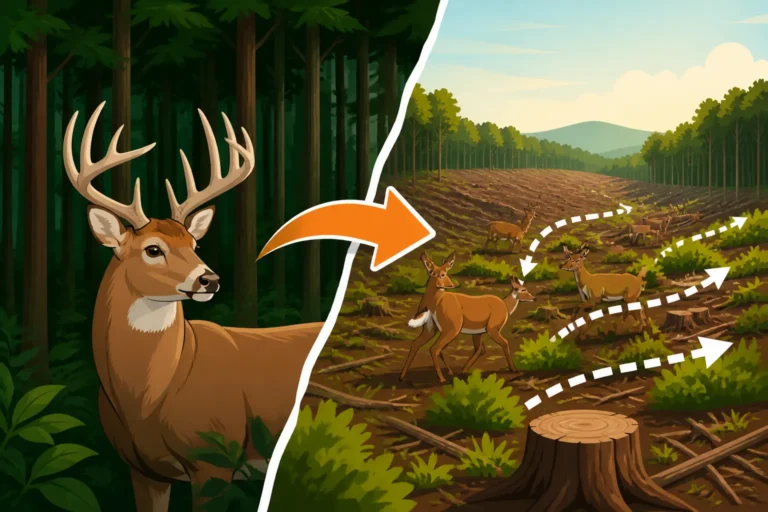
The very nature of State Forests—their active timber management—is what makes them so attractive to certain game species. Logging operations, whether clearcuts, selective harvests, or thinnings, create a mosaic of habitat types at different successional stages. This diversity is absolutely critical for healthy wildlife populations, particularly for white-tailed deer. Recent clearcuts, for example, might look like a mess to the untrained eye, but for deer, they are a browse buffet, providing an explosion of young saplings, shrubs, and herbaceous growth that they absolutely crave. This is their salad bar, and they will gravitate towards it.
Beyond browse, these managed areas also create essential cover. Thick regeneration in a few-year-old clearcut provides bedding and security cover that mature, open timber simply can't offer. Meanwhile, older stands within the same forest provide critical hard mast (acorns, beechnuts) and soft mast (wild apples, berries) that deer, bears, and turkeys rely on, especially in the fall. You'll also find conifer stands, which are often left untouched or selectively harvested, providing thermal cover during harsh winters and security cover year-round.
For hunters, this means that scouting isn't just about finding game sign; it's about understanding the forest's recent management history. A State Forest that had a clearcut two years ago will likely hold different deer than one that hasn't seen active logging in decades. This constant change provides both challenges and opportunities. You might find fantastic Grouse Hunting New York Aspen Cover in a younger stand, while a more mature block provides the mast needed for deer or bear.
Geographic Spread and Accessibility Across the State
One of the great advantages of New York's State Forests is their widespread distribution. While many hunters think of the vast public lands in the northern part of the state, you'll find State Forests sprinkled throughout the Southern Tier, Central New York, Western New York, and even closer to the Capital Region. This means that hunters in almost every corner of the state have access to these valuable public lands, often within a reasonable drive from populated areas. There are literally hundreds of these parcels, ranging in size from a few hundred acres to several thousand.
These forests are generally characterized by a network of unpaved forest roads, old logging trails, and footpaths. This often makes for easier access than the deep wilderness areas, allowing hunters to penetrate further into the woods without an arduous bushwhack. However, don't mistake "accessible" for "easy." Many of these roads are gated, requiring hunters to walk in. Some are well-maintained, while others can be rough and require a high-clearance vehicle. Knowing the specific access rules for each State Forest is paramount.
Unlike the "forever wild" sections of the Adirondack and Catskill Forest Preserves, State Forests are working landscapes, and their accessibility often reflects this. You might encounter active logging trucks, or find a road temporarily closed due to operations or weather. This is part of the deal. However, for hunters willing to do a bit of research and put in the legwork, the sheer volume and widespread nature of these forests means there's almost always a new area to explore, often with fewer crowds than some of the more well-known public hunting grounds. You can find detailed maps and access points on the New York DEC's website, and by using mapping applications like onX Hunt.
Navigating the Rules: Hunting Regulations in State Forests
Hunting public land in New York always comes with a set of rules and regulations designed to ensure safety, conservation, and fair chase. State Forests are no exception. While many general hunting laws apply statewide, there are specific nuances to consider when you're hunting within these actively managed timberlands.
Licensing and General Season Compliance
First and foremost, hunting in New York State Forests requires the appropriate New York Hunting Licenses and What They Cost. Whether you're chasing white-tailed deer, black bear, wild turkey, or small game, you'll need the proper base license and any required privileges (e.g., bowhunting, muzzleloading, turkey permits). All statewide season dates for New York Deer Seasons by Zone and New York Small Game and Upland Bird Seasons apply directly to State Forest lands. It’s absolutely critical to consult the current New York State Hunting and Trapping Regulations Guide for the most up-to-date information on season dates, bag limits, and specific regulations for the Wildlife Management Unit (WMU) you intend to hunt.
Remember, the State Forest's location within a particular WMU dictates the season structure. For example, a State Forest in the Southern Tier will adhere to the Southern Zone deer calendar, which differs significantly from the Northern Zone. Always double-check your WMU and the corresponding regulations to avoid any infractions. This might seem basic, but it's the foundation of legal and ethical hunting, and a quick glance at the current regulations can save you a lot of grief in the field.
Beyond licenses and seasons, general rules such as legal shooting hours, blaze orange requirements (when applicable), and prohibitions on certain activities (like baiting deer or bears) are also in full effect. There are no special "State Forest" exceptions to these fundamental laws. Think of State Forests as public land that happens to have timber management; the general hunting laws remain constant.
Specific Use Regulations Affecting Hunters
While general hunting rules apply, State Forests also have specific regulations regarding how you can use the land, which can impact your hunting setup. For instance, Camping Rules on New York State Forest Land generally permit primitive camping, often for up to three nights, but there might be restrictions on group size or locations. Always check the DEC website for the specific State Forest you plan to visit, as rules can vary slightly. Building fires typically requires knowing current fire danger levels, and you must always fully extinguish them.
When it comes to your setup, Treestand Rules on New York Public Land stipulate that portable treestands are allowed, but they must be removed at the end of the hunting season (or within a certain timeframe after the season closes, depending on local rules). Permanent stands, nailing steps into trees, or causing damage to trees is generally prohibited. Similarly, temporary ground blinds are usually fine, provided they are non-permanent and removed. Trail Camera Rules on New York Public Land are also generally quite permissive, allowing cameras as long as they don't damage trees and are removed at the season's end, but always check for specific area variations or any recent updates to these regulations.
Vehicle access is another key area. Many State Forests feature extensive internal road networks, but these are often gated or designated for administrative use only. While you might be able to drive in a short distance on some main access roads, expect to do a significant amount of walking. Always look for signage, respect gated roads, and avoid driving on unauthorized trails. Disregarding these rules can lead to fines and environmental damage, so err on the side of caution and hoof it.
Understanding Active Forest Operations
The active management of State Forests means that you might encounter logging operations, road maintenance, or other forestry work. These operations can sometimes lead to temporary closures of certain roads or sections of the forest for safety reasons. It's always a good idea to check the local DEC office website or call the regional office responsible for the State Forest you plan to hunt to inquire about any active operations or closures. This pre-hunt research is invaluable and can save you a wasted trip.
When you're out in the woods, be aware of your surroundings. Logging equipment is heavy, noisy, and dangerous. If you hear chainsaws or heavy machinery, give it a wide berth. On the flip side, fresh logging can be a goldmine for game. Once an area has been cut and the machinery has moved on, the resulting browse and new growth can attract deer, rabbits, and grouse. Knowing an area has been recently logged (perhaps by reviewing older satellite imagery or looking at DEC management plans) can guide your scouting efforts to identify newly created hot spots.
Furthermore, logging roads, even if currently inactive or gated, can serve as excellent access points and natural travel corridors for deer. They often follow contours, creating easy routes through otherwise dense terrain. Hunters frequently use these old roads to get into an area, then branch off into the timber. The disturbance itself, while initially disruptive, eventually creates a richer, more diverse habitat that benefits many game species, truly making these working forests unique hunting grounds.
Whitetail Strategies: Finding Deer in State Forests
Hunting white-tailed deer in New York's State Forests requires a slightly different approach than hunting dense wilderness or open farmland. The dynamic nature of these managed timberlands creates unique opportunities for observant and adaptable hunters.
Decoding the Landscape: Prime Deer Habitat in Managed Forests
To consistently find deer in State Forests, you need to understand their core needs: food, water, and cover. In these managed timberlands, all three are often dictated by forestry operations and natural regeneration. Food sources are usually abundant in recent clearcuts or thinned areas, where sunlight reaches the forest floor, promoting the growth of palatable browse. Look for areas that were cut 1-5 years ago; these will have robust young growth that deer prefer. Older clearcuts (5-15 years) can offer thicker, denser cover for bedding. Don't overlook mature stands of oak, hickory, or beech during mast years, as these will draw deer in to feed on acorns or beechnuts. Knowing how to identify different mast trees and track their production each year is a critical skill.
Cover is equally important, and State Forests excel at providing it. Thick, regenerating timber offers security from predators and hunters, as well as thermal protection from winter winds and summer heat. Conifer stands (pine, hemlock, spruce) are particularly valuable for winter bedding. Topography also plays a significant role. Look for benches, saddles, and small draws that offer natural travel corridors or sheltered bedding sites. Even a small dip in the terrain can provide enough cover for a buck to feel safe. Water sources, while sometimes scarce on high ridges, can be found in small creeks, seeps, or beaver ponds within the lowlands and valleys. Connecting these elements—a fresh clearcut for feeding, a thick conifer stand for bedding, and a small creek for water—will reveal prime deer habitat.
The key is to think like a deer moving through these diverse habitats. They will often feed in the younger cuts, bed in the thicker sections, and use the edges of different timber types as travel routes. Reading Aerial Photos for Southern Tier Deer and other regions can help you visualize these transitions before you even step foot in the woods. Pay attention to how different timber types transition into each other; these "edge" habitats are often magnets for deer.
Strategic Approach: Stand & Still-Hunting Tactics
Once you've identified potential deer hotspots, the next challenge is how to hunt them effectively. State Forests, with their network of old logging roads and varying timber, lend themselves well to both stand hunting and still-hunting. Old logging roads are often goldmines for access and serve as natural funnels. Deer frequently use these slightly more open pathways for travel, especially along edges where the road meets thick cover. Setting up a stand near a pinch point on one of these roads, or where a well-used trail crosses it, can be incredibly effective.
For stand placement, consider the principles of Treestand Setups in Adirondack Hardwoods, focusing on wind direction, visibility, and exit/entry routes that won't spook deer. Look for natural funnels created by terrain features (like a narrow saddle between two ridges) or habitat changes (where a young clearcut meets mature timber). Often, the edges of clearcuts are the most productive, as deer will skirt these areas before venturing into the open to feed. Utilizing portable treestands or saddle hunting setups allows you the flexibility to move and adapt as deer patterns change throughout the season.
Still-hunting is another highly effective tactic in State Forests, especially in areas with varied cover. Moving slowly and deliberately through regenerating timber, along ridge lines, or through open hardwood stands can allow you to intercept deer as they go about their day. Focus on areas where deer are likely to be bedding or transitioning between feeding and bedding. During the peak of Hunting the New York Rut in November, still-hunting can be particularly productive, allowing you to cover ground and locate bucks actively seeking does. Always hunt into the wind, use binoculars to pick apart cover ahead of you, and take advantage of any available cover to break up your silhouette.
Mitigating Pressure: Hunting Smarter, Not Harder
One reality of hunting State Forests is that many of them, particularly those with good road access, can experience significant hunting pressure, especially on opening day or during peak rut. This doesn't mean you can't find success; it simply means you need to hunt smarter. The common wisdom holds true: "walk a mile, find a smile." Most hunters won't venture more than a half-mile from their vehicle. By pushing deeper into the woods, or by finding less obvious access points, you can often escape the crowds and find undisturbed deer.
Mapping applications like onX Hunt or Scouting With the New York HuntFishNY App become invaluable here. Use them to identify areas that require a longer walk, or that are surrounded by steep, challenging terrain that deters other hunters. Look for property lines that create odd-shaped corners or pockets that are hard to access from main roads. These overlooked pockets often hold mature deer that have learned to avoid pressure. Pay attention to small swamps, steep ravines, or dense conifer thickets—places hunters typically avoid—as these can be prime bedding areas for wary bucks.
Understanding Hunting Pressure on New York Public Land is about anticipating where other hunters will go and then choosing a different path. This might mean getting into the woods well before daylight to beat the crowds, or hunting mid-week when fewer people are out. It also means using observation. If you consistently see other hunters entering a particular area, consider shifting your focus to a less popular spot. Sometimes, it’s not about finding the most deer, but finding the least pressured deer.
Beyond Deer: Diverse Hunting in State Forests
While deer hunting often takes center stage, New York's State Forests offer a wealth of opportunities for pursuing other game animals. The diverse habitats created by active timber management make these public lands attractive to bears, turkeys, and various small game species.
Black Bear Encounters: Where to Find Them
New York's black bear population is thriving, particularly in the larger, more contiguous blocks of State Forest land, especially those that border the Catskill and Adirondack Forest Preserves or other large wilderness areas. Bear hunting in State Forests can be incredibly rewarding for those willing to put in the effort. Unlike some other states, New York prohibits the use of bait for bear hunting, meaning hunters must rely on scouting and understanding bear behavior. Therefore, all the strategies outlined in Bear Hunting Without Bait in New York apply directly to State Forests.
When scouting for bear in State Forests, focus on prime food sources. Bears are opportunistic omnivores, and their diets shift with the seasons. In early fall, they'll often key in on hard mast crops like acorns and beechnuts, or soft mast like wild apples and berries. Look for stands of mature oak and beech trees, especially on ridge tops or south-facing slopes. Areas with abundant berry bushes can also be hot spots. Signs like scat, torn-up logs (where they've dug for grubs), and claw marks on trees are dead giveaways. Thicker, less accessible sections of the forest, often steep ravines or dense conifer swamps, provide critical escape and bedding cover for bears.
Hunting bears in State Forests often involves covering a lot of ground, either by still-hunting or by setting up a stand overlooking a known food source or travel corridor. Look for areas with a mix of dense cover and open timber, as bears will use the cover for security but venture into more open areas to feed. Remember that bears can cover vast distances, so be prepared for a mobile hunt, or choose a strategic, high-odds ambush point based on recent sign.
Spring and Fall Turkey Hunting Success
Wild turkeys have made a remarkable comeback in New York, and State Forests provide excellent habitat for them. The mosaic of habitat types—mature timber for roosting, regenerating cuts for bugs and nesting, and open areas for strutting—creates an ideal environment. For spring gobblers, your focus should be on locating roosting sites. Turkeys typically roost in tall, mature trees along ridge lines or near water sources. Listen for gobbling at dawn, and then try to get into a position to call the bird off the roost. The varied terrain of State Forests can make this challenging but also offers natural barriers to use to your advantage.
During the spring season, Run-and-Gun Turkey Tactics on Public Land works exceptionally well in State Forests. This involves covering ground, calling frequently, and moving to new locations if you don't get a response. Turkeys in State Forests often respond well to aggressive calling early in the morning. Later in the day, a more subtle approach might be necessary. Look for clearings, old logging landings, or open hardwood flats where gobblers might strut. In the fall, turkey hunting in State Forests involves locating flocks, breaking them up, and then calling individual birds back in. Food sources like acorns, beechnuts, and agricultural fields (if adjacent to the forest) are key attractants.
Regardless of the season, understanding turkey behavior and adapting your calling and setup to the varied terrain of a State Forest is crucial. The mix of open woods and thick regenerating areas can present different challenges than hunting open fields, but it also provides ample cover for both you and the birds.
Upland Game and Small Game Opportunities
Beyond big game, State Forests are a fantastic resource for upland birds and small game. The active timber management that benefits deer also creates ideal conditions for ruffed grouse, woodcock, squirrels, and rabbits. For ruffed grouse, focus on areas of young, regenerating aspen, birch, or alder. These early successional habitats provide dense cover and the buds that grouse feed on, and are excellent places for Grouse Hunting New York Aspen Cover. Look for cuts that are 5-20 years old; they provide the perfect blend of cover and food.
Woodcock, another migratory upland bird, are often found in moist, swampy areas with alder thickets or young willows, especially during their spring and fall migrations. Look for areas along stream bottoms or wet depressions within the forest. Squirrels, both gray and fox, are abundant in State Forests, particularly in stands of mature hardwoods that produce acorns, hickory nuts, and beechnuts. Hunting squirrels can be a great way to introduce new hunters to the sport or to simply enjoy a quiet day in the woods. Look for cuttings on the forest floor, which indicate recent feeding activity.
Rabbits, primarily cottontails and snowshoe hare (in higher elevations or northern regions), thrive in brushy clearcuts, briar patches, and regenerating timber. The same thick cover that deer use for bedding will often hold rabbits. For snowshoe hare, focus on dense conifer stands or alder swamps. Hunting these species in State Forests often means navigating thick cover, making good brush pants and a reliable shotgun essential. The varied habitat means you can often find multiple small game opportunities within the same State Forest parcel.
Essential Tools and Best Practices for State Forest Hunters
Successful and responsible hunting in New York's State Forests requires more than just knowing where to go and what to hunt. It demands proper preparation, the right gear, and a commitment to ethical practices.
Mastering Navigation: Maps, Apps, and GPS
The vastness and often remote nature of State Forests mean that reliable navigation is non-negotiable. Always carry a physical map and compass, and know how to use them, even if you primarily rely on digital tools. A topo map can reveal subtle terrain features that are invisible from the ground but crucial for understanding game movement. In addition to physical maps, modern mapping applications have revolutionized how hunters navigate public lands. Apps like onX Hunt or Scouting With the New York HuntFishNY App provide invaluable information, displaying property boundaries, roads, trails, water sources, and topographic lines directly on your phone or tablet.
One of the most critical features of these apps is the ability to download offline maps. Cell service is notoriously spotty in many State Forests, so having your maps pre-loaded means you won't be left guessing when you lose signal. onX Hunt, in particular, offers detailed onX Layers for New York Land Status that differentiate between various public land types, private parcels, and even landowner information, which is incredibly helpful for staying on legal hunting ground. While phone apps are powerful, consider a dedicated GPS Units Versus Phone Apps discussion in your own head – a dedicated GPS unit often offers better battery life and durability in harsh weather, though phones are convenient.
No matter your preference, knowing your location at all times is paramount. Mark your vehicle, treestand locations, and any significant game sign. This prevents getting lost, helps you track game, and allows you to analyze your hunts more effectively back at home. Don't leave your navigation to chance; a lost hunter is a dangerous hunter.
Safety First: Preparation for the Unexpected
Safety should always be your top priority. Hunting in State Forests means you could be miles from the nearest road, and help might be hours away. Always inform someone of your hunting plans: where you're going, your expected return time, and who to contact if you don't check in. A basic well-stocked first-aid kit is essential, containing items for cuts, blisters, sprains, and any personal medications. Fire-starting materials (waterproof matches, lighter, fire starter) are crucial for survival in cold conditions.
Dress in layers, understanding that New York weather can change rapidly, especially in forested environments. Even on a clear, cold morning, temperatures can climb, or a sudden squall can blow through. Wool Versus Synthetics in Wet Snow is a debate for good reason: both offer benefits. Wool stays warm when wet, while modern synthetics wick moisture and dry quickly. Avoid cotton, which offers no insulation when wet. Insulated, waterproof boots are also critical for traversing potentially wet, muddy, or snowy terrain.
Carrying a reliable headlamp or flashlight, even for day hunts, is a smart practice, as you might find yourself walking out after dark. A whistle can be used for signaling in an emergency. In remote areas, consider carrying a personal locator beacon (PLB) or a satellite communication device, especially if you hunt alone. These devices can summon emergency services even when you have no cell service, providing peace of mind in truly remote State Forests.
Ethical Hunting and Conservation Stewardship
As hunters, we are stewards of the land and its wildlife. Adhering to "Leave No Trace" principles is fundamental when hunting State Forests. Pack out everything you pack in, and perhaps even a bit more. This includes spent shell casings, food wrappers, and any trash you might find. Leave the forest in better condition than you found it. Respect all posted signs, private property boundaries, and designated non-hunting areas. Use your mapping app (like onX Hunt or GoHunt) to ensure you always know exactly where you are relative to property lines.
Remember that State Forests are multi-use lands, shared with hikers, mountain bikers, cross-country skiers, and other outdoor enthusiasts. Be courteous and respectful of other users. Wear appropriate blaze orange or pink during firearms seasons to ensure you are highly visible. Proper game retrieval is also a critical ethical responsibility. Do everything in your power to recover any game you shoot. This means taking responsible shots, tracking diligently, and being prepared to stay out after dark or return the next morning if necessary (after ensuring proper tagging and reporting, of course).
Finally, contribute to conservation by properly reporting all harvests to the New York DEC as required. This data is vital for wildlife managers to make informed decisions about season lengths, bag limits, and overall herd health. Be an advocate for hunting and public lands, and always represent our community in a positive, responsible light.
Finding Your State Forest Sweet Spot: Research and Reconnaissance
The sheer number and diversity of New York's State Forests mean that finding your perfect hunting spot requires diligent research and reconnaissance. You can't just pick a random forest and expect instant success; the most rewarding hunts come from effort put in before the season even begins.
Digital Reconnaissance: Pre-Season Intel Gathering
Your journey to finding a State Forest sweet spot starts long before you lace up your boots. The New York DEC website is your first and best resource. Many State Forests have dedicated pages with maps, access points, and sometimes even management plans that detail recent or upcoming timber harvests. These plans are goldmines of information, as they tell you where the "new food" and "new cover" will be for deer and other game. You can often download topographic maps directly from the DEC, or use their online interactive mapping tools.
Beyond the DEC, satellite imagery is your next best friend. Platforms like Google Earth, onX Hunt, and GoHunt allow you to virtually scout vast areas from the comfort of your home. Look for tell-tale signs:
- Clearcuts: These show up as lighter, often patchy areas. Zoom in to estimate their age based on vegetation density. Younger, brushier cuts are great for browse.
- Conifer Blocks: Dark green, dense areas that offer excellent thermal and security cover.
- Waterways: Rivers, creeks, swamps, and beaver ponds. These often create natural funnels or attract game.
- Old Logging Roads and Trails: Look for faint lines through the timber. These can be prime access routes and travel corridors.
Reading Aerial Photos for Southern Tier Deer and other regions is a crucial skill. Identify potential bedding areas on leeward slopes or in thick cover, and connect them to feeding areas. Look for natural pinch points—narrow strips of cover between open areas, or saddles along ridges—where deer are likely to funnel. Mapping tools like onX Hunt often have layers showing historic burns or timber cuts, further aiding your digital reconnaissance.
Boots-on-the-Ground Scouting: Confirming Your Intel
While digital scouting is powerful, nothing replaces boots-on-the-ground reconnaissance. You need to verify what you see on the map with what's actually happening on the forest floor. Ideally, conduct your scouting trips in the late winter or early spring before foliage is dense, and again in late summer or early fall. In late winter, you can easily see old game trails, rubs, scrapes, and bedding areas. You'll also identify mast trees and their production from the previous fall.
During scouting trips, focus on confirming your identified pinch points, bedding areas, and food sources. Are those clearcuts as thick as they looked on the map, or are they more open? Are there fresh tracks, droppings, or rubs indicating recent deer activity? What are the primary mast trees, and is it shaping up to be a good mast year? Pay attention to prevailing wind directions and how terrain features might affect thermals, especially in the mornings and evenings. Identifying potential stand sites or ambush points during this phase is critical, noting specific trees that offer good cover and shooting lanes.
Walk the access points you identified. Are the roads passable? Are there gates? How much walking will it truly take to reach your desired hunting zone? Getting a feel for the terrain, the density of cover, and the presence of any unforeseen obstacles (like recent blowdowns or flooded areas) is invaluable. This firsthand knowledge will build your confidence and refine your hunting plan, ensuring you're not going in blind on opening day.
Continuous Learning: Adapting to Forest Changes
The most successful hunters in State Forests are those who embrace continuous learning and adaptation. Remember, these are dynamic environments. A clearcut that was a deer magnet five years ago might now be too thick for easy hunting but excellent for bedding. A bumper acorn crop one year might be followed by a mast failure the next. Storms can create new blowdowns that alter travel patterns, and new logging operations can open up previously inaccessible areas or change existing habitat.
Keeping a hunting journal can be a powerful tool. Document where you hunted, the weather conditions, what you saw, and any game sign. Note the success or failure of your tactics in specific areas. Over time, this journal becomes a personalized database of knowledge about the particular State Forests you hunt, allowing you to identify patterns and adapt to changes.
Beyond your own observations, stay engaged with local hunting communities, conservation groups, and the DEC. Sometimes, a quick chat with a forester or a regional biologist can provide insights into upcoming management plans or general wildlife trends in a particular area. The State Forests of New York are a fantastic, underutilized resource for hunters. By understanding their unique characteristics, navigating their regulations, employing strategic hunting tactics, and committing to thorough reconnaissance, you can unlock incredible hunting experiences year after year.
| Characteristic | New York State Forests | Adirondack/Catskill Forest Preserve | Wildlife Management Areas (WMAs) |
|---|---|---|---|
| Primary Purpose | Multiple Use (Timber, Recreation, Wildlife) | "Forever Wild" (Wilderness Preservation) | Wildlife Habitat Management, Recreation |
| Logging | Active, managed timber harvests | Generally prohibited | Varies, some habitat cuts occur |
| Habitat Diversity | High (mosaic of age classes from logging) | Mature forest, less early successional | Actively managed for specific species |
| Access | Often good; network of forest roads (some gated) | Primitive, foot-travel focused | Varies; often good road/parking access |
| Camping | Primitive camping generally allowed (rules apply) | Primitive camping allowed (rules apply) | Primitive camping often restricted |
| Treestands/Blinds | Portable allowed, must be removed | Portable allowed, must be removed | Portable allowed, must be removed |
| Crowd Level | Moderate to Low (variable by access) | Low (deeper you go) | Moderate to High (esp. popular WMAs) |
| Game Species | Deer, bear, turkey, grouse, squirrels, rabbits | Deer, bear, turkey, grouse | Diverse, often specific focus |
Disclaimer
This article is for general informational purposes only and does not constitute professional advice. Laws, prices and regulations vary by location and change over time. Consult a qualified professional for guidance on your specific situation.