Arrow Weight for Short Shots
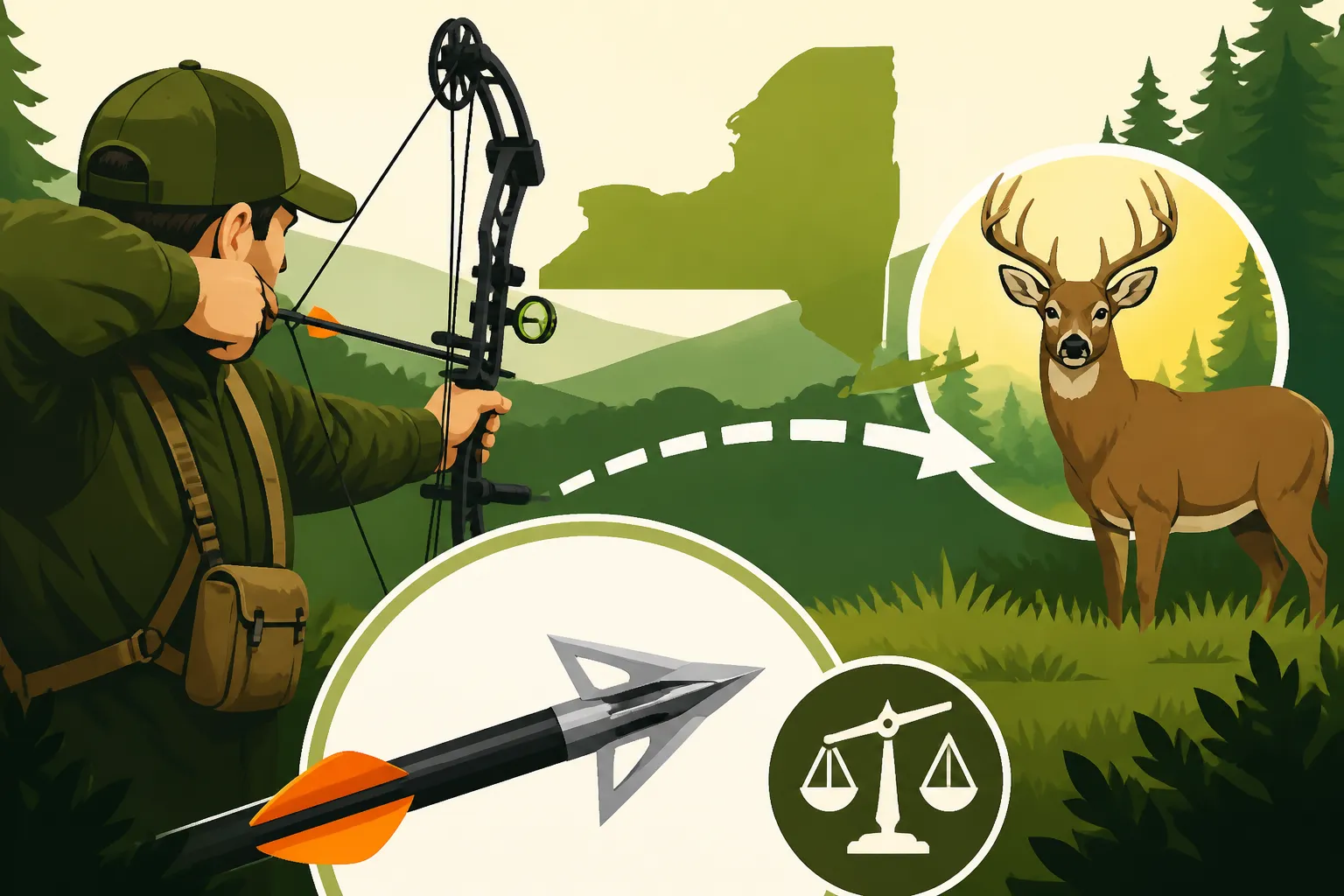
It's a common dilemma for New York bowhunters: you've spent countless hours scouting, hanging stands, and practicing, only to find yourself faced with a whitetail at an incredibly close range – say, 10 or 15 yards. Suddenly, all that talk about flat trajectory and long-range accuracy feels irrelevant, and you're left wondering if your arrow setup is truly optimized for a clean, ethical kill on what should be an easy shot. This guide will dive deep into the world of arrow weight, explaining why it matters even more for those critical short shots, and how to choose the best setup for penetration and performance in New York's diverse hunting environments.
Understanding Arrow Weight Basics for New York Hunting
When you're flinging an arrow from your bow, you're essentially launching a tiny missile, and the weight of that missile is one of the most crucial factors dictating its performance downrange, particularly at close quarters. It’s not just about how fast it flies; it's about what happens when it hits its mark.
Why Arrow Weight Matters, Especially Up Close
At very close distances, the nuances of arrow flight that dictate long-range accuracy – things like minimal drop and wind drift – become less of a concern. Instead, the focus shifts almost entirely to penetration. A heavier arrow carries more momentum. Think of it like a bowling ball versus a tennis ball. The bowling ball, even moving slower, will have far more power to crash through pins because of its mass. In bowhunting, that mass translates into the ability to drive through hide, muscle, and bone, ensuring your broadhead reaches vital organs. This is especially critical in New York's typically thick woods where a deer might be quartering sharply or you might hit a shoulder blade. You need every ounce of "push" you can get to achieve a pass-through, which is vital for a good blood trail and quick recovery.
For those of us hunting the dense cover of the Catskills or the Adirondacks, where shots often present themselves at spitting distance, prioritizing momentum over raw speed is a smart play. You're not likely to be taking 50-yard shots through a maze of trees anyway.
Common Arrow Weight Ranges for Whitetails
Arrow weights are typically measured in grains, and the total arrow weight includes the shaft, fletching, insert, and broadhead. Here’s a general breakdown you'll hear about in the New York hunting community:
- Light Arrows (350-400 grains): These are built for speed. They fly fast and flat, which can be appealing for hunters who want to extend their effective range and minimize pin gap. However, at close range, they sacrifice some penetration power, which can be a real drawback if you hit any heavy bone. For those quick 15-yard shots where a deer might be tucked into a thicket, a lighter arrow might not have the grunt to punch through if you hit less-than-ideal anatomy.
- Medium Arrows (400-475 grains): This is often considered the sweet spot for many whitetail hunters, offering a good balance of speed and momentum. They still fly relatively flat but carry enough mass to drive a broadhead deep. For the typical New York hunter, this range offers versatility for both a 20-yard timber shot and perhaps a 40-yard shot across a field edge, should the opportunity arise.
- Heavy Arrows (475+ grains): These arrows are momentum monsters. They're slower, with a more pronounced trajectory, but when they hit, they hit hard. For hunters specifically focused on maximum penetration at close range, or those using lower draw weights, a heavier arrow can significantly increase your chances of a pass-through on a deer. If you're hunting dense areas and expect close encounters, or if you value reliable penetration above all else, leaning into the heavier end of the spectrum is a solid strategy.
Many serious bowhunters, especially those who find themselves hunting from treestands in tight pockets, gravitate towards the medium to heavy end, knowing that a clean pass-through is paramount. For more on optimizing your bow setup, you might find Bow Draw Weight for New York Whitetails helpful.
Factors Influencing Optimal Arrow Weight for Short Shots
Choosing the right arrow weight isn't just about picking a number; it's about understanding the underlying physics and how various components of your setup work together. For those critical short shots, these interactions become even more pronounced.
Kinetic Energy vs. Momentum at Close Range
You'll often hear about "kinetic energy" and "momentum" when discussing arrow performance. Kinetic energy (KE) is often associated with speed and is the energy an arrow possesses due to its motion. Momentum (P) is a measure of the mass in motion, and it's directly related to how well an arrow will push through resistance.
At close ranges, say inside 25 yards, the speed advantage of lighter arrows doesn't offer a significant benefit to KE, as the arrow hasn't had much time to shed velocity. However, the momentum difference between a light and heavy arrow remains significant. For punching through tough hide, muscle, and especially bone, momentum is king. A heavier arrow will carry more momentum, allowing it to continue driving forward even after encountering resistance. This means less deflection on impact and a higher probability of a complete pass-through, leaving you with two holes and a much better blood trail. In a dense New York woodlot, where tracking can be tough, a good blood trail can mean the difference between recovering your deer and a heartbreaking loss.
Broadhead Choice and its Interaction with Arrow Weight
Your broadhead choice is intricately linked to arrow weight, especially for those close-range impacts.
- Fixed-Blade Broadheads: These broadheads rely on their robust, unmoving design for penetration. They are often favored with heavier arrows because the combined mass and stable design create a truly formidable penetrator. If you’re pushing a heavy arrow with a quality fixed blade, you’re maximizing your chances of breaking through bone or achieving a complete pass-through even on a less-than-perfect close shot. Many hunters swear by them in areas like the Southern Tier where you might encounter larger-bodied deer in thick cover.
- Mechanical Broadheads: Mechanicals (or expandable broadheads) deploy blades on impact, creating a larger cutting diameter. While they can create massive wound channels, some designs require more kinetic energy to properly deploy and penetrate, especially on marginal hits or bone. While modern mechanicals are incredibly reliable, pairing them with a heavier arrow can provide an extra margin of safety, ensuring enough momentum to deploy the blades and still drive deep. If you choose a mechanical, ensure your arrow setup has sufficient momentum. For a deeper dive into broadheads, check out Fixed Versus Mechanical Broadheads.
Consider how your broadhead will perform when combined with your arrow weight at the point of impact. Many archers choose a heavier arrow with a strong fixed-blade broadhead when hunting in dense areas where close, tough shots are the norm.
Target Animal and Shot Presentation
The type of animal you're hunting and the specific shot presentation you're likely to encounter in New York should absolutely inform your arrow weight decision. While we’re focused on whitetails, there's a range of sizes and situations.
A mature New York buck, especially one in the Southern Zone or Finger Lakes region, can be a tough animal, with dense shoulder bones and thick hide. If you anticipate shots at tight quarters, perhaps from a ground blind or a low treestand, you might encounter steep quartering angles or even potential frontal shots as a deer approaches. These are moments where penetration is paramount. A heavier arrow provides a significant advantage here, increasing the force behind your broadhead and its ability to power through.
In contrast, if you're consistently shooting at broadside does in open farmland where the chances of bone impact are lower and trajectory might be a slight concern for longer "short" shots (e.g., 25-30 yards), you might find a medium-weight arrow sufficient. Ultimately, the goal is always maximum penetration for a quick, ethical kill. Tools like GoHunt's ballistic calculator can help you visualize how different arrow weights and broadhead types might perform against various target sizes and shot angles.
Practical Considerations for New York Hunters on Short Shots
Even at close range, your entire bow setup needs to be dialed in. Arrow weight is a huge part of that, but it's not the only factor. Thinking holistically about your gear will lead to more consistent, ethical hunting.
Balancing Speed, Trajectory, and Penetration
For short shots, the need for a super-flat trajectory is largely eliminated. A few inches of drop at 10-20 yards is negligible when your pins are sighted in correctly. The real balancing act, then, becomes between overall arrow speed and penetration. A slightly slower, heavier arrow delivers more momentum and kinetic energy to the target, which, as we've discussed, is paramount for pass-throughs.
However, speed isn't entirely irrelevant. A faster arrow can sometimes mean a shorter window for the deer to "jump the string," though at truly close ranges (under 20 yards), this is less of a concern than at longer distances. The primary benefit of a heavier arrow on short shots is undoubtedly increased penetration. It’s about ensuring that when you release, that arrow has the absolute best chance to blow through the animal, leaving a robust blood trail for recovery. Don't fall into the trap of obsessing over FPS (feet per second) if it means sacrificing adequate momentum. Many seasoned New York hunters, especially those focused on heavy timber, will readily trade a bit of speed for more punch downrange.
Tuning Your Setup for Consistency
Regardless of your chosen arrow weight, a well-tuned bow is non-negotiable for accuracy at any range. A heavy arrow, if not properly spined for your bow's draw weight and length, can fly erratically, negating all its penetration benefits. Proper tuning ensures that your arrow leaves the string cleanly, flies straight, and impacts precisely where you're aiming.
This involves:
- Arrow Spine: Matching the stiffness of your arrow shaft to your bow's draw weight and length. A reputable pro shop can help you with this.
- Paper Tuning or Bare Shaft Tuning: Methods to ensure your arrow is flying perfectly straight, without any fishtailing or porpoising.
- Broadhead Tuning: Making sure your broadheads (especially fixed blades) fly with the same point of impact as your field points. This is absolutely critical.
- Front of Center (FOC): This refers to the balance point of your arrow. A higher FOC (generally 10-15% for hunting) can improve penetration and stability, especially with heavier arrows. Achieving higher FOC often involves using heavier inserts or broadheads.
A properly tuned setup, whether you're using a lighter or heavier arrow, will always be more effective and ethical than a poorly tuned one. After all, the heaviest arrow in the world won't matter if you can't hit your mark. If you're looking for guidance on different aspects of your bow setup, you might find Bow Sights for Timber Shots or Minimum Draw Weight for New York Deer useful.
GoHunt and Ballistics Calculators for Informed Choices
In today's age of advanced technology, you don't have to guess when it comes to arrow performance. Online ballistics calculators and apps are incredibly valuable tools for bowhunters. Brands like GoHunt often offer or integrate these kinds of tools into their platforms, allowing you to input your specific bow setup details (draw weight, arrow weight, arrow speed, FOC, broadhead type) and get estimates for kinetic energy, momentum, and trajectory at various distances.
Using a calculator like this can help you:
- Compare different arrow weights: See the exact KE and momentum differences between a 400-grain arrow and a 500-grain arrow with your specific bow.
- Visualize trajectory: Understand how much drop to expect at, say, 10, 20, and 30 yards, even for a heavier, slower arrow. While minimal for short shots, it's good to confirm.
- Optimize FOC: Experiment with different broadhead and insert weights to see how they impact your FOC and overall performance.
These tools provide empirical data to support your choices, moving beyond anecdotal evidence. It's about making an informed decision for your personal setup and hunting style in New York. While GoHunt is just one example, there are many resources that can help you dial in your arrow performance without needing a full-blown chronometer range.
Recommendations for Arrow Weight in New York's Diverse Terrains
New York State offers such a wide variety of hunting terrain, from dense Adirondack forests to rolling Southern Tier farmlands. Your arrow weight choice can and should be adapted to the specific conditions you anticipate.
Thick Cover and Heavy Timber
When you're still-hunting the dark timber of the Adirondacks or locked into a ground blind in a hemlock thicket in the Catskills, shots are often up close and personal. You're talking about distances of 5 to 20 yards, where a deer might appear suddenly and offer a fleeting, tight-window shot. In these scenarios, maximum penetration is your absolute priority. You're not worried about a 60-yard shot.
For this kind of hunting, a heavier arrow, generally in the 450+ grain range, truly shines. The increased momentum helps your broadhead slice through any incidental brush, and more importantly, power through the dense hide and potentially heavy bone of a mature whitetail. A pass-through is critical for a good blood trail in thick woods. Couple this with a sturdy fixed-blade broadhead, and you've got a setup that inspires confidence when that big buck steps out at spitting distance. If you're exploring deep backcountry, you might also find Treestand Setups in Adirondack Hardwoods helpful for maximizing your chances.
Field Edges and Mixed Woods
Many New York hunters find themselves hunting agricultural fringes in the Southern Tier or mixed hardwood-conifer forests where shots could vary from 15 yards to perhaps 40 yards. Here, you're looking for a good balance. You still want excellent penetration for close encounters, but a bit more speed might be desirable for those slightly longer "short" shots across a small clearing or field edge.
A medium-weight arrow, typically between 400 and 450 grains, often hits this sweet spot. It provides enough momentum for reliable penetration on close shots while maintaining a reasonably flat trajectory for those mid-range opportunities. This setup offers versatility, which is invaluable when hunting diverse terrains like those found across the Finger Lakes region or many State Forests. For strategies on hunting these areas, consider Hunting Southern Tier Farmland Deer.
Ultimately, the best arrow weight for short shots isn't a one-size-fits-all answer. It's a calculated decision based on your bow, your broadhead, the game you're after, and the specific terrain you'll be hunting in New York. Test different weights, tune your setup meticulously, and practice at close ranges to gain confidence in your chosen arrow.
Arrow Weight Comparison Table
Here's a quick reference table to help you visualize the general trade-offs of different arrow weights for your New York bowhunting setup:
| Arrow Weight Category | Typical Grain Range | Primary Benefit for Short Shots | Potential Drawback | Ideal New York Terrain | Recommended Broadhead Pairing |
|---|---|---|---|---|---|
| Light | 350-400 grains | Flatter trajectory (less relevant up close) | Reduced penetration potential | Open country, longer shots (not primary short shot focus) | Mechanical (good deployment needed) |
| Medium | 400-475 grains | Good balance of speed & momentum | Less extreme in either benefit | Mixed woods, field edges, versatile | Fixed or well-designed Mechanical |
| Heavy | 475+ grains | Maximum momentum and penetration | More pronounced trajectory | Thick timber, deep cover, close shots | Fixed blade (maximum punch) |
Remember, this is a guideline. Your specific bow setup, draw weight, and even your personal shooting style will influence what feels and performs best for you. The key is to find what gives you the most confidence for that critical shot when it counts. For overall planning, remember to consult resources like Scouting New York Public Land Before Season to understand the habitat and anticipate shot distances.
Disclaimer
This article is for general informational purposes only and does not constitute professional advice. Laws, prices and regulations vary by location and change over time. Consult a qualified professional for guidance on your specific situation.