Posting a Drive on Southern Tier Ground
Few things are as frustrating as knowing deer are in a thicket, a dense creek bottom, or that gnarly hemlock stand on Southern Tier ground, but just not being able to get a shot on them. You spend hours still-hunting or sitting on stand, and they just melt away. That's where a well-executed deer drive comes in, turning that frustration into success by strategically moving deer toward waiting hunters. But on the varied and often challenging terrain of New York's Southern Tier, "posting a drive" isn't as simple as just scattering a few people around. It requires careful planning, a deep understanding of the land, and teamwork to safely and effectively get those wary whitetails moving. This guide is all about mastering the art of positioning your standers, or "posters," for a successful deer drive in the Southern Tier.
Understanding Southern Tier Deer Movement and Terrain for Drives
The Southern Tier of New York is a mosaic of rolling hills, deep ravines, agricultural fields, dense hardwood forests, and scattered pockets of evergreens. Unlike the vast, uninterrupted timber of the Adirondacks, or the steep, rugged Catskills, the Southern Tier presents its own unique challenges and opportunities for deer drives. Deer here are often patterned to specific types of cover and escape routes, shaped by both the natural landscape and consistent hunting pressure.
Reading the Landscape for Natural Funnels and Escape Routes
When you're planning a drive, the very first thing you need to do is become a student of the landscape. Forget just looking for tracks; you need to see the deer's highway system. Southern Tier deer are masters of using topography to their advantage. They’ll naturally funnel through saddles between ridges, follow the contours of creek bottoms, or skirt the edges of dense conifer stands that offer thermal cover and security. Often, old logging roads, grown-over fence lines, or even subtle changes in vegetation density can act as invisible deer trails, especially under hunting pressure.
Before you even step foot on the property, spend time with a good mapping tool, like the one offered by GoHunt, studying aerial photos and topographic maps. Look for those pinch points where the terrain narrows, where a deep ravine meets a field edge, or where two thick woodlots are connected by a thin strip of cover. These are your prime candidates for poster placement. It’s also crucial to identify potential escape routes—the ways deer will try to get out of your drive. Are there thick swamps they'll dive into? Neighboring properties they'll run to? Understanding these escape options helps you either block them or, better yet, turn them into intercept points. Remember, deer will often run past you, not directly to you, when pushed.
Impact of Hunting Pressure and Time of Day on Deer Behavior
Southern Tier deer are some of the most pressured animals in the state. Hunters flock to the region during New York's Southern Zone Firearm Season, especially during peak rut, making deer incredibly wary. This means deer here are conditioned to avoid direct confrontation and will often sneak out the back door if a drive isn't executed perfectly. They learn quickly, becoming nocturnal or seeking refuge in the nastiest, thickest cover imaginable, often right under your nose.
For deer drives, this wariness dictates strategy. Running and yelling drivers might work on unpressured deer in some areas, but in the Southern Tier, it's more likely to send deer slinking out the sides long before they reach your posters. A slow, deliberate push, with drivers moving quietly and steadily, is usually more effective. As for the time of day, earlier drives can catch deer still on their feet, moving between feeding and bedding areas, or perhaps before they've settled into their deepest daytime bedding cover. However, a midday drive, when most still-hunters are back at camp for lunch, can surprise deer that have been bumped into heavy cover. Knowing the general deer movement patterns, which you can often infer from New York Deer Harvest Records, can help time your drives effectively.
Strategic Placement of Posters: The Key to a Successful Drive
Posting a drive is truly an art form, especially in the undulating and diverse landscape of the Southern Tier. It's not about how many people you have, but where each person is positioned and what their role is. The goal is to anticipate the deer's escape route, not just push them blindly.
Identifying Key Ambush Points for Standers
Your posters are the anchors of the drive; they need to be in spots where a pushed deer is likely to pass by, giving them a shot. In the Southern Tier, these key ambush points often include:
- Saddles and Funnels: As discussed, deer love to use the path of least resistance over ridges. A saddle or a narrow strip of cover connecting two larger blocks of woods is gold. Similarly, a thick hedgerow leading into a woodlot, or Hunting a Funnel Between Two Swamps, can be a perfect spot.
- Field Edges: Deer often hug the edges of fields when pushed from the woods. Posting a hunter slightly into the woods, overlooking the field edge, can be incredibly effective. Consider Setting Up on a Southern Tier Field Edge if you're working a woodlot adjacent to agriculture.
- Creek Crossings and Gully Mouths: If a drive incorporates a creek or ravine, deer will typically cross at the easiest points. Posting a hunter where a deer trail crosses a creek, or at the mouth of a gully where deer will emerge, can pay off.
- Thick Cover Transitions: Deer are reluctant to leave dense cover and cross open spaces. Position posters at the very edge of thickets, clear-cuts, or transition lines where dense pines meet more open hardwoods.
Each poster needs to be still, quiet, and absolutely ready. This isn't a social hour; it's about being an invisible part of the landscape.
Setting Up Safe Shooting Lanes and Communication
Safety is paramount in any deer drive, and this is especially true when you're coordinating multiple hunters across varied terrain. Before anyone moves, the drive leader must clearly define the boundaries of the drive, the direction of the push, and most importantly, the established zones of fire for each poster. You should never shoot at a deer running towards a fellow hunter or beyond a safe backstop. This isn't just common sense; it's critical to preventing accidents. All hunters should be wearing visible New York Blaze Orange Requirements or blaze pink, no exceptions.
Effective communication is another non-negotiable aspect. Cell service can be spotty in many parts of the Southern Tier, so relying solely on phones is risky. Handheld Two-Way Radios on a Deer Drive are invaluable for keeping drivers and posters updated on the progress of the drive, deer sightings, and any safety concerns. Ensure everyone knows the radio channel and uses concise language. Confirming each poster's location before the drive begins is also crucial for situational awareness.
Overcoming Terrain Challenges in the Southern Tier
The Southern Tier isn't always gently rolling hills. You’ll encounter steep ravines, rocky outcrops, dense pockets of multiflora rose and honeysuckle, and sometimes boggy areas. These natural obstacles influence deer movement and, consequently, where you place your posters. A deer pushed from one side of a deep ravine will often follow the ravine to an easier crossing point rather than try to scale a steep bank.
It's tempting to put posters in the "easy" spots, but the most productive places are often those that exploit the deer's natural tendencies to use cover and avoid human presence. Don't be afraid to put a poster in what seems like an unlikely spot if your scouting (and a tool like GoHunt's topo maps) suggests it’s a natural deer path through difficult terrain. Sometimes, placing a poster just inside a thicket, rather than on its edge, allows them to be more concealed and get a closer, more ethical shot on a deer trying to sneak through cover.
Orchestrating the Drive: From Planning to Execution
A deer drive is like a well-choreographed dance, with each participant having a specific role and understanding their movements in relation to the others. It's a team effort, and when done right, it can be incredibly exciting and productive.
Defining Roles: Drivers and Standers
Every successful drive starts with clear roles.
Posters (Standers): These are the hunters positioned at the identified ambush points. Their job is to remain absolutely still, silent, and alert. They should be well-hidden, whether in a natural blind, a portable ground blind, or a treestand, blending into the environment. Their focus is solely on intercepting deer that are pushed their way, ensuring a safe and ethical shot. They should resist the urge to move or make noise, as this can alert deer or, worse, compromise safety.
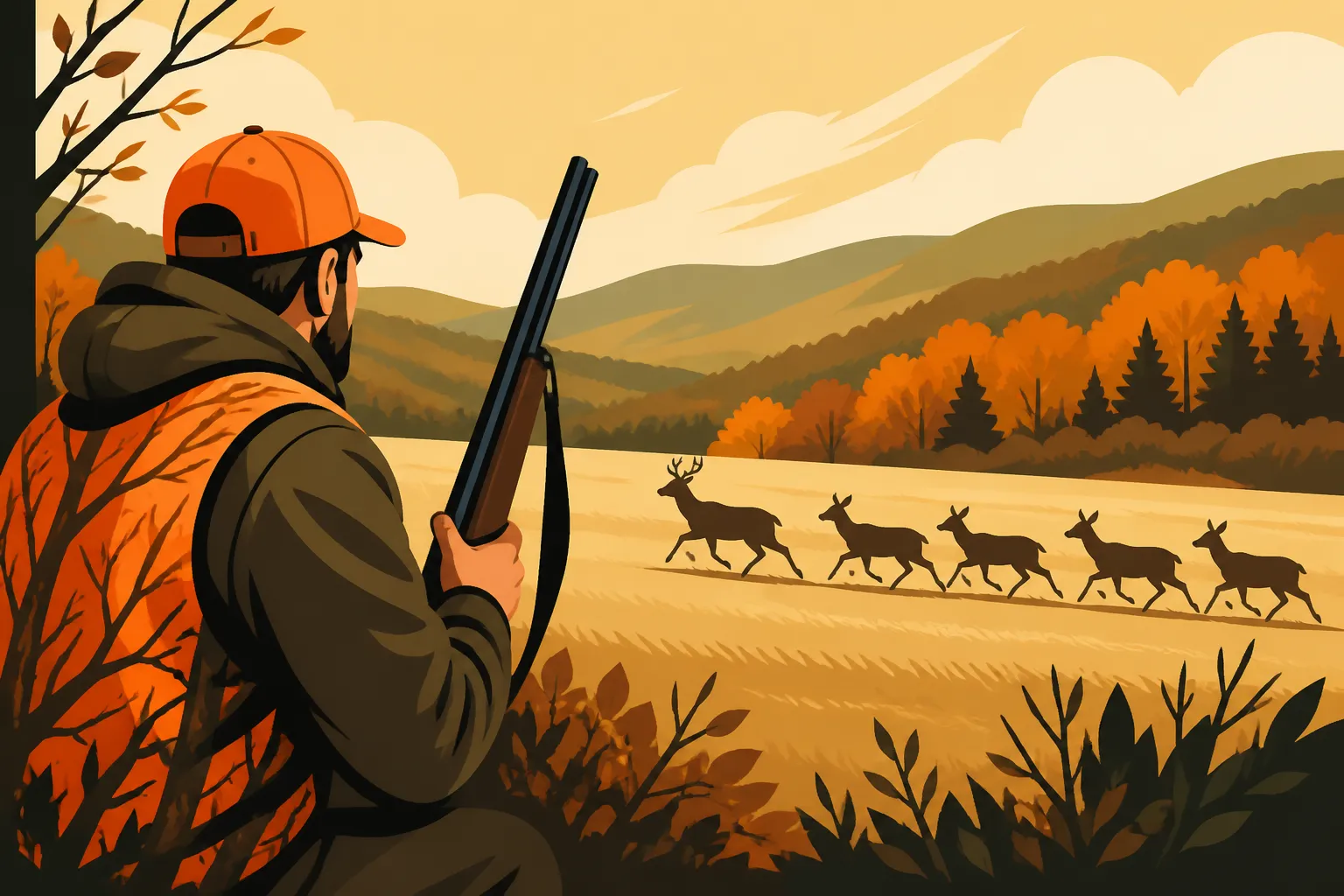
Drivers: These hunters walk through the designated cover, making a deliberate, slow push toward the posters. Their goal isn't to run deer at top speed, but to gently prod them along. In the Southern Tier, a quiet, consistent pace is usually more effective than a noisy charge. The number of drivers and their spacing depends on the size and density of the cover being driven. For smaller Southern Tier woodlots, Deer Drives With Three or Four Hunters can be surprisingly effective. Drivers should stay in communication with each other and the posters, often via two-way radio, to maintain alignment and adjust as needed. They're not just moving deer; they're acting as a living fence, guiding deer towards the desired locations.
Utilizing Wind and Thermals for Your Advantage
Deer have an incredible sense of smell, and they will almost always try to use the wind to detect threats. Ignoring wind direction in a drive is a recipe for deer blowing out the sides of your drive, or worse, scenting your posters from a distance and changing course entirely.
The general rule of thumb is to have your posters positioned downwind of where you expect the deer to come from. This way, any deer approaching will be coming into the wind, making it harder for them to scent the poster. Drivers, on the other hand, should ideally move crosswind or slightly upwind, pushing deer toward the downwind posters. In hilly Southern Tier terrain, thermals also play a huge role. In the mornings, thermals rise, carrying scent uphill. In the evenings, they fall, carrying scent downhill. Understanding Wind and Thermals on a Catskill Ridge (a concept equally applicable to Southern Tier ridges) is crucial. For example, if you're driving a ridge in the morning, deer on the uphill side might scent a driver below them, while a poster on the ridge top might be undetectable to deer coming up. Always account for both wind and thermal direction when setting up your drive.
Post-Drive Strategy: Tracking and Recovery
So, the drive is over, and a shot was taken. What happens next is just as critical as the drive itself. Even a perfectly placed shot can result in a deer running a considerable distance. Immediately mark the exact spot where the deer was standing when shot, and the direction it ran. This visual reference is invaluable.
Resist the urge to rush in. Give the deer some time, especially if the shot wasn't obviously fatal or if the deer didn't drop within sight. A calm, careful approach usually leads to better results. Once you begin tracking, look for blood, hair, bone fragments, and disturbed earth. If snow is on the ground, Tracking a Deer in Fresh New York Snow becomes a bit easier, but even in dry leaves, careful attention to subtle signs is key. If the trail is sparse, or if it starts getting dark, consider calling off the track until morning, unless weather conditions would spoil the meat. For challenging recoveries, especially when Blood Trailing After Dark in New York might be necessary, having a strong headlamp and a plan is essential. Communicate with your group, ensuring everyone knows someone is tracking and where they are headed.
Adapting Your Drive Tactics to Different Southern Tier Scenarios
The Southern Tier isn't homogenous; it features a wide array of cover types, from small, fragmented woodlots to sprawling state forests. A one-size-fits-all approach to deer drives simply won't work. Successful hunters are masters of adaptation.
Driving Small Woodlots and Farm Edges
Many parts of the Southern Tier, especially in counties like Steuben, Chemung, and Broome, are characterized by a mix of agriculture and small, isolated woodlots. These smaller blocks of timber are prime candidates for quick, efficient drives. You might only need a few drivers and one or two posters. The key here is to identify where deer will enter or exit these small cover patches, often along fencerows, creek lines, or where the woodlot meets a corn or soybean field.
When hunting these areas, be mindful of private property. Always ensure you have permission, and use tools like GoHunt's property line overlay feature to stay on the correct side of the fence. Hunting Southern Tier Farmland Deer often involves these types of scenarios, where deer bed in small woodlots during the day and feed in fields at night. A drive can effectively bump them out of their daytime sanctuary. The challenge is often that deer will just skirt the edges, so posters need to be tight to the cover, perhaps even slightly inside, watching for those sneaky exits.
Navigating Larger Public Land Blocks
While much of the Southern Tier is private land, there are also significant blocks of state forest and wildlife management areas, particularly in counties like Allegany, Delaware, and Chenango. Deer Drives on New York Public Land demand even more meticulous planning due to their larger size and the potential for encountering other hunters. Here, your drive might cover a much larger area, requiring more hunters and a more complex setup.
For these larger areas, extensive scouting is paramount. Use Reading Aerial Photos for Southern Tier Deer to identify large clear-cuts, mature timber stands, and remote ravines that deer will gravitate towards. These areas might hold multiple deer and offer more escape options. Drivers need to maintain consistent spacing and communication to ensure deer don't slip through gaps. Posters might need to cover wider areas or be positioned further apart, relying more on long-range shooting skills. Be extra vigilant about safety, as you might not know where other hunting parties are.
Dealing with Wary, Pressured Deer
Southern Tier deer, as we've established, are notoriously savvy. They've seen it all, and they've adapted. This means your drives need to be equally adaptable. If deer are consistently blowing out the sides of your drive, or doubling back through the drivers, it's time to change tactics.
Consider subtle pushes instead of aggressive ones. Instead of yelling and crashing through the woods, drivers might just walk slowly, making minimal noise, essentially acting as a human fence that simply encourages deer to move. This "still-driving" approach can coax deer past posters who are equally still and quiet. Another strategy is to place posters in unexpected locations. Deer become accustomed to hunters being in obvious spots. A poster hidden in a thick, thorny patch that deer would never expect a human to be, but which is a natural deer escape route, can be highly effective. Ultimately, it’s about outsmarting the deer, and in the Southern Tier, that means anticipating their evasiveness and planning for it. Always remember to check property lines on tools like GoHunt before planning a drive near boundaries, especially with wary deer that might run into neighboring parcels.
| Role | Primary Goal | Key Considerations | Southern Tier Application |
|---|---|---|---|
| Poster | Intercept deer pushed by drivers | Safety, quietness, clear shooting lanes, concealment | Guarding saddles, field edges, creek crossings, thick funnels, logging road intersections |
| Driver | Stealthily move deer towards posters | Direction of push, wind, pressure, communication, pace | Pushing thickets, ravines, woodlots, working with terrain, maintaining spacing |
Disclaimer
Hunting is an inherently dangerous activity. Always prioritize safety, understand and follow all New York State Department of Environmental Conservation (DEC) hunting regulations, and ensure you have proper training and licensure. The advice provided here is for informational purposes only and does not replace official safety courses or regulations.