Fishers and Martens in New York
It’s easy to think of New York’s forests as primarily deer and bear country, but deep within the quiet timber, two other incredible furbearers thrive, often out of sight: the fisher and the American marten. These elusive members of the weasel family play vital roles in our wild places, and understanding them helps us appreciate the intricate web of life we’re so fortunate to share. This guide will walk you through the fascinating lives of fishers and martens, exploring their habitats, behaviors, conservation stories, and how they contribute to New York’s rich natural heritage.
Understanding New York's Elusive Forest Dwellers
When you spend time in the deeper woods of New York, especially in the Adirondacks or the Catskills, you might not often see a fisher or a marten. These animals are notoriously shy, incredibly agile, and prefer dense forest cover, making direct sightings rare and special. Yet, their presence is a strong indicator of a healthy, robust ecosystem. They are fierce, intelligent predators, perfectly adapted to life among the trees, and their stories are intertwined with the history of New York’s wilderness itself.
Meet the Fisher: A Fearless Hunter
The fisher, often mistakenly called a "fisher cat" (they are not felines at all!), is a medium-sized member of the weasel family, known for its dark, sleek fur and its incredible ferocity. Imagine a creature that looks like a giant ferret, but with the strength and hunting prowess to take down prey much larger than itself. They are primarily nocturnal and crepuscular, meaning they’re most active at dawn and dusk, making them even harder to observe. Their agility in trees is remarkable, but they do most of their hunting on the forest floor, constantly on the move, sniffing out their next meal.
For hunters and trappers, encountering fisher sign – tracks in the snow, scat, or even an occasional glimpse darting through the underbrush – is always a thrill. They are truly wild animals, embodying the rugged spirit of the New York woods. Their survival depends on their intelligence, speed, and powerful bite, making them formidable predators in their niche. Historically, they were prized for their luxurious fur, which led to significant population declines in the past, but their story in New York is largely one of a successful comeback, thanks to dedicated conservation efforts.
Introducing the American Marten: Adirondack Icon
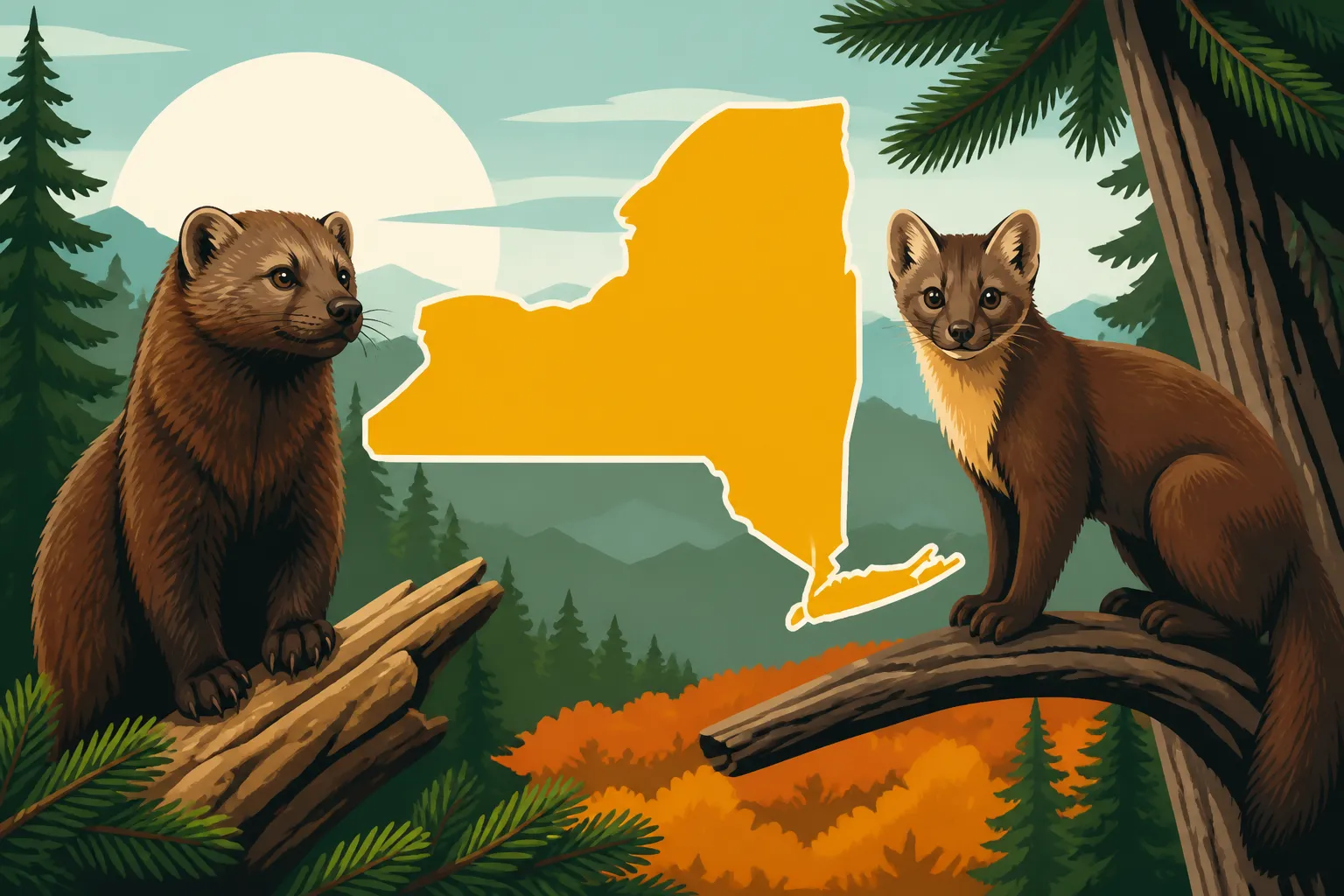
The American marten, sometimes referred to as the pine marten, is a smaller, even more arboreal (tree-dwelling) cousin of the fisher. With its rich, reddish-brown fur, cream-colored chest patch, and bushy tail, the marten is arguably one of the most beautiful furbearers in New York. Unlike the fisher, which has expanded its range, the marten remains largely confined to the vast, wild expanses of the Adirondack Forest Preserve. They are truly an icon of our northern wilderness, a testament to the health and connectivity of those deep woods.
Martens are incredibly active, constantly exploring their high-canopy world, moving through branches with astonishing speed and grace. They hunt squirrels, mice, voles, and birds, expertly navigating the complex world of the forest canopy. Their presence is a reminder of the unique biodiversity found in the Adirondacks, and their smaller stature and more specialized habitat requirements make them particularly sensitive to habitat fragmentation and disturbance. Spotting a marten is a rare treat, a fleeting glimpse of wild beauty that underscores the importance of preserving large, intact forest ecosystems.
Why These Furbearers Matter to Our Ecosystem
Both fishers and martens play crucial roles in maintaining the health and balance of New York’s forest ecosystems. As predators, they help regulate populations of small mammals, contributing to forest health by controlling rodents and other prey species. For instance, fishers are one of the few predators capable of hunting porcupines, helping to keep those populations in check in certain areas, which can benefit forest regeneration. Martens, with their focus on squirrels and other arboreal prey, also contribute to this natural balance, preventing overpopulation that could strain resources or spread disease.
Beyond their direct impact as predators, these species serve as important indicators of environmental health. A thriving population of fishers suggests a robust prey base and sufficient mature forest habitat, while the presence of martens is often seen as a sign of high-quality, old-growth or mature coniferous and mixed forests. Their sensitivity to habitat changes makes them valuable barometers for the overall well-being of our woodlands. Protecting these furbearers means protecting the intricate natural systems that make New York’s wilderness so special.
The Resurgent Fisher: A Conservation Success Story
The story of the fisher in New York is a truly inspiring one, a testament to what dedicated conservation and reintroduction efforts can achieve. At one point, fishers were nearly extirpated from much of their historical range in the state due to unregulated trapping and habitat loss. However, through careful management and intentional restoration projects, these tenacious animals have made a remarkable comeback, expanding their presence far beyond their traditional Adirondack stronghold.
Historical Decline and Delisting
For centuries, fisher fur was highly sought after, leading to intense trapping pressure, particularly during the era of unrestricted harvest. Coupled with widespread deforestation in the 19th and early 20th centuries, which removed much of their preferred dense forest habitat, fisher populations plummeted throughout New York. By the mid-20th century, their numbers were severely depleted, primarily confined to the most remote corners of the Adirondacks. It was a bleak picture for these unique furbearers, highlighting the impact human activities can have on even the most resilient species.
Recognizing their ecological importance and precarious status, New York implemented strict protections and initiated reintroduction programs. Fishers were trapped in healthy populations in other states and released into suitable habitat in New York’s Catskill Forest Preserve and other areas. These efforts, combined with forest regrowth and improved trapping regulations, allowed populations to recover and expand. Today, fishers are common throughout much of the state, a direct result of these long-term commitments to wildlife management. The success story of the fisher is a shining example for other struggling species.
Fisher Habitat and Range Expansion
Fishers are remarkably adaptable predators, comfortable in a variety of forest types, though they show a preference for dense, mature coniferous or mixed forests with plenty of overhead cover. They utilize hollow logs, rock crevices, and abandoned burrows for denning and resting, making areas with a mix of downed timber and dense understory particularly attractive. Their ability to thrive in a broader range of forest conditions, compared to their marten cousins, has been a key factor in their impressive range expansion across New York.
Their range now encompasses not only the Adirondacks and Catskills but also much of the Southern Tier, parts of the Finger Lakes region, and even into some more agricultural areas where good woodlots persist. This expansion is evident when you look at the increasing number of sightings and incidental captures in areas where they were historically absent. As they move into new territories, they play a vital role in balancing those local ecosystems, taking advantage of abundant prey like squirrels, mice, and even domestic poultry if opportunity arises. This wide distribution means that anglers and hunters throughout the state might now encounter signs of these animals, from Hunting the Finger Lakes Region Deer to the thickets of the Catskills.
Hunting and Trapping Fishers in New York
With their recovered populations, fishers are now managed as a valuable furbearer in New York. This management typically involves regulated hunting and trapping seasons, carefully designed to ensure sustainable populations while providing opportunities for sportsmen. These seasons are set with conservation in mind, balancing harvest rates with population growth and distribution. Trapping is the primary method for taking fishers, given their elusive nature and the density of the habitats they prefer.
For those interested in pursuing fishers, it's crucial to understand and adhere to all current regulations regarding season dates, bag limits, and legal trapping methods. Checking the annual New York hunting and trapping guides is essential. Proper trap selection and placement are paramount to ensure ethical and effective take. Engaging with resources that provide current, up-to-date information for hunters and trappers, such as online platforms for wildlife research, can be helpful for understanding species distribution and management areas. If you're looking into Trapping New York Furbearers, fishers are certainly a species that requires specific knowledge and skills.
The American Marten: A Wilderness Indicator
In stark contrast to the fisher's widespread comeback, the American marten remains a more specialized and sensitive species in New York, its fate intricately tied to the health of our wildest, most intact forests. While protected for many years, careful management now allows for limited trapping in its core range, emphasizing its status as a true wilderness furbearer.
Marten Distribution and Fragile Niche
The American marten in New York is primarily found within the vast, continuous blocks of mature forest that characterize the Adirondack Park. They show a strong preference for dense, old-growth coniferous or mixed forests with a complex canopy, abundant deadfall, and deep snow in winter. This specific habitat requirement makes them particularly vulnerable to timber harvesting practices that alter forest structure, reducing the continuous canopy they depend on for hunting and escaping predators. Their distribution is much more restricted than that of the fisher, acting as a natural barometer for the ecological integrity of the Adirondacks.
They are less adaptable to fragmented landscapes or human disturbance, which explains their confinement to the wildest parts of the state. This specialization means that any threats to large, undisturbed forest tracts, such as large-scale development or certain types of logging, pose a direct risk to marten populations. Their presence is a powerful reminder of the unique ecological value of The Adirondack Forest Preserve, making them a true flagship species for wilderness conservation in New York.
Challenges to Marten Recovery
While fishers have expanded, martens still face significant challenges, even within their Adirondack stronghold. Habitat fragmentation, though less severe than in other parts of the state, remains a concern, particularly on the edges of the park or in areas with increased human activity. The lack of extensive, old-growth forest that provides continuous canopy cover and complex denning structures is also a limiting factor. Martens thrive in environments that have been allowed to develop naturally over long periods, something that is becoming rarer even in protected areas.
Another subtle challenge comes from competition with the larger, more generalized fisher. While they occupy slightly different niches (martens are more arboreal), there can be some overlap, and fishers are known to prey on martens. This natural dynamic, while not typically a primary driver of decline, is another factor in the complex web of interactions these animals face. Ensuring that the Adirondacks continue to provide the specific, high-quality habitat martens need is paramount for their long-term security in New York.
Marten Management and Trapping Regulations
Due to their more restricted range and greater habitat sensitivity, martens are managed with an even higher degree of caution than fishers. For many years, martens were a fully protected species in New York, allowing their populations to recover within the Adirondacks. More recently, with evidence of stable or increasing populations in core areas, limited trapping seasons have been re-established in specific Wildlife Management Units (WMUs) within the Adirondack region. These seasons are typically very short and have strict bag limits, reflecting the ongoing commitment to sustainable management.
Anyone considering trapping martens must be exceptionally well-versed in the specific regulations, which can vary year to year and by location. This includes strict reporting requirements for harvested animals, often involving submitting specific biological samples like teeth for age and sex determination, which are vital for ongoing research and population monitoring. Resources like the GoHunt platform, which provides species profiles and regulation summaries for various game animals, can be useful for staying informed on the precise legalities surrounding New York Trapping Seasons and Tagging for specialized furbearers like martens.
Distinguishing Between Fishers and Martens
While both fishers and martens belong to the same family (Mustelidae) and share a general weasel-like appearance, they are distinct species with clear differences in size, appearance, behavior, and preferred habitat. Understanding these distinctions is key to appreciating their individual roles in the ecosystem and for proper identification in the field.
Physical Characteristics: Size, Color, and Tail
The most immediate difference between a fisher and a marten is size. Fishers are significantly larger, typically weighing between 5 to 12 pounds, with males being notably larger than females. They can measure up to 3 feet in length, including their long, bushy tail. Their fur is generally dark brown to black, often with a grizzled appearance on the head and shoulders due to lighter-tipped hairs. Their tail is thick and tapers to a point. Martens, on the other hand, are much smaller and more slender, usually weighing only 1.5 to 3 pounds and measuring up to 2 feet long, including their tail. Their fur is a rich, golden-brown or reddish-brown, often with a distinct cream or orange-colored bib on their chest and throat. Their tail is also bushy but appears more proportionate to their smaller body.
Consider the contrast like comparing a domestic house cat (marten) to a small, muscular dog (fisher). Both are carnivores, but their build and specific adaptations reflect different lifestyles. The fisher’s robust build allows it to tackle larger prey on the ground, while the marten’s lighter, more agile body is perfectly suited for navigating high in the trees. These physical traits are direct reflections of their evolutionary paths and ecological niches, making them unique even within their family.
Behavioral Traits and Preferred Prey
Their physical differences directly influence their behavioral traits and preferred prey. Fishers are highly active predators, primarily hunting on the ground, though they are excellent climbers. They are known for their broad diet, which includes small mammals like mice, voles, squirrels, and rabbits, as well as birds, carrion, and, famously, porcupines. Their aggressive nature and powerful jaws make them formidable hunters capable of subduing a wide range of prey. They cover large territories, constantly on the move, reflecting their generalist hunting strategy.
Martens, conversely, are much more arboreal. While they will hunt on the ground, a significant portion of their hunting occurs in the trees. They are agile climbers and jumpers, perfectly adapted to pursuing red squirrels and other tree-dwelling prey through the canopy. Their diet is more specialized, consisting mainly of squirrels, voles, mice, and berries. They are known for their playful, inquisitive nature, often exploring crevices and hollows in their endless search for food. Understanding these behavioral nuances helps hunters and trappers when considering Hunting Squirrels in New York Hardwoods and what other creatures might be nearby.
Tracking and Identifying Sign in the Woods
For those spending time in New York's forests, learning to identify the tracks and sign of these furbearers can be incredibly rewarding. Fisher tracks are typically larger than marten tracks, showing five toes and often a heel pad impression, creating a distinctive pattern in snow or mud. Their stride is longer, and they often use a bounding gait. Scat can also be an indicator; fisher scat is usually twisted, elongated, and contains hair and bone fragments from their varied diet. You might also find signs of their presence where they’ve cached prey or investigated dens.
Marten tracks are smaller and more delicate, also showing five toes, but often with less distinct heel pads. In deep snow, their lightweight bodies mean they don't sink as much, leaving lighter impressions. Marten scat is also elongated but often smaller and can contain more squirrel fur or berry seeds, depending on the season. If you're out Finding Sign in Big Adirondack Timber, especially in areas with dense spruce and fir, observing these subtle differences in tracks and scat can tell you a lot about which furbearer is present. Additionally, look for claw marks on trees or disturbed snow around tree wells where they might have been hunting squirrels.
| Feature | Fisher | American Marten |
|---|---|---|
| Average Weight | 5-12 lbs (males larger) | 1.5-3 lbs |
| Total Length | Up to 3 feet (including tail) | Up to 2 feet (including tail) |
| Fur Color | Dark brown to black, grizzled head | Rich golden/reddish-brown, cream/orange bib |
| Tail | Thick, bushy, tapers to point | Bushy, proportionate to body |
| Primary Habitat | Dense coniferous/mixed forests, adaptable | Mature coniferous/mixed forests, old-growth |
| Hunting Style | Primarily terrestrial, excellent climber | Primarily arboreal, highly agile in trees |
| Primary Prey | Small mammals, porcupines, carrion | Squirrels, voles, mice, birds, berries |
| Current NY Range | Widespread (Adirondacks, Catskills, Southern Tier, etc.) | Primarily Adirondack Park |
| Legal Status | Regulated trapping/hunting seasons | Limited, highly regulated trapping (Adirondacks) |
Life in the Forest: Ecology and Role
Fishers and martens are not just beautiful creatures; they are integral components of the forest ecosystem. Their lives revolve around hunting, denning, and raising their young, all while navigating the challenges of their wild environment. Understanding their ecology helps us appreciate the intricate balance of nature and our role in preserving it.
Diet and Predation Patterns
The dietary habits of fishers and martens reflect their respective sizes and preferred hunting grounds. Fishers, as larger, more robust predators, have a broader diet. They are opportunistic and will consume almost anything they can catch, including snowshoe hares, cottontail rabbits, mice, voles, shrews, and birds. They are also known to eat berries and nuts when available, especially in warmer months. Their most famous prey, the porcupine, is a testament to their skill and tenacity. Fishers attack porcupines on the head, avoiding the sharp quills, eventually incapacitating them. This unique predation helps keep porcupine populations in check, which can be beneficial to forest health by reducing tree damage.
Martens, being smaller and more agile, focus their predatory efforts on smaller, often arboreal prey. Red squirrels are a staple of their diet, which they pursue through the tree canopy with incredible speed. They also consume deer mice, voles, shrews, and, opportunistically, birds and their eggs. During berry seasons, martens will readily switch to fruits, which can form a significant part of their diet. Their specialized hunting techniques and dietary preferences help manage the populations of these smaller forest inhabitants, preventing any single species from becoming overly abundant and ensuring a diverse and healthy prey base.
Reproductive Habits and Den Sites
Both fishers and martens exhibit fascinating reproductive strategies. Fishers typically breed in late winter or early spring, but they have a unique adaptation called "delayed implantation." This means the fertilized eggs do not immediately implant in the uterus; instead, they remain dormant for several months. Actual embryonic development begins much later, with kits born in early spring the following year, roughly 11-12 months after breeding. Litters usually consist of 1 to 5 kits, which are born blind and helpless in a den site, often a hollow log, rock crevice, or tree cavity. The female raises the young alone, teaching them hunting skills before they disperse in late summer or fall.
Martens also exhibit delayed implantation, though their gestation period is shorter, with young typically born in early spring after about 8-9 months. Litters are usually 1 to 5 kits, born in secure den sites, often in hollow trees, under root masses, or in rock piles. The mother marten is a dedicated parent, raising her young until they are old enough to hunt independently, typically by late summer. The reliance of both species on secure, natural den sites underscores the importance of maintaining mature forest stands with plenty of snags, downed timber, and natural cavities, providing the critical shelter needed for successful reproduction.
Interactions with Other Wildlife
Fishers and martens exist within a complex food web, interacting with a wide array of other wildlife. As mesopredators (mid-level predators), they are both preyed upon by larger carnivores such as bobcats, coyotes, and New York's Black Bear Population, especially when young. Their main competitors for food resources include other small to medium-sized predators like red foxes, weasels, and even owls and hawks. These interactions create a dynamic balance, where populations fluctuate based on prey availability and predator pressure.
Fishers, in particular, are known for their bold interactions. They can be quite territorial, and their aggressive nature allows them to hold their own against competitors. Martens, while smaller, are equally fierce in defending their territory and food sources. Understanding these interspecies dynamics is crucial for wildlife managers, as changes in one population can have ripple effects throughout the ecosystem. For example, a decline in prey species due to habitat loss could impact the survival rates of both fishers and martens, affecting the entire food chain in that area.
Preserving New York's Furbearer Heritage
The continued presence of fishers and martens in New York’s forests is a testament to ongoing conservation efforts and responsible stewardship. Their future, however, depends on our continued commitment to robust research, strategic habitat management, and ethical hunting and trapping practices. These efforts ensure that future generations can also appreciate these incredible furbearers.
Research and Monitoring Efforts
Effective conservation begins with sound science. The New York Department of Environmental Conservation (DEC), along with university researchers and conservation organizations, continuously monitors fisher and marten populations across the state. This involves various techniques, including track surveys, remote cameras, live-trapping and tagging, and genetic analysis of hair and tissue samples. Such research provides critical data on population size, distribution, reproductive success, health, and movements of these animals. For instance, studying New York Wildlife Disease Monitoring can help identify threats to furbearer health.
This ongoing data collection is vital for making informed management decisions, such as setting appropriate trapping seasons and bag limits, identifying critical habitats that need protection, and assessing the impact of environmental changes. Citizens can also contribute by reporting sightings of these animals, especially in areas where they are less common, through official channels or platforms like GoHunt that often aggregate user-reported wildlife data. Every piece of information helps paint a clearer picture of their status and needs.
Habitat Management for Fisher and Marten
Habitat is the cornerstone of wildlife conservation, and for fishers and martens, the focus is on maintaining and enhancing forest ecosystems. For fishers, this means preserving large blocks of mixed and coniferous forests, ensuring connectivity between woodlots, and allowing for natural processes like the creation of downed timber and snags that provide denning and resting sites. While adaptable, large, unfragmented forests are always preferable.
For martens, the focus is even more specific: the preservation of mature and old-growth coniferous and mixed forests, particularly in the Adirondacks. This includes practices that promote structural complexity, such as maintaining a diverse age class of trees, encouraging dense understories, and protecting areas with deep snow accumulation, which martens utilize for subnivean (under-snow) hunting. Land managers in New York Wildlife Management Areas often employ these strategies, recognizing the importance of diverse habitat for a wide range of species. Conservation efforts often involve careful forest management planning on both public lands and in partnership with private landowners to ensure these vital habitats persist.
Responsible Trapping and Hunting Practices
For generations, regulated hunting and trapping have been integral parts of New York’s wildlife management strategy, and fishers and martens are no exception. These activities, when conducted responsibly and ethically, can contribute to conservation by providing valuable data, supporting local economies, and fostering a connection to the natural world. Maintaining healthy populations through sustainable harvest is the ultimate goal.
Hunters and trappers play a critical role in the management process. This includes strictly adhering to all state regulations, obtaining the necessary licenses and permits, and ensuring humane and ethical practices. Reporting harvests accurately provides essential data for population assessments. Furthermore, ethical sportsmen are often the first to notice changes in wildlife populations or habitat conditions, serving as valuable eyes and ears in the field. Engaging with educational resources and experienced mentors is crucial for anyone interested in Predator and Furbearer Hunting in New York, ensuring that traditional skills are passed down with a strong emphasis on responsible stewardship.
Disclaimer
This article is for general informational purposes only and does not constitute professional advice. Laws, prices and regulations vary by location and change over time. Consult a qualified professional for guidance on your specific situation.