Hunting After a Poor Acorn Year
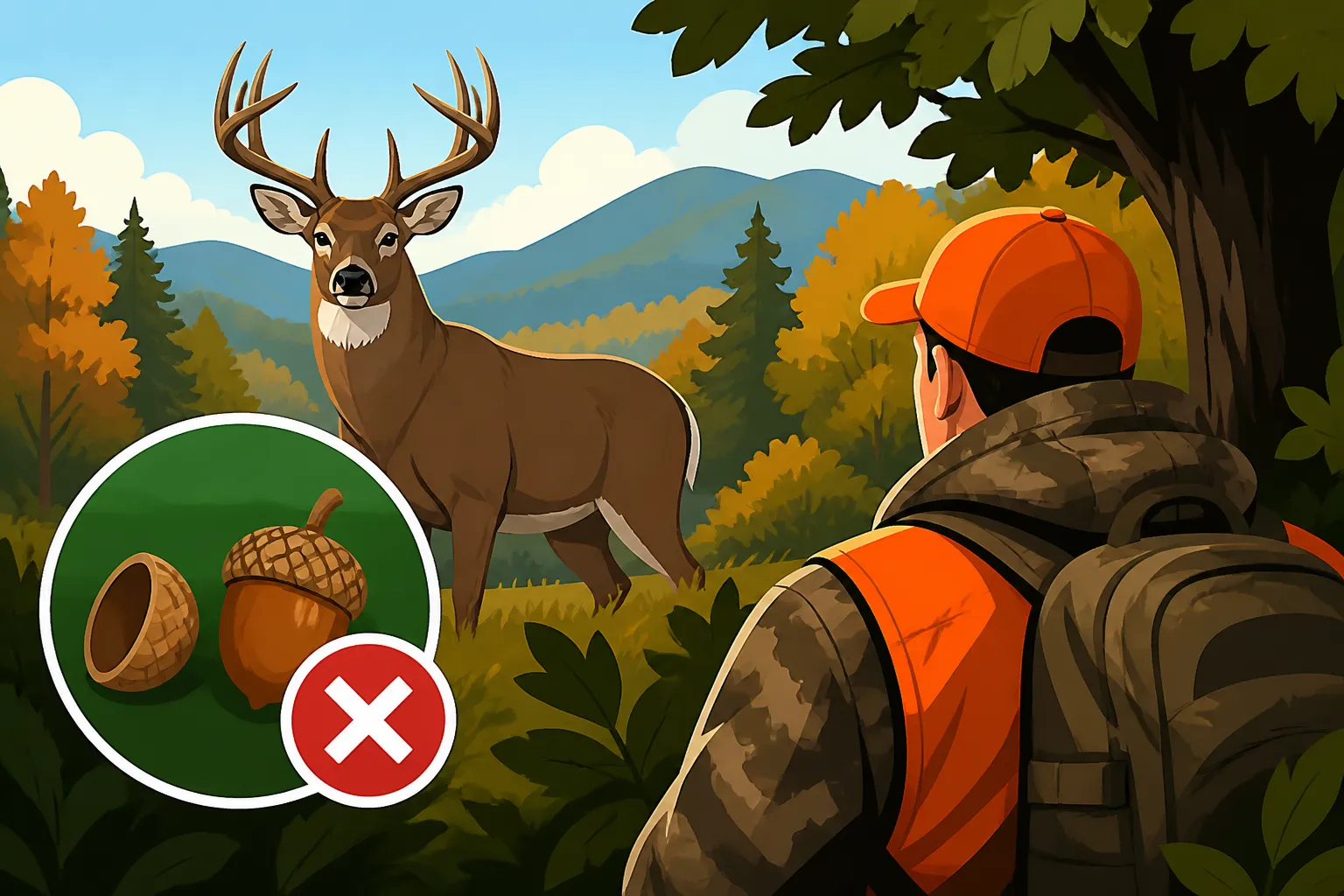
It’s a scenario that can send shivers down any New York deer hunter’s spine: you’ve been scouting your favorite oak flats all summer, eagerly anticipating opening day, only to find the ground barren. No piles of fresh acorns, no tell-tale droppings, and the deer sign you’d come to expect has vanished. A poor acorn year can feel like the bottom has dropped out of your hunting season, leaving you frustrated and wondering where all the deer have gone. This guide is here to help you navigate those challenging years, understand why deer patterns change so dramatically, and adapt your strategies to find success even when the woods aren't raining acorns.
The Nutritional Void: Why Acorns Dictate Deer Movement
When the acorns aren't falling, it's not just a minor inconvenience; it's a massive shift in the deer's world. Acorns are much more than just a snack; they're a cornerstone of a whitetail's diet in many parts of New York, providing critical energy and nutrients during the pre-rut and early firearm seasons.
Acorns as a Primary Energy Source
Think of acorns as nature's power bars for deer. These little nuts are incredibly energy-dense, packed with carbohydrates and fats that deer need to put on weight for the upcoming breeding season and to store reserves for the harsh New York winter. They're also highly palatable, meaning deer absolutely love them. When a good acorn crop is present, deer will often prioritize these food sources above almost anything else, sometimes traveling considerable distances to get to a reliable oak stand.
In areas of the Southern Tier or across the Catskills where oak forests are prevalent, a heavy acorn crop can concentrate deer in predictable patterns. Hunters learn these patterns, focusing their efforts around oak ridges and flats, knowing that deer will be there. The abundance means less effort expended for high caloric intake, which is exactly what a wild animal needs. When that abundant, easy-to-access food source disappears, it creates a significant void in their diet and forces them to change their entire daily routine. It's not just about missing a meal; it's about missing their most important pre-winter provision.
Cascading Effects on Deer Behavior
The absence of acorns sends a ripple effect through the deer herd’s behavior. First and foremost, their travel patterns change. Instead of gravitating towards those familiar oak stands, deer become more nomadic, constantly searching for alternative food. This can make them feel "scattered" and harder to pattern. A robust acorn crop often serves as a central hub, drawing deer from surrounding bedding areas. Without it, those hubs cease to exist, and deer might spread out into smaller groups or travel longer, less predictable routes in search of sustenance.
Bedding areas might also shift. If a deer's primary bedding was strategically located near a favored oak flat, they'll now choose bedding cover that is closer to whatever new food source they've discovered. This might mean denser thickets closer to agricultural fields, or less disturbed areas near remaining soft mast. Furthermore, the increased search for food can sometimes make deer more vulnerable, as they spend more time moving and less time bedded down. However, it also means they might be more cautious and less willing to expose themselves in open areas without a strong incentive. Hunters who rely on observing deer trails leading to specific oak trees will find themselves scratching their heads when those trails go cold.
Finding Alternative Food Sources When Acorns Fail
When acorns are a bust, the key to success lies in understanding the deer's new grocery list. They aren't going to starve; they're simply going to pivot to whatever other forage is available and nutritionally beneficial. This requires hunters to pivot their scouting and focus on different types of mast and browse.
The Appeal of Other Hard Mast
While oaks are often the star of the show, New York forests offer a variety of other hard mast that deer will readily turn to in a poor acorn year. Beechnuts, for example, are another high-energy food source. Though they don't always produce as consistently or abundantly as acorns, when beech trees do drop, deer will key in on them hard. Look for smooth, gray-barked beech trees, especially on higher slopes in the Adirondacks or Catskills, and inspect the ground for the small, triangular nuts, often encased in a prickly burr. A good pair of binoculars, like those from a reputable brand you might research on GoHunt, can help you scan for productive beech trees from a distance.
Hickory nuts are another option, though deer sometimes find them harder to crack. However, in a pinch, they'll work at them. Maples, especially sugar maples, can provide samaras (their winged seeds) which deer will browse, particularly in the early fall. Even less common sources like black cherry pits, when abundant, can attract some attention. The lesson here is to expand your mast search beyond just oaks. Identifying other mast-producing trees and checking their production early in the season can give you a significant advantage. This requires a broader understanding of tree identification and a willingness to explore new areas.
Tapping into Soft Mast and Browse Opportunities
Beyond hard mast, deer will heavily rely on soft mast and various browse opportunities. Soft mast includes fruits and berries, which are generally available earlier in the season but can persist longer depending on the species and weather. Wild apple trees, often remnants of old homesteads or naturally occurring, are absolute magnets for deer. Finding an isolated apple tree on public land can be like hitting the jackpot. Wild grapes, often found draping over other trees along field edges or stream bottoms, are another favored food source. Deer will also seek out dogwood berries and honeysuckle, both of which can provide valuable nutrients.
When it comes to browse, deer will increase their intake of tender shoots, leaves, and twigs from a variety of plants. This could include maple and oak saplings, sumac, aspen, and various forbs. Areas that have been recently logged or have experienced some kind of disturbance that promotes new, succulent growth can become prime feeding grounds. Clear-cuts or areas where forest management has occurred, often found in New York State Forest Hunting parcels, can provide a buffet of fresh browse. These areas might not look "traditional" but can be incredibly productive when other food sources are scarce. Remember, if you're Scouting New York Public Land Before Season, you should be looking for these diverse food options, not just oaks.
Exploiting Agricultural Fields
In New York's farm country, agricultural fields become absolute lifelines for deer during a poor acorn year. Standing cornfields are obvious deer magnets, providing both food and cover. Deer will bed in them and feed heavily on the corn. Soybean fields, once the leaves yellow and drop, become another prime target as deer will pick the remaining beans from the stalks. Winter wheat and other brassicas planted as cover crops or for cattle feed can also draw deer in, especially as the season progresses and other natural foods dwindle.
Hunting these agricultural areas often means shifting your tactics. Instead of waiting for deer to come to an oak flat, you're now focusing on how deer enter and exit a field, or where they might be staging in nearby woodlots before dark. This can involve scouting field edges for trails, finding funnels leading to bedding cover, or identifying transition areas. In many rural parts of New York, especially the Southern Tier, agriculture plays a huge role in deer movement, and a poor mast year only amplifies its importance. If you're wondering about deer in these areas, remember that a strong New York Deer Population Estimate will always factor in these human-influenced food sources. Always respect private property and obtain permission before hunting on private land, but also look for opportunities on public land adjacent to agriculture, or within designated cooperative hunting areas.
| Food Source Type | Examples & What to Look For | Deer Preference (No Acorns) | Typical Availability | Scouting Tips |
|---|---|---|---|---|
| Hard Mast | Beechnuts, Hickory nuts | High | Early Fall – Mid Fall | Smooth gray bark (beech), ridged bark (hickory), triangular nuts or tough shells on ground. |
| Soft Mast | Wild Apples, Grapes, Dogwood | High | Late Summer – Mid Fall | Old orchards, field edges, stream bottoms, thickets. Look for fruit on the ground. |
| Browse | Maple/Oak Saplings, Honeysuckle, Sumac, Aspen Shoots | Moderate – High | Year-round | Recently logged areas, young clear-cuts, thickets with new growth. |
| Agriculture | Corn, Soybeans, Winter Wheat | Very High | Fall – Winter | Crop fields, adjacent woodlots, deer trails leading into fields. |
Strategic Adjustments for a Challenging Season
When the familiar acorn patterns are gone, your hunting strategy needs to evolve. It's no longer about setting up on a known food source; it's about being more flexible, responsive, and relying heavily on intense scouting.
Prioritizing Intelligent Scouting and Adaptability
The single most important adjustment you can make in a poor acorn year is to double down on scouting. Forget your preconceptions about where deer "should" be. Instead, go into the woods with an open mind, actively looking for fresh sign around alternative food sources. This means walking more, covering different terrain types, and spending time observing. You're looking for fresh tracks, droppings, rubs, and scrapes that indicate where deer are currently feeding and moving.
Utilize tools like the GoHunt mapping platform to identify potential areas. Look for stands of beech trees, old apple orchards on abandoned farmsteads, dense honeysuckle thickets, or even areas that were logged a few years ago that are now growing new browse. The platform can help you identify these features and then plan your boots-on-the-ground scouting trips more efficiently. What you thought was a prime spot for Hunting the Rut in the Southern Zone based on historical acorn drops might be a ghost town, so you need to be willing to shift. Don't be afraid to pull your stand and move to a completely new area if the sign isn't there. Adaptability is your best friend when Mother Nature throws a curveball.
Hunting Transition Zones and Bedding Areas
Since feeding areas might be more dispersed and less predictable, focusing on transition zones and bedding areas becomes even more critical. Deer still need to feel safe, and they still need to travel between their bedding and feeding sites. These travel corridors, funnels, and staging areas become the choke points where you're most likely to encounter a deer.
Look for natural pinch points like saddles between ridges, narrow strips of timber connecting larger woodlots, fence lines, or creek bottoms. These are areas deer will naturally use to move from one place to another, regardless of the specific food source. Focus on hunting these travel routes, especially during the morning and late afternoon hours when deer are most likely to be on the move. Also, pay close attention to dense thermal cover that provides security bedding. Thick pines, impenetrable multiflora rose thickets, or steep ravines offer deer a sense of safety. If you can locate these bedding areas, set up on the downwind side, along a subtle trail leading out, anticipating deer movement as they leave to feed. Remember that deer drives are an option too, especially on Deer Drives on New York Public Land, but even for those, knowing where deer are likely to be bedded is key.
Timing Your Hunts to Maximize Success
In a typical acorn year, deer might feed throughout the day in a productive oak flat. In a poor year, however, their feeding patterns can become more focused around dawn and dusk, or during periods of low pressure. This means your timing becomes paramount. Get to your stand early, well before first light, to catch deer returning from feeding overnight. Stay late, until the very last legal shooting light, to intercept deer heading out for their evening meal.
Mid-day lulls might be even more pronounced, but don't rule out hunting all day, especially during the peak of the rut or on cold, cloudy days. A hungry deer might move more often, especially if pressured. Consider how different food sources are utilized throughout the day. For example, deer might hit a secluded apple tree right at dawn, then move to browse in a clear-cut during midday, and finally venture to an agricultural field at dusk. Understanding this sequence, and using your scouting to inform it, can help you decide when and where to hunt. This is especially true when considering Late-Season Food Sources for New York Whitetails when remaining agricultural fields or specific types of browse are all that's left.
Leveraging Technology and Tools for Success
In a year where deer patterns are disrupted, technology isn't just a convenience; it's a powerful ally. Modern tools can help you quickly gather information, adapt your strategy, and put you in the best possible position to intercept a New York whitetail.
Harnessing Mapping Applications and Aerial Imagery
Gone are the days of relying solely on paper topo maps. Today's mapping applications, like GoHunt, are indispensable for hunting after a poor acorn year. These apps provide high-resolution aerial imagery that allows you to identify potential food sources, bedding areas, and travel corridors from the comfort of your home. You can zoom in and spot those isolated apple trees, dense evergreen thickets, or the boundaries of agricultural fields. You can also identify terrain features like saddles, ridges, and creek bottoms that serve as natural funnels.
Layers within these apps can highlight property lines, public land boundaries, and even historical satellite imagery that might show past logging activity or changes in vegetation. This is invaluable for Reading Aerial Photos for Southern Tier Deer to understand the landscape. Before you even set foot in the woods, you can mark potential hot spots, plan your scouting routes, and identify entry and exit strategies that minimize disturbance. Some apps even allow you to mark deer sign like rubs and scrapes, building a digital history of deer activity over time. This makes adapting to new food sources much quicker than trying to navigate with outdated maps or by trial and error.
The Indispensable Role of Trail Cameras
Trail cameras are always a valuable scouting tool, but their importance skyrockets during a poor acorn year. When deer patterns are unpredictable, cameras allow you to monitor multiple locations simultaneously without physically being there and leaving human scent. Set them up on suspected alternative food sources, transition zones, or along the edges of bedding cover. They will tell you what deer are using, when they are using it, and if mature bucks are in the area.
Regularly check your cameras (but minimize disturbance!). Look for consistent patterns: Are deer hitting a particular honeysuckle patch every evening? Is a new rub line appearing near a specific clear-cut? The data from your cameras will be your most reliable source of real-time information, helping you confirm your hunches and narrow down your hunting locations. This is particularly crucial for identifying new "hot spots" that may have emerged due to the lack of acorns. They can help you understand Where Adirondack Bucks Bed even if their traditional food sources are gone, allowing you to adapt your approach to their current needs.
Disclaimer
Hunting is an inherently dangerous activity. Always prioritize safety, follow all New York State Department of Environmental Conservation (DEC) regulations, and ensure you have the proper licenses and permits before heading into the field. This guide provides informational advice only and does not supersede official hunting regulations or safety protocols.