Where Crossbows Are Restricted in New York
Navigating New York’s hunting regulations can feel like trying to untangle a stubborn knot, especially when it comes to specific equipment like crossbows. Many hunters, myself included, have stood scratching our heads, wondering if our beloved crossbow is legal in this patch of woods or that one, particularly when state and local rules sometimes seem to contradict or layer on top of each other. This guide is here to cut through that confusion, helping you understand precisely where crossbows are restricted in New York, why those limitations exist, and how to confidently plan your next hunt.
The Evolving Landscape of Crossbow Use in New York
For a long time, crossbows in New York were a topic of hot debate, often grouped with firearms by traditional archers. However, the regulations have evolved significantly, making them a legal and effective tool for many big game hunters across the state. Understanding this general legality is the first step before diving into where you might encounter restrictions.
Crossbow Legalities and General Seasons
Back in the day, crossbows had a much more limited role in New York's hunting seasons. But times have changed! Since 2014, crossbows have been fully legal for big game during the regular firearm season, the muzzleloader season, and a portion of the archery season. This means that for a good chunk of the year, if a firearm or muzzleloader is allowed, your crossbow likely is too. The DEC has worked to integrate crossbows into the hunting calendar, recognizing their utility for a broader range of hunters, including those with physical limitations or those simply preferring the platform. This flexibility is a huge win, allowing more people to enjoy New York Deer Seasons by Zone with their chosen equipment. It's a testament to how the state tries to balance tradition with accessibility.
For instance, during the Southern Zone firearm season, or even the Northern Zone's general firearm season, you can legally take your crossbow out. The crossbow season itself runs concurrently with a portion of the regular bow season, giving archers who prefer a crossbow a solid window to hunt. However, it's critical to remember that while the general seasons might allow them, specific locations can have different rules. This is where the complexities truly begin, and where many hunters get tripped up, thinking "legal for the season" means "legal everywhere."
General Rules for Crossbow Operations
Beyond the calendar, New York also has specific operational rules for crossbows. These aren't necessarily restrictions on where you can hunt, but rather on how you use your equipment. For example, there are minimum limb width and draw weight requirements to ensure humane kills. While New York Crossbow and Bow Regulations are regularly updated, generally, a crossbow must have a minimum draw weight of 100 pounds and a maximum draw weight of 200 pounds. The stock also needs to be at least 21 inches long, and the bolt (arrow) needs to be at least 14 inches long, excluding the broadhead.
These rules are in place for ethical hunting practices, ensuring that the crossbow delivers enough energy to dispatch game cleanly and quickly. It's not about making hunting harder; it's about respecting the animal and ensuring a responsible harvest. So, while you're checking your calendar and mapping out your hunt, make sure your gear itself meets these state-mandated specifications. Failure to do so could lead to a citation, regardless of where you're hunting.
Where Crossbows Face Specific Limitations and Why
While the general trend has been towards greater inclusion of crossbows in New York hunting, there are indeed specific areas and situations where their use is either restricted, requires special consideration, or is outright prohibited. These limitations often stem from a mix of historical land management practices, safety concerns in specific population densities, or efforts to maintain certain "traditional" hunting experiences.
"Bow-Only" Areas and Wildlife Management Units
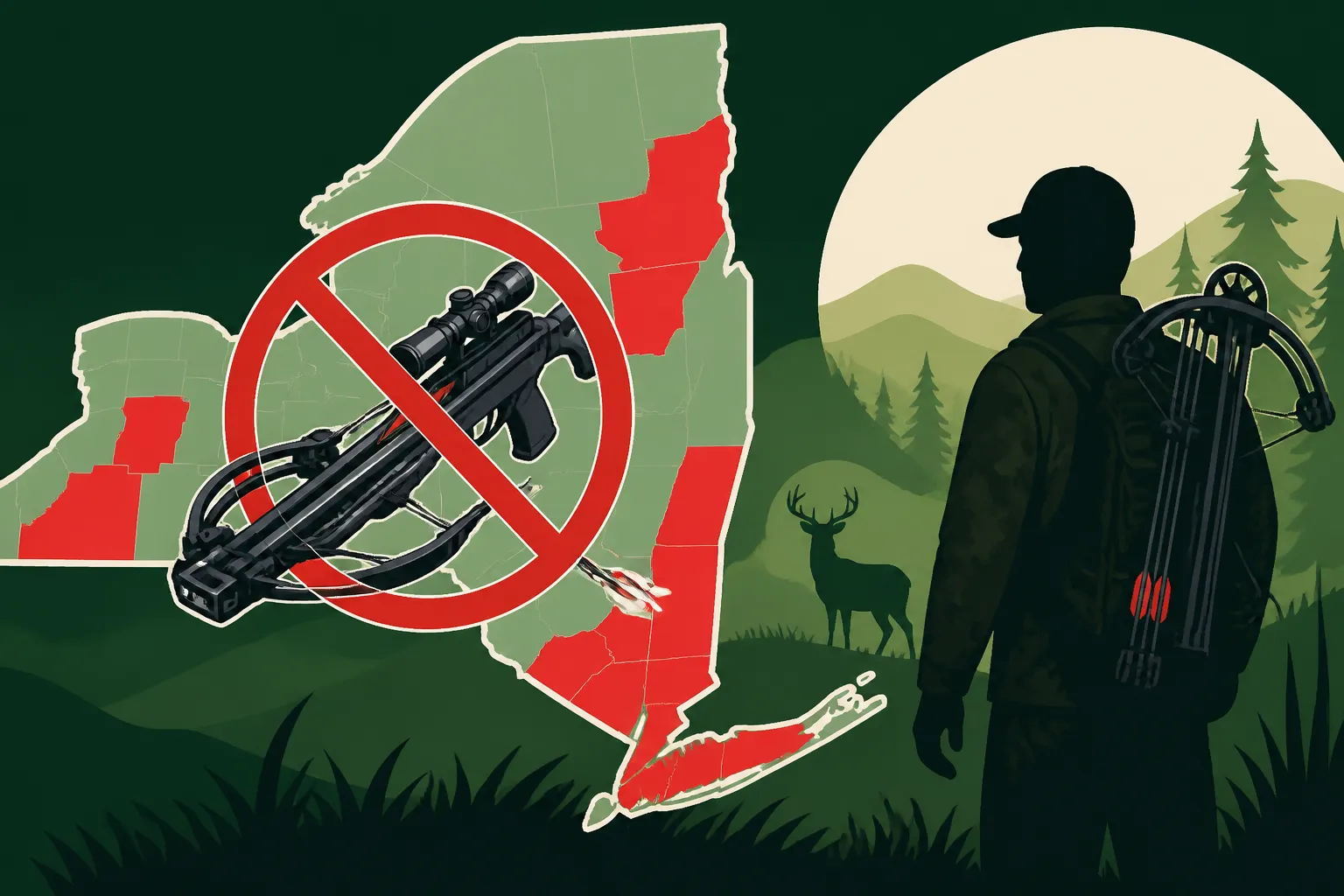
This is perhaps the most common source of confusion and restriction for crossbow hunters. New York has designated "bow-only" areas or specific sections within certain New York Wildlife Management Areas where only traditional archery equipment (longbows, recurves, and compound bows) is permitted during the archery season. Crossbows, even though they technically shoot an arrow, are considered a separate category and are therefore excluded from these specific zones during the bow-only period.
The rationale behind these "bow-only" zones often relates to hunter density, safety in areas closer to human populations, or simply a desire to provide a distinct experience for traditional archers. For example, some WMAs closer to suburban areas might be designated bow-only to minimize noise concerns or increase the safety buffer due to the shorter effective range of traditional archery compared to firearms or even crossbows. It's a way for the DEC to manage hunter impact and diverse recreational opportunities. Always, always check the specific regulations for any WMA or state land you plan to hunt, as these rules can vary significantly from one location to another. You might even find that a WMA allows crossbows during the general firearm season, but explicitly prohibits them during its archery-only phase.
Adirondack and Catskill Forest Preserve Considerations
The vast and beautiful Adirondack and Catskill Forest Preserves present their own set of nuances for all hunters, including those with crossbows. While there aren't specific blanket crossbow restrictions within the Forest Preserves as a whole, the distinction between "Wild Forest" and "Wilderness" areas is crucial and impacts all weapon types.
In general, within "Wild Forest" areas of The Adirondack Forest Preserve and the Catskills, which typically have more accessible roads and designated campsites, crossbows are permitted during the appropriate seasons (firearm, muzzleloader, and the special crossbow season). However, "Wilderness Areas" are managed for a more primitive, backcountry experience. These areas often have restrictions on motorized vehicles, bikes, and sometimes even the types of stands or blinds you can use. While crossbows aren't usually explicitly banned in Wilderness Areas, the logistical challenges and other regulations often steer hunters towards other gear or areas. It's less about a crossbow-specific ban and more about the overall primitive nature of the hunt. For instance, in some truly remote wilderness areas, the use of certain types of treestands that require permanent attachment might be restricted, which could indirectly affect some crossbow setups.
It’s vital to consult the specific Unit Management Plan (UMP) for the section of the Forest Preserve you intend to hunt, as these plans detail localized rules that go beyond statewide regulations. While GoHunt can offer fantastic insights into terrain and public land boundaries, the DEC's official UMPs are the definitive source for these hyper-local nuances.
Navigating Public Land Complexities with a Crossbow
The patchwork of public land in New York—from state forests to WMAs and state parks—each comes with its own set of rules that can affect crossbow hunters. What's perfectly legal in one spot might get you a hefty fine just a few miles down the road. It’s a common frustration, making it feel like you need a law degree just to figure out where to hunt!
State Forests, State Parks, and Other Public Lands
New York State Forests, which are managed primarily for timber production and recreation, are generally more straightforward. If crossbows are legal for the season you're hunting, they are typically allowed in State Forests. These lands are usually less restrictive than some WMAs or State Parks. However, even within State Forests, there might be specific areas designated for other uses (like nature preserves or educational zones) where hunting is prohibited entirely.
State Parks, on the other hand, are a different beast. Many State Parks do not allow hunting at all. Those that do permit hunting often have very specific, sometimes highly restrictive, rules. They might limit hunting to archery-only, specific species, or even require special permits. For example, Allegany State Park, while allowing hunting, has specific archery-only zones. Always assume hunting is not allowed in a State Park unless you can confirm otherwise through official park regulations. Even then, verify if crossbows fall under their definition of "archery equipment" or if they are explicitly excluded. This level of detail requires digging deep into each park's unique rules. You might be able to find public hunting land in New York through the DEC, but always double-check the specific rules for that parcel.
| Public Land Type | General Crossbow Rule (during legal seasons) | Common Restrictions/Considerations |
|---|---|---|
| State Forests | Generally Permitted | Hunting prohibited in designated non-hunting areas; check for local closures. |
| Wildlife Management Areas | Permitted in many | Often contain "Bow-Only" sections; site-specific rules vary greatly; check individual WMA regs. |
| Adirondack/Catskill Forest Preserve (Wild Forest) | Generally Permitted | Check Unit Management Plans for localized rules; vehicle restrictions. |
| Adirondack/Catskill Forest Preserve (Wilderness) | Generally Permitted | Primitive experience; limited access; other gear restrictions may apply. |
| State Parks | Highly Restricted/Often Prohibited | Many prohibit hunting; those allowing it often have specific permits, archery-only zones, or special rules. |
| Private Land | Permitted with permission | Subject to landowner's rules in addition to state/local regs. |
Local Ordinances and Other Overlapping Rules
Beyond state-level regulations, local towns and municipalities in New York have the authority to enact their own hunting ordinances. This is a huge, often overlooked, layer of complexity. A town might have specific discharge setbacks, or even outright bans on hunting with any projectile weapon (including crossbows) within certain village or town limits, regardless of what the DEC says about statewide seasons.
Imagine planning a hunt on a promising small woodlot near a town border in the Southern Tier; you’ve checked the DEC regulations for New York's Southern Zone Firearm Season, confirmed your crossbow is legal for the state season, but then you arrive to find a local ordinance sign prohibiting hunting within 500 feet of a dwelling, or even banning crossbows altogether in that specific township. It's incredibly frustrating, and it happens more often than you'd think. Before heading out, especially to areas close to developed land or on smaller parcels, it's always a good idea to contact the local town clerk or police department to inquire about any specific local hunting ordinances.
Another subtle restriction involves hunting with dogs. While not a crossbow-specific restriction, hunters using dogs for game other than deer or bear need to be aware of how crossbows fit into the broader hunting framework. For example, Crossbow Rules When Hunting With a Dog could involve additional safety considerations or rules depending on the species and location.
Essential Resources for Crossbow Hunters in New York
With all these layers of rules and potential restrictions, it can feel overwhelming to stay on the right side of the law. But don't despair! There are excellent resources available to help you navigate the complexities and ensure you have a safe, legal, and successful hunt.
Utilizing Official DEC Resources
The New York State Department of Environmental Conservation (NYSDEC) website is your absolute best friend when it comes to understanding hunting regulations. It’s the official source, and while it can sometimes be a bit dense, it’s comprehensive. You'll find the annual Hunting & Trapping Regulations Guide, which details all seasons, bag limits, and general equipment rules. Critically, it also contains specific section on New York Crossbow and Bow Regulations, outlining the legal crossbow seasons and any statewide limitations.
Beyond the main guide, the DEC also provides detailed maps and information for specific WMAs and Forest Preserve units. This is where you'll find those crucial localized rules that can impact crossbow use. Don't just skim the general season dates; drill down into the particular WMA or State Forest you plan to visit. Their maps often include important boundaries, such as bow-only zones or areas closed to hunting. Remember, ignorance of the law is no excuse, so taking the time to thoroughly review these resources is paramount.
Leveraging Mapping and Scouting Apps
In today’s digital age, technology can be a huge asset for hunters, helping to clarify land ownership, boundaries, and specific hunting regulations. Apps like the official Scouting With the New York HuntFishNY App from the DEC are invaluable. These apps often overlay public land boundaries, WMA specifics, and even some local ordinances directly onto a map, allowing you to see at a glance where you stand.
Other third-party apps, such as GoHunt or OnX Hunt, can also be incredibly useful. While they might not always have every single micro-ordinance for every tiny town, they excel at showing property lines, public vs. private land, and sometimes even a summary of state-level regulations for a given area. When researching a new spot, I always start with these apps to get a visual overview. It's much easier to spot a potential "bow-only" zone or an adjacent private property when you can see it clearly on a map. These tools are fantastic for planning your entry and exit routes, understanding terrain, and crucially, double-checking boundaries to avoid unintentional trespass or hunting in a restricted zone.
Staying Updated on Regulation Changes
Hunting regulations, including those for crossbows, are not static. They can and do change from year to year. The DEC regularly reviews seasons, equipment rules, and management strategies. For example, there have been Proposed Changes to New York Crossbow Limits in recent years, reflecting ongoing discussions about hunter participation and deer management. It’s important to acknowledge that the rules can evolve, and what was legal last year might have a slight modification this year.
Before each hunting season, make it a habit to obtain and review the most current Hunting & Trapping Regulations Guide. Don’t rely on old copies or word-of-mouth. Subscribing to DEC newsletters or following their social media channels can also provide timely updates on significant regulation changes. This proactive approach will save you a lot of headaches, potential fines, and ensure you're always hunting legally and responsibly. It’s also important to have a solid foundation in general hunting ethics and safety, which is why taking a New York Hunter Education Requirements course is essential for all new hunters and a great refresher for seasoned veterans.
Disclaimer
The information provided in this guide is for general informational purposes only and is not intended as legal advice. Hunting regulations in New York are subject to change and can vary based on specific locations, seasons, and other factors. Always consult the official New York State Department of Environmental Conservation (NYSDEC) regulations guide and local ordinances before engaging in any hunting activities.