Opening Weekend Crowds on New York Public Land
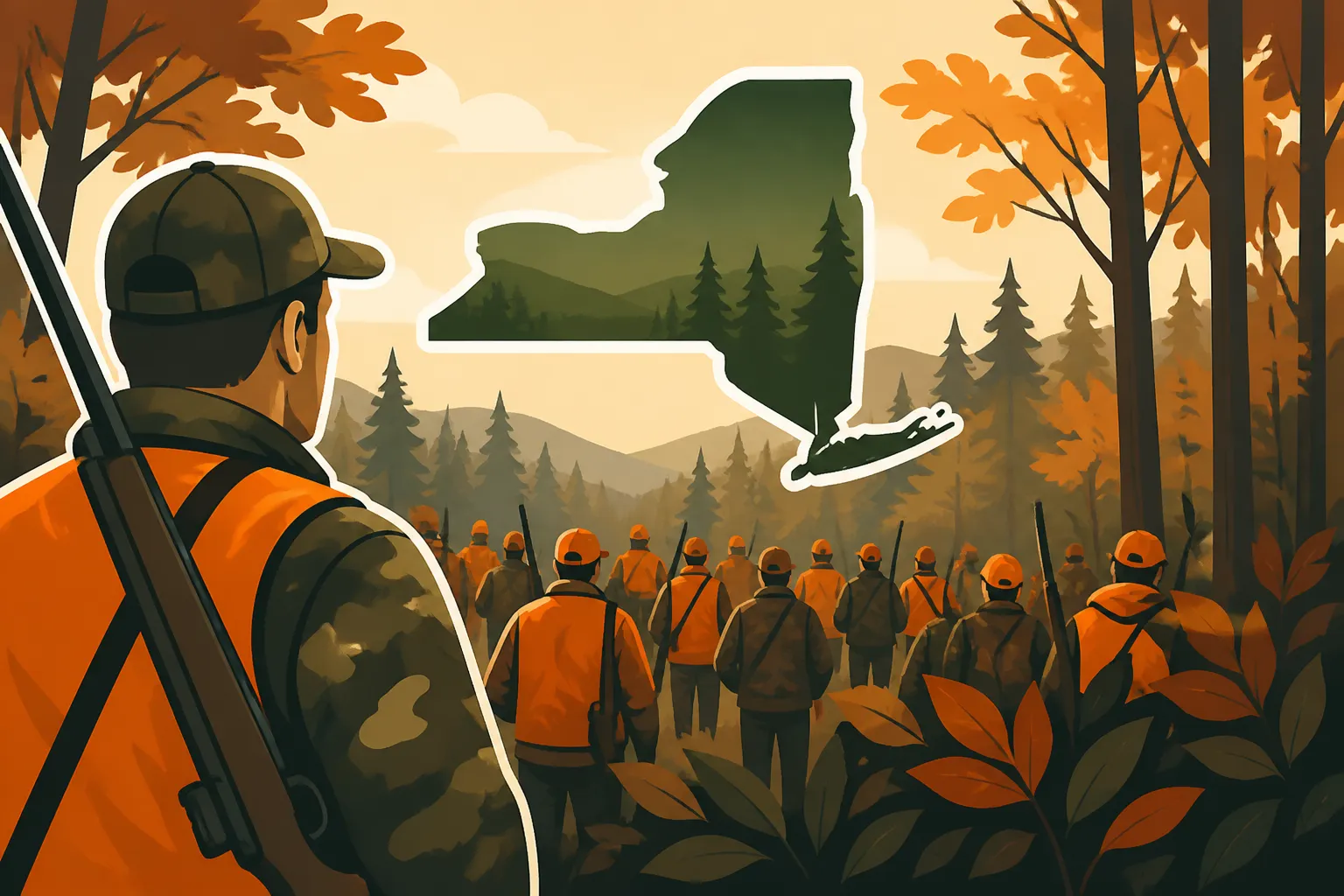
The excitement of opening weekend on New York's public lands is something most hunters feel deep in their bones, but that thrill can quickly turn to frustration when you arrive at your favorite spot only to find a dozen other trucks already parked there. It's a common struggle, trying to find your peace in the woods when it feels like everyone else had the same brilliant idea. This guide is dedicated to helping you navigate those busy times, offering strategies and insights to help you escape the opening weekend crowds and find those quieter, more productive corners of New York's vast public hunting grounds.
Understanding the Opening Weekend Rush
It’s easy to feel disheartened when you pull into a public land parking area on opening morning and it looks like a dealership lot. But understanding why these areas get so busy can help you anticipate the pressure and plan around it, rather than getting caught off guard.
Why Public Land Gets So Busy
Let's be honest, not everyone has access to sprawling private land filled with undisturbed deer. For many New York hunters, public land is their only option, and that's perfectly fine—it's a resource for all of us. The sheer volume of hunters converging on public areas, especially on opening day, is a direct result of several factors. First, there's the undeniable allure of tradition and the communal experience. For some, opening weekend is less about filling a tag and more about the ritual of being in the woods with friends and family, even if it means sharing the space with others. This creates a natural draw to well-known and easily accessible spots.
Second, the accessibility factor plays a huge role. Many state forests and Wildlife Management Areas (WMAs) are crisscrossed with maintained roads, designated parking lots, and established trail systems. While this is fantastic for encouraging public use, it also means these areas become magnets for hunters who prefer not to trek miles into the backcountry. The path of least resistance often leads to higher concentrations of orange vests. Add to that the pent-up anticipation after a long offseason, and you've got a recipe for packed parking lots and hunters bumping into each other in the timber.
Identifying High-Pressure Zones
Knowing where the crowds are likely to be is the first step in avoiding them. Generally speaking, public lands located within an hour or two's drive of major population centers are going to see the most intense pressure. Think about WMAs close to Albany, Syracuse, Rochester, Buffalo, or even the fringes of the New York City metropolitan area. These spots are just too convenient for too many people.
Beyond proximity to cities, look for land features that make public access easy. Any state forest or WMA with a dense network of logging roads, well-marked hiking trails, or multiple, clearly defined parking areas will likely be heavily hunted. These areas, while sometimes offering excellent habitat, become popular because hunters don't have to work as hard to get in. For instance, some of the larger, more popular state forests in the Southern Tier, known for their decent deer populations, can feel like a busy park rather than a wilderness on opening day. Conversely, the deeper, more rugged parts of the Adirondack Forest Preserve or Catskill Forest Preserve might see less pressure due to the sheer effort required to access them, but even they have their popular trailheads. Hunting Pressure on New York Public Land
| Public Land Type | Typical Opening Weekend Pressure | Characteristics |
|---|---|---|
| WMAs (near population) | Very High | Managed for wildlife, often good access, can be small or large. |
| State Forests (easy access) | High | Often good road systems, multiple parking areas, diverse habitat. |
| Catskill/Adirondack Preserves (easy access) | Moderate-High | Trailheads, lean-tos, popular hiking routes. |
| State Forests (remote) | Moderate | Limited access, harder terrain, require more walking. |
| Catskill/Adirondack Preserves (remote) | Low-Moderate | Wilderness areas, deep timber, long hikes required. |
| Private Land (with permission) | Very Low | If you have it, it's often your own little slice of heaven. Getting Private Land Permission in New York |
Strategies for Escaping the Crowds
So, how do you find that elusive quiet corner when everyone else seems to be out there? It takes a combination of effort, smart planning, and sometimes, a willingness to do things a little differently.
Going Deeper into the Woods
This might sound like common sense, but it’s amazing how many hunters stop just out of sight of the parking lot. The truth is, many deer in pressured areas quickly learn that the safest places are often the hardest for humans to reach. If you're willing to put in the miles and tackle some challenging terrain, you dramatically increase your chances of finding unpressured deer and escaping the immediate throngs.
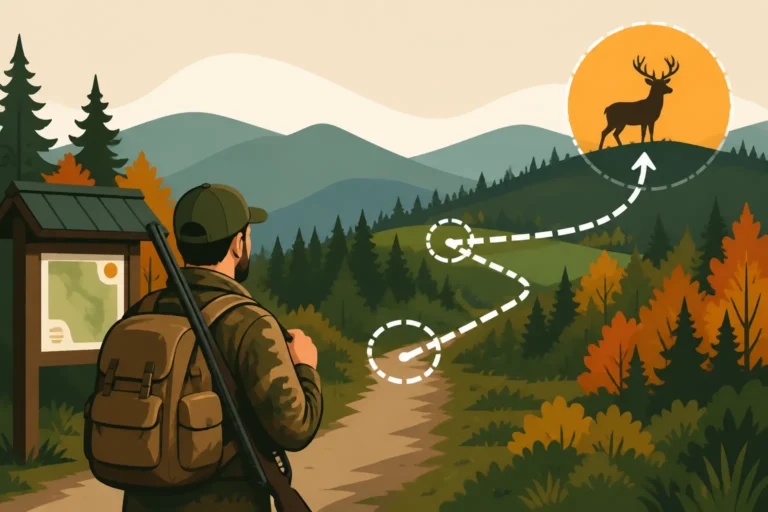
Think about the "half-mile rule" or even the "mile rule." Most hunters don't venture much further than half a mile from their vehicle, especially on opening day when the woods are full of activity. If you can push past that boundary, you'll often find a noticeable drop-off in human sign and a corresponding increase in deer activity. This means trading comfortable, easy walks for bushwhacking through dense brush, climbing steep hillsides, or navigating swampy bottomlands. Tools like onX Hunt are invaluable here, allowing you to scout potential routes and anticipate terrain challenges from your couch before you ever set foot in the woods. You can mark waypoints, measure distances, and visualize the topography to plan your deep excursions. Remember, though, going deep requires extra preparation in terms of gear, navigation skills, and physical fitness. How Far to Walk From a Trailhead
Utilizing Overlooked or Less Obvious Access Points
Sometimes, the trick isn't going deeper, but going smarter. Instead of pulling into the main parking lot that everyone else uses, spend some time studying maps for alternative access points. This could mean looking for small pull-offs on obscure dirt roads, checking for logging trails that aren't clearly marked on public-facing maps, or even parking a bit further down the road and walking in along the shoulder where allowed.
Many public lands have numerous boundaries, and not all of them are lined with designated parking. Some small, forgotten easements or even private land that borders public ground (with permission from the landowner, of course) can offer an incredible advantage. The key is to look for access points that aren't obvious to the casual hunter. This might require a bit of pre-season driving and boots-on-the-ground scouting. You'd be surprised how often a deer-rich section of public land goes unhunted simply because the access point is inconvenient or doesn't have a big, flashy sign. Finding Ground Others Walk Past This strategy also allows you to hunt from different angles, potentially intercepting deer that are being pushed by other hunters coming from the main access points.
Hunting Mid-Week Instead of Weekends
This is perhaps the simplest and most effective way to beat the crowds, if your schedule allows. The pressure on public lands drops dramatically after opening weekend, and particularly during the work week. While opening Saturday might see dozens of hunters, a Tuesday just a few days later could feel almost deserted. Deer, having been pushed and disturbed over the weekend, often settle back into their routines in quieter areas, making mid-week hunting highly productive.
Planning a vacation day or two around your hunt can make a world of difference. Not only do you encounter fewer people, but the deer behavior is often more natural, less skittish. This can be especially true during the rut, when bucks are moving regardless of pressure, but are less likely to be completely nocturnal if disturbance is minimal. If your goal is to fill a tag and have a more serene hunting experience, consider saving your prime public land spots for those glorious mid-week mornings or afternoons.
Advanced Tactics for Pressured Public Land
Beyond simply avoiding people, there are specific hunting tactics that can help you find success even when others are in the woods. These involve understanding deer movement under pressure and using your environment to your advantage.
Leveraging Topographic Maps and Aerial Imagery
Modern mapping tools like onX Hunt and GoHunt are absolute game-changers for identifying overlooked spots on public land. Don't just look for green on the map; really dive into the contour lines and aerial images. Deer, particularly mature bucks, will gravitate towards areas that offer security cover and difficult access for humans.
Look for steep ravines, tight drainages, or thick, impenetrable swamps that might be surrounded by more open timber. These natural barriers often act as sanctuaries where deer feel safe from pressure. Even relatively small pockets of thick cover on a steep hillside can hold deer that have been pushed off more accessible ground. Identify pinch points, funnels, and natural travel corridors that lead to or from these security areas. These might be subtle benches on a steep slope or narrow strips of timber between open fields. By understanding the topography and how deer will use it to evade pressure, you can position yourself strategically where they are likely to pass. Reading Aerial Photos for Southern Tier Deer For instance, if you're hunting a particular ridge system, knowing where the steepest climbs are and where the terrain naturally bottlenecks can show you where deer will travel when pressured from below. Wind and Thermals on a Catskill Ridge
Hunting the "Fringe" Areas
Deer often inhabit the transitional zones between different types of habitat or between public and private land. These "fringe" areas can be incredibly productive, especially when public land is pressured. For example, deer might spend the daylight hours bedded on thick private property and then slip onto public land to feed at dusk, or vice versa. Positioning yourself on the public side of a fence line, along a thick hedgerow bordering a field, or where a dense swamp meets more open woods can be highly effective.
Similarly, don't overlook small, isolated patches of public land that might seem too insignificant to hold deer. These might be small woodlots surrounded by suburban sprawl or tiny state forest parcels that get ignored because they aren't part of a massive block of timber. Deer often use these smaller, overlooked pockets of cover as safe havens, especially if they provide a quick escape route to thicker habitat. These areas require careful scouting and often permission if you're crossing private land to access them, but they can pay off big when bigger areas are crowded. Hunting Small Woodlots Near Suburban Sprawl
Adapting Your Hunting Style
When public land is bustling, sitting patiently in a traditional stand might not always be the most effective approach. Deer become incredibly wary under pressure, often going nocturnal or moving through the thickest cover available. This is where adapting your hunting style can be crucial.
Consider still-hunting or carefully stalking through cover. This involves moving slowly, taking a few steps, and then pausing for several minutes to observe and listen. You're not looking to spook deer, but rather to intercept them as they move through the woods, often pushed by other hunters. Focus on dense cover, thickets, and areas with good visibility. Still-Hunting Catskill Ridges Another tactic is to set up a ground blind in an area of thick cover, especially if you're able to brush it in well. Deer might avoid traditional treestands if they're seeing a lot of human activity higher up. A well-concealed ground blind can offer a low-profile ambush point. Using a Ground Blind on New York Public Land Remember, when deer are pressured, they become experts at utilizing every piece of cover, so embrace the thick stuff!
Respecting Other Hunters and Staying Safe
Even with the best crowd-avoidance strategies, you might still encounter other hunters on public land, especially on opening weekend. Knowing how to interact safely and ethically is paramount.
Ethical Considerations and Hunter Etiquette
The vast majority of hunters are respectful and share a love for the outdoors, but opening weekend can test everyone's patience. If you encounter another hunter, a simple nod, wave, or quiet greeting is usually sufficient. Avoid "sky-lining" yourself or walking noisily directly towards another hunter's position. If you see someone already set up in a spot you intended to hunt, graciously move on and find another area. There's plenty of woods to go around.
A good rule of thumb is to maintain ample spacing. Give other hunters a wide berth, both for safety and to avoid disturbing their hunt. If you happen to bump a deer, and you know another hunter is downwind or in the direction of the deer's travel, a quick, quiet heads-up (if safe and practical) can sometimes be appreciated. The hunting community thrives on mutual respect. Remember, we're all out there for the same reasons. For information on general public land guidelines, see Public Hunting Land in New York.
Prioritizing Safety in Crowded Conditions
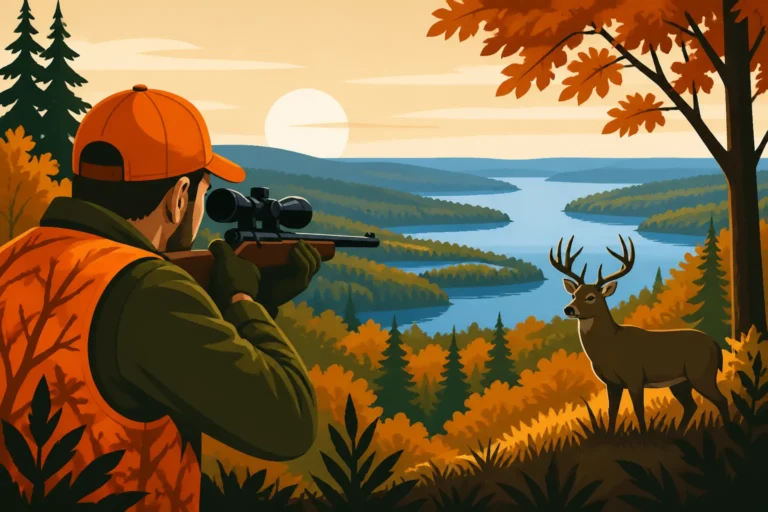
Safety should always be your number one priority, and even more so when there are more people in the woods. Wearing blaze orange is not just a legal requirement in many New York hunting scenarios, but a crucial safety measure that makes you visible to other hunters. How Much Blaze Orange New York Requires Ensure you're wearing enough blaze orange or blaze pink to be easily seen from all directions.
Always be absolutely certain of your target and what lies beyond it before taking a shot. In pressured situations, deer might move erratically, and other hunters could be in unexpected places. Use binoculars to positively identify your target and scan for any potential hazards. Communicate clearly with hunting partners if you're moving or changing positions. A two-way radio can be incredibly useful for coordinating drives or simply staying in touch when visibility is low or you're covering a lot of ground. Carry a first-aid kit, a reliable compass or GPS (your phone with onX Hunt is great, but always have a backup), and extra layers, especially if you're venturing deep into the backcountry to escape the crowds. The goal is to have a successful hunt, but above all, to come home safely.
Disclaimer
This article is for general informational purposes only and does not constitute professional advice. Laws, prices and regulations vary by location and change over time. Consult a qualified professional for guidance on your specific situation.