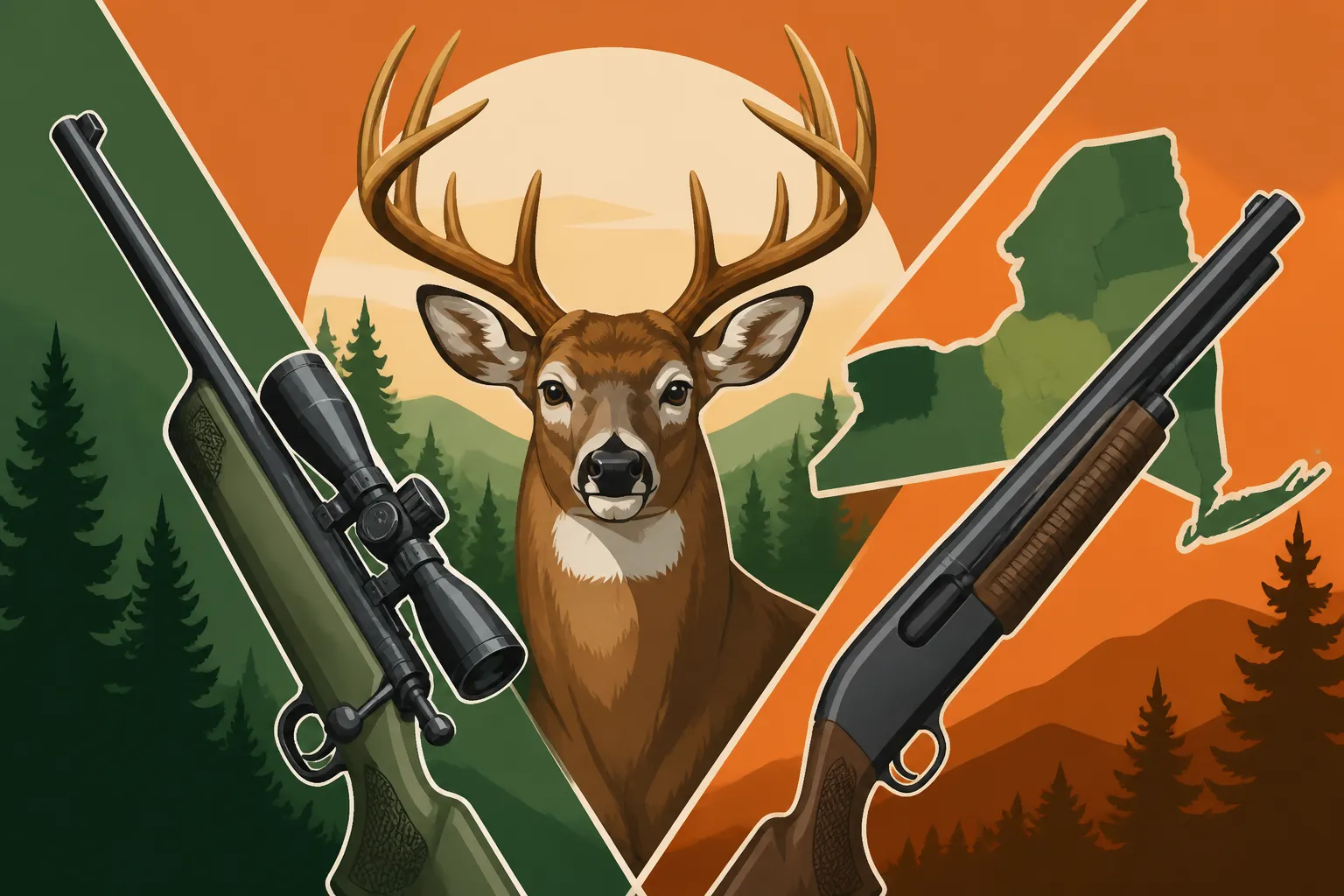
Rifle and Shotgun Choices for New York Deer
One of the biggest head-scratchers for new and even seasoned deer hunters in New York is navigating the often-confusing maze of firearm regulations and choosing the right tool for the job. You're trying to figure out if your trusty rifle is even legal in your favorite hunting grounds, or if you need to invest in a shotgun. This comprehensive guide will break down the rifle and shotgun choices for New York deer hunting, helping you understand the rules, pros, and cons of each, so you can head into the woods with confidence.
Understanding New York's Firearm Regulations for Deer
Before you even start thinking about calibers or gauges, you absolutely have to know the lay of the land when it comes to New York's hunting regulations. The state isn't a "one-size-fits-all" kind of place, and what's legal in the Adirondacks might get you into hot water in the Southern Tier. This regional difference can be a real point of frustration for hunters who might pursue deer in multiple parts of the state.
The Two Major Deer Zones
New York State is primarily divided into two main deer hunting zones: the Northern Zone and the Southern Zone. These zones dictate not only season dates but also the types of firearms you can legally use for deer hunting. It’s crucial to know which zone you’ll be hunting in, as it fundamentally changes your firearm options. This distinction helps manage deer populations and addresses different hunting conditions and population densities across the state. A hunter accustomed to their rifle up north might find themselves needing a different strategy, and certainly a different gun, if they decide to hunt downstate.
The Northern Zone, generally encompassing the Adirondack Park and surrounding counties, often permits the use of rifles for deer hunting. This is largely due to the vast, wild, and often rugged terrain, where longer shots across clearings or through open timber might be more common. Meanwhile, the Southern Zone, which covers the majority of the rest of the state, including the Catskills, Finger Lakes, and Western New York farmlands, has traditionally restricted rifle use for deer hunting in many areas. The reasoning behind this is often related to higher population densities, smaller private land parcels, and safety concerns, with shotguns or muzzleloaders being the primary firearm options. Always double-check the specific regulations for your Wildlife Management Unit (WMU) before heading out. Sometimes, specific WMUs within a zone might have their own unique quirks. For detailed information on these geographical divides, check out How New York's Two Deer Zones Split the Calendar.
Rifle Versus Shotgun Zones
The legal framework for firearms is perhaps the most significant difference between New York's Northern and Southern Zones. In the Northern Zone, centerfire rifles are generally allowed for deer hunting, offering hunters the advantage of longer range and flatter trajectories. This is ideal for the expansive timber and open cuts found there. However, even within the Northern Zone, there might be local restrictions near populated areas or state parks, so always confirm.
Conversely, the Southern Zone historically limited firearm deer hunting to shotguns (using slugs), muzzleloaders, and bows. This regulation aims to minimize the risk of over-penetration and stray bullets in more densely populated areas. The good news is that over time, New York has introduced specific areas within the Southern Zone where centerfire rifles are now permitted, often in WMUs with more expansive terrain and lower population density, or where deer management goals necessitate broader options. These changes can be hard to keep up with, so a resource like the New York Legal Firearms for Deer Hunting guide is essential. When planning your hunt, use the official DEC website or a mapping application that includes regulation overlays to identify the exact firearm restrictions for your chosen WMU. Tools like GoHunt can often help visualize these complex boundaries and specific rules, giving you a clearer picture of what you can and cannot use.
The Enduring Appeal of the Deer Hunting Rifle
For many, the rifle is synonymous with deer hunting. Its precision, range, and historical connection to big game hunting make it a favorite choice where legal. In New York, this largely means the Northern Zone, but with some Southern Zone exceptions gaining traction.
Why Rifles Excel in Open Terrain
Rifles truly shine in open terrain or areas with longer sightlines. Imagine hunting the big timber of the Adirondacks, where a buck might appear at 150 yards across a regenerating clearcut or a mature hardwood ridge. A rifle, with its flatter trajectory and greater accuracy at extended ranges, gives you the confidence to make that shot. The modern rifle platform is incredibly versatile, allowing for precise bullet placement that maximizes ethical harvests and minimizes tracking. This is particularly important when hunting in vast wilderness areas where a long blood trail can quickly become a monumental task. The ability to reach out and touch an animal cleanly at greater distances is a significant advantage, especially when chasing wary mature bucks that tend to keep their distance.
The consistent ballistics of centerfire rifle cartridges also mean less guesswork for the hunter. Once you’ve zeroed your rifle, you know exactly where your bullet will impact at various distances, assuming you practice and know your holdovers. This predictability is a huge asset when hunting mountainous or undulating terrain where estimating range can be tricky. Plus, a well-placed rifle shot often results in a quick, humane harvest, which is always the goal.
Popular Rifle Calibers for New York Deer
New York hunters, where rifles are permitted, have a wide array of calibers to choose from, each with its own fan base and specific advantages. The "best" caliber is always a hot debate, but really, it comes down to shot placement and hunter comfort. For instance, the venerable .30-06 Springfield is a perennial favorite, known for its versatility and power, capable of cleanly taking any deer in North America. The .270 Winchester offers a flatter trajectory, making it excellent for slightly longer shots, while the .308 Winchester is highly regarded for its accuracy and compact rifle designs, perfect for maneuvering through thick Northern Zone timber. The 6.5 Creedmoor has gained immense popularity recently due to its exceptional accuracy, mild recoil, and effectiveness on deer-sized game.
Other solid choices include the .243 Winchester, a fantastic option for lighter recoil and newer hunters, proving lethal on whitetails with good bullet selection. Even classic lever-action cartridges like the .30-30 Winchester still find favor in dense cover, offering quick follow-up shots. When considering your rifle, it’s not just about the cartridge, but also the bullet itself. Modern bullet technology has advanced significantly, offering controlled expansion and deep penetration, even from smaller calibers. Whatever you choose, make sure it’s a caliber you can shoot accurately and comfortably. For more on this topic, check out Choosing a Rifle Caliber for New York Deer.
Shotguns for New York's Southern Zone
While rifles dominate the popular imagination of deer hunting, shotguns are the workhorse firearm for many New York hunters, particularly in the Southern Zone where regulations historically favored them. Modern slug guns are a far cry from the old smoothbore blunderbusses of yesteryear.
The Evolution of the Slug Gun
If you grew up hunting in New York's Southern Zone, you likely remember the days of smoothbore shotguns shooting rifled slugs. These setups were adequate for close-range shots, but beyond 75 yards, accuracy quickly became a challenge. Modern slug guns have completely transformed this reality. Today's dedicated slug guns feature fully rifled barrels, often paired with cantilever scope mounts, turning what was once a scattergun into a surprisingly accurate short-to-medium range deer rifle. These specialized barrels impart spin on the slug, much like a rifle barrel does to a bullet, vastly improving stability and accuracy.
With the right setup, including a quality scope and sabot slugs, these modern slug guns are capable of consistent accuracy out to 150 yards, and even further in the hands of a skilled shooter. This capability has truly leveled the playing field for Southern Zone hunters, allowing them to make ethical shots at ranges that were once unimaginable with a shotgun. Many manufacturers now produce bolt-action or semi-automatic slug guns specifically designed for deer hunting, offering rifle-like ergonomics and precision. These aren't your grandpa's pheasant guns anymore; they are purpose-built deer harvesters. You can dive deeper into this topic with Shotgun Slug Guns for Southern Tier Deer.
Legal Shotgun Ammunition Types
When hunting deer with a shotgun in New York, you are required to use a single projectile, typically a slug. Buckshot is generally not permitted for deer hunting, reflecting the emphasis on clean, ethical kills with controlled ammunition. There are two primary types of slugs that hunters use:
- Rifled Slugs: These are traditional lead slugs designed for use in smoothbore barrels. They have "rifling" (shallow grooves) on the slug itself, which is actually intended to allow the slug to compress as it passes through various chokes, rather than to impart spin for accuracy. They are still effective at closer ranges (up to about 75 yards) and are typically less expensive.
- Sabot Slugs: These are highly accurate, aerodynamically designed projectiles encased in a plastic sleeve (sabot). The sabot engages the rifling in a rifled shotgun barrel, causing the slug to spin, and then separates from the projectile once it leaves the barrel. This gives sabot slugs much better accuracy and range, making them the preferred choice for modern rifled slug guns. They are more expensive than rifled slugs but offer rifle-like performance.
When selecting your ammunition, always match the slug type to your shotgun barrel. Using sabot slugs in a smoothbore barrel will not yield the same accuracy benefits, and using rifled slugs in a rifled barrel can lead to excessive lead fouling and diminished performance. It’s also crucial to practice with your chosen ammunition, as different brands and weights can pattern differently through the same barrel.
Caliber and Gauge Considerations for New York Whitetails
Choosing the right caliber or gauge isn't just about legality; it's about matching the tool to the task. New York's whitetails aren't enormous, but they are tough, and ethical hunting demands a firearm that can deliver sufficient energy and penetration for a clean kill.
Matching Caliber to Terrain and Shot Distance
The caliber you choose should align with the type of terrain you'll be hunting and the typical shot distances you anticipate. In the dense, close-quarters cover often found in parts of the Catskills or thick Southern Tier woodlots, a fast-handling rifle in a moderate caliber like a .30-30, .35 Remington, or a powerful straight-wall cartridge (where legal) might be ideal. Shots are typically under 100 yards, and quick target acquisition is more important than extreme long-range accuracy.
Conversely, if you're hunting more open agricultural fields in Western New York or the expansive clearcuts of the Northern Zone, where shots could stretch past 200 yards, a flatter-shooting cartridge like a .270 Winchester, 6.5 Creedmoor, or .30-06 Springfield makes a lot of sense. These calibers maintain their energy and trajectory over longer distances, giving you a better chance at a precise, ethical shot. It's not about raw power, but about putting the bullet where it needs to go. Even in these situations, it's wise to consider the legal range of your chosen firearm and your personal effective range. No matter how capable your rifle, if you can't consistently hit a pie plate at 200 yards in field conditions, you shouldn't take that shot. Practical Range in Adirondack Timber is a great resource to help you think through these distances.
Recoil Management and Shooter Comfort
Recoil is a factor often overlooked by new hunters but is paramount to accuracy. A rifle or shotgun that kicks like a mule might seem impressive, but if it causes you to flinch, anticipate the shot, or simply develop poor shooting habits, it's doing more harm than good. You need to be able to comfortably manage the recoil of your firearm to ensure consistent accuracy, especially when hunting under pressure.
For lighter-framed shooters or those sensitive to recoil, smaller calibers like the .243 Winchester, 7mm-08 Remington, or even the 6.5 Creedmoor offer excellent deer-killing performance with manageable recoil. In shotguns, a 20-gauge slug gun often provides more than enough power for deer while being significantly milder to shoot than a 12-gauge, especially if you opt for lighter-recoiling slugs. Don't fall into the trap of thinking "bigger is better" if it means you can't shoot your firearm accurately. Accuracy trumps power every single time. A well-placed shot from a .243 is far more effective than a poorly placed shot from a .300 Win Mag. If you're looking for something with a bit more punch but still manageable, the .308 Winchester is often seen as a sweet spot for many hunters.
Accessories and Enhancements for Your Deer Firearm
A firearm is just one part of the equation. Equipping it with the right accessories can significantly enhance your effectiveness and overall hunting experience. This is where you really tailor your setup to your specific needs and the New York environment.
Optics: Scopes, Red Dots, and Iron Sights
For rifle hunting, a quality scope is almost non-negotiable. Modern scopes offer excellent light-gathering capabilities, allowing you to clearly see your target in the low-light conditions prevalent during legal shooting hours. For most New York deer hunting, a variable power scope in the 3-9×40 or 2-7×32 range is perfect. These magnifications provide a wide field of view for quick target acquisition in thick cover, while still offering enough zoom for longer shots. Look for scopes with good glass, reliable turrets, and a clear reticle. Rifle Scopes for Low-Light Timber goes into more detail on selecting the right optic.
For shotgun hunters, especially those using rifled barrels, a scope is equally beneficial. A low-power variable scope (1-4x, 2-7x) is a popular choice, providing a broad field of view for close encounters and enough magnification for those 100-150 yard slug shots. Some shotgun hunters also opt for red dot sights, which offer extremely fast target acquisition at close to medium ranges, especially in heavy brush where quick, instinctive shooting is often required. While less common, traditional iron sights are still reliable, especially in very close quarters or as a backup, though they limit your effective range compared to optics. Always ensure your chosen optic is durable and can hold zero under the rigors of hunting.
Slings, Bi-pods, and Shooting Aids
Once you've got your firearm and optic sorted, consider how you'll carry and steady your shot. A good sling is indispensable for carrying your rifle or shotgun through New York's varied terrain, from the steep inclines of the Catskills to the sprawling flatlands of the Southern Tier. Choose a comfortable, durable sling that allows for easy carrying and quick shouldering. Some hunters prefer wider slings for better weight distribution during long walks to their stand.
While not always necessary, a bi-pod can be a game-changer for steadying your shot in open areas, especially if you find yourself shooting from a prone position or off a backpack. It provides a stable shooting platform, significantly improving accuracy at longer ranges. However, in dense woods, they can sometimes be cumbersome. Many hunters find shooting sticks or even using natural rests like trees or rocks to be more practical in tight cover. Practice shooting from various field positions – kneeling, sitting, standing, and using natural rests – to become a more versatile and accurate hunter. Always remember that the steadiest shot is the most ethical shot.
Maintaining Your Deer Hunting Firearm
A reliable firearm is a safe and effective firearm. Proper maintenance isn't just about keeping your gun looking good; it's about ensuring it functions flawlessly when you need it most, particularly in the challenging weather conditions New York hunting can throw at you.
Cleaning and Storage Best Practices
After a day in the woods, especially if it was wet, snowy, or muddy, your firearm needs attention. The first rule of cleaning is safety: always ensure your firearm is unloaded and the action is open before you begin. For basic field cleaning, wiping down the exterior with a lightly oiled cloth removes moisture and prevents rust. Pay special attention to metal-to-metal contact points. For a more thorough cleaning, disassemble the firearm as per the manufacturer's instructions. Use a bore snake or cleaning rod with appropriate brushes and patches to clean the barrel, removing powder residue and any copper fouling. A good solvent will help loosen stubborn buildup, followed by a light application of gun oil to protect the metal surfaces.
When it comes to storage, keep your firearm in a cool, dry place. A gun safe is ideal, offering both security and protection from environmental damage. Many safes have dehumidifiers or desiccant packets to combat moisture. If storing in a soft case for an extended period, be aware that some materials can trap moisture and even accelerate rust. Hard cases are generally better for transport but should be aired out regularly. Ensuring your firearm is clean and properly stored will extend its life and maintain its accuracy. For more on this, consider Cleaning a Rifle After a Wet Sit.
Pre-Season Check-Ups and Zeroing
Don't wait until opening day to discover your firearm has an issue or that your scope has shifted zero. A thorough pre-season check-up is crucial. This means taking your rifle or shotgun to the range well before the season opens. Fire a few shots to confirm your zero. If you've sighted in at 100 yards, verify that it's still grouping consistently. Windage and elevation can shift due to bumps during transport, temperature changes, or simply loosening scope rings. Adjust as necessary.
This range time also allows you to knock off the rust from your shooting skills and get comfortable with your firearm again. Practice shooting from different positions you might encounter in the field. Test your ammunition to ensure it's still performing as expected. This is also a good time to check all screws, especially on scope mounts and bases, to ensure they are tight. Examine the barrel for any obstructions and the action for smooth operation. A little proactive maintenance and practice can prevent a missed opportunity or, worse, a wounded animal in the field. When Zeroing at 100 Yards for Woods Hunting, consider your realistic maximum shot distance.
Responsible Firearm Ownership and Safety
Hunting is a privilege, and with that privilege comes a tremendous responsibility, especially when handling firearms. Safety is paramount, both for yourself, your hunting partners, and the general public. New York takes firearm safety seriously, and so should every hunter.
The Four Rules of Firearm Safety
These are the bedrock principles that every firearm owner must live by, without exception:
- Treat every firearm as if it were loaded: This mindset prevents accidental discharges. Never assume a gun is unloaded. Always check.
- Always point the muzzle in a safe direction: A "safe direction" means a direction where an accidental discharge would cause no injury or damage. Never point a gun at anything you are not willing to destroy.
- Keep your finger off the trigger until your sights are on the target and you are ready to shoot: This rule prevents negligent discharges when handling a firearm, even if you are not actively aiming. Your finger should rest outside the trigger guard until the very moment you intend to fire.
- Be sure of your target and what is beyond it: This is critical for hunting. You must positively identify your target as a legal game animal and be absolutely certain there are no people, livestock, homes, or other unintended targets in your bullet's path. A bullet can travel a long way and through many obstacles.
Adhering to these four rules, every single time you handle a firearm, is the most effective way to prevent accidents.
New York Hunter Education Requirements
To legally hunt in New York, you must complete a Hunter Education course. This course is designed to instill essential safety practices, knowledge of hunting laws, ethics, and wildlife conservation principles. It covers everything from firearm handling and tree stand safety to game identification and blood trailing. Whether you're a seasoned hunter from another state or a brand-new beginner, if you plan to hunt with a firearm in New York, you'll need to demonstrate proficiency and understanding of these rules.
The course typically involves both classroom instruction and a practical field exercise. It's not just a hoop to jump through; it's a valuable learning experience that reinforces safe and ethical hunting behaviors. Even after completing the course, continuously reviewing safety principles and staying updated on current regulations is a lifelong commitment for a responsible hunter. New York also has specific requirements for New York Bowhunter Education Requirement if you plan to hunt archery season.
Making Your Final Choice
The decision of what firearm to use for deer hunting in New York isn't a simple one, especially with the varied regulations and hunting conditions across the state. It boils down to a combination of legalities, personal preference, and the specific hunting scenario you envision.
Factors Beyond Caliber: Fit, Feel, and Handling
While caliber and legalities are critical, don't overlook the subjective factors of fit, feel, and handling. A firearm that fits you well will be more comfortable to shoot and easier to aim accurately. This means considering the length of pull, the grip angle, and the overall balance of the gun. Spend time shouldering different rifles and shotguns at your local gun shop. Does it feel natural to bring to your shoulder? Can you easily acquire the sights or scope? Is it too heavy or too light for carrying long distances?
A fast-handling firearm is crucial in New York's often dense cover, where a deer might appear and disappear in a matter of seconds. A cumbersome, unwieldy gun can cost you an opportunity. Consider the action type: bolt-actions are known for accuracy, pump-actions and semi-autos for quick follow-up shots. For many hunters in the thick Southern Tier woods, a shorter, lighter shotgun or carbine-length rifle is preferred for its maneuverability. Ultimately, the best firearm for you is one you are confident and proficient with. This personal connection to your gear makes all the difference in the field.
A Comparative Look at Rifle vs. Shotgun for NY Deer
To help solidify your understanding, here’s a quick comparison of rifles and shotguns for New York deer hunting:
| Feature | Centerfire Rifle | Modern Shotgun (Rifled Barrel, Sabot Slugs) |
|---|---|---|
| Legal Zones | Primarily Northern Zone, specific Southern WMUs | Primarily Southern Zone, legal statewide |
| Effective Range | 150-300+ yards (depending on caliber/shooter) | 75-150 yards |
| Accuracy | Generally superior at all ranges | Excellent within its effective range |
| Trajectory | Flatter, less bullet drop | More pronounced bullet drop at longer ranges |
| Recoil | Varies significantly by caliber, can be stout | Generally heavier than most deer rifles, especially 12ga |
| Ammunition Cost | Moderate to high | High (sabot slugs are pricey) |
| Versatility | Specialized for deer/big game, less versatile | Can be used for small game/birds with barrel swap |
| Maneuverability | Varies by barrel length, can be long | Often shorter and handier in thick cover |
This table highlights that while rifles offer superior range and accuracy, modern slug guns are highly effective within their designated zones and ranges. Your choice should align with where you hunt, the regulations in that area, and your personal shooting comfort. Always consult the official New York DEC regulations for the most up-to-date information on specific WMU rules, and don't hesitate to seek advice from experienced local hunters. Many find value in resources like GoHunt for detailed mapping and regulatory overlays to ensure compliance.
Disclaimer
This article is for general informational purposes only and does not constitute professional advice. Laws, prices and regulations vary by location and change over time. Consult a qualified professional for guidance on your specific situation.