Upland Guns for Aspen and Alder
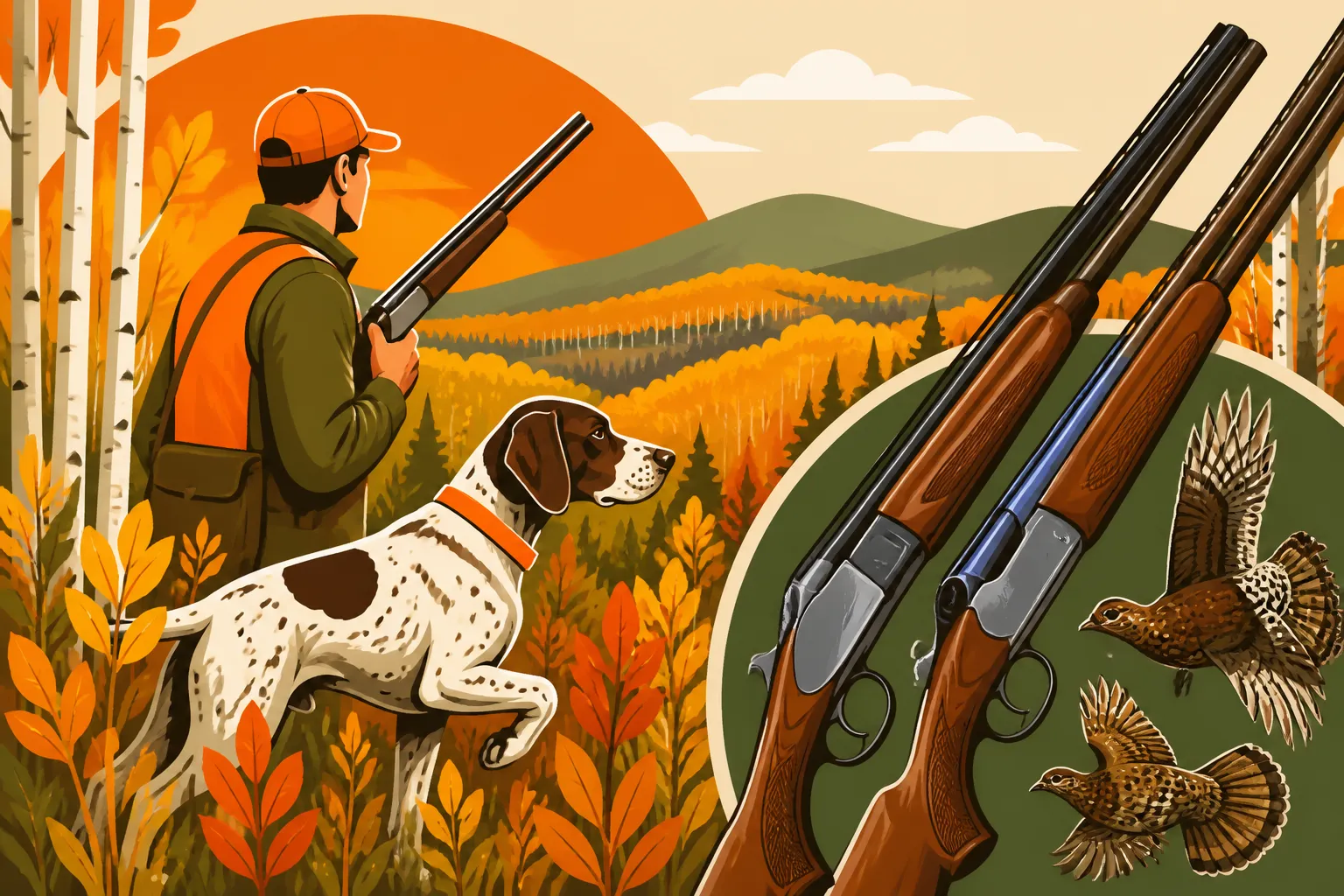
The thrill of an upland bird flushing from dense cover in New York is something truly special, but it often comes with the frustration of a quick, evasive target and challenging shooting conditions. Hunters often struggle to choose the right firearm that offers both maneuverability in tight spaces and the rapid, effective shot needed for a fleeting grouse or a zig-zagging woodcock. This guide will dive deep into the world of upland guns, helping you understand the features that make a difference when you're walking the tight lines of aspen cuts and wading through thick alder runs across our beautiful state.
The Unique Challenges of New York's Upland Cover
Hunting ruffed grouse and American woodcock in New York isn't like shooting clays; it's a dynamic, demanding experience that puts your gear to the test. Our forests and wetlands present a distinct set of obstacles that demand a shotgun specifically suited for the task. It's about more than just hitting a bird; it's about being able to react quickly and effectively in challenging environments.
Navigating Aspen Regeneration and Alder Swamps
Think about the places where grouse and woodcock thrive in New York. You're often pushing through young aspen stands, where the trees are close together and the undergrowth is a tangled mess of briars and saplings. Then there are those classic alder runs, especially in areas like the Finger Lakes or the Tug Hill Plateau, where woodcock love to feed. These aren't open fields; they're thick, unforgiving environments where every step can be a challenge. Your shotgun needs to be short enough to swing quickly without catching on branches, and light enough that carrying it all day doesn't feel like a chore. Trying to navigate these areas with a long, heavy waterfowl gun is an exercise in futility and frustration. It's easy to get tangled, slow your swing, and miss an opportunity simply because your gun wasn't designed for such close quarters.
The Fast Flush and Close-Range Shots
Upland birds don't often give you much warning. One moment you're listening to your dog work a scent trail, or just crashing through brush on your own, and the next, a grouse explodes from underfoot with a thunderous roar, or a woodcock rockets skyward with that distinctive peent. These flushes are almost always within 15-30 yards, sometimes even closer. You have mere seconds, often less, to mount your gun, swing, and fire. This isn't a long-range precision shot; it's about instinct, speed, and putting a decent pattern on a rapidly disappearing target. The gun you choose must feel like an extension of your body, allowing for an incredibly fast and fluid mount, because if you're thinking about your gun, you've likely already missed your chance.
Weather and Terrain Considerations
New York's upland season spans from early fall through early winter, meaning you could be hunting in crisp, dry October air or slogging through wet, heavy snow in November. The terrain varies from gently rolling hills in the Southern Tier to steeper, rockier ground in the Catskills. Your shotgun needs to be durable enough to withstand being bumped, scraped, and exposed to moisture. A gun that's overly delicate or has a finish that quickly rusts won't hold up to the rigors of our hunting conditions. Furthermore, the weight of the gun becomes a huge factor when you're hiking for miles up and down hills, sometimes through muddy or icy conditions, trying to locate active coverts. It's not just about the shot, but the entire journey to get there.
Choosing the Right Gauge for New York Upland
The eternal debate among upland hunters often starts with gauge. While any shotgun can theoretically take a bird, certain gauges offer distinct advantages when you're pounding the brush for grouse and woodcock in New York. The key is finding a balance between pattern density, recoil, and gun weight that suits your personal style and the demands of the environment.
The Venerable 12-Gauge: Power and Versatility
The 12-gauge is the most common shotgun chambering in the world, and for good reason: it’s incredibly versatile. It can throw a large, dense pattern of shot, which can be an advantage when dealing with fast-flying birds in thick cover. With a 12-gauge, you have access to a vast array of ammunition choices, from light target loads perfect for grouse to heavier loads for other game. If you're someone who might only own one shotgun for all their hunting needs, a 12-gauge can certainly do the job for upland. However, that versatility often comes at a price. Many 12-gauge guns are built heavier, which can be a real burden during a long day of walking through challenging terrain. The recoil, while manageable, can also be a bit more stout compared to smaller gauges, which might slow down your follow-up shot if you need one.
The Nimble 20-Gauge: A Modern Favorite
For many dedicated upland hunters in New York, the 20-gauge has become the default choice, and it's easy to see why. These shotguns are typically lighter and more slender than their 12-gauge counterparts, making them incredibly comfortable to carry all day long and much quicker to swing in tight spots. The reduced recoil means less shoulder punishment and faster recovery for potential second shots, which is crucial when you flush a pair of grouse. While it throws a slightly smaller charge of shot than a 12-gauge, modern ammunition and proper choke selection ensure that a 20-gauge still delivers a lethal pattern on grouse and woodcock out to typical upland ranges. It truly shines in situations where fast handling and portability are paramount, making it an excellent companion when hunting Grouse Hunting New York Aspen Cover or tracking birds through Woodcock Hunting New York Alder Runs.
Smaller Gauges: The 28 and .410 for the Experienced Hunter
Venturing into the 28-gauge or even the .410 bore is often seen as a challenge for the experienced upland hunter, but these smaller gauges offer an unparalleled elegance and lightness. A 28-gauge gun is an absolute joy to carry, almost disappearing in your hands as you navigate dense cover. It delivers a surprisingly effective pattern for its size, making it a favorite among purists who appreciate its gentle recoil and classic feel. However, ammunition selection is more limited and often more expensive. The .410, on the other hand, is generally considered the domain of the expert. Its very small shot charge demands precise shooting, as its pattern is notoriously sparse beyond very close ranges. While some hunters swear by it for woodcock or close-flushing grouse, it's generally not recommended for beginners due to the significant challenge it presents. If you're considering Best Shotgun Gauge for New York Grouse, these smaller options are worth exploring once you've truly honed your skills.
Shotgun Actions: Finding Your Rhythm in the Brush
Beyond the gauge, the action of your shotgun plays a significant role in how it feels and performs in the field. Each type of action offers a different blend of reliability, speed, and tradition, all of which are important considerations when you're making quick decisions in New York's demanding upland cover.
Over/Under and Side-by-Side: Classic Choices
For many, the elegant lines and balance of a double-barreled shotgun, whether an over/under (O/U) or a side-by-side (SxS), are synonymous with upland hunting. Both offer the distinct advantage of having two barrels, allowing you to quickly select between two different chokes (e.g., improved cylinder and modified) for varying shot distances or a rapid follow-up shot. Over/unders tend to have a single sighting plane, which can feel more natural to some shooters, while side-by-sides offer a wider, more traditional field of view. Their breaking action also means they are inherently safe when crossing obstacles, as you can visibly confirm the gun is open and unloaded. While they can be a bit heavier than some single-barrel options, many upland-specific models are built to be lightweight and fast-handling. Companies like Caesar Guerini and Browning offer beautiful and reliable upland doubles that balance perfectly. For those who appreciate tradition and craftsmanship, a quality O/U or SxS is hard to beat for 20 Gauge Doubles for Aspen Cover.
Semi-Automatics: Speed and Reduced Recoil
Semi-automatic shotguns offer a compelling blend of speed and comfort, particularly for hunters who might be sensitive to recoil or desire a quicker follow-up shot. Gas-operated semi-autos, in particular, absorb a significant amount of recoil energy, making even 12-gauge loads feel softer on the shoulder. This can be a huge benefit during a long day of shooting, especially if you're hunting in a particularly birdy covert that offers many opportunities. With three shots available (two in the magazine, one in the chamber), they provide an extra round for a triple flush or a missed first shot. However, semi-autos tend to be longer and can be more prone to collecting debris in their action, which requires diligent cleaning after a day in the brush. Brands like Benelli and Beretta are highly regarded for their reliable semi-automatic upland models. Using a mapping tool like GoHunt can help you scout dense public land areas where quick, multiple shot opportunities might arise, making the semi-auto a strong contender.
Pump-Actions: Reliable and Rugged
The pump-action shotgun is a workhorse, known for its rugged reliability and straightforward operation. It's often the first shotgun many hunters own, and its robust design means it can take a beating in the field without missing a beat. For upland hunting in New York, a pump-action can be an excellent choice if you prioritize dependability and don't mind the manual cycling of the action. While generally less expensive than other actions, some pump models can be a bit heavier and longer, which might make them slightly slower to swing in very thick cover compared to a purpose-built upland double. The key with a pump is practice; smooth, consistent cycling is essential for quick follow-up shots. Remington's venerable 870 Wingmaster and Mossberg's 500 series have long been staples in the field, proving their worth season after season. Their sheer toughness makes them a great option if you're worried about dinging up a fancier gun while Hunting Grouse and Woodcock Together in dense New York forests.
Barrel Length and Choke for Close-Quarters Hunting
In the world of upland hunting, especially for grouse and woodcock in New York's dense cover, the conventional wisdom about longer barrels for better patterns often goes out the window. Here, maneuverability and quick pattern spread are kings, making specific barrel lengths and choke choices critical for success.
Short Barrels: Maneuverability is Key
When you're pushing through a thick stand of tag alders or navigating a regenerating aspen cut, a long barrel quickly becomes a liability. It catches on branches, slows your swing, and makes it incredibly difficult to react to a sudden flush. This is why many experienced upland hunters favor shorter barrels, typically in the 24-inch to 26-inch range, for grouse and woodcock. A shorter barrel dramatically improves the gun's balance and swing characteristics in tight quarters, allowing you to snap the gun up and onto a target almost instinctively. While some might worry about velocity loss, for the close ranges typical of New York upland hunting, any negligible loss is far outweighed by the significant gain in handling speed and ease of movement. This agility is paramount when those birds erupt right at your feet. For optimal handling when you're really in the thick stuff, like Barrel Length for Walking Thick Cover, shorter is almost always better.
Open Chokes: Spreading the Pattern for Fast Birds
Given the incredibly close ranges at which grouse and woodcock typically flush, an open choke constriction is absolutely essential. Chokes like Cylinder (Cyl), Skeet (SK), or Improved Cylinder (IC) are your best friends in the uplands. These chokes allow the shot pattern to open up very quickly after leaving the barrel, creating a wider spread that increases your chances of hitting a small, fast-moving target within those critical 10-30 yard ranges. A tighter choke, like Modified or Full, will keep the pattern too dense at these close distances, often resulting in a missed bird or, even worse, over-patterning and destroying a bird with too many pellets. For a detailed discussion on this topic, check out Choke Choice for Fast Flushes. Having a wider pattern means you don't have to be quite as surgically precise with your lead, which is a huge advantage when a bird explodes from behind a screen of branches.
Patterning Your Upland Gun for Success
Choosing the right barrel length and choke is only half the battle; you still need to know how your specific gun and ammunition combination performs. This is where patterning comes in. Before you ever hit the woods, take your upland gun to the range with the exact shells you plan to use (e.g., 7 1/2 or 8 shot). Set up a large piece of paper or cardboard at 20-30 yards – representative of your typical shooting distance. Fire several shots and observe the pattern. Are there any large gaps? Is the pattern evenly distributed? Is the point of impact where you're looking? This exercise will confirm if your chosen choke and shot size are indeed creating the desired spread. You might find that even with an Improved Cylinder choke, one brand of shell patterns better than another in your specific gun. Patterning removes guesswork and builds confidence, ensuring you're ready when a grouse suddenly bursts from cover.
Ammunition Considerations for Grouse and Woodcock
Choosing the right shotgun is crucial, but it's only half of the equation. The ammunition you load into that gun is equally, if not more, important for ethical and effective upland hunting. For New York's grouse and woodcock, balancing pellet size, material, and quantity is key to success.
Shot Size and Material: What Works Best
For ruffed grouse and woodcock, lighter shot sizes are generally preferred. Number 7 1/2 or 8 lead shot are the go-to choices for most upland hunters. These smaller pellets create a dense pattern, which is exactly what you want when shooting at small, fast-moving birds at close range. More pellets in the air increase your probability of hitting the target, and for birds like grouse and woodcock, these shot sizes carry more than enough energy to ensure a clean kill without excessive meat damage. Some hunters even opt for 9 shot for woodcock due to their smaller size and typically very close flush distances. However, if you're looking to simplify and only carry one type of shell, 7 1/2 shot is a fantastic all-around choice for both species. Diving deeper into Shot Size for Grouse and Woodcock can help you fine-tune your selection.
Carrying Enough, But Not Too Much
When you're traversing miles of dense New York cover, every ounce counts. It's tempting to load up your vest with boxes of shells, but excessive weight can quickly lead to fatigue. Most upland hunters find that a box (25 shells) is more than enough for a solid half-day or even a full day of hunting, especially if you're not in a super birdy area. If you're hunting with a good dog and expecting high action, maybe a few extra, but be mindful. The goal is to be prepared, not burdened. An upland vest designed with accessible shell loops or pockets makes it easy to grab a fresh round quickly without fumbling. Don't forget that many upland vests, like those often discussed when looking at Upland Vests With Water Capacity, also have dedicated shell storage. Always be prepared for follow-up shots but remember that a tired hunter is a less effective hunter.
Non-Toxic Shot Requirements
While lead shot is generally permissible for upland birds over dry land in New York, it's incredibly important to be aware of regulations regarding non-toxic shot. Non-toxic shot is required for hunting waterfowl and other migratory birds in many areas, particularly near water or in specific wildlife management areas. While woodcock are migratory birds, many states allow lead shot for them in upland settings. However, regulations can change, and it's always your responsibility to check the most current New York State DEC guidelines before heading out. If you find yourself hunting near a marsh or wetland where woodcock often feed, or if you're unsure, opting for non-toxic bismuth or steel shot is the safest bet. These alternatives have improved significantly in performance over the years and are perfectly effective for upland birds, ensuring you stay compliant and reduce environmental impact. Tools like the GoHunt app can sometimes provide overlays for WMA regulations, which can be helpful in identifying areas where non-toxic shot might be mandated.
Ergonomics and Fit: Comfort in the Cover
The best upland gun in the world is useless if it doesn't fit you, or if it's a pain to carry all day. When you're spending hours pushing through tough New York cover, the ergonomics and fit of your shotgun become paramount. It's about more than just the shot; it's about the entire hunting experience.
Weight and Balance for All-Day Carrying
Imagine hiking several miles through uneven terrain, climbing over blowdowns, and pushing through dense thickets. Now imagine doing that with a heavy, unbalanced shotgun. It quickly turns a joyful hunt into a miserable slog. For upland hunting in New York, a lightweight gun is a massive advantage. Look for models that weigh under 7 pounds, ideally closer to 6 pounds. But weight alone isn't enough; balance is just as crucial. A well-balanced gun feels light in your hands and pivots smoothly, without feeling muzzle-heavy or butt-heavy. When you shoulder the gun, it should feel natural, pointing where your eyes are looking. This optimal weight and balance reduce fatigue, making it easier to stay focused and ready for that sudden flush, even after hours of walking. Consider how a gun's weight will affect your overall endurance when you’re out on a long tramp for grouse.
Stock Fit and Swift Mounting
A shotgun that fits you properly is arguably the most important factor in consistent shooting. "Fit" refers to how the stock dimensions (length of pull, drop at comb, cast) align with your body. When you bring the gun to your shoulder, your eye should naturally align with the rib, and you shouldn't have to crane your neck or adjust your head. If the gun doesn't fit, you'll be slower to mount, your cheek won't be consistently on the stock, and you'll likely shoot inaccurately. For quick-flushing birds, a swift, natural mount is absolutely critical. It's about instinct and muscle memory. Visiting a gun fitter or trying several different shotguns to find one that aligns well with your natural pointing can make a huge difference in your success rate. A gun that feels like an extension of your body will allow you to make those lightning-fast shots when a bird suddenly appears from a wall of cover.
Slinging Your Shotgun: Practicality in the Field
While many upland purists eschew slings on their shotguns, for hunting in New York's often rugged and steep terrain, a sling can be a game-changer. There will be times when you need both hands free – to climb over a fence, navigate a steep ravine, or retrieve a dog that's tangled in briars. A good quality, comfortable sling allows you to carry your shotgun securely on your shoulder or across your back, freeing up your hands for other tasks. Look for a sling that is durable, comfortable, and ideally has some non-slip properties. While it might add a tiny bit of weight, the practical benefits far outweigh this minor drawback. Just make sure the sling doesn't interfere with your gun mount or snag on brush when you're actively hunting. The ability to free up your hands safely and efficiently makes those long walks to find Finding Woodcock in Alder Runs much more manageable.
Practical Accessories for the Upland Hunter
Beyond the gun itself, a few key accessories can significantly enhance your upland hunting experience in New York. These items are designed to improve comfort, safety, and efficiency, allowing you to focus on the hunt rather than distractions.
Upland Vests: Organization and Comfort
A good upland vest is more than just a piece of clothing; it's your mobile command center in the field. Look for a vest that offers ample storage for shells, a comfortable game bag that can expand to hold a few birds, and pockets for essentials like water, snacks, dog treats, and a first-aid kit. The game bag should be easy to clean and designed to keep birds cool. Comfort is paramount, so consider padded shoulder straps and an adjustable fit that allows you to layer clothing underneath as the weather dictates. Many vests also incorporate blaze orange panels for safety, which leads us to our next point. For a detailed look at options, check out Upland Vests With Water Capacity.
Blaze Orange (and Pink): Essential Safety
New York State law requires hunters to wear a certain amount of blaze orange (or pink) during certain seasons. For upland hunting, especially during overlapping big game seasons, this is not just a legal requirement but a critical safety measure. Even if it's not strictly required for a particular season or species, wearing blaze orange dramatically increases your visibility to other hunters, which is always a good idea, particularly on public lands like New York State Forests. A good vest often incorporates orange, but an additional hat or bandana can further enhance your visibility. Prioritizing safety through high visibility allows you to hunt with greater peace of mind.
Footwear and Clothing: Comfort in All Conditions
Your feet are your most important tool in upland hunting. A comfortable, waterproof, and supportive pair of hunting boots is non-negotiable. You'll be walking miles through wet grass, muddy trails, and potentially shallow streams, so dry feet are crucial for comfort and preventing blisters. Look for boots with good ankle support to navigate uneven terrain. Similarly, durable and thorn-resistant clothing, like tough canvas or briar-proof pants (see Brush Pants for New York Alder), will protect you from thorns, briars, and sharp branches, allowing you to push through dense cover without constant worry of tears or scratches. Layering is key for New York's variable weather, allowing you to adapt to changing temperatures throughout the day.
| Gauge | Typical Weight (lbs) | Pattern Density | Recoil (Relative) | Ideal For | Pros | Cons |
|---|---|---|---|---|---|---|
| 12-Gauge | 6.5 – 8 | High | Moderate to High | Versatility, Mixed Bag | Wide range of ammo, dense patterns, powerful. | Can be heavier, more recoil, might damage birds at very close range with dense loads. |
| 20-Gauge | 5.5 – 7 | Moderate | Mild to Moderate | Dedicated Upland, All-Day Carry | Lighter, nimble, less recoil, effective patterns at upland ranges. | Slightly less shot mass than 12-gauge, ammo variety good but not as extensive as 12ga. |
| 28-Gauge | 5 – 6.5 | Moderate | Very Mild | Upland Purist, Close-Range | Extremely light, low recoil, elegant, surprisingly effective at close range. | Limited ammo availability, often more expensive ammo. |
| .410 Bore | 4.5 – 6 | Low | Very Mild | Expert Hunters, Very Close Range | Extremely light, almost no recoil, ultimate challenge. | Very sparse pattern, demands precise shooting, not for beginners. |
Ultimately, the best upland gun for aspen and alder in New York is the one that fits you, feels comfortable, and allows you to make quick, confident shots on fast-flushing birds. While the trends may lean towards lighter 20-gauge doubles or semi-autos with shorter barrels and open chokes, your personal preference and practice will always be the most important factors. Get out there, try different options if you can, and make sure your gear is dialed in so you can enjoy every exhilarating flush the New York woods have to offer.
Disclaimer
This article is for general informational purposes only and does not constitute professional advice. Laws, prices and regulations vary by location and change over time. Consult a qualified professional for guidance on your specific situation.