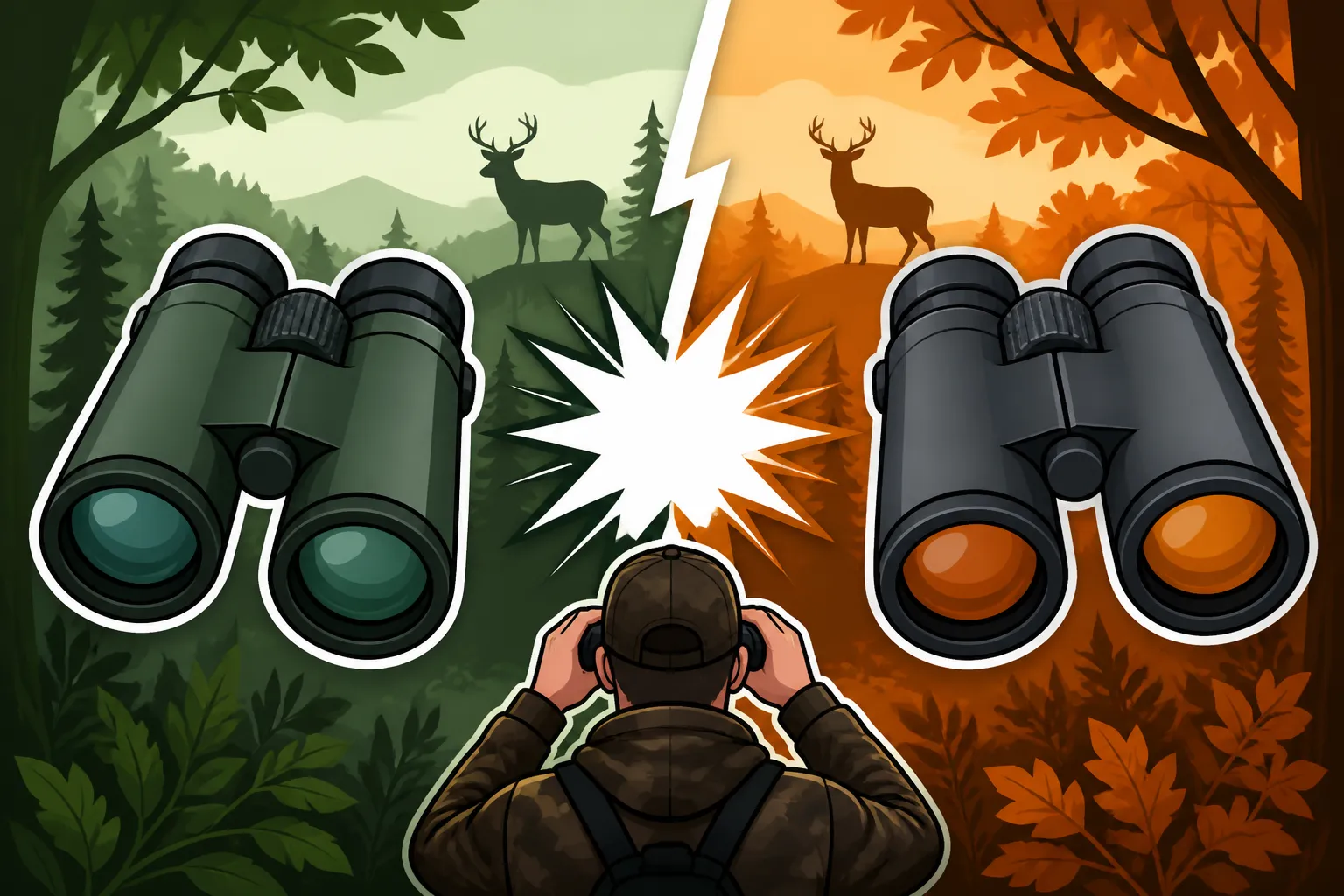
8×42 Versus 10×42 in the Woods
The search for the perfect pair of binoculars for hunting in New York often comes down to a deceptively simple choice: 8×42 or 10×42? It’s a decision that many hunters agonize over, knowing that a good pair of optics is a significant investment and can make or break a hunt. The frustration stems from not wanting to spend hard-earned money on something that doesn't quite fit the diverse terrain and hunting styles we experience, from the tight Adirondack thickets to the expansive Southern Tier farm fields. This guide will meticulously break down the real-world differences between these two popular binocular configurations, helping you confidently choose the best option for your New York hunting adventures.
Understanding Binocular Basics: Magnification and Objective Lens
Before we dive into the nitty-gritty of 8×42 versus 10×42, it’s essential to understand what those numbers actually mean. This foundational knowledge will help you grasp why a seemingly small difference in magnification can have a big impact in the field. It’s not just about how big an object appears; it's about stability, light gathering, and how much of the world you can see at once.
What Do the Numbers Mean?
Let's break down the common binocular notation like "8×42" or "10×42." The first number, "8x" or "10x," refers to the magnification. This means that an object viewed through 8x binoculars will appear eight times closer than it would with your naked eye, and ten times closer with 10x binoculars. It’s a straightforward concept, but its implications for field performance are significant. Think about trying to hold a camera steady when zoomed way in – the higher the magnification, the more noticeable any slight movement becomes, translating directly to how steady your image will be.
The second number, "42" in both cases, refers to the diameter of the objective lens in millimeters. This is the large lens at the front of the binoculars, the one that faces your target. The size of this lens is crucial because it dictates how much light the binoculars can gather. A larger objective lens can collect more light, which is incredibly important during those prime hunting hours at dawn and dusk when game is most active and natural light is at a premium. So, while the 42mm is constant in our comparison, understanding its role is key to appreciating overall binocular performance.
How Magnification Affects Image and Field of View
The magnification, that "8x" or "10x," directly influences two critical aspects of your viewing experience: the apparent size of the object and your field of view. Higher magnification, like 10x, brings distant objects closer and allows you to discern finer details. This can be a huge advantage when you’re trying to count antler points on a buck across a large field or identify a bear moving through distant timber. That extra zoom can sometimes be the difference between making a confident decision and passing on an animal.
However, greater magnification comes with a trade-off: a narrower field of view. The field of view refers to the width of the area you can see through your binoculars at a specific distance (often measured in feet at 1,000 yards, or in degrees). With 8x binoculars, you'll generally have a wider field of view than with 10x binoculars. This means you can scan a larger area more efficiently and acquire targets more quickly, which is invaluable when an animal might be moving through brush or when you're trying to locate a buck that just slipped into a thicket. A wider field of view also makes it easier to follow moving game, preventing that frustrating experience of "losing" an animal in your glass.
Objective Lens Size and Light Gathering
As mentioned, the 42mm objective lens in both our 8×42 and 10×42 examples is the light-gathering powerhouse of your binoculars. A larger objective lens gathers more ambient light, which is then transmitted to your eyes. This is why binoculars with larger objective lenses are often preferred for low-light conditions. During those critical moments right after first light or just before legal shooting hours end, every photon counts. The ability to see clearly in dim conditions can extend your effective hunting time and help you identify game that might otherwise blend into the shadows.
However, it's not just the absolute size of the objective lens, but how it pairs with the magnification that truly determines low-light performance. This brings us to the concept of the exit pupil. The exit pupil is the diameter of the light beam that exits the binoculars and enters your eye. It's calculated by dividing the objective lens diameter by the magnification. For an 8×42 binocular, the exit pupil is 42mm / 8 = 5.25mm. For a 10×42 binocular, it's 42mm / 10 = 4.2mm. A larger exit pupil allows more light into your eye, making the image appear brighter, especially when your pupils are dilated in low light (which can be up to 7mm in young adults, but typically closer to 5-6mm for most adult hunters). This difference, even if seemingly small, can make a noticeable impact on image brightness and clarity when you're straining to see details in the gloom of dawn or dusk in the New York woods.
The Case for 8×42 Binoculars in New York Woods
For many New York hunters, particularly those who spend most of their time in dense cover, the 8×42 binocular is often the unsung hero. It might not boast the highest magnification, but its inherent advantages often translate to more effective and comfortable glassing in the types of environments we frequently encounter. From the impenetrable Catskill timber to the shadowy Adirondack swamps, these binoculars shine where steady hands and a broad view are paramount.
Pros: Wider Field of View, More Stable Image, Better in Low Light
One of the most significant advantages of 8×42 binoculars is their wider field of view. When you're still-hunting through a mixed hardwood forest in the Southern Zone, or slowly picking apart a transition line in the Catskills, you're constantly scanning for subtle movements, a flick of an ear, or the horizontal line of a deer's back in a vertical world. A wider field of view allows you to cover more ground with each sweep, reducing the chance of missing an animal that might be slightly off-center. It helps you acquire targets faster, which is crucial when game appears suddenly and briefly in thick cover.
Secondly, the 8x magnification provides a much more stable image. Even the steadiest hands will experience some tremor, and this becomes far more pronounced with higher magnification. When you're trying to pick out a detail on a distant ridge, or identify a deer through the swirling leaves of a blustery November day, an 8x binocular will offer a steadier, clearer picture. This stability means less eye strain and more comfortable extended viewing sessions, which is important during those long waits on a stand. You can even use your GoHunt app to mark a potential movement corridor, then use your 8x42s to keep a close eye on it without constant jiggle.
Finally, as we discussed with the exit pupil, 8×42 binoculars generally offer better low-light performance than their 10x counterparts with the same objective lens size. The larger exit pupil (5.25mm vs. 4.2mm) means more light reaches your eye. This is a game-changer during legal hunting hours just after sunrise and just before sunset, when deer are most active. That extra bit of brightness can help you confidently identify a deer, or even count points, in conditions where a 10x might just show you a dark silhouette. This advantage is particularly valuable in the deep shadows of the Adirondack Forest Preserve or in tight, hemlock-filled ravines.
Cons: Less Magnification for Long-Distance Spotting
Of course, no optical device is perfect, and 8×42 binoculars do have their limitations. The primary drawback is the lower magnification. If your hunting style frequently involves glassing vast open areas, like sprawling cornfields in Western New York or distant clear-cuts in the Northern Zone, 8x magnification might leave you wanting more. You might struggle to pick out the subtle details, like a deer bedded down at 800 yards, or the tell-tale horizontal line of a buck's back in a far-off CRP field.
In such situations, what might look like a stump or a clump of dirt through 8x might reveal itself as a deer with a quick glance through a 10x or even higher power optic. This isn't to say 8x is useless in open country, but it certainly puts you at a disadvantage compared to higher magnification when distance is a factor. You might find yourself reaching for a spotting scope or relying more on your rifle scope if long-range identification is a regular part of your hunting strategy.
Scenarios Where 8×42 Shines
Consider these common New York hunting scenarios where 8×42 binoculars truly excel:
- Thick Catskill Timber: When you're Still-Hunting Catskill Ridges, moving slowly through dense hardwoods and hemlock groves, shots are often under 100 yards, and deer appear quickly. The wide field of view helps you scan effectively and acquire targets fast without "tunnel vision." The stable image allows you to quickly confirm what you're seeing through the brush.
- Dense Adirondack Spruce Swamps: These dark, tight areas demand quick target acquisition. You're often hunting tight funnels and looking for glimpses of movement. The superior low-light performance of 8x42s is invaluable here, helping you see into those deep shadows where deer often bed. Finding Sign in Big Adirondack Timber often involves discerning subtle details in low light, which 8x handles well.
- Still-Hunting and Close-Range Archery: If you're an archery hunter sitting in a treestand or using a ground blind, especially in early season when foliage is thick, 8x provides all the magnification you need for ethical shot placement confirmation. The wider field of view makes it easier to track a deer coming through the woods without having to constantly shift your head or binoculars. This is especially true when Treestand Setups in Adirondack Hardwoods are designed for closer encounters.
- Hunting the New York Rut in November: Bucks are on the move, often quickly, chasing does. The ability to rapidly scan large areas and quickly pick up a moving target is paramount. The 8×42 provides that balance of sufficient magnification and a generous field of view to keep up with the action.
The Case for 10×42 Binoculars for Varied New York Terrain
While 8x42s have a strong argument for timber hunters, the 10×42 configuration offers a compelling alternative for those whose hunting grounds demand more reach. If your New York hunting spans diverse landscapes, from rolling farmland to vast public land clearings, the extra magnification of a 10×42 can be a powerful asset. It allows you to peer deeper into the landscape, revealing details that might remain hidden to the naked eye or through lesser powered optics.
Pros: Greater Magnification for Long-Distance Observation
The most obvious advantage of 10×42 binoculars is the increased magnification. An object viewed through 10x will appear 25% closer than it would through 8x binoculars. This additional "reach" is incredibly beneficial when you’re trying to pick apart details at greater distances. Imagine looking across a vast field in the Southern Tier, trying to determine if that dark blob near the far treeline is a stump, a hay bale, or a feeding deer. With 10x, you're much more likely to make that identification confidently. This is particularly useful when Hunting Southern Tier Farmland Deer where vast agricultural fields are common.
This enhanced magnification allows you to better scout an area from a distance without disturbing game. You can sit on a high vantage point, utilize a resource like GoHunt to mark potential travel corridors or bedding areas, and then systematically glass these zones for hours. The 10x magnification helps you discern if that slight movement in the distant brush is a branch swaying or an antler tip, or if that darker patch is a shadow or a bedded buck. It can save you miles of walking and help you refine your strategy before committing to a stalk.
Cons: Narrower Field of View, More Susceptible to Hand Shake
As we discussed, the trade-off for higher magnification is a narrower field of view. When you're using 10×42 binoculars, the area you can see at one time is smaller. This means you’ll need to scan more diligently, slowly sweeping the terrain to ensure you don’t miss anything. In dense cover, where animals might only present themselves for a split second, this narrower window can make target acquisition more challenging. It's like looking through a straw compared to looking through a toilet paper roll – you see more detail, but less of the overall picture.
Another significant drawback of 10x magnification is its increased susceptibility to hand shake. Even subtle tremors in your hands are magnified by 10, making the image appear jumpy and difficult to stabilize. This can lead to eye fatigue and make it harder to focus on fine details, particularly during extended glassing sessions. If you’re trying to pick out a detail on a distant buck, and the image is constantly jiggling, the extra magnification might not actually deliver a clearer picture. Many hunters find that bracing against a tree or using a tripod is almost a necessity for comfortable and effective glassing with 10x binoculars, especially if they are spending long hours trying to spot deer on open ridges or across wide valleys.
Scenarios Where 10×42 Excels
Here are specific New York hunting situations where 10×42 binoculars truly demonstrate their value:
- Southern Tier Farmland Edges: In areas with mixed forests and large agricultural fields, like those found in the Southern Tier, you'll often be observing deer from hundreds of yards away. A 10×42 allows you to effectively Hunting a Standing Cornfield in Farm Country or a distant alfalfa field, identifying individual deer and assessing their size before making a move.
- Finger Lakes Gorges and Ridgelines: The Finger Lakes region boasts varied topography with deep gorges and expansive ridgelines. Hunting here often involves spotting game across valleys or on opposing hillsides. The extra magnification helps you pick apart distant cover and identify movement from a strategic vantage point. This is crucial for success when Hunting Finger Lakes Region Deer.
- Spotting Deer in Clear-Cuts and Burn Areas: In the Northern Zone, where logging is more prevalent, clear-cuts or regrowing areas can be vast. Deer often browse in these areas, and a 10×42 binocular allows you to thoroughly scan these large, often distant, sections of habitat from a single position.
- Calling Coyotes in a New York Winter: When you're predator hunting, especially in more open country or fields covered in snow, you need to spot coyotes approaching from a long way off. The 10x magnification helps you pick out that subtle movement against a snowy backdrop, giving you more time to get set up for the shot. Coyote Calling in a New York Winter often demands this kind of reach.
Making Your Choice: Matching Binoculars to Your New York Hunting Style
Ultimately, the "best" binocular for you isn't about one being inherently superior to the other; it's about which tool best fits your specific needs as a New York hunter. Your choice should align with your primary hunting methods, the typical terrain you frequent, and your personal preferences for stability versus magnification.
Consider Your Primary Hunting Method
Think about how you spend most of your time in the woods:
- Still-hunting or Tracking in Dense Woods: If you're constantly on the move, navigating thick brush, and expecting close-range encounters, an 8×42 is often the better choice. Its wider field of view and steadier image make it easier to acquire fast-moving targets and scan effectively while on the move. When you're walking slowly through a dense woodlot looking for fresh tracks or subtle deer sign, the 8x will keep the world from bouncing around too much.
- Stand Hunting or Blind Hunting in Mixed or Open Country: If you primarily sit in a treestand overlooking a food plot, or a ground blind on a field edge, you'll often benefit from the extra reach of a 10×42. From a stationary position, you can brace your binoculars, minimizing shake, and use the magnification to study distant deer, identify antler size, or observe their behavior without spooking them. This is especially true if you are hunting areas where you expect longer observation distances, allowing you to really Read Aerial Photos for Southern Tier Deer and then pick apart the actual landscape with your glass.
- Archery vs. Rifle Hunting: For bowhunters, who typically operate at closer ranges, the 8×42's wider field of view and superior low-light performance (crucial during early morning and late evening draws) often make it the preferred choice. Rifle hunters, especially those in open areas, might lean towards 10×42 for better long-range identification, confirming ethical shot placement, and evaluating antler restrictions.
Consider Your Typical Terrain
New York State offers an incredible variety of hunting terrain, and your binocular choice should reflect this diversity:
- Heavy Timber and Mountainous Terrain (Adirondacks, Catskills): In these areas, where visibility is often limited to 50-150 yards, and slopes can make stable glassing difficult, the 8×42's wider field of view, increased stability, and better low-light performance are significant advantages. You're less likely to need extreme magnification, and more likely to appreciate the ability to quickly scan a narrow shooting lane or a thick bedding area. Consider if you're often setting up Hanging a Stand on an Adirondack Funnel or Entry Routes on Steep Catskill Ground.
- Mixed Farmland and Woodlots (Southern Tier, Finger Lakes, Western NY): If your hunting involves a mix of dense woods and open fields, this is where the decision becomes tougher. A 10×42 can excel when you're glassing across large fields from a treeline. However, if you also spend a lot of time still-hunting the woodlots, an 8×42 might be more versatile. Many hunters in these areas will actually carry both, or pair their 10x binoculars with a wider-field-of-view rifle scope, like those often discussed for Rifle Scopes for Low-Light Timber.
- Open Areas (Large clear-cuts, marshes, coastal plains): For those rare moments of wide-open spaces in New York, such as hunting certain waterfowl zones or vast logging clearings, the 10×42 offers a distinct advantage in identifying distant game. If your primary hunting style involves scouting vast expanses, the 10x will be a valuable asset.
Trying Before Buying
This is perhaps the most crucial advice: try them out! Visit a local optics dealer, or borrow a friend's binoculars. Hold both 8×42 and 10×42 models in your hands. Walk around outside with them, try glassing objects at different distances, and simulate real-world hunting conditions as much as possible. Pay attention to eye relief, how comfortable they feel, and whether you can hold the image steady. Even a slight difference in comfort or stability can make a huge difference after hours in the field. Don't be afraid to ask questions. Sometimes, a brand like GoHunt, known for their mapping tools, might also have resources or recommendations on optics that pair well with their scouting data.
Ultimately, the best binoculars for you are the ones you'll carry, use, and feel confident with in the field.
Comparison Table: 8×42 vs. 10×42 for New York Hunting
To summarize the key differences and help you visualize the choice, here's a comparison based on typical New York hunting scenarios:
| Feature | 8×42 Binoculars | 10×42 Binoculars | Ideal New York Hunting Scenarios |
|---|---|---|---|
| Magnification | 8x (Objects appear 8x closer) | 10x (Objects appear 10x closer) | 8x for close to mid-range; 10x for mid to long-range. |
| Field of View | Wider, easier to scan and acquire targets | Narrower, requires more precise scanning | 8x for dense woods, still-hunting, tracking. 10x for open fields, clear-cuts, long-distance observation. |
| Image Stability | More stable, less hand shake | More susceptible to hand shake, often needs bracing | 8x for handheld use, moving targets. 10x often benefits from a tripod or bracing for extended viewing. |
| Low Light Perf. | Better (larger exit pupil), brighter image | Slightly less bright (smaller exit pupil) | 8x excels in dawn/dusk, deep timber. 10x is good in decent light but may struggle a bit more in extreme low light. |
| Eye Strain | Generally less eye strain, more comfortable | Can cause more eye strain with prolonged use | 8x for long hours glassing. 10x might require more breaks or better bracing. |
| Detail at Dist. | Good up to moderate distances | Excellent for fine details at longer distances | 8x for distinguishing features up to 150-200 yards. 10x for 200+ yards, antler counting, identifying bedded game. |
| Weight/Size | Often slightly lighter/more compact feel (minor) | Often slightly heavier/more substantial feel (minor) | Both are generally portable. |
Ultimately, consider if you're predominantly a deep woods hunter navigating Hunting Pressure on New York Public Land in thick cover, or if you regularly find yourself perched overlooking vast landscapes. Your binoculars are an extension of your eyes, and choosing the right pair will significantly enhance your hunting experience in New York. Don't rush the decision, because a good pair of binoculars will be a faithful companion for many seasons to come.
Disclaimer
This article is for general informational purposes only and does not constitute professional advice. Laws, prices and regulations vary by location and change over time. Consult a qualified professional for guidance on your specific situation.