Bear Hunting Gear Without Bait
Hunting black bears in New York State presents a unique challenge, especially given our strict no-baiting regulations. This isn't like hunting over a barrel in other states; here, you're tracking, still-hunting, and putting in serious miles to intercept these intelligent, wide-ranging animals on their own terms. It's tough, rewarding work, and your gear absolutely needs to be up to the task. This comprehensive guide will walk you through the essential equipment you'll need to successfully pursue New York's black bears without the aid of bait, from your primary weapon to the boots on your feet and the tools to get your hard-earned harvest out of the woods.
Understanding New York's No-Bait Rule and Its Gear Implications
First off, let's address the elephant in the room – or rather, the bear not over a bait pile. New York State prohibits the use of bait to hunt bears. This isn't just a minor regulation; it fundamentally changes the type of gear and tactics you employ. You won't be setting up a static stand over a barrel for days on end, waiting for a bear to come to you. Instead, you'll be actively searching for bears, often covering vast tracts of challenging terrain. This means your gear needs to be durable, portable, and suited for extended periods of movement and observation, rather than just waiting. It places a huge emphasis on scouting, mobility, and being prepared for an encounter at any moment.
The Impact on Your Hunting Strategy
The "no bait" rule forces New York bear hunters to adopt more traditional, active hunting methods. This often involves extensive scouting to locate natural food sources like beech nuts, acorns, berries, or even agricultural crops that bears are frequenting. You might spend days hiking through the Adirondack Forest Preserve or traversing the steep slopes of the Catskill Forest Preserve, looking for fresh sign: scat, overturned rocks, claw marks on trees, or trampled paths leading to feeding areas. When you find these areas, your strategy becomes either still-hunting – moving slowly and deliberately through cover, trying to spot a bear before it spots you – or setting up an ambush point along a known travel corridor or near a promising food source. This active style means every item you carry needs to earn its place in your pack. Weight becomes a critical consideration, as does versatility.
How Gear Choices Reflect Active Hunting
Because you're not stationary over bait, your gear choices shift dramatically. Instead of prioritizing comfort for long sits in a blind, you'll lean towards lightweight, rugged equipment that can withstand miles of abuse. Your optics need to be sharp enough to pick out a bear in dense timber, not just identify one at a close, predictable range. Your weapon needs to be reliable and accurate, capable of delivering a precise shot, often quickly and from an unsupported position, when an opportunity arises. Furthermore, self-sufficiency is key. You'll be further from your vehicle, often in more remote areas, so navigation tools, first-aid, and emergency shelter become paramount. This isn't about setting it and forgetting it; it's about being prepared for an expedition every time you step into bear country.
Rifles and Ammunition for Black Bears
Choosing the right firearm for black bears in New York is a balance of power, accuracy, and handling characteristics suited to dense woods and open ridges. While black bears aren't grizzly bears, they are tough animals, and proper bullet placement with a suitable caliber is critical for a humane and efficient harvest. New York permits rifles, shotguns, and muzzleloaders for bear hunting, depending on the specific season and Wildlife Management Unit (WMU).
Top Rifle Calibers for New York Black Bears
When it comes to rifles, you want a caliber that delivers sufficient energy and penetration for a clean kill on a bear that can weigh hundreds of pounds. While many deer calibers can certainly take a bear, opting for something with a bit more punch can provide an extra margin of error, especially if you hit bone.
Here's a breakdown of common and effective rifle calibers:
- .30-06 Springfield: A classic for a reason. It offers excellent power, a flat trajectory, and a wide variety of bullet weights. It's more than capable of taking down any New York black bear, even at longer distances should the situation present itself in more open terrain like clear-cuts or large natural openings.
- .308 Winchester: Similar to the .30-06 but in a shorter action, the .308 is renowned for its accuracy and efficiency. It’s a fantastic choice for both deer and bear, providing ample knockdown power in a compact package, which can be a real benefit when maneuvering through thick Catskill timber.
- .270 Winchester: Often considered a premier deer caliber, the .270 also has plenty of steam for black bears. With good bullet construction, it will perform admirably. It's a popular choice for those who want a versatile rifle for multiple big game species.
- .30-30 Winchester: For hunters who prefer lever actions or anticipate closer shots in dense Adirondack forests, the .30-30 remains a viable option. While its effective range is shorter, it’s a proven performer at woods ranges with proper bullet selection.
- 6.5 Creedmoor / .30-06 / .308 Comparison
| Caliber | Optimal Range (yards) | Kinetic Energy (ft-lbs @ 100 yds) | Recoil (relative) | Common Use Case |
|---|---|---|---|---|
| 6.5 Creedmoor | 0-300 | ~1800-2000 | Moderate | Versatile, accurate, good for deer and bear in mixed terrain |
| .308 Winchester | 0-250 | ~2200-2600 | Moderate-Heavy | Reliable, accurate, excellent for timber and medium ranges |
| .30-06 Spfd. | 0-300+ | ~2600-3000+ | Heavy | Powerful, versatile, handles long shots and heavy game |
Note: Kinetic energy and optimal range depend heavily on specific bullet weight and construction.
Ammunition Selection for Bears
Beyond caliber, the specific ammunition you choose is paramount. You want a bullet designed for deep penetration and controlled expansion, especially when a bear’s thick hide, heavy bones, and dense muscle are in play. Avoid varmint or rapidly expanding deer bullets that might fragment on impact. Look for:
- Bonded Bullets: These bullets have their lead core chemically bonded to the copper jacket, preventing separation and ensuring high weight retention and deep penetration. Examples include Federal Fusion, Nosler AccuBond, and Hornady InterBond.
- Partitioned Bullets: Featuring a partition that separates the front and rear lead cores, these bullets offer excellent expansion in the front while the rear portion remains intact for deep penetration. The Nosler Partition is the classic example.
- Monolithic (All-Copper) Bullets: Barnes TSX, Hornady GMX, and Federal Trophy Copper are excellent choices for bears. They retain virtually 100% of their weight, punch through bone, and expand reliably without shedding fragments, often creating impressive wound channels.
Always ensure you practice with your chosen ammunition to confirm accuracy and point of impact before heading into the woods. A poorly placed shot, even with the best bullet, can lead to a difficult or lost bear.
Optics: Seeing Bears in New York's Cover
Effective optics are non-negotiable for bear hunting in New York, especially when you're not hunting over a bait pile. You'll be spending a significant amount of time glassing dense timber, scanning distant ridges, and trying to pick apart shadows, often in low light conditions. The right binoculars and a capable rifle scope can mean the difference between spotting a bear and walking right past it.
Binoculars for Scanning and Spotting
Your binoculars are your primary scouting tool. They help you pick apart thickets, search for movement in distant openings, and identify natural food sources from afar.
- Magnification and Objective Lens: For most New York bear hunting scenarios, an 8×42 or 10×42 binocular is ideal. An 8x magnification provides a wider field of view and is steadier to hold, which is great for scanning dense woods like those you find in the Catskill Forest Preserve. A 10x offers a bit more reach for longer distances or slightly more open areas, such as logging cuts or power line rights-of-way. The 42mm objective lens strikes an excellent balance between light gathering capability and portability. Avoid anything much larger, as heavy binoculars become a burden during long hikes.
- Quality Glass: Invest in the best quality glass you can afford. The clarity, brightness, and edge-to-edge sharpness of good binoculars make a huge difference, particularly in the dim light of dawn and dusk when bears are most active. Look for features like phase-coated prisms and fully multi-coated lenses. Brands like Vortex, Leupold, and Maven offer excellent performance for the price.
- Durability and Ergonomics: Your binoculars will take a beating. They need to be waterproof and fogproof, capable of handling the damp, sometimes harsh, conditions of New York's backcountry. Ergonomics are also key; ensure they fit comfortably in your hands and are easy to operate with gloves on. A good bino harness will keep them secure, accessible, and prevent neck strain during long days in the woods.
Rifle Scopes for Precision
When you finally spot that bear, your rifle scope is what helps you make a precise shot. Since most bear encounters in New York are likely to be at shorter to medium ranges in timber, extreme magnification isn isn't typically necessary.
- Magnification Range: A variable power scope in the 2-10x or 3-9x range is highly versatile. A low-end magnification (2x or 3x) allows for quick target acquisition in thick cover if a bear busts out close. The higher end (9x or 10x) is plenty for shots out to a couple hundred yards, which is about as far as you'll typically shoot in New York's varied terrain. For true backcountry hunts where a longer shot might present itself, a 3-12x or 4-16x might be considered, but remember that higher magnification often comes with a trade-off in field of view and low-light performance at the low end.
- Low-Light Performance: Bears are crepuscular, meaning most active at dawn and dusk. A scope with excellent light transmission is crucial. Look for a large objective lens (40mm or 42mm is often sufficient, but 50mm can offer a bit more light gathering), fully multi-coated lenses, and a good exit pupil. An illuminated reticle can also be a significant advantage in low light or against a dark bear hide in deep shadows.
- Durability and Reliability: Just like your binoculars, your scope needs to be built to withstand the elements. Waterproofing, fogproofing, and robust construction are essential. A scope that holds zero reliably after bumps and knocks is non-negotiable.
Rangefinders in Thick Catskill Cover
A reliable rangefinder is an invaluable tool for bear hunting. While many shots might be close, knowing the exact distance to your target, especially if it's quartering away or in broken terrain, can prevent a misjudgment. In areas with varying terrain and dense foliage, estimating distance can be incredibly difficult. A rangefinder removes that guesswork. Look for one that can quickly acquire targets in brush and has angle compensation features if you're hunting steep ground like the Catskills. Even if you're only ranging out to 150-200 yards, knowing that exact distance helps you hold dead on, giving you the confidence for a clean shot when the moment arrives.
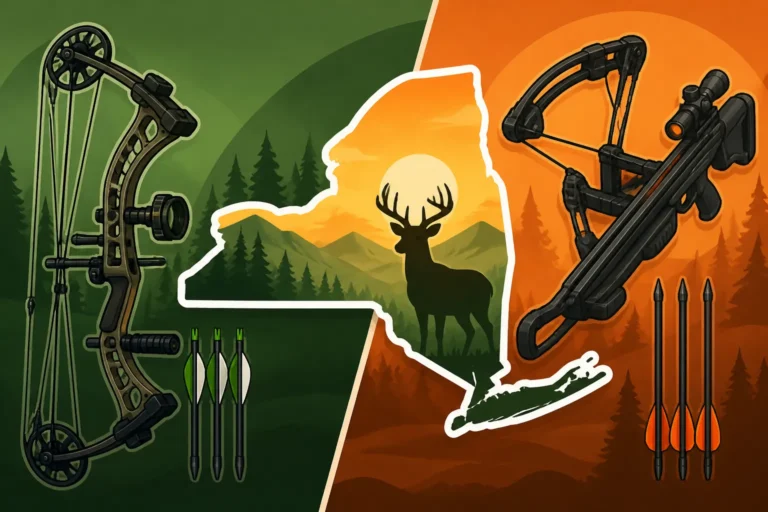
Archery Gear for Close Encounters
Bowhunting for black bears in New York is an intensely personal and challenging pursuit, demanding precision, patience, and excellent woodsmanship. Given the no-bait rule, success hinges on finding natural food sources, ambushing travel corridors, or executing a silent still-hunt. Your archery gear must be finely tuned and robust enough for such demanding encounters.
Bow Setup for New York Black Bears
Whether you prefer a compound, recurve, or longbow, your setup needs to deliver sufficient kinetic energy and momentum to penetrate a bear's thick hide, heavy bone structure, and dense muscle.
- Draw Weight: For black bears, most experienced bowhunters recommend a minimum draw weight of 50-60 pounds for compounds, with some preferring even more. For traditional bows, aim for a draw weight in the 55-pound plus range. This ensures adequate power for penetration, especially with a well-placed shot. Always choose a draw weight you can comfortably and accurately hold and shoot from various positions, including awkward ones you might encounter in the woods.
- Bow Tuning: Your bow must be perfectly tuned. Any inconsistencies in arrow flight will be magnified, reducing penetration and accuracy. Broadhead tuning is especially critical. Ensure your broadheads fly exactly like your field points. This might involve minor adjustments to your rest, nocking point, or even arrow spine.
- Accessories:
- Sights: A multi-pin sight is common for compounds, allowing for quick adjustments at varying distances. A single-pin slider sight can also work well if you practice ranging and adjusting quickly. Fiber optic pins with good light gathering are crucial in low light.
- Rest: A full-capture or drop-away rest is generally preferred to ensure consistent arrow launch and broadhead clearance.
- Stabilizer: A good stabilizer helps balance the bow, reduces hand shock, and can improve accuracy, especially on longer shots or when shooting in windy conditions.
Broadheads for Timber Shots
The broadhead is arguably the most critical component of your archery setup for bears. You need maximum penetration and a devastating wound channel for a quick, ethical kill.
- Fixed-Blade Broadheads: Many veteran bear hunters swear by fixed-blade broadheads for their superior penetration and reliability. They have no moving parts to fail and are known for cutting through tough hide and bone. Look for a strong, sharp, two or three-blade design with a sturdy ferrule. Examples include Exodus, Iron Will, Magnus Stinger, or GrizzlyStik. The key is extreme sharpness and structural integrity.
- Mechanical Broadheads: While some hunters use mechanical broadheads, particularly those with a large cutting diameter, it's essential to choose a robust design specifically engineered for larger, tougher game. Look for designs with stout blades and a strong tip, ensuring they don't deploy prematurely or fail to penetrate adequately. Ensure they are legal in New York, as some states have specific regulations regarding mechanicals. If opting for mechanicals, practice extensively to ensure they deploy consistently and penetrate deeply on foam targets.
- Arrow Weight: For bear hunting, a heavier arrow (450-550 grains total arrow weight or more) combined with a heavy-for-spine broadhead will increase kinetic energy and momentum, leading to deeper penetration. This is often more important than sheer speed when targeting tough animals like bears. A heavier arrow also tends to be quieter.
Crossbow Rules During New York Archery Season
New York State allows crossbows during the regular archery season for big game, which includes black bear. This offers another option for hunters. While the rules are generally straightforward, always confirm current regulations, especially if you hunt near areas with special restrictions. Crossbows deliver significant kinetic energy and speed, making them effective for bears. The same principles of broadhead selection and shot placement apply. Ensure your crossbow is sighted in, and that you're comfortable and accurate with it out to your maximum ethical shooting range. The ability to hold the reticle steady for longer periods can be an advantage when waiting for a clear shot. Crossbow Rules During New York Archery Season provides more detail on specific regulations.
Clothing and Layering for Bear Country
Hunting New York's bear country means dealing with unpredictable weather, especially in the fall. From crisp, clear mornings to sudden downpours or even early snow in the higher elevations of the Adirondacks or Catskills, your clothing system needs to adapt. Effective layering is not just about comfort; it's about safety and staying focused when that bear finally presents an opportunity.
Base Layers for Moisture Management
Your base layer is the foundation of your entire clothing system. Its primary job is to wick moisture (sweat) away from your skin, keeping you dry and preventing dangerous chilling, especially when you stop moving after a strenuous hike.
- Material Choice: Merino wool is a fantastic option. It's naturally breathable, excellent at wicking, retains warmth even when damp, and is naturally odor-resistant, which is a huge plus when you're working hard in the backcountry for multiple days. Synthetic base layers (polyester, polypropylene) are also effective, often more durable, quicker drying, and usually more affordable. Avoid cotton at all costs; it absorbs moisture and holds it against your skin, making you cold and clammy.
- Weight: Choose a lightweight or mid-weight base layer depending on the expected temperatures. A lightweight top and bottom are usually sufficient, allowing you to add warmth with subsequent layers. For very cold late-season hunts, a heavy-weight base layer might be appropriate.
- Fit: Base layers should fit snugly against your skin to maximize their wicking capabilities. Too loose, and they won't pull moisture away effectively.
Mid-Layers for Insulation
Mid-layers provide the bulk of your warmth. They trap air close to your body, creating an insulating barrier against the cold.
- Fleece: Fleece jackets and pants are popular mid-layers due to their warmth-to-weight ratio, breathability, and quick-drying properties. Different weights of fleece offer varying levels of insulation.
- Puffy Jackets/Vests: Down or synthetic insulated jackets and vests are excellent for packing warmth without bulk. They compress easily into your pack, making them perfect for throwing on during a break, while glassing, or after the shot when your body temperature drops. Synthetics perform better when wet than down, which can be a consideration in damp New York weather.
- Softshells: A good softshell jacket or pant can serve as both an outer layer in mild conditions and a mid-layer under a heavier shell. They offer good wind resistance and a degree of water repellency while remaining breathable.
Outer Layers for Weather Protection
Your outer layer, or shell, protects you from wind, rain, and snow, keeping your insulating layers dry and effective.
- Waterproof/Breathable Shells: A high-quality waterproof and breathable jacket and pants are essential for New York's variable weather. Look for garments with Gore-Tex, eVent, or similar proprietary waterproof membranes. These allow sweat vapor to escape while preventing external moisture from getting in. This is crucial for staying dry and comfortable during a sudden Catskill thunderstorm or a long walk through wet Adirondack brush.
- Windproof Layers: Even if it's not raining, a strong wind can cut through insulating layers and dramatically reduce your comfort. Many good waterproof shells are also windproof. Some hunters also carry a lightweight windbreaker for milder, windy days when a full rain shell isn't needed.
- Quietness: When actively hunting, stealth is key. Choose outer layers that are as quiet as possible. Crinkly rain gear can spook game, so look for fabrics designed for quiet movement.
Boots for New York Swamps and Snow
Footwear is arguably one of the most important gear choices for bear hunting in New York. You'll be covering rugged terrain, often wet, and potentially encountering snow.
- Waterproof and Durable: Your boots must be waterproof. New York's woods are often damp, with stream crossings, marshy areas, and wet leaves. Look for boots with a Gore-Tex liner or similar waterproof membrane. The uppers should be tough enough to withstand abrasion from rocks and brush.
- Support and Traction: Choose boots that provide excellent ankle support, especially if you're traversing steep, uneven terrain. Aggressive outsoles with deep lugs are critical for traction on wet leaves, mud, rocks, and potentially snow.
- Insulation: The amount of insulation you need depends on the season. For early fall, uninsulated or lightly insulated boots might suffice. As the season progresses into late fall and early winter, you'll want boots with 400-800 grams of Thinsulate or similar insulation to keep your feet warm during long sits or cold treks. Always try on boots with the thickest socks you plan to wear.
- Rubber Boots: For incredibly wet conditions, particularly if you're still-hunting swamp edges or areas where you know you'll be slogging through mud, high-quality rubber boots (like those from Muck Boot Co. or LaCrosse) can be invaluable. They offer 100% waterproofing and can be surprisingly comfortable for walking, provided you choose a pair with good support.
Navigation and Safety in Remote Terrain
New York's bear habitat can be vast and unforgiving. Whether you're in the deep wilderness of the Adirondacks or the extensive public lands of the Catskills, reliable navigation and safety gear are paramount, especially when hunting without bait, which often takes you deeper into less-traveled areas. Never underestimate the potential to get turned around, even in familiar territory.
GPS Units and Smartphone Apps
Modern technology has revolutionized backcountry navigation, but it's crucial to have redundant systems.
- Dedicated GPS Unit: A dedicated handheld GPS unit is highly recommended. These devices are built to withstand abuse, are generally more durable, have longer battery life, and are designed to function even without cell service. They allow you to mark waypoints (vehicle, stand locations, bear sign, kill site), track your path, and navigate back to safety. Familiarize yourself with how to use it before you're in the woods. Garmin's GPSMAP series or InReach devices are popular choices, offering robust features and satellite communication options.
- Smartphone Apps: Apps like GoHunt (which offers robust mapping features), Gaia GPS, or onX Hunt are incredibly powerful tools. They provide detailed topographic maps, aerial imagery, property boundaries (critical for knowing public vs. private land), and the ability to mark waypoints. However, smartphones have limited battery life in the cold and can be unreliable without cell service. Always download offline maps for your hunting area before you leave home. Carry a portable power bank to recharge your phone, and keep it in an inside pocket to preserve battery in cold weather. While Scouting With the New York HuntFishNY App is a great start, combining it with a commercial app like GoHunt provides even greater detail.
- Old-School Map and Compass: This is your ultimate backup. Technology can fail – batteries die, screens crack. A waterproof topographic map of your hunting area and a reliable compass are essential. Know how to use them to navigate by terrain features, even if you just check them periodically to confirm your GPS readings.
Essential Safety Gear
Beyond navigation, a few key items can make a critical difference in an emergency.
- First-Aid Kit: A compact, well-stocked first-aid kit is non-negotiable. It should include supplies for cuts, scrapes, blisters, sprains, and any personal medications. Consider adding a tourniquet for severe bleeding.
- Headlamp: Even if you plan to be out before dark, things can go wrong. A reliable headlamp with extra batteries is crucial for navigating in low light or darkness, especially if you're tracking a bear after dusk.
- Fire Starting Kit: Waterproof matches, a lighter, or a ferro rod can be life-saving if you need to build a fire for warmth or signaling.
- Emergency Shelter: A lightweight emergency blanket, space blanket, or bivy sack can provide critical protection from hypothermia if you get stranded or injured.
- Whistle: A loud whistle is an effective signaling device if you get lost or need to attract attention.
- Communication Device: A satellite messenger (like a Garmin InReach or Zoleo) allows you to send and receive text messages and, more importantly, trigger an SOS call to emergency services even without cell service. These are worth their weight in gold for truly remote hunts.
Bear Spray vs. Sidearm
This is a frequently debated topic, and individual preference plays a large role. In New York, carrying a sidearm for self-defense is legal with the proper permits, but bear spray is also an option.
- Bear Spray: Designed to deter aggressive bears, bear spray is a non-lethal option. It's often effective and requires less training than a firearm. It creates a deterrent cloud that irritates a bear's respiratory system and eyes. Always carry it in an accessible holster on your chest or hip, not in your pack.
- Sidearm: If you choose to carry a handgun for bear defense, ensure you are proficient with it and have practiced drawing and firing quickly under stress. A larger caliber (.44 Magnum, 10mm, or .45 ACP +P) loaded with hard-cast or heavy-for-caliber jacketed hollow points is generally recommended. The primary goal is to deter an attack, not necessarily to kill the bear. Remember, a sidearm is a last resort.
Many hunters carry both, using bear spray as a primary deterrent and the sidearm as a backup. The most important thing is to be prepared and confident in whatever method you choose. Your safety is paramount in New York's bear country.
Meat Care and Extraction Gear
Successfully harvesting a black bear in New York is just the first step; the real work often begins after the shot. Given that you're likely hunting far from roads and often in rugged terrain, having the right gear to properly care for and extract the meat is crucial. Bears are large animals, and their fat renders quickly, so prompt field dressing and cooling are essential to preserve the quality of the meat.
Field Dressing Tools
Proper field dressing immediately after the kill is vital to cooling the carcass and preventing spoilage, especially if temperatures are mild.
- Sharp Knife: A sturdy, razor-sharp fixed-blade knife is your primary tool. Carry a spare or a sharpener to maintain a keen edge. Look for knives with a comfortable, non-slip grip. A gut hook can be useful for opening the belly cavity without piercing intestines, but a sharp point and careful technique work just as well.
- Bone Saw: While not always strictly necessary, a small, collapsible bone saw can be invaluable for splitting the pelvis or sternum, allowing for more thorough cleaning and cooling of the body cavity. It can also help with quartering the animal for easier packing.
- Gloves: Latex or nitrile gloves are essential for hygiene and to protect yourself from blood-borne pathogens. Carry several pairs.
- Game Bags: Breathable game bags are critical. They protect the meat from flies, dirt, and debris while allowing air to circulate, which helps cool the meat. Do not use plastic tarps or garbage bags directly on the meat, as they trap heat and moisture, promoting bacterial growth. Quality synthetic game bags are lightweight, reusable, and tough enough to withstand rough handling.
- Bear Tooth Submission: Don't forget your bear tooth submission kit! New York requires hunters to submit a premolar tooth from their harvested bear for population management studies. Have the necessary paperwork and a small ziplock bag ready. Submitting a Bear Tooth Sample provides detailed instructions.
Hauling and Extraction Systems
A mature black bear can weigh anywhere from 150 to over 500 pounds. Getting that much weight out of the backcountry, especially over steep, uneven ground, is a monumental task. You need a plan and the right gear.
- Frame Pack: For quartering out a bear and packing it out in pieces, a sturdy external or internal frame pack designed for heavy loads is a must. Look for packs with comfortable hip belts, strong suspension systems, and ample capacity. You'll be putting a lot of weight in it, so comfort and durability are key. Many hunters choose packs that allow them to attach quarters externally to the frame, keeping blood off the pack's main compartment. Packs Built for a Multi-Day Backcountry Hunt delves into good options.
- Game Carts/Sleds: If you're fortunate enough to kill a bear near a relatively flat logging road or ATV trail, a heavy-duty game cart can be a lifesaver. However, for most of New York's rugged public land, a cart might be impractical. In snowy conditions, a deer sled can make dragging a whole bear (or large pieces) much easier over slippery terrain.
- Rope/Hoist: A strong rope and perhaps a small gambrel or pulley system can be useful for hanging quarters in a tree to cool, or for helping to maneuver a heavy animal for skinning and quartering.
- Coolers: Once you get the meat back to your vehicle, large, durable coolers are essential for keeping it cold, especially during warmer early season hunts. Fill them with ice immediately. If you have a long drive home, consider dry ice for added cooling power.
Handling a Bear After the Shot
Unlike deer, bears have a significant layer of fat that acts as an insulator, making it harder for the carcass to cool down. This fat can also render and impart off-flavors to the meat if not handled correctly.
- Cooling Quickly: The priority is to cool the meat as rapidly as possible. After field dressing, prop the cavity open with sticks to allow air circulation. If possible, skin the bear in the field and quarter it immediately. This exposes more surface area to the air and significantly speeds up the cooling process.
- Cleanliness: Keep the meat as clean as possible. Avoid dragging the carcass through dirt if possible. Use your game bags to protect the meat.
- Transport: Transport the meat in game bags in your pack. If you're using a vehicle, ensure the meat is in coolers with ice. Do not transport an entire unskinned bear in the back of a pickup truck in warm weather, as it will likely spoil.
Taking the time to invest in good meat care and extraction gear will ensure that your hard-earned bear meat is a delicious and lasting reward for your efforts.
Scouting and E-Scouting Tools
In New York, where you can't rely on bait to bring bears to you, comprehensive scouting is absolutely critical. Black bears are highly nomadic and their movements are dictated primarily by available food sources, which can change throughout the season and from year to year. You need to know where they are, what they're eating, and how they're moving through the landscape. This is where a combination of physical and "e-scouting" tools comes into play.
E-Scouting from Home
Before you even step foot in the woods, powerful digital mapping tools can give you a significant advantage.
- Satellite Imagery: Platforms like GoHunt's mapping tools, onX Hunt, or even Google Earth offer invaluable satellite imagery. Use these to identify:
- Potential Food Sources: Look for mast-producing trees (oaks, beech), berry patches (if season-appropriate), apple orchards, and agricultural fields (corn, soybeans) that bears might be visiting. Sometimes these appear as distinct color changes or patterns.
- Travel Corridors: Identify natural funnels, pinch points, dense cover leading to feeding areas, creek bottoms, logging roads, and ridge lines that bears are likely to use for travel between bedding and feeding.
- Bedding Areas: Look for thick, north-facing slopes, dense conifer stands, or areas with heavy blowdowns where bears might seek cover and rest.
- Water Sources: While bears don't need a constant, open water source, knowing where streams, ponds, or marshes are can help predict travel.
- Topographic Maps: Overlaying topo lines on your satellite imagery helps you understand the terrain. Identify steep draws, subtle benches, and ridgelines. Bears often travel along contours to conserve energy or use thick draws for cover. GoHunt and other apps allow you to easily switch between topo and satellite views.
- Property Boundaries: Crucially for public land hunting in New York, these apps clearly show public and private land boundaries. This helps you avoid trespass and identify accessible hunting areas within the Adirondack Forest Preserve, Catskill Forest Preserve, or various New York State Forest Hunting tracts. Knowing exactly where the lines are keeps you legal and out of trouble.
On-the-Ground Scouting
No amount of e-scouting can replace boots on the ground. Once you've identified promising areas from your maps, you need to verify them in person.
- Reading Sign: Look for fresh bear sign. This includes:
- Scat: Droppings vary in appearance depending on what the bear has been eating (e.g., berry seeds, corn husks, hair). Fresh scat indicates recent activity.
- Tracks: Identify paw prints, especially along muddy trails or stream banks. Note their size and direction of travel.
- Rub Trees: Bears will rub on trees, leaving hair and claw marks.
- Overturned Rocks/Logs: Bears will flip over rocks and logs to search for insects and grubs.
- Feeding Sign: Torn-up ant hills, broken corn stalks, chewed nuts under beech trees, or claw marks on apple trees.
- Trail Cameras: Strategically placed trail cameras can be invaluable for identifying bear presence, travel patterns, and even individual bears. Place them on trails leading to natural food sources, funnels, or rub trees. Remember to follow specific regulations regarding trail camera use on public land. For example, on many WMAs, you must avoid damaging trees and sometimes cannot leave them unattended for extended periods.
- Understanding Food Cycles: Bear movements are heavily influenced by mast crops. A good year for acorns or beech nuts will concentrate bears in specific areas. A poor year will force them to search wider for other food sources. Stay informed about local mast crop predictions, which can often be found through university extension offices or state wildlife agencies. Hunting After a Poor Acorn Year will drastically change your scouting focus.
GPS and Navigation During Scouting
When you're out scouting, use your GPS unit or phone app to mark everything.
- Key Waypoints: Mark fresh sign, potential stand locations, bedding areas, water sources, and especially your vehicle location and trailheads.
- Tracking Your Path: Record your track. This not only helps you get back out but also shows you exactly what ground you've covered and where you might have missed something. You can review this data later at home.
- Wind and Thermals: Pay attention to wind direction and thermals during your scouting trips. This will help you plan your approach and stand placement for actual hunting trips, especially on terrain like that found in Wind and Thermals on a Catskill Ridge. A solid understanding of how air currents move will allow you to stay undetected by a bear's keen nose.
By combining meticulous e-scouting with thorough on-the-ground reconnaissance, you build a comprehensive picture of bear activity, dramatically increasing your odds of success when hunting New York's elusive black bears without bait.
Essential Safety and Emergency Preparedness
Bear hunting in New York often means venturing into truly wild and remote landscapes, far from immediate help. The Adirondack Park, the Catskills, and many other State Forests and WMAs offer incredible hunting opportunities, but they also demand a high level of self-reliance and preparedness. Your safety gear isn't an afterthought; it's as critical as your weapon and optics.
Communication and Signaling
Getting lost or injured in the backcountry can quickly turn a hunt into a life-threatening situation.
- Satellite Messenger/PLB: As mentioned earlier, a satellite messenger (like a Garmin InReach or Zoleo) is perhaps the most important piece of safety gear for solo or remote hunts. It allows two-way text communication even without cell service and, critically, has an SOS button that directly alerts emergency services with your exact location. A Personal Locator Beacon (PLB) is another option, providing a one-way SOS signal. These devices are peace of mind in a small package.
- Whistle: A simple, loud whistle can signal for help if you're injured or lost and within earshot of others. Three short blasts is a universal distress signal.
- Cell Phone (Limited Reliance): While your cell phone is useful for GPS apps, don't rely on it for communication in remote areas. Cell service is often nonexistent. Keep it in airplane mode or off to conserve battery and only use it when you know you have service or for navigation with downloaded maps.
- Trip Plan: Always leave a detailed trip plan with someone responsible. Include your hunting area, expected route, vehicle description, and your planned return time. Stick to your plan as much as possible, and check in when you're safely out of the woods.
First Aid and Survival Basics
Beyond communication, you need to be equipped to handle basic medical emergencies and survival situations.
- Comprehensive First Aid Kit: Don't skimp here. Your kit should cover everything from minor cuts and blisters to sprains, fractures, and severe bleeding. Consider including:
- Bandages, gauze, medical tape
- Antiseptic wipes and antibiotic ointment
- Pain relievers, anti-inflammatories
- Mole skin for blisters
- Tweezers, small scissors
- A triangular bandage or sling
- A tourniquet (and know how to use it)
- Any personal medications you require
- Emergency Shelter: A lightweight emergency bivy bag, space blanket, or a durable tarp can provide critical warmth and protection from the elements if you have to spend an unexpected night in the woods. Hypothermia is a real threat, even in seemingly mild conditions, especially if you're injured or wet.
- Fire Starter: Waterproof matches, a lighter, and a ferro rod provide redundant ways to start a fire. Fire provides warmth, comfort, and a signaling method.
- Water Purification: A small water filter or purification tablets can turn questionable water sources into potable drinking water, which is vital for multi-day trips or unexpected delays.
- Headlamp with Spare Batteries: As mentioned, a headlamp is crucial for navigation and tasks in the dark. Always carry fresh spare batteries.
Bear Awareness and Defensive Tools
Even though New York bears are generally shy, encounters can happen, especially if you surprise a sow with cubs or an injured bear. Being prepared for a defensive situation is part of hunting in bear country.
- Make Noise: When moving through dense cover or areas with limited visibility, make occasional noise to avoid surprising a bear. Clap, talk loudly, or call out.
- Carry Bear Spray: This is often the most effective and safest deterrent for an aggressive bear. Carry it in a chest or hip holster for immediate access. Know how to deploy it quickly.
- Firearm Proficiency: If you carry a sidearm for self-defense, regular practice is key. Being able to draw and fire accurately under duress is a perishable skill. Understand the limitations and responsibilities that come with carrying a firearm for defense in the woods.
- Encounter Protocol: Know what to do if you encounter a bear. Generally, make yourself look large, make noise, and slowly back away. If a bear charges defensively, stand your ground and use your deterrent (spray or firearm). If it's a predatory attack (rare), fight back aggressively.
By prioritizing these safety and emergency preparedness measures, you can enjoy the challenges and rewards of bear hunting in New York with greater confidence and peace of mind. The wild places we pursue bears demand our respect and preparation.
Specialized Gear for New York's Terrain and Seasons
New York's bear seasons span multiple months, from early archery in September through the late muzzleloader and firearm seasons in December. The terrain can range from the vast, rugged mountains of the Adirondacks and Catskills to the rolling hills and agricultural lands of the Southern Tier. This variety demands gear that can adapt to different conditions and hunting styles.
Cold Weather Gear for Late Season Hunts
If you're hunting bears during the late firearm or muzzleloader seasons, particularly in the Northern Zone or higher elevations, cold weather is a guarantee. Your layering system needs to be robust, and specialized items become critical.
- Insulated Outerwear: Beyond your waterproof shell, a heavy, insulated jacket and bibs or pants are essential for stationary hunting in freezing temperatures. Look for synthetic insulation that retains warmth even if damp, or high-fill power down for extreme cold (ensuring it stays dry).
- Hand and Foot Warmth: This is where most hunters get cold.
- Heated Vests/Gloves: Battery-powered heated vests, hand muffs, and gloves can provide hours of supplemental warmth, allowing you to stay on stand longer.
- Chemical Hand/Toe Warmers: Stock up on these. They're lightweight, inexpensive, and provide a reliable heat source.
- Insulated Boots: Boots with 800-1200 grams of insulation are often needed for late-season sits. Consider over-boots for added warmth.
- Face and Head Protection: A warm hat, balaclava, or face mask is crucial, as a significant amount of body heat is lost through the head.
Optics Protection and Cleaning
Cold, wet conditions can quickly fog up or compromise your optics.
- Lens Covers: Keep lens covers on your binoculars and scope when not actively glassing or shooting. This protects them from rain, snow, and scratches.
- Cleaning Cloths: Carry a few high-quality microfiber lens cloths to gently wipe away moisture or smudges. Avoid using clothing, as it can scratch lens coatings.
- Rain Guards/Bino Harness with Covers: Many bino harnesses have integrated rain guards that protect your objective lenses. Consider these for keeping your glass clear in precipitation.
Specialized Scouting and Hunting Aids
While general scouting applies year-round, some tools become more useful depending on the season and specific New York landscape.
- Spotting Scope: For extensive glassing of distant clear-cuts, large openings, or open mountain faces (more common in some parts of the Adirondacks), a lightweight spotting scope can extend your reach beyond binoculars, allowing you to identify bears at extreme distances and assess their size.
- Maps and Topo Features: Understanding features like Entry Routes on Steep Catskill Ground or Where Adirondack Bucks Bed (as deer and bears often share similar habitat needs) becomes even more critical when hunting without bait. Using GoHunt's satellite imagery with topo overlays can reveal subtle benches, saddles, and dense thermal cover that bears might use.
- Treestand/Ground Blind Considerations: While you won't be baiting, setting up in a treestand or ground blind along a known travel corridor or near a feeding area is still a viable tactic. Ensure your stand setup is safe and your ground blind is brushed in naturally to avoid detection. Treestand Setups in Adirondack Hardwoods and Using a Ground Blind on New York Public Land offer good principles that apply to bear hunting. Always remember New York's rules regarding permanent treestands on public land – generally, only temporary stands are allowed and must be removed at the end of the season.
Tracking a Deer in Fresh New York Snow
While this guide focuses on bear hunting, the skills and gear for tracking are universal. If you're fortunate enough to shoot a bear during a late-season hunt with snow on the ground, the ability to track becomes invaluable. A good headlamp, flagging tape, and keen observation skills are essential. A wounded bear can travel a long way and often seeks the thickest cover. Being prepared for a potential follow-up, even into darkness, ensures a successful recovery and an ethical hunt. The principles outlined in Tracking a Deer in Fresh New York Snow are directly applicable.
Embracing the challenges of New York's no-bait bear hunting season means investing in reliable, high-quality gear that stands up to the elements and aids you in every aspect of your hunt. From deep penetration with your chosen broadhead to navigating back to the truck with a heavy pack, preparation is your biggest ally.
Disclaimer
This article is for general informational purposes only and does not constitute professional advice. Laws, prices and regulations vary by location and change over time. Consult a qualified professional for guidance on your specific situation.