Spot-and-Stalk Gear for New York Bears
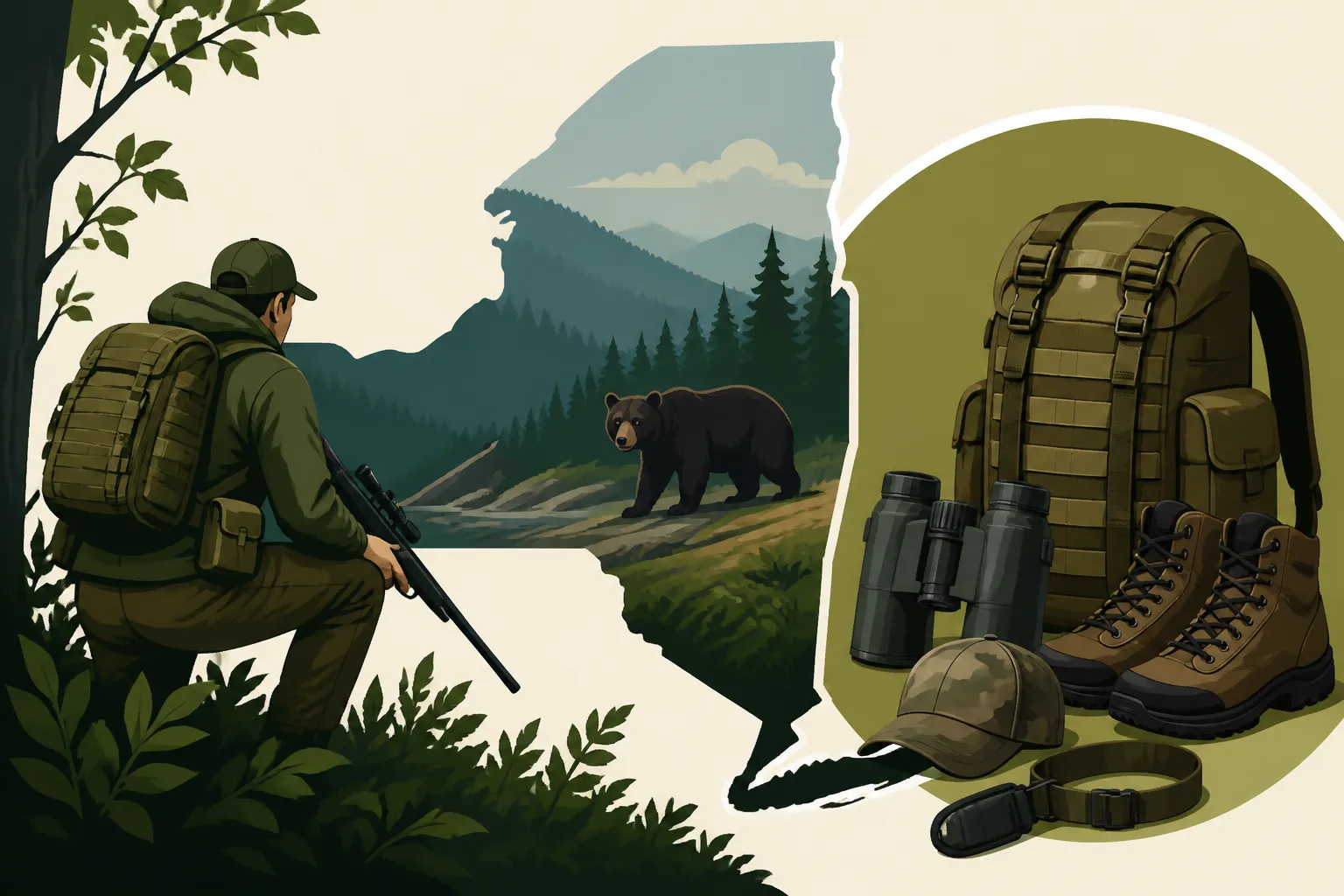
Finding a black bear in the dense forests of New York, especially when you're committed to the challenge of a spot-and-stalk hunt, can feel like an impossible task. It's a game of patience, keen observation, and precise movement, where every piece of gear either helps or hinders your success. This guide is all about equipping you with the right tools and knowledge to confidently pursue a New York black bear on foot, ensuring you're prepared for the rugged terrain and the thrill of the chase.
The Unique Challenge of Spot-and-Stalk Bear Hunting in New York
Spot-and-stalk bear hunting isn't for the faint of heart, especially in New York. Unlike hunting over bait in other states, New York's regulations require hunters to find bears based purely on their natural movements and food sources. This means a completely different approach, relying heavily on scouting, patience, and the ability to move silently through often unforgiving terrain.
New York's Diverse Bear Habitat
New York's black bear population is thriving, but they call a wide variety of landscapes home. From the rugged peaks and vast timber of the Adirondacks to the steep, forested slopes of the Catskills and even into the more agricultural pockets of the Southern Tier, bears adapt to their surroundings. This diversity in habitat means your spot-and-stalk strategy needs to be flexible. In the Adirondacks, you might be glassing clear-cuts or high-elevation berry patches, while in the Catskills, you're more likely focusing on mast crops in oak or beech stands along steep ridges. Understanding where bears are likely to be feeding or bedding based on the time of year and available food sources is crucial. New York's Black Bear Population gives a great overview of where these bruins roam.
The sheer density of cover in many New York landscapes presents its own set of problems. You're rarely going to find wide-open plains where you can spot a bear from a mile away and leisurely plan your approach. Instead, you'll be navigating thick stands of evergreens, dense hardwood forests, and brushy draws. This makes actual spotting incredibly challenging, often requiring you to focus on subtle movements, shadows, or even just a flash of black hide through a tiny window in the foliage. It's a game of inches, and your ability to see without being seen is paramount.
The Nature of Spot-and-Stalk
Spot-and-stalk in New York involves a lot more "stalking" than "spotting" compared to hunting bears in western states. You're often looking for sign—scat, tracks, torn-up logs, or claw marks on trees—before you ever see the bear itself. Once you find fresh sign, the true stalk begins. This means moving slowly, deliberately, using the wind to your advantage, and constantly scanning ahead. It requires incredible patience and attention to detail.
This method demands that you become an expert in reading the terrain and understanding how a bear might move through it. You'll be using natural features like draws, ridges, and even changes in vegetation to mask your approach. The sound of a snapping twig or a misplaced boot can be all it takes to send a bear crashing through the underbrush, never to be seen again. Because you can't use bait, you're entirely dependent on finding the bear in its natural patterns. This puts a huge emphasis on knowing your hunting area intimately, understanding bear behavior, and having the right gear to support such a demanding hunt. Why Baiting Bears Is Illegal in New York explains the reasoning behind this regulation.
Essential Optics for Bear Spot-and-Stalk
When you're trying to locate a creature as elusive as a black bear in challenging terrain, your eyes are your most important tool. But even the sharpest eyes need help, and that's where quality optics come into play. They aren't just for long-range glassing; they're for picking apart dense cover, confirming a bear's presence, and planning your final approach.
Binoculars and Spotting Scopes
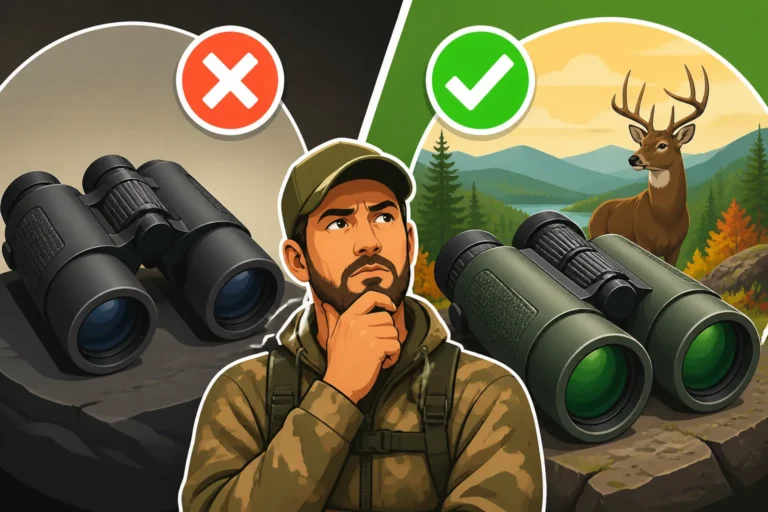
For a spot-and-stalk bear hunter in New York, a good pair of binoculars is non-negotiable. You'll be spending hours, sometimes days, behind glass, meticulously searching every shadow, every berry patch, every likely bedding area. An 8x or 10x magnification is usually ideal for all-around use in New York's varied terrain. An 8×42 or 10×42 binocular provides a great balance of magnification, light gathering capability, and a wide enough field of view to scan vast areas efficiently. The objective lens size (the '42' in 8×42) is important for low-light performance, which is critical during early morning and late evening hunts when bears are most active.
While binoculars are your primary scanning tool, a spotting scope can be incredibly valuable, especially if you anticipate hunting areas with long sightlines or need to confirm details on a distant animal. For example, if you're overlooking a large valley or a distant clear-cut in the Adirondacks, a spotting scope (say, a 15-45x or 20-60x) allows you to discern if that black blob is a rock, a stump, or indeed, a bear. It helps you assess size, confirm the animal's actions, and ensure it's a legal animal if antler restrictions (though not for bears, similar principles apply to deer) were in play. Remember, you'll want something relatively compact and rugged to carry through the woods. Optics for Adirondack and Catskill Timber delves into choosing optics specifically for these regions.
Rangefinders and Reticles
Knowing the exact distance to your target is absolutely critical for an ethical shot, especially with a firearm. A quality rangefinder is an indispensable piece of gear for spot-and-stalk bear hunting. You might spot a bear at 400 yards, but your stalk might only get you within 150 yards for a shot. Knowing that precise distance helps you account for bullet drop and ensure an accurate impact. Look for a rangefinder that can perform well in varied lighting conditions and through light cover, as New York woods are rarely completely open. Some rangefinders even offer angle compensation, which is very helpful when shooting up or down steep Catskill slopes.
Beyond dedicated rangefinders, many modern rifle scopes come equipped with reticles that can assist with range estimation and holdovers for different distances. Mil-dot or BDC (Bullet Drop Compensator) reticles, when properly understood and practiced with, can make follow-up shots or shots at unfamiliar ranges much more manageable. While they don't replace the precision of a laser rangefinder, they can provide quick estimates in rapidly developing situations. Platforms like GoHunt often feature articles and tutorials on how to effectively use these tools in the field, helping hunters maximize their accuracy. Practice with your specific setup is key, both at the shooting range and during simulated hunting scenarios in the woods.
Firearms and Ammunition for Close Encounters
Selecting the right firearm and ammunition for New York black bears is a critical decision. You need something that can deliver enough energy to humanely harvest a large, tough animal, often in dense cover and at relatively close ranges. Safety, accuracy, and ethical take are paramount.
Rifle Calibers and Considerations
For rifle hunters, New York's diverse bear habitat and regulations guide your choices. Common and effective calibers for black bears include the .30-06 Springfield, .308 Winchester, .270 Winchester, and even the 6.5 Creedmoor. These cartridges offer a good balance of power, trajectory, and readily available ammunition. A .30-06, for instance, provides excellent knockdown power for bears in thick timber, while a .308 is compact and offers sufficient energy for shots out to moderate ranges. The key is shot placement. Even a powerful cartridge is ineffective if the bullet doesn't hit its mark.
Considerations for a New York bear rifle often lean towards reliability and maneuverability. A shorter barrel (20-22 inches) can be easier to handle in dense brush, reducing snagging and allowing for quicker target acquisition. A sturdy, weatherproof stock (synthetic is often preferred over wood for durability in wet conditions) is also a good idea. Accuracy from your chosen rifle is more important than raw power, so make sure you're comfortable and proficient with it. For more on rifle selection, check out Rifle Calibers for New York Bear.
Ammunition Choice for Bears
The type of ammunition you load into your rifle is just as important as the caliber itself. For black bears, you want a bullet designed for deep penetration and controlled expansion. Avoid thin-jacketed, varmint-style bullets, as they may fragment on impact and fail to reach vital organs. Instead, opt for premium hunting bullets such as bonded-core designs (e.g., Nosler AccuBond, Hornady InterBond), Barnes TSX/TTSX, or Swift A-Frame. These bullets are engineered to hold together, penetrate bone and muscle, and create a lethal wound channel.
For example, a 180-grain bonded bullet in a .30-06 will perform very differently than a 150-grain standard bullet. The heavier, sturdier bullet will retain more energy and penetrate deeper, increasing your chances of a quick, humane kill on a large bear. Always test your chosen ammunition at the range to ensure it cycles reliably in your firearm and provides acceptable accuracy. This isn't a place to cut corners; bear hide and bone are tough, and you want every advantage possible. Shot Placement on a New York Black Bear emphasizes why ammunition choice and accuracy are so critical.
Clothing and Footwear for Stealth and Comfort
Being comfortable and able to move silently are two foundational pillars of successful spot-and-stalk bear hunting. New York's weather can be notoriously fickle, and the terrain demands specialized gear that won't give you away or wear you out prematurely.
Layering for Stealth and Weather
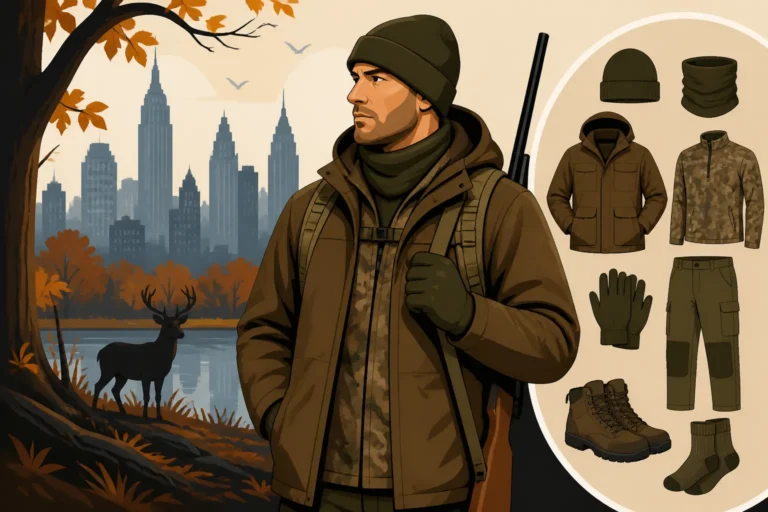
New York's bear seasons span parts of late spring, summer, and fall, meaning you can encounter anything from warm, humid days to chilly, damp conditions, sometimes all in the same hunt. Layering is your best friend. Start with a moisture-wicking base layer to manage sweat, even on cool days, as stalking can be physically demanding. Next, a mid-layer provides insulation, like a fleece jacket or a lightweight puffy. Your outer layer should be quiet, durable, and ideally water-resistant or waterproof. Soft shell jackets and pants are popular because they offer good protection against light rain and brush while remaining relatively silent.
The "stealth" aspect of clothing cannot be overstated. Materials that crinkle, swish, or make any other noise when you move will ruin a stalk faster than almost anything else. Look for quiet fabrics like brushed fleece, wool, or synthetic blends specifically designed for hunting. Camouflage patterns are a personal choice, but breaking up your outline is more important than matching specific leaves. Earth tones or effective breakup patterns that blend with the local vegetation work best. Don't forget a blaze orange or pink vest or hat when required by regulation for safety, especially during overlapping seasons. How Much Blaze Orange New York Requires details these safety requirements.
Footwear for Varied Terrain
Your feet are your primary mode of transport in the woods, and they need to be protected and supported. New York's terrain can range from relatively flat forest floors to rocky, steep ascents and descents, often covered in wet leaves, mud, or slippery moss. Good quality hunting boots are a must. Look for boots that are waterproof, durable, and provide excellent ankle support. A stiff sole offers better stability on uneven ground and helps prevent foot fatigue over long days of walking.
Many hunters prefer a boot with a medium to high ankle cut for stability, especially when carrying a pack or traversing side hills. The outsole tread is also critical for grip on slippery surfaces. Before the season, break in your boots thoroughly to avoid blisters. Consider carrying gaiters to keep debris and water out of your boots, especially when pushing through wet brush or crossing small streams. A comfortable, well-fitting boot will allow you to focus on the hunt, not on your aching feet, enabling you to move quietly and confidently closer to a bear.
Navigation and Communication for Bear Country
Stepping into bear country, especially the vastness of the Adirondack and Catskill Forests, means you need reliable tools to know where you are, where you're going, and how to call for help if things go sideways. Getting lost or being unable to communicate can quickly turn a memorable hunt into a dangerous situation.
GPS Devices and Mapping Apps
In the often-featureless expanse of New York's dense forests, a reliable navigation system is your lifeline. A dedicated handheld GPS unit is a robust choice, offering durability, long battery life, and precise location tracking, often with preloaded topographical maps. These devices are purpose-built for the outdoors and can withstand harsh weather that might sideline a smartphone. They let you mark waypoints for bear sign, your truck, or a recovered animal, and track your route to ensure you can always find your way back.
However, modern smartphone mapping apps have become incredibly sophisticated and are a popular alternative or excellent backup. Apps like those offered by GoHunt often include detailed topographical maps, satellite imagery, public/private land boundaries, and the ability to download maps for offline use when cell service is nonexistent (which is often the case in bear habitat). Just remember to carry a portable power bank to keep your phone charged, as GPS usage can drain batteries quickly. Knowing how to use these tools effectively – setting waypoints, understanding contour lines, and navigating off-grid – is just as important as having them. For navigating vast areas, GPS Units for Adirondack Backcountry Hunts offers specific advice.
Communication in Remote Areas
While a spot-and-stalk hunt is often a solitary endeavor, having a way to communicate in an emergency is paramount. Cell service is spotty at best in much of New York's prime bear habitat. For areas without cell signal, a satellite communication device, like a satellite messenger or a satellite phone, can literally be a lifesaver. These devices allow you to send text messages, share your location, and, critically, send an SOS signal to emergency services, even when miles from the nearest road.
Even if you're hunting with a partner or group, don't rely solely on cell phones. Consider carrying two-way radios if you'll be within line-of-sight range or a few miles apart, especially during a coordinated drive or when one person is still-hunting while another is posting. Before you head out, always let someone know your hunting plan, including your intended area and expected return time. This simple step can make a huge difference if you don't check in when planned.
Essential Field Gear for Success and Safety
Beyond the core optics, firearms, and clothing, a successful and safe spot-and-stalk bear hunt requires a collection of thoughtful field gear. These items might seem small, but they contribute significantly to your effectiveness, comfort, and ability to handle the unexpected.
Packs for Sustained Efforts
A good hunting pack is much more than just a bag; it's a mobile storage and organization system. For spot-and-stalk bear hunting, especially if you're venturing deep into public lands for extended periods, you'll need a pack that can comfortably carry all your day's essentials – water, snacks, extra layers, first-aid kit, and optics – while also having the capacity to haul out bear meat if you're successful. Look for a pack with good suspension, a comfortable hip belt, and thoughtful pocket organization. A pack that is hydration-compatible is also a huge plus.
The material of your pack matters for stealth. Just like your clothing, a noisy pack can spook game. Opt for quiet fabrics that won't rustle against brush or make squeaking noises with movement. Some hunters prefer an external frame pack for its ability to comfortably haul heavy loads of meat, while others opt for a sturdy internal frame day pack with external lashing points for versatility. Packs Built for a Multi-Day Backcountry Hunt provides deeper insights into choosing the right pack for different hunting styles. Remember to pack lightly but smartly; every ounce counts when you're covering miles of rugged New York terrain.
Knives and Field Care
When you do connect with a bear, the real work begins. A sharp, durable field dressing knife is absolutely essential. Carry at least one, if not two, sharp knives for field dressing, skinning, and quartering the animal. A fixed-blade knife with a blade length between 3-5 inches is often ideal for control and effectiveness. Some hunters also carry a small bone saw or a hatchet for larger bone sections, which can be useful if you're planning a full gutless method or quartering for a long pack out.
Beyond knives, consider specialized game bags. These breathable cloth bags protect the meat from dirt, insects, and drying out, especially if you're packing out over multiple trips or several hours. In warmer early season hunts, this is non-negotiable. Learn proper field dressing and meat care techniques before you go. Handling a Bear After the Shot provides essential guidance on post-harvest procedures, including the often-overlooked step of submitting a bear tooth sample for scientific study, which is a required step for New York bear hunters.
Emergency and Safety Gear
No matter how experienced you are, things can go wrong in the backcountry. A comprehensive first-aid kit is crucial. It should include supplies for cuts, scrapes, blisters, sprains, and any personal medications. Beyond medical supplies, always carry a fire-starting kit (waterproof matches, lighter, fire starter), a headlamp or flashlight with extra batteries, and a small emergency shelter (like a space blanket or lightweight tarp). A whistle can be used to signal for help or communicate over distances.
Bear spray, while not a substitute for proper bear awareness, can be a useful tool for personal defense, especially if you're in an area known for higher bear densities or if you're concerned about potential close encounters with sows and cubs. Ensure you know how to deploy it safely and effectively. Finally, carry enough water or a water filter to stay hydrated throughout your hunt. Planning for the unexpected is a hallmark of a responsible New York hunter.
| Gear Category | Essential Items | Key Considerations for New York Bear Hunting |
|---|---|---|
| Optics | Binoculars (8x/10x), Rangefinder, Spotting Scope | Excellent low-light performance, rugged, waterproof. Rangefinder with angle compensation. |
| Firearms | Rifle (.30-06, .308), Shotgun (slugs) | Appropriate caliber for large game, reliable in all weather, maneuverable in dense cover. |
| Ammunition | Premium hunting bullets | Controlled expansion, deep penetration (bonded, solid copper). |
| Clothing | Layering system, quiet outer shell | Moisture-wicking base, insulating mid-layer, silent, waterproof/resistant outer. Blaze orange when required. |
| Footwear | Waterproof, high-ankle hunting boots | Excellent ankle support, stiff sole for uneven terrain, good traction, broken in. Gaiters helpful. |
| Navigation | GPS device, Smartphone mapping app | Topographical maps, offline capability, extra battery. Know how to use waypoints. |
| Communication | Satellite messenger, Two-way radios | Emergency SOS, location sharing. Inform someone of your plan. |
| Packs | Durable hunting pack (day or multi-day) | Comfortable suspension, quiet fabric, sufficient capacity for essentials + meat. |
| Field Care | Sharp knives, Game bags | Fixed blade, durable. Breathable game bags for meat protection. |
| Safety/Emergency | First-aid kit, Fire starter, Headlamp, Bear spray | Comprehensive, waterproof. Whistle, emergency shelter. Know how to use all items. |
Disclaimer
This article is for general informational purposes only and does not constitute professional advice. Laws, prices and regulations vary by location and change over time. Consult a qualified professional for guidance on your specific situation.