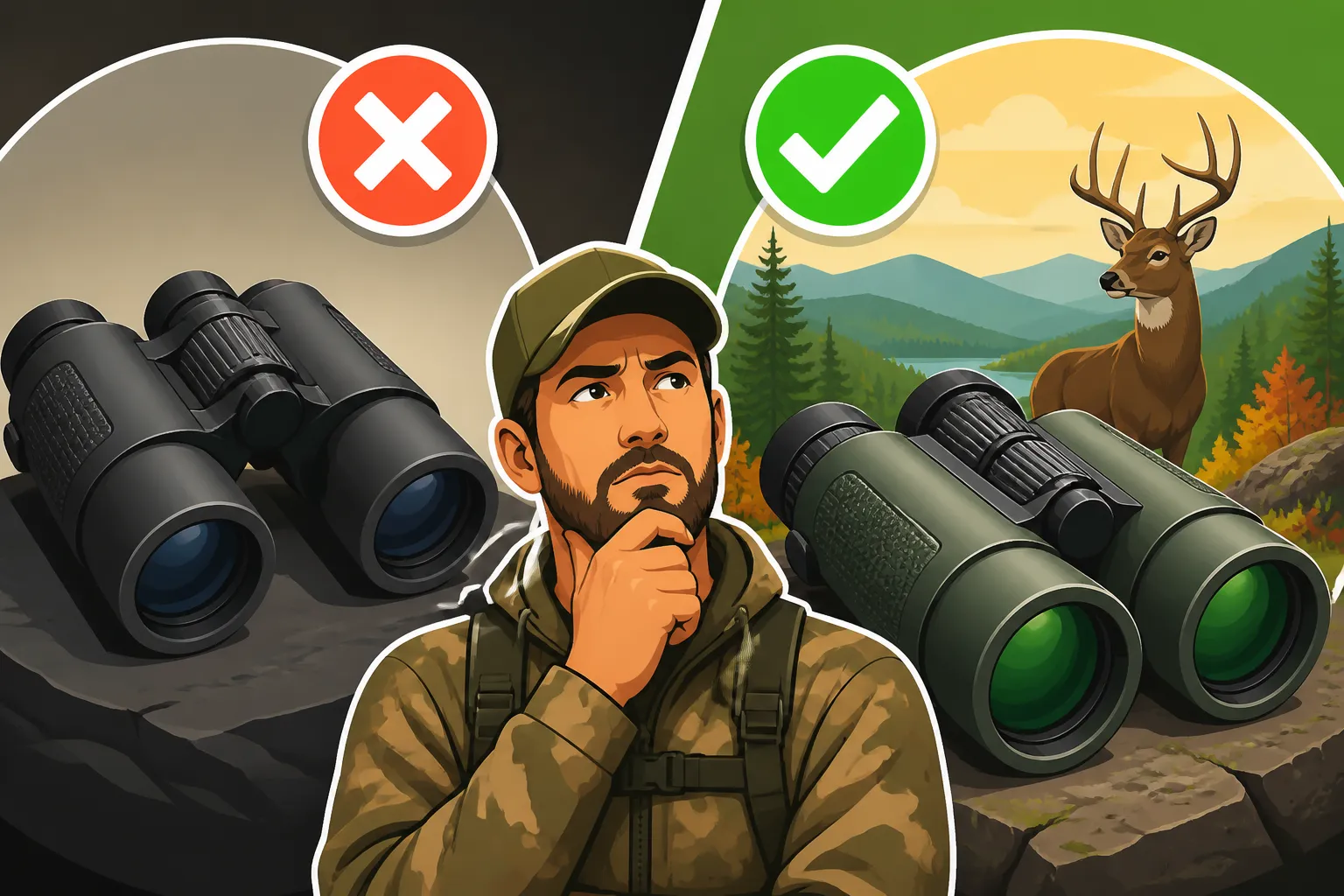
Are Cheap Binoculars Good Enough?
The woods of New York can be unforgiving, whether you’re sitting on a cold November deer stand or trying to pick apart thick aspen cover for grouse. Many new hunters, and even some veterans, find themselves staring at a dizzying array of binoculars, wondering if those budget-friendly pairs are truly "good enough" for the rigors of a real hunt. This guide is here to cut through the marketing noise and help you understand when affordable optics might serve you well, and when they could leave you wishing you’d invested a little more.
The Allure of Affordable Optics: What You Get (and Don't Get)
It's completely understandable why someone might grab the cheapest pair of binoculars on the shelf. Hunting gear, from your Rifle and Shotgun Choices for New York Deer to your Clothing for a New York November, adds up quickly. Saving a few bucks on optics seems like a smart play, especially if you're just starting out or only hit the woods a couple of times a year. But as with most things in life, there's a trade-off, and understanding that balance is key to making an informed decision.
The Immediate Appeal and Basic Functionality
Let’s be honest: a lot of budget binoculars look like their high-end counterparts from a distance. They boast similar magnification numbers, often come with a neck strap, and promise to bring distant objects closer. For very casual observers or for basic use in bright, ideal conditions, many cheap binoculars actually perform adequately. If you’re just trying to get a slightly closer look at the bird on your feeder, or occasionally glass an open field for deer in broad daylight, a $50-$100 pair will likely achieve that goal.
The basic function of gathering light and magnifying an image is certainly present. You can identify shapes, confirm if that brown patch is a stump or a deer, and generally get a magnified view. For someone who might only be Hunting Southern Tier Farmland Deer where shots are relatively close and the landscape is often open, or checking out distant fence lines, this level of performance can sometimes feel "good enough." It's tempting to think that all binoculars simply magnify, so why spend more? But the devil, as they say, is in the details, and in hunting, those details can mean the difference between a successful, ethical harvest and a missed opportunity or worse.
The Hidden Costs of Cutting Corners
Where budget binoculars really start to reveal their limitations is when conditions become less than ideal – which, let's face it, is a typical day in the New York woods. The "hidden costs" aren't just about missing a shot; they're about frustration, unreliable performance, and ultimately, a less enjoyable hunting experience.
Consider durability: many cheaper models use plastic components and glues that can fail under stress. A bump against a tree while you're navigating steep ground or a sudden drop can render them useless, leaving you without optics when you need them most. Imagine you've spent hours meticulously planning your Treestand Setups in Adirondack Hardwoods, only to find your binoculars fogged up internally from the morning dew, or worse, cracked from a minor fall.
Then there's the optical quality itself. Cheaper glass and less sophisticated coatings (or none at all) mean less light transmission, poor edge-to-edge sharpness, and often noticeable chromatic aberration (color fringing). This translates to a dim, blurry image, especially around the edges, making it incredibly difficult to discern fine details. What might look like a legal antler in poor glass could turn out to be a branch when viewed through better optics, or vice versa. This can be particularly frustrating when you're trying to count points on a buck from a distance, or trying to confirm if a patch of brown is indeed a bear moving through thick cover. Resources like GoHunt often feature discussions and reviews from hunters who detail these critical differences in the field, helping others understand what they’re truly getting for their money.
Decoding Binocular Specifications: What Actually Matters
Understanding the numbers and jargon associated with binoculars can feel like learning a new language. But for hunters, knowing what specifications truly impact your field performance is far more valuable than just looking at the price tag. These aren't just arbitrary numbers; they directly influence how well you can see and identify game in various hunting situations across New York.
Magnification vs. Objective Lens Size (e.g., 8×42 vs. 10×42)
When you see numbers like "8×42" or "10×50" on a pair of binoculars, you're looking at two crucial specifications. The first number, "8x" or "10x," represents the magnification power. An 8x binocular makes an object appear 8 times closer than it is to the naked eye. The second number, "42" or "50," refers to the diameter of the objective (front) lenses in millimeters. A larger objective lens gathers more light, which can lead to a brighter image.
Many hunters automatically gravitate towards higher magnification, thinking "more power is always better." However, this isn't necessarily true, especially for typical New York hunting. Higher magnification often comes with a narrower field of view (less of the surrounding area visible), making it harder to find and track moving game. It also exaggerates hand shake, making the image unsteady. For example, an 8x binocular is often preferred for 8×42 Versus 10×42 in the Woods because it offers a wider field of view and a steadier image, which is paramount when trying to locate a deer moving through dense Adirondack timber. Conversely, a 10x might offer more detail at extreme distances, but requires a steadier hand or even a tripod. For stationary hunting from a blind or stand in a relatively open area, 10x can be beneficial, but for still-hunting or stalking, 8x often proves more practical.
Understanding Optical Coatings and Glass Quality
This is where the true difference between a cheap binocular and a capable hunting optic often lies. "Optical coatings" are thin layers applied to the glass surfaces to reduce light reflection and increase light transmission through the lenses, resulting in a brighter, clearer, and higher-contrast image. The best binoculars feature "fully multi-coated" optics, meaning all air-to-glass surfaces have multiple layers of anti-reflective coatings. Cheaper models might only be "coated" or "multi-coated" on some surfaces, leading to significant light loss and internal reflections that degrade image quality.
Beyond coatings, the quality of the glass itself is critical. High-end binoculars often use "ED glass" (Extra-low Dispersion glass) or similar premium formulations, which are designed to correct chromatic aberration. This is the phenomenon where different colors of light are focused at slightly different points, leading to color fringing around objects, especially noticeable in high-contrast situations like a dark deer against a bright sky. Cheaper glass, without these corrections, will show more color fringing and generally produce a softer, less detailed image. When you're trying to pick out a specific branch from an antler tine in deep shadow, superior glass and coatings are not a luxury; they're a necessity. This is something that becomes extremely apparent when trying to glass effectively with any type of Optics for Adirondack and Catskill Timber.
Field of View and Eye Relief for Hunters
These two specifications are often overlooked but are incredibly important for a comfortable and effective hunting experience.
Field of View (FOV) refers to the width of the area you can see through the binoculars at a specific distance (usually 1,000 yards). It’s typically measured in feet or degrees. A wider FOV is a massive advantage in hunting, especially in dense New York cover or when trying to locate a moving animal. If you’re trying to quickly scan a ridge line or track a deer trotting through the woods, a wide FOV allows you to cover more ground with less movement, increasing your chances of finding game and keeping it in sight. For hunters operating in tight spaces or conducting Deer Drives With Three or Four Hunters, a wide FOV can be crucial for situational awareness.
Eye Relief is the distance your eye can be from the eyepiece and still see the entire field of view. This is absolutely critical for anyone who wears eyeglasses or sunglasses. Binoculars with short eye relief require you to press your eyes right up to the eyepieces, which is uncomfortable with glasses and can even scratch your lenses. Good eye relief (typically 15mm or more) allows eyeglass wearers to comfortably use their binoculars without removing their glasses, which is a huge advantage when precious seconds count in the field. Don't underestimate the comfort and practical benefits of adequate eye relief; it contributes significantly to how often and effectively you'll use your binoculars.
Real-World Scenarios: When Cheap Binos Fall Short (and When They Might Do)
It's one thing to read about specifications; it's another to experience their impact firsthand in the cold, wet, or dim reality of a New York hunting season. This is where the true value (or lack thereof) of your binoculars becomes painfully clear.
Low-Light Performance: Dawn, Dusk, and Deep Woods
This is arguably the most critical area where cheap binoculars simply cannot compete with quality optics, and it directly impacts your hunting success and ethics. Deer, bear, and turkey are most active during the low-light hours of dawn and dusk. These are the prime times for hunting in New York, and it's also when you'll be trying to confirm targets, assess ethical shot opportunities, and scan dense cover.
The ability of a binocular to perform in low light is largely determined by its exit pupil and the quality of its glass and coatings. The exit pupil is the diameter of the light beam that exits the eyepiece and enters your eye (objective lens diameter divided by magnification, e.g., 8×42 = 5.25mm exit pupil). A larger exit pupil allows more light into your eye, which is beneficial in dim conditions. However, even with a good exit pupil, if the glass isn't clear and the coatings aren't efficiently transmitting light, the image will appear dark, hazy, and lacking contrast.
Imagine trying to distinguish a legal buck from a doe at 70 yards in deep shadow just before legal shooting light ends. With cheap binoculars, the image might be so dark and muddy that you can’t make out antler points, or worse, you can't even tell if it's a deer or a stump. This forces you to hold off on a shot, potentially missing a chance, or worse, taking an unethical shot because you couldn’t properly identify your target. This is the same principle that applies to Low-Light Performance in a Scope; clarity and brightness are paramount for ethical hunting. For these critical moments, cheap binoculars are often not "good enough" and can become a significant liability.
Durability and Weather Resistance in New York's Elements
New York weather is famously unpredictable. One day it's crisp and sunny, the next it's a driving rain, heavy snow, or thick fog. Hunting gear must be able to withstand these conditions, and binoculars are no exception.
High-quality hunting binoculars are typically "fog proof" and "waterproof." This is achieved by sealing the optics with O-rings and purging them with inert gases like nitrogen or argon. This prevents internal fogging due to temperature changes and stops moisture from entering the housing. Cheap binoculars often lack these features. A sudden downpour, a fall in a shallow creek, or simply the condensation from your breath on a cold morning can cause internal fogging that renders them completely useless. Once moisture gets inside, it often leads to mildew, affecting the glass permanently.
Beyond weather, the physical robustness of the binoculars is crucial. Hunting involves bumps, scrapes, and occasional drops. Quality binoculars are built with rugged housings, often reinforced with rubber armor, to absorb impacts. Cheaper models tend to use flimsier materials that crack or break easily. Imagine being deep in the Adirondack Forest Preserve, miles from your truck, and your binoculars fail because of a minor slip. You're suddenly at a huge disadvantage. While no optic is indestructible, a quality pair offers a much higher degree of reliability in the harsh environments New York hunters face.
Identifying Detail at Distance
One of the primary reasons to carry binoculars is to resolve fine details at distances too far for the naked eye. This could be counting antler points to confirm a legal buck, distinguishing between a coyote and a domestic dog, spotting a turkey's head behind a bush, or simply observing subtle movements that indicate game presence.
Cheap binoculars often suffer from several optical defects that hinder detail resolution. Beyond the aforementioned chromatic aberration, they frequently exhibit poor edge-to-edge sharpness, meaning only the very center of the image is clear, while the rest is blurry. Field curvature can also be present, where the image appears sharp only in one plane, making it difficult to focus across the entire view. These issues make it a real challenge to pick out the subtle flick of an ear, the shimmer of an antler tine, or the exact pattern of a bird's plumage when you're trying to identify it from afar.
For example, if you're Scouting New York Public Land Before Season and trying to decipher rub lines or scrape activity from a distant vantage point, or trying to confirm if a deer has enough antler points to be legal in an antler restriction zone, poor detail resolution can lead to misidentification. This isn't just an inconvenience; it can be the difference between a successful hunt and an illegal harvest, or simply missing out on an opportunity because you couldn't confidently identify your target. GoHunt, with its detailed product comparisons, often helps hunters understand how much difference a slightly better optic can make in resolving these critical details.
Finding the Sweet Spot: Budget-Friendly But Capable Options
So, if cheap binoculars often fall short, does that mean you need to mortgage your house for a premium pair? Absolutely not. There’s a vast middle ground of binoculars that offer excellent performance and durability without breaking the bank. The trick is to be an informed consumer and prioritize features that truly matter for hunting.
Prioritizing Key Features Over Brand Name
Instead of blindly chasing the lowest price or the most famous brand, focus on the specifications we've discussed:
- Fully Multi-Coated Optics: This is non-negotiable for good light transmission and image brightness. Don't settle for anything less than "fully multi-coated" on all lens surfaces.
- Phase-Coated Prisms: If the binoculars use roof prisms (most modern ones do), phase correction coatings are essential for sharp, high-contrast images. Uncoated roof prisms will produce a noticeably duller image.
- Good Eye Relief: Especially if you wear glasses. Aim for 15mm or more for comfortable viewing.
- Reputable Construction: Look for rubber armor and clearly stated waterproofing/fog proofing (often nitrogen or argon purged). While you might not get tanks, you should expect them to handle typical field conditions without immediate failure.
There are many smaller, less heavily marketed brands that produce surprisingly high-quality optics at a more accessible price point than the big-name players. They might not have the absolute latest cutting-edge glass, but they often provide a huge step up from the cheapest options for a relatively modest increase in cost. It's about finding value, not just a low price. Sometimes spending just a bit more can get you optics that are twice as good.
The Used Market and Refurbished Deals
One fantastic way to get more bang for your buck is to explore the used market or look for refurbished models from reputable sellers. A mid-range binocular that's a few years old or gently used will almost always outperform a brand-new, entry-level option in the same price bracket.
When considering used optics, be diligent:
- Inspect Thoroughly: Check for scratches on the lenses (especially the objective lenses), internal dust, or fungus. Look for signs of impact or damage to the housing.
- Test Functionality: Ensure the focus wheel turns smoothly, the diopter adjustment works, and the hinges move freely but hold their position.
- Test Optics: Look through them in varying light conditions. Do the images align (collimation)? Is there significant chromatic aberration? Does the image seem clear from edge to edge?
Many outdoor retailers and even manufacturers offer certified refurbished optics, which have been inspected and repaired to factory standards, often coming with a warranty, making them a very safe bet. Forums on hunting sites like GoHunt are often great places to find trusted sellers and get advice on what to look for when buying used. Just like buying a used truck, a smart purchase can get you a lot more utility for your investment.
Renting or Borrowing Before Buying
If you're still on the fence about investing in a specific price tier or magnification, consider renting or borrowing a pair of binoculars first. Some high-end camera stores or specialty outdoor retailers offer rental programs for optics. Alternatively, ask a seasoned hunting friend if you can borrow their mid-range or high-end binoculars for a day or two in the field.
This hands-on experience is invaluable. You'll quickly discover the difference that quality glass and coatings make in low light, the comfort of good eye relief, and how a steady 8x image feels compared to a shaky 10x. It allows you to test different features in your actual hunting environment without committing to a purchase. You might find that for your style of hunting, that slightly more expensive pair is absolutely worth it, or perhaps you'll realize a capable budget option is indeed "good enough" for your specific needs. This practical test can save you from buyer's remorse and ensure you're confident in your gear choice before hitting the woods for seasons like New York's Southern Zone Firearm Season.
Comparison Table: Binocular Tiers for New York Hunting
| Feature | Cheap Binoculars (<$100) | Mid-Range Binoculars ($100-$400) | High-End Binoculars (>$400) |
|---|---|---|---|
| Glass Quality | Basic, often hazy | Good to Very Good | Excellent, ED/HD glass |
| Coatings | Coated, multi-coated on some surfaces | Fully multi-coated, phase-coated | Fully multi-coated, phase-coated |
| Low-Light Perf. | Poor to Adequate | Good | Excellent, bright and clear |
| Durability | Flimsy, not always waterproof | Decent, sealed/fog proof | Rugged, fully waterproof/fog proof |
| Image Sharpness | Often blurry edges, color fringing | Sharp, good edge-to-edge | Razor-sharp, minimal aberrations |
| Eye Relief | Variable, can be short | Good, comfortable for glasses | Excellent, long and consistent |
| Field of View | Narrow to average | Average to Wide | Very Wide |
| Comfort/Ergonomics | Basic, sometimes awkward | Good, balanced | Excellent, designed for long use |
| Ideal Use | Casual bird watching, bright conditions | Serious hunting, varied conditions | Professional, demanding use, extreme conditions |
In the end, whether "cheap binoculars are good enough" depends entirely on your specific hunting style, the conditions you hunt in, and your personal expectations. If you're a fair-weather hunter in open terrain, a basic pair might suffice. But for most New York hunters facing dense cover, low light, and unpredictable weather, investing in optics that are at least in the mid-range category is a wise decision. They enhance your ability to spot game, make ethical decisions, and ultimately, improve your overall hunting experience. Don't let a few dollars stand between you and a clearer, more reliable view of the wild. Do your research, perhaps through resources like GoHunt, and make an informed choice that will serve you well for seasons to come. You might also consider useful accessories like a Binocular Harnesses Worth Wearing to protect your investment and make carrying them all day a breeze.
Disclaimer
This article is for general informational purposes only and does not constitute professional advice. Laws, prices and regulations vary by location and change over time. Consult a qualified professional for guidance on your specific situation.