Opening Weekend Tactics in the Northern Zone
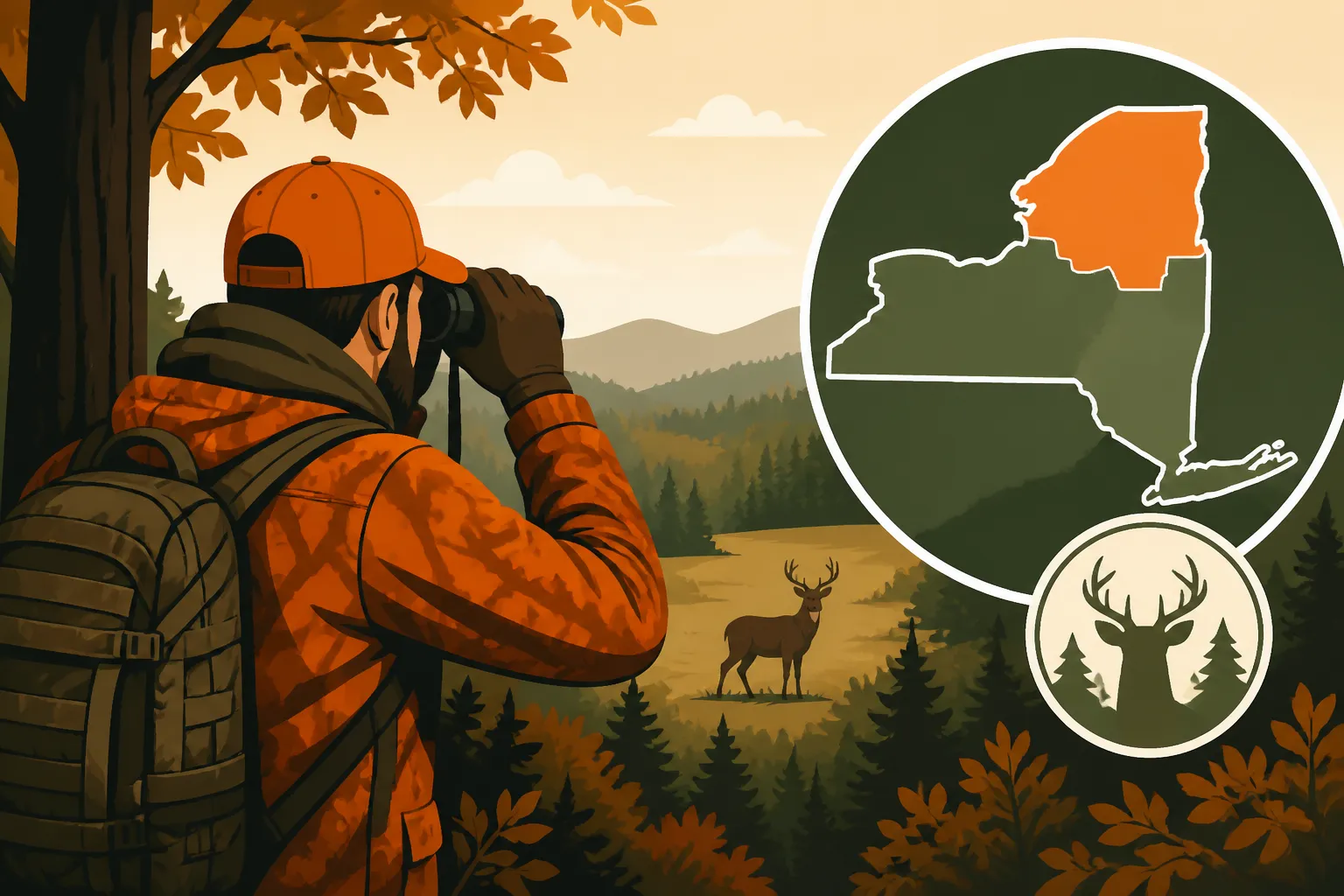
The opening weekend of New York's Northern Zone firearm season can feel like both a massive opportunity and an overwhelming challenge. Unlike the Southern Zone, which often sees deer moving more predictably near agriculture, the Northern Zone is characterized by vast, dense timber, rugged terrain, and generally lower deer densities. This immense landscape can leave even seasoned hunters wondering where to begin, how to locate deer still in their early-season patterns, and how to outsmart other hunters hoping for that first-day success. This comprehensive guide is here to walk you through the nuances of tackling opening weekend in the Northern Zone, from pre-season preparation to in-the-moment strategies and essential recovery tactics.
Understanding the Northern Zone's Unique Opening Day Challenges
The Northern Zone presents a distinctly different hunting landscape compared to much of New York. It’s a land of big woods, expansive public tracts, and deer populations that live a much wilder, less human-influenced existence. This wildness is part of its allure, but also the source of its unique difficulties for opening day.
The Vastness and Lower Deer Densities
Imagine staring at a map, seeing endless green for miles, and knowing that deer, while present, aren't exactly thick on the ground. This is the reality for many hunters in the Northern Zone, particularly within the sprawling Adirondack Forest Preserve. The sheer scale of the landscape means deer aren't concentrated in small woodlots or along consistent agricultural edges as they might be elsewhere. They have vast areas to roam, making finding them a significant undertaking. Their movements are often dictated by subtle changes in topography, specific mast crops, and water sources, rather than the broad, predictable patterns you might find in farmland regions. You won't often find high deer numbers per square mile, which means every piece of sign you find holds more weight, and every deer sighting is a hard-earned reward. This low-density reality means your strategy needs to be less about volume and more about precision and persistence.
Early Season Deer Behavior and Food Sources
When the Northern Zone firearm season opens, usually in late October, deer are still largely in their fall feeding patterns, having not yet fully entered the frantic rut. Their primary focus is packing on calories for the long winter ahead. This means they’ll be tied to specific food sources that are peaking at that time. Often, this includes acorns in oak stands, beechnuts in mature beech forests, or even late-season berries in clear-cuts and regenerating timber. Water sources, especially during dry spells, can also be major attractants. Deer movement during this time is often crepuscular – heavily focused on the first and last hours of daylight – as they move from bedding areas to feeding grounds. Midday activity can be minimal, especially if hunting pressure is high, pushing deer into dense cover. Understanding that these deer are still trying to maintain a relatively quiet existence, feeding and bedding with minimal disruption, is key to predicting their movements. They haven't yet been driven by the intense urges of the rut, so rattling and grunting calls might be less effective than they would be a few weeks later in November when a hunter is Hunting the Rut in the Northern Zone.
Pre-Season Scouting: Laying the Groundwork for Success
Success in the Northern Zone, especially on opening weekend, rarely happens by accident. It’s the direct result of dedicated, smart scouting. You can’t just show up and expect to stumble onto a productive spot. The work you put in before the season truly begins is what separates the consistently successful hunters from those who spend opening day wondering where all the deer are.
Digital Reconnaissance with Mapping Tools
Before you even tie on your boots, your scouting should start from the comfort of your home. Modern mapping applications, like the New York State DEC's Scouting With the New York HuntFishNY App or commercial platforms such as GoHunt, are indispensable tools for the Northern Zone. These platforms offer detailed topographic maps, satellite imagery, and often public/private land overlays that can reveal hidden gems. Look for features that naturally funnel deer: saddles between ridges, narrow strips of timber connecting larger blocks, points of land jutting into swamps, or the edges of dense conifer thickets where deer seek thermal cover. Pay close attention to changes in elevation, as deer will often travel the path of least resistance or utilize benches and subtle contours. Identifying potential bedding areas – dense cover, often on south-facing slopes for warmth or thick pines for protection – and connecting them to possible feeding areas via potential travel corridors is your goal. GoHunt, for example, allows you to drop pins and draw lines, helping you visualize potential routes and stand locations long before you ever step foot in the woods. This digital legwork helps you prioritize specific areas for later boots-on-the-ground verification, saving you precious time and effort.
Boots-on-the-Ground Verification
Once you’ve identified promising areas on your maps, it’s time to hit the woods. This phase of scouting is crucial for confirming your digital findings and discovering fresh sign. Walk those potential travel corridors and funnel points, looking for actual deer sign: rubs, scrapes (though less prominent pre-rut), tracks, and most importantly, fresh droppings. Focus your efforts on the transition zones between heavy cover and potential food sources. In the vast timber, deer often utilize subtle funnels that aren't obvious on a map, like a slightly drier ridge through a swamp or a small bench along a steep hillside. Don't be afraid to push into the thick stuff – sometimes the heaviest cover, the kind most hunters avoid, is exactly Where Adirondack Bucks Bed. Look for areas where different habitat types converge, like a mature hardwood ridge meeting a conifer swamp. These edges are natural deer magnets. Pay attention to water sources as well; a small spring or seeping wet spot in a dry year can be a huge draw. If you find heavy concentrations of fresh sign, try to determine direction of travel and patterns. This hands-on scouting, ideally done a few weeks before the season, will give you invaluable insight into current deer movements.
Tactical Approaches for Opening Weekend Deer
The Northern Zone demands a thoughtful, adaptable approach on opening weekend. You can't rely on the same tactics that might work in a small woodlot downstate. Here, patience, stealth, and a deep understanding of deer movement are your most valuable assets.
Still-Hunting the Big Timber
In the vast tracts of the Northern Zone, still-hunting can be an incredibly effective strategy, especially if you're covering ground that other hunters might overlook. This isn't about aimlessly wandering; it's a deliberate, slow, and methodical movement through the woods, taking one or two steps, then stopping and observing for minutes at a time. Your senses are your best tools here. Listen for the crunch of leaves, the snap of a twig, or the rustle of a deer moving through the underbrush. Look for horizontal lines and subtle movements that break up the vertical patterns of trees. Focus on shadows, tree trunks, and brush piles, as deer often bed or stand motionless in these areas.
Still-hunting is particularly potent when moving into the wind or with a quartering wind, allowing your scent to be carried away from where you expect deer to be. Concentrate on areas where you’ve found sign during scouting, or where the terrain naturally forces deer into specific travel lanes. Think about subtle ridges, benches, or the edges of thick swamps. The key is to move at a snail's pace, constantly scanning, and being ready to stop and set up for a shot at a moment's notice. It’s physically demanding, requiring discipline and sharp observation skills, but it allows you to cover more ground effectively than sitting in one stand all day, especially in areas with lower deer densities. For more specific tactics, consider focusing on Still-Hunting Catskill Ridges, which offers transferable skills for Northern Zone terrain.
Strategic Stand Placement and Patience
Despite the appeal of still-hunting, a well-placed stand remains a powerful tool, particularly in the Northern Zone, if you've done your homework. The trick is where you place it. Forget about vast open fields; here, you're looking for subtle funnels, pinch points, and transition zones in the timber. A good stand location might be on a bench just below a ridge, overlooking a seep or spring that deer frequent, or at the intersection of two distinct habitat types, like where a hardwood ridge meets a conifer swamp. You're looking for areas where deer movement is naturally concentrated, even if subtly.
Early season deer are still very sensitive to human presence, so entry and exit routes that minimize disturbance are paramount. Plan your approach carefully, preferably using natural cover, and avoid walking through bedding or primary feeding areas. Once in your stand, patience is key. The Northern Zone isn't about seeing dozens of deer; it's about being ready for that one opportunity. Long sits are often required. Focus your stand placement on areas with consistent sign, connecting a bedding area to a suspected feeding area. For ideal placement, consider scouting routes that lead to Where Adirondack Bucks Bed or exploring specific Treestand Setups in Adirondack Hardwoods to maximize your visibility and cover.
Reading the Terrain and Thermals
Understanding how terrain influences deer movement and how thermals work in the Northern Zone's topography is crucial for success. Deer inherently use terrain to their advantage, often traveling just below a ridge line to stay out of sight, or utilizing benches on steep hillsides. They will typically move along the path of least resistance or use cover features to remain hidden. On opening weekend, when pressure can be higher, they'll become even more attuned to using these features for security.
Thermals, the invisible currents of air that rise and fall with temperature changes, are equally important. In the morning, as the sun warms the earth, air begins to rise, carrying your scent up the hillside. As evening approaches and temperatures drop, the air cools and falls, carrying your scent down the hillside. This means your stand placement and hunting approach need to account for these shifts. If you're hunting an evening stand on a ridge, you want your stand to be above where you expect deer to approach from, so your falling scent drifts over their back, not directly into their path. Conversely, in the morning, you want to be lower, with your rising scent being carried up and over them. Neglecting thermals is a common mistake that can blow an otherwise perfect setup. GoHunt, with its detailed topographic maps, can help you visualize these terrain features and predict thermal shifts, allowing you to plan your hunt accordingly.
Navigating Hunting Pressure and Finding Untouched Ground
Opening weekend, even in the vastness of the Northern Zone, means encountering other hunters. While the sheer acreage helps spread people out, accessible areas, particularly those near well-known trailheads, can still see significant pressure. The key to success is often finding ground that others are either unwilling or unable to reach.
Avoiding Trailhead Crowds
It's a simple truth: most hunters won't walk further than a mile or two from their vehicle. On opening weekend, this tendency is amplified. Parking lots at popular access points for the Adirondack Forest Preserve or larger State Forests will likely be full. If you arrive and see a dozen trucks, that immediate area is probably already being worked over. To truly find unpressured deer, you need to go where others aren't. This might mean starting your walk earlier, utilizing less obvious access points, or simply committing to hiking deeper into the woods than most.
Don't be afraid to consult your GoHunt maps or GPS Units for Adirondack Backcountry Hunts to identify potential entry points that are a little more remote, perhaps a less-used logging road, an old snowmobile trail, or even just picking a straight line through the woods, knowing you're heading away from the primary trail systems. While it requires more effort and better navigation skills, the payoff of finding deer that haven't been bumped by countless hunters can be immense. Remember, deer will quickly adjust their patterns to avoid pressure, so finding those pockets of quiet where they feel safe is paramount. This can be critical to finding areas with fewer Opening Weekend Crowds in the Southern Zone, a lesson that applies equally to the Northern Zone.
The Art of Deep Woods Access
To truly escape pressure in the Northern Zone, you need to master the art of deep woods access. This isn't just about walking further; it's about smart navigation and understanding how deer use the most inaccessible terrain. Look for areas on your map that are surrounded by thick swamps, steep ravines, or large bodies of water that deter casual hunters. These natural barriers often create sanctuaries where deer can feel safe, even during opening weekend.
Your approach might involve crossing a small creek, navigating a dense beaver swamp, or hiking up a steep, rocky incline. Investing in good quality, waterproof boots and a reliable pack with emergency gear is essential. Utilize features like old timber cuts that are now grown over, or the edges of dense conifer stands, as these provide both cover for you and potential bedding for deer. Often, the best hunting on public land is a mile or more from the nearest road or marked trail. This commitment to deep woods access means fewer human scent trails, less noise, and deer that are more likely to be moving in their natural patterns. When you're ready to put in the miles, places like the Adirondack wilderness offer an incredible experience, as detailed in our guide on The Adirondack Forest Preserve.
A Northern Zone Opening Weekend Strategy Checklist
To help you organize your thoughts and actions for a successful Northern Zone opening weekend, here's a quick checklist.
| Category | Action Item | Notes |
|---|---|---|
| Pre-Season | Digital Map Reconnaissance | Use GoHunt or HuntFishNY for topo, satellite, property lines. |
| Identify Funnels & Bottlenecks | Saddles, ridge points, swamp edges, habitat transitions. | |
| Scout for Food Sources | Acorns, beechnuts, late berries, water. | |
| Boots-on-the-Ground Scouting | Verify digital findings, find fresh sign (tracks, droppings, rubs). | |
| Plan Entry/Exit Routes | Minimize disturbance to bedding/feeding areas. | |
| Opening Weekend | Arrive Early / Avoid Crowds | Seek out less-used access points, walk further. |
| Observe Wind & Thermals | Always consider scent direction; adapt stand/still-hunt. | |
| Patience in the Stand | Long sits, especially during prime morning/evening hours. | |
| Still-Hunt Slowly & Deliberately | Move into wind, stop frequently, scan thoroughly. | |
| Focus on Transition Areas | Where food meets cover, or dense cover meets travel corridors. | |
| Post-Shot | Mark Last Sight / Search Grid | Note landmarks, start tracking deliberately. |
| Allow Sufficient Time | Especially for marginal shots, wait for deer to expire. | |
| Plan for Recovery | Consider distance, terrain, potential help. | |
| Meat Care | Field dress quickly, cool meat, protect from elements. |
Post-Shot Protocols and Backcountry Recovery
Taking a deer on opening weekend in the Northern Zone is a fantastic accomplishment, but the job isn't done until that deer is safely recovered and processed. The challenges of the Northern Zone don't end with the shot; they extend through the often-difficult recovery process.
Tracking in Difficult Terrain
The terrain that makes the Northern Zone so appealing for hunting also makes tracking a downed deer a significant challenge. Dense underbrush, thick conifer stands, rocky slopes, and wet swamps can quickly obscure a blood trail. If you've made a good shot, the deer might not go far, but even a short trail can be tough to follow in a tangle of downed trees and ferns. It's vital to mark the exact spot where the deer was standing when you shot it and the last place you saw it. Use a piece of flagging tape, your hat, or a distinctive tree.
When you begin tracking, move slowly and methodically. Look for blood on both the ground and on vegetation, noting its color and consistency, which can give clues about the shot placement. If the blood trail peters out, stop, mark your last spot, and then systematically grid-search the area in circles or ever-widening squares. Always assume the deer went further than you think. If it's getting dark, consider backing out and returning in the morning, provided temperatures are cold enough to preserve the meat and you’re confident the deer is expired. A good headlamp is essential, as is a partner to help with the search. Knowing how to efficiently perform Blood Trailing After Dark in New York can make all the difference.
Meat Care in Remote Conditions
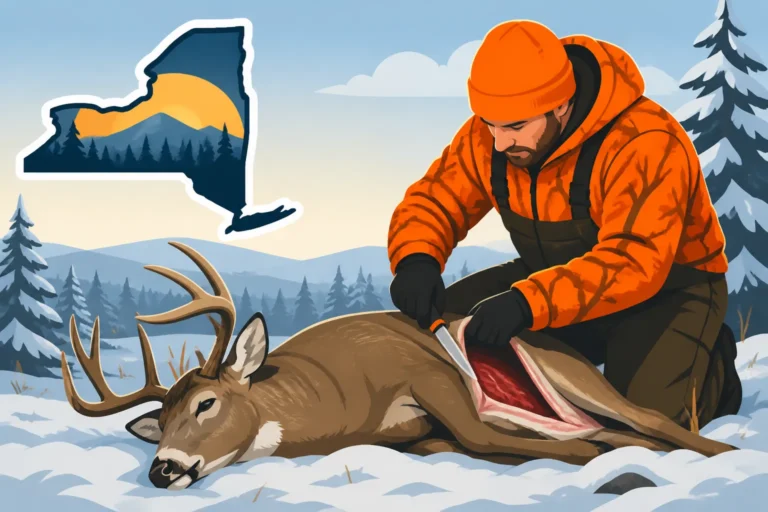
Given the often remote nature of Northern Zone hunting, caring for your meat immediately after the kill is paramount. Even in late October, daytime temperatures can sometimes be mild enough to cause spoilage if precautions aren't taken. Once you've recovered your deer, the first step is to field dress it as quickly as possible. Removing the entrails allows the carcass to cool much faster. If you're deep in the backcountry, you'll need to decide whether to quarter the animal on site or attempt to drag it out whole. Quartering can make the pack-out significantly easier, especially if you're alone or facing a long haul over rugged terrain. Consider bringing game bags, especially during warmer weather, to protect the meat from flies and dirt.
If you do quarter it, hang the meat in the shade, off the ground, to continue cooling. Black bears are present throughout the Northern Zone, so securing your meat (e.g., hanging it high or covering it) is a smart practice if you need to leave it overnight. Having a plan for the pack-out, whether it's a deer cart for flatter sections or a sturdy frame pack for steep climbs, is crucial. Remember, proper meat care not only ensures a better culinary experience but also respects the animal and the effort you put into the hunt.
Disclaimer
Please note: Hunting regulations and seasons can change. Always consult the official New York State Department of Environmental Conservation (DEC) hunting regulations guide for the most up-to-date information before planning any hunting trip. This guide is for informational purposes only and does not supersede state regulations.