Upland Vests With Water Capacity
There’s nothing quite like the feeling of chasing grouse or woodcock through a patchwork of New York’s aspen cuts or alder runs. The crunch of leaves, the explosive flush, the smell of crisp autumn air—it’s pure magic. But let’s be real: all that walking, climbing, and pushing through thick cover is thirsty work. You’ve probably experienced that parched throat, the fatigue setting in, or even worse, watching your loyal bird dog panting excessively with no easy way to get them a drink. This guide is all about solving that problem by exploring why an upland vest with integrated water capacity is an absolute game-changer for staying hydrated and comfortable on your New York hunting adventures.
Why an Upland Vest with Water Capacity is a Game Changer for New York Hunters
For years, we've wrestled with various ways to carry water in the field. Maybe you've tried strapping bottles to your belt, cramming them into a backpack, or even carrying a dedicated hydration pack that felt awkward over your hunting jacket. The truth is, none of those traditional methods truly integrate seamlessly with the dynamic, active nature of upland hunting. An upland vest designed with water in mind isn't just a convenience; it's a critical piece of gear for safety, comfort, and ultimately, success in the field.
The Relentless Thirst of New York's Diverse Upland Terrain
New York State offers an incredible variety of upland hunting opportunities, and each type of terrain presents its own physical demands. Picture yourself slogging up a steep incline in the Catskills, pushing through dense brush in the Adirondacks, or traversing rolling hills in the Southern Tier. These aren't strolls in the park; they're genuine workouts that will have you breaking a sweat even on a cool October morning. The constant movement, the adrenaline of a flush, and the effort of navigating tangled cover all contribute to rapid dehydration.
Even on seemingly mild days, your body is working hard. The dense vegetation and varied elevations typical of prime grouse and woodcock habitat mean you're constantly changing pace, stepping over logs, and weaving through branches. This consistent exertion elevates your heart rate and body temperature, leading to increased fluid loss. Without a steady and easily accessible water source, you'll quickly feel the effects of fatigue and reduced focus, which can dampen your enjoyment and even impact your safety.
Consider the early season, particularly September and early October, when temperatures in many parts of New York can still climb into the 60s or even 70s. Hunting in these conditions, especially during the middle of the day, demands constant hydration. The humid air can make you feel even hotter, causing you to sweat more than you might realize. Having water right on your back, integrated into your vest, means you’re far more likely to take those crucial sips throughout the morning and afternoon, proactively fending off dehydration before it starts to set in.
Keeping Yourself and Your Dog Hydrated in the Field
It’s not just about you; your hunting dog is often working ten times harder, covering far more ground and pushing through even thicker cover. Their body temperature rises quickly, and they rely entirely on you for their hydration needs. Watching your faithful companion panting excessively, their tongue lolling, is a clear sign they need water, and they need it now. Without proper hydration, dogs can suffer from heatstroke, exhaustion, and other serious health issues that can cut your hunt short and endanger their well-being.
Many upland vests with water capacity include features that make it easy to hydrate your dog as well. Some systems allow for quick detachment of the hose, so you can squirt water directly into a collapsible bowl or even offer it straight to your dog’s mouth. This immediate access is vital. You don’t want to be fumbling with a backpack or digging for a bottle when your dog is clearly overheating. Keeping your dog properly hydrated ensures they maintain their energy, focus, and drive throughout the hunt, allowing them to perform at their best whether they're pointing pheasants on Pheasant Hunting Western New York Farmland or sniffing out grouse.
Beyond the immediate relief, consistent hydration for both hunter and dog helps prevent injuries and maintains stamina. For you, it means avoiding muscle cramps, lightheadedness, and the general malaise that comes with being parched. For your dog, it means their muscles stay supple, their pads don’t dry out as quickly, and they can keep their nose to the ground without fading. A well-hydrated team is a happy and effective team, maximizing your time afield and ensuring everyone returns home safely after a long day chasing birds.
Beyond the Bulk: The Inadequacies of Traditional Hydration Gear
Let’s face it, trying to make a standard backpack or a fanny pack work for water on an upland hunt often feels like a compromise. Backpacks, while great for carrying large loads, tend to be bulky and can interfere with quick gun mounting. The straps can chafe, and reaching for a water bottle often means taking the pack off, which is a nuisance when you’re trying to stay mobile and observant in a productive cover. Nobody wants to be fumbling with gear when a bird flushes unexpectedly.
Fanny packs or belt-mounted bottles offer slightly better accessibility but come with their own set of drawbacks. They can pull down on your waist, shifting weight uncomfortably, and bottles can bounce or snag on brush as you move. Moreover, their capacity is often limited, meaning you might run out of water sooner than you’d like, especially on a warm day or a long trek. Neither option offers the streamlined integration that an upland vest with dedicated water storage can provide, where the weight is distributed evenly across your shoulders and back, and the water source is a mere sip away.
The noise factor is also a real consideration. Clanking bottles, crinkling plastic, or the rustle of a poorly secured backpack can give away your position to wary birds. Upland hunting often requires a quiet, stealthy approach, particularly when you’re working a savvy old grouse. A well-designed hydration system within a vest minimizes these distractions, keeping your focus where it needs to be: on the cover, your dog, and the next potential flush.
Dissecting the Ideal Upland Vest: Features That Matter Most
Choosing the right upland vest with water capacity involves more than just picking one off the shelf. You need to consider how it integrates hydration, how well it stores your other essential gear, and whether it can stand up to the rigors of New York’s diverse landscapes. A good vest is an investment in your comfort, safety, and overall hunting experience. It should feel like an extension of yourself, not an encumbrance.
Smart Hydration Integration: Bladders, Bottles, and Hoses
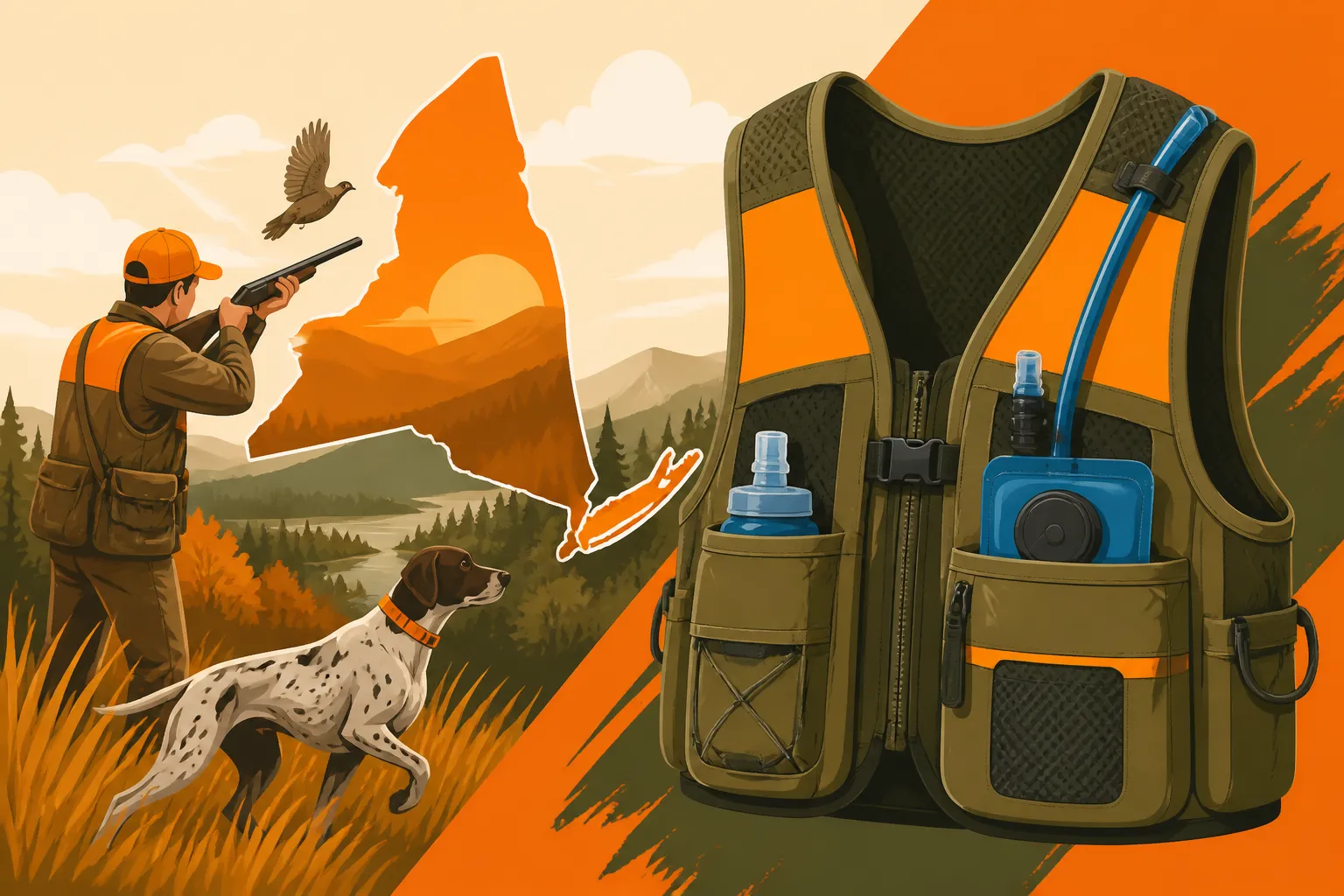
At the heart of any effective water-carrying upland vest is its hydration system. Most modern vests opt for either an integrated hydration bladder or strategically placed pockets designed to hold water bottles, often with accompanying hose routing. Hydration bladders, typically ranging from 1.5 to 3 liters, offer the advantage of hands-free sipping through a hose that clips to your shoulder strap. This means you can take a drink without breaking stride or even dropping your gun. Look for bladders with wide openings for easy filling and cleaning, and insulated hoses to prevent water from freezing in colder weather or getting too warm in the sun.
Some vests combine a bladder system with external bottle pockets, offering maximum flexibility. This can be particularly useful if you want to carry different types of liquids, like plain water in the bladder and an electrolyte drink in a bottle. Accessibility is key, so check that any bottle pockets are easy to reach without awkward contortions. The hose management for bladder systems is also crucial; a good vest will have clips or loops to keep the bite valve secure and readily available, preventing it from swinging around or getting snagged in the brush. You want to be able to take a quick sip and get back to the hunt seamlessly.
The capacity itself should match your typical hunt duration and conditions. For a quick morning hunt in cool weather, 1.5 liters might be sufficient. But if you’re planning an all-day excursion into remote areas like the Adirondack foothills or a warm early-season Grouse Hunting New York Aspen Cover pursuit, a 2-3 liter bladder is a far more sensible choice. It’s always better to have a little too much water than not enough, especially when you’re miles from the truck.
Intelligent Storage Solutions for Upland Essentials
Beyond water, an upland vest needs to carry everything else you consider essential for a successful hunt. This includes ammunition, game, a first-aid kit, a compass, and perhaps even a snack. The best vests strike a balance, offering ample storage without becoming overly bulky or causing contents to shift around. A large, accessible game bag is non-negotiable, ideally one that can expand to accommodate multiple birds and is lined for easy cleaning. Some vests feature two separate game bags, allowing for better organization if you're taking different species.
Shell loops or dedicated shell pockets are another critical feature. You want quick access to your cartridges without fumbling, especially if you get into a flurry of flushes. Many vests offer external loops or internal pockets that securely hold a box or two of shells. Beyond game and ammo, consider pockets for smaller items: a dedicated spot for your phone or GPS, a small zippered pocket for your license and keys, and a larger utility pocket for dog treats, a lead, or a small field dressing kit.
Think about the organization and distribution of weight. A well-designed vest will keep heavier items closer to your body and distribute the load evenly across your shoulders and hips, preventing strain. Features like internal mesh pockets, zippered compartments, and external elastic loops all contribute to keeping your gear secure and organized, reducing noise and frustration in the field. When you’re pushing through dense cover, the last thing you want is a loose item rattling around or snagging on a branch.
Built to Last: Comfort and Durability for New York Cover
Upland hunting in New York is tough on gear. From thorny briars to sharp branches in Woodcock Hunting New York Alder Runs, your vest will take a beating. Therefore, durability is paramount. Look for vests constructed from rugged, tear-resistant materials like heavy-duty nylon or Cordura. Reinforced stitching at stress points and robust zippers will ensure your vest stands up to years of abuse. While lightweight materials are appealing, don’t sacrifice durability for a few ounces, especially in demanding terrain.
Comfort, however, is equally important. A vest that chafes, rides up, or restricts movement will quickly become a nuisance. Look for features like padded shoulder straps, a well-ventilated back panel, and adjustable sternum and waist straps. These adjustments allow you to custom-fit the vest to your body, ensuring a snug, comfortable fit that distributes weight effectively and doesn’t impede your swing when that bird flushes. Many vests now incorporate breathable mesh panels, which are crucial for managing body heat during strenuous activity or warmer early-season hunts.
Consider the fit over your typical hunting layers. A good vest should accommodate both a light shirt for early season and heavier jackets for colder late-season hunts without feeling too tight or too loose. Some vests offer modularity, allowing you to add or remove pouches and pockets as needed, adapting to different hunt styles or seasonal requirements. A durable, comfortable vest becomes a reliable partner, allowing you to focus on the hunt rather than your gear.
Navigating New York's Seasons and Cover: Practical Vest Considerations
New York's upland seasons span several months, bringing with them a wide range of weather conditions and foliage densities. A versatile upland vest with water capacity needs to perform effectively whether you're sweating in September or shivering in November. Understanding how your vest adapts to these changing conditions is crucial for a productive and comfortable hunt.
Seasonal Adaptability: From Early Fall Warmth to Late-Season Chill
Early fall in New York can be surprisingly warm, even hot. Hunting grouse or woodcock when temperatures are still in the 60s or 70s means you’ll be sweating profusely, making proper hydration absolutely critical. For these conditions, a vest with excellent ventilation, like large mesh panels on the back and sides, is a huge advantage. You’ll appreciate a hydration bladder that keeps your water cool, perhaps even with an insulated hose. The ability to carry plenty of water for both yourself and your dog cannot be overstated when the sun is high and the air is still.
As the season progresses into late October and November, temperatures drop significantly, and you'll likely be wearing more layers, possibly even a heavy jacket. Your vest needs to be adjustable enough to fit comfortably over bulkier clothing without feeling restrictive. While hydration is still important in colder weather, the risk of water in your bladder or hose freezing can become a concern. Some hunters address this by using insulated bladders or carrying water bottles closer to their body heat, perhaps in a fleece-lined pocket. The vest should be designed so that its capacity and accessibility remain practical even when you're bundled up. Think about how easy it is to reach your shells or retrieve a downed bird from the game bag with gloved hands. Upland Guns for Aspen and Alder might feel different over thick layers, so your vest shouldn't add to the bulk.
Stealth and Streamlining in Thick New York Brush
Upland hunting often means pushing through dense, unforgiving cover—think impenetrable hawthorn thickets, tangled grapevines, or thick alder swamps. A vest that's too bulky or has snag points can be a real hindrance. Loose straps, external pockets that protrude too far, or uncovered zippers can catch on branches, creating noise and slowing your progress. The ideal upland vest with water capacity will have a relatively streamlined profile, minimizing external protrusions that can snag or create unwanted sounds.
Look for vests where pockets are secure and close flush against the body when not in use. Internal organization helps keep items from rattling around. Consider the material itself: while durable, some fabrics can be noisy against brush. Quieter, softer nylons or canvas blends are preferable for close-quarters hunting where stealth can make the difference between a successful flush and a bird slipping away unseen. When you're trying to sneak up on a cagey grouse in a thicket, every little sound matters.
The ability to move freely and quickly is essential. If your vest is constantly catching on branches, you'll spend more time untangling yourself than focusing on the dog or potential bird activity. A well-fitting vest that moves with your body, rather than against it, will allow you to maintain your balance and agility in challenging terrain. This is especially important when you’re trying to keep up with a fast-working setter or pointer in the dense habitat often found in New York’s central and western regions.
Integrating Modern Tech and Essential Safety Gear
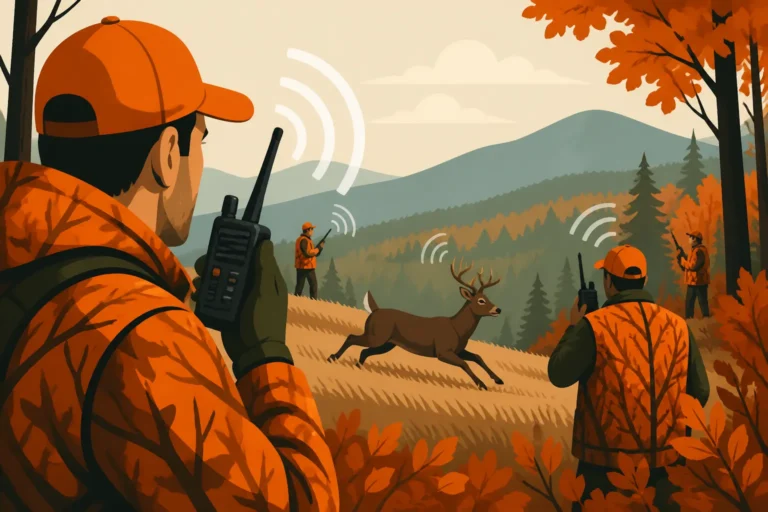
Modern upland hunting often incorporates technology to enhance safety and efficiency. Many hunters rely on GPS devices or smartphone apps like GoHunt for navigation, particularly when exploring new public land or navigating remote areas. Your vest should have designated, easily accessible pockets for these electronics, ideally with weather-resistant closures to protect them from rain or snow. Some vests even include antenna ports for handheld radios, allowing seamless communication with hunting partners during a drive or a wider spread.
Beyond technology, safety gear is paramount. A small, but comprehensive, first-aid kit should always be part of your essentials. Look for a vest with a dedicated internal or external pocket that can securely hold such a kit, along with other critical items like a whistle, a fire starter, and an emergency blanket. For dog handlers, a basic dog first-aid kit is also a wise addition. The beauty of an integrated vest is that all these items are organized and right where you need them, rather than scattered across various pockets or forgotten in a separate bag. First Aid Kits for Remote Adirondack Ground are especially important.
Visibility is another safety aspect, particularly when hunting with multiple people or in areas with other users. While not strictly part of water capacity, many upland vests now incorporate blaze orange or blaze pink panels to meet hunter safety requirements. Ensure that your chosen vest provides adequate visibility, especially during peak firearm seasons when you might encounter other hunters in the field. Having all your essentials—water, ammo, game, tech, and safety gear—neatly organized and accessible in one well-designed vest enhances both your effectiveness and your safety profile.
Making Your Choice: Finding the Perfect Upland Water Vest
With so many options on the market, choosing the right upland vest can feel overwhelming. It comes down to understanding your specific hunting style, the type of terrain you frequent in New York, and what features will genuinely enhance your experience without creating unnecessary bulk or discomfort. Don't rush this decision; a good vest will be with you for many seasons.
Matching Water Capacity to Your Hunting Style and Duration
The amount of water you need directly correlates with the length and intensity of your hunt, as well as the ambient temperature. For quick, localized hunts of an hour or two in cool weather, a smaller 1.5-liter capacity might suffice, especially if you plan to return to your vehicle frequently. However, if you’re heading out for an all-day excursion, covering miles of ground in the hills of the Southern Tier or pushing deep into state forests in the Northern Zone, a 2-3 liter bladder is a much more appropriate choice. It's often better to carry a little extra water and not need it than to run dry miles from your starting point.
Consider the remoteness of your hunting areas. If you frequently hunt public lands where access to natural water sources is unreliable or non-existent, maximizing your carried water capacity becomes even more critical. Conversely, if you primarily hunt small private tracts with easy access to your vehicle, you might be able to get away with a slightly smaller capacity. Think about the physical demands of your typical hunt – are you walking flat fields, or are you climbing steep ravines? More exertion means more sweat and a greater need for hydration. For longer walks or more intense conditions, prioritize a higher water capacity.
| Feature | Low Capacity (1-1.5L) | Medium Capacity (2-2.5L) | High Capacity (3L+) |
|---|---|---|---|
| Hunt Duration | Short (1-2 hours) | Moderate (2-5 hours) | Long/All-Day (5+ hours) |
| Conditions | Cool temps, low exertion | Moderate temps, mixed exertion | Warm temps, high exertion, remote |
| Best For | Quick scouting, local coverts | Typical day hunts in most NY regions | Deep backcountry, multi-dog hunts |
| Weight (full) | Lighter, agile | Balanced | Heavier, but essential |
| Key Advantage | Minimal bulk, maximum mobility | Versatile for most scenarios | Ensures ample hydration for long days |
The Ergonomics of a Fully Loaded Vest: Weight and Fit
A vest that feels great when empty can feel like a sack of bricks when fully loaded with water, shells, and game. This is where the ergonomics and adjustability truly matter. A 2-3 liter bladder full of water adds approximately 4.5 to 6.5 pounds to your back, not including your other gear. A well-designed vest will distribute this weight effectively across your shoulders and hips, preventing undue strain and maintaining your balance. Look for vests with wide, padded shoulder straps that won't dig in, and a robust waist belt that helps transfer some of the load from your shoulders to your hips.
Adjustability is paramount. The ability to fine-tune the shoulder straps, sternum strap, and waist belt allows you to dial in the fit, ensuring the vest stays snug and stable against your body, even when you're scrambling over uneven ground or bending to flush a bird. A vest that bounces or shifts will quickly become uncomfortable and distracting. Breathable back panels and internal frames can also contribute significantly to comfort, preventing sweat build-up and supporting the load. Trying on a vest with some weight in it – even just a few water bottles – before you buy can give you a much better sense of its true comfort and stability.
Remember that you’ll be wearing this vest for hours, often with a shotgun or rifle slung across your shoulder. The design should not interfere with gun mounting or your natural movements. Consider how the game bag rests when full and if it pulls uncomfortably on your back. Companies like GoHunt, known for their digital mapping tools and scouting insights, understand the demands on hunters, and many vest manufacturers are now designing gear with these strenuous activities in mind, focusing on both capacity and carry comfort.
Specific Needs for the Dedicated Bird Dog Handler
If you hunt with a bird dog, your vest isn't just for you; it's a mobile support system for your canine partner too. This means considering additional features that cater specifically to their needs. Easy access to water for your dog is primary. Look for vests that allow you to quickly dispense water into a collapsible bowl or directly to your dog. Some vests have specific pockets designed for carrying these bowls or even small, separate water bottles dedicated to your dog.
Beyond water, a dog handler often carries extra items: dog treats for positive reinforcement, a lead or check cord, an e-collar remote, and a small dog first-aid kit for minor cuts or scrapes. The vest should have well-organized pockets for these items, making them quickly retrievable without fumbling. For instance, a small, zippered pocket on the shoulder strap might be perfect for an e-collar remote, while a larger, easily accessible pocket could hold treats. Bird Dog Gear for New York Cover is crucial.
Finally, think about the game bag. If you’re hunting with a strong retriever, they'll be bringing birds directly to you. A game bag that opens wide and is easy to access, even with a bird in hand, is a valuable asset. Some vests even feature an expandable game bag or a blood-proof lining that makes clean-up easier after a successful hunt. Investing in a vest that considers both your needs and those of your loyal hunting dog will make your shared adventures in New York's uplands far more enjoyable and efficient.
Disclaimer
This article is for general informational purposes only and does not constitute professional advice. Laws, prices and regulations vary by location and change over time. Consult a qualified professional for guidance on your specific situation.