Two-Way Radios on a Deer Drive
There’s nothing quite like the adrenaline rush of a well-executed deer drive in New York, especially when you’re pushing deer through thick cover or across a sprawling piece of public land. But let's be honest, trying to shout across a ravine or relying on spotty cell service to coordinate your crew can turn a promising drive into a frustrating mess, or worse, a safety concern. This guide is all about cutting through that communication clutter, helping you understand how two-way radios can be your best friend for safe, effective deer drives, no matter where you hunt in the Empire State.
Why Radios Are Essential for New York Deer Drives
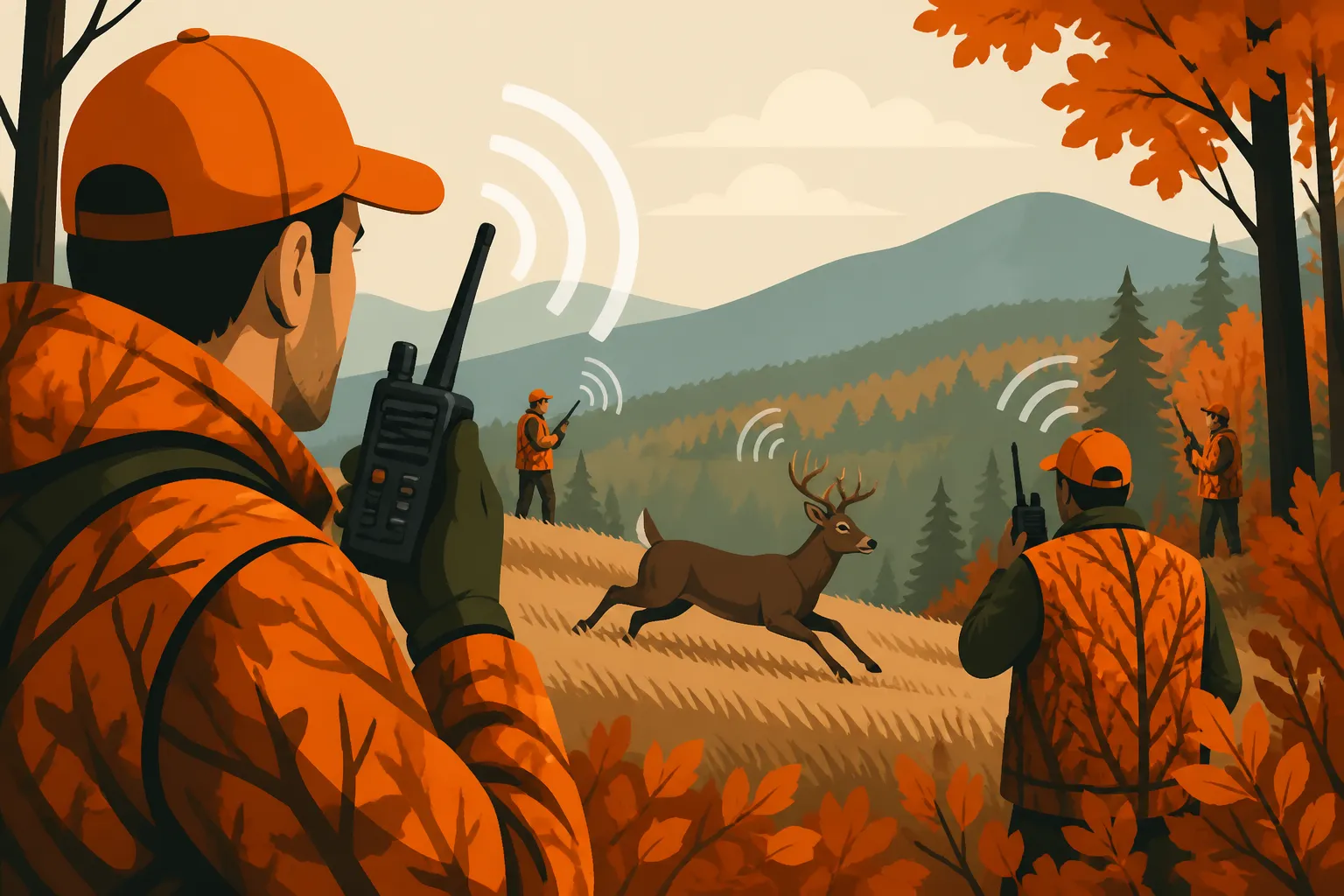
Deer drives are a time-honored tradition in many parts of New York, especially when you're trying to move deer from dense bedding areas or push them past standers on difficult terrain. But without reliable communication, a deer drive can quickly go sideways. You need to know where your hunters are, what they’re seeing, and when it’s safe to move. Radios provide that critical link, turning a group of individuals into a cohesive, coordinated team.
The Challenge of New York's Diverse Landscape
New York's hunting grounds are incredibly varied, from the rolling hills and thick brush of the Southern Tier to the rugged, steep inclines and dense timber of the Catskills, and the vast, often remote wilderness of the Adirondacks. Each of these environments presents unique communication challenges. Cell service can be non-existent in deep valleys or far from main roads. Shouting is impractical and often counterproductive, alerting deer to your presence long before you want them to know. A two-way radio, however, offers a consistent, instant line of communication that isn't dependent on cell towers or the sound of your lungs. This is especially true when you're trying to conduct Deer Drives With Three or Four Hunters across broken country. You need to maintain a perimeter and know everyone's location.
Imagine you're trying to push a small woodlot bordering a standing cornfield in the Finger Lakes region. The corn acts like a sound dampener, and the thick woods swallow up voices. A radio allows the drivers to communicate their pace and direction, while standers can quickly report deer movement or adjust their position. Without it, you might have drivers stumbling out into an open field too soon, or worse, pushing deer in an unintended direction, completely ruining the effort.
Safety First: Maintaining Contact on a Drive
Beyond just coordinating the hunt, safety is paramount during a deer drive. Knowing the location of every hunter on the drive is crucial, especially when visibility is limited by thick cover or changing light conditions. A radio allows you to establish a clear, real-time safety net. You can instantly warn a hunter about an unexpected obstacle, a change in deer movement, or even a personal emergency. This constant contact significantly reduces the risk of accidents and ensures everyone can account for each other.
Think about a situation on public land where you're trying a Deer Drives With Three or Four Hunters across a tract known for its Hunting Pressure on New York Public Land. You want to be sure your drivers know exactly where the standers are positioned and vice-versa. A clear radio channel allows a stander to say, "I see John's blaze orange to my left, I'm clear to my right," giving the driver pushing in that direction crucial information. Without this, there's always that gnawing worry about where everyone is in relation to the shooter.
Coordinating Tactics for Success
Effective deer drives are all about precision and timing. Radios allow for seamless tactical adjustments on the fly. Drivers can report sign they’re finding, how deer are reacting to the push, or if they need to slow down or speed up. Standers can relay if deer are circling back, holding tight, or breaking out in an unexpected direction, allowing the drivers to modify their strategy immediately. This real-time feedback loop dramatically increases the chances of a successful drive.
Consider a drive along a Catskill ridge. As the drivers move, they might hit a patch of dense hemlock where deer are holding tight. With radios, they can communicate this to the standers, who might then adjust their positions slightly to cover escape routes the deer are likely to take. Without radios, that information might never reach the standers, and the deer could slip through undetected. A well-placed stander who knows exactly what the drivers are doing and what the deer are doing has a much better chance of success. This kind of dynamic communication is also invaluable if you are trying to learn Reading a Ridge for Catskill Deer Movement in real-time.
Choosing the Right Two-Way Radios for New York Terrain
When you're out in the New York woods, not all two-way radios are created equal. The sprawling forests, steep hills, and remote locations demand a radio that's not just reliable but also suited to the challenges of the environment. Picking the right kind can make all the difference in a successful and safe deer drive.
Understanding FRS, GMRS, and Business Band Options
For most recreational hunters, you'll be looking at either FRS (Family Radio Service) or GMRS (General Mobile Radio Service) radios.
- FRS Radios: These are common, inexpensive, and require no license to operate. They typically have lower power output (usually 0.5 to 2 watts), which means shorter range – often less than a mile in wooded terrain, though manufacturers might advertise much greater "ideal condition" ranges. They're great for very short-range communication, like staying in touch with a buddy just a few hundred yards away in light cover or if you are Deer Drives With Three or Four Hunters on a small parcel.
- GMRS Radios: GMRS radios offer higher power output (up to 50 watts for mobile units, though handhelds are usually 5-10 watts) and often have detachable antennas, which can significantly increase range and clarity. A license is required from the FCC to operate GMRS radios, but it covers your entire family. For serious deer drives, especially across varied New York terrain, GMRS is generally the superior choice due to its increased range and better penetration through cover.
- Business Band (UHF/VHF): These radios offer the best performance, especially if you get a true commercial-grade unit. They are designed for rugged use and can have excellent range and clarity. However, they require individual licenses, are more expensive, and often require programming by a specialist. For most hunting groups, they're overkill, but if you're part of a very serious, large hunting club with dedicated land and a need for extreme reliability, they might be an option.
When planning your hunt, consider the size of your drive area and the terrain. If you're running a small drive on fairly open Southern Tier farmland, FRS might suffice. But for larger, more complex drives through dense woods or over Catskill ridges, GMRS will give you the much-needed boost in reliability. Some hunters even use robust mapping tools like GoHunt to visualize their drive path and potential radio dead zones beforehand.
Features That Matter for Hunters
Beyond just FRS or GMRS, certain features on a two-way radio can be incredibly useful for hunters:
- Weather Resistance: You're hunting in New York, which means you're going to encounter rain, snow, sleet, and everything in between. Look for radios with an IP (Ingress Protection) rating, indicating their resistance to dust and water. An IPX4 rating is a good minimum for splash resistance, while higher ratings like IPX7 mean they can be submerged for a short period.
- Battery Life: Long battery life is crucial for all-day hunts, especially when you might be out from before dawn until after dusk. Look for radios with rechargeable lithium-ion batteries and consider carrying spare batteries or a portable power bank. Cold weather can drastically reduce battery performance, so prepare accordingly.
- Privacy Codes/Channels: These allow you to reduce interference from other radio users, ensuring your conversations stay private and clear. While not truly "private," they filter out chatter on shared frequencies.
- VOX (Voice Activated Transmission): This feature allows hands-free operation, which can be invaluable when you're carrying your rifle and trying to navigate thick brush. Just speak, and the radio transmits.
- Durability: Radios get dropped, bumped, and scraped in the woods. Choose models with rugged construction, perhaps even a rubberized casing, to withstand the abuse of a hunting season.
Brands like Motorola and Midland offer a wide range of FRS/GMRS radios that are popular with hunters due to their balance of features and cost. When looking at options, consider how they’ll perform in the variable conditions of a New York Northern Zone Firearm Season or a tough late-season hunt.
Durability and Weather Resistance
I can't stress this enough: your radio will get wet, dirty, and probably dropped. New York weather is notoriously unpredictable, especially during the deer seasons. A drizzly October morning can turn into a downpour by noon, and a clear November day can quickly bring lake-effect snow. A radio that can't handle a little moisture is a liability.
Look for models that clearly state their water resistance. Many consumer-grade radios are only "splash proof," which is better than nothing, but still leaves them vulnerable in heavy rain or a sudden dunk in a creek. Stepping up to a fully waterproof (IPX7 or IPX8) radio gives you immense peace of mind. These can be more expensive, but the reliability they offer is often worth the investment, preventing a dead radio from ruining a drive or, more importantly, compromising safety. Always check the battery compartment seal on any radio you consider, as this is a common point of failure for water ingress. Carrying your radio in a secure, easily accessible pouch, perhaps even with an integrated rain cover, is also a smart move to protect your investment.
Effective Communication and Safety Protocols
Having the right radios is only half the battle; knowing how to use them effectively and safely during a deer drive is just as crucial. Clear communication protocols not only make the drive more successful but also ensure everyone goes home safe.
Establishing Clear Call Signs and Protocols
Before you even step into the woods, every hunter involved in the drive needs to understand the communication plan. Assign clear, distinct call signs to each participant (e.g., "North Driver," "West Stander," "Base Camp," or simply "Hunter One," "Hunter Two"). This avoids confusion when multiple people are talking.
Beyond call signs, establish simple, concise communication protocols:
- "Standers set.": Once all standers are in position and ready.
- "Drivers moving.": When the push begins.
- "Deer sighted – North/South/East/West.": Reporting direction of deer movement.
- "Safe shot – North/South/East/West.": Only used when a deer presents a shot and the shooter is absolutely certain of the backdrop and the location of other hunters.
- "Hold position.": If a driver needs to pause or a stander sees something critical.
- "All clear.": When a segment of the drive is complete or an area is deemed safe.
- "Emergency!": For immediate, critical situations.
Practice these a few times before the hunt. Clarity is key, especially in the excitement of a drive. Using a mapping app like GoHunt can help visualize positions, allowing for more precise directions during communication. For instance, a driver might say, "North Driver, I'm approaching the big oak at coordinates X, Y. Deer are pushing east, stay alert."
Crucial Safety Checks Before the Drive
Safety on a deer drive, especially when using radios, revolves around prevention and clear understanding. Before the drive commences, gather everyone and conduct a thorough safety briefing.
- Weapon Safety: Emphasize safe firearm handling, muzzle control, and target identification. Remind everyone that they are responsible for every shot they take.
- Hunter Location: Review the intended path of the drivers and the exact positions of the standers. Physically point out boundaries and no-shoot zones if possible. This is where a detailed map, perhaps even created with GoHunt, is invaluable. Mark known obstacles or dangerous terrain.
- Radio Check: Ensure every radio is working, on the correct channel, and that everyone understands the call signs and protocols. Have each person do a quick radio check from their designated starting point.
- Blaze Orange: Confirm everyone is wearing the legally required amount of blaze orange or blaze pink. This is non-negotiable in New York during firearm seasons. For more details, you can always check out How Much Blaze Orange New York Requires.
- Contingency Plan: Discuss what to do if a radio fails or if someone gets separated. Establish a "last known location" protocol and a predetermined rendezvous point. Knowing First Aid Kits for Remote Adirondack Ground are present and who has them is also a good idea.
Never start the drive until every single person is confident in the plan and comfortable with their role and the safety guidelines.
Coordinating Movement and Standers
The real magic of radios on a deer drive comes in the ability to coordinate movement. Drivers can maintain a consistent line and pace, adjusting as needed based on terrain or deer sign. Standers can then react to information from the drivers, adjusting their focus or even shifting position slightly if it's safe to do so.
- Pace Management: Drivers should communicate their pace. "Slow and steady, lots of thick stuff here" or "Picking up speed, moving through open timber" helps standers anticipate deer arrival.
- Flank Awareness: Drivers on the ends of the line should frequently communicate their position relative to the middle drivers. This keeps the line from bowing too much and ensures deer don't slip out the sides.
- Reporting Deer Behavior: When deer are spotted, a clear report like "Deer moving ahead, two does, heading towards Smith's stand, East" gives precise information. This allows the stander to prepare and the other drivers to understand the overall movement pattern.
- Confirming Safety: Before any shot, a stander should confirm over the radio if there's any uncertainty about a driver's location or the backdrop. It's always better to let a deer walk than to take a risky shot.
Using maps like those on the New York HuntFishNY app or GoHunt can help clarify locations during these conversations. "I'm at the bend in the logging road marked on the map, seeing deer to my north." This level of detail, facilitated by clear radio communication, turns a chaotic push into a strategic maneuver.
Maximizing Range and Battery Life
Getting the most out of your two-way radios in the rugged and often cold New York environment means understanding their limitations and taking steps to overcome them. Maximizing range ensures communication across wide areas, while managing battery life keeps you connected throughout your hunt.
Terrain and Line-of-Sight Considerations
Radio waves, especially on FRS and GMRS frequencies, travel best in a straight line – this is known as "line-of-sight." Any obstruction between your radio and the receiver will reduce range and signal clarity.
- Hills and Valleys: These are the biggest enemies of radio range. A stander in a deep ravine in the Catskills might struggle to hear a driver on the adjacent ridge. The denser the terrain, the more pronounced this effect. Using a quality mapping tool, such as those available through GoHunt, can help you identify these potential dead zones before you even start the drive. You can plan your drive routes and stander positions to minimize large obstructions between communicating parties.
- Dense Foliage: Thick timber, especially with wet leaves or snow, absorbs radio waves. This is why a radio that claims 20 miles of range in open country might only get you a quarter-mile in a New York swamp or a dense pine plantation.
- Antenna Height: The higher your antenna, the better your line of sight. If possible, drivers can try to communicate from a slightly elevated position. Standers should also aim to position themselves where they have a relatively clear path to the drivers' expected route.
During a drive, if you lose contact, try moving to a slightly higher elevation or out from behind a thick patch of woods. Sometimes just a few feet can make a difference. Understanding these limitations is key to using your radios effectively and planning your Deer Drives on New York Public Land accordingly.
Extending Battery Life in Cold Weather
New York's hunting seasons, especially in November and December, often mean cold weather. And cold weather is the arch-nemesis of battery life. Here are some strategies to keep your radios powered up:
- Start with Fresh Batteries: Always begin your hunt with fully charged batteries. If using alkaline batteries, replace them with a fresh set before each major outing.
- Keep Batteries Warm: The colder a battery gets, the less power it can deliver. Keep your radio close to your body, perhaps in an inner pocket of your Clothing for a New York November when not actively using it. If you have spare batteries, keep them warm too.
- Turn Off Unnecessary Features: Features like backlit displays, vibrating alerts, and weather radio scanning can drain batteries quickly. Only use them when absolutely necessary.
- Lower Power Settings: Many GMRS radios have high and low power settings. For shorter distances, use the low power setting to conserve battery. Only switch to high power when you need the extra range.
- Carry Spares: Always carry a spare, fully charged battery pack or a set of fresh alkaline batteries (if your radio supports them). A portable power bank capable of charging USB devices can also be a lifesaver for radios that charge via USB. This is especially vital if you're engaging in Cold-Weather Sitting Strategy in New York and need reliable comms for extended periods.
Antenna and Accessory Options
Sometimes, the built-in antenna on your radio just isn't cutting it. For GMRS radios, you often have the option to upgrade the antenna, which can significantly improve range and signal quality.
- Longer Antennas: A longer, higher-gain antenna can dramatically improve your radio's performance by effectively capturing and transmitting more signal. Ensure any aftermarket antenna is compatible with your radio and the frequencies you're using.
- External Microphones/Headsets: These accessories can make communication much more convenient, especially in cold weather. You can clip the mic to your jacket collar and speak without pulling the radio out of your pocket, keeping it warmer and safer from drops. Some headsets even integrate ear protection, which is smart if you're on a stand.
- Belt Clips and Lanyards: While simple, these accessories are crucial for keeping your radio secure and accessible. A strong belt clip or a lanyard around your neck ensures the radio doesn't get lost or dropped while navigating dense cover or climbing over obstacles. Just make sure the lanyard is not going to snag on brush.
By understanding the physics of radio waves, protecting your batteries from the cold, and utilizing available accessories, you can ensure your two-way radios are a reliable and effective tool for successful and safe deer drives across any of New York's diverse hunting landscapes.
Disclaimer
This article is for general informational purposes only and does not constitute professional advice. Laws, prices and regulations vary by location and change over time. Consult a qualified professional for guidance on your specific situation.