Reading Cuttings Under an Oak
It's happened to all of us. You're walking through the New York woods, spots a magnificent oak tree, and your heart flutters with the hope that it's a deer magnet. You might even find some acorn pieces on the ground, but then comes the crushing doubt: is this a hot feeding spot right now, or just an old sign from last week, or even last year? It's incredibly frustrating to dedicate precious hunting time to a stand that's gone cold. This guide will walk you through the essential skill of "reading" the ground under an oak, specifically focusing on fresh acorn cuttings, so you can confidently identify active feeding areas and greatly improve your chances of a successful New York hunt.
The Irresistible Appeal of Acorns to New York Whitetails
There's a reason why hunters and deer alike get so excited about acorns: they are an absolute powerhouse of nutrition and an incredibly desirable food source for white-tailed deer. When a mast crop is good, acorns can dictate deer movement more than almost any other factor. Understanding their importance and how different types of oaks drop their nuts is fundamental to effective scouting and hunting.
Acorns are packed with carbohydrates, fats, and protein, providing deer with a crucial energy boost, especially as they prepare for the rigors of the rut and the lean winter months. Unlike browse or certain forbs, acorns offer a concentrated source of calories that deer instinctively seek out. A consistent acorn crop can lead to healthier deer, larger antler growth, and better fawn survival rates. When acorns are plentiful, deer will often abandon other food sources, like agricultural fields or succulent browse, to focus solely on the bounty beneath the oak canopy.
The seasonal availability of acorns is key. They don't all drop at once, nor do all oaks produce the same type of acorn with the same nutritional profile. This staggered drop creates a dynamic food landscape that changes throughout the fall. Early-dropping oaks can pull deer into an area well before the main firearm seasons, while later-dropping varieties can hold deer into the late season, providing a critical food source when other options have vanished.
Why White Oaks Drop First and Attract Early Hunters
When the leaves start to turn and there's that crisp hint of fall in the air, many seasoned New York hunters turn their attention to white oaks. These trees are often the first to drop their acorns, typically starting in late September and continuing through October, and deer absolutely prefer them. The reason? White oak acorns have a lower tannin content compared to red oak acorns. Tannins give food a bitter taste, and deer, like us, prefer a sweeter, less bitter meal.
Scouting white oaks in late summer and early fall is a fantastic strategy for bowhunters, especially as New York's Archery Season Opens. You'll want to be out there before the season even begins, looking for signs of an impending drop. Observe the trees themselves; a heavy load of acorns usually means a good crop. Then, as soon as the first acorns start hitting the ground, begin your ground checks. The Southern Tier, with its sprawling mixed hardwood forests, is particularly renowned for its white oak stands, as are parts of the Finger Lakes Region. Finding a stand of white oaks that are actively dropping can give you an incredible advantage during the early archery season, as deer will often be focused almost exclusively on this preferred food source.
The Persistent Appeal of Red Oak Acorns Through Winter
While white oaks might be the first course, red oaks often provide the main meal that lasts well into winter. Red oak acorns, characterized by their pointed tips, have a higher tannin content, making them less palatable to deer initially. This is why deer often hit white oaks hard first. However, this higher tannin content also means red oak acorns are less prone to spoiling and can remain viable on the forest floor for much longer, often well into December and even January, especially if covered by snow.
As the season progresses, and white oak acorns are either consumed or spoil, red oaks become an increasingly critical food source. Once exposed to freezing and thawing cycles, some of the tannins in red oak acorns can leach out, making them more appealing to deer in the bitter cold. These acorns become a lifeline for deer during the late season, providing essential carbohydrates and fats needed for survival. Hunters focusing on Late-Season Food Sources for New York Whitetails should absolutely prioritize locating productive red oak stands. You'll find red oaks widely distributed throughout New York, from the Catskills to the Adirondack foothills, making them a consistent, if later, draw for deer across the state. They are especially vital in areas where other forage has been depleted or buried under snow.
Decoding Acorn Cuttings: What to Look For
The real trick to hunting oaks isn't just finding them, it's knowing if deer are currently using them. That's where reading the ground for acorn cuttings comes in. It's not enough to see scattered acorn bits; you need to understand the nuances of what you're looking at. The freshness, the type of cut, and the sheer volume all tell a story about deer activity. Without this skill, you might be setting up over a food source that was hot two weeks ago, but is now cold, leading to wasted effort and frustration.
Identifying Deer Cuttings Versus Squirrel Activity
This is perhaps the most crucial distinction to make. Both deer and squirrels love acorns, but their feeding styles leave very different clues. Mistaking squirrel activity for deer activity is a common mistake that can lead to many fruitless hunts.
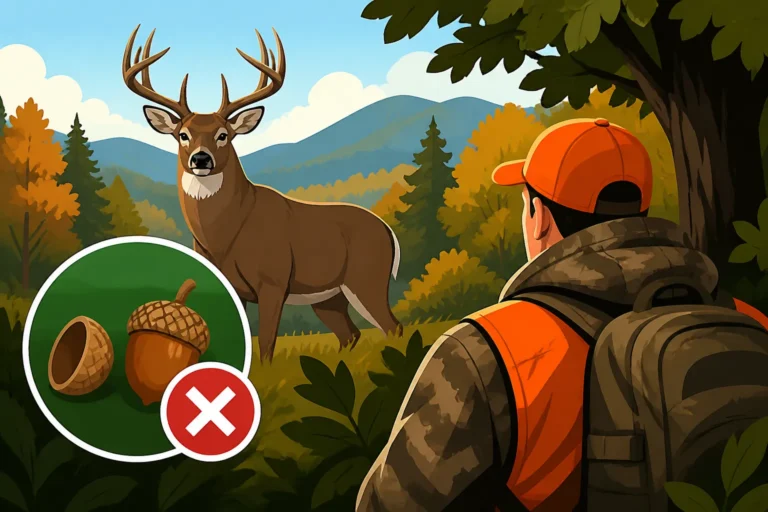
Deer are generally neat eaters when it comes to acorns. They'll typically pick up an acorn, hold it with their front incisors against their palate, and make a clean, precise cut to remove the cap and then often gnaw on the nut itself. What you'll find left behind are often semi-circular, clean-edged pieces of the acorn shell, sometimes with the cap still attached, or larger fragments that show a distinct chew pattern. There might also be fine, almost dusty bits of shell where they've thoroughly chewed a nut. These cuttings are usually found scattered on the forest floor directly under the tree, or slightly away if a deer moved while eating.
Squirrels, on the other hand, are much messier. They often hold the acorn with their paws and gnaw at it with their sharp incisors, leaving behind more ragged, splintered fragments. They're also known for carrying acorns away to bury or cache, so you might find piles of fragments near a log or stump where a squirrel sat and fed. If you see very small, shredded pieces, or if the shells look like they've been pried open rather than cleanly cut, it's a good bet squirrels are the primary culprits. Always look for the precision of the cut and the overall pattern of distribution to differentiate.
The "Sheen Test" and Other Freshness Indicators
Once you've determined that the cuttings are likely from deer, the next step is assessing their age. This is where the "sheen test" and other indicators become invaluable. Freshness is everything; you want to hunt where deer were just feeding.
Fresh acorn cuttings will still retain a slight, almost waxy sheen to them. The edges of the shell fragments will be sharp and distinct, and they might even feel a little damp or resilient if you pick them up. They haven't had time to dry out or be weathered by the elements. If you see this, you know deer were literally just there, or at most, within the last 24 hours.
Older cuttings, conversely, will appear dull, faded, and weathered. Their edges will be less sharp, and they might crumble easily when touched. They'll also blend in more with the surrounding leaf litter and duff, often showing signs of dust or dirt accumulation. If the ground is wet, older cuttings will be thoroughly waterlogged and soft, whereas fresh ones might still have some integrity.
Beyond the cuttings themselves, look for corroborating evidence. Fresh deer droppings are a dead giveaway of recent activity. They'll be dark, moist, and often clustered. Fresh tracks in soft dirt or mud, scuffed leaves indicating recent movement, or even freshly broken twigs from deer browsing nearby are all excellent indicators. Consider the weather too: if it rained recently, any dry cuttings are older than the rain event. If the ground is covered in fresh snow, any cuttings on top of that snow are very new, a perfect situation for Tracking a Deer in Fresh New York Snow. You can even use scouting tools like the GoHunt app to mark the exact location of these fresh cuttings, helping you keep track of changing patterns.
Strategies for Hunting Active Oak Stands
Finding an active oak stand is just the first step; turning that knowledge into a successful hunt requires strategic planning and execution. Timing, approach, and stand placement are all critical elements that need to align with the deer's behavior around these prime food sources.
Optimal Stand Placement Around Productive Oaks
Your stand placement is paramount when hunting an oak stand. The goal is to intercept deer as they approach to feed, or while they are feeding, without alerting them to your presence. The most crucial factor is wind direction. Deer rely heavily on their sense of smell, so you must position yourself directly downwind or crosswind of the feeding area. Never hunt with the wind blowing your scent directly into the oak stand; you'll blow deer out before they even get close.
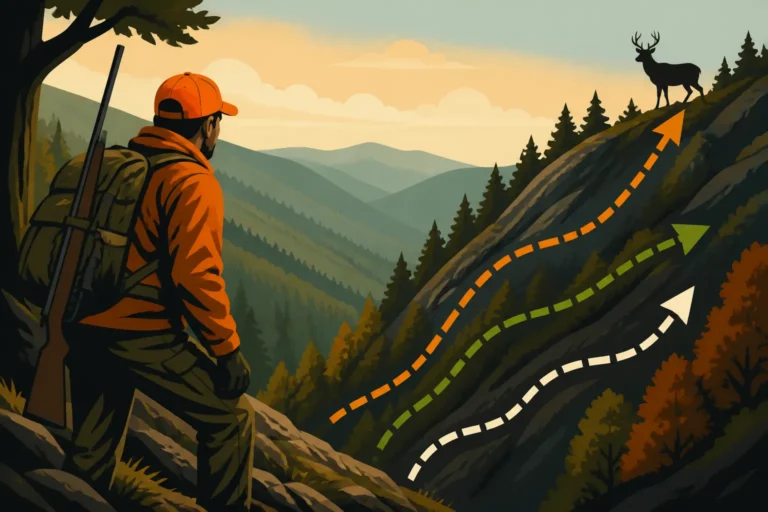
Consider the prevailing winds for your area, but also be mindful of localized thermals, especially in hilly or mountainous terrain like the Catskills. In the mornings, thermals generally rise, carrying your scent uphill. In the evenings, they fall, carrying scent downhill. Positioning yourself to account for both wind and thermals, as discussed in Wind and Thermals on a Catskill Ridge, can be the difference between seeing deer and seeing nothing.
Think about where deer will likely be coming from. Is there thick bedding cover nearby, a hidden draw, or a subtle ridge line that provides them security? Set up your stand between their bedding areas and the oak, but far enough away from the bedding cover itself to avoid disturbing them. Look for pinch points, subtle trails, or natural funnels that lead to the oak. These are often excellent ambush points. Don't be afraid to set up 30-50 yards away from the tree itself, especially if the wind dictates it. Sometimes, a well-placed stand slightly off the immediate feeding area, covering a primary approach trail, is far more effective than being right on top of the acorns. For more detailed guidance, consider concepts like Treestand Setups in Adirondack Hardwoods which can be adapted to any heavily timbered area with oak.
Integrating Acorn Scouting with Trail Camera Use
Trail cameras are an invaluable tool for taking your acorn scouting to the next level. While ground sign tells you what happened, a trail camera tells you when it happened and who was there. Once you've identified an active oak stand with fresh cuttings, setting up a trail camera is the logical next step.
Place your camera overlooking the most active feeding areas, or on the main trails leading into the oak stand. Position it to capture photos or videos of deer as they come to feed. Pay close attention to the time stamps on your images. Are deer feeding primarily in the mornings, evenings, or throughout the day? This information will help you pinpoint the best times to hunt. You might discover that a mature buck is only hitting the oak after dark, suggesting you need to adjust your approach or find a transition area closer to his bedding. Conversely, if you see consistent daytime activity, you know you have a high-odds spot.
Trail cameras also help you identify specific deer, allowing you to target particular bucks. You can see their travel routes, how many deer are using the area, and whether there are any patterns of specific deer arriving together. Apps like GoHunt can be incredibly useful here. You can upload your camera photos, tag specific deer, and plot their movements on a map, giving you a comprehensive overview of the deer activity around your oak stands. This detailed understanding allows you to fine-tune your hunting strategy and maximize your chances.
Common Mistakes and How to Avoid Them
Even with the best intentions and diligent scouting, it's easy to fall into common traps when hunting acorn crops. These mistakes, often stemming from impatience or overlooking crucial details, can quickly lead to frustrating hunts. Recognizing and actively working to avoid them will make you a much more successful oak hunter in New York.
Not Distinguishing Between Old and Fresh Activity
This is arguably the most common and disheartening mistake hunters make when chasing deer on acorns. You spend hours scouting, find an area littered with acorn caps and chewed shells, hang a stand, and then sit for an entire day, seeing absolutely nothing. The bitter truth? You were likely hunting old sign. The deer were there, but they moved on days ago, or even weeks ago.
The frustration of hunting a "dead" spot is immense. It's not just wasted time, but it can also diminish your confidence. This is precisely why the "sheen test" and meticulously evaluating other freshness indicators are so critical. Don't let enthusiasm override objective observation. If the cuttings look dull, weathered, and don't have that tell-tale fresh look, or if there are no fresh droppings or tracks, it's probably old news.
The solution is consistent, repeated scouting visits. Acorn crops can be highly dynamic. A tree that was hot one day might be completely cleaned out or abandoned by deer a few days later if a better food source becomes available or if hunting pressure moves them. Make a point to check your chosen oak stands frequently, ideally within 24-48 hours of your planned hunt. If you arrive and the fresh sign isn't there, be prepared to move. It's better to spend an hour quickly checking other options or moving to a different stand than to commit to a cold spot. Remember, as in Hunting After a Poor Acorn Year, deer behavior shifts dramatically with food availability.
Overlooking Nearby Water or Bedding Cover
While acorns are a powerful draw, deer don't live on acorns alone. They are complex creatures with fundamental needs beyond just food. A common mistake is to focus solely on the oak stand itself, ignoring the surrounding habitat that supports the deer using it. A fantastic oak stand without nearby water or secure bedding cover will only hold deer for short feeding forays, making them much harder to pattern.
Deer need water daily, especially when consuming dry foods like acorns. Look for small seeps, creeks, ponds, or even puddles within a reasonable distance of your oak stand. If you can identify a travel corridor that connects a water source to the oak, you've found a high-value area. Similarly, secure bedding cover is non-negotiable. This could be a dense stand of pines, a thicket of briars, a laurel swamp, or even steep, rugged terrain where deer feel safe. Deer will often bed very close to a preferred food source, especially if they feel unpressured.
Your active oak stand is a piece of a larger puzzle. Think about the entire habitat picture. Where are deer bedding? Where are they watering? How do they get from one to the other, and how does the oak stand fit into that travel pattern? Use tools like the GoHunt app or Reading Aerial Photos for Southern Tier Deer to analyze the landscape. Look for natural funnels, draws, and dense cover connecting these elements. By understanding how the oak stand integrates into the deer's daily life, you can identify not just where they eat, but also their approach routes and escape paths, allowing for more strategic stand placement and a much higher chance of success. This broader perspective often leads to opportunities to catch deer transitioning between food and cover, which can be even more productive than hunting them directly over the acorns. You might even find success using a ground blind if the cover is right, as highlighted in Using a Ground Blind on New York Public Land.
| Oak Type | Acorn Drop Season | Tannin Content | Deer Preference | Staying Power | Ideal Scouting Time |
|---|---|---|---|---|---|
| White Oak | Early Fall (Sept-Oct) | Low | High (Sweet) | Short | Late Summer / Early Fall |
| Red Oak | Mid-Late Fall (Oct-Nov) | High | Moderate (Bitter) | Long | Mid-Fall / Late Fall |
Disclaimer
Hunting is an activity with inherent risks. Always prioritize safety, follow all New York State Department of Environmental Conservation (DEC) regulations, and obtain appropriate licenses and permits. This guide is for informational purposes only and does not replace professional advice or mandatory hunter education courses. Be aware of your surroundings and hunt ethically and responsibly.