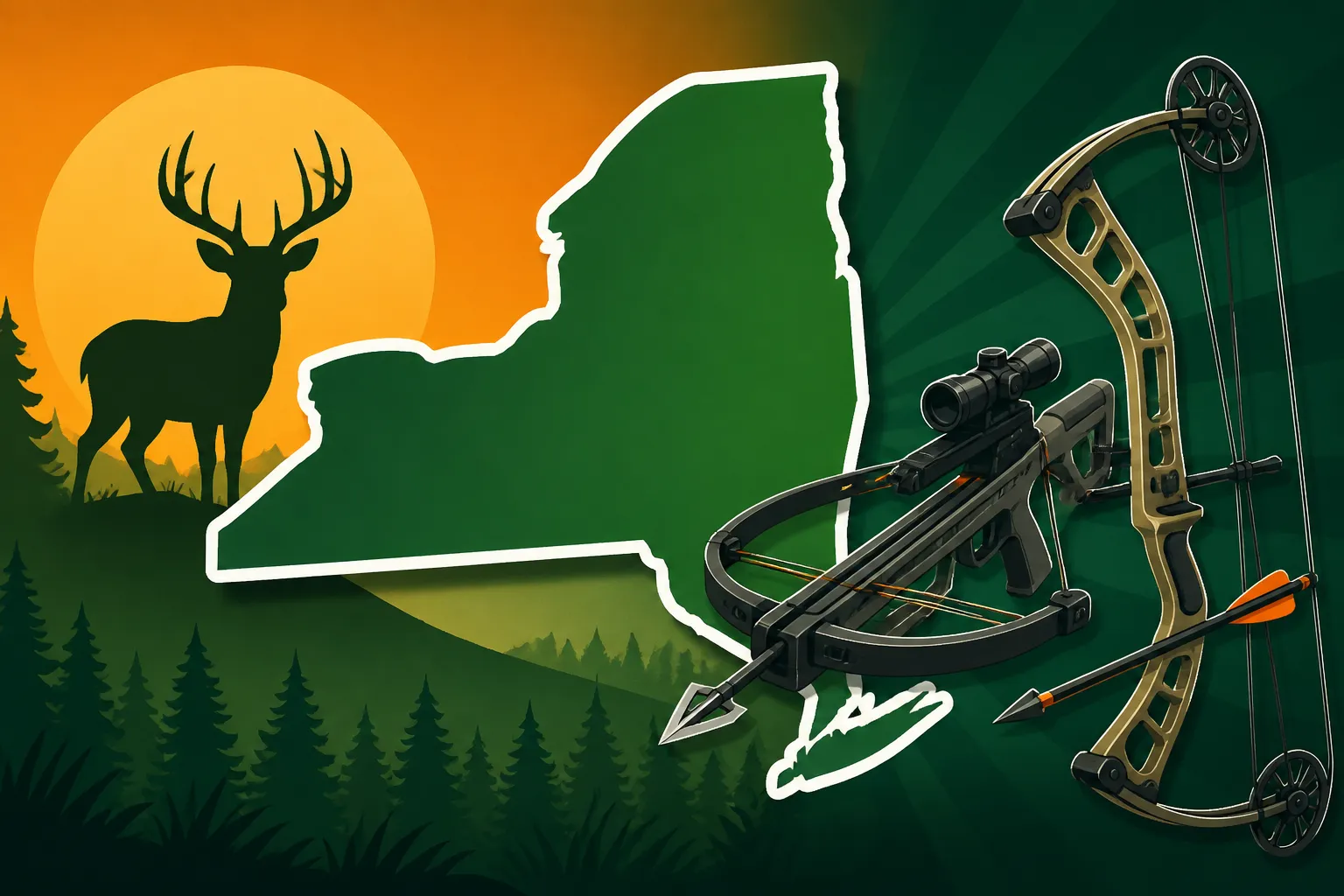
New York Crossbow and Bow Regulations
Navigating the world of New York hunting regulations can feel like trying to untangle a fishing line after a particularly enthusiastic cast – especially when it comes to understanding the nuances of archery and crossbow use. It's a common frustration, with rules changing, new technology emerging, and sometimes, a little confusion lingering around who can use what, and when. This comprehensive guide is designed to cut through that complexity, offering a clear, detailed breakdown of all the current bow and crossbow regulations in New York State, ensuring you're confident and compliant in the woods.
Understanding the Foundation: New York Archery Privileges and Education
Before you even think about stringing a bow or cocking a crossbow, you need to lay the groundwork with the proper licensing and education. New York is particular about ensuring its hunters are knowledgeable and safe, especially when wielding traditional archery equipment or modern crossbows.
The Big Game License and Archery Privilege
First things first, any hunter aiming to pursue deer or bear with a bow or crossbow in New York must possess a valid New York State hunting license. This isn't just a basic small game license; it's specifically the big game license that unlocks the door to deer and bear hunting. But simply having the big game license isn't enough for archery. You need to add the "archery privilege" to it. This privilege acts as an endorsement, indicating you've met the specific educational requirements to hunt with a bow or crossbow. Think of it like getting a special endorsement on your driver's license for a motorcycle – same base license, but different vehicle. The cost for adding this privilege is relatively minor, but the implications are huge. It validates that you've been exposed to the critical safety aspects unique to archery hunting, from tree stand use to proper shot placement.
Bowhunter Education Requirements
So, how do you get this coveted archery privilege? It all boils down to education. New York requires all first-time bowhunters (or anyone who hasn't previously held a New York archery privilege or an equivalent out-of-state certificate) to successfully complete a Bowhunter Education course. This isn't a quick online quiz; it's a comprehensive program designed to teach you about equipment, safety, deer anatomy, tracking, and ethical shot angles. Many hunters, myself included, have found these courses invaluable, even after years in the woods. They cover everything from how to properly use a safety harness in a tree stand to understanding deer behavior during the rut.
There are options for taking this course, often offered through certified instructors with the New York Department of Environmental Conservation (DEC). You can find schedules and locations on the DEC website, or sometimes through local sportsman's clubs or even big box sporting goods stores like Cabela's or Bass Pro Shops. It's crucial to complete this course before you head afield with a bow. There's no grandfathering in for experience alone if you're a new archery hunter to the state or a new bowhunter in general. Once you've successfully completed the course, you'll receive a certificate that allows you to purchase that archery privilege for your license. It's a one-time requirement, but the knowledge and safety practices are something you carry with you every season. For more detailed information on hunter education in general, you might want to read our guide on New York Hunter Education Requirements.
Traditional Bowhunting Regulations: What You Need to Know
For those who embrace the challenge and tradition of hunting with a vertical bow, New York has specific rules governing your equipment to ensure humane and safe hunting practices.
Minimum Draw Weight and Arrow Specifications
When it comes to the bow itself, New York sets a minimum draw weight for vertical bows. Currently, that minimum is 35 pounds. This isn't just an arbitrary number; it's designed to ensure that an arrow launched from your bow carries enough kinetic energy to achieve a clean, ethical kill on a big game animal like a deer or bear. Trying to hunt with a bow under this weight is not only illegal but risks injuring an animal without harvesting it. Many modern compound bows easily exceed this, but traditional recurves and longbows might be closer to the minimum, so it’s something to verify.
Beyond the bow, your arrows also have specific requirements. They must be at least 15 inches long, and when it comes to the business end, they must be fitted with a broadhead. Small game hunting with field points or blunt tips is one thing, but for big game, a razor-sharp broadhead is mandatory. The regulations dictate that broadheads must have at least two cutting edges and be at least 7/8 inch wide. This width ensures a sufficient cutting diameter to create a quick, clean kill. There’s a lot of debate among archers about fixed blade versus mechanical broadheads, but both are legal as long as they meet these minimum specifications. For example, a popular mechanical broadhead like the Rage Hypodermic or a fixed blade like the G5 Montec would easily meet these criteria. The key is knowing your equipment and practicing with your chosen broadhead to ensure accuracy.
Fixed Blade Versus Mechanical Broadheads
The choice between fixed blade and mechanical broadheads is a hot topic among bowhunters, and New York allows both, provided they meet the minimum cutting width. Fixed blade broadheads, as the name suggests, have blades that are rigidly attached and do not deploy. They are known for their strength and reliability, and many hunters trust them for their simplicity and the fact that there's no mechanism to fail. Brands like Muzzy and Magnus are stalwarts in this category. They require excellent tuning of your bow to fly accurately, as the fixed blades can catch the wind and steer the arrow if not perfectly aligned.
Mechanical broadheads, on the other hand, have blades that are tucked away during flight and deploy upon impact. This design typically results in better flight characteristics, often mimicking the flight of a field point, which can be advantageous for consistency, especially at longer ranges. Once deployed, they can create a much wider cutting diameter than most fixed blades, leading to massive wound channels and excellent blood trails. Popular options include the aforementioned Rage or the NAP Killzone. However, some hunters worry about potential mechanical failure upon impact, or the blades not deploying fully. Whichever you choose, it is absolutely critical to practice with your hunting broadheads (or practice versions that mimic their flight) before the season to ensure pinpoint accuracy. Don't just assume your field points and broadheads will fly the same.
Crossbow Regulations in New York: A Detailed Overview
Crossbows have seen a rise in popularity, offering a unique blend of traditional archery challenge with some of the aiming advantages of a firearm. However, New York has specific rules about their use, including who can use them and when.
Who Can Use a Crossbow and Permit Requirements
Historically, crossbow use in New York was more restricted, often limited to hunters with certain physical disabilities. However, regulations have evolved, and now, with the proper permits, a much broader range of hunters can legally use crossbows. To hunt with a crossbow in New York, you must first possess a valid New York State hunting license and the archery privilege, just like a traditional bowhunter. On top of that, you need a specific New York Crossbow Privilege. This is an additional privilege you purchase for your license, and it's what differentiates a vertical bowhunter from a crossbow user. This additional privilege ensures that those choosing crossbows are aware of the specific rules and seasons associated with their use.
The great news is that acquiring the crossbow privilege is relatively straightforward once you have your general hunting license and bowhunter education. It typically costs a nominal fee and is purchased through the same channels as your regular license, either online via the DEC's HuntFishNY system, at a licensing agent, or by phone. It's not an extra course like bowhunter education, but rather an acknowledgement and an additional fee to use the equipment during designated seasons. The DEC often updates these regulations, so it's always a good idea to check the most current hunting guide or visit the DEC website for the latest details, especially concerning any proposed changes to crossbow limits or seasons. For instance, there have been discussions about Why New York May Drop Crossbow Limb Limits in the future.
Crossbow Specifications and Safety
Just like vertical bows, crossbows have specific technical requirements in New York to ensure safe and ethical hunting. The law mandates a minimum peak draw weight of 100 pounds for crossbows. This is significantly higher than vertical bows, reflecting the different mechanics of crossbows and the need for sufficient power to deliver a humane shot. Additionally, crossbows cannot have a draw weight exceeding 200 pounds. This upper limit is likely in place to prevent the use of overly powerful devices that might blur the line between crossbow and firearm in terms of kinetic energy and potential for long-range shots.
The bolts (arrows) used with crossbows must also meet certain criteria. They must be at least 14 inches in length and fitted with a broadhead that has at least two cutting edges and is a minimum of 7/8 inch wide, identical to the broadhead requirements for vertical bows. As with any hunting equipment, safety is paramount. Crossbows must be equipped with a functional safety device, and hunters are advised to always engage the safety until the moment of the shot. It's also critical to always point the crossbow in a safe direction and be mindful of your shooting lane, as crossbow bolts travel at high speeds. Practice shooting from elevated positions if you plan to hunt from a stand, and always know your target and what's beyond it.
Archery Seasons and Special Opportunities
One of the greatest advantages of bowhunting in New York is the extended seasons it offers. Bowhunters often get into the woods weeks before the firearm seasons open, and sometimes have unique opportunities during special hunts.
Early Archery Seasons
New York is divided into two primary deer hunting zones: the Northern Zone and the Southern Zone, each with its own distinct hunting calendar. Bowhunters in both zones get an early jump on the season, which is often a fantastic time to be in the woods. The early archery season in the Southern Zone typically kicks off in late September, offering hunters a chance to pursue deer before they experience significant hunting pressure. Temperatures can still be warm, which means focusing on early morning and late evening hunts near food sources, or along shaded travel corridors. For a precise start date, you'd be looking at New York Southern Zone Archery Dates. This early season also provides an opportunity to pattern deer behavior before the rut fully kicks in.
In the Northern Zone, the archery season usually begins even earlier, often in mid-September. The Northern Zone is vast, characterized by large tracts of public land and rugged terrain, particularly in the Adirondack Park. Getting in early here means catching deer in their predictable summer patterns before they start to change with falling temperatures and increased rut activity. Hunters in the Northern Zone often deal with vastly different conditions, including thicker cover and sometimes more solitary deer encounters. Knowing When New York's Northern Zone Bow Season Opens is key for planning your trips. These early seasons are also prime for velvet bucks, though antler development is usually complete by this point.
Late Archery Reopeners and Holiday Hunts
Beyond the primary early seasons, New York offers some unique late-season archery opportunities that can be incredibly productive, especially when cold weather and snow start to concentrate deer. In the Southern Zone, after the general firearm season concludes, there's often a special late archery and muzzleloader season that reopens. This is a fantastic chance to fill a tag when deer are often focused heavily on finding any remaining food sources, like standing corn or mast crops, or heading to thermal cover to escape the cold. The landscape looks completely different, and deer patterns shift dramatically. Understanding Hunting the Late Southern Zone Archery Reopener can be a game-changer for success.
Furthermore, certain Wildlife Management Units (WMUs) in the Southern Zone participate in a special Holiday Deer Hunt. This hunt typically runs from December 26th through January 1st and is exclusively for bowhunters and muzzleloader hunters. It's a short window, but it falls during a time when many people are off from work and deer are often facing severe winter conditions, making them more predictable as they seek sustenance. This can be an excellent opportunity for filling a late-season tag, especially for hunters with Deer Management Permits (DMPs). Information on New York Holiday Deer Hunt Rules will clarify specific WMU participation and regulations. These late seasons are often less crowded than the early firearm seasons, offering a more tranquil hunting experience.
Youth Deer Hunting Weekend
New York is proactive in encouraging the next generation of hunters, and the Youth Deer Hunting Weekend is a testament to that commitment. This special weekend, typically held in early October, allows junior hunters (ages 12-15) to hunt deer with a bow or crossbow, provided they are accompanied by a licensed, experienced adult mentor. The mentor cannot carry a firearm or bow themselves, making the focus entirely on guiding the youth hunter. This is a priceless opportunity for young hunters to gain valuable field experience in a controlled environment, often before the main hunting seasons begin and hunting pressure increases.
The rules for the youth weekend are very specific, outlining mentor requirements, bag limits, and legal game. It's a chance for mentors to pass down knowledge about scouting, tracking, and ethical shot selection. It’s important for both youth hunters and their mentors to be intimately familiar with New York Youth Deer Hunt Rules to ensure a safe and successful outing. This initiative helps foster a love for hunting and conservation in young people, creating memories that last a lifetime and ensuring the future of our hunting traditions.
Equipment and Safety Considerations for Bowhunting
Beyond the regulations, effective and safe bowhunting relies heavily on your equipment choices and diligent safety practices. The right gear can make all the difference, but only if used correctly.
Treestands and Safety Harnesses
For many New York bowhunters, particularly those pursuing whitetails in the Southern Tier or Catskills, hunting from an elevated position in a treestand is a primary tactic. Treestands offer a better vantage point, help to get your scent above a deer's nose, and can dramatically increase your shot opportunities. However, they also come with inherent risks. The single most important piece of safety equipment for any treestand hunter is a full-body safety harness. It's not optional; it's absolutely essential. Many preventable accidents happen when hunters fail to wear or properly attach their harness.
When setting up a stand, whether it's a fixed-position stand, a climber, or a saddle setup, always use a lifeline or safety rope from the moment your feet leave the ground until you're back down. This keeps you connected to the tree 100% of the time. Inspect your stand and harness regularly for wear and tear, and never take shortcuts. For hunters on public land, remember there are specific Treestand Rules on New York Public Land regarding how stands can be affixed to trees and how long they can be left in place. Some regulations, for instance, prohibit stands that damage the tree, meaning screw-in steps or permanent stands are often disallowed. Companies like Hunter Safety System (HSS) make excellent, user-friendly harnesses that integrate into your hunting clothing.
Ground Blinds and Concealment
While treestands are popular, ground blinds offer another excellent option, especially in areas where treestand placement is difficult or where you need to conceal movement more effectively. Modern pop-up ground blinds provide excellent concealment, breaking up your outline and containing your scent to some degree. They are particularly effective when hunting field edges, food plots, or thick transition areas where deer might not look up. Brands like Primos and Barronett offer durable, portable blinds that can be set up quickly.
When using a ground blind, especially on public land, consider brushing it in naturally with local vegetation to help it blend even further. Position it strategically with the wind in mind, and ensure you have clear shooting lanes for both bow and crossbow. Be mindful of the sun's position throughout the day, as a blind that offers great concealment in the morning might be back-lit and reveal your silhouette by afternoon. Just like treestands, there are rules for leaving ground blinds on public lands, such as those covered in Ground Blind Rules on New York WMAs. Generally, temporary blinds are acceptable, but permanent structures or leaving blinds unattended for extended periods may be prohibited.
Optics and Rangefinders for Archery
Accuracy is paramount in bowhunting, and modern optics play a crucial role in ensuring ethical shots. While a rifle hunter might use a high-magnification scope, bowhunters primarily rely on good binoculars and, increasingly, rangefinders. A quality pair of binoculars (8×42 or 10×42 are popular choices) allows you to scan for deer, identify antler points, and study their behavior without excessive movement. Brands like Vortex, Leupold, and Maven offer excellent options at various price points. Having good low-light performance is a huge plus, as most deer movement occurs at dawn and dusk. For specific advice, check out Binocular Power for Timber Hunting.
Rangefinders have become an almost indispensable tool for bowhunters. Unlike firearms, where a few yards off might still be a killing shot, a few yards off with a bow can mean a missed shot or, worse, a wounded animal. A rangefinder instantly gives you the exact distance to your target, allowing you to select the correct pin on your bow sight. This is especially critical when hunting from an elevated position, where angles can deceive the eye. Modern rangefinders often include angle compensation features, which are invaluable for treestand hunting. Always range key landmarks around your stand before a hunt – specific trees, rocks, or openings – so you have reference points when a deer steps out. For a detailed discussion on effective ranging, our piece on Rangefinders Under 100 Yards could be helpful.
Ethical Considerations and Fair Chase Principles
Hunting in New York, especially with archery equipment, isn't just about following the letter of the law. It's also about upholding the spirit of fair chase and ensuring the most ethical outcome for the animals we pursue.
Shot Placement and Animal Recovery
One of the cornerstones of ethical bowhunting is making a clean, humane kill. This starts with understanding deer anatomy and prioritizing ethical shot placement. For deer, the "boiler room" – the area containing the heart and lungs – is the primary target. A double-lung or heart shot leads to a quick, humane death. Hunters should always strive for broadside or slightly quartering-away shots that maximize the chances of hitting these vital organs. Quartering-to shots, straight-on shots, or shots at a deer looking directly at you should generally be avoided, as they present a much smaller target for vital organs and a higher risk of wounding.
After the shot, patience is paramount. Unless you see the deer drop within sight, it's almost always best to wait. For a good hit on the heart/lungs, waiting 30 minutes to an hour is often sufficient, but for questionable hits (like gut shots), waiting 4-6 hours or even overnight (if temperatures allow) significantly increases your chances of a successful recovery. Following a blood trail, even a sparse one, requires diligence and attention to detail. This is where experience, and sometimes the help of a well-trained tracking dog (where legal), comes into play. It's every bowhunter's responsibility to do everything possible to recover an animal once it's been shot. Our article on Blood Trailing After Dark in New York delves into this critical skill.
Avoiding Unethical Practices
Fair chase means giving the animal a reasonable chance to evade the hunter. This involves refraining from practices that give the hunter an undue advantage. For bowhunting in New York, this specifically means no baiting. Unlike some other states, New York prohibits the use of bait (such as corn, apples, or mineral licks) to attract deer for hunting purposes. This applies to both private and public lands. The rationale is to maintain the challenge of hunting and prevent the concentration of deer, which can also contribute to disease transmission. While some hunters find this frustrating, it ensures a more natural hunting experience.
Other unethical practices to avoid include shooting beyond your effective range, which varies greatly from hunter to hunter. Just because your bow can shoot 60 yards doesn't mean you can make an ethical shot at that distance under hunting conditions. Practice, practice, practice, and know your personal limits. Avoid shooting at running or quickly moving deer, as the chances of a clean kill are drastically reduced. Ultimately, being an ethical hunter means making responsible decisions in the field that respect the animal and the traditions of the sport.
Comparing Bow vs. Crossbow Hunting in New York
The decision between hunting with a vertical bow or a crossbow in New York is a personal one, with both offering distinct advantages and disadvantages. Understanding these differences can help you choose the right tool for your hunting style and physical capabilities.
Advantages and Disadvantages of Vertical Bows
Advantages:
- Extended Seasons: Vertical bowhunters often get the earliest start to the deer season and have unique opportunities like New York's Long Archery Season.
- Challenge and Tradition: Many hunters enjoy the deep satisfaction and connection to tradition that vertical bowhunting offers. The skill required to shoot accurately and consistently is significant.
- Lightweight and Maneuverable: Vertical bows are generally lighter and more compact than crossbows, making them easier to carry through dense cover and maneuver in tight treestands.
- Less Recoil/Noise: Vertical bows are quieter and produce virtually no recoil, which can be advantageous for not alarming other deer in the vicinity after a shot.
Disadvantages:
- Higher Skill Curve: Mastering a vertical bow takes significant practice, strength, and finesse. Draw weight must be held at full draw, which can be challenging in cold weather or for extended periods.
- Physical Demands: Requires a certain level of physical fitness and strength to consistently draw and hold the bow.
- Limited Range: While some skilled archers can shoot far, the practical ethical range for most vertical bowhunters is typically within 20-40 yards.
- Shot Angle Sensitivity: More sensitive to body movement and torque during the shot process, requiring precise form.
Advantages and Disadvantages of Crossbows
Advantages:
- Ease of Use/Lower Skill Curve: Crossbows are generally easier to learn and master, as they can be cocked and then held at full draw without physical exertion, allowing for more time to aim.
- Greater Accuracy (for some): For many, crossbows offer rifle-like accuracy, particularly out to 40-60 yards, due to their stability and trigger-activated firing mechanism.
- Less Physical Demand: Ideal for hunters with physical limitations, injuries, or those who simply cannot pull back a vertical bow.
- Versatility: Can be used in more varied weather conditions without impacting accuracy as much as a vertical bow might.
Disadvantages:
- More Restricted Seasons: While gaining ground, crossbows typically have more restricted seasons compared to vertical bows. For example, some early archery-only periods might exclude crossbows entirely, though this is evolving. The long-tail post Crossbow Rules During New York Archery Season directly addresses this.
- Bulkier and Heavier: Crossbows are often heavier, wider, and more cumbersome to carry through thick woods and maneuver in treestands.
- Loud and Recoil: They produce a distinct mechanical sound and some recoil upon firing, which can startle nearby game.
- Higher Price Point: Quality crossbow setups can often be more expensive than comparable vertical bow setups.
- Safety Concerns: Care must be taken to keep fingers and clothing clear of the string path when firing.
When making your choice, consider your physical capabilities, the type of hunting you plan to do, and your commitment to practice. Many hunters start with a crossbow for its ease of entry and later transition to a vertical bow, or use both depending on the season and location.
Navigating Public Land with Archery Gear
New York offers a wealth of public land opportunities for bowhunters, from the vast wilderness of the Adirondacks to the smaller state forests of the Southern Tier. However, successfully hunting these areas with archery gear requires specific knowledge and strategies.
Rules for Treestands and Ground Blinds on Public Land
Hunting on public land comes with a unique set of responsibilities and rules, especially concerning your equipment. When it comes to treestands, the general rule across most New York State Forests and Wildlife Management Areas (WMAs) is that only portable stands are allowed. This means stands that are designed to be removable and do not cause permanent damage to the tree. Screw-in steps, nailing platforms, or any alteration that damages the tree bark is typically prohibited. Stands must also be clearly marked with the hunter's name and address or hunting license number.
The duration a stand can be left on public land is also regulated. Many WMAs and State Forests specify that stands can only be left up for a certain period, often tied to the specific hunting season, and must be removed shortly after the season closes. This prevents abandonment and ensures fair access for all users. Always consult the specific regulations for the WMA or State Forest you intend to hunt. For instance, you can find a lot of useful information using the Scouting With the New York HuntFishNY App, which often includes WMA-specific rules.
Ground blinds, whether natural or manufactured, are also subject to regulations. Temporary, portable ground blinds are generally permitted, provided they are removed after use and do not alter the landscape. Permanent structures are almost universally forbidden. If you're building a natural blind, ensure you're only using deadfall and downed limbs, and not cutting live vegetation. Always remember to pack out anything you pack in, including your blinds and any associated garbage.
Scouting and Accessing Remote Public Ground
Successful bowhunting on public land, particularly in New York's vast wilderness areas, starts long before the season opens with diligent scouting. Aerial maps, topographic maps, and mapping applications like GoHunt or onX Hunt are invaluable tools for identifying potential bedding areas, travel corridors, pinch points, and food sources. Look for changes in elevation, saddles between ridges, old logging roads, and areas with different timber types. Our guide to Reading Aerial Photos for Southern Tier Deer can provide great insights into this.
Accessing remote public ground can often mean leaving the beaten path and hiking deep into the woods. This is where bowhunting truly shines, as you can get away from the crowds that often hug main roads during firearm seasons. When planning your access, consider prevailing winds and how your entry and exit routes might impact deer movement. Try to use terrain features or natural barriers to conceal your approach. Early archery seasons are often less pressured, but as the season progresses, and especially if you're hunting during the rut, knowing where deer seek refuge from pressure can be key. Apps like GoHunt often have public land layers and property line tools that are indispensable for navigating these vast areas and avoiding trespass.
Table: New York Archery and Crossbow Regulations at a Glance
| Feature/Requirement | Vertical Bows (Compound, Recurve, Longbow) | Crossbows |
|---|---|---|
| Minimum Draw Weight | 35 pounds | 100 pounds |
| Maximum Draw Weight | N/A (no upper limit specified) | 200 pounds |
| Minimum Arrow/Bolt Length | 15 inches | 14 inches |
| Broadhead Minimum | 7/8 inch wide, 2 cutting edges | 7/8 inch wide, 2 cutting edges |
| Required Privilege | Archery Privilege | Archery Privilege + Crossbow Privilege |
| Youth Hunting | Yes (with mentor, specific seasons) | Yes (with mentor, specific seasons) |
| Baiting | Prohibited | Prohibited |
| Public Land Stands | Portable, removable, no tree damage | Portable, removable, no tree damage |
| Safety Device | N/A (inherent in design) | Required (manual or automatic) |
Note: Always consult the current New York DEC Hunting Regulations Guide for the most up-to-date and complete information.
The Importance of Current Information
Staying informed about New York's hunting regulations isn't a one-time task; it's an ongoing commitment. Regulations can change annually, and sometimes even mid-season, due to wildlife management decisions, legislative updates, or emerging conservation concerns.
Accessing Official DEC Resources
Your absolute best source for the most accurate and up-to-date information is the New York Department of Environmental Conservation (DEC) itself. They publish an annual Hunting and Trapping Regulations Guide, which is available both online on their website and in print at most license-issuing agents. Before each season, make it a point to download and thoroughly read the latest guide. Pay close attention to any highlighted changes from previous years.
The DEC website is also a treasure trove of information, offering details on specific WMUs, season dates, license purchasing, and important advisories, such as those related to Chronic Wasting Disease. You can even find interactive maps and detailed instructions on how to report your harvest using the GoHunt platform integrated with the DEC system. Don't rely solely on word-of-mouth or outdated information from forums. Investing the time to review the official DEC resources will prevent headaches and ensure your hunt is fully compliant.
Staying Updated on Rule Changes and Proposals
New York's hunting regulations are dynamic, constantly adapting to biological data, hunter feedback, and evolving societal values. For instance, discussions about crossbow regulations, antler point restrictions, or even the allocation of Deer Management Permits (DMPs) are ongoing. The DEC often solicits public comment on proposed changes, and staying engaged with these discussions can help you understand the rationale behind future regulations.
Following reputable New York hunting news sources, subscribing to DEC newsletters, and checking in with local sportsman's clubs are all good ways to stay informed. Sometimes, significant changes are proposed that could impact your hunting strategy for years to come. Being proactive in understanding these potential shifts, rather than being surprised when they go into effect, will make you a more prepared and successful hunter in the long run. The convenience of tools like GoHunt in organizing and presenting this information can also be incredibly helpful for busy hunters.
Disclaimer
Always consult the official New York State Department of Environmental Conservation (DEC) hunting regulations guide for the most current and accurate information before participating in any hunting activity. Regulations are subject to change, and it is the hunter's responsibility to be aware of and comply with all applicable laws.