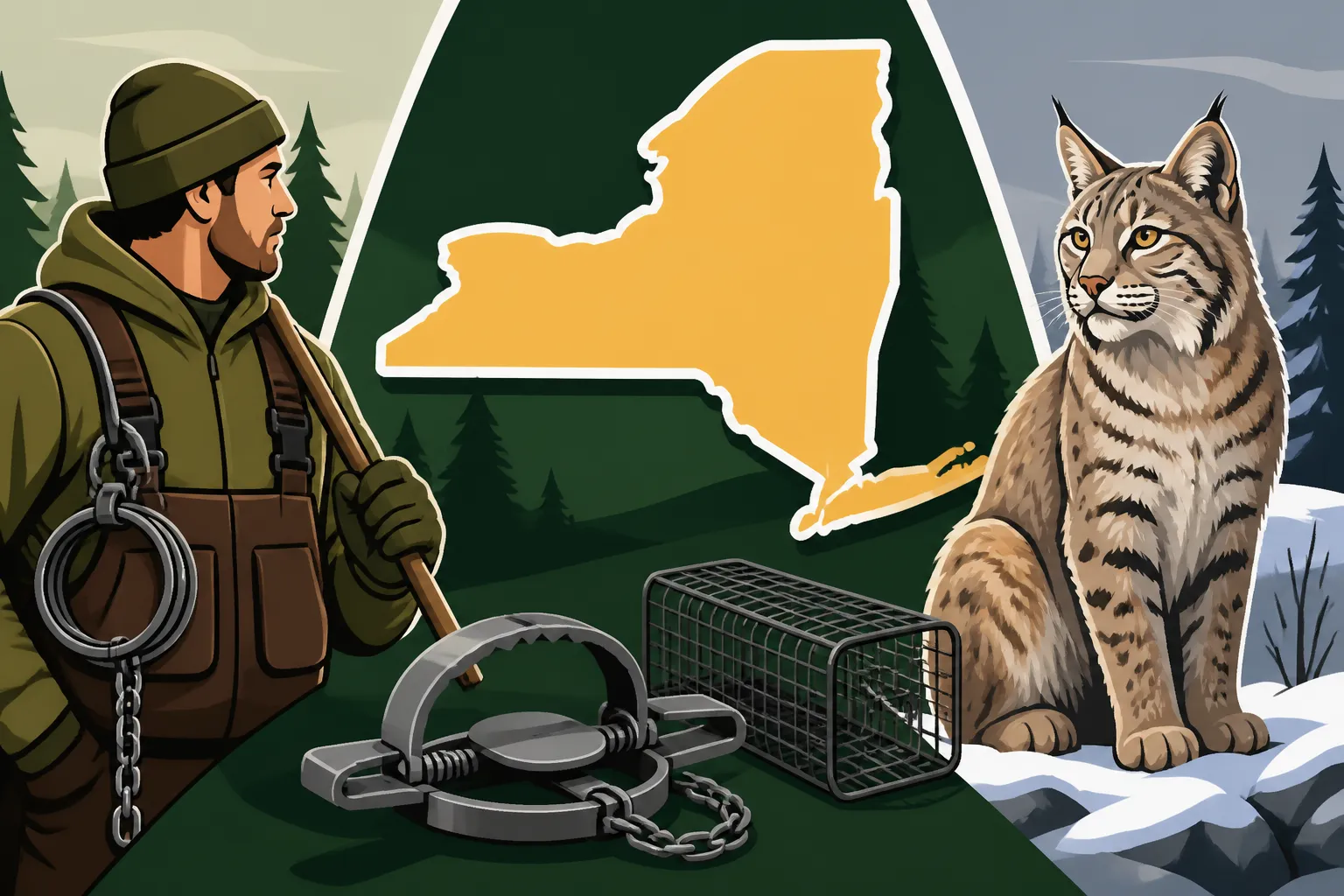
New York Fisher and Bobcat Trapping Rules
Navigating the world of furbearer trapping in New York can feel like deciphering an ancient scroll, especially when you're after elusive and highly regulated species like fishers and bobcats. It's not just about setting a trap; it's about understanding a complex web of season dates, specific Wildlife Management Units (WMUs), legal trap types, and crucial reporting requirements that can change yearly. This guide is here to break down the ins and outs of New York's fisher and bobcat trapping rules, helping you stay compliant, ethical, and hopefully, successful in your pursuit.
Understanding New York's Furbearer Trapping Landscape
New York State boasts a rich tradition of furbearer trapping, offering opportunities to pursue a variety of animals. Among the most prized, both for their pelts and the challenge they present, are the fisher and the bobcat. These carnivores play vital roles in the ecosystem, and their management by the New York State Department of Environmental Conservation (DEC) reflects a commitment to sustainable populations. For trappers, this means strict rules are in place, designed to ensure both the health of the species and the safety of all outdoor enthusiasts.
Fishers, often called "fisher cats" despite not being felines, are members of the weasel family known for their agile, arboreal habits and their striking dark brown fur. They thrive in dense, mature forests, particularly those with a mix of hardwoods and conifers, and are found throughout much of upstate New York. Bobcats, on the other hand, are secretive, medium-sized wild cats with distinctive spotted coats and tufted ears. They prefer mixed forests, swamps, and rocky areas, with strongholds in the Catskills, Adirondacks, and parts of the Southern Tier. Both species require careful scouting and a deep understanding of their habitat and behavior to trap successfully. The value of their pelts can be significant, making them a tempting target, but the ethical and legal responsibilities are paramount.
The frustration many trappers face is the sheer amount of detail and the regional variations in regulations. What's legal in one WMU might not be in another, and ignorance of the law is no excuse. This is why thorough preparation is essential, from understanding the general New York Trapping Seasons and Tagging rules to drilling down into the specifics for each target species.
Navigating Fisher Trapping Regulations in New York
Fishers offer a unique challenge and reward for New York trappers, but their management is quite specific. These agile predators have seen population fluctuations over the years, leading the DEC to implement carefully designed regulations to ensure their long-term health. Understanding these rules is your first step to a successful and legal season.
Fisher Season Dates and Wildlife Management Units
The season for trapping fishers in New York is not statewide, nor is it uniform. Instead, it varies significantly by Wildlife Management Unit (WMU). These distinctions are crucial, as being off by a single day or a few miles can lead to severe penalties. Generally, fisher seasons are shorter and often coincide with other furbearer seasons, typically running from late October or early November into December. For instance, in some parts of the Adirondacks, the season might open in early November and run for a few weeks, while in certain southern zones, it could be a different window entirely. It's imperative to check the official DEC furbearer hunting and trapping guide each year, as these dates are subject to change based on population surveys and management objectives.
To illustrate the variability, consider that WMUs like 5A, 5C, and 6A in the Adirondack region might have slightly different start and end dates compared to, say, WMU 7A in the Central/Western region. Many trappers utilize tools like the GoHunt app or the DEC's online mapping resources to pinpoint their exact WMU and confirm the precise dates before even thinking about setting a trap. This proactive approach helps avoid accidental violations and ensures you're operating within the legal framework. Knowing the local conditions and consulting resources like the GoHunt platform can save a lot of headaches, especially when planning your approach for Fishers and Martens in the Adirondacks where conditions can be particularly challenging.
Legal Trap Types and Set Requirements for Fishers
New York State has strict regulations regarding the types of traps that can be used for furbearers, especially to minimize non-target catches and ensure humane practices. For fishers, this often means specific requirements for foothold traps and body-gripping traps (like Conibear-style traps). Foothold traps generally have limitations on jaw spread, and often require padded jaws or laminated jaws in certain areas. These traps must be checked at least once every 24 hours.
Body-gripping traps, popular for their efficiency, also have specific size limitations for fishers. Crucially, any body-gripping trap with a jaw spread over a certain size (e.g., 6.5 inches) must be set fully submerged in water, or at least partially submerged within a water body. This water set rule is a major consideration, as it limits their use in upland environments where fishers are often found. Furthermore, all land sets must be at least 100 feet from a public road or dwelling, a rule designed to prevent conflicts and ensure public safety. Trappers often build cubbies or use covered sets to protect the trap and ensure the target animal is properly guided, which also helps prevent non-target species from interacting with the trap. It’s a lot to remember, and getting it wrong can lead to serious legal issues, including fines and license revocation.
Tagging, Reporting, and Pelt Sealing for Fishers
Once a fisher is successfully trapped, the work isn't over. New York State requires immediate tagging of the animal at the trap site with your DEC license tag. This demonstrates legal harvest and helps state officials track harvest numbers. The tag must remain with the pelt until it is sold or processed for personal use.
Beyond immediate tagging, all harvested furbearers must be reported to the DEC within a specific timeframe. This can typically be done online through the DEC's harvest reporting system or via a phone call. This data is critical for biologists to monitor population trends and make informed management decisions for future seasons. While fisher pelts typically don't require physical sealing by a DEC officer (unlike bobcats in certain areas), accurate and timely reporting is still a non-negotiable requirement. Ignoring these reporting steps is a direct violation of conservation laws and can result in significant penalties.
Specifics of Bobcat Trapping in New York
Bobcats represent an even more specialized trapping endeavor in New York, largely due to their more restricted range and population dynamics. They are a truly iconic species, and managing their harvest requires a very precise set of regulations to ensure their populations remain robust across the state.
Restricted Zones and Open Seasons for Bobcats
Unlike fishers, bobcat trapping is not permitted statewide in New York. The DEC has designated specific zones where bobcat trapping is allowed, primarily in the northern, central, and southeastern parts of the state where populations are more stable. These include portions of the Northern Zone, the Catskill region, and certain WMUs in the Southern Zone. For example, trappers in the Adirondack Park might find an open bobcat season, while those in many western New York counties will not. The open areas are precisely delineated by WMU boundaries, and it’s critical to confirm your location before setting any traps.
The season dates for bobcats are also highly specific and generally shorter than those for other furbearers. In the Northern Zone, the bobcat season often aligns with the general furbearer season, typically running from late October through December. However, in the Southern Zone, the season might be much shorter, often limited to a few weeks in December. These specific geographical and temporal restrictions highlight the DEC's careful approach to managing a species that can be sensitive to overharvest. Using mapping tools, such as those integrated into the GoHunt platform, can be incredibly beneficial for trappers to verify if their intended trapping location falls within an open bobcat management unit and what the exact dates are. This attention to detail is crucial when targeting game like the Bobcat Range and Numbers in New York.
Special Permitting, Trap Requirements, and Setbacks for Bobcats
New York’s bobcat trapping regulations often include requirements beyond a general trapping license. While a specific bobcat permit is not typically required in the same way a deer management permit is, the general trapping license is a prerequisite, and trappers must have completed a mandatory trapper education course.
In terms of trap types, the same general restrictions apply as for fishers, with limitations on jaw spread for foothold traps and requirements for body-gripping traps to be submerged if they exceed a certain size. However, for bobcats, there are often additional considerations, particularly regarding "cage traps." While cage traps are legal, trappers targeting bobcats often prefer more traditional methods. All land sets for bobcats must adhere to the 100-foot setback rule from public roads and dwellings, just like for fishers. The DEC's rules are designed to ensure responsible and humane trapping practices, and that includes minimizing the risk to non-target animals or pets. Successfully trapping a bobcat means not just knowing where and when but also how to set your traps ethically and legally.
Bobcat Pelt Sealing and Biological Data Submission
This is perhaps the most critical distinction in bobcat trapping regulations: all bobcat pelts harvested in New York State must be sealed by a DEC environmental conservation officer (ECO). This is not an optional step. After harvesting a bobcat, trappers must contact a local ECO to arrange for the pelt to be sealed within a specified timeframe (typically within 10 days of the close of the season in the WMU where it was taken, or 10 days after harvest if taken outside the specified season). The ECO will affix a tamper-proof seal to the pelt, signifying it was legally harvested. Without this seal, the pelt cannot be legally sold or commercially processed.
During the sealing process, the ECO may also collect biological data, such as a lower jawbone or other tissue samples. This is invaluable for the DEC's research, providing crucial information on age, sex ratios, diet, and overall population health. By submitting these samples, trappers directly contribute to the scientific management of New York's bobcat population. This commitment to data collection underscores the importance of bobcats as a managed species and highlights the partnership between trappers and conservation efforts. Failure to have a pelt sealed or to provide requested biological samples can lead to serious legal repercussions, falling under New York Wildlife Violation Penalties.
Essential Rules and Best Practices for Ethical Furbearer Trapping
Beyond the species-specific regulations for fishers and bobcats, there are overarching rules and best practices that every furbearer trapper in New York must adhere to. These are foundational to ethical trapping, public perception, and the sustainable future of the sport.
Trap Identification and Regular Checks
Every trap set in New York State, regardless of the target species, must be clearly tagged with the trapper's name and address or their DEC customer ID number. This is a non-negotiable legal requirement. This identification ensures accountability and allows DEC officers to quickly identify the owner of any trap found in the field. It’s not just a rule; it’s a vital component of responsible trapping.
Equally important is the requirement for regular trap checks. All traps must be visited and checked at least once every 24 hours. This regulation is in place for humane reasons, ensuring that any captured animal is dealt with as quickly as possible, minimizing stress and suffering. For water sets, the checks can sometimes be extended, but for land sets targeting fishers and bobcats, the 24-hour rule is firm. Trappers must plan their routes and sets accordingly, considering accessibility, especially in remote areas or during inclement weather. Failing to check traps diligently is a serious ethical and legal lapse.
Respect for Private Land and Public Access
Much of New York's prime furbearer habitat exists on a patchwork of public and private lands. While public lands like State Forests and Wildlife Management Areas offer extensive opportunities, private land access requires strict adherence to permission laws. Always obtain written permission from landowners before setting traps on private property. This isn't just a courtesy; it's a legal requirement. Trespassing, even accidentally, can lead to severe penalties and harm the reputation of all trappers. The GoHunt app can be useful for identifying land ownership boundaries, helping you to avoid inadvertent trespass.
For public lands, trappers must be aware of specific access rules, seasonal closures, and any unique regulations that might apply to a particular WMA or Forest Preserve area. For example, some areas might have restrictions on vehicle use, or specific zones designated as wildlife sanctuaries where trapping is prohibited. Always consult the specific regulations for the public land you intend to trap. Remember that successful trapping, especially for wary animals, often starts with extensive Scouting New York Public Land Before Season to understand habitat, animal movement, and potential pressure from other outdoor users.
Mandatory Trapper Education and Licensing
Before you can even consider setting a trap for a fisher or a bobcat in New York, you must meet the state's hunter and trapper education requirements. Every new trapper, regardless of age, must successfully complete a DEC-approved trapper education course. This course covers everything from furbearer biology and identification to trap types, humane handling, safety, and all relevant state laws. It’s designed to instill responsible and ethical practices.
In addition to completing the course, you'll need to purchase a valid New York State trapping license. This is typically an add-on privilege to a general hunting license or can be purchased as a standalone trapping license. It’s critical to ensure your license is current and that you carry proof of it with you whenever you are trapping. The cost for a New York Trapping License Cost is relatively low, but the value it provides in legal access and supporting conservation efforts is immense. The DEC regularly updates its regulations, and licensed trappers are expected to stay informed about any changes. It’s not a one-and-done deal; continuous learning and adherence to the law are part of being a responsible New York trapper.
| Species | Primary Open Zones | General Season Dates (Approx.) | Pelt Sealing Required? | Key Trap Rules/Notes |
|---|---|---|---|---|
| Fisher | Northern Zone, Catskills, parts of Southern Tier | Nov – Dec | No (but reporting is) | Footholds (jaw spread limits), body-grips (submerged if large), 24hr check, ID tags |
| Bobcat | Select WMUs in Northern, Catskills, SE Southern Tier | Nov – Dec (Northern), Dec (Southern) | Yes (by ECO) | Footholds (jaw spread limits), body-grips (submerged if large), 24hr check, ID tags, biological samples |
Note: Always consult the current year's official NYS DEC Hunting and Trapping Regulations Guide for precise dates, WMU boundaries, and specific rules, as these are subject to change.
Disclaimer
The information provided in this guide is intended for general informational purposes only and is not a substitute for the official New York State Department of Environmental Conservation (DEC) Hunting and Trapping Regulations Guide. Regulations can change annually. It is the responsibility of every trapper to consult the most current official DEC regulations before participating in any trapping activities.