How Close a New York Mentor Must Stay
It can feel a little intimidating, can't it? You're excited to introduce a young hunter to the incredible traditions and skills of hunting in New York, but the rules around supervision can sometimes seem a bit murky. There's a real concern about doing things correctly, not just for legal reasons, but for the safety and educational value of the experience. This comprehensive guide is here to demystify exactly how close a New York mentor must stay to a junior hunter, ensuring you meet the legal requirements while fostering a positive and safe environment.
Understanding New York's Mentored Youth Hunting Program
New York State has a fantastic program designed to get young people involved in hunting. It’s all about passing down a legacy, teaching critical outdoor skills, and instilling a deep respect for wildlife and the environment. But because we're talking about firearms and archery equipment, and the safety of our future hunting generations, the rules are very specific, especially concerning supervision.
The Spirit and Purpose of the Program
At its heart, the Mentored Youth Hunting Program isn't just a set of regulations; it's an opportunity. It allows experienced hunters, like yourself, to directly engage with and guide the next generation, often starting as early as 12 years old for big game. Think about it: that first crisp morning in the woods, the excitement of spotting deer, the quiet lessons learned about patience and observation. These are moments that shape a young person's character and connect them to nature in a profound way. The program acknowledges that while formal hunter education is crucial, there's no substitute for hands-on experience under the watchful eye of a seasoned mentor. It's about building confidence, teaching responsibility, and ensuring that these vital traditions continue for decades to come.
Eligibility and General Requirements
So, who can be a mentor, and who can be a mentee? It’s pretty straightforward, but crucial to get right. Generally, a mentor must be at least 18 years old (21 for big game in most cases, or 18 for small game, depending on specific rules) and hold a current, valid New York hunting license. They need to be experienced and responsible, capable of providing direct instruction and supervision.
For the mentee, the program typically caters to junior hunters, generally between 12 and 15 years old for big game species like deer and bear, or even younger for small game and turkey. They must possess a valid junior hunting license. It's important to remember that these junior hunters don't have to complete a full hunter education course before participating in the mentored program, but they must complete it to hunt independently once they reach 16. This is where the mentor's role becomes even more vital – you're essentially their first, real-world instructor. For a deeper dive into these specifics, you can always check out the official guidelines on New York Mentored Youth Hunting Rules or understand the New York Junior Hunting License Cost associated with getting them started.
The Crucial Proximity Rule: How Close is Close Enough?
This is where the rubber meets the road, and it's often the source of the most questions. New York's Department of Environmental Conservation (DEC) is very clear about the required proximity between a mentor and their junior hunter, but there's a key distinction based on the type of hunting.
The Letter of the Law: Specific Distance Requirements
Let's break down the precise legal requirements, because they can vary:
-
For Junior Hunters (ages 12-15) participating in big game firearm seasons (deer, bear): The adult mentor must remain within 10 feet of the junior hunter. This isn't a suggestion; it's a hard and fast rule. Imagine being tethered by a short rope – that’s the kind of proximity we're talking about. This rule ensures that the mentor has immediate, physical control over the firearm and can intervene instantly if necessary, whether it's to correct a shooting position, prevent a misidentification, or ensure a safe shot. This distance is about ensuring the mentor can physically reach and guide the junior hunter, and even take control of the firearm if a dangerous situation arises.
-
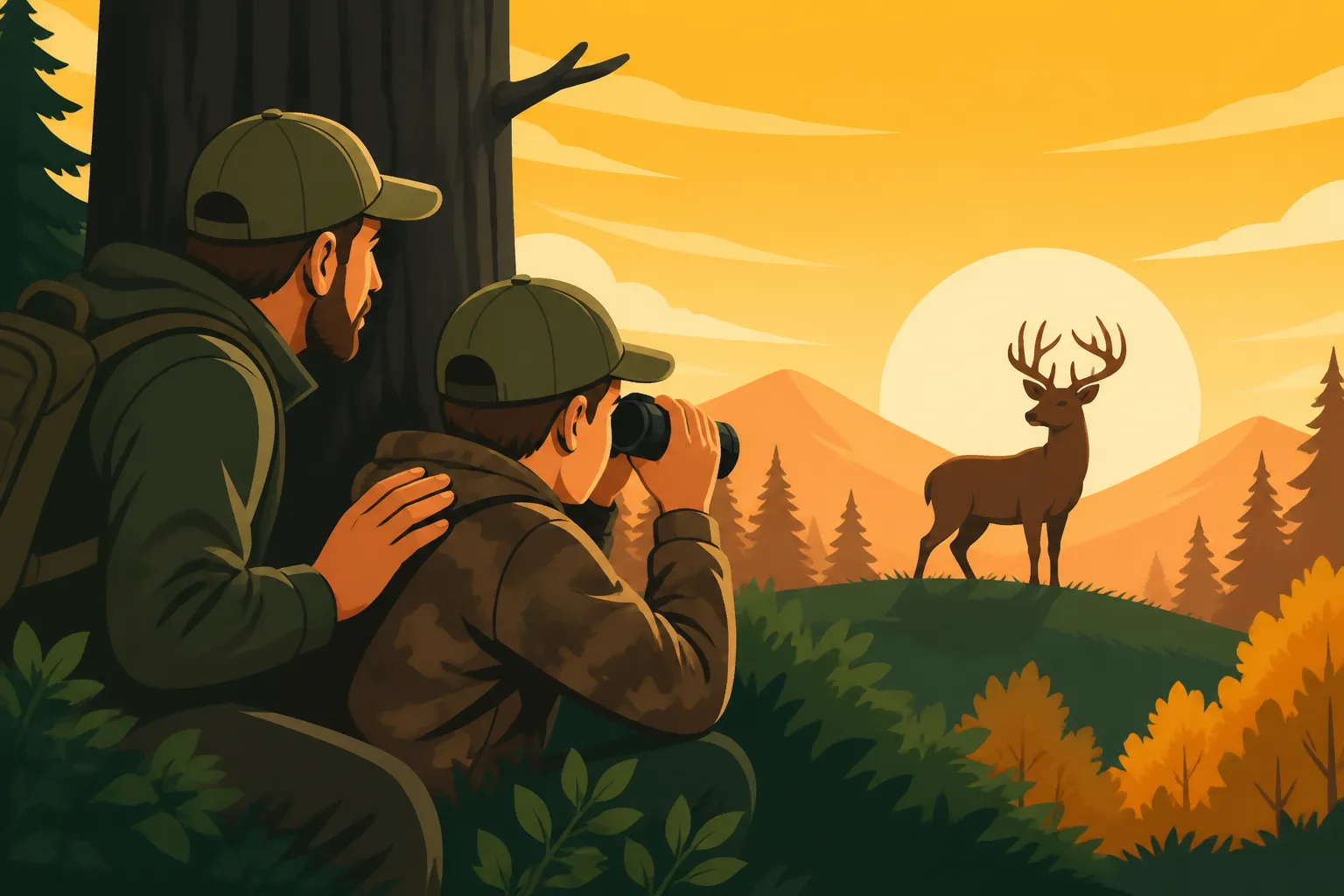
For Junior Hunters (ages 12-15) participating in archery or crossbow seasons (deer, bear, turkey): The adult mentor must remain "within sight and voice contact without use of electronic devices." While this isn't a rigid 10-foot rule, it still implies very close supervision. "Within sight and voice contact" means you need to be able to clearly see the junior hunter and communicate with them effectively, without shouting or relying on two-way radios. This allows for slightly more flexibility in terrain that might naturally separate you a bit more than 10 feet, but the spirit of direct control remains paramount. For example, if you're set up in a ground blind and your junior hunter is in another blind 20 yards away, but you can both clearly see each other and speak normally, that might qualify. However, if a thick hedgerow separates you, even if it's only 15 yards, you might lose that direct sight and voice contact.
It's a nuanced but absolutely vital difference. The 10-foot rule for firearms reflects the heightened immediate danger potential, while the "sight and voice" rule for archery acknowledges the slightly different nature of bowhunting, where sometimes a few extra yards might be necessary for different shot angles, but immediate, non-electronic communication is still expected.
Beyond the Ten Feet: Interpreting "Direct Control"
While the 10-foot rule for firearms is very prescriptive, and "sight and voice" for archery offers a little more room, the underlying principle is always "direct control." This isn't just about avoiding a ticket; it's about making sure you can actively mentor and intervene.
Consider a hypothetical scenario: You and your junior hunter are still-hunting through a mixed hardwood forest in the Catskills. If your mentee is carrying a firearm, you must be within 10 feet. This means walking practically side-by-side, or one just slightly behind the other, always maintaining that close physical presence. You can't let them wander ahead while you're glassing a distant ridge. It’s an exercise in discipline for both mentor and mentee, and frankly, it can be a challenge in dense cover or on steep slopes. But that’s the law.
If they're using a bow, that 10-foot tether loosens a bit, but you still need to see and talk to them. This might mean one of you is on a slightly higher contour on a ridge, or perhaps you're both in separate but adjacent Treestand Setups in Adirondack Hardwoods, positioned so you can see each other's stand and speak normally. The point is, you shouldn't be separated by anything that obstructs your view or muffles your voice. The expectation is that you are actively supervising and ready to provide immediate instruction or assistance. This level of supervision also helps with important teachable moments, like discussing a deer's body language or ethical shot angles in real-time, which is far more effective than trying to explain it after the fact.
Safety, Ethics, and Education: Why Proximity Matters
These strict proximity rules aren't arbitrary; they are the bedrock of safety and effective mentorship in the field. They protect the junior hunter, the mentor, and anyone else who might be in the woods.
Preventing Accidents and Ensuring Responsible Actions
The most obvious reason for close supervision is safety. When a young person is learning to handle a firearm or archery equipment, every moment is a teaching moment. A mentor's close presence means they can:
- Prevent misfires: Correcting finger placement on the trigger, ensuring the safety is engaged or disengaged at the appropriate time.
- Ensure proper target identification: Preventing the targeting of non-game animals, other hunters, or unsafe backgrounds. This is perhaps the most critical aspect, as excited young hunters might rush a shot.
- Guide ethical shot placement: Helping the junior hunter understand anatomical targets for a quick, humane harvest, and when not to take a shot if the animal isn't properly broadside or the distance is too great.
- Manage immediate intervention: In the event of an unexpected encounter or a sudden change in circumstances, the mentor is close enough to physically prevent an unsafe action.
Without this close proximity, critical seconds can be lost, and irreversible mistakes can happen. It's a heavy responsibility, and the rules are designed to give mentors the best possible chance to uphold it.
Instilling Good Hunting Habits and Respect for Wildlife
Beyond immediate safety, close proximity allows for constant, real-time coaching. This is where the true educational value of the program shines. Imagine trying to teach someone to track a deer or read subtle changes in the wind if you're 50 yards apart. It's nearly impossible. Being close allows you to:
- Point out fresh tracks or droppings: "See that scuff mark there? That's a buck rub from last night."
- Whisper about wind direction and thermals: "Feel that breeze? It's shifting; we need to adjust our approach." Tools like the GoHunt app can even help visualize wind direction over terrain, which you can show your mentee on your phone in real-time. This kind of shared observation and discussion builds true woodsmanship.
- Demonstrate patience and stealth: Young hunters often have boundless energy. Being right there with them helps you model quiet movement and the importance of waiting for the right moment.
- Foster respect for the animal: After a shot, you're immediately there to guide them through proper blood trailing, ethical recovery, and field dressing. This teaches them the responsibility that comes with taking an animal's life. This direct experience and instruction are vital for nurturing responsible hunters.
Legal Ramifications for Non-Compliance
Let's be blunt: violating these rules carries consequences. The DEC takes mentored youth hunting seriously because it directly impacts public safety and the reputation of hunters. If a mentor is found to be in non-compliance with the proximity rules, they could face fines, potential loss of hunting privileges, and even more severe penalties if an accident occurs. These aren't just minor infractions; they reflect a failure to adequately supervise a minor handling a weapon. It's not just about what could happen, but what the law explicitly requires to prevent those situations. So, when you're out there, always remember that you're not just guiding a young hunter; you're upholding the standards of safe and ethical hunting in New York.
Practical Strategies for Effective Mentoring in the Field
Knowing the rules is one thing, but putting them into practice effectively, especially when dealing with the realities of hunting in New York's diverse landscapes, is another. Here are some strategies to make your mentored hunt both safe and educational.
Planning Your Hunt with Supervision in Mind
Effective supervision starts long before you even step into the woods. Good planning is paramount:
- Choose appropriate locations: For a junior hunter's first few hunts, consider areas with more open visibility rather than extremely dense cover. A clear-cut edge overlooking a field, a less rugged section of a state forest, or a well-defined woodlot where you can maintain visual contact easily can be ideal. You might want to consider Hunting Southern Tier Farmland Deer for early experiences, as the terrain can be more forgiving than, say, deep Adirondack timber.
- Utilize appropriate gear: If hunting from a stand, consider using a two-person ladder stand, or two individual stands placed immediately adjacent to each other. Ground blinds are another excellent option, as they provide concealment while allowing you to sit right next to your mentee. Be sure to review Treestand Safety Gear for Steep Ground with your junior hunter and ensure they are properly harnessed. When planning your route, using mapping tools like GoHunt can help you scout potential stand locations or travel corridors where maintaining proximity is easier, visualizing terrain features and cover beforehand.
- Pre-hunt discussions: Before each outing, clearly discuss the plan, safety protocols, and what to expect. Reiterate the proximity rules and why they are in place. Talk about shot angles, target identification, and what to do if an animal appears. Having these conversations beforehand sets clear expectations and reinforces the seriousness of the hunt. This helps build a solid foundation of understanding before the excitement of game animals enters the picture.
Communication and Active Engagement
Staying close physically is important, but staying connected mentally is just as vital.
- Constant, quiet communication: Even when no game is in sight, talk quietly about what you're observing. "Did you hear that squirrel chatter?" "Look at that rub line along the logging road." This keeps the junior hunter engaged and teaches them to pay attention to subtle details. Use whispering, hand signals, or a light tap on the shoulder when a deer is approaching. Tools like the GoHunt app on your phone can be a great way to show them property lines or contour changes in real-time, even in the field. It’s an interactive map that you can both look at, reinforcing awareness of your surroundings.
- Teach them to report: Encourage your mentee to point out anything they see or hear first. "Mentor, I see movement at 10 o'clock," or "I hear a gobble off to the left." This teaches them observation skills and gives you immediate feedback on their awareness.
- Active observation: Don't just watch the woods; watch your mentee. Observe their body language, their attention span, and their reactions. Are they getting fidgety? Are they scanning their surroundings effectively? Your role is not just to be present, but to be an active guide. This constant engagement reinforces the lessons from a hunter education course and brings them to life. Remember, the New York Hunter Education Requirements lay the theoretical groundwork, but you're providing the practical application.
Adapting to Different Hunting Scenarios
New York offers incredibly varied terrain, from the dense hardwoods of the Adirondacks to the rolling hills of the Southern Tier, and adapting your approach while maintaining proximity is key.
- Still-hunting challenges: If you're still-hunting, particularly in rugged areas like when Still-Hunting Catskill Ridges, maintaining that 10-foot or sight-and-voice rule can be difficult. It might mean moving slower, almost in unison, or sticking to contour lines that allow you to stay side-by-side. Avoid pushing through overly thick brush that could completely obscure your view of the junior hunter.
- Stationary setups: For tree stands or ground blinds, the proximity is generally easier to maintain. Just ensure your setup allows for clear communication and visibility between you. When Using a Ground Blind on New York Public Land, you can often place two seats side-by-side, ensuring constant contact.
- Weather conditions: Rain, snow, or fog can severely impact visibility and sound. On days with poor visibility, the need for even closer proximity becomes more critical. You might decide to hunt in more open areas, or simply choose another day if conditions make safe supervision impossible. Always have reliable gear, including a good Packs for a Day on Public Land to keep essentials dry and accessible for both of you.
The ultimate goal of the Mentored Youth Hunting Program is to create safe, knowledgeable, and ethical hunters for the future. By diligently adhering to these proximity rules and actively engaging with your junior hunter, you're doing more than just following the law; you're shaping a responsible outdoors enthusiast who will carry on the hunting tradition with pride and respect. Don't forget, when it comes to Hunting the New York Youth Deer Weekend, these rules are especially important as it's often a junior hunter's first real opportunity at big game.
| Hunting Method | Junior Hunter Age Range | Mentor Requirement | Specific Proximity Rule | Key Consideration |
|---|---|---|---|---|
| Firearms | Generally 12-15 | Valid NY Hunting License, 18+ (21+ for Big Game) | Within 10 feet of the junior hunter | Immediate physical intervention & control |
| Archery/Crossbow | Generally 12-15 (check specific species rules) | Valid NY Hunting License, 18+ (21+ for Big Game) | Within sight and voice contact (no electronic devices) | Constant visual & verbal communication |
| Small Game/Turkey (Firearm) | Generally 12-15 (can be younger for certain species) | Valid NY Hunting License, 18+ | Within 10 feet of the junior hunter | Same as big game firearms, for immediate safety |
| Small Game/Turkey (Archery) | Generally 12-15 (can be younger for certain species) | Valid NY Hunting License, 18+ | Within sight and voice contact (no electronic devices) | Flexibility in cover, but still direct supervision |
Disclaimer
Always consult the most current New York State Department of Environmental Conservation (DEC) hunting regulations guide before heading afield. Regulations can change, and it is the hunter's responsibility to be aware of and comply with all applicable laws and rules.