Pheasants on New York Farmland
Many New York hunters fondly remember a time when wild pheasants were a common sight in the agricultural landscapes, flushing with an explosive cackle from goldenrod thickets or cornfield edges. Today, the reality is different; these magnificent birds are far less prevalent in the wild, leaving many folks wondering if a genuine pheasant hunt is still possible in the Empire State. This comprehensive guide will peel back the layers on pheasant populations in New York, delving into their history, the critical habitats they need, where you can still find them, and the most effective strategies for pursuing these beautiful upland game birds, whether wild or stocked.
The Legacy of Pheasants in New York's Fields
The ringneck pheasant (Phasianus colchicus) isn't native to North America, but its history in New York is rich and deeply intertwined with our agricultural past. For generations, these birds provided thrilling hunting opportunities and were a cherished part of the rural landscape. Understanding their journey here helps us appreciate their current status.
A Brief History of Ringnecks in the Empire State
Pheasants were first successfully introduced to New York in the late 1800s and early 1900s, largely through private efforts and later by the state. They thrived in the patchwork of small farms, diverse crop rotations, and abundant edge habitat that characterized New York's rural areas well into the mid-20th century. Post-World War II, as agriculture boomed and land use patterns shifted slightly, pheasants experienced a golden age. Their populations peaked, offering fantastic hunting for legions of upland enthusiasts. It wasn't uncommon for hunters to find multiple coveys in a single day, working brushy fencerows and weedy field corners. However, this abundance was not to last, and by the 1970s and 80s, a noticeable decline began, leaving many veteran hunters nostalgic for those bygone days.
Why Wild Pheasant Numbers Declined
The primary culprit behind the dwindling numbers of wild pheasants in New York, and indeed much of the Northeast, is habitat loss and degradation. The charming, diverse farmlands of yesteryear, with their small fields, hedgerows, odd corners of untended brush, and abundant cover, have largely given way to modern agricultural practices. These include larger monoculture fields, intensive tilling that leaves little overwinter cover, the removal of fencerows for larger equipment access, and the widespread use of herbicides that eliminate the crucial weedy edges pheasants rely on for food and shelter.
Consider the classic New York farm from decades ago: you'd find a small patch of corn, a hayfield, an old apple orchard, and plenty of brushy edges where the woods met the fields. These "edge habitats" were critical for pheasants, providing nesting cover, escape routes from predators, and a constant food supply of seeds and insects. Today, those diverse buffers are often gone, replaced by cleanly tilled land right up to the field edge, or dense, unbroken forest that pheasants don't favor. This lack of suitable, year-round habitat, especially for nesting and winter survival, has made it incredibly difficult for wild pheasant populations to sustain themselves naturally. Increased predation pressure from animals like coyotes and raccoons, which thrive in fragmented landscapes, also plays a significant role when pheasants lack adequate cover.
Understanding Pheasant Biology and Preferred Habitat
To successfully hunt pheasants in New York, whether they're wild remnants or newly stocked birds, it's crucial to understand their basic biology and what constitutes their ideal living environment. These aren't forest birds or deep marsh dwellers; they are creatures of the open country, but with very specific needs.
Key Characteristics of Ringneck Pheasants
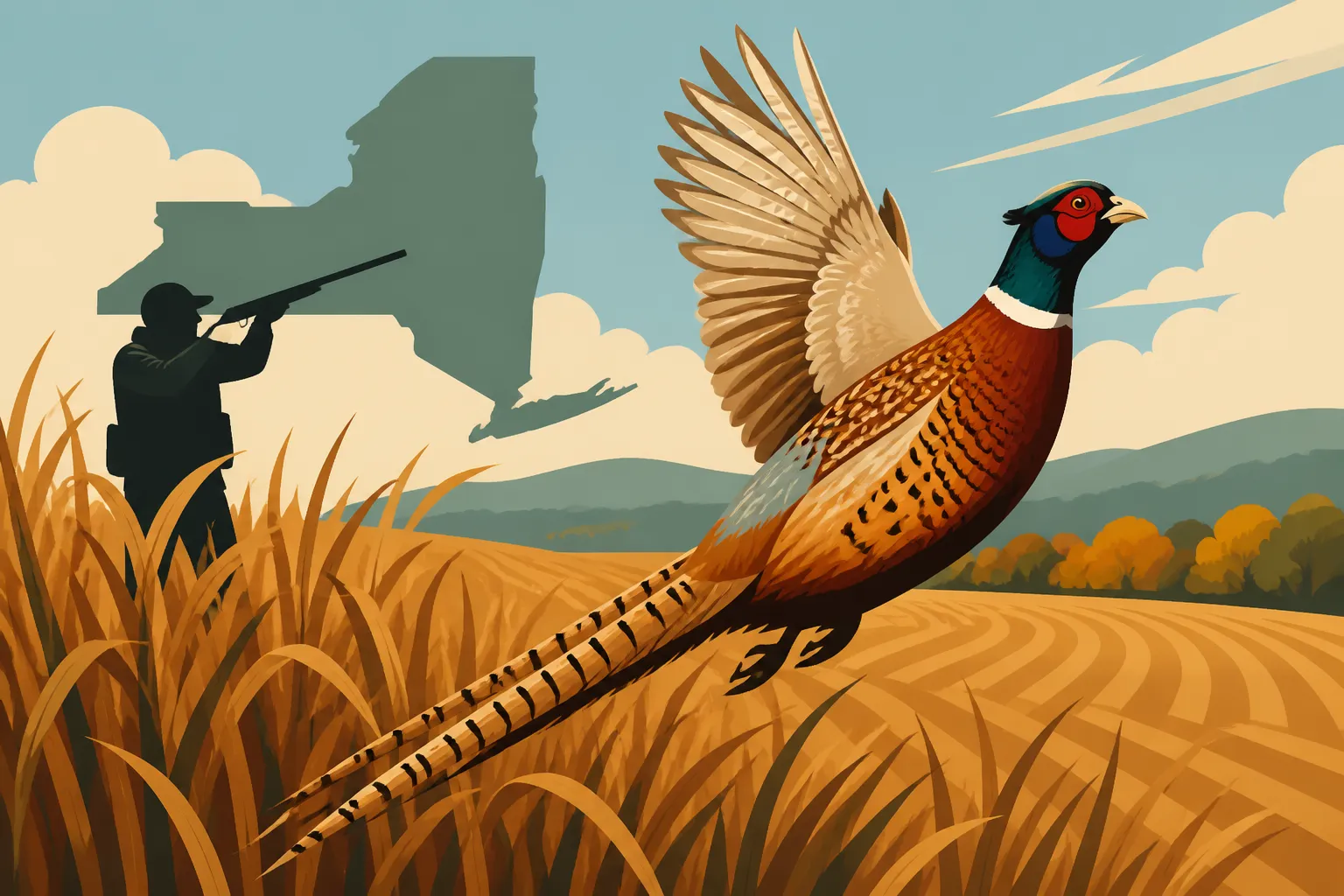
Ringneck pheasants are truly striking birds, especially the males, or roosters. Their iridescent green heads, distinct white neck ring, and coppery bodies mottled with dark spots make them unmistakable. Hens, by contrast, are more subtly colored, a camouflaged blend of browns and blacks, which helps them blend into nesting cover. Roosters can weigh between 2.5 to 3.5 pounds, with hens usually a pound or so lighter. Their flight is explosive and rapid, often accompanied by their characteristic "cackle" – a sound that can startle even the most seasoned hunter. They prefer to run rather than fly when disturbed, using dense cover to evade predators. This ground-dwelling tendency is a key factor in how hunters approach them.
Their diet is varied, consisting mainly of seeds from grains, grasses, and weeds, supplemented by insects, especially during the breeding season. They need readily available food sources, often found in agricultural fields, as well as grit for digestion. Understanding their daily routines is also helpful: they'll often feed in open fields in the mornings and evenings, spending the mid-day hours loafing in dense cover, digesting their food and conserving energy. When winter brings deep snow, they need areas where food remains accessible and cover provides protection from bitter winds and cold.
Ideal Pheasant Habitat in New York
The perfect pheasant habitat in New York is a mosaic of different cover types, all within close proximity. Think about a diverse agricultural area where fields of corn, soybeans, or small grains are interspersed with tall grasses, old overgrown pastures, brushy fencerows, and wetland edges. This combination provides everything a pheasant needs:
- Nesting Cover: Dense, undisturbed areas of tall grass, legumes, or fallow fields are crucial for hens to lay and incubate their eggs safely.
- Brood Rearing Cover: Areas with abundant insects (for chicks) and protective overhead cover, often found in fields with diverse vegetation.
- Roosting Cover: Thick, often thorny patches of multiflora rose, honeysuckle, sumac, or thickets of evergreens provide safe overnight roosting spots, especially important in winter.
- Food Sources: Standing corn, sorghum, or fields with waste grain are vital, particularly in fall and winter. Areas with weed seeds like ragweed or smartweed are also excellent.
- Escape Cover: Dense, impenetrable thickets that offer immediate refuge from predators and hunters.
- Water: While pheasants get some moisture from dew and food, proximity to ponds, streams, or wet areas is beneficial.
The challenge in New York is that much of this ideal, diversified habitat has been lost. Modern farms are often much cleaner, lacking the "weedy" corners and brushy fencerows that were once so common. This fragmentation means pheasants either have to travel further for resources, exposing them to more danger, or they simply cannot survive in those areas. This is why you'll increasingly find pheasants concentrated in specific areas where habitat management is actively practiced, or on properties where farming practices are still somewhat diversified. Using tools like GoHunt can help you visualize these different habitat types when scouting potential areas, offering valuable satellite imagery and property line overlays.
Where to Find Pheasants on New York Farmland
Given the decline in wild populations, finding pheasants in New York often means focusing your efforts on specific types of land and regions. It's not like the old days where you could just walk any cornfield. Now, smart scouting and understanding public access programs are key.
Identifying Prime Public Lands and WMAs
For many hunters, public land offers the most accessible opportunities. In New York, this usually means focusing on Wildlife Management Areas (WMAs) that are specifically managed for small game, including pheasants. These WMAs are often located within or adjacent to agricultural regions, particularly in the Finger Lakes, Western New York, and parts of the Hudson Valley. The New York State Department of Environmental Conservation (DEC) actively manages these lands, often planting food plots, creating dense cover, and participating in the pheasant stocking program to provide hunting opportunities.
Look for WMAs that have a good mix of open fields, brushy edges, and dense cover plantings. Some well-known examples might include areas like Connecticut Hill WMA near Ithaca, Lake Shore Marshes WMA along Lake Ontario, or multiple WMAs throughout the Southern Tier. These areas often have diverse ecosystems, providing a variety of cover attractive to pheasants. To locate these spots and understand their specific rules and characteristics, I highly recommend leveraging the DEC's website or dedicated hunting apps like GoHunt, which can provide detailed maps and land ownership information. Additionally, researching New York Wildlife Management Areas will give you a broader understanding of what these public lands offer. Don't be afraid to scout these areas pre-season to identify prime habitat spots, paying close attention to thick cover adjacent to food sources.
Scouting Private Land Opportunities
While public lands are a great starting point, private farmland still holds significant potential for pheasant hunting in New York. The challenge, of course, is gaining permission. However, building relationships with landowners can unlock some truly exceptional hunting opportunities.
When scouting private land, look for farms that might not be as "clean" as large commercial operations. Farms with brushy fencerows, un-mowed field edges, small woodlots, or patches of standing corn or sorghum are ideal. Sometimes, older farms or those managed by hobby farmers still maintain the diverse habitat pheasants love. It's also worth looking for farms participating in conservation programs, as these often include provisions for wildlife habitat.
One excellent avenue for private land access is New York's Cooperative Hunter Access Program, which includes the "Posted Land and Public Access Cooperator Farms." These are private landowners who allow public hunting on their property, often receiving benefits or incentives for doing so. They typically post specific signs indicating public access, and rules may vary. Using tools like the DEC's online mapping system or GoHunt can help you identify these properties.
When approaching landowners directly, always be respectful, well-spoken, and offer to help in some way (e.g., helping with small chores, sharing some of your harvest). It's also crucial to understand and adhere to New York's trespass and permission laws. Remember, permission is a privilege, not a right, and maintaining a good relationship is paramount. Often, finding a good Hunting a Standing Cornfield in Farm Country on private land can lead to fantastic pheasant action, especially when that cornfield has thick, unharvested edges.
New York's Pheasant Stocking Program
For many New York hunters, the primary opportunity to pursue pheasants comes through the state's robust stocking program. This initiative helps bridge the gap left by declining wild populations and ensures that hunters still have access to this classic upland experience.
How the Stocking Program Operates
The New York State DEC operates a significant pheasant stocking program, raising thousands of pheasants at state game farms, primarily the Reynolds Game Farm in Ithaca. These birds are then released on numerous public and private lands across the state, specifically to provide hunting opportunities. The program aims to distribute birds strategically to provide equitable access and ensure a good hunt. Often, cooperating sportsmen's clubs play a vital role, helping to transport and release birds in designated areas.
The stocking schedule is typically announced by the DEC each year, detailing which WMAs and cooperator lands will receive birds, and when the releases will occur. These releases are timed to coincide with the opening of the pheasant season, and often continue through the season, providing fresh opportunities for hunters. The purpose isn't to re-establish wild populations (though some birds may survive), but rather to offer "put-and-take" hunting where birds are harvested shortly after release. This effort is vital for maintaining a hunting tradition that might otherwise fade away. Hunters planning to pursue pheasants on these stocked lands should always check the specific schedule and rules for their chosen location on the DEC website or through apps like GoHunt.
Hunting Stocked Birds vs. Wild Birds
Hunting stocked pheasants can be a different experience than pursuing truly wild birds, but both offer unique challenges and rewards.
Stocked Birds:
- Behavior: Newly released birds might be a bit disoriented initially, sometimes holding tighter than wild birds, or, conversely, running more freely. After a few days in the field, they often become more "wild," adapting to their surroundings and becoming quite challenging. They may not be as street-smart as wild birds, but they are still pheasants with natural instincts.
- Habitat Use: Stocked birds will gravitate towards the best available cover, so focusing on dense brush, tall grasses, and areas adjacent to food sources is crucial. They are often found relatively close to release points, especially in the first few days.
- Hunting Pressure: Stocked areas, especially WMAs, can see significant hunting pressure, particularly on opening weekend. This means you might encounter more hunters and their dogs. Getting out early or focusing on weekdays can lead to a more peaceful hunt.
- Permit Requirement: Crucially, hunters pursuing stocked pheasants in New York are often required to possess a special New York Pheasant Permit Requirement, in addition to their regular hunting license. This permit helps fund the stocking program.
Wild Birds:
- Elusiveness: Wild pheasants are generally much warier and more challenging to hunt. They are masters of evasion, often running far ahead of hunters or dogs, flushing at the most unexpected times, or holding incredibly tight in cover you swear couldn't hide a mouse.
- Habitat Selection: Wild birds are typically found in areas with truly exceptional, diverse habitat, often on private lands where they've established breeding populations. These spots usually have years, if not decades, of stable, high-quality cover and food.
- Numbers: If you find wild pheasants, their numbers are often much lower than stocked populations. A successful day might involve finding one or two birds, making each one a prized trophy.
- No Special Permit: A regular small game license is sufficient for wild pheasants, as they are not part of the state's "put-and-take" program.
Both types of hunting require skill, patience, and often, a good bird dog. The joy of a pheasant hunt, whether it's a freshly stocked bird flushing from a WMA field or a wily wild rooster erupting from a neglected fencerow, remains an exciting and rewarding pursuit.
Effective Hunting Tactics for New York Pheasants
Pheasant hunting is an active pursuit, demanding a combination of strategic planning, endurance, and often, the keen nose of a good dog. There are several tried-and-true tactics that New York hunters employ to put these cunning birds in the game bag.
Walking Up Birds and Group Drives
For hunters without dogs, or for those hunting heavily pressured areas where dogs might push birds too far, walking up birds and executing strategic group drives are highly effective methods.
- Walking Up: This involves systematically walking through prime pheasant cover, attempting to flush birds within shotgun range. Focus on dense areas like tall grass fields, brushy fencerows, wetland edges, and standing corn or sorghum. Walk slowly and deliberately, pausing occasionally to try and make nervous birds flush. Pheasants are notorious for holding tight, often waiting until you're right on top of them before exploding into the air. When you get to a good patch of cover, think about where a pheasant would want to be if it were trying to evade you. Look for escape routes and try to cut them off. Patience is key; don't rush through good cover.
- Group Drives: This tactic is particularly effective on larger pieces of cover, like expansive cornfields or overgrown fallow fields. It involves a line of "drivers" walking through the cover, pushing birds towards "blockers" or "posts" positioned at the far end, often along a known escape route or another dense patch of cover. This method can be incredibly exciting when several birds flush at once. Safety is paramount with group drives; everyone must know their assigned positions, shooting lanes, and always be aware of where other hunters are located. Communication is essential. Just as you'd plan for Deer Drives With Three or Four Hunters, a pheasant drive needs coordination and clear understanding of roles to be safe and successful. Always wear blaze orange, and know your effective range.
Hunting With Dogs: Pointers and Flushers
Without a doubt, a good bird dog dramatically increases your chances of success when pheasant hunting. Dogs can cover ground more thoroughly, locate birds that hunters might walk past, and retrieve downed game from dense cover.
- Pointers: Breeds like German Shorthaired Pointers, English Pointers, or Brittanys excel at finding and "pointing" birds, holding them in place until the hunter arrives to flush. This allows the hunter to get into a good shooting position. The thrill of watching a dog go on point, nose twitching, tail stiff, is one of the quintessential joys of upland hunting. Once on point, the hunter approaches, often commanding the dog to "whoa" or "steady," then walks in to kick out the bird. This method is incredibly effective for conserving energy and ensuring clean shots. For those who love the classic pointer experience, "Running Pointing Dogs on New York Pheasants" is an article that delves deeper into this rewarding style of hunting.
- Flushers: Breeds like English Springer Spaniels, Labrador Retrievers, or Cocker Spaniels are trained to actively search for birds and flush them out of cover. They work close to the hunter, systematically quartering through the cover. While they don't point, their energetic searching and flushing instinct can be incredibly effective, especially in dense habitat where birds are more likely to run than hold. A good flusher will flush a bird, mark its fall, and retrieve it upon command.
Regardless of the dog breed or style, proper training is essential. A well-trained bird dog will stay within range, honor other dogs, and retrieve shot birds promptly. They also serve as invaluable companions, making the hunt even more enjoyable.
Gear and Shotgun Selection
Pheasant hunting in New York involves a lot of walking, often through thick and sometimes thorny cover, so having the right gear is crucial for comfort, safety, and success.
- Shotgun: A 12-gauge or 20-gauge shotgun is ideal for pheasants. Many hunters prefer a 12-gauge for its knockdown power, especially on strong-flying roosters. A modified or improved cylinder choke is often recommended for the varying ranges encountered, as shots can be close in thick cover or further out on running birds. Use lead shot (where legal) in sizes 4, 5, or 6, or equivalent non-toxic loads if hunting areas where it's required.
- Ammunition: Carry a good supply of high-brass upland loads. Pheasants are tough birds, and you want enough power to ensure a clean kill.
- Clothing: Durability and protection are key. Invest in good quality "Brush Pants for New York Alder" or briar-resistant chaps to protect your legs from thorns and thickets. A comfortable upland vest with large game pockets for birds and shell loops is essential. Don't forget your blaze orange! New York's requirements for New York Blaze Orange Requirements are critical for safety, especially during group hunts or in areas with high hunter traffic.
- Boots: You'll be walking miles, often through wet fields and uneven terrain. Waterproof, comfortable boots with good ankle support are a must. Consider insulated boots for late-season hunts. For extended walking in varying terrain, I find that a pair of durable, waterproof upland boots, like those suitable for Boots for Walking New York Aspen Cuts, provide excellent support and traction.
- Navigation: While you might be hunting familiar fields, it’s always smart to have a GPS unit or a reliable hunting app like GoHunt on your phone to track your progress, mark flush points, and ensure you stay within property boundaries.
- First Aid: Always carry a basic first aid kit for both yourself and your dog, especially if hunting in remote areas.
- Water: Stay hydrated! Carry plenty of water for yourself and your canine companion.
Being well-prepared not only makes the hunt more enjoyable but also increases your chances of a successful and safe outing.
Navigating New York's Pheasant Regulations
Like all hunting pursuits in New York, pheasant hunting is governed by specific regulations designed to manage populations and ensure hunter safety. Staying informed about these rules is essential before heading afield.
Season Dates, Bag Limits, and Permits
New York's pheasant season typically opens in mid-October and runs through December in the Southern Zone, with slightly different dates for the Northern Zone and Long Island. However, it's crucial to consult the most current DEC hunting regulations guide each year, as dates can vary. For up-to-date information, checking the New York Pheasant Season and Stocking details on the DEC website is your best bet.
- Bag Limit: The daily bag limit for pheasants in New York is generally two pheasants per hunter. This limit applies statewide, but always double-check for any specific WMA or cooperator farm rules that might differ.
- Possession Limit: There may also be a possession limit, usually twice the daily bag limit, for birds you've taken and stored.
- Pheasant Permit: As mentioned earlier, if you are hunting pheasants on lands designated by the DEC for stocking (including many WMAs and Cooperative Hunter Access areas), you will be required to purchase and carry a special New York Pheasant Permit Requirement. This permit helps fund the stocking program. Hunters pursuing wild pheasants on non-stocked private land or un-stocked public land generally do not need this specific permit, but a regular small game hunting license is always required. It's vital to know which type of land you're hunting to avoid any violations.
Always carry your valid hunting license and any required permits with you while afield. The DEC's HuntFishNY app is a convenient way to keep your licenses and permits accessible on your smartphone.
Safety Considerations and Blaze Orange Rules
Safety is paramount in any hunting scenario, but especially so when walking through dense cover, potentially with other hunters or dogs nearby.
- Blaze Orange: New York law mandates that all hunters pursuing small game, including pheasants, wear a minimum amount of outer clothing in blaze orange or blaze pink. This typically includes a hat or cap and a vest or jacket. The specific requirements are detailed in the New York Blaze Orange Requirements guide, but generally, wearing more is always safer. This bright color makes you highly visible to other hunters, significantly reducing the risk of accidental shootings. Never compromise on blaze orange, even if you're hunting alone.
- Firearm Safety: Always treat every firearm as if it were loaded. Keep the muzzle pointed in a safe direction, and your finger off the trigger until you're ready to shoot. Be absolutely certain of your target and what lies beyond it before taking a shot, especially when birds flush low or near horizon lines.
- Awareness: When hunting with a group, maintain appropriate spacing and always know where your hunting partners are. Communicate frequently, especially when birds flush or you encounter obstacles. In dense cover, it's easy to lose track of others.
- Hearing and Eye Protection: While not legally required for upland hunting, using hearing protection can prevent long-term damage, and eye protection can guard against stray pellets or branches.
- Dog Safety: If hunting with dogs, ensure they are also visible, perhaps with a blaze orange vest or collar. Always supervise your dog and train them to respond to commands, especially around roads or other hunters.
Following these regulations and safety guidelines ensures a responsible, ethical, and enjoyable pheasant hunting experience for everyone.
Challenges and the Future of Pheasant Hunting in New York
The landscape of pheasant hunting in New York has changed drastically over the decades, and future challenges loom. However, there are ongoing efforts and a dedicated community working to preserve this cherished tradition.
Habitat Loss and Agricultural Shifts
The biggest hurdle for wild pheasants in New York remains the relentless march of habitat loss and the evolution of agricultural practices. Small, diversified family farms, which once created ideal pheasant habitat, have largely given way to larger, more efficient operations that prioritize maximum yield. This means fewer brushy fencerows, less idle land, and more monoculture crops like vast corn or soybean fields that are quickly harvested, leaving little winter cover or food. The widespread use of pesticides and herbicides also reduces the insect populations crucial for pheasant chicks and the weed seeds that adult birds rely on.
This transformation of the rural landscape makes it incredibly difficult for wild pheasant populations to thrive. Even where habitat exists, it's often fragmented, isolating small populations and making them more vulnerable to predation and severe weather events. Without significant changes in land use or large-scale, sustained habitat restoration efforts, a widespread return of abundant wild pheasants across New York is unlikely.
Conservation Efforts and Hunter Involvement
Despite these challenges, the future of pheasant hunting in New York isn't entirely bleak. Conservation organizations and dedicated hunters are working tirelessly to provide opportunities and improve habitat.
- Pheasants Forever (PF): Organizations like Pheasants Forever are at the forefront of habitat conservation. They work with private landowners to implement beneficial practices, restore grasslands, establish food plots, and educate the public on the importance of upland habitat. Local PF chapters across New York are actively involved in hands-on projects, demonstrating that hunters are not just consumers of wildlife but dedicated conservationists.
- New York State DEC: The DEC's pheasant stocking program is a vital lifeline for providing hunting opportunities, ensuring that new generations can experience the thrill of a flushing pheasant. This program is largely funded through hunting license sales and the specific pheasant permit fees.
- Hunter Funding: Every time you purchase a New York hunting license, a small game license, or a special pheasant permit, you're directly contributing to wildlife management and conservation efforts in the state. Additionally, supporting initiatives like the "New York Habitat and Access Stamp Cost" helps generate funds specifically for habitat acquisition and improvement. These funds are crucial for sustaining stocking programs and improving habitat on public lands.
- Private Landowner Engagement: Encouraging private landowners to adopt wildlife-friendly farming practices, even on small scales, can have a cumulative positive impact. This could involve leaving buffer strips around fields, planting native grasses, or allowing some areas to grow into brushy cover.
The future of pheasant hunting in New York relies heavily on continued dedication from hunters, conservation organizations, and state agencies. By supporting habitat work, participating in stocking programs, and educating others, we can ensure that the cackle of a flushing pheasant remains a cherished sound in New York's fields for years to come, even if it often means hunting stocked birds. While New York Wild Pheasant Numbers Today might not be what they once were, the passion for these birds and their pursuit continues to drive significant conservation efforts.
Disclaimer
This guide is intended for informational purposes only and does not supersede official New York State Department of Environmental Conservation (DEC) regulations. Hunting laws, seasons, bag limits, and permit requirements are subject to change. Always consult the current year's official New York State Hunting and Trapping Regulations Guide issued by the DEC before engaging in any hunting activities. Hunters are responsible for knowing and adhering to all applicable laws and regulations.