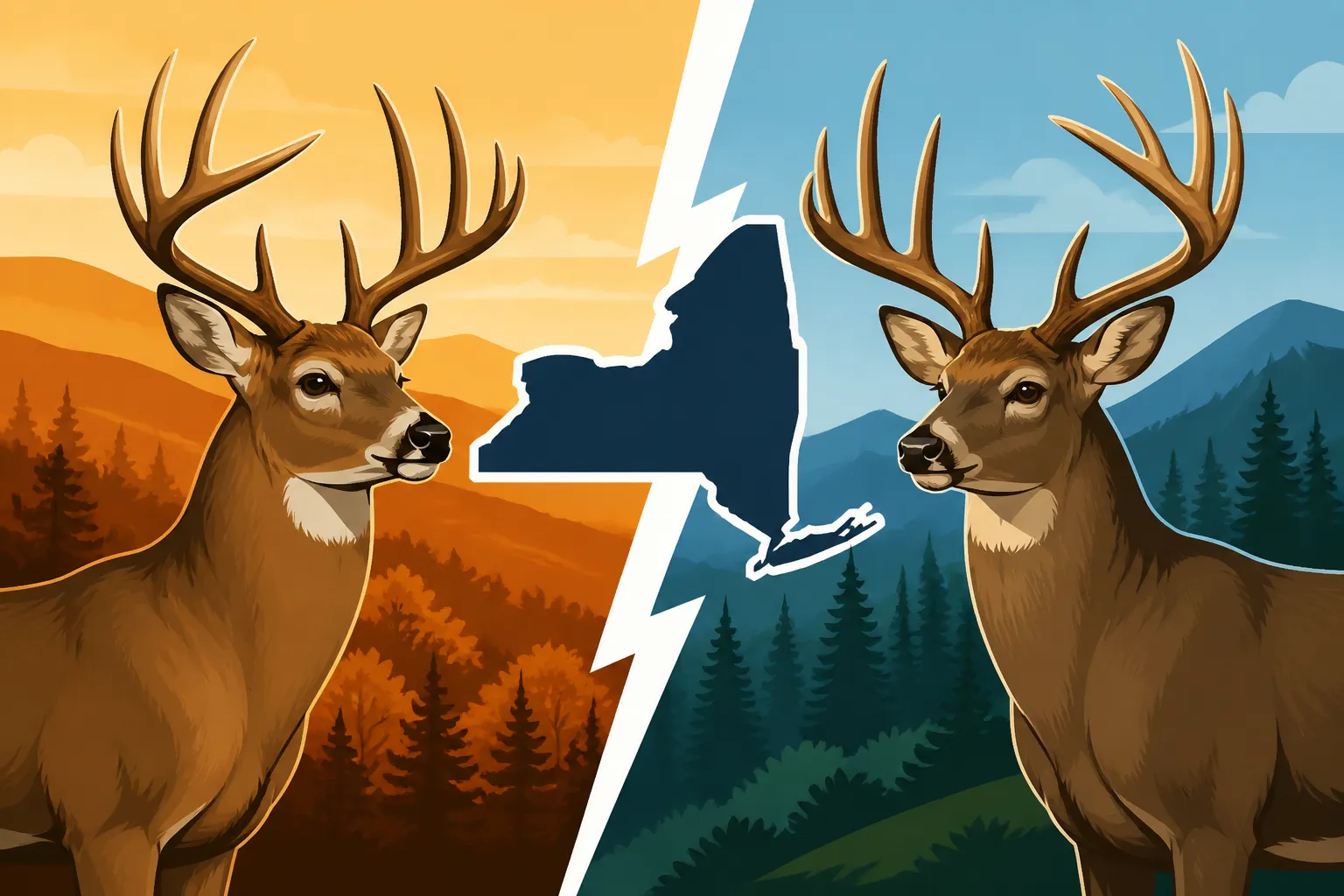
Southern Tier Versus Adirondack Deer
For those of us who spend countless hours in the woods of New York, it’s no secret that a deer hunt in the Southern Tier feels completely different than one in the Adirondacks. You might be scratching your head, wondering why your buddy’s tactics for big farm country bucks just don't pan out when you head north, or vice versa. This comprehensive guide is here to unravel the distinct worlds of New York's Southern Tier and Adirondack deer, helping you understand their habitats, behaviors, and the unique challenges and rewards each region offers the dedicated hunter.
Understanding New York's Diverse Deer Zones
New York State is a vast and ecologically varied landscape, and nowhere is this more apparent than when you look at its white-tailed deer populations. The state is broadly divided into different ecological zones, which profoundly influence deer density, size, and behavior. While the entire state holds deer, the experience of hunting them, and even the deer themselves, can feel worlds apart depending on whether you're stalking the rich farmlands and rolling hills of the Southern Tier or navigating the rugged, often unforgiving terrain of the Adirondack Mountains.
The Great Divide: Geographical and Habitat Contrasts
The most obvious distinction between the Southern Tier and the Adirondacks lies in their geography and primary habitats. The Southern Tier, generally encompassing the southwestern and south-central portions of the state, is characterized by a mix of agricultural fields, mature hardwood forests, and brushy edges. It's a land shaped by agriculture and logging history, leading to a mosaic of food sources and cover. Think sprawling cornfields bordering oak ridges, small woodlots interspersed with pastureland, and winding creek bottoms.
In stark contrast, the Adirondack Park, a massive expanse of over 6 million acres in northern New York, is dominated by vast, unbroken tracts of coniferous and mixed forests, towering mountains, and countless lakes and streams. Much of this land is "Forever Wild" Forest Preserve, meaning human impact is minimized, and the landscape remains largely untamed. This fundamental difference in habitat sets the stage for everything from deer density to seasonal movement patterns. It's not just about different trees; it's about different worlds for a whitetail.
Regulatory Zones and Management Philosophies
The New York State Department of Environmental Conservation (DEC) recognizes these ecological differences through its deer management zones. While the state's deer season framework, such as the New York Deer Seasons by Zone and New York Deer Management Permits Explained, provides a general structure, the actual implementation and success of management strategies are heavily influenced by the specific characteristics of each region. For instance, the Southern Zone, which covers the Southern Tier, often has more liberal antlerless permit allocations due to higher deer densities and agricultural impacts, while the Northern Zone, encompassing the Adirondacks, generally sees more conservative management to account for lower deer populations and more challenging winter conditions. These differing approaches reflect the DEC's understanding that a one-size-fits-all strategy simply won't work across such disparate environments.
The Southern Tier: A Whitetail Hotbed
If you're looking for consistent deer sightings, robust populations, and a chance at mature bucks, the Southern Tier of New York is often where hunters set their sights. This region is renowned for its high deer density and productive habitat, making it a favorite for many, from seasoned veterans to those just getting into the sport.
Abundant Food and Cover in Agricultural Landscapes
The Southern Tier's agricultural footprint is arguably its biggest draw for deer. Farmers cultivate vast fields of corn, soybeans, and alfalfa, providing an almost unlimited buffet for whitetails, especially during the crucial late fall and early winter months. These rich food sources, coupled with the region's mix of hardwood ridges, dense creek bottoms, and regenerating clear-cuts, create ideal conditions for deer to thrive. You’ll find deer bedding in thick brush adjacent to a cut cornfield, or moving through a narrow woodlot to reach a stand of oaks dropping acorns. This close proximity of diverse forage and thick cover allows deer to conserve energy and grow larger, healthier bodies and antlers.
Many hunters focus their efforts on understanding how deer move between these different food sources and bedding areas, often utilizing trail cameras and scouting apps like GoHunt to pinpoint natural funnels and travel corridors. This is a far cry from the vast, homogenous forests found further north, where food can be more dispersed and harder to locate consistently. The Hunting Southern Tier Farmland Deer approach often involves glassing fields from a distance, identifying staging areas, and then setting up ambush points along natural travel routes.
Higher Deer Density and Hunter Success Rates
The numbers don't lie: the Southern Tier boasts some of the highest deer densities in New York. This translates directly into more deer sightings, more opportunities, and generally higher hunter success rates. Wildlife Management Units (WMUs) in this region, such as those within the Steuben County and Chemung County areas, consistently report impressive harvest numbers. This isn't to say every hunt is easy – deer in these areas are often pressured, especially on public lands or smaller private tracts.
However, the sheer volume of deer means that even after significant hunting pressure, there are still plenty of animals to pursue. The availability of New York Deer Management Permits Explained in many of these WMUs also allows hunters to fill multiple tags, further contributing to the region's popularity. This abundance requires a different mindset than hunting areas where every deer sighting feels like a lottery win. Here, it’s about persistence, adapting to deer patterns, and often, outsmarting animals that have seen it all before.
Mature Buck Potential
While the Adirondacks are famous for their solitude, the Southern Tier is well-known for its potential to produce impressive racks. The combination of excellent nutrition and increasing hunter restraint, sometimes through voluntary antler restrictions or a desire to let younger bucks walk, contributes to a healthy age structure among bucks. It's not uncommon to find areas in the Southern Tier where bucks reach 3.5 years old and beyond, allowing them to express their full antler potential.
The dense cover and fragmented landscapes mean these mature bucks often become masters of evasion, utilizing small pockets of cover to avoid detection. Scouting becomes paramount, as does understanding the local deer habits. Many hunters spend countless hours before the season using mapping tools or their GoHunt app to identify potential bedding areas, pinch points, and rub lines, hoping to intercept a seasoned old monarch moving between feeding and bedding. The Hunting the Rut in the Southern Zone can be particularly productive for those targeting larger bucks, as they become more active and less cautious during this period.
The Adirondacks: A Wilderness Challenge
Venturing into the Adirondack Park to hunt deer is an entirely different beast. It's a land of breathtaking beauty and daunting challenges, where the reward isn't just a deer, but the profound experience of pitting your wits against a truly wild landscape.
Harsh Winters and Lower Deer Density
The Adirondacks are characterized by long, brutal winters with heavy snowfall and persistent cold. These conditions are the primary limiting factor for deer populations in the region. Deep snow makes foraging difficult, increases energy expenditure, and leaves deer more vulnerable to predators and starvation. As a result, deer densities are significantly lower than in the Southern Tier, and this is a reality every Adirondack hunter must accept. You’re simply not going to see the same numbers of deer.
The DEC works hard to monitor the herd, and understanding How Severe Winters Hit Adirondack Deer is crucial for managing this fragile population. Hunters often measure success not just in a filled tag, but in a successful stalk, a hard-earned track, or simply an encounter with a ghost in the big timber. The challenge itself is the draw for many, who prefer the solitude and raw wilderness experience over the higher odds of other regions.
Vast Forests and Dispersed Food Sources
Unlike the patchwork of fields and forests in the Southern Tier, the Adirondacks are dominated by immense, unbroken stretches of forest, primarily conifers like spruce, fir, and hemlock, interspersed with northern hardwoods such as maple and beech. Food sources, while present, are often much more dispersed and less concentrated than in agricultural areas. Deer might browse on twigs, lichens, and mosses, or seek out small pockets of regenerating clear-cuts or swamps with preferred browse.
Identifying and understanding these scattered food sources, especially in the absence of obvious agricultural fields, is a key component of Adirondack deer hunting. Hunters spend a lot of time searching for natural mast crops like beechnuts or acorns, which can be critical food sources, especially when Hunting After a Poor Acorn Year. This demands extensive scouting, an intimate knowledge of the forest ecosystem, and often covering many miles on foot, relying on maps and tools like GoHunt to navigate the vast public lands.
Solitude and the Wilderness Experience
For many, the true trophy of an Adirondack deer hunt isn't the size of the rack, but the unparalleled wilderness experience it offers. You can walk for hours, even days, without encountering another human, immersing yourself in the "Forever Wild" spirit of the Adirondack Forest Preserve. The challenges are immense: navigating without cell service, enduring harsh weather, and pushing your physical limits.
This deep connection with nature and the solitude it provides are what draw dedicated hunters back year after year. It's about self-reliance, honed woodsmanship, and a profound respect for the wild. Whether you're focused on Treestand Setups in Adirondack Hardwoods or just enjoying the quiet, the Adirondacks offer a hunting experience unlike any other in New York. The physical demands are higher, the deer are fewer, but the sense of accomplishment is immeasurable.
Habitat and Food Source Differences
The type of habitat a deer lives in directly impacts its diet, behavior, and physical characteristics. Understanding these fundamental differences between the Southern Tier and Adirondack regions is key to successful hunting in either zone.
Southern Tier: Agriculture, Hardwoods, and Browse
In the Southern Tier, deer live in a veritable supermarket of food. The presence of cultivated crops – corn, soybeans, alfalfa, winter wheat – provides a high-calorie, highly digestible diet that fuels rapid growth and supports large body sizes. This agricultural bounty is often complemented by extensive hardwood forests, primarily oak and hickory, which produce reliable mast crops. When acorns and hickory nuts are dropping, deer will gorge themselves, building up critical fat reserves for the winter.
Beyond the major food sources, the Southern Tier also offers a rich variety of natural browse. Early successional growth in abandoned fields, clear-cuts, and along fencerows provides deer with a diverse diet of twigs, leaves, and forbs throughout the year. This constant availability of high-quality nutrition means deer here can often maintain healthier body weights and grow impressive antlers, assuming they live long enough to reach maturity. Hunters often focus on identifying these food sources and the natural funnels deer use to travel between them, whether it’s a brushy creek bottom or a subtle ridge connecting two feeding areas.
Adirondacks: Conifers, Browse, and Limited Mast
The Adirondack deer's diet is a testament to survival in a tougher environment. The landscape is dominated by coniferous forests, which offer excellent winter cover but limited edible browse. Deer in the Adirondacks rely heavily on hardwood stands (birch, maple, beech) for browse during the snow-free months, and they will keenly seek out any mast crop, like beechnuts, though these can be less reliable or widespread than the oak crops of the Southern Tier.
During the harsh winters, deer often yard up in dense stands of hemlock and spruce, known as deer wintering areas. Here, they'll conserve energy and browse on whatever is available – often conifer needles, twigs, and bark, which are far less nutritious than agricultural crops or acorns. The scarcity and seasonal nature of high-quality food mean Adirondack deer often have smaller body sizes and, on average, smaller antlers, as less energy can be diverted to antler growth. Understanding where these deer yards are, and how deer travel to and from them, is critical for hunting success, especially in late season. Knowledge of Where Adirondack Bucks Bed in relation to these crucial food and cover sources is paramount.
Hunting Strategies and Challenges
The vastly different environments of the Southern Tier and Adirondacks demand distinct hunting strategies. What works well in one region might be completely ineffective in the other.
Southern Tier Tactics: Ambushes and Pressure Management
Hunting the Southern Tier often revolves around understanding deer movement patterns between food, water, and cover. Due to higher deer densities and often smaller, more fragmented land parcels, deer in this region are typically more accustomed to human presence and hunting pressure. This means relying heavily on ambush tactics, such as setting up well-placed treestands or ground blinds along known travel corridors, field edges, or pinch points. The Opening Weekend Tactics in the Southern Zone often involve capitalizing on the initial rush of activity before deer become more nocturnal.
Scouting is paramount, often employing trail cameras year-round to monitor deer activity and patterns. Hunters frequently use mapping applications like GoHunt to pinpoint property lines, identify subtle elevation changes that create funnels, and mark potential bedding areas. Patience and stealth are key, as deer are often quick to detect anything out of the ordinary. Rattling and Grunting in New York can be effective during the rut, but timing and execution need to be precise to avoid educating wary bucks. Furthermore, managing scent and entry/exit routes carefully is crucial to avoid alerting deer to your presence, especially on properties that see a lot of hunting activity.
Adirondack Approaches: Tracking, Still-Hunting, and Endurance
Hunting in the Adirondacks is a test of endurance, woodsmanship, and sheer will. With vast tracts of public land and lower deer numbers, successful hunting often involves covering extensive ground, employing still-hunting techniques, or tracking deer through the snow. The idea of sitting in a single stand for hours might work in a specific, high-traffic funnel, but more often, success comes from actively searching for deer.
Still-Hunting Catskill Ridges or similar techniques in the Adirondacks means moving slowly, deliberately, and using binoculars to pick apart dense cover. It's about reading sign – tracks, rubs, scrapes – and anticipating where a deer might be bedded or feeding. When snow covers the ground, tracking becomes an invaluable skill, allowing hunters to follow fresh deer sign for miles, often leading to an opportunistic shot. Navigation is also a major challenge; relying on a GPS or a reliable mapping app (like GoHunt offline maps) is non-negotiable, as getting lost in the Adirondack wilderness can be life-threatening. The physical demands are high, requiring excellent conditioning and preparedness for rapidly changing weather conditions.
| Feature | Southern Tier Deer | Adirondack Deer |
|---|---|---|
| Habitat | Mixed agriculture, hardwoods, brushy edges | Vast coniferous/mixed forests, mountains, swamps |
| Food Sources | Abundant crops (corn, soybeans), oak/hickory mast | Browse (twigs, leaves), limited mast (beechnuts), lichens |
| Deer Density | High | Low |
| Body Size | Generally larger, heavier | Generally smaller, lighter |
| Antler Potential | High, good age structure in many areas | Lower, often smaller average antlers |
| Hunting Pressure | High, deer accustomed to humans | Low to moderate, deer more wary/wild |
| Typical Tactics | Stand hunting, ambushes, trail cameras | Still-hunting, tracking, extensive scouting, endurance |
| Winter Severity | Moderate to severe | Harsh, deep snow, long cold periods |
| Management Focus | Population control, agricultural damage mitigation | Herd survival, habitat protection, public access |
Deer Management and Population Dynamics
The way deer populations are managed in New York reflects the diverse environments and unique challenges faced by each region. The DEC employs different strategies to ensure healthy deer herds while balancing ecological and human interests.
Southern Tier: Balancing Abundance and Impact
In the Southern Tier, deer populations are generally robust, and in some areas, can even be overabundant, leading to agricultural crop damage and increased deer-vehicle collisions. The DEC's management here often focuses on allowing hunters to take antlerless deer through mechanisms like the New York Deer Management Permits Explained. This helps to control herd growth and keep populations in check with available habitat.
The higher harvest numbers, reflected in the New York Deer Harvest Records, are a direct result of these management efforts and the region's high deer density. While hunter numbers are high, the sheer productivity of the land often means that deer can rebound quickly. There's also a constant vigilance against diseases like Chronic Wasting Disease (CWD), especially after the discovery of a captive herd case in Herkimer County, emphasizing the importance of monitoring and reporting requirements for hunters in areas like the Herkimer County CWD Containment Towns.
Adirondacks: Prioritizing Survival and Wilderness Values
Adirondack deer management is a more delicate balance. Given the lower deer densities and the harsh winter conditions, the focus shifts to herd survival and ensuring that the population remains healthy and sustainable in a wilderness setting. Antlerless permits are far less common in the Northern Zone, and seasons are often shorter or more restrictive. The emphasis is on quality over quantity, with hunters often having to work much harder for their deer.
The DEC monitors Adirondack deer closely, often using aerial surveys and harvest data to assess population trends. Understanding how factors like How Severe Winters Hit Adirondack Deer impacts survival rates is crucial for setting season dates and permit quotas. The management here also strongly considers the unique values of the Adirondack Park – its vast public lands and its "Forever Wild" designation – seeking to maintain an ecological balance that allows deer to thrive without overtaxing the fragile wilderness ecosystem. For hunters in the Adirondacks, supporting these conservative management practices is key to preserving the challenging, yet rewarding, hunting experience for future generations.
Disclaimer
Always consult the most current New York State Department of Environmental Conservation (DEC) hunting regulations before heading afield. Seasons, bag limits, and specific rules can change annually.