New York’s Emerging Moose Population
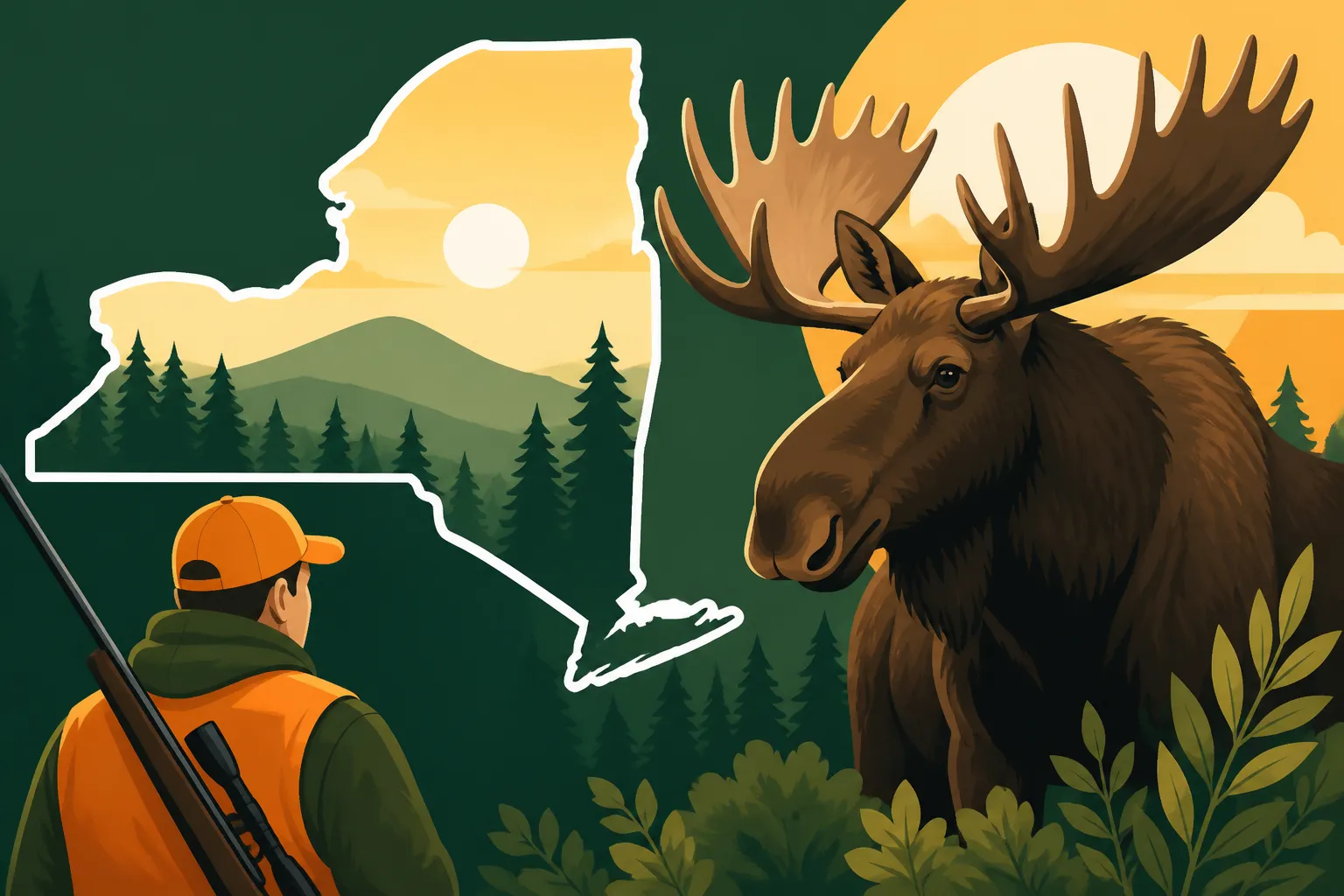
It’s a truly incredible experience to be out in the New York woods, walking through a crisp Adirondack morning, and suddenly catch sight of a massive, dark silhouette moving through the timber. For many years, the idea of seeing a wild moose in New York was relegated to old stories or fleeting glimpses of animals that had wandered over from neighboring states. But things are changing, and this guide is here to shed light on the incredible comeback of New York’s moose population, helping you understand their current status, where they roam, and what the future might hold for these magnificent creatures in our state.
The Ghost of Giants Past: A Historical Look at New York Moose
For generations, the moose was more legend than reality in New York. Many long-time hunters and outdoor enthusiasts grew up hearing tales of moose, but few ever expected to encounter one in the wild. Yet, these impressive animals once roamed freely across vast swathes of our state.
Original Range and Decline
Imagine New York before extensive settlement – dense, unbroken forests covered much of the landscape, providing ideal habitat for a wide array of wildlife, including moose. Historical records suggest that moose were once distributed throughout much of upstate New York, particularly in the extensive northern forests of the Adirondacks and even extending into parts of the Catskills. They thrived in these environments, relying on vast tracts of young deciduous growth for browse and coniferous forests for winter cover.
However, the arrival of European settlers brought profound changes to the landscape and wildlife populations. Unregulated hunting, driven by market demand for meat and hides, took a heavy toll. More significantly, massive deforestation efforts, particularly during the 19th century, dramatically altered the pristine forests moose depended on. Timber harvesting, land clearing for agriculture, and the subsequent loss of vital habitat pushed moose populations to the brink. Their natural inclination to roam vast territories made them particularly vulnerable to these pressures.
Extirpation and Early Sightings
By the late 1800s, moose were considered extirpated from New York State. This means the species was locally extinct, completely vanished from our wildlands. For nearly a century, any sightings were incredibly rare, often attributed to misidentification or anecdotal evidence. It wasn't until the latter half of the 20th century that the first signs of a potential comeback began to emerge.
These early sightings were typically of transient individuals, often young bulls dispersing from healthy populations in Vermont, Massachusetts, or Canada. They were pioneers, testing the waters, so to speak, of a landscape that had once been home to their ancestors. These sporadic reports, though exciting, didn't immediately indicate a breeding population. Instead, they were glimpses of hope, suggesting that if conditions were right, New York's vast reforested areas could once again support these magnificent animals. Understanding this history is crucial to appreciating the conservation efforts and natural processes that have led to their current, albeit still vulnerable, resurgence.
Where the Wild Things Are: Current Moose Distribution in New York
While moose might seem like a mythical beast to some New Yorkers, they are very much a part of our state's ecosystem, particularly in specific regions. Their distribution isn't uniform, and understanding where they are concentrated can help both wildlife enthusiasts and hunters gain a better appreciation for these animals.
Adirondack Strongholds
When you talk about moose in New York, the conversation invariably starts and ends with the Adirondack Park. This vast expanse of protected wildland, including both private timberlands and state-owned preserves like The Adirondack Forest Preserve, serves as the undisputed stronghold for New York's moose population. Within the park, moose are most consistently found in the northern and central Adirondacks. Areas with a mosaic of young forests, regenerating clear-cuts, and wetlands provide ideal conditions. These include regions around the St. Lawrence County line, northern Herkimer County, and parts of Hamilton and Essex counties. The dense forest cover, abundant water sources, and relatively low human population density offer the solitude and forage moose require.
The Adirondacks provide critical elements: extensive spruce-fir forests for winter cover, vast tracts of deciduous growth for summer browse, and numerous lakes, ponds, and wetlands where they can feed on aquatic vegetation. The "Forever Wild" designation of much of the Adirondack Forest Preserve also means that large areas are protected from extensive development, ensuring habitat integrity, a crucial factor for large, wide-ranging species like moose.
Expanding into Neighboring Regions
While the Adirondacks remain the core, there's growing evidence that moose are slowly, cautiously, expanding their range beyond these traditional boundaries. This expansion is often observed in adjacent regions that share similar habitat characteristics. The Tug Hill Plateau, with its remote, snow-laden forests and regenerating timberlands, has seen increasing moose activity. The St. Lawrence River Valley, particularly its eastern portions, also offers suitable habitat, acting as a natural corridor for animals dispersing from the main Adirondack herd or even from Quebec.
These fringe areas present both opportunities and challenges. While they offer potential new habitat, they may also be subject to greater human disturbance or different ecological pressures. For hunters interested in general wildlife distribution, tools like GoHunt can provide useful insights into broader regional game patterns, helping to identify potential corridors or less-pressured areas where various species might be expanding. While not specific to moose tracking, understanding broader game movements can inform outdoor pursuits.
Moose Sightings Near the Vermont Border
Another significant source of New York's emerging moose population comes from immigration from neighboring states. Vermont, New Hampshire, and Massachusetts all have well-established moose populations, and it's quite common for individuals, particularly young bulls seeking new territory, to cross state lines. The eastern Adirondacks and areas along the Lake Champlain corridor are prime locations for observing Moose Sightings Near the Vermont Border.
These trans-border movements are vital for genetic diversity and population reinforcement in New York. The presence of healthy populations in nearby states means a continuous, albeit slow, influx of new individuals, helping to bolster New York's still-recovering herd. It's a testament to the resilience of nature and the interconnectedness of regional ecosystems. These movements highlight that wildlife doesn't recognize human-drawn borders, and the health of our moose population is intrinsically linked to the health of populations in the wider New England landscape.
Counting the Colossus: Population Estimates and Trends
Accurately counting a wildlife population that is as elusive, wide-ranging, and thinly distributed as New York’s moose is no easy feat. Unlike deer, which exist in much higher densities and are frequently observed, moose often remain hidden in vast, remote forests, making precise enumeration a significant challenge for wildlife biologists.
How Many Moose Live in the Adirondacks
Current estimates from the New York State Department of Environmental Conservation (DEC) place the Adirondack moose population somewhere in the range of 600-800 individuals. This number fluctuates, of course, but it represents a significant increase from just a few decades ago when sightings were exceedingly rare. These figures are derived from a combination of methods, including aerial surveys conducted in winter, public reporting programs, and incidental observations by DEC staff and researchers.
It's important to understand that these are estimates, not precise headcounts. Moose, particularly in the dense Adirondack timber, are incredibly difficult to spot consistently. The DEC is continually refining its methods and encourages public participation in reporting sightings to help improve the accuracy of these numbers. Knowing How Many Moose Live in the Adirondacks gives us a baseline, but the trend of growth is perhaps even more telling than the exact current figure.
Challenges of Estimating Moose Numbers
The challenges in counting moose are manifold. Firstly, their vast range means covering enough ground for an accurate aerial survey is costly and time-consuming. Secondly, moose are naturally solitary and inhabit incredibly dense, rugged terrain, especially the thick conifer swamps they favor for wintering. This makes ground-based surveys practically impossible for large-scale estimates. Furthermore, factors like snowfall depth, wind conditions, and even the type of aircraft used can impact survey effectiveness.
Another layer of complexity comes from the moose’s cryptic nature. They don't typically congregate in large herds like deer, and their dark coloration provides excellent camouflage against tree trunks and shadows. This means that even with dedicated efforts, biologists are often working with statistical models and extrapolations rather than direct counts, emphasizing the importance of every piece of data collected, whether through formal research or citizen science reporting.
Population Growth Drivers
Despite the challenges of counting them, the upward trend in New York's moose population is undeniable. Several key factors are driving this slow but steady recovery. The most significant is undoubtedly habitat regeneration. As agricultural lands were abandoned in the 20th century and large tracts of forest were allowed to mature, the landscape has returned to a more moose-friendly state. Specifically, the proliferation of young deciduous browse – aspen, birch, willow, and maple saplings – in areas impacted by logging, storms, or natural succession, provides crucial food sources.
Furthermore, their protected status has been critical. Moose hunting has been prohibited in New York, allowing the population to recover without additional pressure. While natural predation on adult moose is minimal (bears might take calves, but adult moose are formidable), the lack of human hunting pressure has been a major boon. The source populations in neighboring states also contribute to growth, acting as a wellspring for dispersing individuals who find suitable habitat in New York. All these elements combined paint a hopeful picture for the continued, albeit gradual, expansion of these impressive animals across our northern wilds.
Challenges for the Giants: Threats to New York's Moose
While the return of moose to New York is a conservation success story, their journey isn't without significant hurdles. These large herbivores face unique threats that can impact their health, survival rates, and the overall stability of their population in the state. Understanding these challenges is crucial for effective management and for anyone hoping to see these magnificent animals thrive.
Winter Ticks and the Adirondack Moose Herd
One of the most devastating threats to moose across the Northeast, and certainly within New York, is the winter tick ( Dermacentor albipictus ). These tiny arachnids can infest moose in staggering numbers, sometimes tens of thousands per animal. Unlike deer, moose have not evolved to effectively groom themselves free of these ticks, leading to severe blood loss, hair loss (from rubbing to relieve itching), and hypothermia, particularly in calves. A single severe tick infestation can weaken a moose to the point of death, especially during harsh winters.
The impact is often most visible in spring, when "ghost moose" – animals that have rubbed off much of their fur in an attempt to dislodge ticks – can be seen. Warmer winters, a clear consequence of climate change, exacerbate this problem. Less persistent snow cover and shorter cold periods mean more ticks survive the winter and reproduce, leading to higher infestations the following year. The DEC is closely monitoring Winter Ticks and the Adirondack Moose Herd, recognizing it as a primary driver of moose mortality, especially among calves and younger animals.
Brainworm and Other Parasites
Another insidious threat to New York's moose is brainworm (Parelaphostrongylus tenuis), a nematode parasite that primarily infects white-tailed deer. Deer are typically unaffected by brainworm, acting as a carrier, but when moose ingest the snails or slugs that carry the parasite's larvae, it can be deadly. In moose, the brainworm migrates to the central nervous system, causing neurological damage that manifests as blindness, stumbling, paralysis, and ultimately death.
While not as widespread or immediately visible as winter tick infestations, brainworm can still cause localized mortality and poses a chronic threat wherever moose and high densities of deer overlap. Beyond brainworm, moose can also be affected by liver flukes and other parasites, though these generally have less severe impacts than winter ticks or brainworm. The interconnectedness of different species, like deer and moose, in the same habitat underscores the complexities of New York Wildlife Disease Monitoring and its critical role in understanding population health.
Habitat Fragmentation and Climate Change
Despite the vastness of the Adirondack Park, habitat fragmentation remains a long-term concern for a species that requires extensive, contiguous tracts of wild land. Roads, developments, and even intense recreational pressure can fragment core moose habitat, limiting their ability to move freely and access diverse food sources or wintering grounds. This is particularly relevant as moose begin to expand into areas with more human presence.
Climate change presents a multifaceted threat beyond just exacerbating tick issues. Warmer average temperatures can lead to heat stress in moose, particularly during summer. Moose are adapted to cold climates and thrive in areas with deep snow and cooler temperatures. Increased temperatures can force them to reduce foraging during the day, impacting their nutritional intake. Additionally, changes in precipitation patterns can affect the availability of favored aquatic plants or the quality of browse. While New York's moose population is currently growing, these environmental challenges mean that vigilance and adaptive management strategies are essential for their continued success.
The Moose's Menu: Understanding Their Habitat Needs
To truly appreciate the comeback of moose in New York, it's essential to understand what makes a landscape suitable for these large herbivores. They have specific dietary and habitat requirements that dictate where they can thrive, and these preferences offer insights into why the Adirondacks have become their primary stronghold.
Preferred Browse and Forage
Moose are primarily browsers, meaning they prefer to eat the leaves, twigs, and bark of woody plants rather than grazing on grasses. Their massive size and impressive antlers are sustained by a diet rich in young, succulent growth. They particularly favor deciduous species such as willow, aspen, birch, mountain ash, and red maple. These species often proliferate in areas where sunlight can reach the forest floor, such as recently logged areas, burned-over sections, or along wetland edges.
In summer, aquatic vegetation is also a crucial part of their diet. Moose are strong swimmers and will wade into ponds, lakes, and marshes to feed on plants like pond lilies, water shield, and various sedges. These aquatic plants are not only highly nutritious but also provide vital minerals, like sodium, that are often scarce in terrestrial browse. Understanding this preference helps explain why moose are frequently found near water bodies, especially in warmer months. For those using resources like GoHunt to research game patterns, knowing these specific preferences can help refine searches for optimal habitat.
Essential Wintering Areas
Winter in New York, especially in the Adirondacks, can be brutal, with deep snow and freezing temperatures. Moose have adapted to these conditions, but they still require specific habitat features to survive the lean months. During winter, moose often move into denser coniferous forests, particularly stands of spruce and fir. These areas provide crucial thermal cover, shielding them from wind and heavy snow. The thick canopy of conifers intercepts snow, creating shallower snow depths on the ground, which makes it easier for moose to move and conserve energy.
They will also "yard up" in these areas, similar to deer, but on a much larger scale, reducing their movements to conserve energy. Their winter diet shifts to the bark and twigs of less palatable woody species, and they must rely on fat reserves built up during the summer. Therefore, the availability of both regenerating deciduous browse for summer and dense coniferous cover for winter is paramount for moose survival.
Water and Mineral Lick Importance
Water is fundamental to all life, and for moose, it's particularly important for both hydration and nutrition. As mentioned, aquatic vegetation provides essential minerals. Beyond feeding in water, moose utilize natural mineral licks when they can find them. These sites, often natural seeps or specific soil types, provide sodium and other trace minerals that are vital for metabolic functions and antler growth. While true natural mineral licks are relatively rare, moose will seek them out, making such locations potential hotspots for observation.
For someone trying to track Finding Sign in Big Adirondack Timber for any large game, knowing these specific habitat needs—browse, cover, and water sources—is key. A hunter or naturalist looking for moose sign should focus on areas combining young deciduous growth, dense conifer stands, and accessible wetlands. These overlapping habitat components create the mosaic that supports a healthy moose population, guiding their movements and influencing their daily and seasonal routines in the New York wilds.
Why New York Does Not Hunt Moose Yet: Management and Future Prospects
Given the increasing number of moose in New York, it’s natural for hunters to wonder if a moose hunting season is on the horizon. After all, neighboring states have well-established moose hunts. However, New York's approach to moose management is decidedly conservative, reflecting the population’s still-recovering status.
DEC Management Philosophy
The New York State Department of Environmental Conservation (DEC) currently manages moose with a primary focus on population recovery and research. Unlike deer, which have a robust, huntable population managed through various season lengths and bag limits, the moose population in New York is still considered "emerging." The DEC's strategy centers on allowing the population to grow and expand its range naturally, while simultaneously studying its health, distribution, and genetic makeup.
This conservative stance means that, for now, New York has a closed season for moose hunting. The DEC prioritizes monitoring the population for threats like winter ticks and brainworm, assessing reproductive rates, and understanding their habitat use. Their goal is to ensure a stable, self-sustaining population before even considering the possibility of a limited hunting season. This dedication to long-term sustainability is a hallmark of responsible wildlife management. For more context on overall wildlife management, understanding the principles behind What "Forever Wild" Means for Hunters on state-protected lands is useful.
Comparing to Neighboring States
New York's position contrasts with that of several neighboring states that have robust, actively managed moose hunting seasons. States like Maine, New Hampshire, and Vermont have significantly larger and more established moose populations, allowing them to implement controlled, limited entry hunts. These states typically issue a small number of permits each year, often through a lottery system, to manage population health, reduce vehicle collisions, and provide recreational opportunities.
Here's a quick comparison of moose management in New York and its immediate neighbors:
| State | Estimated Moose Population | Hunting Season? | Tags Available Annually (Approx.) | Primary Management Goal |
|---|---|---|---|---|
| New York | 600-800 | No | 0 | Population Recovery & Expansion |
| Maine | 60,000-70,000 | Yes | 3,000-4,000 | Sustainable Harvest & Population Control |
| New Hampshire | 3,000-4,000 | Yes | 60-70 | Sustainable Harvest & Research |
| Vermont | 2,000-3,000 | Yes | 80-100 | Sustainable Harvest & Population Stability |
This table clearly illustrates the difference in population sizes and management strategies. New York is playing the long game, aiming to reach a population level that can sustain a limited harvest without jeopardizing its long-term viability. This mirrors the cautious approach outlined in discussions like Why New York Does Not Hunt Moose Yet.
Potential for Future Hunting Opportunities
So, what would it take for New York to open a moose hunting season? It's not out of the realm of possibility, but several conditions would need to be met. First and foremost, the moose population would need to demonstrate sustained growth and stability, expanding its range and maintaining healthy reproductive rates over several years. The DEC would need to be confident that a limited harvest would not negatively impact the long-term viability of the herd.
Secondly, public support would be crucial. Introducing a hunting season for an iconic, still-recovering species would likely involve extensive public input and discussion. Finally, the logistical framework for a lottery system, harvest reporting, and biological sampling would need to be established. While the DEC remains cautious, the continued growth of the population offers a glimmer of hope that, someday, New York hunters might have the opportunity to pursue these magnificent animals in a regulated, sustainable manner, adding another unique experience to the state’s rich hunting traditions.
Coexisting with Giants: Safety and Observation
The increasing presence of moose in New York brings with it both excitement and responsibility. While encountering a moose in the wild is a thrilling experience, it's crucial to remember that these are large, powerful wild animals that require respect and caution. Understanding how to coexist safely is paramount for both human and moose well-being.
Moose-Vehicle Collisions
One of the most immediate and significant concerns arising from an expanding moose population is the risk of moose-vehicle collisions. A full-grown bull moose can weigh over 1,000 pounds and stand six feet tall at the shoulder, making a collision incredibly dangerous for both the animal and vehicle occupants. Because of their height, the animal's body often impacts the windshield, leading to severe injuries or fatalities for drivers and passengers.
These collisions are most common at dawn, dusk, and during the night, particularly in areas within and around the Adirondack Park. Roads like State Route 3, Route 30, and sections of the Adirondack Northway (I-87) that cut through prime moose habitat are known hotspots. Drivers in these areas, especially during spring dispersal or the fall rut, should exercise extreme caution, reduce speeds, and be vigilant for any movement along the roadside. The impact of severe winters, as seen in How Severe Winters Hit Adirondack Deer, can also influence ungulate movement and vulnerability to collisions.
Encountering a Moose in the Wild
For hikers, campers, and hunters, encountering a moose in the wild can be a truly awe-inspiring moment. However, it's vital to remember that while moose generally avoid humans, they are not to be approached. A moose, especially a cow with a calf or a bull during the fall rut, can become aggressive if it feels threatened. Unlike deer, which tend to flee, a moose might stand its ground, charge, or stomp if provoked.
If you encounter a moose, the best course of action is to give it plenty of space. Observe from a distance, and if it appears agitated (ears laid back, hair bristling, head lowered), slowly and calmly back away. Never get between a cow and her calf. While seemingly docile, their sheer size and strength demand respect. For those in the backcountry, carrying a good map or using mapping apps like those often referenced by GoHunt users for general outdoor navigation and identifying potential habitat is always a good idea, helping you to plan routes that allow for wildlife observation while minimizing disturbance. This also aligns with the broader goal of Scouting New York Public Land Before Season for any game.
Reporting Moose Sightings
Your observations can play a crucial role in helping the DEC monitor New York’s emerging moose population. The department relies on public reporting to gather data on moose distribution, movement patterns, and population health. If you see a moose, especially in an area where they are not commonly reported, documenting the sighting can be incredibly helpful.
The DEC’s website, through the HuntFishNY app or directly via their online reporting system, provides clear instructions on how to submit a sighting. Details such as the date, time, location (GPS coordinates are ideal), and a description of the animal (e.g., bull, cow, calf) are valuable. Your careful observations contribute directly to the scientific understanding that informs management decisions, ultimately supporting the long-term health and growth of New York’s magnificent moose herd. This collective effort ensures that we can all be part of the ongoing story of these wild giants in our state.
Disclaimer
The information provided in this guide is for general informational purposes only and is not intended as legal advice or an exhaustive statement of all hunting regulations. Hunting laws and wildlife management policies in New York are subject to change. Always consult the official New York State Department of Environmental Conservation (DEC) regulations and guidelines before planning or participating in any hunting activities.