Gray Versus Fox Squirrels in New York
Ah, the humble squirrel! It might seem like a simple target for a day afield, but for many new hunters, and even some seasoned folks, telling the difference between New York's two primary bushy-tailed residents – the gray squirrel and the fox squirrel – can be a bit perplexing. You spot movement, you see that familiar twitching tail, but knowing which species you're looking at can help you predict their behavior and find them more consistently. This guide will walk you through the distinct characteristics, preferred habitats, and even tailored hunting strategies for both gray and fox squirrels across our diverse New York landscape.
Understanding New York's Squirrel Species: More Than Just "Bushy Tails"
For many of us, "squirrel" conjures up an image of a fast-moving, chattering critter scampering up an oak tree in the backyard. That's almost always our common gray squirrel. But dive deeper into the state's woodlands and agricultural fringes, and you'll encounter its larger, often more subtly colored cousin, the fox squirrel. Recognizing these differences isn't just for naturalists; it's a vital part of becoming a more successful and informed squirrel hunter, allowing you to adapt your approach to the specific game you're pursuing.
The Ubiquitous Gray Squirrel
When you think of a squirrel in New York, the eastern gray squirrel ( Sciurus carolinensis) is almost certainly what comes to mind. These are the acrobats of the forest, the chattering busybodies that seem to be everywhere, from our densest hardwoods to city parks. They are incredibly successful and adaptable, which is why they're so widespread throughout the state.
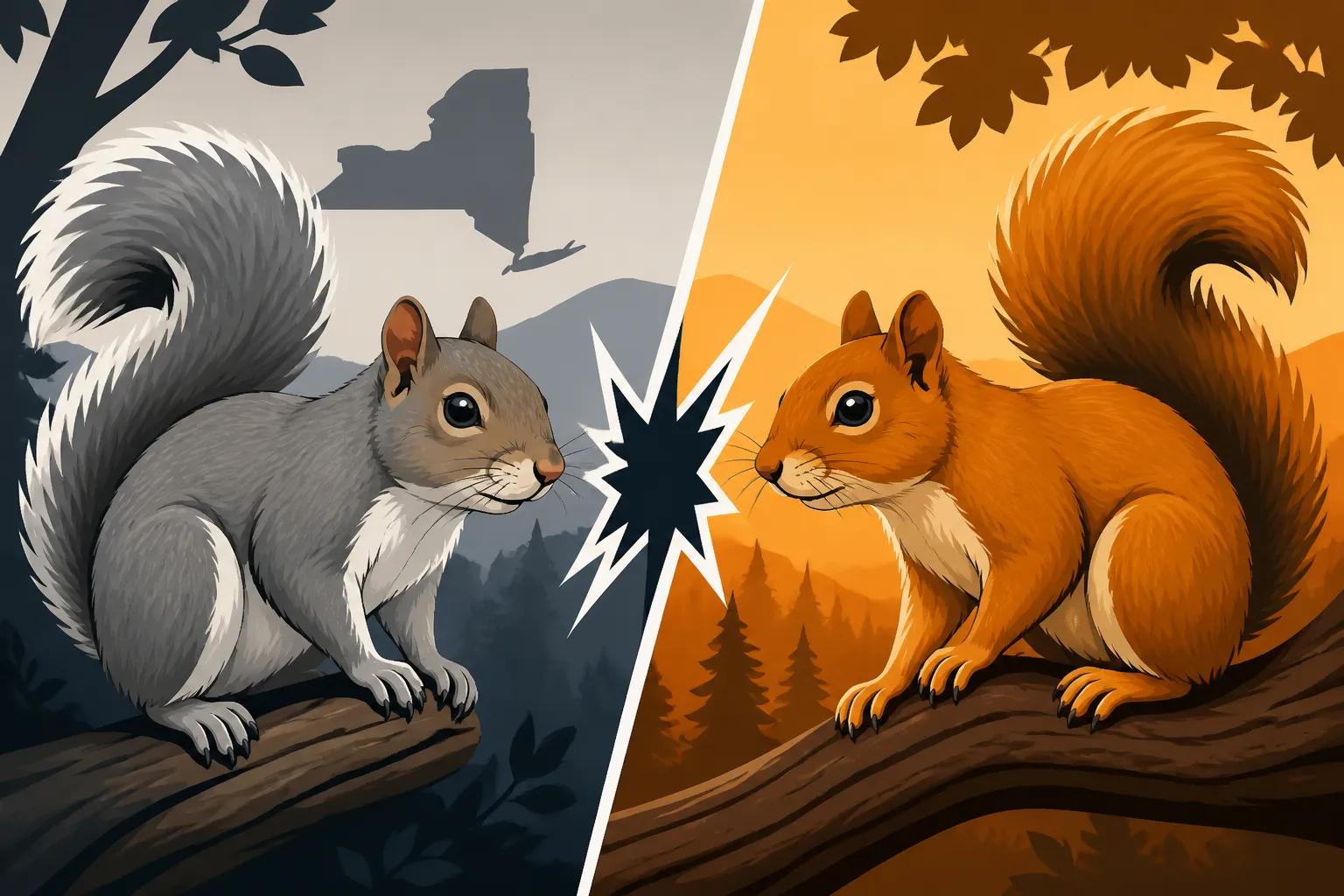
Gray squirrels, as their name suggests, typically have a salt-and-pepper gray coat on their backs, often with a brownish tinge on their heads and flanks. Their undersides are usually white or light gray. What often surprises people is that gray squirrels can also be found in a completely black phase, especially in certain areas like portions of the Finger Lakes region or parts of Western New York. These melanistic individuals are genetically the same species, just rocking a different, darker outfit. Their tails are long and exceptionally bushy, often tipped with white hairs, which they use for balance, communication, and even as a bit of a sunshade or umbrella.
These squirrels are true forest dwellers, thriving in deciduous and mixed hardwood forests. They absolutely adore areas rich in mast-producing trees like oaks, hickories, and beeches. You'll find them eagerly burying acorns, gnawing on hickory nuts, and stripping walnuts. But they're not picky; they'll also munch on seeds, tree buds, fungi, and occasionally even insects or bird eggs, especially when hard mast is scarce. Their habitat preferences mean that if you're Hunting Squirrels in New York Hardwoods, you're likely to encounter plenty of grays.
In terms of behavior, gray squirrels are notoriously quick and agile. They'll scale a tree in a blur, often circling to the opposite side to avoid detection, making them a challenging target. They're highly social and vocal, constantly chattering and barking warnings to each other. When you spook a gray squirrel, it's usually a frantic dash up the nearest tree, where they'll often flatten themselves against a limb or wedge into a tree cavity, hoping to become invisible.
The Elusive Fox Squirrel
Now, let's talk about the fox squirrel (Sciurus niger). If you haven't specifically sought them out or live in an area where they're abundant, you might not have even realized New York had another primary squirrel species. They're often less numerous and more localized than their gray cousins, leading to their somewhat more "elusive" reputation among general observers.
The fox squirrel is significantly larger than the gray squirrel, often weighing a pound or more, making it the largest tree squirrel in North America. Their coloration is also distinct: they typically have a grizzled gray-brown back, but their undersides are a striking rusty red or orange. Many fox squirrels also display characteristic white patches on their nose, chin, or ears, which can be a dead giveaway. Their tail, while bushy, isn't quite as fluffy as a gray's and often appears more reddish-brown, lacking the prominent white fringe.
Their habitat preferences differ too. While they still rely on nut-bearing trees, fox squirrels tend to favor more open woodlands, scattered woodlots, forest edges, and areas adjacent to agricultural fields. They're not as keen on dense, unbroken forests as gray squirrels. You'll often find them foraging on the ground in a picked cornfield or along a hedgerow. This preference means they're often found in areas like the rolling farmlands of Western New York or the agricultural pockets of Central New York, rather than the deep, unbroken forests of the Adirondacks or Catskills. If you're Reading Cuttings Under an Oak in an open woodlot, pay close attention to the size of the cuttings – fox squirrels can handle bigger, tougher nuts.
Fox squirrels are generally less frantic and a bit more deliberate in their movements than grays. They spend more time on the ground foraging, and when spooked, they might run across the ground for a considerable distance before finally climbing a tree. Once in a tree, they tend to be less prone to the "circle the trunk" evasion tactic, often just sitting still on a limb, relying on their camouflage and size to avoid detection. They are also less vocal than gray squirrels, often going about their business with quiet determination.
Here’s a quick comparison to help solidify the differences:
| Feature | Gray Squirrel (Sciurus carolinensis) | Fox Squirrel (Sciurus niger) |
|---|---|---|
| Size | Smaller, typically 1 to 1.5 lbs | Larger, typically 1.5 to 3 lbs |
| Color | Gray back, white/light gray belly. Can be all black (melanistic). | Grizzled gray-brown back, rusty red/orange belly. Often white nose/ears. |
| Tail | Very bushy, often fringed with white hairs. | Bushy, but often less "fluffy" than gray, more reddish-brown. |
| Habitat | Dense deciduous and mixed forests, suburban areas, parks. | Open woodlands, forest edges, scattered woodlots, agricultural areas. |
| Behavior | Agile, fast, chattery, often circle trees. Spend less time on the ground. | More deliberate, slower, quieter. Spend more time foraging on the ground. |
| Distribution | Widespread throughout New York. | More localized in New York, common in Western and Central NY. |
Key Differences: Identification, Habitat, and Behavior for Hunters
Knowing the general traits is one thing, but applying that knowledge in the field is where it truly counts. As hunters, we’re constantly observing and interpreting the subtle cues wildlife gives us. Differentiating between gray and fox squirrels in real-time can sharpen your instincts and lead to more filled game bags.
Visual ID on the Move
When you're out in the woods, especially when trying to pinpoint a fast-moving target, immediate identification is crucial. The size difference between a gray and a fox squirrel is often the most striking indicator. A fox squirrel will look noticeably more substantial, almost like a miniature groundhog with a big tail, compared to the sleeker, more diminutive gray. If you spot a squirrel moving on the ground and it seems unusually large, especially for an animal that's supposed to climb trees, you're likely looking at a fox squirrel.
Color patterns are also a dead giveaway, even if they're moving quickly. The rusty red or orange belly of a fox squirrel often flashes as it moves, contrasting sharply with the white or light gray belly of a gray squirrel. Pay attention to the face as well; those distinct white patches on the nose or ears are classic fox squirrel markings. Gray squirrels, even the black phase ones, typically have a more uniform facial coloration. As they climb, watch the tail too; a white fringe means gray, while a more consistent reddish-brown hue points to a fox.
Behavioral cues are just as important as visual ones. Gray squirrels are like little hyperactive acrobats. They'll bound across branches, leap from tree to tree, and, when alarmed, will spiral up a trunk at dizzying speed, often stopping on the far side. Fox squirrels are generally more methodical. They might run across a field, climb a tree with less haste, and then often sit motionless on a limb, relying on their larger size and camouflage to blend in. They're less prone to the frantic circling act.
Where to Find Each Species in New York
Understanding where each species prefers to live is paramount to successful squirrel hunting. You can't hunt what isn't there, and blindly wandering through the wrong habitat will only lead to frustration.
Gray squirrels are truly statewide in New York. From the most remote corners of the Adirondack Forest Preserve to the suburbs of Long Island, wherever there are mature hardwoods, you're likely to find gray squirrels. They thrive in dense, unbroken stands of oak, hickory, and beech, which provide both abundant food and ample canopy cover for safety. They'll also readily adapt to mixed forests, especially if conifers are interspersed with hardwoods. If you're hunting any of New York's State Forests or Wildlife Management Areas, particularly in the Southern Tier or Finger Lakes regions, you'll encounter grays in abundance.
Fox squirrels, however, are more localized. They are primarily found in the western and central parts of New York, including areas like the Finger Lakes and Western New York regions. They prefer more open, park-like woods, smaller woodlots, and especially areas that border agricultural fields. Think oak and hickory groves adjacent to cornfields or overgrown fencerows. Hunting Western New York Farmland often means a better chance of encountering fox squirrels. They're less common, if present at all, in the vast, dense forests of the Adirondacks or Catskills. If you're specifically targeting fox squirrels, focus your scouting on those transitional zones between agriculture and mature timber. Using GoHunt's satellite imagery can be incredibly helpful here, allowing you to pinpoint those specific patches of hardwoods bordering cornfields or open pastures where fox squirrels tend to hang out. It lets you visualize the landscape from above and identify the perfect mix of cover and food.
Behavioral Nuances and Hunting Strategy
Once you've identified your target species and understand their preferred haunts, you can fine-tune your hunting strategy for greater success. Their different temperaments and reactions to pressure require distinct approaches.
For gray squirrels, their nervous energy and quick reflexes mean you often need to be just as quick. Still-hunting, moving slowly and quietly through the woods, pausing frequently to listen and scan, is a highly effective tactic. When you spot a gray, they'll likely bolt for a tree. Be ready to take a quick, accurate shot. If they "tree" and vanish, patience is your friend. Sit quietly for 10-15 minutes; they often reappear, peaking around the trunk or along a branch. Sometimes a gentle "scratching" call, mimicking another squirrel, can draw them out. They are quick to disappear into tree cavities, so knowing where those escape routes are can be key.
Fox squirrels, on the other hand, often call for a different pace. Because they spend more time on the ground and move more deliberately, a stand-hunting approach can be very effective. Setting up quietly near a known food source – like a productive nut tree or the edge of a cornfield – and waiting for them to appear can pay off. They might not react to human presence with the same immediate panic as a gray squirrel, sometimes allowing for a more composed shot. If spooked, they might run across the ground for a greater distance before climbing, or climb a tree and sit motionless for a longer period. This slower reaction time can give you a precious extra second or two to raise your rifle or shotgun. Using GoHunt's detailed maps can help you identify these specific food sources, whether it's a stand of mature walnuts or the edge of a grain field, improving your chances of choosing a productive spot.
Hunting Tactics Tailored for New York Squirrels
Whether you're after the nimble gray or the beefy fox squirrel, tailoring your tactics to their specific behaviors and habitats will significantly boost your success rate. Squirrel hunting is a fantastic way to hone your woodsman skills, practice marksmanship, and enjoy the beauty of New York's forests.
Still-Hunting and Stand Hunting for Grays
Still-hunting is a classic and highly productive method for gray squirrels. It involves moving through the woods at a snail's pace, taking only a few steps, then pausing for several minutes to scan the trees and ground for movement. These pauses are critical because squirrels, especially grays, are masters of freezing in place. By stopping, you might cause a hidden squirrel to twitch its tail or peek around a tree, giving away its position. Focus on areas with abundant nut trees like oaks and hickories, especially along ridges or near water sources. When you find an active feeding area, marked by fresh cuttings, it's often worth slowing down even further, or even sitting for a while.
Stand hunting for grays can also be effective, particularly in the early morning or late afternoon when squirrels are most active. Find a comfortable spot near several mast-producing trees or a well-used game trail squirrels frequent. Sit with your back against a wide tree for camouflage and comfort, and remain as still and quiet as possible. Use binoculars to scan the canopy and tree trunks. Often, the first sign of a gray squirrel is a rustle in the leaves on the forest floor, or a tiny movement high in a branch. Being patient in a good spot will often yield multiple opportunities, especially during the peak feeding times. The app GoHunt can be invaluable for identifying these prime feeding areas, allowing you to highlight stands of oaks or hickories even before you step foot in the woods. When I'm Squirrel Hunting a New York Oak Ridge, I always try to identify the most productive trees on my map beforehand.
Adapting for Fox Squirrels in More Open Terrain
Hunting fox squirrels demands a slightly different mindset due to their preference for more open habitats and their often more deliberate movements. Instead of busting through thick woods, you might be working along a woodlot edge, a fencerow, or the perimeter of an agricultural field. Long-range observation becomes more important here.
Setting up with a good vantage point, perhaps on a slightly elevated piece of ground overlooking a cornfield or a distant grove of large nut trees, can be very effective. Fox squirrels often feed on the ground in these open areas, making them visible from a distance. Patience is paramount; they might take their time to emerge from cover or cross open ground. If you spot one in the open, try to use natural cover to close the distance slowly and quietly, or wait for it to move closer to your position. Remember, they may not immediately flee up a tree, giving you a chance to set up for a shot. For instance, if you're Hunting a Standing Cornfield in Farm Country, setting up along the field edge and patiently watching for movement between the corn and the adjacent woodlot is often your best bet. GoHunt is excellent for helping visualize these open-to-timber transitions, marking out those crucial ambush points.
Gear Considerations for Squirrel Hunting
While squirrel hunting doesn't require a lot of specialized gear, having the right tools can make your experience more enjoyable and successful. For firearms, a .22 caliber rifle is a popular choice for its accuracy, low noise, and minimal meat damage. Rimfire rifles like a .22LR are perfect for headshots, which is ideal for table fare. Alternatively, a shotgun, particularly a .410 or 20 gauge with small shot (like #6 or #7.5), is excellent for fast-moving targets in thick cover. Shotguns are very forgiving if your aim isn't perfect, especially if you're trying to stop a squirrel before it vanishes into a tree cavity. Best Shotgun Gauge for New York Grouse offers some insights that can cross over to squirrel hunting as well, particularly regarding gauge and shot size.
Beyond your firearm, quiet clothing is a must. Wool or soft fleece prevents alarming rustles as you move. Comfortable, sturdy boots that can handle varied terrain are essential for covering ground. A good pair of binoculars (8x or 10x) will greatly aid in spotting squirrels, especially when they're camouflaged against tree bark or hidden in dense foliage. Don't forget a small pack to carry your ammunition, water, snacks, and a knife for field dressing. I always mark my truck on GoHunt before I head into new woods, especially when I'm walking those big hardwood tracts looking for squirrel sign; it gives me peace of mind knowing my exit route is mapped, even if I lose cell service.
New York's Squirrel Harvest and Management Insights
Squirrel hunting in New York is more than just a pastime; it's a rich tradition, an excellent way to introduce new hunters to the field, and a means of connecting with our natural world. The state's healthy squirrel populations provide ample opportunity, thanks to thoughtful management and abundant habitat.
Squirrel Population and Management in New York
New York boasts robust populations of both gray and fox squirrels, although gray squirrels are significantly more widespread and numerous. Squirrel populations tend to fluctuate based on the availability of mast crops – the nuts and seeds produced by trees. A bumper crop of acorns and hickory nuts one year often leads to a boom in squirrel numbers the following year, as more food means better survival rates and successful breeding. Conversely, a poor mast year can see a dip in populations. This is a natural cycle, and squirrels are incredibly resilient.
The New York State Department of Environmental Conservation (DEC) manages squirrel populations through regulated hunting seasons and bag limits. These regulations ensure that harvests are sustainable and that breeding populations remain healthy. Squirrels serve as a vital food source for many predators in the ecosystem, and their presence indicates a healthy forest environment. For many, squirrel hunting is the perfect entry point into the hunting world, offering accessible opportunities and generally liberal seasons. It teaches fundamental hunting skills like observation, stalking, and responsible firearm use in a low-pressure environment. If you want to dive deeper into the state's squirrel numbers, New York Squirrel Harvest Numbers can give you an interesting perspective on how well these populations are doing.
Rules and Regulations
Before heading afield for squirrels, it's crucial to be familiar with New York's current hunting regulations. While squirrel seasons are generally long and bag limits generous, rules can change. You'll need a valid New York State hunting license to pursue squirrels. Additionally, if you plan to hunt any migratory game birds (like doves, which are also considered small game), you might need to register for the Harvest Information Program (HIP).
Squirrel season typically runs from early fall through late winter in New York, offering plenty of opportunity. Daily bag limits are usually quite liberal, allowing hunters to take a good number of animals for the table. However, it's always best practice to check the most current New York State Hunting and Trapping Regulations Guide, which is published annually by the DEC. This guide will provide the precise opening and closing dates for the season, the daily bag limit, and any specific rules or restrictions that might apply to your hunting zone or the type of land you're hunting. Familiarizing yourself with general licensing requirements is also key; New York Hunting Licenses and What They Cost is a great resource. You can find information on the broader small game seasons in New York Small Game and Upland Bird Seasons. Even something as straightforward as squirrel hunting benefits from checking the GoHunt app to double-check boundaries on public land or confirm local regulations.
Disclaimer
This article is for general informational purposes only and does not constitute professional advice. Laws, prices and regulations vary by location and change over time. Consult a qualified professional for guidance on your specific situation.