Are New York Coyotes Part Wolf?
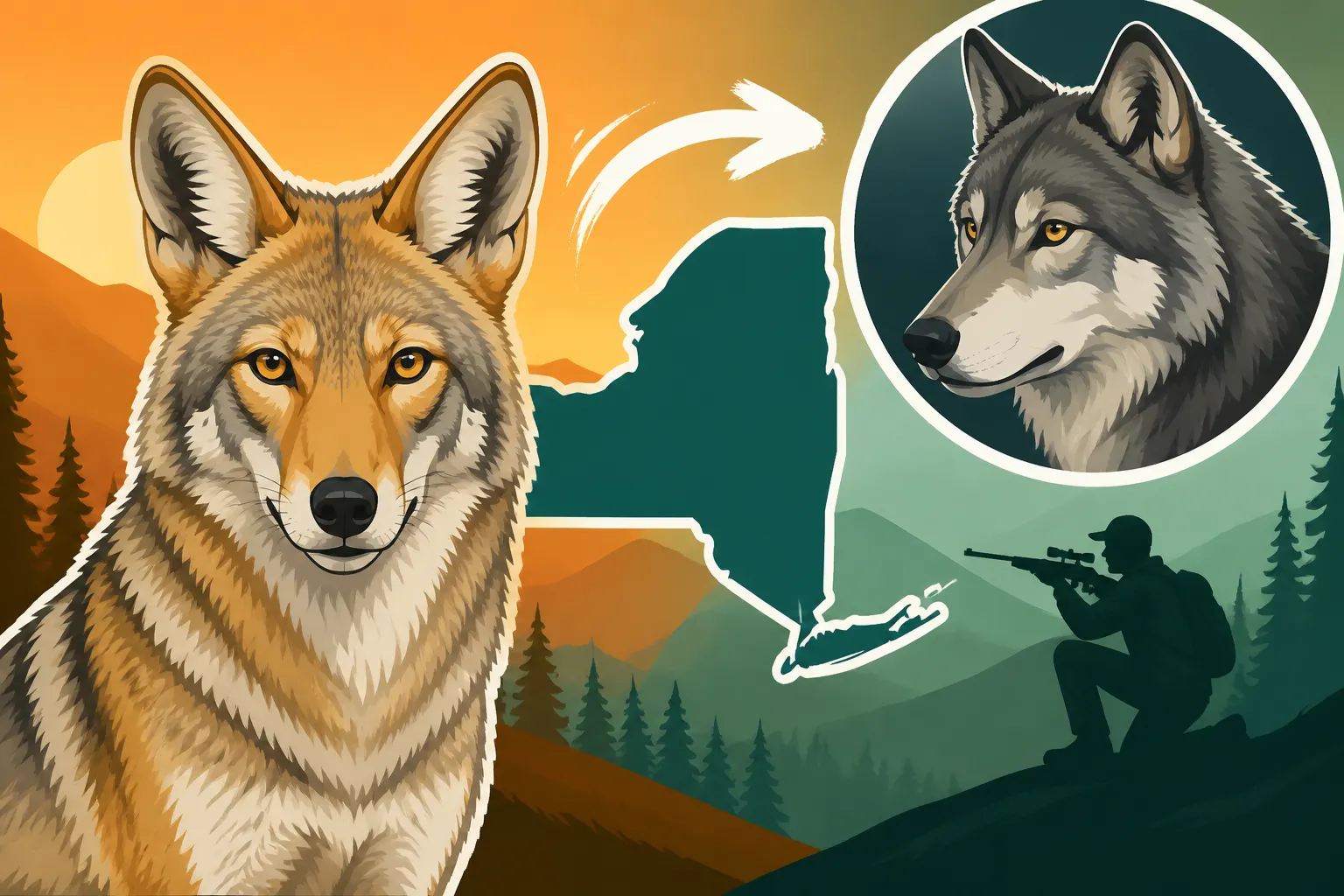
There's a question that pops up in hunting camps and online forums all across New York State: are the coyotes we're seeing really just coyotes, or are they something more… something part wolf? It's a valid question, especially when you encounter one that seems unusually large or acts a bit differently than the western coyotes you might see on TV. This guide is here to unravel the fascinating genetic story of the eastern coyote, explain what makes them unique, and discuss what this means for New York hunters.
The Eastern Coyote: A Genetic Mix in New York
For years, hunters and wildlife enthusiasts in New York have observed coyotes that appear larger, sometimes darker, and seemingly more robust than their western counterparts. This observation has fueled a widespread belief that these animals, often colloquially termed "coywolves," are significant hybrids of coyotes and wolves. The truth, as often happens in the natural world, is a bit more complex and incredibly fascinating. Our eastern coyotes are indeed unique, a testament to adaptation and survival in a changing landscape.
Explaining the "Coywolf" Phenomenon
The idea of the "coywolf" isn't just a folk tale; it stems from very real ecological events. As European settlers expanded westward, they pushed out the gray wolf populations that once dominated the northeastern landscape. At the same time, the adaptable western coyote began its eastward migration, finding new territories and filling ecological niches left vacant by the wolves. This eastward expansion brought coyotes into contact with the last remnants of those eastern wolf populations, as well as domestic dogs in some areas. These encounters, especially in regions where both species were scarce and mates were hard to find, led to interbreeding. The resulting offspring inherited a blend of genes, creating an animal that is, in many ways, perfectly suited for the diverse habitats of the Northeast, from dense forests to agricultural lands.
When we talk about the "coywolf phenomenon" in New York, we're acknowledging this history of genetic mixing. It's not that a coyote is half wolf and half dog in equal measure, but rather that a unique genetic blueprint emerged from these historical interactions. The term "coywolf" itself isn't a scientific classification but a descriptive one, reflecting the blended ancestry and the often larger, more wolf-like appearance some of these animals exhibit. This genetic legacy is what allows them to thrive in varied environments, from the Adirondack wilderness to the farmlands of the Southern Tier.
The Scientific Perspective: DNA Evidence and Admixture
Modern genetic studies have provided incredible insights into the ancestry of our New York coyotes. What the DNA tells us is that the eastern coyote is predominantly coyote, but with significant genetic contributions from both wolves (primarily eastern wolves, a subspecies or ecotype distinct from western gray wolves) and, to a lesser extent, domestic dogs. This phenomenon is known as "admixture."
Research has shown that the average eastern coyote in New York might carry anywhere from 10% to 25% wolf DNA and perhaps 5% to 10% domestic dog DNA, with the rest being pure coyote. The exact percentages can vary by region and individual animal, but the consistent finding is this blend. This wolf DNA is thought to contribute to their slightly larger size, broader skulls, and stronger jaws compared to pure western coyotes. The dog DNA, while less prominent, might have offered some genes related to adaptability to human-modified landscapes or certain coat colors. So, while they are not "half wolf" in the way some imagine, they are certainly not pure coyotes either. Their genetic makeup makes them incredibly resilient and effective predators within the New York ecosystem. Understanding Coyotes Across New York State gives us a better picture of their distribution.
How Migration Led to Hybridization
The story of the eastern coyote is fundamentally one of migration and opportunity. Originally, coyotes were animals of the western prairies and deserts. However, as forests were cleared and wolf populations dwindled, an ecological vacuum was created in the East. Coyotes, being incredibly adaptable, began to expand their range eastward in the early to mid-20th century. This journey brought them into contact with residual populations of eastern wolves, particularly in areas around the Great Lakes and into Canada.
During this period, populations of both coyotes and wolves were likely at low densities, making interbreeding more probable. With fewer mates of their own species available, individuals sought partners from closely related canids. Over generations, this resulted in a stable hybrid population that continued to move south and east, eventually colonizing all of New York State. The genes that allowed them to be successful in new forested and semi-open habitats were likely favored, leading to the animals we see today. This gradual, generational mixing allowed for the beneficial traits of wolves—like larger size and ability to take down bigger prey—to be incorporated into the coyote's already formidable adaptability. It’s a remarkable example of evolution in action, perfectly tailoring a predator for a new environment.
What Sets Them Apart: Physical and Behavioral Characteristics
When you're out in the woods or fields of New York, distinguishing between a larger-than-average coyote, a "coywolf," or even a stray domestic dog can be tricky. While the genetic answer is clear to scientists, visually identifying the exact lineage of every canid you encounter isn't always straightforward for the average person. However, there are some general characteristics that tend to differentiate our eastern coyotes from pure western coyotes, and certainly from true wolves, which are extremely rare in New York's wild.
Size, Build, and Coat: Spotting the Differences
The most noticeable difference between a typical western coyote and its eastern New York cousin is often size. Western coyotes usually weigh between 20-35 pounds. Eastern coyotes, however, frequently tip the scales at 35-55 pounds, with some individuals pushing 60 pounds or more, leading many hunters to believe they've seen a wolf. This larger stature is a direct result of the wolf genetic admixture, providing them with more robust musculature and bone structure.
Beyond weight, their build also tends to be stockier and more powerful than the leaner, almost gaunt appearance of a pure western coyote. Their heads might appear broader, and their snouts slightly shorter and wider. The coat color can also be quite variable. While many eastern coyotes maintain the typical grizzled gray and tan associated with coyotes, it's not uncommon to see individuals with more reddish hues, darker brown or black patches, or even a more uniform charcoal gray, which can sometimes be attributed to wolf or domestic dog genetics. Their tails are usually bushy and carried low, as with western coyotes, but they might appear slightly thicker. New York Coyote Hunting Season Rules often don't distinguish by size, but knowing what you're looking at helps with identification.
Social Structure and Hunting Habits
Pure western coyotes are incredibly adaptable predators, often hunting alone or in small family groups, primarily targeting small prey like rodents, rabbits, and fawns. Their social structure is typically less rigid than that of wolves. Eastern coyotes, with their larger size and wolf heritage, exhibit some fascinating shifts in their behavior.
They still hunt alone or in pairs for smaller game, but their enhanced size and strength allow them to tackle larger prey more effectively. It's not uncommon for eastern coyotes to form more cohesive family units or even small packs, enabling them to bring down adult deer, especially during harsh winter months or when targeting vulnerable animals. This capability makes them significant predators of deer, particularly fawns, and contributes to the overall New York Predator Impact on Fawn Recruitment. Hunters often observe them working together, employing more strategic hunting tactics than single coyotes typically would. This ability to form more effective hunting units makes them incredibly efficient at adapting to the food sources available, from deer to turkeys, and even scavenging from larger kills.
Vocalizations and Territory Markers
The haunting howl of a coyote is a quintessential sound of the New York wilderness. While both western and eastern coyotes share a similar vocal repertoire—including howls, yips, barks, and growls—there can be subtle differences attributed to their genetic makeup. Some argue that the howls of eastern coyotes can be deeper, longer, and more resonant, sometimes incorporating elements that sound more wolf-like. This might be due to larger lung capacity or differences in vocal cord structure influenced by their wolf ancestors.
Like all canids, eastern coyotes use scent marking extensively to communicate. They'll deposit urine, feces, and rub glands on various objects to delineate territory, signal their presence, and communicate reproductive status. These scent posts are crucial for social interaction and avoiding conflicts with neighboring packs. Hunters using predator calls during Coyote Calling in a New York Winter might notice different responses from these animals, potentially indicating variations in their social structure or territorial defense. Understanding these nuances can be key to successful hunting strategies, as a more wolf-like social structure might mean different calling patterns or approaches are more effective.
Hunting Eastern Coyotes in New York
Hunting coyotes in New York is a challenging yet rewarding pursuit, offering year-round opportunities for those looking to hone their predator skills and contribute to wildlife management. Given their unique genetic makeup and adaptable nature, eastern coyotes present a formidable quarry. Understanding the regulations and employing effective tactics are key to success.
Understanding New York's Coyote Hunting Regulations
New York State recognizes coyotes as a game species and allows hunting them for much of the year, with specific regulations that hunters need to be aware of. Generally, coyotes can be hunted statewide, often with very generous seasons, sometimes extending year-round in certain areas or under specific conditions. There's typically no bag limit, emphasizing their role in population control.
However, it's crucial to check the current New York State Department of Environmental Conservation (DEC) regulations before heading out, as rules can vary by zone, method, and time of year. For instance, specific hunting hours (day vs. night) might apply, and the use of artificial lights or electronic calls can be regulated differently depending on the season or locale. While New York has a "no baiting" rule for bears, this generally doesn't apply to coyotes, though check local ordinances. You'll need a valid New York hunting license, and blaze orange requirements might apply during certain deer or bear seasons, even when you're primarily hunting coyotes for safety. Make sure you are also familiar with New York Legal Firearms for Deer Hunting as those same firearms are often used for coyote hunting.
| Characteristic | Western Coyote (Typical) | Eastern Coyote (New York) | Gray Wolf (Typical) |
|---|---|---|---|
| Weight Range | 20-35 lbs | 35-55 lbs (up to 65+) | 70-120 lbs (up to 180) |
| Height | 20-22 inches | 24-26 inches | 26-32 inches |
| Length | 40-50 inches | 48-60 inches | 60-72 inches |
| Snout | Long, narrow | Moderately broad | Broad, blocky |
| Ears | Relatively large, pointed | Slightly smaller than pure coyote, rounded | Smaller, rounded |
| Tail | Bushy, carried low | Bushy, carried low, often thicker | Bushy, carried straight out/up |
| Coat Color | Grizzled gray/tan | Variable (gray, tan, red, dark brown, black) | Variable (gray, black, white, brown) |
| Genetic Makeup | ~100% Coyote | 70-85% Coyote, 10-25% Wolf, 0-10% Dog | ~100% Wolf |
| Primary Prey | Small mammals, birds | Deer, small mammals, birds, carrion | Large ungulates, small mammals |
| Social Structure | Solitary or small family groups | Family groups, small packs (more cooperative hunting) | Larger, cohesive packs |
Tactics for Successful Eastern Coyote Hunting
Hunting eastern coyotes can be a thrilling challenge. Their intelligence, keen senses, and ability to adapt mean you need to be at the top of your game. Since they have a genetic edge from their wolf ancestors, they might exhibit slightly different behaviors than what you'd expect from a purely western coyote.
One of the most effective methods is calling. Various calls, including distress calls (rabbit, fawn, bird), challenge howls, and pup distress calls, can be highly effective. Because eastern coyotes sometimes form more cohesive packs and might be more territorial due to their wolf genes, a challenge howl followed by a distress call can sometimes provoke a response from a dominant animal. Sitting still and being patient is paramount. Often, a coyote will circle downwind to scent-check the area before committing, so setting up with the wind in your favor is critical. Using terrain features for cover and breaking up your silhouette is also vital. Tools like GoHunt can be invaluable for scouting potential travel corridors and understanding the topography where coyotes might be moving, helping you plan your setup before you even step foot in the woods. When looking for good areas, consider Hunting New York's Southern Tier or state forests where deer populations are strong, as coyotes will follow their primary food source.
Night hunting, where permitted, can be highly productive during colder months when coyotes are more active. Thermal or night vision optics can provide a significant advantage, but again, always verify local regulations regarding their use. Setting up on field edges, near known deer bedding areas, or along natural funnels can increase your odds. Patience, scent control, and silent movement are universal truths in coyote hunting, regardless of their genetic lineage.
The Role of Coyotes in the Ecosystem
Regardless of their genetic origins, eastern coyotes play a vital role in New York's ecosystems. As apex predators (in the absence of significant wolf populations), they help regulate prey species populations, particularly deer. By preying on fawns, weak, or sick adult deer, they contribute to the overall health and vigor of the deer herd. They also consume a wide variety of other animals, including rodents, rabbits, and ground-nesting birds, and are significant scavengers, helping to clean up carrion.
For hunters, understanding their role helps put the pursuit into perspective. While some see coyotes purely as competition for deer, others recognize their importance in maintaining ecological balance. Effective coyote management, through hunting, can help maintain healthy wildlife populations. They are a natural and integral part of the New York landscape, a testament to nature's resilience and adaptability. Their presence reminds us that even with human pressures, wildlife finds a way to thrive, creating a unique and complex hunting experience. Exploring public lands using resources like Public Hunting Land in New York can help you find areas where coyote populations are strong.
Disclaimer
This article is for general informational purposes only and does not constitute professional advice. Laws, prices and regulations vary by location and change over time. Consult a qualified professional for guidance on your specific situation.