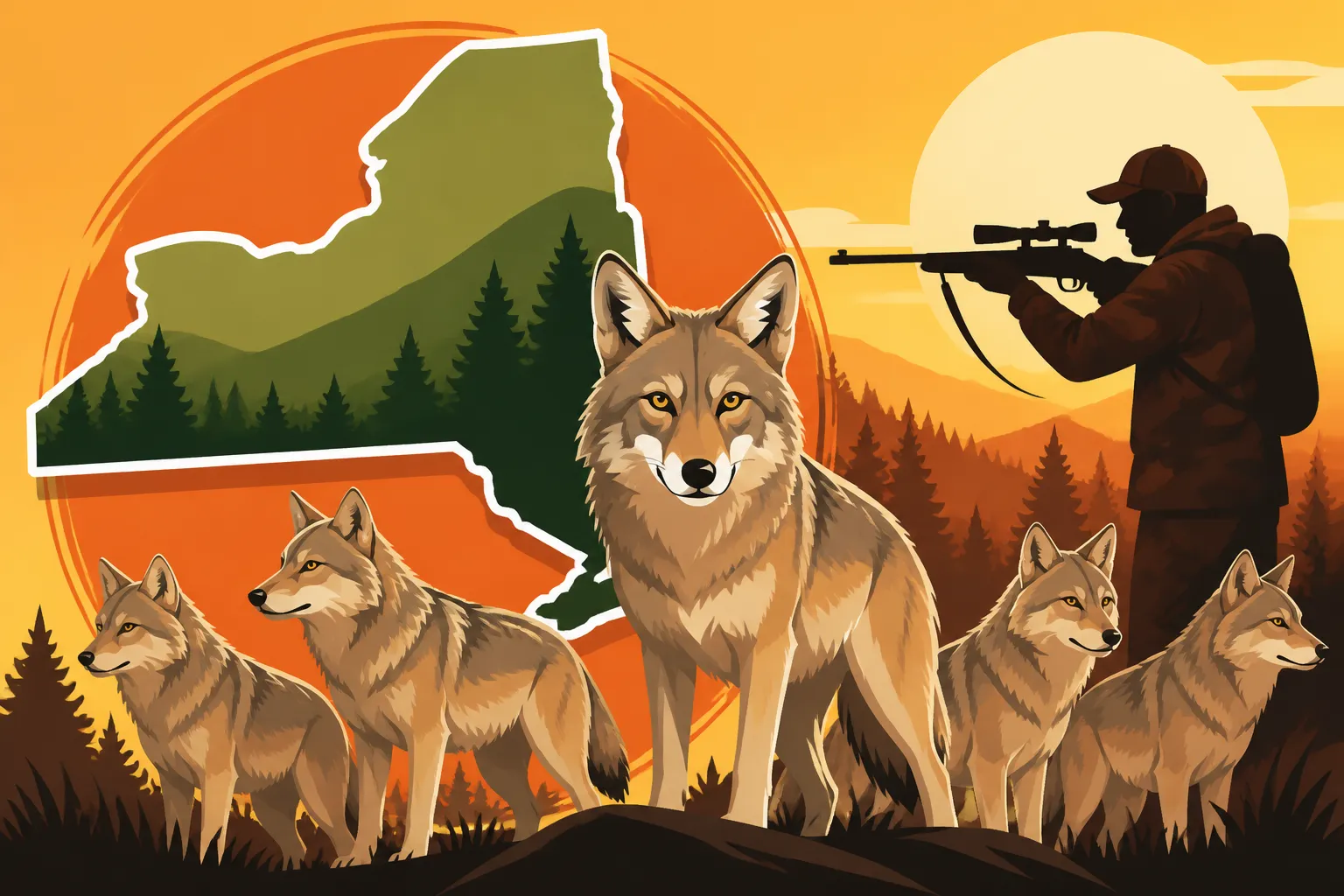
How Many Coyotes New York Has
It’s a question many of us New York hunters and outdoors enthusiasts ponder when we hear that distant howl or catch a glimpse of a shadowy figure slipping through the timber: just how many coyotes are out there? It often feels like they're everywhere, a constant presence, yet getting a firm number on these incredibly adaptable canids is notoriously difficult. This guide will delve into the complexities of estimating New York’s coyote population, exploring why they’re so challenging to count, how they've thrived across the state, and what factors truly influence their numbers.
The Elusive Nature of New York's Coyote Population: Why Counting is a Challenge
Trying to put an exact number on New York's coyote population is a bit like trying to count individual snowflakes in a blizzard—it's an admirable goal, but the sheer scale, constant movement, and secretive nature of the subjects make it incredibly difficult. Unlike deer, which tend to congregate and are more visible, especially in agricultural areas, coyotes are masters of stealth and evasion, making traditional census methods largely ineffective. This elusiveness is a key part of their survival strategy and why, despite their widespread presence, a definitive statewide count remains a statistical puzzle rather than a precise figure.
One of the primary hurdles in population estimation is their wide-ranging behavior. A single coyote might cover many square miles in a day, especially during the breeding season or when food is scarce. This constant movement means that if you're trying to count them visually or through track surveys, you might be counting the same animal multiple times, or entirely missing others that are just over the next ridge. Their nocturnal habits also play a huge role; much of their activity happens under the cover of darkness, when humans are least likely to observe them. They're not exactly keen on posing for trail cameras during daylight hours in high-traffic areas, preferring the quiet solitude of night.
Moreover, coyotes are incredibly intelligent and wary of human activity. They quickly learn to avoid areas with heavy hunting pressure or frequent human disturbance. This means that methods like live trapping and tagging, while effective for some species, are often labor-intensive and yield lower success rates with coyotes. They can detect traps, avoid baits, and generally possess a cunning that makes direct capture challenging for researchers. Even advanced techniques like genetic sampling from scat or hair require extensive fieldwork across vast, often rugged terrain, making comprehensive data collection a monumental undertaking.
Why Direct Counting Isn't Feasible
Imagine trying to count every squirrel in your neighborhood park. Now imagine that park is all of New York State, and the squirrels are far more cunning and active at night. That's essentially the challenge with coyotes. They don't form large, easily observed herds like deer in open fields, nor do they stay in a specific den for extended periods like a bear. Their social structure, while family-based, often involves dispersing young and transient individuals, further complicating any efforts to establish fixed territories for counting.
Think about the sheer diversity of New York's landscapes, from the dense Adirondack forests and steep Catskill ridges to the rolling farmlands of the Southern Tier and the suburban fringes of Long Island. Each habitat presents unique challenges for observation. In thick conifer stands, you might walk within feet of a coyote without ever knowing it. In more open country, they might spot you from a quarter-mile away and be gone before you even raise your binoculars. This geographical spread and habitat variation mean no single counting methodology can be universally applied with high accuracy across the entire state.
Another factor is their adaptability. Coyotes are omnivores and opportunistic hunters, capable of thriving on a diet ranging from mice and voles to deer fawns and even garden vegetables or discarded human food. This means their presence isn't solely tied to one particular food source that could be monitored, unlike, say, a species reliant on a specific type of mast crop. This flexibility in diet allows them to exist in almost any environment where food and cover are present, further dispersing their population and making localized counts difficult to extrapolate statewide.
The Role of Indirect Evidence in Population Estimates
Given the difficulties of direct counting, wildlife biologists and management agencies, including New York's Department of Environmental Conservation (DEC), rely heavily on indirect indicators to estimate coyote populations. These indicators provide valuable insights into trends, distribution, and general abundance, even if they don't produce an exact number. It's like a detective piecing together clues to understand a situation rather than witnessing it directly.
One of the most significant pieces of indirect evidence comes from hunter harvest data. When hunters report their take, it provides a snapshot of where coyotes are being harvested and in what numbers. While harvest numbers don't equate directly to population size, consistent reporting over years allows biologists to identify trends, such as increases or decreases in certain regions. For instance, if harvest numbers are consistently high in a particular Wildlife Management Unit (WMU), it suggests a healthy, robust population in that area.
Other forms of indirect evidence include roadkill data, reports from farmers or landowners experiencing depredation, and systematic surveys for tracks and scat. While these sources also have their limitations—roadkill numbers, for example, might reflect traffic volume as much as coyote density—when combined and analyzed over time, they paint a clearer picture. Wildlife cameras, set up by both researchers and recreational users, also contribute to this body of evidence by providing presence/absence data and sometimes insights into group size and activity patterns. These collective pieces of the puzzle allow the DEC to make informed management decisions, even without a precise statewide tally of How Many Coyotes New York Has.
The Eastern Coyote's Rise: A Look at Their Success in New York
The story of the eastern coyote in New York is one of incredible ecological success and adaptation. These aren't the smaller, more desert-dwelling coyotes of the American West; rather, they are larger, often carrying some wolf genetics from historical interbreeding as they migrated eastward. This genetic mixing, combined with their inherent adaptability, has allowed them to thrive in a wide array of habitats, from the wildest corners of the Adirondacks to the semi-rural suburbs, making them a fixture of the New York landscape.
Their expansion into New York is a relatively recent phenomenon in the grand scheme of things. Originally, coyotes were largely a western species. As wolves were extirpated from much of the eastern United States, coyotes began to fill that ecological niche, moving eastward through Canada and then down into New England and New York starting in the mid-20th century. This wasn't a rapid invasion but a gradual colonization, with individuals moving into unoccupied territories, establishing new populations, and slowly expanding their range. Their ability to survive and reproduce in diverse environments, coupled with their opportunistic diet, paved the way for their current widespread distribution.
Today, you'd be hard-pressed to find a county in New York where coyotes aren't present. They've demonstrated a remarkable capacity to adapt to environments that many other wild canids would struggle in. This includes areas with significant human development, where they learn to coexist, often unseen, right alongside us. Their success is a testament to their intelligence and resilience, characteristics that have enabled them to not only survive but truly flourish in a state with varied landscapes and human pressures. For a deeper dive into their genetic makeup, you might find Are New York Coyotes Part Wolf? insightful.
Eastern Coyotes Across New York State
From the rugged peaks of the Adirondacks to the agricultural plains of the Lake Plains, coyotes have established themselves as apex predators across New York. Their distribution is comprehensive, though densities might vary. In the vast, remote wilderness areas, they fulfill a crucial role in the ecosystem, much like the wolves they replaced. Here, they primarily prey on deer, small mammals, and carrion, regulating populations and contributing to the health of the ecosystem. Hunting in these areas often requires different tactics than in more populated zones, perhaps focusing on Coyote Calling in a New York Winter.
Moving into the Catskill Mountains and the Southern Tier, coyotes are equally prevalent. These regions offer a mix of dense forest, open woodlands, and fragmented farmlands, providing abundant cover and diverse food sources. Here, they might frequently interact with deer populations, especially during fawn season, and are a common sight or sound for hunters pursuing other game. It's in these mixed-use landscapes where their adaptability truly shines, as they navigate between wild spaces and areas influenced by human activity.
Even in more suburban and semi-rural areas, coyotes have learned to carve out a living. They're often seen around the edges of towns, in greenbelts, and even within larger parks. While encounters are less common than in truly wild areas, they occur, and residents might hear their distinctive yips and howls, especially at night. Their ability to persist in these human-dominated landscapes is a key reason why their numbers are so difficult to pinpoint but are generally understood to be robust statewide. Coyotes Across New York State gives a good overview of their reach.
How They Compare to Other Predator Populations
When considering New York's other large predators, the coyote stands out for its widespread distribution and adaptability. Black bears, while present in significant numbers, tend to be concentrated in the larger forested regions like the Adirondacks, Catskills, and parts of the Allegheny Plateau. Bobcats, another native predator, are also found across the state but are generally more elusive and have lower population densities than coyotes.
Coyotes have a distinct advantage due to their reproductive rate and diet flexibility. They can breed at a relatively young age and produce larger litters than many other predators, especially when food resources are abundant. This high reproductive capacity allows populations to rebound quickly even after significant mortality events, whether from hunting, trapping, or disease. This resilience is a critical factor in their enduring success and makes them a stable, permanent part of New York's ecological fabric. Understanding their numbers is important for managing other species, as their New York Predator Impact on Fawn Recruitment can be significant.
Factors Shaping Coyote Numbers and Distribution in New York
Coyote populations, like any wildlife species, are not static. They ebb and flow based on a complex interplay of environmental factors, food availability, disease, and human interaction. While they are incredibly resilient, understanding these dynamics helps explain why their numbers might seem to fluctuate in different areas and why complete eradication is both impractical and ecologically undesirable. These factors contribute to their overall distribution, often creating higher concentrations in some regions and sparser populations in others, largely dictated by the suitability of the habitat.
One of the most significant drivers of coyote populations is the availability of food. They are opportunistic predators, meaning they will eat whatever is most accessible and nutritious. This includes a wide variety of small mammals like rabbits, mice, and voles, which form a substantial part of their diet. When these small prey populations are booming, coyotes have an easier time raising larger litters, leading to an increase in their numbers. Conversely, a crash in small game populations can lead to increased competition and lower reproductive success. They are also known to prey on deer, especially fawns in the spring and weakened adult deer during harsh winters.
Habitat suitability also plays a crucial role. While coyotes can live almost anywhere, they thrive in areas that offer a mosaic of cover, water, and diverse food sources. This often means regions with mixed forests, brushy areas, and agricultural fields. These environments provide excellent denning sites, ample hunting grounds, and protection from human disturbance. Dense, unbroken tracts of mature forest might support fewer coyotes per square mile than a more fragmented landscape with varied edge habitats. Public hunting lands across the state, such as those discussed in Public Hunting Land in New York, often provide this ideal mixed habitat.
The Influence of Prey Availability
Deer, while not their primary food source year-round, are a significant component of the coyote diet, particularly during certain times of the year. During the spring fawning season, coyote predation on young deer can be substantial, and deer populations can certainly influence local coyote densities. A robust deer herd often means more fawns, providing an abundant, albeit seasonal, food source that can support higher numbers of coyotes. This is a natural ecological interaction, helping to keep deer populations healthy by culling weaker individuals.
Beyond deer, the abundance of rodents and rabbits is perhaps even more critical. Coyotes are incredibly efficient at hunting small game, and these species provide a consistent, year-round food supply. Agricultural fields, brushy hedgerows, and overgrown areas are teeming with voles, mice, and cottontails, essentially serving as coyote buffets. Changes in agricultural practices, land use, or even weather patterns that affect these small mammal populations can have a ripple effect on coyote numbers. For example, a mild winter followed by a good growing season for crops often means a boom in rodent populations, which in turn can lead to higher coyote survival rates and reproductive success.
When natural food sources become scarce, coyotes, being the adaptable creatures they are, will seek out alternative options. This can sometimes lead to increased depredation on livestock or pets, particularly in areas where wild prey is less available, or where human development encroaches on their habitat. It's a natural consequence of their survival instincts and a clear indicator of the delicate balance between wildlife and human activity.
The Impact of Disease and Human Interaction
Disease can play a significant, though often unseen, role in regulating coyote populations. Mange, a parasitic skin disease, is one of the most common ailments affecting coyotes. While usually not fatal in healthy individuals, severe cases can weaken animals, making them more susceptible to other diseases, predation, or harsh weather conditions. Rabies, though less common in wild canids today thanks to vaccination efforts in some areas, can also cause localized mortality events. Mange in New York Coyotes and Foxes is a good example of a disease that can impact local numbers. These diseases naturally thin the ranks, preventing overpopulation and ensuring the long-term health of the species.
Human interaction, particularly hunting and trapping, is another significant factor. New York has a long and open season for coyotes, reflecting their robust population and status as a nuisance animal in many areas. While hunting and trapping are unlikely to significantly reduce statewide populations due to their high reproductive rates, they can certainly influence local densities and behavior. In areas with intense hunting pressure, coyotes may become even more nocturnal and wary, making them harder to observe and hunt. Hunters targeting coyotes might use various methods, from calling to still-hunting, as explored in Coyote Hunting Season Rules and Coyote Calling in a New York Winter.
Another aspect of human interaction is habitat modification. Urban sprawl, increased road networks, and development can fragment habitats, forcing coyotes into closer proximity with human settlements. While some adapt, others might be displaced or fall victim to vehicle collisions. Conversely, agricultural practices can sometimes create ideal habitat by providing abundant food sources and cover, showcasing the dual nature of human impact on their populations.
How New York Monitors and Manages its Coyote Population
Given the challenges in direct counting, New York's Department of Environmental Conservation (DEC) employs a multi-faceted approach to monitor and manage its coyote population. This strategy combines biological surveys, hunter and trapper harvest data, and public input to understand trends and inform management decisions. The goal isn't necessarily to count every individual, but rather to understand the health, distribution, and stability of the population across the state and to address any conflicts that arise.
One of the most valuable tools for monitoring coyote populations comes directly from hunters and trappers. Harvest reporting provides critical data points on the number of coyotes taken, their sex, and the general location of the harvest. Over time, this data allows the DEC to track changes in population trends. For instance, if harvest numbers are consistently increasing in certain WMUs, it suggests a growing or stable population. Conversely, a sustained decline might prompt further investigation into potential issues affecting the local population. This cooperative effort from the hunting community is indispensable for wildlife management.
The DEC also conducts various biological studies and surveys. This might include analyzing coyote carcasses submitted by hunters for age, reproductive status, and health indicators. Researchers might also use track surveys in snow, listen for howling surveys, or deploy trail cameras in specific study areas to gather data on presence, absence, and relative abundance. These scientific efforts provide a deeper understanding of coyote ecology and population dynamics, complementing the broader harvest data. Keeping track of diseases like New York Wildlife Disease Monitoring also plays a role in understanding population health.
Utilizing Hunter Harvest Data and Public Reports
Hunter and trapper harvest reports are the backbone of New York's coyote population monitoring. Each animal taken and reported contributes a data point that, when aggregated, forms a comprehensive picture of coyote distribution and relative abundance. This voluntary reporting system hinges on the active participation of the hunting community, underscoring the vital role hunters play in wildlife conservation and management. It provides a wide geographic spread of data that would be impossible to collect through dedicated scientific efforts alone.
Beyond simply counting numbers, the DEC also gathers information on the age and sex of harvested coyotes where possible. This demographic data is crucial for assessing the health and reproductive potential of the population. For example, a high proportion of young coyotes in the harvest might indicate a healthy, expanding population with good recruitment, while an unusually high number of older animals might suggest lower reproductive success in recent years. This level of detail helps biologists understand the underlying dynamics of the population, not just its size.
Public reports of coyote sightings, conflicts with pets or livestock, and roadkill incidents also contribute to the DEC's understanding. While anecdotal, a pattern of increasing reports in a specific area can flag potential hotspots of coyote activity or indicate an increasing presence in human-dominated landscapes. These reports often trigger further investigation or public outreach efforts. When using tools like GoHunt to scout new areas or analyze game activity, hunters can often cross-reference their personal observations with broader trends reported by the DEC, gaining a more complete picture of local coyote presence.
Coyote Management Strategies in New York
New York's approach to coyote management is primarily geared towards allowing the species to maintain a healthy population while addressing specific conflicts that arise. Unlike some species that might require intensive population enhancement programs, coyotes in New York generally thrive on their own due to their adaptability and high reproductive rate. Therefore, management often focuses on mitigating human-coyote conflicts and using regulated hunting and trapping as population management tools.
Hunting and trapping seasons are set with the understanding that these activities, while providing recreation, also help manage coyote numbers, particularly in areas where they might impact deer or livestock populations. Night Hunting Rules for New York Coyotes and other season details provide opportunities for hunters to pursue coyotes. The long seasons and liberal bag limits reflect the robust nature of the population and the recognition that coyotes play an important ecological role but can also pose challenges for landowners and agricultural producers. The DEC encourages responsible hunting and trapping practices to maintain a sustainable balance.
Education and public outreach are also key components of coyote management. This includes advising landowners on best practices to deter coyotes from residential areas, such as securing garbage, supervising pets, and removing attractants. By empowering residents with knowledge, the DEC aims to reduce conflicts and promote coexistence. Ultimately, New York's coyote management strategy is a dynamic process, continually adjusting to population trends, ecological factors, and societal needs, all with the goal of fostering a healthy and stable ecosystem where both coyotes and humans can thrive.
Coyote Population Trends and Outlook in New York
New York's coyote population is generally considered stable and widespread, with no indications of a statewide decline. In fact, their range has expanded significantly over the past half-century, and they are now firmly established in every county across the state. While precise numbers remain elusive for the reasons discussed, the general consensus among wildlife biologists is that coyotes are thriving, demonstrating remarkable adaptability to both wild and human-dominated landscapes.
Harvest data, consistently collected over many years, continues to show robust numbers of coyotes taken by hunters and trappers annually. This sustained harvest, without any noticeable impact on the overall population, is a strong indicator of a healthy and resilient species. Even localized increases in hunting or trapping pressure typically do not lead to long-term population declines, as coyotes are quick to reproduce and disperse into available territories. This ecological resilience means that New York will continue to have a significant and widely distributed coyote population for the foreseeable future.
The future outlook for coyotes in New York remains positive for the species. Their ability to exploit diverse food sources, adapt to various habitats, and quickly reproduce ensures their continued presence. They will continue to be a vital component of New York's ecosystems, playing their role as opportunistic predators and helping to maintain the balance of other wildlife species, including deer. For hunters, this means continued opportunities to pursue these challenging and intelligent animals, whether for sport, fur, or predator control.
Regional Variations in Coyote Density
While coyotes are found statewide, their densities can vary significantly from one region to another. Generally, you might find higher concentrations in areas that offer a rich mosaic of mixed forests, brush, and agricultural lands—places where diverse food sources and ample cover are readily available. The Southern Tier, with its mix of rolling hills, farms, and woodlands, often reports robust coyote activity. Similarly, parts of the Finger Lakes region and Western New York, with their blend of agricultural fields and natural cover, provide ideal habitat.
Conversely, the deepest, most unbroken tracts of the Adirondack Wilderness Area, while certainly home to coyotes, might support slightly lower densities per square mile compared to more fragmented landscapes. The prey base in such vast, often harsher, environments can be more scattered, and the sheer scale of the wilderness can lead to more dispersed coyote territories. Even within these variations, coyotes remain a constant presence, adapting their behavior and home ranges to the specific conditions of their environment. Understanding these regional nuances is important for anyone using tools like GoHunt to scout specific areas for coyote activity.
Urban and suburban edges also present unique density patterns. While coyotes learn to be incredibly stealthy in these areas, often going unnoticed by residents, localized populations can become quite stable if food sources (like rodents, small pets, or discarded food) are consistently available and undisturbed denning sites exist. These "urban coyotes" demonstrate the extreme end of their adaptability, learning to navigate human landscapes with remarkable success.
The Ecosystem Role of Coyotes in New York
Coyotes play a crucial and often underappreciated role in New York's ecosystems. As adaptable predators, they are instrumental in maintaining the health and balance of various prey species. They act as natural regulators, particularly for populations of small mammals like rodents and rabbits, preventing these species from overpopulating and potentially impacting agricultural crops or forest regeneration. Their predation on deer, especially fawns, also contributes to the overall health of the deer herd by culling sick, weak, or genetically inferior individuals, leaving stronger animals to reproduce.
In the absence of larger predators like wolves, coyotes effectively fill a vital ecological niche. They help to keep ecosystems dynamic and resilient, ensuring that no single prey species dominates to the detriment of others. This role is particularly important in a state like New York, where human activity has altered many natural processes. The presence of a healthy coyote population is a sign of a robust and functioning ecosystem, capable of supporting a diverse array of wildlife.
For hunters, coyotes also present an ethical and often exciting challenge. Managing predator populations through regulated hunting can be a part of broader wildlife management goals, especially where there are concerns about predation on vulnerable game species or livestock. However, it's important to remember that coyotes are part of the natural landscape, and their presence is a testament to their incredible ability to thrive in a changing world.
| Factor | Impact on Coyote Population | Notes |
|---|---|---|
| Prey Availability | High correlation | Abundant small mammals (rodents, rabbits) and deer fawns boost numbers. |
| Habitat Quality | Moderate to High | Mix of forest, brush, and fields provides best cover/food. |
| Human Development | Variable | Can displace, but coyotes adapt to suburban edges and food sources. |
| Hunting/Trapping | Localized impact | Can reduce local numbers, but statewide population is resilient. |
| Disease (e.g., Mange) | Localized impact | Can cause temporary declines in affected areas. |
| Competition (e.g., Fox) | Low | Coyotes typically dominate fox populations. |
| Weather | Low to Moderate | Severe winters can impact pup survival; mild winters aid survival. |
Disclaimer
This article is for general informational purposes only and does not constitute professional advice. Laws, prices and regulations vary by location and change over time. Consult a qualified professional for guidance on your specific situation.