Aging Venison in Cold Weather
The crisp, cold air of a late New York deer season can be a blessing and a curse. You've put in the work, braved the biting wind, and finally tagged a magnificent whitetail. Now, the real work begins. While your buddies might be rushing to the butcher, you're eyeing that natural refrigeration with a knowing glance. Learning how to properly age your venison in the cold weather isn't just a tradition; it's a game-changer for flavor and tenderness, and it's something every New York hunter can master. This guide will walk you through the ins and outs of letting nature do some of the work, transforming your hard-earned deer into truly exceptional table fare.
The Magic Behind Aging Venison
Let's be honest, we've all had venison that was a little tough, or lacked that deep, rich flavor we crave. Often, the culprit isn't the deer itself or even the cooking, but how the meat was handled right after the harvest. This is where aging comes in, and it's truly a magical process that happens naturally when conditions are right. It’s not about letting the meat go bad; it’s a controlled tenderization that enhances both texture and taste.
When a deer is harvested, its muscles are full of energy stores. As these stores deplete, the muscles stiffen, a process known as rigor mortis. If you process and freeze the meat immediately during this stage, you're essentially locking in that toughness. Aging, however, gives the meat a chance to relax. Over several days, natural enzymes present in the muscle tissue begin to break down complex proteins, particularly collagen, which is the connective tissue that makes meat tough. Think of it like a natural marinade working from the inside out. This enzymatic breakdown is the secret to getting fork-tender cuts.
Beyond tenderness, aging also develops a more profound, concentrated flavor. As moisture slowly evaporates from the surface, the natural venison flavors become more intense and complex. This isn't just about gamey taste; it's about a richer, more nuanced profile that elevates every dish you prepare. Whether you're planning venison steaks, roasts, or even ground meat, proper aging contributes significantly to the overall culinary experience. It's an investment of a few days that pays huge dividends at the dinner table, making all that effort in the field truly worthwhile.
Identifying Optimal Cold Weather Aging Conditions
Successfully aging venison hinges almost entirely on creating and maintaining the right environmental conditions, especially when using the unpredictable New York autumn and winter weather to your advantage. You're essentially running a natural walk-in cooler, and just like any good appliance, it needs to be regulated. The goal is to keep the meat cool enough to prevent spoilage, but not so cold that it freezes solid, stopping the enzymatic action.
The ideal temperature range for aging venison is generally between 34°F and 40°F (about 1°C to 4°C). Temperatures consistently above 40°F invite bacterial growth and spoilage, especially if you haven't done a meticulous job field dressing. Below 32°F, the meat will freeze, halting the beneficial aging process entirely. While a brief dip below freezing overnight won't ruin everything, prolonged freezing means you're no longer aging; you're simply storing frozen meat. Many New York hunters cherish those crisp fall days and early winter snaps that offer this perfect window. If you're out Hunting the Southern Zone Holiday Hunt or employing Muzzleloader Tactics in December Cold, you're often in a prime position to utilize natural cold for aging. Before heading out on a late-season hunt, many of us will even check resources like GoHunt to get a feel for the upcoming weather patterns, which can help determine if aging outdoors is a viable plan.
Beyond temperature, good air circulation and appropriate humidity are also critical. You want enough airflow to prevent moisture buildup on the meat's surface, which can encourage mold or bacterial growth. However, too much dry air can lead to excessive dehydration and a thick, leathery crust, resulting in more trim loss. A relative humidity of 70-80% is often considered ideal, but this can be hard to precisely control in an outdoor setting. The key is balance: a gentle breeze is good, but a strong, dry wind will accelerate drying too much. Lastly, absolute cleanliness and protection from pests are non-negotiable. Any flies, rodents, or scavengers will quickly ruin your efforts. You need a secure, screened-in area to keep unwanted visitors away from your prize.
Here's a quick reference for understanding cold weather aging conditions:
| Factor | Ideal Aging Condition | Risk of Poor Conditions |
|---|---|---|
| Temperature | 34°F – 40°F (1°C – 4°C) | Above 40°F: Rapid spoilage, bacterial growth |
| Below 32°F: Freezing, halts enzymatic tenderization | ||
| Airflow | Gentle, consistent circulation | Stagnant air: Moisture buildup, mold, souring |
| Excessive wind: Rapid dehydration, leathery crust | ||
| Humidity | Moderate (approx. 70-80% relative humidity) | High humidity: Slimy surface, bacterial growth, mold |
| Low humidity: Excessive trim loss due to drying | ||
| Cleanliness | Spotless environment, protected from pests | Pests (flies, rodents): Contamination, spoilage |
| Dirty surfaces: Bacterial transfer, off-flavors | ||
| Protection | Screened, secure from insects/scavengers | Exposure: Insect infestation, animal interference |
Practical Methods for Aging Venison Outdoors
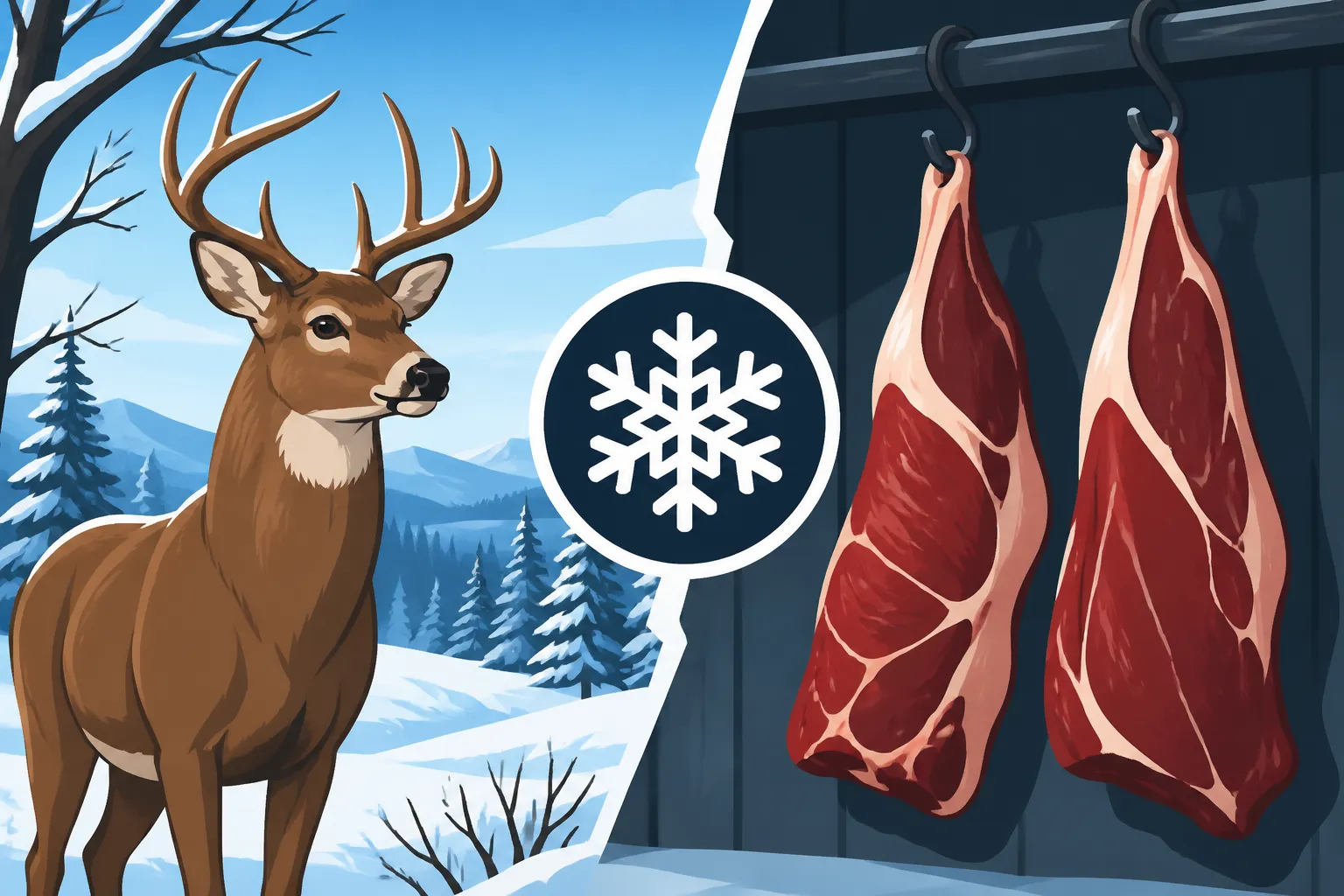
Once you've field-dressed your deer thoroughly and are confident in the cold weather conditions, the next step is to get your deer hung and protected. This is where your garage, shed, or even a sturdy tree can become your temporary butcher shop. Remember, the goal is to keep the carcass clean, cool, and well-ventilated for the duration of the aging process.
A clean, unheated garage or shed is often the best option for New York hunters. You want a space where you can hang the deer by its hind legs, allowing for good air circulation around the entire carcass. Ensure the area is free from strong odors (like gasoline or chemicals) that could be absorbed by the meat. Before hanging, give the area a good cleaning. If you're hanging multiple deer or doing a Deer Drive With Three or Four Hunters, space is key. Once hung, cover the deer with a clean game bag or cheesecloth. This acts as a barrier against flies and other insects while still allowing air to circulate and moisture to escape. It's a critical step, even in cold weather, as a single fly can quickly ruin your efforts. Keep an eye on the forecast using tools like GoHunt or your local weather app; a sudden warm spell could force you to adjust your plans.
For those adventurous enough to be out on public land for extended periods, perhaps scouting Late-Season Food Sources for New York Whitetails, you might consider a temporary setup. In truly remote, consistently cold areas, some hunters will hang a deer from a sturdy tree branch, particularly in forested areas with good natural airflow. However, this method requires constant vigilance against scavengers like coyotes or bears, and it's much harder to maintain a consistently clean environment. For most, a secure structure is paramount. The duration of aging will depend on several factors: the temperature, the age of the deer, and personal preference. Younger deer with less connective tissue might only need 3-5 days, while an older, larger buck could benefit from 7-10 days, or even up to 14 days if temperatures are consistently ideal. Regularly check the meat's surface for any signs of spoilage, which we'll discuss in the next section. When you're ready to proceed, having a plan for Butchering a Deer at Camp or at home is the next crucial step.
Knowing When Your Venison is Perfectly Aged
After days of patiently watching the thermometer and checking on your hanging deer, the moment of truth arrives: how do you know it's ready for the knife? There's a fine line between perfectly aged and spoiled, and understanding the visual, tactile, and olfactory cues is essential for turning your successful hunt into delicious meals. This insight is what separates truly tender venison from tough, uninspiring cuts.
The most noticeable change in properly aged venison will be its appearance. The exterior of the meat will develop a darker, almost purplish-brown hue. This is completely normal and a sign of oxidation, not spoilage. You might also notice a thin, dry crust forming on the surface. This "bark" is protective and will be trimmed away during butchering, but its presence indicates proper moisture loss and air circulation. The texture of this surface crust should feel dry and somewhat firm to the touch, not slimy or wet. If you see any green or fuzzy mold, or if the surface feels unusually slick, that's a red flag and indicates potential spoilage. When you're learning the ropes of New York Deer Camp Traditions, these visual checks are often passed down from seasoned hunters to new recruits.
Perhaps the most important indicator is smell. Properly aged venison should have a clean, slightly earthy, and faintly gamey aroma – a deep, rich scent that makes you anticipate the meal. It should never, ever smell sour, putrid, ammonia-like, or overly strong in an unpleasant way. Trust your nose; if something smells off, it probably is. This is a critical point of judgment that can prevent a lot of heartache (and stomachache!). Once you've confirmed that your deer is perfectly aged and the exterior is dark and dry, it's time to take it down and get to work. The meat should feel more pliable and less rigid than immediately after the kill. From here, you can proceed with breaking down the carcass, knowing that your efforts in cold-weather aging have set you up for optimal flavor and tenderness, maximizing your Deer Meat Yield From a New York Buck. You can then move onto methods like Freezing and Shipping Game Meat for long-term storage, ensuring every piece is ready for the table.
Disclaimer
This article is for general informational purposes only and does not constitute professional advice. Laws, prices and regulations vary by location and change over time. Consult a qualified professional for guidance on your specific situation.