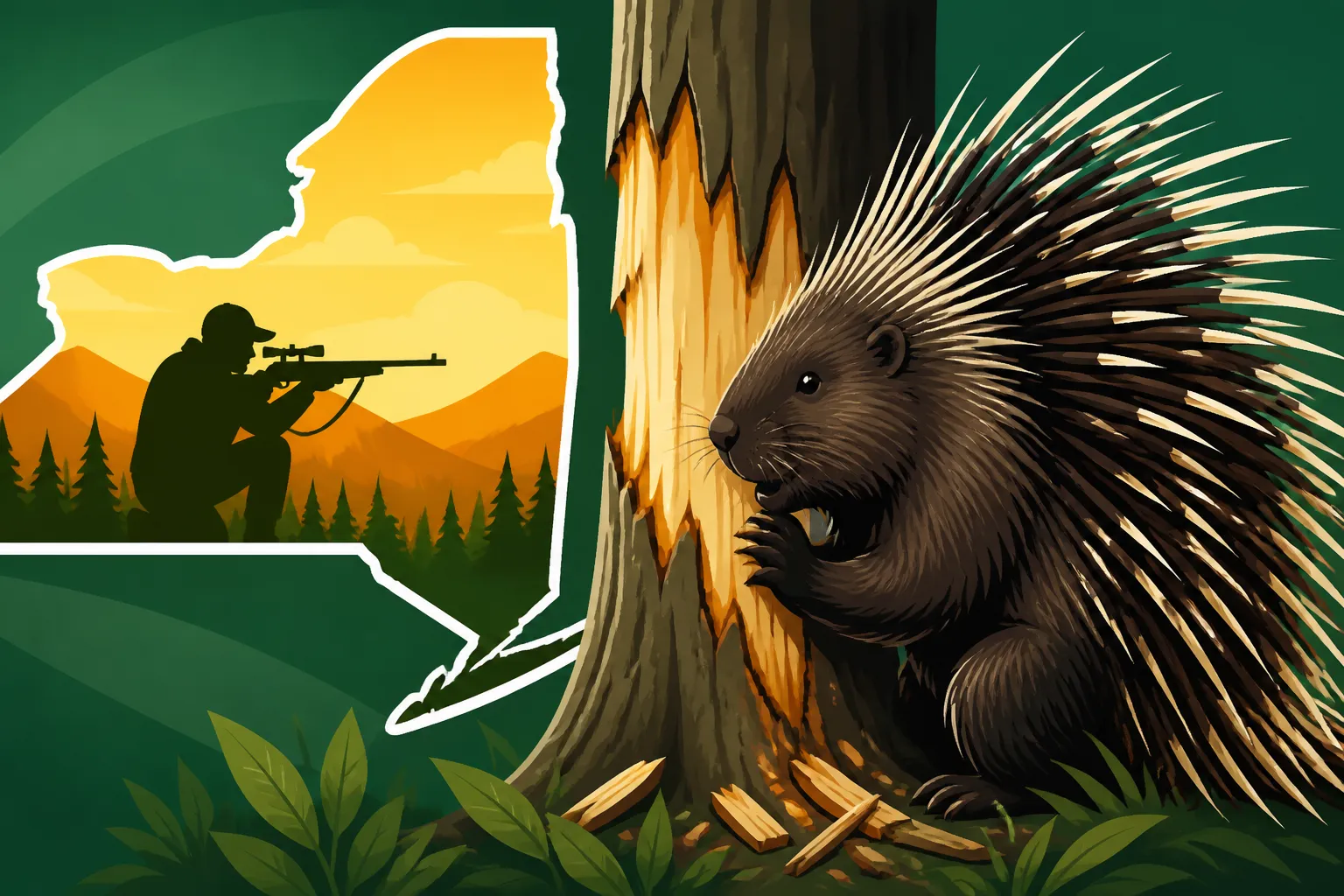
Porcupines and New York Timber Damage
It’s a sight no New York woodsman wants to see: perfectly good timber, gnawed and scarred, sometimes even girdled, by what seems like an invisible culprit. This guide is here to shed light on the elusive porcupine, a quilled resident of our forests whose dining habits can unfortunately lead to significant timber damage, offering you real-world strategies to understand, identify, and manage this issue, whether you’re a hunter, landowner, or simply someone who cares about the health of our woodlands.
The Peculiar Palate of the Porcupine: Why New York's Quilled Rodents Damage Trees
Porcupines are fascinating creatures, easily recognized by their bristly coats of quills. While often seen as harmless, or even a bit comical, these herbivores can inflict real damage on trees, particularly when other food sources are scarce. Understanding why they turn to timber is the first step in addressing the problem.
The Winter Dilemma: Why Bark Becomes a Feast
Imagine trying to find a decent meal when everything is covered in a foot of snow, or locked away in icy ground. That’s the reality for a porcupine in a New York winter. Their primary diet usually consists of green vegetation, fruits, and buds, but when these are unavailable, tree bark and the cambium layer beneath become a crucial, often life-saving, food source. This inner bark is packed with carbohydrates and other nutrients that help them survive the lean months. It's not a preference, but a necessity born of hunger and survival instinct. They're just trying to make it through, much like deer pawing for acorns under the snow.
This winter necessity explains why damage often seems to appear suddenly when the snow melts. They've been up in those trees, quietly munching away, while we're bundled up indoors or focused on tracking deer in the snow. It’s a survival mechanism that, unfortunately, conflicts directly with a landowner's desire for healthy timber or a hunter's hope for an undisturbed forest. You might also notice them targeting evergreen needles during winter when deciduous leaves are gone, but bark remains their prime fallback.
Preferred Timber: Not All Trees Are Created Equal
Just like we have our favorite foods, porcupines have their preferred tree species. In New York, they tend to favor a variety of softwoods and hardwoods. Hemlocks and pines are often high on their list, especially the tender inner bark of younger, growing trees. However, they aren't picky when hunger strikes, and you'll find evidence of them on maples, birches, and even apple trees in old orchards. They’re looking for trees that offer easy access to that nutritious cambium layer.
They're particularly fond of the upper branches and trunk sections, sometimes going quite high up into the canopy. It's a safer spot for them, away from ground predators, and often offers more tender bark. The location of the damage can tell you a lot about the animal doing it. If you see gnawing high up, it’s a pretty good bet it's a porcupine. It's like finding a deer browse line on saplings – the height and nature of the damage are key identifiers.
Seasonal Impact: When Damage is Most Pronounced
While porcupines can nibble on bark throughout the year, the most significant and noticeable damage almost always occurs during the colder months, roughly from late fall through early spring. This is their "winter foraging" period, driven by the scarcity of other foods. As a hunter or landowner, if you’re out Scouting New York Public Land Before Season in late winter or early spring, that's often when you’ll first spot widespread damage.
During other seasons, their impact tends to be less dramatic, usually limited to smaller areas or individual branches, as they feast on a more varied diet of leaves, buds, and fruits. However, a particularly harsh winter or a locale with limited alternative forage can extend the period of heavy bark consumption. So, while you might find occasional evidence of porcupine activity in the summer, it's the post-snowmelt landscape that truly reveals the extent of their winter work.
Spotting the Signs: Identifying Porcupine Damage in Your New York Woods
Knowing what to look for is half the battle when trying to figure out if porcupines are the culprits or if you have another critter causing mischief. New York’s woods are home to many animals, and several can leave similar-looking marks on trees. Distinguishing porcupine damage is crucial for effective management.
The Distinctive Chew Mark: Porcupine Versus Other Wildlife
Porcupine gnaw marks are quite unique. They typically scrape away the outer bark to get to the tender, nutrient-rich cambium layer beneath, leaving behind broad, shallow tooth marks. These marks are often irregular, with parallel grooves from their incisors. You might see large patches of bark removed, sometimes completely girdling a tree, which can kill it. The gnawing often occurs at varying heights, from the base of the tree all the way up into the canopy, thanks to their climbing abilities.
Compare this to other common tree-damaging animals:
- Deer: Deer usually browse on twigs, buds, and young saplings, leaving jagged tears rather than clean gnaw marks. Reading a Ridge for Catskill Deer Movement might show you evidence of deer browsing. They also might rub antlers on smaller trees, stripping bark in a vertical fashion, but it looks very different from porcupine feeding.
- Rabbits and Hares: These small mammals will gnaw on bark, especially on younger trees and shrubs, but their damage is usually confined to the lower parts of the trunk, typically within a foot or two of the ground, and their tooth marks are smaller and more delicate than a porcupine's.
- Squirrels: Squirrels mostly chew on nuts, cones, and sometimes strip bark for nesting material or to access sap, but their gnawing on the main trunk is typically less extensive and more localized than a porcupine's feeding.
- Beaver: Beaver damage is distinct – they fell entire trees or gnaw around the base in a characteristic conical shape to get to the inner bark or for construction materials. You'll often find this near water sources. For more on these industrious dam-builders, check out New York Beaver Population and Damage.
Here's a quick comparison table:
| Animal | Typical Damage Type | Location on Tree | Mark Characteristics | Severity |
|---|---|---|---|---|
| Porcupine | Bark removal, girdling | Trunk, branches, high | Broad, shallow, parallel grooves | High, can be fatal to tree |
| White-tailed Deer | Twig browsing, antler rubs | Lower branches, saplings | Jagged tears, vertical strips | Moderate |
| Rabbit/Hare | Bark gnawing | Base of trunk (low) | Small, delicate tooth marks | Moderate (young trees) |
| Squirrel | Bark stripping, nut marks | Branches, localized trunk | Scattered, shallower | Low |
| Beaver | Tree felling, girdling | Base of trunk (low) | Conical shape, near water | Very High (fells tree) |
Location, Location, Location: Where to Look for Damage
When you're out in the woods, whether you're hunting in a New York State Forest Hunting block or scouting your own private land, specific locations can be hotspots for porcupine activity. Look for damage on the main trunk, especially high up, but also along larger branches. They're often found in areas with a mix of deciduous and coniferous trees, as this offers a varied diet throughout the year.
Pay close attention to rocky outcrops, old log piles, or dense thickets. These areas provide excellent denning sites where porcupines might take shelter. If you find bark damage concentrated around such a feature, it's a strong indicator that you have porcupines nearby. Also, check around the bases of trees where piles of bark chips might accumulate – a tell-tale sign of recent feeding activity directly above.
Assessing Severity: When to Worry About Tree Health
Minor porcupine damage might not be a huge concern for an otherwise healthy, mature tree. A small patch of bark removed will often heal over time, though it can leave a scar and create an entry point for disease or insects. However, when porcupines girdle a tree – meaning they remove a complete ring of bark around the entire circumference – it spells death for that tree. The cambium layer, which transports water and nutrients, is severed, and the tree will slowly die.
Beyond individual trees, extensive porcupine damage across a stand can impact the overall health and timber value of your woodlot. This is especially true in areas managed for specific timber production. For a hunter, it might mean the loss of valuable cover or food trees that deer and other game rely on. If you're seeing widespread girdling or significant damage to a large number of young, valuable trees, it's definitely time to consider mitigation strategies.
Practical Strategies for Mitigating Porcupine Timber Damage in New York
Dealing with porcupine damage often requires a multi-pronged approach. There’s no single magic bullet, but a combination of methods can help protect your valuable timber and maintain a healthier forest ecosystem.
Physical Barriers and Deterrents: Protecting Individual Trees
If you have a few specific trees you want to protect, like young saplings, fruit trees, or valuable hardwoods, physical barriers are often the most effective.
- Tree Wraps: Commercial tree wraps, made of plastic or paper, can offer a temporary solution for smaller trees, protecting the lower trunk. However, they need to be installed correctly to prevent moisture buildup and removed periodically to allow the bark to breathe.
- Wire Mesh or Hardware Cloth: This is a more durable and long-term solution. Wrap the base of the tree with galvanized wire mesh (¼-inch or ½-inch hardware cloth works well) extending at least 2-3 feet up the trunk and buried a few inches into the ground. Ensure it's loose enough to allow for tree growth. For porcupines, the key is height, as they can climb. If they are reaching higher branches, wrapping just the base might not be enough.
- Repellents: Some commercial repellents are available, typically containing capsaicin or other bitter agents. These can be sprayed or painted on bark. Their effectiveness can vary widely, and they often require frequent reapplication, especially after rain or snow, making them less practical for widespread use or in the harsh New York weather. Always read the labels carefully and ensure they are safe for the trees and other wildlife.
While these methods can save specific trees, they often aren't feasible for an entire woodlot. They are best for high-value trees or small orchards.
Habitat Modification: Making Your Woods Less Appealing
Sometimes, making your property less attractive to porcupines can reduce damage. This involves altering their preferred environment and food sources.
- Remove Den Sites: Porcupines love to den in rock crevices, hollow logs, brush piles, or abandoned buildings. If these are located close to valuable timber, removing or making these sites less accessible can encourage them to move elsewhere. Of course, always be cautious when disturbing potential animal dens.
- Secure Food Sources: If you have an old apple orchard or other fruit trees, cleaning up fallen fruit can reduce one attractant, though this is a less significant factor than bark in winter.
- Promote Natural Predators: New York is home to several predators that will prey on porcupines, most notably fishers, bobcats, and coyotes. Fishers and Martens in New York thrive in many of the same forested areas, and they are particularly adept at dispatching porcupines. Maintaining healthy predator populations can naturally help control porcupine numbers. While you can't "order" predators to your land, avoiding indiscriminate predator control helps maintain a balanced ecosystem. If you're interested in other predators, you can read more about Coyotes Across New York State.
Population Management: Hunting and Trapping as Tools
In cases of severe and persistent damage, especially on private land or within specific management areas, direct population control through hunting or trapping may be considered. Porcupines are classified as small game in New York, and they can be hunted or trapped during specific seasons. Always check the current New York State Department of Environmental Conservation (DEC) regulations for specific seasons, bag limits, and legal methods. Websites like GoHunt or the DEC’s own portal are invaluable for this up-to-date information.
- Hunting: Porcupines are generally slow-moving and not particularly wary, making them relatively easy to harvest. A small-caliber rifle or shotgun is typically sufficient. For specifics on pursuing other animals, you might look into Predator and Furbearer Hunting in New York.
- Trapping: Trapping can be an effective way to remove nuisance porcupines, especially around problem areas like woodlots or orchards. Box traps or foothold traps (where legal and appropriate) can be used. If you're considering this option, be sure you understand New York Trapping Seasons and Tagging and obtain the proper licenses and training. Trapping requires careful attention to regulations and ethical practices to avoid non-target animals. GoHunt often has helpful articles or community forums where experienced trappers share advice on humane and effective methods.
Before embarking on hunting or trapping, assess the scale of the problem. If it’s just one or two trees with minor damage, other deterrents might be a better first step. If significant timber loss is occurring, then population management might be warranted.
Nurturing Your Woodland: Long-Term Forest Health and Porcupine Coexistence
Understanding porcupines within the broader context of your New York woodland helps in developing sustainable, long-term management strategies. They are a native species, and their presence is part of a healthy ecosystem, even if their dining habits can be frustrating.
Understanding Porcupines in the Ecosystem: More Than Just Pests
Porcupines, like all wildlife, play a role in the forest ecosystem. While they cause timber damage, they also contribute to the natural processes of a woodland. They can help thin out less vigorous trees, and their feeding activity can create deadwood, which benefits other wildlife and insect species. Their unique defense mechanism also means they have few natural predators, although fishers are particularly well-adapted to hunting them. New York Small Game and Furbearers provides a broader context for understanding these animals and their place in our state's wild places.
The goal isn't always eradication, which is often impractical and potentially harmful to ecological balance, but rather managing their impact to acceptable levels. Coexistence, where possible, often leads to the most sustainable outcomes for both wildlife and landowners.
Integrated Pest Management: A Holistic Approach
An integrated approach to managing porcupine damage combines several strategies, focusing on prevention, monitoring, and targeted intervention when necessary.
- Monitor Regularly: Keep an eye on your trees, especially after heavy snows. Early detection of damage can lead to quicker and easier intervention. The New York HuntFishNY App can be a great tool for marking locations where you've seen damage or porcupine activity.
- Understand Your Forest: What tree species are most prevalent? Are there natural den sites? Understanding your specific property will inform the most effective strategies.
- Combine Methods: Don't rely on just one technique. Use barriers on high-value trees, make den sites less inviting, and consider population control only if damage is severe and persistent.
- Evaluate Effectiveness: After implementing a strategy, observe if the damage has decreased. Adjust your plan as needed.
Thinking about the long-term health of your entire forest, rather than just reacting to individual instances of damage, is key.
Resources for New York Landowners and Hunters
You don't have to tackle porcupine problems alone. New York has excellent resources available to help landowners and hunters manage wildlife issues and promote forest health.
- New York State Department of Environmental Conservation (DEC): The DEC website is your go-to source for all regulations regarding hunting and trapping porcupines, as well as general wildlife management advice. They have regional offices and staff who can offer guidance on specific situations.
- Cornell Cooperative Extension: This organization provides a wealth of information on forestry, wildlife, and land management. They often host workshops and can provide personalized advice.
- Local Foresters: Consulting with a professional forester can help you develop a long-term forest management plan that considers wildlife impacts, including those from porcupines. They can help assess timber value and suggest strategies to promote overall forest health.
- Hunting and Trapping Communities: Online forums, local clubs, and resources like GoHunt can connect you with experienced individuals who have dealt with similar issues. They often share practical tips and local knowledge that can be incredibly valuable. GoHunt also provides tools and information that can help you understand the broader wildlife picture in your area, which is useful when dealing with any animal population.
By staying informed and using the available resources, New York landowners and hunters can effectively manage porcupine timber damage and foster a healthy, thriving forest for years to come.
Disclaimer
This article is for general informational purposes only and does not constitute professional advice. Laws, prices and regulations vary by location and change over time. Consult a qualified professional for guidance on your specific situation.