Bow Cases for Travel to New York
Traveling to New York for a bowhunting trip, or even just heading to a different region within the state, brings its own set of anxieties. Beyond ensuring your license is in order and your broadheads are razor-sharp, there's the ever-present worry about your precious bow. It’s not just an expensive piece of equipment; it’s an extension of your hard work, practice, and passion. This guide is all about protecting that investment and giving you peace of mind, delving into the critical role a quality bow case plays when traveling to and around New York, and what features truly matter.
Why a Quality Bow Case is Essential for Travel
When you're packing up your truck, SUV, or even contemplating air travel to chase whitetails in the Southern Tier or black bears in the Catskills, your bow needs more than just a soft sleeve. New York, with its diverse terrain and sometimes unpredictable weather, demands a certain level of preparedness. A good bow case isn't merely an accessory; it's a non-negotiable piece of gear that safeguards your hunt from the moment you leave your driveway.
Protecting Your Investment from the Elements and the Road
Think about the journey itself. Your bow could be rattling around in the bed of a pickup truck, subject to bumps, shifts, and the occasional spilled coffee or muddy boot. It might endure sudden stops, sharp turns, or even an unexpected downpour when you're pulling gear out. Without a robust case, limbs can get torqued, sights knocked askew, and strings frayed. A flimsy case offers little defense against these realities. A hard case, in particular, acts as a fortress, absorbing impacts and keeping the internals of your bow pristine. It’s about ensuring that when you arrive at your chosen hunting spot, whether it's a state forest or a private woodlot, your bow is in the exact same condition as when you packed it, ready to perform. The last thing you want is to discover a bent pin in your sight or a scraped cam just as you're setting up for Opening Weekend Tactics in the Southern Zone.
Navigating Regulations and Peace of Mind
Beyond physical protection, a proper bow case helps you adhere to various travel and hunting regulations, especially if you're crossing state lines or flying. While New York state doesn't have specific bow case requirements for transport within the state (beyond general safety, like bows needing to be unstrung or cased for transport on public roads, depending on local ordinances), airlines certainly do. For any air travel, a lockable, hard-sided case is almost always a requirement for firearms and archery equipment. Even if you're driving, a secure, locked case deters theft and gives you immense peace of mind, knowing your equipment is safe during pit stops or when left unattended at a motel. This security lets you focus on the excitement of the hunt, not the worry of your gear. Knowing your equipment is secure also means you can spend more time focusing on scouting with tools like the HuntFishNY app or analyzing aerial photos for good deer movement, rather than constantly checking on your bow.
Types of Bow Cases: Finding Your Perfect Match
Just like there are different bows for different hunting styles, there are various bow cases designed for specific needs. Choosing the right one depends heavily on your travel methods, the level of protection you need, and your budget.
Soft-Sided Cases: Light and Convenient
Soft-sided cases are often the go-to for shorter trips, quick range sessions, or when space is at a premium. They’re typically made of durable Cordura or similar synthetic fabrics, often with some internal padding.
- Pros: They are lightweight, generally more affordable, and offer a bit more flexibility for squeezing into tight spaces, like the back seat of a packed truck. Many come with useful external pockets for arrows, releases, and calls, making them great for grab-and-go scenarios. For local hunters in New York heading to a nearby range or a short drive to a public land access point, these can be perfectly adequate for keeping dust off and minor bumps at bay.
- Cons: Their primary drawback is a lack of rigid protection. They won't stand up to heavy impacts or protect your bow if something heavy falls on it. For serious travel, especially air travel or long drives over rough roads, they simply don't offer enough security or structural integrity. While they might be fine for a quick hop to Hunting Small Woodlots Near Suburban Sprawl, they aren't built for the rigors of a multi-day trip deep into the Adirondack Forest Preserve.
Hard-Sided Cases: The Ultimate Fortress
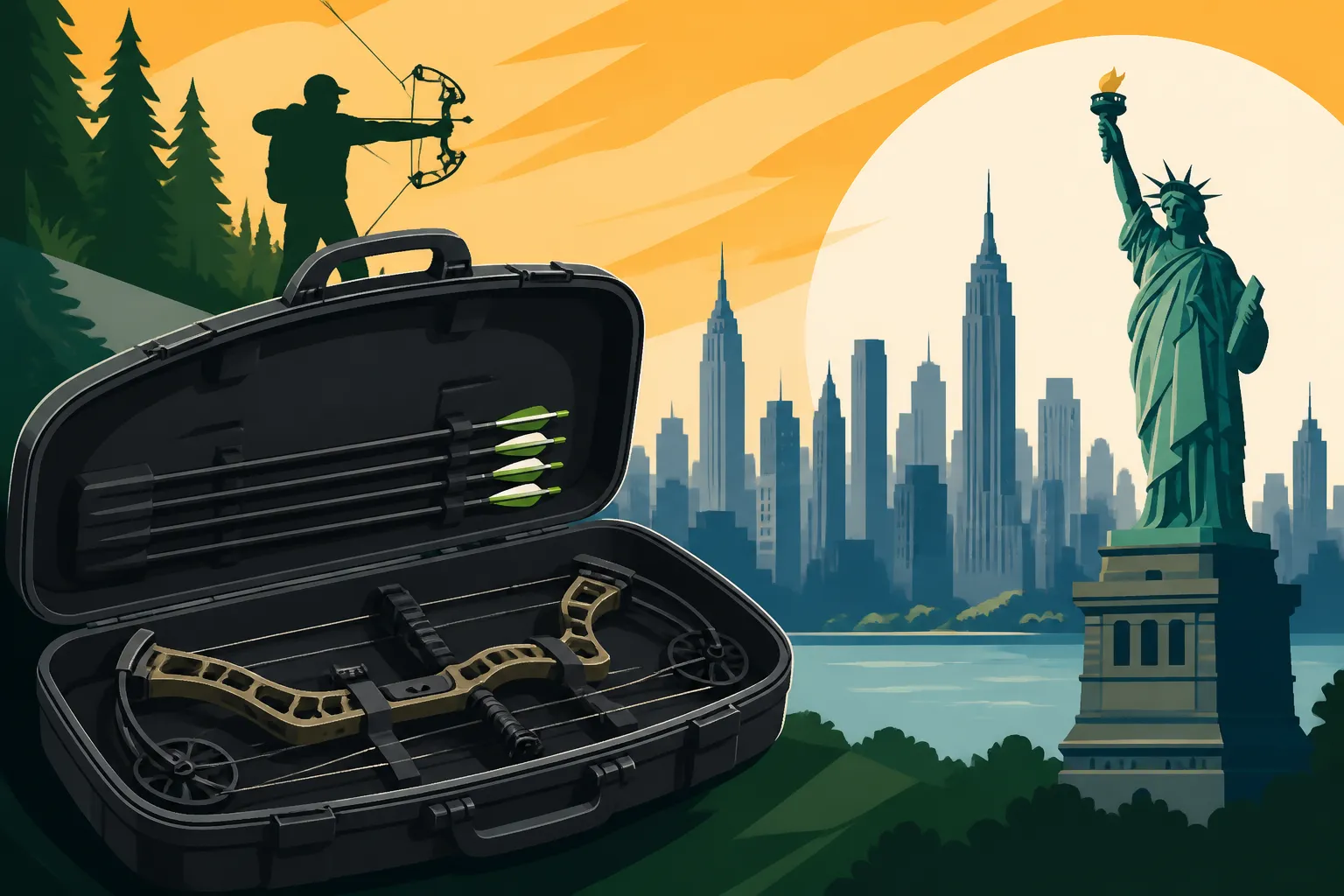
Hard-sided cases are the tanks of the bow case world. Constructed from rugged plastics or composites, they are designed to withstand significant abuse, making them ideal for air travel or any situation where maximum protection is paramount.
- Pros: Unparalleled protection against impact, crushing, and the elements. They often feature dense foam inserts that can be customized to cradle your specific bow model, ensuring no internal movement. Many are waterproof and dustproof, critical features if you're driving through a blizzard to reach a December muzzleloader hunt or if your gear is riding on the roof rack. The ability to lock them securely is a huge plus for security and compliance with travel regulations. Brands like SKB and Pelican are well-regarded for their robust hard cases.
- Cons: They are heavier and bulkier than soft cases, taking up more space and adding to your luggage weight (a consideration if flying). They are also generally more expensive. However, for protecting an investment of hundreds or even thousands of dollars, the cost is often justified. If you're planning a serious multi-day hunt in a remote area, perhaps using tools like GoHunt to map out your routes and potential camping spots, a hard case ensures your bow survives the journey to your chosen hunting grounds unscathed.
Hybrid Cases: A Blend of Both Worlds
Some manufacturers offer hybrid cases that attempt to combine the best features of both soft and hard cases. These might have a semi-rigid frame with soft exterior panels, or a hard shell that’s lighter than traditional hard cases.
- Pros: They offer more protection than a purely soft case, often with more internal rigidity and padding, while being lighter and less cumbersome than a full hard case. They can be a good middle-ground solution for car travel where you want more protection without the bulk of a heavy-duty hard case.
- Cons: They don't offer the same level of crush-proof protection as a dedicated hard case, so they might not be suitable for airline travel unless specifically rated for it. Their effectiveness varies widely by manufacturer.
Key Features to Look for in a Travel Bow Case
Once you've decided on the general type of case, several specific features can make a world of difference in its functionality and your overall travel experience.
Durability and Construction Materials
For hard cases, look for high-impact resistant plastics like polypropylene, often found in cases from companies like SKB or Plano. Reinforced corners and sturdy hinges are crucial. For soft cases, a denier rating of 600D or higher for the fabric indicates good tear resistance, and robust zippers are a must. Continuous zippers that wrap around the case are less likely to fail than short, segmented ones. When you're pulling a bow out of your truck in the cold New York air before heading out for Hunting Southern Tier Farmland Deer, you want to know the case won't crack or tear on you.
Secure Locking Mechanisms
This is paramount. For hard cases, integrated TSA-approved locks or heavy-duty padlock holes are essential. Many cases now come with reinforced metal padlock rings that resist cutting. Even soft cases should have lockable zippers, though the overall security will be less due to the fabric construction. Always ensure your chosen case can be locked to prevent unauthorized access and to meet airline requirements. This is especially important for compliance with New York Crossbow and Bow Regulations if you're carrying a crossbow, or just for general security of any archery equipment.
Internal Padding and Tie-Downs
The inside of the case is just as important as the outside. High-density foam inserts, often customizable or "pluck-and-pull" foam, allow you to create a perfect snug fit for your specific bow, preventing any movement during transit. Velcro straps or other tie-down systems further secure the bow and any accessories. Some cases have dedicated compartments or straps for quivers, arrows, and stabilizers, keeping everything organized and preventing items from rattling against your bow. Proper padding means your Bow Sights for Timber Shots stay zeroed and your Broadheads for Timber Shots remain sharp.
Wheels and Handles for Easy Transport
If you're opting for a larger, heavier hard case, wheels are a godsend. Dragging a bulky case through airports, parking lots, or even just across a muddy field can be exhausting. Smooth-rolling, durable wheels (preferably recessed to prevent breakage) can significantly lighten your load. Ergonomic handles, multiple grab handles, and even backpack straps on some soft cases contribute to ease of transport. Think about the distances you might need to carry or roll your case, especially if you’re navigating public land that might require a bit of a walk from the parking area.
| Case Type | Primary Protection | Weight/Bulk | Cost Range | Travel Suitability | Key Advantage |
|---|---|---|---|---|---|
| Soft-Sided | Minor Scratches, Dust | Low | Lower | Local car trips, Range | Lightweight, flexible, often extra pockets |
| Hard-Sided | Impact, Crush, Elements | High | Higher | Air travel, Rugged journeys | Maximum protection, lockable security |
| Hybrid | Moderate Impact | Medium | Mid-range | Car travel, Less rigorous use | Better than soft, lighter than full hard |
Packing Your Bow Case for a New York Trip
Packing your bow case isn't just about throwing your bow in and zipping it up. A thoughtful approach ensures everything arrives safely and ready for action.
Disassembling and Securing Your Bow
For maximum protection, consider removing detachable components from your bow, such as the quiver, stabilizer, and even some sights if they are prone to snagging or getting knocked. Place these items in dedicated pockets within the case or in separate, smaller, padded pouches. Loosening your bow's limbs slightly can also relieve tension if you anticipate significant temperature fluctuations or very long travel times, but always consult your bow manufacturer's recommendations first. For compounds, ensure your cams are not pressing directly against the case walls or other gear. For traditional bows, consider a separate limb sock or sleeve inside the case. This meticulousness prevents damage to critical components like your Bow Draw Weight for New York Whitetails settings.
What Else to Include in Your Case
Beyond the bow itself, your case is an ideal place for several other essential items.
- Arrows and Broadheads: Store arrows in a dedicated arrow case or tube, which then goes into the bow case. Ensure broadheads are securely covered or in a separate broadhead box to prevent them from damaging the case lining or other gear.
- Release Aid: A small, padded pouch for your release aid keeps it safe from accidental damage.
- Tools: A small multi-tool for field adjustments, an Allen wrench set, and a spare string or serving material can be invaluable.
- Hunting License and Tags: While you'll carry your license on your person, having a spare copy or digital record within your case (or easily accessible on your phone via the HuntFishNY app) can be a good backup. Make sure you understand the rules for New York Bowhunting and Muzzleloading Privileges and any other tags you might hold.
- Small First-Aid Kit: A compact kit for minor cuts or scrapes is always a good idea, especially when hunting in remote areas.
- Rangefinder: Keep your Rangefinders in Thick Catskill Cover protected from bumps.
Remember to keep your overall weight in mind, especially if flying. Use tools like GoHunt to scout your hunting area, noting any specific gear you might need for the terrain, and pack accordingly.
Checking for TSA Compliance and Documentation
If flying, always verify current TSA regulations for sporting equipment. Generally, bows must be in a hard-sided, locked container. The case should not be easily opened without force once locked. Pack your declaration form (if required) inside the case with your bow, and be prepared to declare it at the check-in counter. When you check your bow case, it will often be inspected by TSA agents. Ensure you are present for this process. Knowing these rules in advance removes a major headache from your travel plans, leaving you more time to think about Hunting the New York Rut in November.
Whether you're traveling just across town or across the country to experience New York's diverse hunting opportunities, investing in the right bow case is a decision you won't regret. It's the silent guardian of your most crucial hunting tool, ensuring that when the moment of truth arrives, your bow is as ready as you are.
Disclaimer
This article is for general informational purposes only and does not constitute professional advice. Laws, prices and regulations vary by location and change over time. Consult a qualified professional for guidance on your specific situation.