Which New York County Has the Most Public Land
Finding quality public hunting land in New York can feel like searching for a needle in a haystack, especially when you're trying to figure out where the most accessible acreage actually is. It's frustrating to pour over maps, only to discover that large green swaths on a digital app are often inaccessible or riddled with private inholdings. This guide aims to cut through that confusion, revealing which New York county stands out as the undisputed king of public hunting land and providing insights into how you can effectively hunt its vast, wild expanses.
The Quest for Public Land: Why It Matters in New York
New York is a state of incredible contrasts, from bustling urban centers to vast, remote wilderness. For the hunter, this means a wildly varied landscape of opportunities and, often, significant challenges when it comes to simply finding a place to hunt. We've all been there, squinting at a map, trying to discern public from private, and wondering if the effort to get there will even be worth it.
The Challenge of Access in a Diverse State
It's no secret that much of New York is privately owned. In densely populated areas, even small woodlots can be posted, leaving hunters feeling squeezed and constantly on the lookout for a new spot. Even in more rural settings, knowing which parcels are truly open to hunting can be a puzzle. You might find a promising block of state land on a map, only to discover the access road is gated or surrounded by private property, forcing you to reconsider your entire plan. This constant struggle for reliable access makes it absolutely vital to know where the largest, most continuous blocks of public land exist. It's about maximizing your time afield and minimizing the headaches of land navigation.
What Counts as "Public Land" for Hunters?
When we talk about "public land" in New York, we're not just talking about one type of property. The state offers a diverse array of public lands, each with its own character and sometimes slightly different regulations. Understanding these distinctions is key to making the most of your hunting season.
First and foremost, we have the immense Forest Preserve lands, primarily within the Adirondack and Catskill Parks. These are constitutionally protected "Forever Wild" areas, often rugged and remote, offering a true backcountry hunting experience. Then there are the State Forests, managed by the Department of Environmental Conservation (DEC) for multiple uses, including timber production and recreation. These are often smaller, more dispersed blocks than the Forest Preserve, but can offer fantastic hunting, particularly in the Southern Tier and central parts of the state.
Wildlife Management Areas (WMAs) are another crucial component, specifically acquired and managed by the DEC for wildlife habitat and public recreation like hunting and trapping. These areas often have specific rules tailored to their primary purpose. Finally, the Finger Lakes National Forest provides a unique federal land hunting opportunity in an otherwise largely private region. Each type of public land presents different opportunities and challenges, from vehicle access to treestand regulations. For example, some WMAs might be more amenable to a short walk-in hunt, while the Forest Preserve often demands a multi-day backcountry excursion. Public Hunting Land in New York covers these types in more detail.
Unveiling New York's Public Land King: Hamilton County
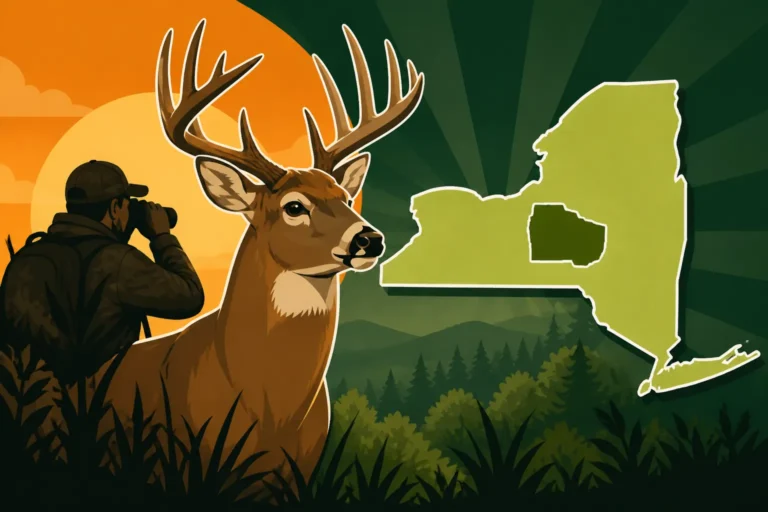
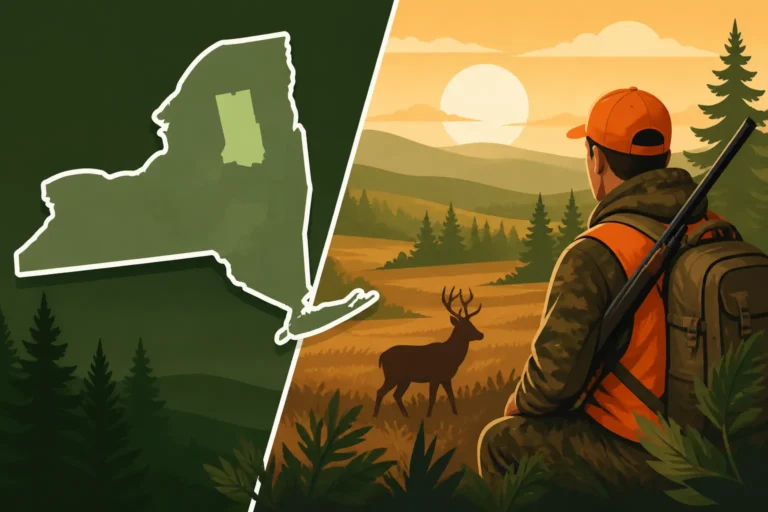
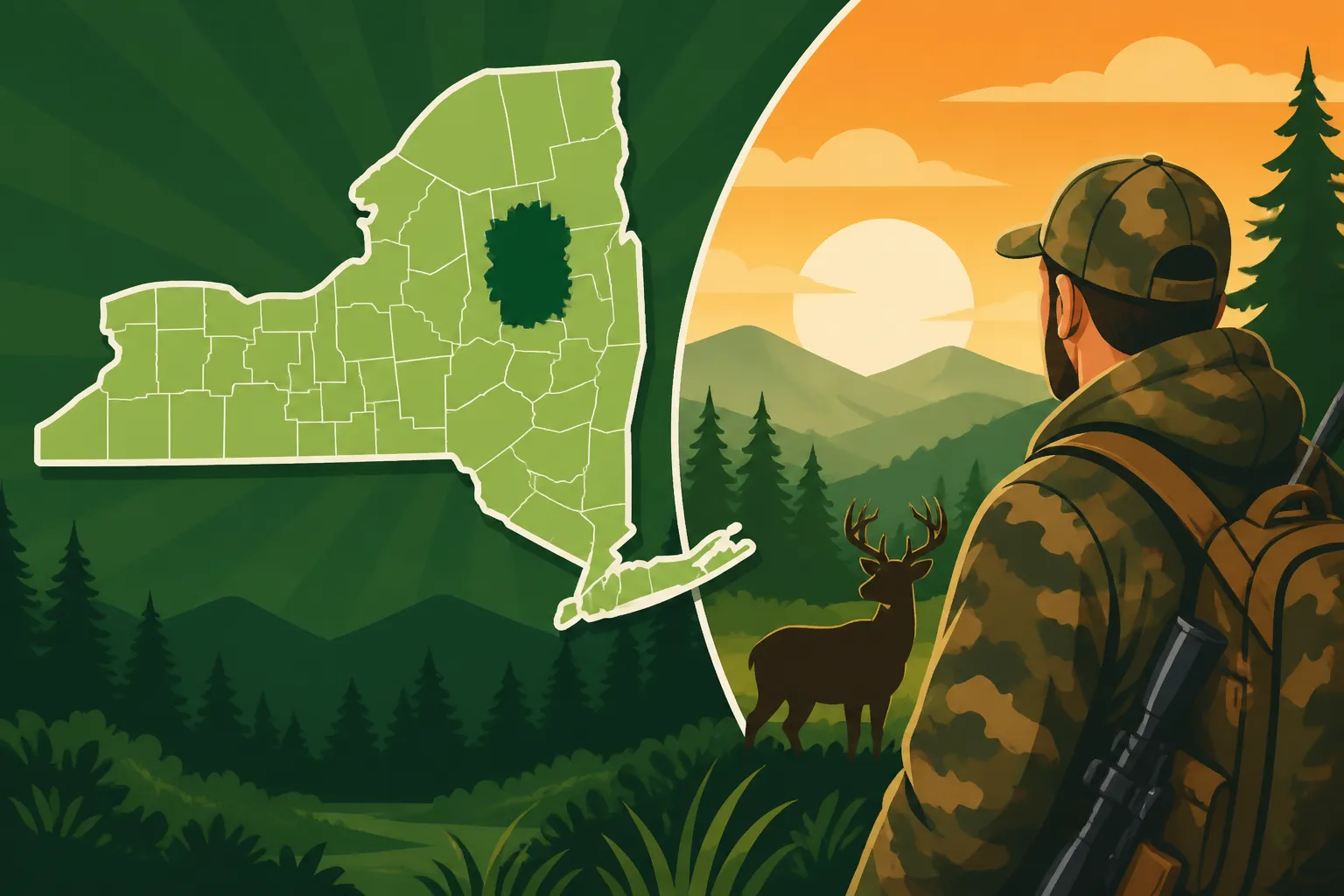
When it comes to sheer acreage of public hunting land in New York, one county undeniably reigns supreme: Hamilton County. This vast, sparsely populated area deep within the Adirondack Park offers an unparalleled amount of wild, open country for the dedicated hunter.
Hamilton County: The Adirondack Giant
Hamilton County is geographically the largest county in New York, and a staggering portion of it falls within the "Blue Line" of the Adirondack Park. This means huge tracts of land are designated as Forest Preserve. We're talking about hundreds of thousands of acres of contiguous, wild land. Imagine endless stretches of mature hardwood and conifer forests, pristine lakes, winding rivers, and rugged mountains. This isn't your average small woodlot hunt; this is big country that demands respect, preparation, and often, a willingness to get deep into the wilderness.
Hunting in Hamilton County offers a chance to truly escape the crowds, although you'll still encounter fellow sportsmen, especially during peak seasons. The opportunities are immense for white-tailed deer, black bear, and even ruffed grouse. The deer densities might not be as high as in some southern agricultural areas, but the bucks that call this rugged terrain home are often mature and hard-earned. The sheer scale means you can always find another ridge, another drainage, another quiet corner to explore.
What "Forever Wild" Means for Hunters in Hamilton County
The heart of Hamilton County's public land is the Adirondack Forest Preserve, protected by the "Forever Wild" clause of the New York State Constitution. This isn't just a catchy phrase; it's a legal designation that dictates how the land is managed. Essentially, these lands are to remain forever wild, meaning no commercial logging, no development, and a strong emphasis on preserving their natural, unadulterated state.
For hunters, this translates to an authentic wilderness experience. You won't find neatly groomed trails everywhere, nor will you always have easy vehicle access. What you will find is an ecosystem largely shaped by natural processes, where wildlife thrives in an unfragmented environment. This requires a different approach to hunting. Forget road-hunting; this is about deep woods scouting, navigating by map and compass (or GPS!), and being prepared for all conditions. It's about finding those remote deer yards in winter, stalking bear in thick timber, or chasing drumming grouse in overgrown clearings. The "Forever Wild" designation means you're stepping into a truly wild landscape, one that challenges and rewards in equal measure. Learning about The Adirondack Forest Preserve is essential for any hunter considering a trip here.
Beyond Hamilton: Other Notable Public Land Havens
While Hamilton County holds the crown for sheer public land volume, several other New York counties offer significant and valuable hunting opportunities across the state. These areas might not boast the same hundreds of thousands of acres of continuous wilderness, but they provide excellent access and diverse hunting experiences.
Essex County: High Peaks and Deep Woods
Right next door to Hamilton County, Essex County is another major player in the Adirondack Park, offering substantial public land primarily within the Forest Preserve. What sets Essex apart is its dramatic terrain, including much of the iconic High Peaks Wilderness. While the highest, most popular hiking peaks might not be ideal for hunting due to heavy recreational traffic, the surrounding deep woods offer fantastic opportunities for deer, bear, and even moose sightings (though moose are not currently hunted in New York).
The public land in Essex County often features steeper, more challenging climbs than other areas, but this also means less pressure in the rugged interior. Hunters willing to put in the effort can find truly remote pockets where mature animals reside. The mix of spruce-fir forests at higher elevations and mixed hardwoods lower down provides diverse habitat. It’s a place where careful map study, a good pair of boots, and excellent physical conditioning are your best friends.
Herkimer County: Gateway to the Central Adirondacks and Beyond
Herkimer County is a fascinating mix, extending from the Mohawk Valley up into the southern reaches of the Adirondack Park. This geographical diversity translates into a wide array of public hunting opportunities. You'll find significant portions of the Adirondack Forest Preserve here, especially in the northern half of the county, but also numerous State Forests and WMAs scattered throughout the more accessible central and southern parts.
Hunting in Herkimer County can range from rugged backcountry pursuits similar to Hamilton and Essex, to more approachable day hunts in State Forests. The deer population varies from scattered deep-woods deer to more numerous animals found closer to agricultural edges in the southern portions of the county. Bears are also common, particularly in the northern reaches. This county is a great option for hunters looking for variety, or those who want a taste of the Adirondacks without venturing quite as far into the deepest wilderness. For those specifically targeting deer in this region, understanding Herkimer County Public Land for Deer can be incredibly useful.
Sullivan County and Delaware County: Catskill Mountains Access
Shifting our gaze southward, Sullivan and Delaware Counties stand out as the primary public land strongholds within the Catskill Forest Preserve. While the Catskills are generally smaller and geographically distinct from the Adirondacks, they offer incredible hunting opportunities in their own right, particularly for white-tailed deer and black bears.
The Catskill Forest Preserve, much like its Adirondack counterpart, is protected "Forever Wild" and offers extensive public hunting. In Sullivan and Delaware, you'll find steep, forested ridges, deep hollows, and dense hemlock stands mixed with mature hardwoods. Deer densities here can be quite good, and the rugged terrain often means that animals can grow to maturity away from heavy pressure. Black bears are also very common, providing excellent hunting prospects. The hunting experience in these Catskill counties often involves navigating steep slopes and thick cover, requiring both stamina and keen woodsmanship. Understanding The Catskill Forest Preserve is vital for planning a hunt in this beautiful region.
Navigating New York's Public Lands: Tools and Tactics
Knowing which county has the most public land is one thing, but effectively hunting it is another. Modern tools and smart planning are essential to maximizing your time and success, especially on vast and unfamiliar terrain.
Essential Mapping Tools for Public Land Hunters
Gone are the days when a folded paper map was your only resource (though carrying one as a backup is always a good idea!). Today's digital mapping applications have revolutionized how we find and navigate public land. Services like onX Hunt are incredibly popular for a reason. They offer detailed satellite imagery overlaid with public and private land boundaries, ownership information, roads, trails, and topographical data. Imagine being able to zoom in and see the exact property line between a small private parcel and a sprawling State Forest, or identify a subtle funnel between two ridges from your couch. This kind of detail can save countless hours of blind scouting.
Another valuable resource, especially for deeper research and planning, is a platform like GoHunt. While GoHunt might be more geared towards Western hunting, the principles of researching units, understanding draw odds, and analyzing harvest data can still inform your New York hunting strategy, particularly if you're looking for broader trends. Additionally, don't forget the state's own resources. The New York DEC's Scouting With the New York HuntFishNY App provides free, detailed maps and a wealth of information specific to public lands within the state, helping you identify WMAs and State Forests near your target areas. Using these tools in tandem allows you to scout remotely, identify potential access points, and plan your routes with precision, even before you ever set foot in the woods.
Planning Your Hunt: Access, Terrain, and Regulations
Simply looking at a green blob on a map isn't enough; true planning involves understanding how you'll access that land and what you can expect once you're there. Public land often has designated parking areas or trailheads, but sometimes access might require a walk through private land (with permission, of course) or a long hike from a more distant entry point. Always check the specific access rules for the WMA or Forest Preserve section you plan to hunt.
Once you've identified your entry, it's time to study the terrain. Use your mapping tools to look for natural funnels, saddlebacks, creek bottoms, and bench cuts that might concentrate deer movement. Identify potential bedding areas (often on leeward slopes or in thick cover) and feeding areas. Understanding Where to Get a New York Public Land Map with these topographical features is crucial for successful scouting.
Equally important are the specific regulations for the area. While general state hunting laws apply, individual WMAs or certain parts of the Forest Preserve might have unique rules regarding treestands, ground blinds, camping, or even specific hunting methods. Always consult the current DEC hunting regulations guide for the most up-to-date information to avoid any surprises or violations.
Maximizing Your Public Land Opportunities
Hunting vast public lands, especially in New York's wilder regions, requires a specific mindset and strategy. It's not always about finding the highest deer density, but about finding unpressured deer and understanding their patterns in a less-impacted environment.
Strategies for Adirondack Public Land Hunting
Hunting the deep woods of the Adirondacks, particularly in counties like Hamilton or Essex, is a game of patience, endurance, and navigation. Forget rattling in every buck or sitting over a food plot; this is about covering ground, reading subtle sign, and outsmarting wary wilderness animals. Physical fitness is paramount, as you'll often be hiking miles from the nearest road, traversing steep terrain and blowdowns. Reliable navigation, whether a GPS unit or a well-practiced map and compass skill, is non-negotiable. It's easy to get disoriented in the endless timber.
One effective strategy is deep woods still-hunting, slowly slipping through the timber, pausing frequently to observe and listen. Focus on finding remote drainages, old growth pockets, or areas of diverse forest composition that might offer better browse or cover. Rather than pursuing specific food sources like agricultural fields, look for natural browse, mast crops (like beechnuts or acorns, though often sparse in deep Adirondack forests), or even softwood swamps where deer seek shelter in harsh weather. If you're targeting bear, focus on natural food sources like berries in late summer or beech nuts in the fall. Packs for a Backcountry Adirondack Hunt will be essential for carrying all your gear, food, and water for multi-day excursions. While the article Still-Hunting Catskill Ridges focuses on the Catskills, many of the techniques for slow, methodical movement and reading terrain apply directly to the Adirondacks.
Public Land Hunting in Other Regions
When you move away from the vast Forest Preserve lands to the State Forests and WMAs found in other counties, your tactics might shift. These areas, while still offering excellent hunting, are often smaller, more fragmented, and can see higher hunting pressure, especially on opening day.
In regions like the Southern Tier or Finger Lakes, many State Forests and WMAs border private agricultural land. Here, focusing on pinch points, funnels, and transition zones between public timber and private fields can be incredibly productive. Deer will often bed on public land and move to private fields to feed. Setting up on these travel corridors, especially during the rut, can pay off big. Hunting Southern Tier Farmland Deer provides excellent context for these types of areas. Similarly, Hunting Western New York Farmland and Hunting Finger Lakes Region Deer highlight how deer utilize varied habitats, from woodlots to river bottoms, often adjacent to public access points.
Consider using portable stands or ground blinds in these areas. Pay close attention to wind direction, as deer will often use prevailing winds to their advantage when moving between cover and food. Scouting these areas for less-pressured pockets, even if it means walking a little further or exploring thicker cover that other hunters avoid, can make a huge difference. Remember, the goal is often to find pockets of public land where Hunting Pressure on New York Public Land is lower than average, allowing deer to move more naturally during daylight hours.
| County | Primary Public Land Type | Estimated Public Land Acreage (General) | Key Hunting Opportunities | Terrain Example |
|---|---|---|---|---|
| Hamilton | Adirondack Forest Preserve | Very Large (hundreds of thousands) | Deer, Bear, Grouse, Remote experience | Rugged mountains, vast timber, lakes, swamps |
| Essex | Adirondack Forest Preserve | Large (hundreds of thousands) | Deer, Bear, Turkeys, High Peaks | Steep mountains, dense forests, deep valleys |
| Herkimer | Adirondack FP, State Forests | Significant (tens of thousands) | Deer, Bear, Small Game | Varied: foothills, timber, some open land |
| St. Lawrence | Adirondack FP, State Forests | Significant (tens of thousands) | Deer, Bear, Waterfowl (north) | Rolling hills, timber, river lowlands |
| Sullivan | Catskill Forest Preserve | Significant (tens of thousands) | Deer, Bear, Turkeys | Steep, forested ridges, hemlock thickets |
| Delaware | Catskill Forest Preserve | Significant (tens of thousands) | Deer, Bear, Turkeys | Rolling to steep hills, mixed hardwoods |
Disclaimer
This article is for general informational purposes only and does not constitute professional advice. Laws, prices and regulations vary by location and change over time. Consult a qualified professional for guidance on your specific situation.