Treestands and Saddles on New York Public Land
For many New York hunters, the thought of hanging a treestand on public land, or even venturing into the world of saddle hunting, can feel like navigating a legal and logistical minefield. Between differing regulations across various land types and the sheer challenge of carrying gear into remote spots, it’s easy to feel overwhelmed. This guide will cut through the confusion, offering clear, actionable advice on safely and effectively utilizing treestands and saddle hunting systems on New York's public hunting grounds.
Understanding New York's Public Land Regulations for Elevated Hunting
One of the biggest hurdles for any hunter looking to use treestands or saddles on New York public land is simply knowing what's allowed. The rules aren't uniform; they can vary significantly depending on whether you're in a State Forest, a Wildlife Management Area (WMA), or the expansive Adirondack or Catskill Forest Preserves. Ignorance of these rules isn't bliss – it's a ticket or worse, the loss of your hunting privileges.
DEC Regulations on Portable Stands
The New York State Department of Environmental Conservation (DEC) has specific guidelines designed to protect public lands from damage while still allowing hunter access. Generally, across most public lands, portable treestands are permitted, but with important caveats. "Portable" is the key word here. This means a stand that is readily removable and leaves no permanent impact on the tree or the environment.
You absolutely cannot build a permanent stand from materials found on site, nor can you leave a stand up year-round. Stands must typically be removed within a certain timeframe after the hunting season closes, often within a week or two. The goal is to ensure that when you pack out, you leave no trace behind. This also usually means no cutting tree limbs to clear shooting lanes, or at least, only minimal pruning that won't harm the tree long-term. Always check the specific regulations for the particular WMA or State Forest you plan to hunt, as some areas might have stricter rules or even prohibit stands entirely due to unique habitat concerns or heavy recreational use. The New York State Forest Hunting guide can give you more specific insights into these distinctions.
Forest Preserve Versus State Forests
When you venture into the Adirondack or Catskill Forest Preserves, often dubbed "Forever Wild" lands, the regulations become even more stringent due to their unique constitutional protection. In these areas, no damage to trees is permitted. This means using screws or nails to attach stand sections or steps is strictly forbidden. Stands must be secured using straps, ropes, or chains that do not penetrate the bark. Even seemingly minor damage like stripping bark can be considered a violation.
This is where saddle hunting or very specific types of hang-on stands become particularly advantageous. They are designed to be minimally invasive, relying on straps and cam buckles that don't harm the tree. Climbing sticks, too, must adhere to these no-damage principles. On the other hand, State Forests and WMAs often have slightly more flexibility, sometimes allowing screw-in steps, though this is becoming less common as land managers lean towards a "leave no trace" ethos everywhere. Always consult the specific unit management plan or local DEC office for the exact rules for your chosen spot. Tools like the Scouting With the New York HuntFishNY App can help you determine the land classification before you even leave your couch.
Ground Blind Alternatives and Rules
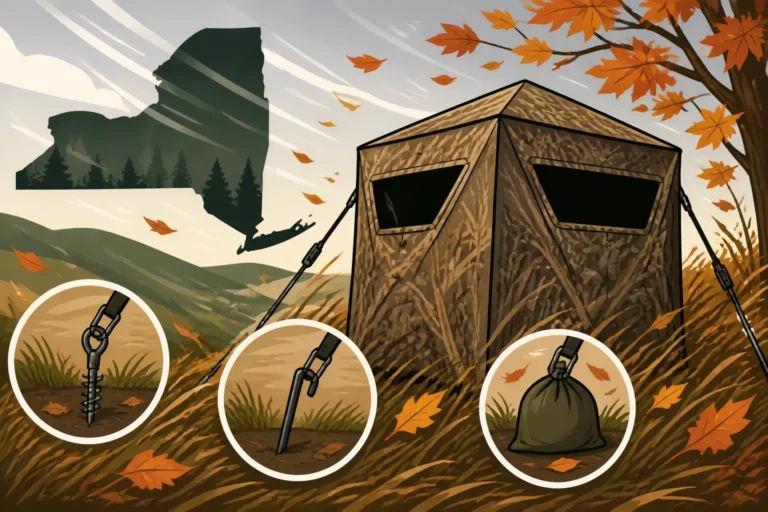
While this guide focuses on elevated positions, it’s worth noting that ground blinds are a viable alternative on public land, especially in areas where ideal treestand trees are scarce or regulations are particularly restrictive. Ground blinds are generally allowed as long as they are portable and removed after each hunting session, or within the specified post-season timeframe. Just like treestands, you can't leave them out indefinitely, and certainly not permanently affixed to the landscape. For hunters dealing with open agricultural fields in the Southern Tier or marshy edges in the Finger Lakes, a ground blind might be the superior tactical choice. Using a Ground Blind on New York Public Land offers more detailed considerations for these setups.
Choosing the Right Elevated System for New York's Diverse Terrain
New York's hunting landscapes are incredibly varied, from the steep, rocky ridges of the Catskills to the dense, mature hardwoods of the Adirondacks, and the rolling farmlands of the Southern Tier. The "best" treestand or saddle system depends heavily on where and how you hunt. What works for a week-long backcountry trip in the High Peaks might be overkill for a quick afternoon hunt on a WMA near home.
Treestand Types: Pros and Cons on Public Land
Hunters typically lean on a few primary types of portable treestands, each with its own set of advantages and drawbacks when used on public land.
Hang-On Stands
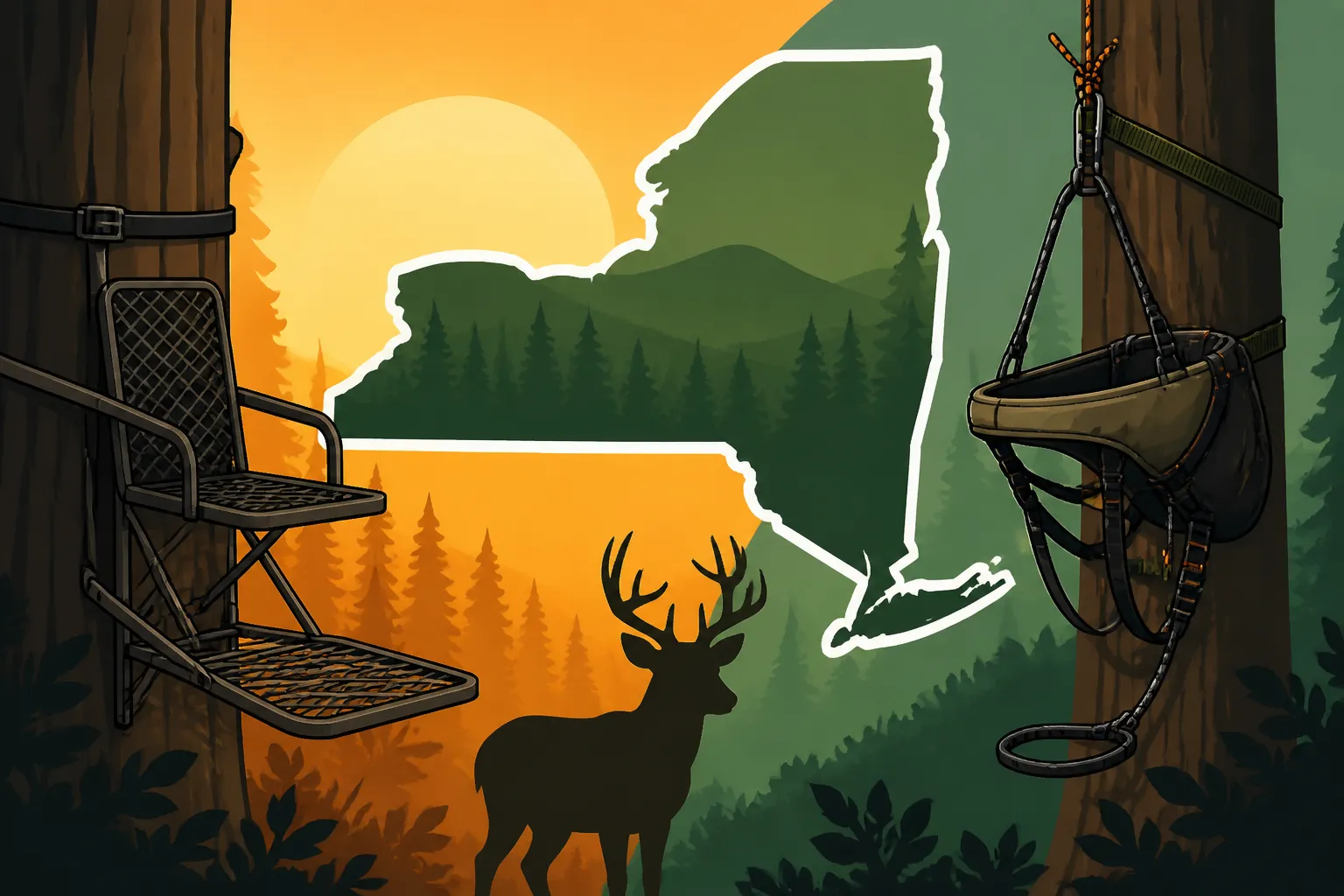
Hang-on stands are incredibly popular for their versatility and relatively light weight. They consist of a platform and a seat that you attach to a tree, usually with a ratchet strap or heavy-duty cam buckle strap. To get up to them, you'll need a separate climbing system, most commonly climbing sticks or screw-in steps (where allowed).
- Pros: Highly adaptable to oddly shaped or crooked trees where a climber won't work. Can be hung well in advance (within regulations) or put up and taken down on each hunt. Excellent for leaving in place for a few days to avoid carrying heavy gear in and out, or for strategic setups in key funnels. Hanging a Stand on an Adirondack Funnel explores this strategy in detail.
- Cons: Requires climbing sticks, adding to the overall weight and setup time. If removed after each hunt, it's a lot of work. If left for multiple hunts, there's a risk of theft, especially in high-pressure areas. You're committed to a single shooting angle unless you reposition the stand.
Climbing Stands
Climbing stands, or "climbers," are a self-contained unit that allows you to ascend a tree using two sections: a seat section and a foot platform. You "walk" the stand up the tree by alternately moving each section.
- Pros: No need for separate climbing aids, making them a single, albeit often heavier, unit to carry. Quick to set up and take down once you're proficient, allowing for mobile, adaptable hunting. Many models are comfortable for all-day sits.
- Cons: Only work on relatively straight, limbless trees, which can be hard to find in some parts of New York's forests. They can be noisy to ascend, potentially spooking game. Heavier than most hang-ons or saddles, making long pack-ins a chore. Finding a suitable tree can be frustrating, especially in areas with smaller, multi-branched hardwoods or pines.
Saddle Hunting: The Mobile Game Changer
Saddle hunting has truly revolutionized mobile hunting, especially for those who frequent public lands. Instead of sitting on a platform, you sit in a minimalist harness-like saddle, tethered to the tree by a rope and carabiner. Your feet are on small platforms or climbing sticks, but your weight is distributed by the saddle.
- Pros: Unmatched mobility and minimal bulk. A saddle and climbing sticks are often lighter than even a lightweight hang-on and certainly lighter than a climber. This is ideal for those long treks into remote spots often needed to escape Hunting Pressure on New York Public Land. It offers true 360-degree shooting angles around the tree, an incredible advantage when a deer circles your position. The minimal profile makes you virtually invisible against the tree trunk.
- Cons: Steep learning curve for comfort and technique. It takes practice to become truly comfortable and efficient. Not all saddles are equally comfortable, and finding the right one can involve trial and error. Some hunters miss the ability to sit down on a traditional seat for extended periods. It can also feel less stable initially compared to a fixed platform. Despite the learning curve, it's worth it for the public land hunter. Saddle Hunting in New York Hardwoods delves deeper into these techniques.
| Stand Type | Mobility | Comfort Level | Setup Time | Tree Suitability | Visibility |
|---|---|---|---|---|---|
| Hang-On | Moderate (with sticks) | High | Moderate | Versatile (even crooked) | Moderate |
| Climbing | High (self-contained) | High | Fast (on right tree) | Straight, limbless only | Moderate |
| Saddle | Very High | Moderate (learn-as-you-go) | Fast | Versatile (even small trees) | Very Low (against tree) |
| Ground Blind | Moderate | High | Fast | Any open area, thick cover | Very Low (concealed) |
Strategic Placement: Making Your Elevated System Effective
Having the right gear is only half the battle; knowing where and how to set it up is what truly puts deer in the freezer. Public land hunting often means dealing with more pressure and less predictable deer movement, making strategic placement critical.
Scouting and Micro-Terrain Analysis
Before you even think about hanging a stand or strapping on a saddle, thorough scouting is paramount. This isn't just about finding big rubs or scrapes, though those are important. It's about understanding the micro-terrain and how deer use it, especially in pressured areas. Look for pinch points, funnels, subtle ridge lines, and thick cover. A tool like GoHunt, with its detailed mapping layers, can be invaluable for identifying these features from home. It allows you to zoom in and see contour lines, drainage features, and vegetation changes that create natural travel corridors.
Once on the ground, confirm these observations. Where are the deer actually entering and exiting bedding areas? What's their preferred route between feeding and bedding? Are there specific oak ridges producing acorns this year that are attracting deer? Consider where deer feel safe and where they might be pressured by other hunters. A stand placed just off a well-used trail, but with an entry and exit route that avoids that trail, can be far more effective than one directly on it. Reading Aerial Photos for Southern Tier Deer and Reading a Ridge for Catskill Deer Movement offer excellent primers on this kind of detailed scouting.
Entry and Exit Routes: The Hunter's Stealth Mission
This is arguably the most overlooked aspect of stand placement, especially on public land where deer are accustomed to human activity. Your entry and exit to and from your stand must be as silent and undetected as possible. Think about the wind direction for your approach, not just for your sit. If you bump deer walking in, your hunt is likely over before it begins.
Try to identify routes that use natural terrain features for concealment – creek beds, logging roads, thick brush lines, or the backside of a ridge. Sometimes, this means walking further out of your way to circle around to your stand location. Always approach with the wind in your face or crosswind to your stand, never blowing towards where you expect deer to be. Likewise, your exit should be planned to avoid disturbing deer that might still be moving or bedded near your area. Sometimes, this means waiting an extra half hour after legal shooting light to allow the woods to calm down before slipping out quietly.
Wind, Thermals, and Scent Control
Wind is the hunter's nemesis and greatest ally. Always, always hunt with the wind in your favor, carrying your scent away from where deer are likely to approach. However, in hilly or mountainous terrain like the Catskills or Adirondacks, thermals play a huge role, especially during dawn and dusk. In the mornings, cooler air sinks, causing thermals to flow downhill. In the evenings, warming air rises, and thermals lift uphill.
This means a stand that's perfect for a morning hunt on a ridge might be a complete bust in the evening, as your scent lifts right into a bedding area above you. Understanding these dynamics is critical. When planning your setup, consider two different stand locations for a given area – one for morning, one for evening – to account for changing wind and thermal patterns. Combine this with rigorous scent control, using specialized detergents for your hunting clothes and scent-eliminating sprays, to minimize your footprint as much as possible.
Prioritizing Safety: Non-Negotiable Practices for Elevated Hunting
Hunting from an elevated position inherently carries risks, and unfortunately, falls from treestands are a leading cause of serious injury or death among hunters. On public land, where you might be more remote and help further away, vigilance is even more crucial. There are simply no shortcuts when it comes to safety.
Full-Body Harness and Lifeline Use
This is the golden rule: you should be connected to the tree from the moment your feet leave the ground until they return. A full-body harness is not an option; it's a requirement. Invest in a quality harness that fits properly and practice wearing it. Many incidents occur while ascending or descending, not just while sitting in the stand.
This is where a safety rope or lifeline comes in. A lifeline allows you to attach your harness to a rope that runs from the base of the tree up above your stand, so you are always tethered while climbing or descending. This means if a climbing stick breaks or you slip, you're caught before you hit the ground. When using a hang-on or saddle, the moment you attach your first climbing stick, you should also be installing your lifeline. For more in-depth advice, check out Treestand Safety Gear for Steep Ground.
Pre-Season Checks and Equipment Inspection
Before every season, and indeed before every hunt, meticulously inspect all of your elevated hunting equipment. This includes your stand, climbing sticks, ropes, straps, and especially your full-body harness. Look for:
- Frayed straps or ropes: Sun exposure, moisture, and general wear and tear can weaken these critical components. Replace them if you see any signs of wear.
- Cracked welds or bent metal: Over time, metal components can fatigue. Pay close attention to attachment points and weight-bearing areas.
- Corrosion: Rust on cables or pivot points can compromise integrity.
- Buckle and Carabiner Functionality: Ensure all buckles snap securely and carabiners operate smoothly.
- Tree damage: If your stand has been out for a while (within legal limits), check for any signs of the tree itself being compromised or loose.
Never assume your gear is in perfect condition just because it was fine last year. A few minutes of inspection can save your life.
The Buddy System and Communication
While solo hunting is a cherished tradition for many, especially on public land, letting someone know your plans is a vital safety measure. Inform a trusted friend or family member:
- Your exact hunting location: Pinpoint it on a map (GoHunt is great for this).
- Your expected return time.
- Who to call if you don't check in.
If possible, hunt with a buddy, especially if you're new to elevated hunting or exploring a particularly remote area. Having someone with you can make all the difference in an emergency, from providing immediate first aid to calling for help. Even a simple two-way radio can be a lifesaver if cell service is spotty, as is often the case deep in the Adirondack Forest Preserve. First Aid Kits for Remote Adirondack Ground is also worth a read for any public land hunter.
Maintenance and Season-Long Considerations for Public Land Gear
Public land hunting puts a lot of wear and tear on your gear. Leaving stands out for extended periods, or constantly setting up and taking down, requires diligent care to ensure longevity and continued safety.
Off-Season Storage and Cleaning
When the season finally wraps up and it's time to pack away your stands and saddles, don't just toss them into the corner of the garage. Proper off-season storage is crucial for maintaining their condition and readiness for the next year.
- Clean thoroughly: Remove any dirt, mud, or debris. A stiff brush and water can do wonders. Make sure everything is completely dry before storing to prevent rust or mildew on straps.
- Inspect again: This is your final chance to spot any wear and tear from the season that might have gone unnoticed. Make a list of any components that need repair or replacement.
- Store in a dry, dark place: Keep stands and saddles away from direct sunlight, which can degrade straps and plastic components over time. A shed or garage is usually sufficient, but avoid damp basements. If you have a specific storage bag for your stand or sticks, use it to protect them from dust and pests.
- Lubricate moving parts: For climbing stands or hang-ons with pivot points, a light application of silicone lubricant can prevent seizing and keep them operating smoothly.
In-Season Checks and Damage Prevention
Throughout the hunting season, especially if you leave a stand out for multiple hunts (where permitted), regular checks are essential.
- Before each hunt: As you approach your stand, visually inspect the straps and platform from the ground for any obvious damage, tampering, or changes in the tree itself. Once you reach the stand, give everything a gentle tug and double-check all connections before putting your full weight on it.
- Wildlife and weather damage: Animals like squirrels or porcupines can chew on straps, and strong winds or heavy snow can stress components. Keep an eye out for any signs of this. If a major storm passes through, consider re-inspecting your stand before your next hunt.
- Theft prevention: Unfortunately, leaving stands on public land carries a risk of theft. While no method is foolproof, consider using security cables or less obvious stand placements. Marking your stand with your DEC customer ID number (usually engraved or permanently marked) can help with recovery if it's stolen and recovered. Some hunters choose to pack their stands in and out every single hunt, especially in high-traffic areas, to mitigate this risk. Packs for a Day on Public Land discusses suitable options for this mobile approach.
Adapting to Changing Conditions
New York weather is famously unpredictable. An early archery hunt could be warm and dry, while late season muzzleloader hunts involve deep snow and bitter cold. Your choice of elevated system and its maintenance need to adapt.
- Winter considerations: If hunting late season, ensure your stand's components can handle freezing temperatures without becoming brittle. Keep your climbing sticks free of ice and snow, which can make them slick and dangerous. Your lifeline should also be checked to ensure it's not frozen stiff or chafing on icy bark.
- Wet weather: Rain and snow can make aluminum platforms and steps incredibly slippery. Ensure your boots have good traction and always maintain three points of contact when climbing. Consider applying non-slip tape to your stand's platform if it's particularly slick. Also, remember to keep your personal gear, like a Muzzleloader Tactics in December Cold setup, dry under these conditions.
By understanding the rules, choosing the right gear for the terrain, planning your approach, prioritizing safety, and maintaining your equipment, you'll be well-prepared to make the most of New York's fantastic public land hunting opportunities from an elevated position.
Disclaimer
This article is for general informational purposes only and does not constitute professional advice. Laws, prices and regulations vary by location and change over time. Consult a qualified professional for guidance on your specific situation.