Rifle Cases for Travel to New York
One of the biggest anxieties for any hunter planning a trip, especially to a new state like New York, is how to safely and legally transport their valuable rifle. It’s not just about getting your firearm from point A to point B; it’s about protecting your investment from damage, ensuring it's ready to perform when you need it, and, perhaps most importantly, staying compliant with state and federal laws that can feel like a minefield. This guide is here to demystify the process of choosing and using rifle cases for travel to New York, giving you the confidence to focus on the hunt ahead.
Why a Good Rifle Case Isn't Just "Good Enough"
You might think any old case will do the trick, but when you're traveling with a rifle, especially across state lines or through varying New York terrains, a "good enough" case is rarely truly sufficient. Your rifle is more than just a tool; it’s often a significant financial investment, a piece of family history, or a carefully tuned instrument critical to your success in the field. Skimping on its protection during transport is a gamble you really don't want to take.
Protecting Your Investment from the Elements and Bumps
Imagine driving your truck down a bumpy, rutted logging road in the Catskills, heading deep into a state forest. Your gear is shifting in the back, and suddenly, you hit an unexpected pothole. A flimsy, unpadded case might offer minimal resistance, allowing your rifle to bounce and absorb jarring impacts directly. This isn’t just about cosmetic scratches; it could mean a shifted scope zero, bent components, or even structural damage to the stock or action. Then there are the elements. A New York hunting trip can throw anything at you – a sudden downpour in the Southern Tier, lake-effect snow along Lake Ontario, or heavy fog rolling in off the Hudson. A truly protective case seals out moisture, dust, and grime, ensuring your firearm arrives in the same condition it left your home. It’s about more than just keeping it clean; it’s about maintaining its integrity and functionality, ensuring your first shot in the timber is as true as your last at the range.
Meeting Legal Requirements for Transport
This is where the rubber meets the road, quite literally. New York State has specific laws governing the transport of firearms. It’s not enough to simply have your rifle in a case; it must be unloaded and enclosed in a case, or taken apart, or otherwise secured in a manner that prevents quick and ready use. This means your rifle cannot be readily accessible or loaded in a vehicle. These aren't suggestions; they are legal requirements, and failure to comply can lead to serious consequences, including fines and legal trouble. A case with proper locking mechanisms is often your first line of defense in demonstrating compliance, proving that you've taken reasonable steps to secure the firearm. When you pull up to your hunting camp or a public access point, you want to be confident that you’re doing everything by the book. It’s a foundational aspect of responsible firearm ownership and a requirement for anyone hunting in New York. You can learn more about specific firearm legality in New York Legal Firearms for Deer Hunting.
Peace of Mind on the Road or in the Air
Let's be honest, hunting trips are supposed to be exciting, not anxiety-inducing. The last thing you need is a nagging worry about whether your rifle is safe or if you’re inadvertently breaking a law. A robust, secure rifle case provides that invaluable peace of mind. Knowing that your rifle is shielded from damage, whether it’s strapped down in the back of your pickup or traveling in the cargo hold of an airplane, allows you to focus on the more enjoyable aspects of your trip: scouting new ground, planning your strategy, or simply enjoying the camaraderie of camp life. It also means you're prepared for unexpected situations, like a flat tire on the side of the road or a spontaneous check by a law enforcement officer. With the right case, your rifle is secured, your ammunition is stored separately, and you can confidently explain your travel plans, knowing you’ve fulfilled your responsibilities. Many hunters use resources like GoHunt to cross-reference regulations and ensure their gear choices align with local requirements, reducing that pre-trip stress.
Types of Rifle Cases: Hard vs. Soft
When it comes to rifle cases, the market generally divides into two main categories: hard cases and soft cases. Each has its strengths and weaknesses, making one more suitable than the other depending on your specific travel needs and the type of hunting you're doing in New York. Understanding these differences is key to making an informed choice that best protects your firearm and ensures legal compliance.
The Robustness of Hard Cases
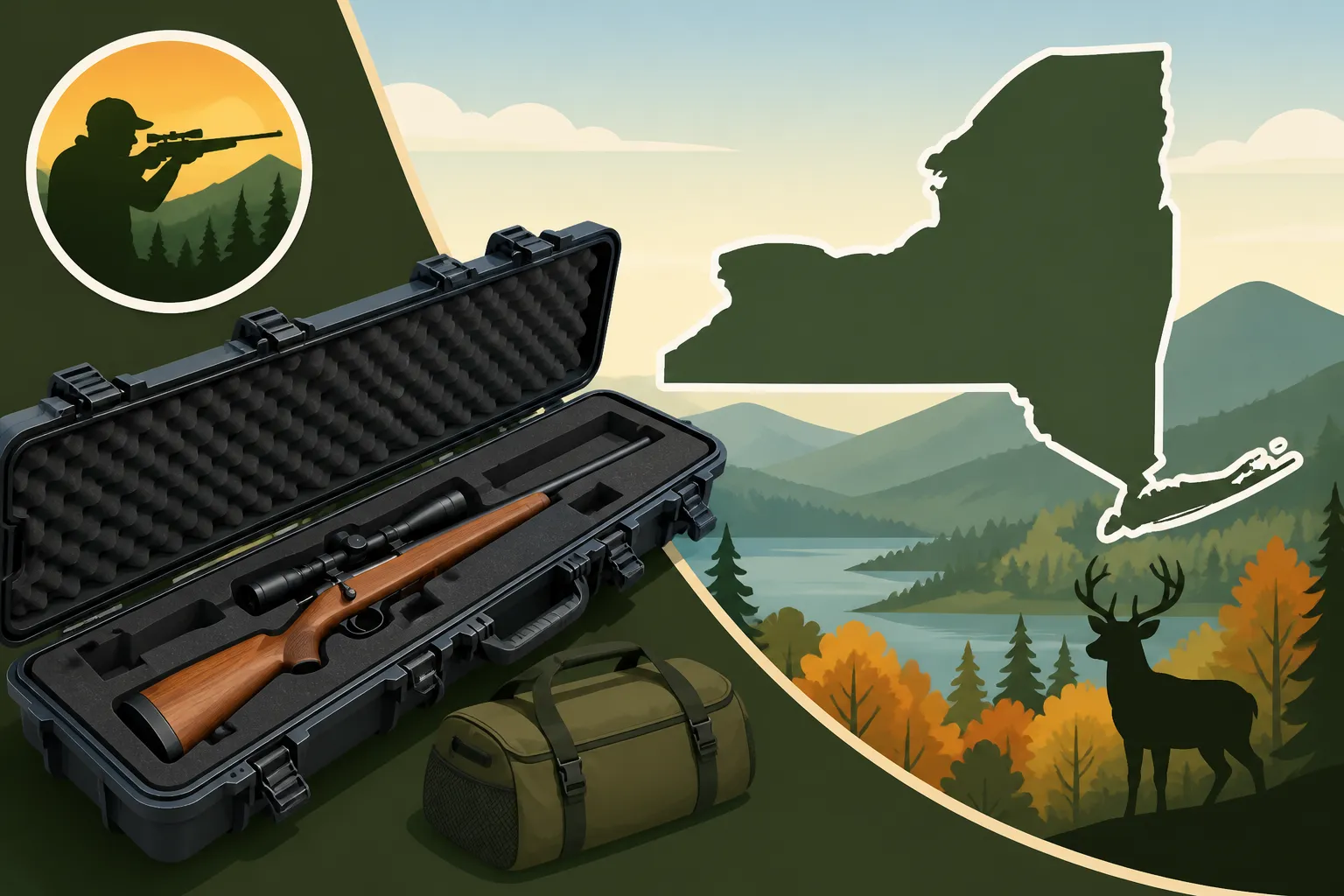
Hard cases are the heavy-duty champions of firearm protection. Typically constructed from durable molded plastics, aluminum, or composite materials, they are designed to withstand extreme impacts, crushing forces, and severe weather conditions. Many feature O-ring seals, making them waterproof and dustproof, which is a huge advantage when encountering unpredictable New York weather. Imagine your hard case accidentally taking a tumble from the bed of your truck onto a gravel road. While it might scuff, the rifle inside is likely to remain perfectly protected and zeroed. For hunters flying to New York or those who frequently transport their firearms over long distances and rough terrain, a hard case is often the only sensible option. They often come with multiple latch points and provisions for padlocks, making them highly secure and compliant with most airline and interstate transport regulations. This level of protection is paramount for maintaining the integrity of sensitive optics like those Rifle Scopes for Low-Light Timber.
The Convenience of Soft Cases
On the flip side, soft cases offer a different set of advantages, primarily focused on convenience and portability for shorter trips. Made from durable fabrics like Cordura or ballistic nylon, they are significantly lighter and more flexible than their hard-sided counterparts. This makes them easier to carry, store, and maneuver in tight spaces, like a cramped truck cab or a small hunting blind. For a quick drive from camp to a Hunting a Standing Cornfield in Farm Country stand, or a walk through the woods to your Treestand Setups in Adirondack Hardwoods setup, a soft case can be ideal. They often feature external pockets for accessories, slings for comfortable carrying, and can be folded or rolled up for compact storage when not in use. While they provide good protection against scratches, minor bumps, and light moisture, they generally lack the crush-proof and waterproof capabilities of hard cases. They are not suitable for airline travel or situations where your rifle might endure significant impacts.
When to Choose Which for New York Hunts
The best choice often comes down to the specifics of your New York hunting adventure. If you're traveling across state lines, especially by air, or if your rifle will be subjected to significant handling (e.g., being shipped, or riding unsecured in a vehicle over rough terrain), a robust hard case is essential. It provides the maximum level of protection and meets the stringent requirements for airline transport. Brands like Pelican, SKB, and Plano offer excellent hard case options that many New York hunters rely on.
However, if your travel is primarily local – say, from your home in the Southern Tier to a nearby state forest, or from your hunting camp to your stand – a good quality soft case can be perfectly adequate. It’s lighter, easier to manage, and offers sufficient protection for those short, controlled movements. Many seasoned New York hunters own both types: a hard case for serious travel and a soft case for daily use in the field. Consider the value of your rifle, the conditions it will face, and the legal mandates of your journey. Using a resource like GoHunt can help you find local suppliers or online retailers offering a variety of both hard and soft case options, complete with user reviews to guide your decision.
| Feature | Hard Rifle Case | Soft Rifle Case |
|---|---|---|
| Protection Level | Maximum (crush, impact, water, dust) | Moderate (scratches, minor bumps, light rain) |
| Material | Molded plastic, aluminum, composites | Heavy-duty fabric (Cordura, ballistic nylon) |
| Security | High (multiple latch points, padlock ready) | Moderate (zippers, sometimes small lockable compartments) |
| Weight/Bulk | Heavy, bulky | Light, flexible |
| Cost | Generally higher | Generally lower |
| Airline Travel | Recommended/Required | Not recommended/Allowed |
| Storage | Takes up significant space | Can often be folded/rolled for compact storage |
| Best Use Cases | Long-distance travel, air travel, harsh conditions, valuable rifles | Local transport, car-to-stand, general storage, budget-friendly |
Key Features to Look For in a New York Rifle Case
Choosing the right rifle case isn't just about picking hard or soft; it's about evaluating the specific features that will give you the best protection, comply with laws, and stand up to the rigors of a New York hunting season. From the materials used to the locking mechanisms, every detail matters when your valuable firearm is inside.
Durability and Weather Resistance
New York weather is famously unpredictable. One minute it's crisp and sunny, the next you're caught in a sudden downpour or a swirling snow shower. A rifle case needs to be built to handle these changes. For hard cases, look for high-impact polymer plastics or aircraft-grade aluminum. A good hard case will feature a robust seal, often an O-ring, that creates a waterproof and dustproof barrier when closed. This is crucial for protecting your rifle from rust and keeping sensitive optics clear. For soft cases, heavy-duty, water-resistant fabrics like 1000D Cordura or ballistic nylon are excellent choices. Reinforced stitching, robust zippers, and quality hardware will ensure the case can handle the bumps and scrapes of field use without falling apart. Don't underestimate the wear and tear a case can take during a long season, especially if you're frequently loading it in and out of a vehicle in less-than-ideal conditions. A durable case means fewer worries about your gear and more focus on your hunt. If you're out late season, you'll appreciate any gear that helps with Keeping a Muzzleloader Dry in Lake-Effect Snow.
Secure Locking Mechanisms
Legal transport in New York and for interstate travel typically requires firearms to be secured. This means your case needs reliable locking mechanisms. For hard cases, look for heavy-duty latches that snap firmly into place, preferably with multiple points for padlocks. TSA-approved locks are often a good idea, even if you’re not flying, as they offer a standardized level of security. The goal is to prevent unauthorized access and to demonstrate that you have taken reasonable steps to secure the firearm, as required by law. Many high-quality hard cases integrate sturdy padlock eyelets into their design, allowing you to use your own robust locks for added peace of mind. For soft cases, while not as secure as hard cases, look for cases with lockable zippers or sturdy D-rings that allow you to thread a small padlock through. While a determined thief could still cut a soft case, these measures fulfill the basic legal requirement for securing a firearm during transport in a vehicle. When looking at case options, checking reviews on platforms like GoHunt can give you insights into the quality and reliability of locking mechanisms across different brands.
Internal Protection and Fit
What's inside the case is just as important as what's outside. The internal padding is critical for cushioning your rifle and preventing movement during transport.
There are a few common types of internal protection:
- Pick-n-Pluck Foam: This allows you to customize the fit precisely to your rifle, creating a snug nest. It's excellent for providing custom support around the stock, action, and especially your optics.
- Convoluted (Egg Crate) Foam: This type of foam provides a softer, more general cushion that compresses around the rifle. It's less customizable but still effective at preventing movement and absorbing shocks.
- Custom-Cut Foam: Some higher-end cases or aftermarket services offer foam inserts specifically cut to the exact dimensions of your rifle and scope.
A well-fitted interior prevents your rifle from rattling around, which can lead to cosmetic damage, but more critically, can shift your scope's zero. Imagine the frustration of getting to your Hunting Finger Lakes Region Deer spot, only to find your rifle is shooting wildly because the scope took a knock. Ensure there's enough space for your rifle with its optics mounted, and consider extra compartments for magazines or other small accessories, but make sure they are separate from the firearm itself for legal compliance. A proper internal fit helps maintain that critical zero, especially when you've painstakingly gone through the process of Zeroing a Rifle for Mixed Distances.
Airline Travel Considerations
While specific airline rules can vary, there are universal requirements if you plan to fly with your rifle to New York. Your firearm must be transported in a hard-sided, lockable case. Soft cases are generally not permitted for checked firearms. The case must be capable of being locked, and only you should have the key or combination. Ammunition typically needs to be transported in a separate, secure container, distinct from the firearm itself, and usually within your checked luggage. You must declare your firearm to the airline at the check-in counter. Always, always contact your specific airline well in advance of your travel date to confirm their exact policies and procedures. Missing a single detail could lead to delays, confiscation, or even missing your flight. Knowing the rules for Ammunition Availability Before Opening Day might also influence how you pack.
Navigating New York's Specific Transport Laws
New York's gun laws can feel complex and, at times, confusing, especially for hunters traveling from out of state. Understanding the nuances of transporting your rifle legally within the state and across its borders is paramount to avoiding trouble and enjoying a stress-free hunt.
Unloaded and Secured: The Golden Rules
For general transport in a vehicle within New York State, the "golden rules" are clear: your rifle must be unloaded and secured. "Secured" typically means it must be enclosed in a case, or taken apart, or otherwise secured in a manner that prevents quick and ready use. This isn't just a suggestion for good practice; it’s a legal mandate. This means no loaded rifles on the seat beside you, no uncased firearms poking out from under a blanket. Your rifle should be out of immediate reach and unable to be quickly brought into action. When you’re pulled over for a routine traffic stop, having your firearm clearly and legally secured demonstrates responsibility and adherence to the law, making any interaction smoother. These rules also extend to situations where you might be temporarily leaving your vehicle, such as when you’re scouting new territory or taking a break from the hunt. Ensure that the case you choose facilitates this secure, unloaded state. This also relates to broader legal aspects discussed in New York Legal Shooting Hours.
Interstate Travel Challenges and Federal Protections
This is often the most anxiety-inducing part of traveling with a firearm. While New York has its own laws, the federal Firearm Owners' Protection Act (FOPA) offers some protection for interstate travel. FOPA generally allows individuals to transport an unloaded, cased firearm from one place where they may lawfully possess it to another place where they may lawfully possess it, even if they pass through states with stricter gun laws. However, there are critical caveats. The firearm must be unloaded and not readily accessible (e.g., in a locked case in the trunk). The journey must be continuous, meaning no unnecessary stops that could be interpreted as "staying" in a prohibited area. This protection only applies to the act of transportation. You cannot stop for an extended visit, nor does it override local restrictions if you plan to stay in a specific area. It's a lifeline for transit, not a blanket permission to ignore local laws.
The complexity lies in knowing the laws of all states you might pass through. Even with FOPA, some states have specific interpretations or additional requirements. It is always best practice to consult the legal framework of every state on your travel route. This diligence, though tedious, is your best defense against unintended legal entanglements. Sites like GoHunt provide valuable resources and links to state wildlife agencies, helping hunters research these complex regulations.
Understanding Vehicle Transport vs. Public Land Carry
It’s important to distinguish between transporting a rifle in your vehicle and carrying it on public land while actively hunting.
- Vehicle Transport: As covered, unloaded and secured in a case is the general rule. This applies whether you're driving to a WMA, a state forest, or a friend's private land. You can review more details about this in Vehicle Rules on New York Public Land.
- Public Land Carry: Once you step out of your vehicle onto public land and begin your hunt, the rules change. During an open season where firearms are permitted, you can typically carry your rifle uncased and loaded (if actively hunting and within legal parameters for loaded firearms). However, you must always be aware of local restrictions. For example, some areas might have specific rules about where firearms are allowed, or during certain hunting methods, such as carrying a crossbow in Crossbow Rules During New York Archery Season. Always check the specific regulations for the Wildlife Management Area (WMA) or state land you are hunting. Many WMAs have information kiosks or maps available online via the DEC website, or through mapping apps like GoHunt, which can help you understand specific nuances on a given parcel of land. Being prepared with a good First Aid Kits for Remote Adirondack Ground also complements responsible hunting in these areas.
By diligently selecting the right rifle case and understanding these legal distinctions, you can ensure your New York hunting trip is not only successful but also completely lawful and free of unnecessary stress. A good case is more than just a container; it's an integral part of your hunting preparation and compliance strategy, ensuring you can simply focus on the pursuit of game.
Disclaimer
This article is for general informational purposes only and does not constitute professional advice. Laws, prices and regulations vary by location and change over time. Consult a qualified professional for guidance on your specific situation.