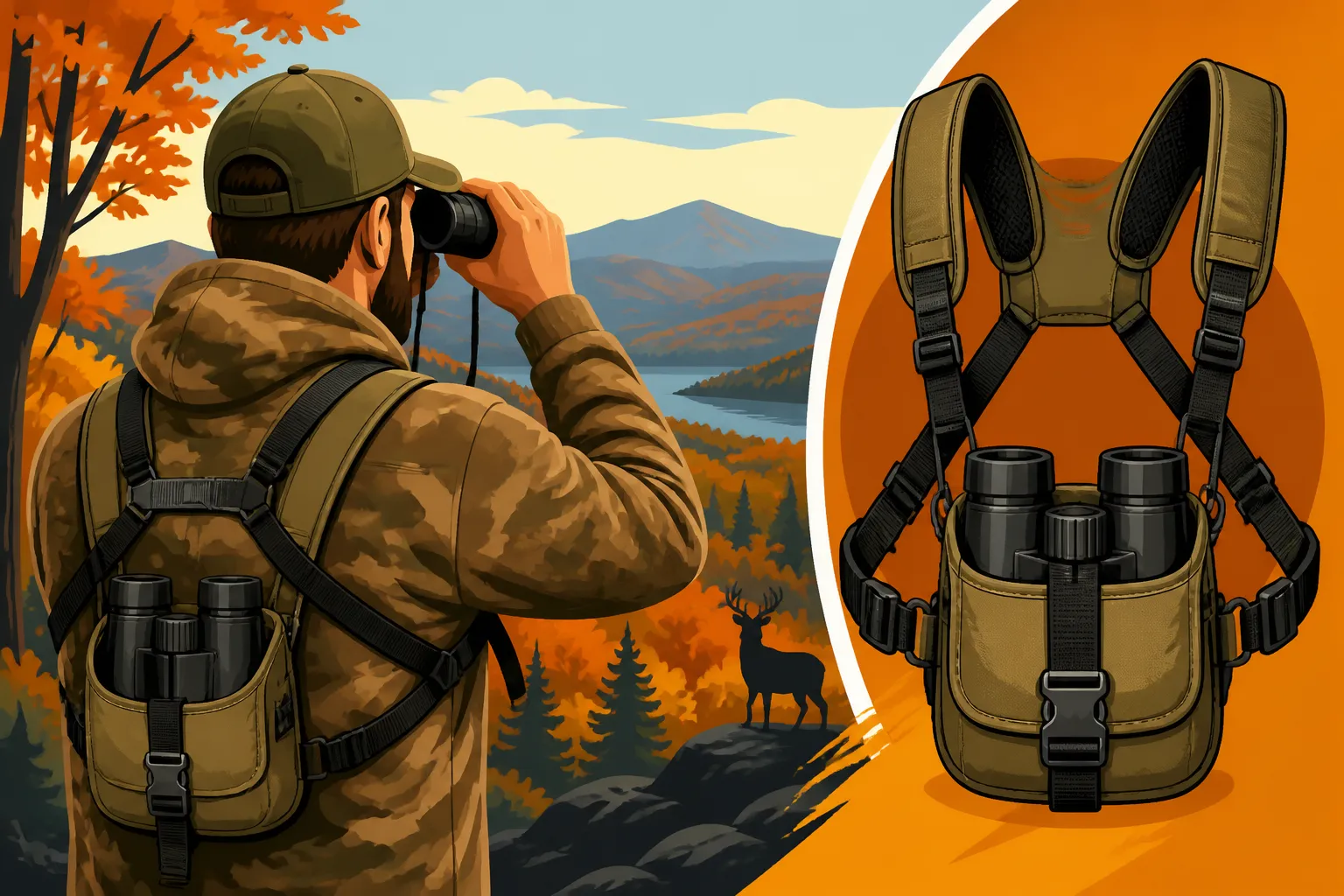
Binocular Harnesses Worth Wearing
There’s nothing quite like the feeling of stepping into the New York woods, but that feeling can quickly sour when your binoculars are bouncing off your chest, digging into your neck, or getting tangled in every branch you pass. It’s a common frustration, especially when you’re trying to move quietly or keep your eyes on the terrain. This guide is all about solving that problem by exploring the world of binocular harnesses and helping you find one that's truly worth wearing, making your time afield much more comfortable and productive.
Why a Quality Binocular Harness is a Game Changer
Let's be real: carrying binoculars around your neck with just a standard strap is a recipe for discomfort. After a few hours, especially with a heavier pair of optics, your neck feels like you've been doing crunches with a bowling ball. A good binocular harness isn't just a fancy accessory; it's a fundamental piece of gear that transforms your hunting experience from a neck-aching chore into a smooth, efficient operation.
Comfort and Ergonomics
The primary benefit of a well-designed binocular harness is the significant boost in comfort. Instead of all that weight hanging directly from your neck, a harness distributes the load across your shoulders and back. This might seem like a small detail, but when you're spending hours still-hunting through thick Adirondack timber or hiking steep Catskill ridges, that even weight distribution makes an enormous difference. You'll find yourself less fatigued at the end of the day, which means you can stay focused on the hunt, not on your aching muscles.
Think about those long glassing sessions from a high point in the Southern Tier, trying to pick apart a distant field edge for deer movement. Without a harness, you’d be constantly taking your binoculars off, resting your neck, and putting them back on. With a harness, your binos are right there, ready for action, and the weight is barely noticeable. It truly allows you to spend more time effectively scouting and less time fiddling with your gear.
Protection for Your Optics
Modern hunting binoculars are an investment, often costing as much as a new rifle scope. The last thing you want is for them to swing wildly and get banged up against a tree, scratched by a rock, or filled with debris when you stumble. A quality binocular harness securely holds your optics close to your body, protecting them from impact and the elements. Many harnesses feature a protective main compartment that shields the lenses and body from dust, moisture, and accidental bumps.
Imagine navigating a dense patch of multiflora rose in a Southern Tier woodlot, or squeezing through a tight spruce thicket in the Northern Zone. With a traditional neck strap, your binoculars are a prime target for snagging and damage. A harness keeps them tucked away, safe and sound, yet still immediately accessible. This added layer of protection ensures your valuable optics last longer and perform flawlessly when you need them most, whether you're trying to Scouting New York Public Land Before Season or locating game during the season.
Quick Access and Stealth
Hunting often comes down to split-second decisions and quiet movements. Fumbling to get your binoculars up to your eyes when a deer steps out of cover or a gobbler appears over a ridge can mean the difference between a successful shot and a missed opportunity. A good binocular harness positions your optics front and center on your chest, making them incredibly quick and easy to deploy with minimal movement and noise.
Many harnesses also feature silent magnetic closures or quiet zipper pulls, ensuring that drawing your binoculars doesn't alert wary game. This stealth factor is crucial, especially when you're trying to work a Rattling and Grunting in New York sequence or slip through a quiet woods during the late season. The ability to smoothly and silently raise your binos, get a quick read, and then tuck them back away without breaking stride is an invaluable asset for any serious New York hunter.
Key Features to Look For in a Binocular Harness
Not all binocular harnesses are created equal. Just like choosing a pair of Boots for New York Swamps and Snow, the features you prioritize will depend on your hunting style, the terrain you navigate, and the specific challenges you face in the field. Let's break down what makes a harness truly effective.
Suspension System and Padding
The core of any comfortable harness is its suspension system. Look for wide, padded straps that distribute the weight across a larger area of your shoulders and back, rather than concentrating it on narrow points. Many top-tier harnesses use breathable mesh or foam padding on the back panel to prevent sweat buildup and increase comfort, especially on warmer early season days. The adjustability of these straps is also critical; you need to be able to fine-tune the fit to accommodate different layers of clothing, from a light base layer in early bow season to heavy winter insulation during Muzzleloader Tactics in December Cold.
A good harness will feel secure without being restrictive. You should be able to move freely, draw your bow or shoulder your rifle, and climb into a stand without the harness digging in or shifting awkwardly. Some designs even offer a small amount of elastic in the straps to allow for natural body movement without letting your binoculars bounce excessively. The goal is to forget you're even wearing it, allowing you to focus completely on the hunt, even during a long day at a New York Deer Camp Traditions.
Storage and Organization
Beyond just holding your binoculars, many harnesses offer additional storage compartments that can be incredibly useful. Think about what small essentials you always reach for in the field: a rangefinder, a wind checker, a spare release, your hunting license, a small compass, or a lens cleaning cloth. Having dedicated, easily accessible pockets for these items can save you from digging through your main pack and potentially making unnecessary noise or movement.
Some harnesses even feature internal organizers or small elastic loops to keep items from rattling around. This thoughtful design helps maintain that critical stealth. For example, some models include a small tether for your rangefinder, ensuring it doesn't get dropped but is always within easy reach. The best harnesses strike a balance, offering enough storage for critical items without becoming overly bulky or cumbersome.
Durability and Weather Resistance
New York's weather can be notoriously unpredictable, swinging from crisp, dry autumn days to sleeting rain, heavy snow, and muddy conditions. Your binocular harness needs to be built to withstand these elements. Look for harnesses made from rugged, water-resistant fabrics like Cordura or similar nylons that can shrug off a sudden shower or brush through wet vegetation. Quality stitching and robust zippers are also key indicators of durability, ensuring the harness holds up season after season.
Pay attention to details like storm flaps over zippers or fully waterproof compartments if you anticipate hunting in consistently wet conditions. While few harnesses are completely submersible, good weather resistance will keep your optics dry and functional, protecting them from internal fogging or damage from moisture. A harness that can handle the abuse of a typical New York hunting season means one less thing you have to worry about when you're miles from the truck.
Silent Operation and Camouflage
In the world of hunting, silence is golden. A harness with noisy buckles, Velcro closures, or stiff, crinkly fabric can blow your cover in an instant. Look for harnesses designed with quiet materials and closures. Magnetic flaps are often favored for their silent and quick access, while quiet zippers with pull tabs can also work well. Avoiding anything that makes a "crinkle" sound when you move or a loud "clunk" when you open it is paramount.
When it comes to color, traditional camouflage patterns are always a popular choice for blending into the environment. However, solid earth tones like drab green, coyote brown, or even black can be equally effective, especially in varying terrains or if you wear a variety of camo patterns yourself. The key is to avoid anything overly bright or reflective. Some hunters even prefer blaze orange or pink elements on their harness during firearm seasons for added safety, as long as it doesn't compromise stealth too much. Remember, staying hidden means considering every piece of your Layering for a New York Deer Stand and gear setup.
Popular Styles and Considerations for New York Hunters
The market for binocular harnesses has expanded significantly, offering a range of styles to suit different preferences and hunting situations. Understanding these variations will help you pinpoint the best fit for your adventures across New York.
Chest-Mounted vs. Backpack Integration
The most common style is the standalone chest-mounted harness, where the binoculars rest directly on your chest, secured by shoulder and back straps. These are popular for their excellent accessibility and protection. They keep your optics high and easily reachable, often with a protective flap or magnetic closure that quickly opens and closes. This design is fantastic for quick glassing while moving or for prolonged periods in a treestand.
Alternatively, some hunters prefer harnesses that integrate with their backpacks. These systems often have straps that connect directly to your pack's shoulder straps or waist belt, reducing the number of straps around your torso. While this can offer a streamlined feel, it might make the binoculars slightly less accessible if you need to remove your pack frequently. For a truly minimalist approach, you might find some models that even attach directly to a belt or vest, offering ultra-low profile carry. Considerations for backcountry hunts or situations where you're carrying a large pack might lean towards integrated systems, but for most day hunts in New York, a dedicated chest-mounted harness is a reliable choice.
Magnetic Closures vs. Zippered Pockets
The type of closure on your main binocular compartment significantly impacts both speed of access and protection.
| Feature | Magnetic Closures | Zippered Pockets |
|---|---|---|
| Access Speed | Extremely fast and silent one-handed operation. | Requires two hands for quiet operation, slower. |
| Stealth | Very quiet, minimal noise when opening or closing. | Can be quiet with quality zippers, but not always. |
| Security | Good for quick access, but can sometimes open if snagged. | Excellent security, keeps contents firmly inside. |
| Weather Seal | Decent, but not fully sealed against heavy rain/snow. | Often provides a better seal against dust and moisture. |
| Durability | Magnets are durable, but outer fabric can wear. | Zippers can eventually fail, but generally robust. |
| Bulk | Often results in a more streamlined, lower-profile design. | Can add a bit more bulk due to zipper tracks. |
Magnetic closures are fantastic for their near-instant, silent access, making them ideal when a fleeting glimpse of a deer requires immediate action. Many hunters, including myself, prefer them for general all-around hunting because of the stealth and speed. However, for maximum protection against driving rain, snow, or extreme dusty conditions, a well-designed zippered pocket with a weather flap might offer superior sealing. Some harnesses cleverly combine both, offering a main magnetic closure for quick access to the binoculars, with smaller zippered pockets for less-frequently accessed items like a First Aid Kits for Remote Adirondack Ground or Trail Cameras on New York Public Land remote.
Brand Focus: GoHunt and Other Quality Options
When you start looking at binocular harnesses, you'll see a lot of names pop up. Many brands are doing a fantastic job of innovating and building quality gear. Brands like GoHunt, for example, are known for their meticulous design, often focusing on durable materials and practical features that serious hunters appreciate. A GoHunt harness might offer a well-thought-out system of internal pockets or an exceptionally comfortable suspension, tailored for long days afield.
While GoHunt consistently delivers, there are other manufacturers that also produce excellent harnesses. When you're comparing, remember to focus on the features that matter most to your hunting style. Do you need maximum weather protection? Is silent access your absolute priority? Or are you looking for ample storage for all your bits and bobs? Different brands emphasize different strengths, so consider what aligns best with your needs. A quick look through online reviews or talking to fellow hunters at your local sporting goods store can also offer valuable insights into real-world performance. Ultimately, the best harness for you is one that disappears on your body, keeps your optics safe, and allows you to focus on the hunt.
Sizing, Adjustment, and Maintenance
Even the best-designed binocular harness won't perform optimally if it doesn't fit correctly or isn't cared for properly. Taking a few extra minutes to adjust your harness and keep it clean will ensure it serves you well for many seasons to come.
Getting the Right Fit
Achieving the right fit is paramount for comfort and function. Most harnesses are highly adjustable, featuring multiple straps that allow you to customize how the weight is distributed and how high or low your binoculars sit on your chest. When trying one on, wear the layers you typically hunt in – this is especially important in New York, where you might be Layering for a New York Deer Stand from a light shirt in September to heavy insulation in December.
The harness should feel snug but not restrictive. Your binoculars should rest comfortably against your chest, close enough that they don't bounce when you walk, but not so tight that they impede your breathing or movement. You should be able to smoothly bring them up to your eyes without snagging or struggling. Spend some time walking around, bending over, and even mimicking shooting positions to ensure the harness moves with you, not against you. A properly adjusted harness will feel like an extension of your body, rather than an extra piece of gear.
Cleaning and Care
Your binocular harness is going to get dirty. It's going to see mud, sweat, pine needles, and maybe even a bit of blood over the course of a New York hunting season. Regular cleaning is essential to maintain its performance and extend its lifespan. Most harnesses can be spot-cleaned with a damp cloth and mild soap. For deeper cleaning, check the manufacturer's recommendations, but generally, a hand wash in lukewarm water with a gentle detergent is sufficient. Avoid harsh chemicals or machine washing, as these can damage the fabric, padding, or waterproof coatings.
Pay special attention to zippers and buckles. Dirt and debris can get lodged in zippers, making them stiff or prone to failure. Clean them with a small brush and apply a silicone-based lubricant designed for zippers if they start to stick. After cleaning, always allow the harness to air dry completely before storing it to prevent mold and mildew. Proper care ensures that your harness remains quiet, functional, and comfortable for years of reliable service.
Seasonal Adjustments
New York's hunting seasons span a wide range of temperatures and conditions, meaning your clothing layers will change dramatically. What fits perfectly over a t-shirt in September's archery season will be far too tight over a heavy winter coat in the late muzzleloader season. It’s a common mistake to adjust your harness once and forget about it, but this can lead to discomfort or reduced functionality.
Make it a habit to readjust your harness each time you change your primary hunting outerwear. Loosen the straps for bulky jackets and tighten them for lighter layers. This simple practice ensures consistent comfort and quick access to your optics, regardless of the weather. By being mindful of these small but significant adjustments, your binocular harness will remain an invaluable piece of gear throughout the entire hunting calendar, from scouting early season rubs to tracking deer in late-season snow.
Disclaimer
This article is for general informational purposes only and does not constitute professional advice. Laws, prices and regulations vary by location and change over time. Consult a qualified professional for guidance on your specific situation.