Headlamps for Walking Out After Dark
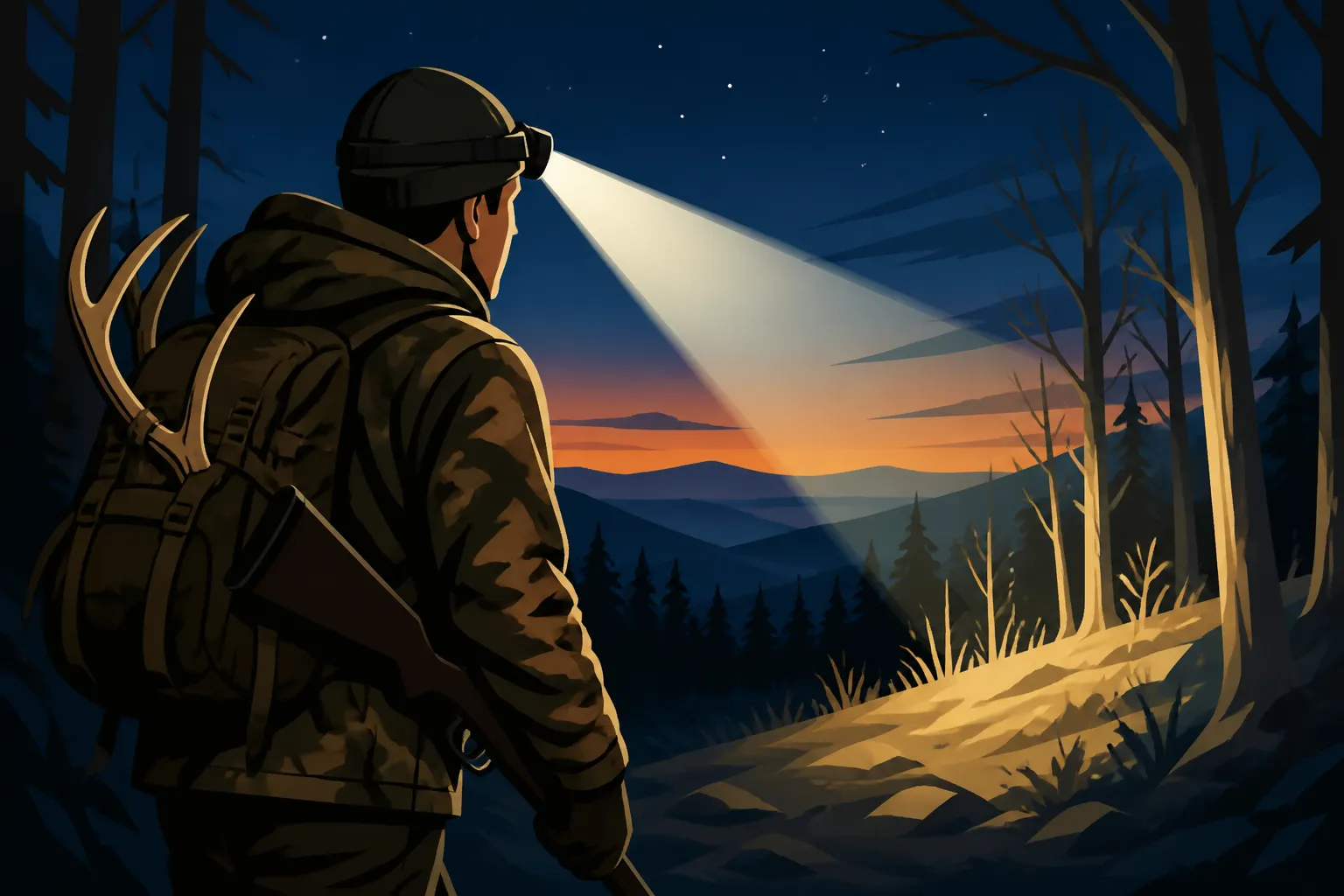
The moment dusk starts to settle and you've still got a mile or two to hike back to the truck, or worse, a deer on the ground, that's when you truly appreciate reliable illumination. There's nothing worse than fumbling in the dark, tripping over roots, or losing the blood trail as legal shooting hours fade into absolute blackness. This guide is all about helping New York hunters understand why a quality headlamp isn't just a convenience, but an essential piece of safety and efficiency gear for every trip into the woods.
Why a Reliable Headlamp is Non-Negotiable for New York Hunters
Let's face it, hunting in New York often means dealing with varied and sometimes challenging terrain, from the steep, rocky slopes of the Catskills to the dense, swampy lowlands of the Southern Tier, or the vast, trackless timber of the Adirondacks. When the sun dips below the horizon, or before it crests the peaks in the morning, these environments become significantly more difficult and dangerous to navigate without proper lighting. A flimsy flashlight clutched in your hand just doesn't cut it when you need both hands free for balance, carrying gear, or field dressing.
The Perils of Darkness in New York's Diverse Terrain
Imagine you're deep in the Adirondack Forest Preserve, miles from the nearest road, having just made a successful shot on a deer as legal light dwindled. Now you face the challenge of field dressing, navigating dense spruce thickets, and dragging out your harvest, all under the cover of night. Without a dependable headlamp, this scenario quickly escalates from challenging to potentially dangerous. Uneven ground, fallen timber, and rocky streambeds become hidden hazards, and a simple misstep can lead to a sprained ankle or worse, leaving you stranded in the cold. This is where smart preparation, informed by tools like the Scouting New York Public Land Before Season information, combined with reliable gear, truly pays off.
Or consider hunting in the steep ravines of the Catskill Forest Preserve. An entry route that felt manageable in daylight can become a treacherous descent in the dark. Roots, loose rocks, and sudden drop-offs become invisible obstacles. A headlamp ensures you can clearly see your footing, identify potential hazards, and keep your hands free to grasp trees or trekking poles for stability. This greatly reduces the risk of injury, allowing you to focus on the task at hand, whether it's getting to your stand or carefully extracting your game.
Even on what might seem like "easier" terrain, like hunting Southern Tier Farmland Deer, the darkness brings its own challenges. A cut cornfield, seemingly flat, can conceal divots, irrigation ditches, or even barbwire fences you didn't notice in the fading light. Swamps or marshes, common in many parts of New York, become labyrinthine traps when you can't see the path of least resistance. A wide, bright beam illuminates your immediate surroundings, revealing these hidden dangers before you stumble into them.
Regulatory Compliance and Ethical Considerations
Beyond personal safety, there are important regulatory and ethical aspects to consider when hunting in New York that make a headlamp indispensable. While legal shooting hours are strictly defined, your activity doesn't always end when the sun sets. If you make a shot late in the day, locating and recovering your animal might extend well past official closing times. Having a powerful headlamp is critical for tasks like Blood Trailing After Dark in New York. It allows you to follow the blood trail efficiently and humanely, ensuring you don't lose a wounded animal overnight, which would be both a waste of game and an ethical failing.
It's important to remember that regulations typically define legal shooting hours, not legal walking or tracking hours. A headlamp provides the necessary light to safely and respectfully manage your hunt even after legal shooting light has passed. It allows you to clearly identify your path and surroundings without accidentally disturbing other hunters or crossing property lines, especially when you're navigating complex parcels, and you've used tools like Reading Aerial Photos for Southern Tier Deer to plan your movements. Always ensure your light source isn't mistaken for a hunting implement or used to spot game illegally, but rather as a tool for navigation and recovery.
Beyond Just Seeing: Practical Uses in the Field
A headlamp isn't just for walking; it's a versatile tool that enhances almost every aspect of your post-sunset or pre-dawn hunting activities. Imagine trying to Field Dressing a Deer in Cold Weather in the pitch black. A headlamp illuminates your work area, allowing for precise cuts and thorough cleaning, crucial for preserving the meat quality. It keeps both your hands free for knives and tools, making the process faster and safer. Trying to hold a flashlight in your mouth or under your arm while performing such a task is inefficient and unsanitary.
Setting up a treestand before dawn, or taking it down after a long day, often requires light. Fumbling with straps, chains, and bolts in the dark is not only frustrating but also dangerous, especially when you’re many feet off the ground. A headlamp provides consistent, hands-free illumination, letting you secure your stand or pack up your gear with confidence and precision. This applies equally whether you're hanging a fixed-position stand or using a climber in remote Adirondack hardwoods or making Treestand Setups in Adirondack Hardwoods.
Furthermore, a headlamp is essential for general gear management. Finding that specific grunt tube in your pack, checking your phone for messages (though hopefully not during the hunt!), or simply packing your backpack efficiently are all made easier with a personal light source. It helps you stay organized and ensures you don't leave any critical gear behind in the gloom.
Key Features to Look for in a Hunting Headlamp
When you're choosing a headlamp for hunting in New York, you're not just grabbing the cheapest option off the shelf. You need something robust, reliable, and tailored to the unique demands of the backcountry. Think about the cold, the wet, the bumps and scrapes – your headlamp needs to withstand it all.
Lumens, Beam Type, and Runtime: Finding the Right Balance
The "brightness" of a headlamp is typically measured in lumens. While more lumens generally mean more light, it’s not always about having the brightest light possible. For walking in and out of your stand, a modest 100-200 lumens might be sufficient on its lowest setting, especially if you're trying to be stealthy or preserve night vision. But for blood trailing or Recovering a Deer From a Steep Ravine, you might need a burst of 500-1000+ lumens to cut through the darkness and spot subtle signs.
Beam type is also crucial. Many quality hunting headlamps offer multiple beam patterns:
- Floodlight: A wide, even beam that illuminates a large area close to you. This is perfect for walking, setting up camp, or field dressing, as it reduces tunnel vision and helps you see your immediate surroundings clearly.
- Spotlight: A focused, narrow beam that throws light a greater distance. This is invaluable for scanning ahead on a trail, looking for landmarks, or intensely searching for a blood trail.
- Red Light Mode: This is a hunter's best friend. Red light preserves your natural night vision, meaning when you turn the red light off, your eyes don't have to readjust to the darkness as much as they would after using white light. It's excellent for subtly checking your gear, reading a map, or walking into your stand without spooking game, as many animals are less sensitive to red light.
Runtime, the amount of time a headlamp will run on a given setting, is directly tied to its brightness. Most manufacturers list runtimes for various modes. Look for a headlamp that offers a long runtime on a lower, usable setting (e.g., 8-10 hours on 100 lumens), with the capability for short bursts of high lumen output when needed. This allows you to conserve battery while still having power for critical moments.
Battery Life and Power Options for New York's Cold
New York winters can be brutal, and cold weather is notorious for draining battery life faster than you can say "bone-chilling." This makes your choice of battery type and management incredibly important.
Most headlamps run on either standard alkaline AA/AAA batteries or rechargeable lithium-ion battery packs.
- Alkaline Batteries: Readily available, but their performance drops significantly in cold temperatures. They also tend to "die" rather than gradually dim, which can leave you suddenly in the dark. Always carry spares, and keep them warm (e.g., in an inside pocket) until needed.
- Rechargeable Lithium-Ion Batteries: Generally perform better in the cold and offer more consistent output. Many modern headlamps use proprietary rechargeable packs that can be charged via USB, which is convenient. However, they can be more expensive to replace, and if your battery dies, you can't just pop in a new one unless the headlamp also accepts alkaline backups. Some headlamps, like those from Fenix or Black Diamond, offer hybrid systems that can use either a rechargeable pack or disposable batteries, providing the best of both worlds.
Regardless of the type, always fully charge or install fresh batteries before a hunt. If you're heading out for a multi-day trip or expect extremely cold conditions, carrying a spare battery pack or a full set of fresh alkaline batteries (kept warm in your pack or pocket) is a non-negotiable insurance policy. This preparedness is similar to how you'd manage a mapping device, as discussed in GPS Units Versus Phone Apps, where battery longevity is key for navigation.
Durability, Waterproofing, and Comfort: Built for the Backcountry
A hunting headlamp needs to be as tough as the environment you hunt in. It will get bumped, dropped, rained on, and covered in mud.
- Durability: Look for headlamps made from robust materials like high-grade plastics or aluminum. Check for impact resistance ratings, often indicated by a drop-test specification (e.g., survives a 1-meter drop). Brands like Princeton Tec or Petzl are known for their rugged construction.
- Waterproofing (IP Rating): This is critical for New York's often damp and unpredictable weather. An IP (Ingress Protection) rating indicates how well a device is sealed against dust and water.
- IPX4: Splash resistant. Fine for light rain, but not for heavy downpours or submersion.
- IPX7: Withstands submersion up to 1 meter for 30 minutes. This is a good minimum for hunting, ensuring it survives accidental drops in puddles or heavy rain.
- IPX8: Withstands continuous submersion beyond 1 meter. The gold standard for extreme wet conditions.
A hunting headlamp should have at least an IPX7 rating for peace of mind. You don't want your light failing when you're caught in a sudden downpour miles from the truck.
Finally, Comfort is paramount, especially if you're wearing it for hours on end, or over a hat or hood.
- Strap Design: Look for a wide, adjustable, and breathable strap. Some headlamps have a top strap that goes over your head, which helps distribute weight and prevents the lamp from slipping, especially useful if you're jogging or doing strenuous work. The material should be comfortable against your skin or over your cap, and easily washable.
- Weight Distribution: A well-designed headlamp balances the weight of the battery pack and light unit to prevent it from feeling front-heavy and bouncing around. Some models place the battery pack on the back of your head for better balance.
| Feature | Description | Ideal for Hunting |
|---|---|---|
| Lumens | Unit of light output/brightness. | Multiple settings: Low (50-150 for walking), Medium (200-400 for general tasks), High (500+ for blood trailing, scanning distances). |
| Beam Type | How light is dispersed (spot vs. flood). | Combination of focused spot for distance and wide flood for close-up tasks. Red light mode for preserving night vision. |
| Runtime | How long the battery lasts at various brightness levels. | Long runtime on low/medium settings (8+ hours), with boost mode for short, high-power needs. |
| Battery Type | Power source (alkaline, rechargeable Li-ion). | Rechargeable Li-ion (better cold weather performance, consistent output) with ability to use alkaline backup, or easily replaceable spare Li-ion packs. |
| IP Rating | Ingress Protection against dust and water. | IPX7 (submersible to 1m) or higher is recommended for New York's unpredictable weather. |
| Durability | Resistance to impact and wear. | Robust housing (plastic, aluminum), impact-resistant (e.g., 1-meter drop rating), designed to withstand drops and knocks. |
| Comfort | How well it fits and feels during prolonged use. | Wide, adjustable, breathable head strap (preferably with top strap for stability), balanced weight distribution, easily operable with gloves. |
| Weight | Overall mass of the headlamp. | Lightweight enough to be comfortable for hours, but not so light that durability is sacrificed. |
Optimizing Your Headlamp Use for Different New York Hunting Scenarios
Just having a great headlamp isn't enough; knowing how and when to use its features effectively can make a huge difference in your hunting experience and safety. It's about being strategic with your light.
Strategic Illumination for Early Mornings and Late Evenings
When you're trying to slip into your stand before legal light, or quietly walk out after hours, stealth is key. This is where your headlamp's lower settings and red light feature truly shine. Use the lowest white light setting that allows you to safely navigate the trail. A bright blast of light can spook deer or other animals you're trying to avoid alerting. For mapping your exact route or checking your watch without giving away your position, a red light is almost always the superior choice. It doesn't disrupt your night vision or, theoretically, the night vision of nearby game as much as white light.
For example, if you've done your homework with Reading a Ridge for Catskill Deer Movement or studied the terrain using tools like GoHunt to plan your precise entry and exit routes to avoid deer bedding areas, you'll want to move as discreetly as possible. Turn your headlamp on only when absolutely necessary, keeping the beam pointed at the ground just in front of your feet. Once you're in your stand, or well away from sensitive areas, you can turn it off and rely on natural light or a very dim red light if you need to adjust gear. Minimize the use of bright white light during these critical transition periods.
When heading out in the dark, even if you know your trail well, take your time. Rushing leads to mistakes. Use your light to identify roots, rocks, and uneven ground. If you're on public land, be mindful of other hunters. A bright beam cutting through the woods could signal your location, which might not always be what you want, or worse, be mistaken for something else. Always be aware of your surroundings and any signals from other hunters.
Enhancing Safety and Efficiency During Game Recovery
This is arguably where a headlamp becomes most indispensable. Tracking a wounded animal after dark is a challenge that requires clear, focused light. For Blood Trailing After Dark in New York, you'll want a headlamp with a powerful, focused beam that can pick up the often subtle signs of blood on leaves, grass, or snow. A floodlight can be useful for scanning a wider area, but a spot beam often helps define the trail itself. Many experienced trackers will also use a second, handheld flashlight to provide a different angle of light, as blood can look different depending on the light source.
When you finally locate your game, your headlamp ensures you can perform tasks like field dressing safely and efficiently. The hands-free illumination allows you to concentrate on proper technique, reducing the risk of accidental cuts. It also helps you identify vital organs, ensuring the animal is properly gutted and ready for transport. Remember that proper field dressing is crucial for meat preservation, especially if you're dealing with warmer temperatures, even if you've already considered how to handle Field Dressing a Deer in Cold Weather.
Packing out a deer in the dark, especially from rugged terrain, is a monumental task. A good headlamp will illuminate your path, making it easier to navigate obstacles with your heavy load. If you're using a Packs for a Day on Public Land or a frame pack, you'll want to ensure your headlamp doesn't interfere with your pack straps or balance. It’s also wise to have a backup light source, perhaps a small handheld flashlight, in case your primary headlamp fails during this demanding process.
Camp Chores and Gear Management in the Dark
Even if you're not tracking a deer, simply getting back to camp or your vehicle in the dark requires light. Once you're there, there are still tasks to be done. A headlamp allows you to set up your tent, prepare a meal, or organize your gear efficiently without fumbling. If you're camping on New York State Forest Land, a headlamp makes it easier to navigate around your campsite and adhere to Camping Rules on New York State Forest Land.
Whether it's cooking dinner, hanging your food from a bear bag, or simply organizing your backpack for the next day's hunt, a headlamp gives you the freedom to use both hands. The red light mode can be particularly useful in camp as well, especially if you're sharing a site with others who might be trying to sleep. A soft red glow provides enough light for most tasks without being disruptive. This kind of mindful use reflects a deeper understanding of wilderness etiquette and safety.
Furthermore, a headlamp is invaluable for inspecting your gear. Did your bow string get a twig stuck in it? Is your rifle scope cap still on? A quick check with your headlamp ensures everything is in working order for tomorrow's hunt. It helps you keep track of small items that might otherwise get lost in the darkness, saving you frustration and potential lost gear.
Maintenance and Best Practices for Longevity
A headlamp is an investment in your safety and success in the field, so treating it right means it will be there for you when you need it most. Just like your rifle or bow, it deserves some attention.
Pre-Season Checks and In-Season Care
Don't wait until opening day to discover your headlamp is dead. Before the hunting season even begins, conduct a thorough check. Install fresh batteries or fully charge your rechargeable pack. Test all modes – high, low, flood, spot, and especially the red light. Make sure the beam is consistent and that there are no flickering issues. Check the head strap for wear and tear, and ensure it's still elastic and adjustable. This simple step can prevent a lot of frustration.
During the season, ongoing care is important. If your headlamp gets wet or muddy, clean it promptly. Wipe down the body with a damp cloth, and clean any mud or debris from the lens with a soft cloth. Check the battery compartment for corrosion, especially if you're using alkaline batteries that might have leaked. If you find any, clean the contacts carefully with a pencil eraser or a cotton swab dipped in rubbing alcohol, then allow it to dry completely before reinserting batteries. Neglecting these small details can lead to intermittent function or complete failure down the line.
Remember that headlamps are not indestructible, even the most durable ones. Avoid dropping them unnecessarily. If you're walking through thick brush or climbing into a stand, be mindful of branches that could snag your headlamp or knock it loose. It's a tool, but it's also a piece of sensitive electronics.
Cold Weather Management and Battery Preservation
New York's late seasons often bring biting cold, which, as we discussed, can wreak havoc on batteries. To combat this, always carry spare batteries and keep them in an inside pocket, close to your body heat. This keeps them warm and ready to perform at their best when you need them. If your primary headlamp battery starts to dim in extreme cold, swapping it out for a warm spare can often restore full functionality. This is a critical tip, similar to how you’d manage any other electronics like a GoHunt enabled device or a smartphone in freezing temperatures.
When not in active use, especially during prolonged periods in the cold, consider removing the batteries from your headlamp if it uses disposables. This prevents accidental discharge and leakage, which can damage the internal components. For rechargeable models, make sure they are fully charged and consider carrying a small, insulated pouch for the headlamp itself to help it retain some warmth. This mindful approach to Cold-Weather Sitting Strategy in New York extends to all your gear.
Lithium batteries (whether disposable or rechargeable) generally perform better in cold weather than alkaline batteries. If you frequently hunt in frigid conditions, upgrading to a headlamp that uses lithium-ion packs or accepts disposable lithium AA/AAA batteries (often marked "Ultimate Lithium") can be a wise investment, providing more consistent output and longer life when temperatures plummet.
Smart Carrying and Storage to Prevent Malfunction
When your headlamp isn't on your head, where does it go? Simply tossing it into your pack can lead to issues. Many headlamps have a "lockout" feature, often activated by holding down the power button for a few seconds. This prevents the light from accidentally turning on inside your pack, draining the battery, and potentially overheating. Always engage the lockout feature when storing your headlamp.
If your headlamp doesn't have a lockout feature, or even if it does, it's a good practice to reverse one of the batteries or remove the battery entirely when storing it for extended periods. This completely breaks the circuit, guaranteeing no accidental power drain. For storage in your pack, consider a small, padded case or pouch. This protects the lens from scratches and the body from bumps and drops, ensuring it's in perfect working order when you pull it out for your next hunt. Just like you'd carefully pack your Packs for a Day on Public Land, your headlamp deserves a secure spot.
At home, store your headlamp and spare batteries in a cool, dry place away from direct sunlight and extreme temperatures. Avoid leaving batteries in unheated garages or sheds over the winter, as this can severely shorten their lifespan. A little preventative care goes a long way in ensuring your headlamp is a reliable partner in the woods for many seasons to come.
Disclaimer
This article is for general informational purposes only and does not constitute professional advice. Laws, prices and regulations vary by location and change over time. Consult a qualified professional for guidance on your specific situation.