Setting Up on a Southern Tier Field Edge
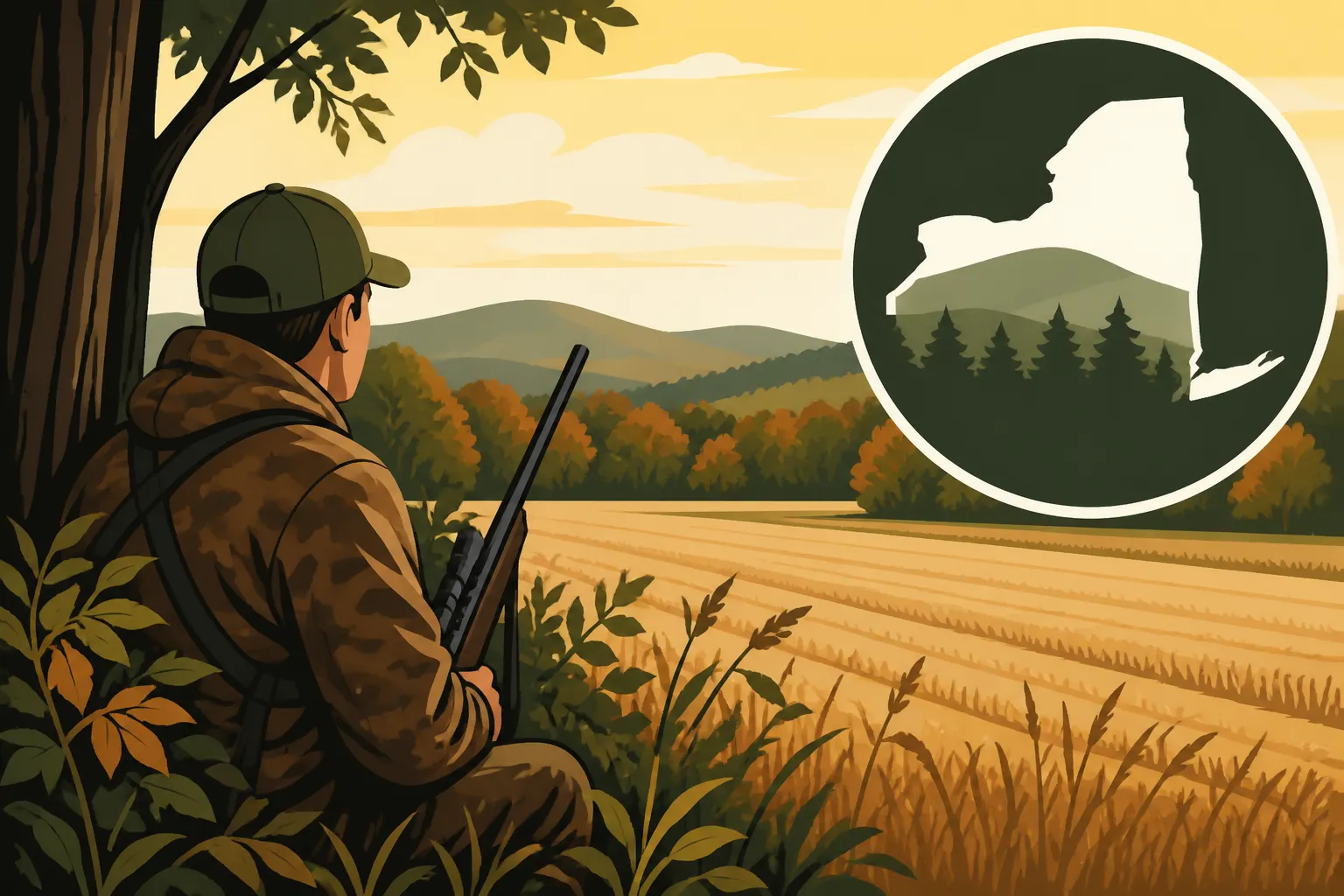
There's nothing quite like the anticipation of a crisp autumn morning, watching a New York Southern Tier field slowly come to life. But if you've spent any time hunting these agricultural fringes, you know the frustration: deer can seem to appear and disappear like ghosts, often just out of range, or they simply don't show up where you expected. This guide will walk you through the nuances of effectively setting up on a Southern Tier field edge, helping you understand deer behavior, refine your scouting, and maximize your chances for success.
The Allure and Challenge of Southern Tier Field Edges
Hunting the edge of an agricultural field in New York's Southern Zone is a classic deer hunting scenario, often painted with idyllic images of bucks strolling out at last light. But the reality can be far more complex. These edges, whether they border a sprawling cornfield in Steuben County or a smaller soybean plot nestled in a Chenango County valley, represent a critical transition zone for deer. They offer both cover and food, making them prime real estate. However, they also expose deer to predators, including us hunters, which makes the deer incredibly wary. The challenge lies in understanding how deer balance their need for sustenance with their instinct for security.
Deer, particularly mature bucks, rarely just waltz out into the middle of a wide-open field in broad daylight. They will often hug the cover, using every available fold in the terrain, hedgerow, or brush line as a security blanket. This creates predictable travel corridors right along the edge. The allure for hunters is obvious: find that precise travel route, and you're in business. The challenge, though, is that these areas also tend to be highly visible and often see significant human activity, from farmers working the land to other hunters trying their luck. It's a constant chess match, requiring attention to detail and a nuanced approach to scouting and setup.
Understanding the specific crops involved also plays a huge role. Early season might see deer hammering lush alfalfa or clover. As fall progresses, standing corn becomes an impenetrable fortress offering both food and cover, leading deer to stage on its edges before venturing out. Once that corn is cut, the leftover waste grain can be a magnet, but it also strips away critical cover. Similarly, soybean fields offer high-protein forage, especially when they're green, and then leftover pods after harvest. Each crop presents a different puzzle, and knowing the local agricultural cycles is key to predicting deer movement.
Decoding Deer Movement Along the Edge
Deer don't just wander aimlessly; their movements are dictated by a few core needs: food, water, and security. On a Southern Tier field edge, food is usually the primary draw, but how they access it is all about security. By really dissecting their patterns, we can start to narrow down the best setup spots.
Entry and Exit Routes: The Invisible Highways
Imagine a busy highway for deer, but one that's almost entirely hidden. Deer often have very specific entry and exit points onto and off a field. These aren't random. They're typically dictated by the terrain, available cover, and scent control. A deer, especially an older buck, isn't going to cross 500 yards of open pasture to get to a preferred feeding spot if there's a thick creek bottom or a dense fencerow they can follow. They’ll stick to the path of least resistance that also offers the most concealment.
Look for natural funnels where the woods come to a point, a draw that extends into the field, or even a line of brush that provides a visual barrier. These are prime locations where deer feel more comfortable stepping out. In the morning, they'll use similar routes to retreat back into heavy cover. Their travel might be influenced by factors like the wind direction, which they often try to keep in their favor to smell danger ahead. If a deer can walk into a field with the wind in its face, sniffing for danger, and then turn and browse with the wind at its back, carrying its scent away from its bedding area, that's often a preferred path. Think about how you would approach a potentially dangerous area if you were a deer. This perspective is invaluable.
Timing and Pressure: When Deer Feel Safe
Deer, particularly in areas with hunting pressure, quickly learn to adapt their movements to the safest times. On field edges, this almost always means dawn and dusk. However, the exact timing can shift based on pressure. If a field edge gets hammered by hunters every evening, deer might start coming out later, closer to full dark, or even switch to feeding entirely at night. Conversely, a quiet field might see deer out earlier in the afternoon.
The key here is understanding the local pressure. Is this a field on public land where many hunters are active, or a private parcel you have exclusive access to? On public land, deer become incredibly nocturnal around field edges. In these scenarios, you might need to back off the actual edge and hunt 50-100 yards inside the timber, catching deer as they stage and feel safe before dark, or as they filter back in the morning. For insights into hunter activity and pressure trends, tools like GoHunt can be incredibly useful, often providing data overlays that highlight areas of high and low pressure, helping you make more informed decisions about when and where to set up.
Weather also plays a role. A cold, rainy day might keep deer bedded down longer, but a sudden drop in temperature after a warm spell can often kickstart movement, especially around prime food sources like a standing cornfield. Deer are opportunistic feeders, and they'll take advantage of comfortable conditions to maximize their caloric intake.
Strategic Scouting and Setup Placement
Effective hunting on Southern Tier field edges begins long before opening day. It starts with meticulous scouting, both in person and with digital tools, to identify those hidden highways and predict deer behavior.
Reading Aerial Photos for Southern Tier Deer
Before you ever set foot in the woods, pull out your maps. Tools like GoHunt's satellite imagery can be a game-changer for Reading aerial photos for Southern Tier deer. Look for anything that breaks up the field edge:
- Fingers of timber: Where the woods extend into the field. These are natural funnels.
- Creek bottoms or draws: These offer concealed travel routes.
- Hedgerows or fence lines: Even a sparse line of brush can offer enough cover for a deer to feel safe moving along.
- Isolated woodlots or thickets: Deer might bed in these smaller patches and only have to cross a short distance to access the larger field.
- Inside corners: Where two field edges meet at an acute angle, creating a natural pinch point. Deer will often cut this corner inside the timber.
Pay close attention to changes in elevation. Even subtle rises or dips can create visual barriers that deer utilize for security. Identify potential bedding areas nearby—dense thermal cover, thick evergreen stands, or steep, inaccessible ridges. Deer will typically travel from these bedding areas to the field edge for feeding. Plot out multiple entry and exit routes for you as the hunter, always considering the wind.
Ground Truthing: What the Sign Tells You
Once you have a few promising spots identified on your map, it's time to hit the field. This is where you confirm your digital scouting with real-world sign.
- Trails: Look for well-worn deer trails leading into and out of the field. Are they fresh? Are there multiple trails converging?
- Scrapes and Rubs: These are like signposts for bucks. A fresh scrape line along a field edge, especially during the pre-rut and rut, indicates active buck travel. During the peak of Hunting the rut in the Southern Zone, a well-placed setup near these areas can be deadly.
- Droppings: Fresh droppings indicate recent feeding activity.
- Tracks: Size and freshness can tell you a lot. Big, deep tracks are always exciting.
- Browsing: What are they eating? Are they hitting the alfalfa, the clover, or the standing beans?
- Bedding: While you generally don't want to disturb bedding areas, knowing where they are helps you understand their travel patterns.
When you're scouting, be mindful of your own scent and disturbance. Don't walk directly on the trails you intend to hunt. Stay off the actual field edge if possible, observing from a distance. Use your binoculars to really glass the field and edges from a vantage point, looking for deer movement at different times of day. A good pair of binoculars, like a quality 10×42, can help you pick apart distant cover and identify subtle deer movements without getting too close.
Choosing Your Setup Location: Treestand, Ground Blind, or Still-Hunt
The Southern Tier offers a variety of terrain, meaning you need to be versatile with your setup. Each option has its advantages and disadvantages.
1. Treestand Setups:
Treestands are the classic choice for a reason: they get you above a deer's primary line of sight and help dissipate your scent. When Hanging a stand on an Adirondack funnel or setting up on a field edge, elevation is your friend.
- Placement: Look for trees just inside the woods line, ideally 10-20 yards from the actual field edge. This allows deer to feel comfortable stepping out without being directly under your stand, and gives you a good shot angle. Aim for trees that offer natural concealment from the field, like a cluster of evergreens or a gnarly old oak.
- Height: Generally, 15-20 feet is a good starting point. Taller is often better, especially if deer are likely to be looking up. However, too high can make shot angles steep.
- Wind: Always, always, always consider the wind. A good stand location is worthless if the wind consistently blows your scent directly into the deer's travel path. Have multiple stand sites for different wind directions.
- Backdrop: Ensure you have a good backdrop to break up your silhouette. Don't sky-light yourself against an open sky.
- Shooting Lanes: Clear shooting lanes beforehand, but be subtle. Don't create a giant, obvious clear-cut that screams "hunter here." Trim just enough for a clean shot.
2. Ground Blind Setups:
Ground blinds are fantastic for cold weather, keeping you concealed, and for hunting areas with limited suitable trees. They're also great for Using a ground blind on New York public land where treestand restrictions might exist or suitable trees are scarce.
- Placement: Similar to treestands, place your blind just inside the cover. A ground blind on the open field edge is almost always a bad idea unless you can completely brush it in and leave it for weeks to allow deer to get used to it.
- Concealment: Natural concealment is key. Tuck it into a thicket, against a fallen log, or where a hedgerow meets the woods.
- Brushing In: This is crucial. Use natural materials from the surrounding area – branches, leaves, cornstalks, hay bales – to break up the blind's outline. This takes time, but it's worth it. You can learn more about Brushing in a blind on a field edge to make it disappear.
- Wind: Just like a treestand, wind is paramount. Ground blinds don't dissipate scent as well as treestands, so be extra vigilant.
- Sight Lines: Ensure you have clear shooting lanes from your seated position. Many hunters overlook this until a buck walks by and they can't get a shot.
3. Still-Hunting and Stalking:
While not a "setup" in the traditional sense, still-hunting can be incredibly effective along field edges, especially in diverse Southern Tier terrain that offers varying pockets of cover.
- Slow Movement: This is key. Take one step, pause, and scan. Use your binoculars constantly. Look for parts of a deer – a twitching ear, the horizontal line of a back, an antler tines.
- Cover: Always move with the cover. Use the fencerows, the creek banks, the dips and rises in the terrain to stay out of sight.
- Wind: Again, keep the wind in your face or quartering. You're moving, so you're actively trying to keep your scent from blowing ahead.
- Patience: This method requires immense patience. You're moving at a deer's pace, often slower. This is great for those days when deer just aren't moving much, or for exploring new pockets of habitat.
Executing the Hunt: Timing, Entry, and Exit
You’ve scouted, you’ve picked your spot, and now it’s time to hunt. But the execution of getting in, sitting smart, and getting out without blowing up your spot for future hunts is just as critical as the setup itself.
The Critical Role of Wind and Thermals
We've mentioned wind, but let's dive deeper. Wind is your number one asset or your biggest enemy. Deer rely heavily on their sense of smell. If they smell you, the game is over, usually before you even know they were there.
- Consistent Wind Direction: For a field edge, you want a consistent wind that blows your scent away from where you expect deer to approach or cross. This often means sitting with the wind quartering to your back, blowing your scent behind you, or with the wind directly in your face if deer are coming from a specific direction.
- Thermals: In hilly Southern Tier terrain, thermals also come into play, especially in the mornings and evenings. As the sun rises and the air warms, thermals lift, carrying scent uphill. In the evening, as the air cools, thermals drop, carrying scent downhill. This means a morning hunt on a ridge might require a different setup or approach than an evening hunt in the same spot. A good understanding of Wind and thermals on a Catskill ridge can be directly applied to any rolling terrain in the Southern Tier. For example, in a valley bordered by fields, morning thermals will carry your scent up the hillsides, so setting up low in the valley might be better. In the evening, thermals will pull your scent down, making a higher ridge top stand a better choice.
Always check the weather forecast for wind direction and speed. Better yet, carry a small bottle of scent checker (like unscented powder or milkweed seeds) to visually confirm the wind direction at your stand location. Never hunt a stand if the wind isn't right. You'll just educate deer and make them more nocturnal.
Stealthy Entry and Exit Strategies
Getting to and from your stand without disturbing deer is paramount. This is where many hunts are ruined before they even begin.
- Approach Routes: Plan your approach using natural cover. Use ditches, creek beds, hedgerows, or the thickest timber to shield your movement and scent. Avoid walking through open fields, especially at dawn or dusk.
- Timing: Arrive early, well before first light, to allow the woods to settle down after your disturbance. For an evening hunt, get in early enough to settle into your stand and let the woods calm down before deer start moving.
- Noise: Minimize noise. Wear quiet clothing. Walk slowly and deliberately. Avoid snapping twigs or scraping branches.
- Exit: This is often overlooked. If you shoot a deer, great. But if you don't, how do you get out without spooking deer that might be moving later or in other parts of the field? Often, it's best to wait until it's completely dark, then make a quiet exit. Sometimes, if you know deer are using a different part of the field, a carefully planned exit route can lead you away from them. This often means walking a bit further, but it preserves your spot for the next hunt. Remember, every time you bump a deer, especially a wise old buck, you’re teaching it to avoid that area.
Patience and Adaptability in the Stand
Once you’re in your setup, patience is critical. Deer may not appear immediately, or they might take a long, circuitous route to get to the field.
- Stay Alert: Continually scan your surroundings, not just the field. Deer can materialize out of thin air. Use your peripheral vision.
- Minimal Movement: Keep movement to an absolute minimum. A slight head turn is okay, but avoid fidgeting, checking your phone, or making any sudden, large movements.
- Calls: If the conditions are right, especially during the rut, light calling can sometimes draw a deer closer. A few soft grunts or a subtle rattle might pique a buck’s curiosity if he’s already in the area. However, don't overdo it. Sometimes, silence is golden. Learning about Rattling volume in thick cover or Grunt calls in mature New York timber can help you apply the right amount of sound for the specific conditions.
- The Unexpected: Be prepared for deer to come from an unexpected direction. They rarely read the script. Having clear shooting lanes in multiple directions is important.
- Field Edge Specifics: If you're hunting a standing cornfield, be aware that deer might be inside it, parallel to your position. They often pop out at different points, making it hard to predict. This is where Hunting a standing cornfield in farm country requires a different approach.
Hunting Southern Tier field edges is a rewarding endeavor, blending the challenge of reading deer sign with the anticipation of a big buck stepping out into the fading light. By understanding deer behavior, scouting meticulously, and executing your hunt with stealth and strategy, you’ll significantly increase your odds of success. And remember, every hunt is a learning experience, even the quiet ones.
| Field Edge Setup Strategy | Ideal Scenario | Advantages | Disadvantages |
|---|---|---|---|
| Treestand (Inside Edge) | Abundant mature trees, consistent wind, deer entering from predictable points. | Elevated view, scent dissipation, wider visibility. | Limited to suitable trees, can be noisy to set up, requires climbing safety gear. |
| Ground Blind (Brushed In) | Limited trees, need for warmth/comfort, hunting with kids, stealthy setup. | Excellent concealment, comfort, can be set up quickly (if brushed well). | Poorer scent control than treestand, limited visibility if not set up well, requires brushing in. |
| Still-Hunting/Stalking | Diverse terrain with varying cover, exploring new areas, unpredictable deer movement. | Highly adaptable, covers more ground, great for scouting as you hunt. | Requires extreme patience and stealth, difficult in open areas, relies on visual detection. |
Disclaimer
Hunting involves inherent risks, including but not limited to those associated with firearms, archery equipment, treestands, and outdoor conditions. Always prioritize safety, follow all New York State Department of Environmental Conservation (DEC) regulations, and ensure you have proper training and licensing. This guide is for informational purposes only and does not substitute for official regulations or professional instruction. The effectiveness of hunting techniques can vary based on numerous factors, including individual skill, local conditions, and animal behavior.