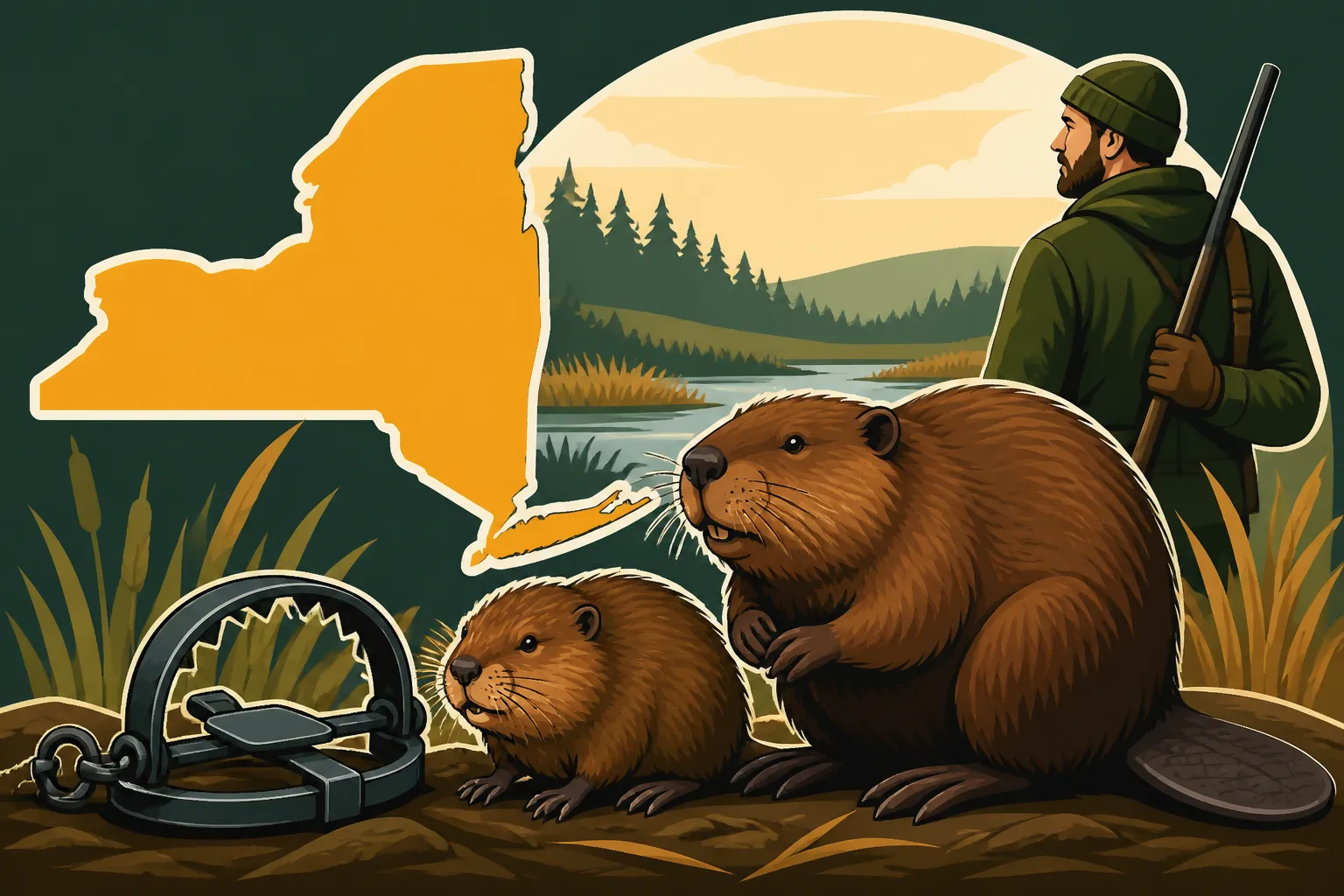
Trapping New York Muskrat and Beaver
For many New York outdoors enthusiasts, the thought of trapping conjures images of rugged wilderness and a deep connection to the land. But for those new to the pursuit or looking to expand their skills, understanding the nuances of trapping muskrat and beaver in our diverse state can feel like a tall order. Navigating regulations, choosing the right gear, and finding productive locations can be challenging. This guide aims to clear up some of that confusion, providing practical insights and essential information to help you get started ethically and successfully.
Understanding New York's Furbearer Regulations for Muskrat and Beaver
Before you even think about setting a trap, you've got to know the rules. New York State has a robust set of regulations governing furbearer trapping, designed to ensure sustainable populations and ethical practices. It's not just about what trap you use, but when and where you can use it, and how you report your success. Ignoring these rules isn't just a minor oversight; it can lead to significant penalties and reflects poorly on the trapping community as a whole.
Licensing and Permit Requirements for Trapping
To lawfully trap muskrat and beaver in New York, you'll first need to hold a valid New York trapping license. This isn't just your standard hunting license; it's a specific privilege that requires you to have passed a trapping education course. This course covers everything from furbearer identification to ethical trapping methods and the proper use of equipment. If you've never held a trapping license before, signing up for one of these courses is your crucial first step. It's comprehensive, hands-on, and ensures you're equipped with the knowledge to trap safely and responsibly.
Beyond the basic license, there aren't typically additional permits specifically for muskrat and beaver, but always double-check the current year's hunting and trapping regulations guide from the New York State Department of Environmental Conservation (DEC). The rules can sometimes change or be updated, and it's solely your responsibility as a trapper to know and follow them. Make sure to understand what a New York Trapping License Cost involves and factor that into your planning. This is an investment in your pursuit and the conservation efforts of the state.
Season Dates and Legal Trapping Methods
New York's trapping seasons for muskrat and beaver are specifically structured to align with prime fur conditions and minimize impact on breeding populations. These seasons vary by region, so you need to be acutely aware of whether you're in the Northern, Southern, or other specific zones. Generally, muskrat seasons open earlier in the fall, often coinciding with colder temperatures that improve fur quality, and beaver seasons tend to follow, extending later into the winter and early spring. These seasons are published annually by the DEC, and a quick check of the current New York Trapping Seasons and Tagging will give you the precise dates for your chosen area.
When it comes to legal methods, New York permits the use of foothold traps and body-gripping (Conibear-style) traps, but there are strict size limitations and regulations regarding their placement. For instance, body-gripping traps, particularly larger ones, often require placement in water or elevated to prevent non-target captures. Foothold traps must be equipped with certain features, like offset jaws or padded jaws, in some areas or for certain species, although for muskrats and beaver, the focus is generally on appropriate size and water sets. Cable restraints are also legal for certain furbearers, but their use is highly regulated and usually restricted to land sets for animals like coyotes, not typically beaver or muskrat. Always carry a copy of the regulations with you when you're on the line.
Reporting Your Harvest and Ethical Practices
Once you've made a catch, reporting your harvest is a critical legal and ethical responsibility. The DEC uses this data to monitor furbearer populations and make informed management decisions for future seasons. For muskrat and beaver, specific tagging requirements usually aren't as stringent as they are for, say, bobcats or fishers, but you are still required to record your catch. This typically involves noting the species, date, and location in a personal log, and sometimes reporting it through the state's online system or a phone app. Consult the regulations for exact reporting procedures.
Ethical trapping extends beyond legalities; it's about minimizing animal suffering and respecting the wildlife we pursue. This means checking your traps frequently – often within 24 hours, but ideally sooner, especially in cold weather. It also means making quick, humane dispatches and taking proper care of the fur to honor the animal. Trappers play a vital role in wildlife management by controlling populations and providing valuable data, and maintaining a high ethical standard is paramount to the public perception and future of the sport. Organizations like the New York State Trappers Association offer resources and education to ensure trappers uphold these high standards.
Essential Gear and Setups for Successful Trapping
Trapping is a gear-intensive pursuit, and having the right tools for the job can make all the difference between a successful line and a frustrating one. For muskrat and beaver, you'll need specific traps, setting aids, and lures that are designed to be effective and safe. Don't skimp on quality; reliable gear saves time and prevents lost opportunities in the field.
Essential Trap Types and Sizes
For muskrat, the most common and effective traps are No. 1 or 1.5 coil-spring foothold traps, or 110/120-size body-gripping (Conibear) traps. Footholds are great for shallow water sets or on runs leading to feeding areas, while the smaller body-grippers are deadly when placed in narrow channels, culverts, or at the entrance to den sites. These traps are designed to quickly dispatch the animal, especially when placed in a drowning set. For beaver, you'll need significantly larger and more powerful traps. Common choices include No. 3 or 4 coil-spring or long-spring foothold traps, or 330-size body-gripping (Conibear) traps.
The 330 Conibear is often considered the gold standard for beaver due to its power and efficacy in water sets. These larger traps are potent and require careful handling. Remember that New York has strict rules on body-gripping trap sizes and placement; generally, any body-gripping trap with a jaw spread over 5 inches must be set entirely in water, or at least 5 feet from public access land if set on land (and only for specific furbearers). Always confirm these specifics in the current regulations to ensure your setups are legal.
Setting Tools, Safety, and Scouting Aids
Working with powerful traps, especially large beaver traps, necessitates specialized tools and a strong emphasis on safety. Setting tongs are absolutely essential for compressing the springs on 330 Conibears, preventing injury to your hands. A trap setter for smaller body-grippers is also a good idea. You'll also need wire cutters, pliers, and a sturdy hatchet or small saw for preparing trap sites and cutting stakes. For anchoring your traps, heavy-gauge wire, rebar stakes, or even drag systems are crucial. Never underestimate the strength of a beaver; they can easily pull out a poorly anchored trap.
Safety should always be your top priority. Beyond setting tools, a pair of heavy-duty gloves can protect against cuts and cold water. A first-aid kit is always a good idea, especially when working in remote areas. For scouting and navigating your trapline, a reliable GPS unit or a mapping app like GoHunt on your phone can be invaluable. These tools help you mark productive locations, track your trap placements, and ensure you can easily find your way back, especially on large tracts of public land like those found in the Adirondacks or Catskills. You can use platforms like GoHunt to scout potential water sources and plot your entry and exit points.
Baits, Lures, and Attractants
While muskrats and beavers are primarily vegetarians, certain scents and edibles can significantly increase your trapping success. For muskrats, apple slices, carrots, parsnips, and especially commercially available muskrat lures (often containing muskrat musk or essential oils) can be highly effective. They are curious animals and respond well to visual attractants like shiny tin foil or bits of bright plastic near the set, especially when combined with a food offering.
Beavers, on the other hand, are strongly attracted to castor mound scents. Castor, a secretion from the beaver's castor glands, acts as a powerful territorial marker. Commercial beaver lures, often containing aged castor and other ingredients like poplar bud oil, are incredibly potent. Additionally, fresh cuttings of poplar, aspen, willow, or apple branches placed near a set can act as a visual and scent attractant, mimicking a natural food source. Using a mapping application like GoHunt can even help you locate stands of these preferred trees around water bodies, guiding your scouting efforts. The right bait or lure, strategically placed, can often draw an animal directly into your well-prepared set.
Locating Prime Muskrat and Beaver Habitat
Finding the furbearers is half the battle. Knowing what kind of environment muskrat and beaver prefer, and then being able to identify fresh sign, is paramount to setting a productive trapline. New York offers a diverse range of aquatic habitats, from small streams and marshy ponds to larger rivers and lakes, each with the potential for furbearer activity.
Identifying Muskrat Sign and Prime Locations
Muskrats are incredibly adaptable and can be found in almost any aquatic environment with stable water levels and abundant vegetation. Look for them in slow-moving streams, marshy inlets, shallow ponds, and even drainage ditches. Prime muskrat habitat will feature cattails, sedges, and other emergent aquatic plants, which serve as both food and building material for their lodges or bank dens.
Key signs to look for include "push-ups" – small mounds of vegetation they construct in open water to feed in relative safety – and feeding platforms, which are simply flattened areas where they've eaten plants. You'll also see narrow "runs" or trails through the vegetation, both in the water and along the banks, leading to their feeding areas or dens. Bank dens will have visible underwater entrances and perhaps a small, often muddy, slide where they enter and exit. Fresh droppings and chew marks on vegetation also indicate recent activity. Pay close attention to these small details; they reveal where to place your traps for maximum effectiveness.
Reading Beaver Activity and Lodges
Beavers are engineers of the aquatic world, and their presence is usually much more obvious than that of muskrats. They prefer ponds, lakes, and slow-moving rivers with nearby woody vegetation. Their most prominent sign is, of course, the beaver lodge – a large mound of sticks and mud built in the water, often with underwater entrances. You'll also see dams, which they construct to raise water levels, creating deeper habitat for their lodges and food caches.
Look for freshly cut trees, often with distinctive conical chew marks, and "runs" or canals they dig to access food sources further inland or to float timber to their lodge. Mud slides on banks where they enter and exit the water are also clear indicators. Active beaver colonies will have food caches of submerged branches near their lodge, especially as winter approaches. A well-worn castor mound along the bank, marked with mud and a distinct musky scent, is a sure sign of a resident beaver and a prime location for a lure set. If you're using a mapping tool like GoHunt, identify potential wetland areas or stream corridors that might hold beaver activity. For specific insights into the species, checking out topics like New York Beaver Population and Damage can give you a broader understanding of where these industrious animals are thriving.
Scouting for Productive Trap Sites
Successful trapping starts long before the season opens. Scouting is crucial, and it’s an ongoing process throughout the trapping season. Start by identifying promising water bodies on maps, either physical topo maps or digital ones like those available through the Using the New York HuntFishNY Map Tool. Look for choke points, culverts, narrow channels, and areas with abundant food sources. Public lands like State Forests or New York Wildlife Management Areas are excellent places to scout, but remember to always seek permission if you're on private property.
Once you're on the ground, look for fresh sign. The fresher the sign, the more likely the furbearers are still active in that spot. Pay attention to water depth, current, and potential trap anchoring points. For beavers, look for fresh cuttings, active dams, and signs of recent lodge maintenance. For muskrats, identify active push-ups and well-used runs. Remember to consider human disturbance; heavily trafficked areas may have fewer or more wary animals. A comprehensive scouting effort, ideally done a few weeks before the season, will save you a lot of time and frustration once it's time to set your traps.
Practical Trapping Techniques and Ethical Considerations
Setting traps isn't just about throwing them in the water. It requires precision, an understanding of animal behavior, and a commitment to ethical practices. Proper trap placement and drowning techniques are critical for humane and effective trapping.
Effective Muskrat Sets
Muskrats are relatively easy to trap once you understand their patterns. Water sets are generally preferred for muskrat because they lead to quick, humane dispatches via drowning. Here are a few reliable methods:
- Runway Sets: Identify well-used runs or trails, either in shallow water or along the bank leading into the water. Place a No. 1 or 1.5 foothold trap directly in the run, ensuring it's submerged. For a drowning set, attach the trap to a heavy wire that slides down a drowning rod into deep water, preventing the muskrat from surfacing.
- Den Entrance Sets: If you can locate an active bank den entrance or a lodge entrance, a 110/120 Conibear trap placed directly in the entrance, submerged, is incredibly effective. These are instant kill traps when the animal passes through.
- Feed Bed Sets: Place a foothold trap on a feeding platform or near a push-up. Bait with a piece of apple or carrot pinned just above the trap, ensuring the muskrat steps on the pan when reaching for the food. Again, ensure a drowning wire is used to deep water.
Always be mindful of water levels. Muskrats are small, and a slight drop in water can expose a trap or prevent a drowning set from working effectively. Adjust your sets as needed, especially after heavy rains or dry spells.
Proven Beaver Trapping Strategies
Beaver trapping requires heavier gear and a more strategic approach due to their size and strength. Drowning sets are absolutely essential for humane beaver trapping.
- Runway/Slide Sets: Beavers create distinct slides or channels where they enter and exit the water. A No. 3 or 4 foothold trap or a 330 Conibear placed in these runs can be very effective. For footholds, use a drowning cable or rod anchored in deep water. For a 330 Conibear, ensure it's fully submerged in the run.
- Castor Mound Sets: Beavers frequently establish castor mounds along the bank, marking their territory. This is a prime location for a blind set (no bait, just trap placement in a travel lane) or a baited set. Create a small mock castor mound or refresh an existing one, add some commercial beaver lure, and place a foothold trap just inches from the water's edge, or a submerged 330 Conibear.
- Dam Break Sets: Beavers are industrious and will almost immediately attempt to repair a breach in their dam. You can intentionally create a small break in a dam and place a 330 Conibear in the breach, submerged. When the beaver comes to repair, they will pass directly through the trap. This is a highly effective, but sometimes laborious, method.
Remember, beaver traps are powerful. Use caution when setting and retrieving them. Consider the advice on Trapping New York Furbearers for more general best practices.
Anchoring, Concealment, and Trap Safety
Proper anchoring is paramount for both safety and success. For muskrats, a sturdy drowning rod or heavy-gauge wire secured to a solid bank or weighted with a rock is usually sufficient. For beavers, you need serious anchoring. Rebar stakes driven deep into the bank, heavy chains, or a drag system (a heavy log or rock attached to the trap chain, designed to snag on vegetation) are common. Never underestimate the pulling power of a trapped beaver.
Concealment, especially for footholds, is important to prevent non-target animals from investigating the set and to make it appear natural to the target animal. Mud, leaves, and submerged debris can be used to blend the trap into its surroundings. Always check for proper trap function after concealment. Critically, set your traps so they are inaccessible to domestic animals or non-target species. This often means setting entirely in water or well away from trails and public access points. Review local land use regulations; sometimes even on Public Hunting Land in New York, there can be restrictions on where traps can be placed near certain features or trails. By practicing safe and ethical trapping, you contribute to the positive image of trappers and the conservation of New York's wildlife.
| Feature / Trapping Aspect | Muskrat Trapping | Beaver Trapping |
|---|---|---|
| Target Size | Small (1-3 lbs) | Large (30-60+ lbs) |
| Primary Habitat | Marshes, shallow ponds, slow streams, ditches | Ponds, lakes, slow rivers with woody vegetation |
| Common Traps | #1/1.5 Foothold, 110/120 Conibear | #3/4 Foothold, 330 Conibear |
| Preferred Sets | Runway, den entrance, feed bed, push-up | Runway/slide, castor mound, dam break, lodge entrance |
| Typical Baits/Lures | Apple, carrot, parsnip, muskrat lure, visual attractants | Castor lure, poplar/aspen/willow cuttings |
| Anchoring Need | Moderate (drowning rod/wire, sturdy stake) | High (heavy rebar, chain, drag systems) |
| Water Depth Req. | Shallow to moderate (drowning sets are key) | Moderate to deep (drowning sets are critical for humane dispatch) |
| Sign to Look For | Push-ups, feed beds, small runs, bank dens | Lodges, dams, freshly cut trees, mud slides, castor mounds |
Disclaimer
The information provided in this guide is for general educational purposes only and is not a substitute for reviewing the current New York State Department of Environmental Conservation (DEC) hunting and trapping regulations. Regulations can change frequently, and it is the responsibility of each individual trapper to be aware of and comply with all applicable state and local laws. Always prioritize safety, ethical practices, and humane treatment of animals.