New York Turkey Population Trends
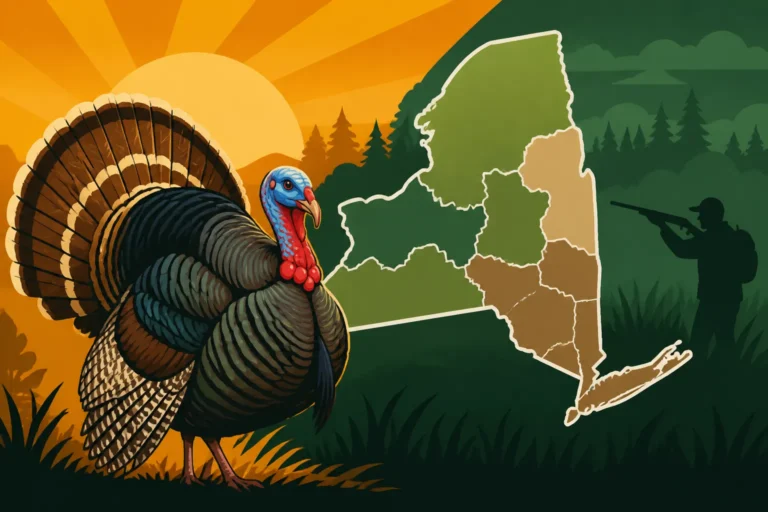
It can be incredibly frustrating to head out for your annual spring turkey hunt, full of anticipation, only to find the woods eerily quiet or the flocks smaller than you remember from years past. You're left wondering if it's just your luck, or if something bigger is happening with New York's wild turkey numbers. This guide will dive deep into New York's wild turkey population trends, shedding light on the "why" behind those shifting gobbler numbers and offering insights into what's being done to support these iconic game birds.
The Rollercoaster Ride of New York's Wild Turkey Population
New York's wild turkey population has seen its share of ups and downs, a fascinating story of conservation success, adaptation, and ongoing challenges. For many hunters, observing these fluctuations firsthand can be puzzling, making it tough to predict what each season might bring. Understanding this journey helps us appreciate the resilience of these birds and the dedicated efforts behind their management.
From Near Extinction to Resurgence
It's hard to imagine, but wild turkeys were completely absent from New York State by the mid-1800s, victims of habitat destruction and unregulated hunting. Their disappearance left a significant void in our forests, a silent testament to unchecked exploitation. However, thanks to dedicated conservation efforts and reintroduction programs that began in the 1940s, these magnificent birds made a phenomenal comeback. Initially, the DEC focused on trap-and-transfer methods, carefully relocating wild birds from areas with stable populations to suitable habitats across the state. This painstaking work, combined with habitat improvements, slowly but surely brought turkeys back to nearly every corner of New York, leading to flourishing populations and the establishment of robust hunting seasons. If you're interested in the history of this remarkable recovery, you can read more about it in our article on How Turkeys Were Restored to New York.
This resurgence wasn't just a win for hunters; it was a testament to what focused conservation can achieve. Many of us remember the boom years of the 1980s and 90s, when gobblers seemed to be everywhere, and filling a tag felt almost inevitable. It was a golden era for turkey hunters, with flocks roaming freely and abundant opportunities across diverse landscapes, from the Southern Tier's rolling hills to the more rugged terrain of the Catskills. The sheer number of birds was inspiring, and it felt like the population could only grow.
The Peak Years and Early Warning Signs
The late 1990s and early 2000s are often considered the peak for wild turkeys in New York. Reports of large flocks, consistent gobbling activity, and high harvest numbers were common across much of the state, particularly in agricultural and mixed-forest regions. Hunters saw turkeys in places they hadn't been for generations, and the excitement was palpable. It seemed like the population had reached an equilibrium, thriving in the mosaic of woodlands and farmlands that characterize much of New York.
However, around the mid-2000s, some hunters began to notice subtle shifts. While overall numbers still looked strong on paper, there were whispers of fewer jakes, smaller flock sizes in specific areas, and perhaps a bit less gobbling intensity. These weren't statewide alarms just yet, but localized observations that served as early indicators of potential changes. Biologists, who monitor these populations meticulously, were also noting a slight decrease in the critical "poult-to-hen" ratios, a key metric we'll discuss further, suggesting that reproduction and survival of young birds might be facing new challenges. These early warning signs highlighted the dynamic nature of wildlife populations and the continuous need for careful monitoring and adaptive management strategies.
Understanding the Factors Influencing Turkey Numbers
Wild turkeys are surprisingly resilient creatures, but their populations are intricately linked to a complex web of environmental factors. It's never just one thing that causes numbers to rise or fall; it's usually a combination of forces acting in concert. When you're out there trying to call in a bird, thinking about these broader trends can help you understand what you're seeing and adjust your tactics accordingly.
Habitat Changes and Their Impact
Habitat is the cornerstone of any healthy wildlife population, and wild turkeys are no exception. They thrive in a diverse landscape that offers a mix of mature timber for roosting, open fields or clearings for foraging, and dense undergrowth for nesting and poult cover. Over the years, changes in land use have significantly impacted these vital habitats. The loss of small farms, increased suburban development, and shifts in timber management practices can all alter the suitability of an area for turkeys. For example, if mature mast-producing oak forests are converted to younger, less diverse stands, or if agricultural fields become housing developments, the birds lose crucial food sources and safe havens.
Furthermore, changes in forest composition due to factors like disease (think of the impact of oak wilt or gypsy moths on mast production) or invasive species can subtly degrade turkey habitat quality. A dense, unbroken canopy might be great for some species, but turkeys need openings and varied vertical structure to find insects, seeds, and fruits. Without adequate nesting cover, hens are more vulnerable to predators, and their nests are at higher risk. These habitat shifts aren't always dramatic or immediate, but their cumulative effect over years can lead to noticeable declines in local turkey populations, making it harder to find birds during New York's Spring Turkey Season Rules.
Weather's Role in Nesting and Poult Survival
Few factors influence wild turkey populations as directly and profoundly as spring and early summer weather. The success of a breeding season hinges almost entirely on favorable conditions during the critical nesting and brood-rearing periods. A cold, wet spring can be absolutely devastating for newly hatched poults. These tiny birds are extremely vulnerable to hypothermia, and prolonged periods of rain or low temperatures can wipe out entire clutches. They rely heavily on insects for protein in their first few weeks of life, and cold, wet weather reduces insect activity, making it harder for poults to find essential nutrition.
Conversely, a warm, relatively dry spring allows hens to nest successfully, eggs to hatch without prolonged exposure to damp conditions, and poults to thrive. Ample insect availability means faster growth and stronger, healthier young birds more capable of escaping predators and surviving to adulthood. This is why you often hear veteran turkey hunters talk about "good hatch years" versus "bad hatch years"—they're instinctively acknowledging the immense power of weather on future turkey populations. A string of poor hatch years can significantly depress numbers, as fewer young birds are recruited into the adult population, and it can take several good years to recover. For more on this critical period, check out our article on New York Wild Turkey Nesting Success.
Predation and Disease Pressures
While a natural part of the ecosystem, predation can exert significant pressure on wild turkey populations, especially when combined with other stressors like poor habitat or unfavorable weather. Eggs, poults, and even adult hens are vulnerable to a variety of predators common across New York, including raccoons, opossums, skunks, foxes, coyotes, bobcats, and even avian predators like great-horned owls. When nesting cover is sparse or fragmented, or if poult survival is already low due to weather, intensified predation can severely hinder recruitment into the breeding population. In areas where predator populations are exceptionally high or habitat makes turkeys particularly susceptible, predation can become a limiting factor.
Disease is another silent threat that can impact turkey numbers. While not as widely publicized as some deer diseases, avian diseases can affect turkeys. For example, Lymphoproliferative Disease Virus (LPDV) and Avian Pox are two viral diseases known to affect wild turkeys. While usually not causing widespread die-offs, they can weaken individual birds, making them more susceptible to predation, other illnesses, or environmental stress. Localized outbreaks can sometimes occur, particularly in areas of higher turkey density. The combination of sustained predator pressure and the subtle, often unseen, presence of disease can be a constant drain on turkey populations, something biologists constantly monitor through various means, including hunter observations.
DEC's Monitoring Efforts and Data Insights
The New York State Department of Environmental Conservation (DEC) works tirelessly to monitor wild turkey populations, ensuring that management strategies are based on sound science. This isn't guesswork; it involves careful data collection and analysis, often with the invaluable help of hunters themselves. These insights are crucial for understanding the health of the flock and making informed decisions about season structures and bag limits.
Poult-to-Hen Ratios and What They Mean
One of the most critical metrics the DEC tracks is the "poult-to-hen" ratio. This ratio is derived from observations reported by volunteers, primarily hunters and landowners, who record the number of adult hens they see throughout the summer and how many poults (young turkeys) accompany them. It's essentially a measure of reproductive success and early poult survival. A high ratio—say, 3.0 poults per hen—suggests a successful hatch and good survival of young birds, indicating a potentially strong recruitment into the fall and following spring populations. A low ratio, conversely, points to poor nesting success or high poult mortality, often due to adverse weather or high predation pressure.
The DEC analyzes these ratios across different regions of the state to identify localized trends. For example, if the Southern Zone consistently reports high poult-to-hen ratios while the Northern Zone struggles, it informs region-specific management considerations. These ratios are strong indicators of the health of the breeding population and the factors affecting the next generation of turkeys. They provide a tangible way for biologists to gauge the impact of environmental conditions and adjust forecasts for future hunting seasons. Understanding Poult-to-Hen Ratios and What They Mean is key to grasping overall turkey population dynamics.
Hunter Harvest Data as a Population Indicator
Hunter harvest data serves as another vital piece of the puzzle for understanding turkey population trends. Each time a hunter harvests a turkey and reports it to the DEC, that data point contributes to a larger picture. The total number of turkeys harvested, the breakdown between gobblers and hens (in fall seasons), and the location of the harvest all provide valuable information. A consistent decline in harvest numbers over several years, especially if accompanied by lower poult-to-hen ratios, can signal a broader population decline. Conversely, stable or increasing harvest numbers suggest a healthy and robust population.
The DEC analyzes this data not just on a statewide level, but by Wildlife Management Unit (WMU) and even county, allowing them to pinpoint areas where populations might be thriving or struggling. This granular detail helps managers understand the nuances of local turkey dynamics. For instance, if overall harvest is down, but specific WMUs show stable numbers, it directs attention to the areas experiencing the decline. This data, coupled with other biological surveys, helps shape regulations such as adjustments to bag limits or season lengths, all aimed at ensuring sustainable turkey populations for the future. You can find more details on these statewide figures in our article on New York Turkey Harvest Numbers.
The Value of Hunter-Submitted Observations
Beyond formal surveys and harvest reports, the collective eyes and ears of New York's hunting community are an invaluable resource for the DEC. Hunters are out in the woods, observing wildlife year-round, and their anecdotal observations often provide crucial real-time insights that complement scientific data. Many states, including New York, encourage hunters to submit their observations, particularly regarding flock sizes, hen and poult sightings, and even general turkey activity. Platforms like GoHunt can be fantastic tools for hunters to track their own observations and contribute to a broader understanding of local wildlife. By routinely using a platform like GoHunt to log your sightings, you not only improve your own scouting records but also contribute to a larger pool of data.
This type of citizen science helps paint a more complete picture, especially in remote areas or between official survey periods. When you're scouting for Hunting the Rut in the Southern Zone and see a group of hens with many poults, or on a late-season Hunting the Northern Zone Fall Turkey Window trip notice a lack of birds, reporting those details can actually make a difference. The DEC can cross-reference these submissions with their official data, identifying patterns or anomalies that might warrant further investigation. Using your GoHunt account to document consistent observations can become a powerful way for individuals to impact conservation efforts.
Regional Differences in New York's Turkey Populations
It’s easy to talk about "New York's turkey population" as a single entity, but the reality is far more nuanced. What’s happening in the Southern Tier can be vastly different from the Adirondacks, or even the Finger Lakes. Geographic location, habitat composition, weather patterns, and land use all play a significant role in shaping local turkey numbers. Understanding these regional distinctions helps hunters and biologists alike.
Southern Tier and Western New York Stability
The Southern Tier and Western New York regions are often considered the strongholds of New York's wild turkey population. This area, stretching across counties like Steuben, Allegany, Cattaraugus, and Chautauqua, offers an ideal mix of agriculture and diverse deciduous forests. The rolling hills, interspersed with cornfields, soybean plots, and old orchards, provide abundant food sources and excellent cover for all stages of a turkey's life cycle. This mosaic of habitat translates to consistent nesting success, good poult survival, and generally stable to thriving turkey populations year after year. Hunters in these areas often experience good hunting during Spring Turkey Hunting in New York.
While even these robust populations can experience yearly fluctuations due to weather, the underlying habitat quality often allows them to rebound more quickly. The region’s extensive tracts of state forest land, such as those in the Finger Lakes National Forest and numerous State Forests across the Southern Tier, provide ample public hunting opportunities where turkey numbers tend to remain healthy. This stability is reflected in consistent harvest data and often higher poult-to-hen ratios compared to other parts of the state. For many, these regions represent some of the Best New York Counties for Turkeys, offering reliable hunting experiences.
Adirondack Foothills and Northern Zone Challenges
In stark contrast, the wild turkey population in the Adirondack foothills and Northern Zone faces more significant challenges. This vast, heavily forested region, characterized by its harsher winters and predominantly coniferous and mixed-hardwood forests, naturally supports lower turkey densities. Turkeys prefer more open, diverse habitats, and the deep snows and sustained cold of the Adirondacks make winter survival much tougher, especially for young birds. Food sources like acorns and other mast can be less abundant or less accessible under deep snow cover.
While turkeys have successfully expanded into some of the peripheral areas and lower elevations of the Adirondack Park, and some parts of the Northern Zone see decent numbers, their populations here are inherently more vulnerable to severe weather events and less likely to reach the densities seen further south. Hunters in these regions often find themselves working harder to locate birds, and populations can fluctuate more dramatically depending on recent winter severity and spring weather. This is why the Northern Zone often has different season dates or regulations, such as those detailed in New York Fall Turkey Zone Windows, to reflect these distinct population dynamics.
Long Island and Hudson Valley Nuances
Long Island and the Hudson Valley present another unique set of challenges and opportunities for wild turkeys. On Long Island, while there are localized pockets of good turkey habitat, the overall population is constrained by human development, habitat fragmentation, and the sheer density of people. Turkeys on Long Island exist in fragmented woodlots and green spaces, often adapting to suburban environments. Their populations can be very localized, and while some areas might see decent numbers, they are far from the widespread flocks found upstate. Special management considerations are often in place due to these unique circumstances.
The Hudson Valley, while less densely populated than Long Island, still experiences significant development pressure. However, it also boasts a mix of agricultural land and state forest tracts that can support healthy turkey populations, particularly in its more rural northern and western reaches. Counties like Columbia and Dutchess, with their blend of farms and rolling woodlands, can offer good turkey hunting. However, even here, habitat fragmentation and localized pressures can create a mosaic of strong and weaker populations. Turkey activity might be abundant in one valley and almost non-existent just a few miles away, illustrating the fine-grained nature of population distribution in these transitional zones.
Future Outlook and Conservation Strategies
The future of wild turkeys in New York isn't just up to nature; it's a shared responsibility that involves active management by the DEC and the ongoing commitment of hunters and conservationists. Understanding current trends allows us to adapt and implement strategies that aim to maintain healthy, huntable turkey populations for generations to come.
Adaptive Management and Hunter Contributions
The DEC employs an adaptive management approach, meaning they continuously monitor turkey populations and adjust management strategies based on the latest data. This isn't a static process; it's dynamic, responding to changes in poult-to-hen ratios, harvest data, and environmental conditions. If a trend of declining numbers emerges, biologists investigate the underlying causes—be it habitat degradation, increased predation, or a string of poor weather years—and then propose adjustments to regulations or habitat initiatives. For instance, if a specific region consistently shows low poult survival, the DEC might consider more conservative harvest limits to allow the breeding population to recover. This approach is fundamental to ensuring sustainable hunting opportunities while protecting the species.
Hunters play an absolutely critical role in this adaptive management framework. Beyond reporting their harvests, active participation in summer brood surveys, reporting unusual turkey sightings, or even taking part in habitat improvement projects on public lands directly contributes to conservation efforts. Organizations like the National Wild Turkey Federation (NWTF) are instrumental in this, often partnering with the DEC on habitat projects and advocating for sound management policies. Every hunter who respects bag limits, understands New York Turkey Harvest Numbers, and reports their observations using tools like GoHunt is a de facto partner in the ongoing conservation of New York's wild turkeys. Your consistent input through GoHunt on what you're seeing in the field helps the DEC fine-tune their strategies for various regions and conditions.
Habitat Improvement for Resilient Flocks
Given the significant impact of habitat on turkey populations, a major focus of conservation efforts revolves around improving and protecting critical turkey habitat. This often involves creating a diverse mosaic of forest types, from mature mast-producing stands to areas with dense undergrowth for nesting and brood rearing. Timber stand improvement, controlled burns where appropriate, and promoting native plant communities are all tools used to enhance habitat quality. For example, creating small clearings or maintaining old logging roads can increase insect availability for poults and create essential foraging areas for adults.
In agricultural landscapes, efforts might focus on promoting hedgerows, restoring riparian buffers, and encouraging diverse crop rotations that benefit wildlife. The aim is to create habitats that are not only rich in food sources but also provide adequate cover from predators and the elements. These initiatives are often a collaborative effort between the DEC, private landowners, and conservation organizations like the NWTF. By restoring and enhancing habitat, we make turkey populations more resilient to natural fluctuations, disease, and predation, ensuring that the thrill of chasing a gobbler through the spring woods remains a cherished tradition in New York. Hunters can also look into state programs and NWTF initiatives that help landowners implement practices beneficial to wild turkeys.
New York Turkey Population Trends: A Snapshot by Region
To summarize some of the nuanced differences in turkey population trends across New York, here's a brief overview by major region, keeping in mind that conditions can vary even within these broad areas.
| Region | General Population Trend (Last 5-10 Years) | Key Influencing Factors | Hunter Experience (General) | Management Focus |
|---|---|---|---|---|
| Southern Tier / WNY | Stable to slightly declining in some areas | Weather (hatch success), habitat quality | Generally good, consistent | Monitor hatch success, habitat diversity |
| Catskills | Stable with some local fluctuations | Weather, habitat diversity, predation | Good, but can be pressured | Maintain diverse forest age classes, access |
| Central NY / Mohawk Valley | Stable to slight decline | Habitat fragmentation, weather | Moderate to good | Promote rural land stewardship, habitat connectivity |
| Adirondack Foothills / North | Lower density, more variable | Harsh winters, habitat type, weather | Challenging, success varies greatly | Winter habitat, consistent monitoring |
| Hudson Valley | Localized stability, overall decline | Development pressure, habitat fragmentation | Variable, highly localized | Protect remaining habitat, public access expansion |
| Long Island | Very localized, small populations | Extreme development pressure, limited habitat | Extremely challenging, niche | Preserve green spaces, manage human-wildlife conflict |
Disclaimer
Please remember that wildlife populations are dynamic and can change based on a multitude of environmental factors, weather patterns, and human activity. This information is intended for general guidance and educational purposes. Always consult the most current New York State Department of Environmental Conservation (DEC) hunting regulations before heading afield, as rules and seasons can be updated annually.