New York Cougar Confirmations
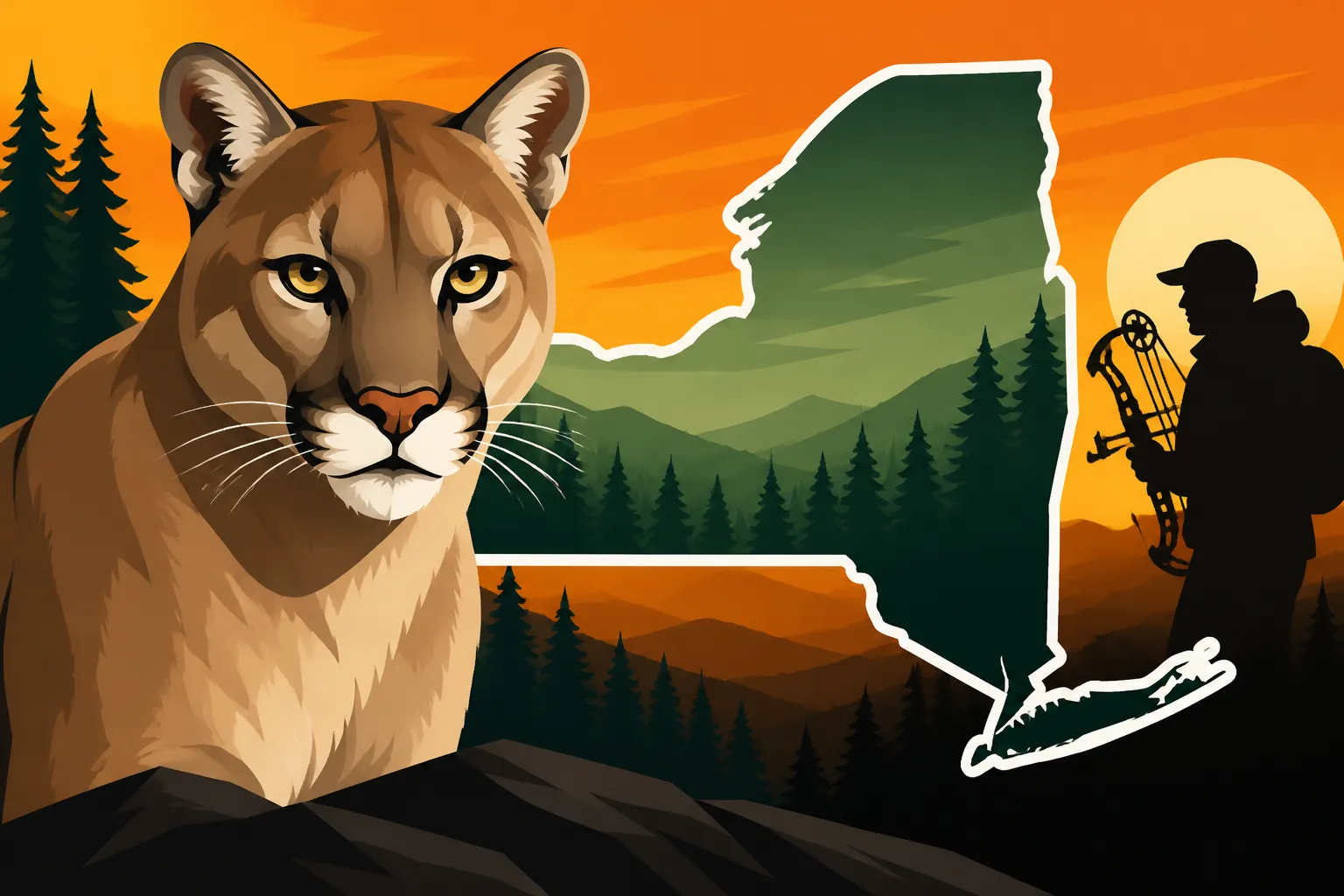
The whispers about cougars in New York are as old as the hills themselves, often surfacing around hunting campfires or in quiet conversations at the local diner. It's a topic that sparks a mix of fascination, skepticism, and a primal hope that these majestic predators might once again roam our wild landscapes. For many of us who cherish New York's outdoors, the idea of a resident cougar population is incredibly compelling, adding another layer of wildness to our already diverse ecosystems. This guide aims to navigate the persistent rumors, the genuine excitement, and the scientific realities surrounding confirmed cougar presence in the Empire State, helping you understand what's fact and what's still firmly in the realm of speculation.
The Enduring Mystery of New York's Phantom Felines
The legend of the cougar, also known as mountain lion, puma, or panther, is deeply ingrained in the North American wilderness psyche, and New York is no exception. While sightings are frequently reported, the official stance on their presence often leaves many outdoors enthusiasts feeling a bit confused, or even dismissed.
A Glimpse into History: When Cougars Roamed New York
Long before Europeans settled these lands, the Eastern cougar, a distinct subspecies, was an integral part of New York's rich wildlife tapestry. Imagine stepping into the deep, primeval forests of the Adirondacks or the rugged Catskills centuries ago; these powerful cats would have been apex predators, silently stalking white-tailed deer, their primary prey. They played a vital role in maintaining the health and balance of the forest ecosystem, a wild and formidable presence that helped shape the natural world around them.
However, as human populations grew and spread, so too did the pressures on these large predators. With increasing agricultural expansion, deforestation, and the bounty systems of the 19th and early 20th centuries, cougars faced relentless persecution. They were seen as threats to livestock and competitors for deer, leading to their systematic removal from the landscape. This intense pressure, coupled with widespread habitat destruction, ultimately led to the extirpation of the Eastern cougar from New York, and indeed, from most of the eastern United States. By the early 1900s, they were largely considered gone, a chapter closed in New York's natural history.
Despite their disappearance, the memory of the cougar lives on, woven into the fabric of local folklore and the names of geographic features. The very notion of their return ignites a powerful sense of nostalgia and a longing for a truly wild New York. We see other species, like wild turkeys and black bears, having made incredible comebacks thanks to conservation efforts, which only fuels the hope that perhaps, one day, the cougar could follow suit.
It's this historical context that truly frames the ongoing public interest and debate. We know they were here, and for many, that knowledge makes it easier to believe they could be here again, even if official records paint a different picture.
Persistent Sightings: Anecdotes and the Human Desire to Believe
Across New York, from the dense wilderness of the Adirondacks to the farmlands of the Southern Tier, there are countless stories of cougar sightings. Hunters returning from a late evening sit swear they saw a long-tailed cat cross a logging road; hikers report fleeting glimpses of something large and tawny disappearing into the undergrowth; and rural residents sometimes find unusual tracks near their property. These aren't isolated incidents, but a consistent stream of reports that attest to the public's conviction that cougars are out there.
The challenge, however, often lies in accurate identification. The Adirondacks are home to New York's Black Bear Population, which, while distinctly different, can be mistaken for large animals in poor light or at a distance. Likewise, Coyotes Across New York State are sometimes misidentified, particularly their larger counterparts. Even bobcats, though much smaller, can be confused, especially by those less familiar with their size and markings. Shadows play tricks, excitement can alter perception, and the sheer desire to see something as magnificent as a cougar can influence what one believes they have witnessed.
There's a deep-seated human desire to believe in the untamed, the wild unknown, and the cougar perfectly embodies this. For many, a cougar sighting represents a connection to a wilder past, a symbol that our forests are still truly wild. It's an emotional response that resonates with our appreciation for nature, and it's completely understandable why these stories persist and are shared with such conviction.
These stories aren't just idle chatter; they become part of the local narrative. In hunting camps, after a long day in the woods, the conversation often turns to tales of the elusive "ghost cat." People draw maps, describe the size and color, and passionately defend their observations. This collective experience, while anecdotal, contributes significantly to the perception that cougars are indeed a part of New York's contemporary wildlife, fueling the ongoing debate and fascination.
Separating Fact from Fiction: What Constitutes a "Confirmation"?
When it comes to the presence of large, elusive predators like cougars, there's a world of difference between a sincere sighting and an official, verifiable confirmation. This distinction is absolutely critical in wildlife management and understanding the true status of a species within a region.
The Critical Distinction: Sighting Versus Verification
Picture this: you're walking a deer trail deep in a New York Wildlife Management Area, and suddenly, a long, low-slung, tan animal with a distinctively long tail crosses your path before vanishing into the thick cover. Your heart pounds. You're convinced it was a cougar. This is a powerful, memorable sighting. And while your experience is valid, heartfelt, and compelling, it doesn't automatically become a "confirmation" in the eyes of wildlife biologists.
For a true confirmation, we need tangible, irrefutable evidence. This means physical proof that can be independently verified. Think clear, high-resolution photographs or video footage where the animal's features are unmistakable. Even better is biological evidence: scat (droppings), fur samples, blood, DNA from a kill site, or even a carcass. Tracks can be crucial, but they must be clear, measurable, and display the distinct characteristics of a cougar print – notably, the absence of claw marks (cougars retract their claws when walking) and a specific pad arrangement. Without this kind of hard evidence, even the most detailed and credible eyewitness accounts remain just that: accounts.
This isn't to say that sightings are dismissed, but rather, that wildlife science operates on a different standard of proof. The scientific method demands reproducibility and concrete data to draw conclusions about species presence and population status. It's incredibly challenging to obtain such evidence for an animal as secretive and wide-ranging as a cougar, which often travels Finding Ground Others Walk Past in remote areas. Acknowledging this challenge is key to understanding why official confirmations are so rare.
The lack of physical evidence for a particular sighting doesn't mean the person didn't see something large and wild. It simply means that, from a scientific perspective, there isn't enough data to definitively say it was a cougar. It leaves room for other possibilities, including misidentification, which is why rigorous verification protocols are so important.
The DEC's Rigorous Approach to Cougar Reports
The New York State Department of Environmental Conservation (DEC) takes every report of a cougar sighting seriously, knowing the public's interest and the potential ecological implications. They don't simply shrug off these calls; rather, they employ a structured and cautious approach to investigation.
When a report comes in, DEC wildlife staff will typically interview the witness in detail, trying to gather as much information as possible about the location, time, behavior of the animal, and specific characteristics observed. They'll often visit the site of the alleged sighting to look for corroborating evidence. This could involve searching for tracks in mud or snow, examining potential kill sites for signs unique to a large cat, or looking for hair snags on fences or low branches that could provide DNA.
The DEC sets a very high bar for confirmation, and for good reason. A confirmed cougar presence, especially if it suggests a breeding population, has significant implications for wildlife management, public safety messaging, and even land use planning. Therefore, they cannot base their official statements on anything less than unequivocal physical evidence. This meticulous process, while sometimes frustrating for those convinced they saw a cougar, is essential for maintaining scientific integrity and providing accurate information to the public.
It's precisely because of this rigorous approach that official confirmations are few and far between. Even with hundreds of reported sightings each year, the vast majority lack the concrete proof needed for the DEC to declare a "confirmed" cougar. They understand the public fascination, but their responsibility is to provide data-driven facts.
The Reality of Confirmed Cougars in New York
So, what's the actual truth behind cougar confirmations in New York? It's a tale of remarkable journeys, but one that doesn't yet point to a resident population.
Wandering Wanderers: The Confirmed Transients
Here's the critical piece of information that often surprises people: the few cougar confirmations in New York (and the broader Eastern states) have almost exclusively involved young, dispersing males. These aren't local cats, but rather incredible long-distance travelers. The most famous example, which many New Yorkers remember, was a cougar that traveled all the way from the Black Hills of South Dakota, across Wisconsin, Michigan, and eventually into Connecticut, where it was sadly killed by a vehicle. This particular animal passed through parts of New York on its epic journey.
Genetic analysis from this, and other occasional confirmed cases in the East, has unequivocally shown that these animals originate from established breeding populations in the Western United States. Their DNA doesn't match historical Eastern cougar genetics, nor does it suggest a remnant population hiding in our forests. These young males are driven by instinct to find new territory and mates, and sometimes, that drive sends them on journeys of hundreds or even thousands of miles, far beyond their typical range.
Such animals are outliers, biological pioneers pushing the boundaries of their species' dispersal. Their presence, while confirmed, indicates an individual animal passing through, not a established population. It’s a testament to the incredible tenacity and survival skills of these predators, but it doesn't mean New York has a secret cougar population that has gone undetected.
No Evidence of a Breeding Population Yet
This is the key takeaway for anyone hoping for the return of the cougar to New York: there is currently no scientific evidence of a breeding cougar population in the state. What does this mean specifically? It means wildlife agencies have not found evidence of adult females with cubs, no repeated sightings of multiple individuals in a localized area over time, no dens, and no long-term genetic clusters suggesting reproduction. Are There Breeding Cougars in New York? is a question that requires continuous monitoring and investigation.
For a breeding population to exist, certain ecological conditions must be met. Cougars require large, contiguous tracts of wild habitat, abundant prey (primarily white-tailed deer, which are plentiful in many parts of New York), and a degree of seclusion from human disturbance. While areas like the Adirondack and Catskill Forest Preserves offer significant potential habitat, the lack of breeding evidence suggests these conditions, or other factors, have not yet allowed for re-establishment.
Establishing a breeding population is a far more complex and challenging proposition than a single animal simply passing through. It requires multiple individuals, male and female, finding each other, successfully reproducing, and raising young to adulthood. This process would leave a much more significant and detectable footprint, including multiple track sets, consistent scat deposits, and eventually, photographic or genetic evidence of family groups.
Wildlife agencies continue to monitor the landscape, utilizing trail cameras on Scouting New York Public Land Before Season and investigating reports. If a breeding population were to establish itself, the evidence would eventually become undeniable, and it would be a momentous occasion for New York's natural history. Until then, the confirmed cougars remain remarkable, but transient, visitors.
What to Do if You Encounter What You Believe is a Cougar
Given the ongoing reports and the natural human inclination to scan the wilderness for signs of large predators, it's wise to be prepared for what to do if you encounter what you believe is a cougar. Your actions can be crucial for both your safety and for providing valuable information to wildlife biologists.
Responsible Documentation in the Field
First and foremost, if you encounter any large, wild animal, safety is paramount. Do not approach it, no matter how curious you are. Maintain a safe distance and never turn your back or run, as this can trigger a chase instinct. Make yourself appear as large as possible, speak in a loud, firm voice, and slowly back away. While cougar attacks on humans are exceedingly rare, especially in the East, it's always best to err on the side of caution.
If you are safely able to, try to document what you are seeing. This means taking clear photos or videos with your phone or camera. Focus on key distinguishing features: the animal's overall size, coat color, head shape, and most importantly, the tail. Cougars have a very long, thick tail, often held with a slight upward curve, with a black tip. This is a primary differentiator from Game Species: Bobcat Range and Numbers in New York or coyotes. Also, note any distinctive markings or behaviors.
After the animal has left, cautiously look for physical evidence. Check for tracks in soft soil, mud, or snow. A cougar track will typically show four toes (front and hind), a distinct heel pad with a characteristic M-shape, and no claw marks. Coyotes and dogs typically show claw marks. If you find scat, note its size and shape, and if safe to do so, photograph it. Avoid touching it without proper protection. If you find a kill site, note the way the carcass is covered or cached, as cougars often bury their kills to return to them later.
Using a GPS-enabled device, such as your smartphone or a dedicated hunting app like GoHunt, can be incredibly helpful. Mark the exact location where you saw the animal or found evidence. Record the date and time accurately. Apps like Scouting With the New York HuntFishNY App also allow you to log observations and plot locations, which can be invaluable when reporting your sighting to the authorities. The more precise information you can provide, the more useful your report will be.
How and Where to Report Your Sighting
Once you've had an encounter and gathered any possible documentation, the next crucial step is to report it to the appropriate authorities. In New York, this means contacting the Department of Environmental Conservation (DEC). You can typically find contact information for your regional DEC office on their official website, or through their general wildlife division. Provide them with all the details you've collected: the date, precise time, exact location (GPS coordinates are best), a detailed description of the animal, its behavior, and any physical evidence you found (tracks, scat, photos, video).
It's important to approach this process with realistic expectations. The DEC will investigate your report, but as discussed, they require irrefutable physical evidence for an official "confirmation." They won't be able to confirm a cougar based solely on your eyewitness account, no matter how convinced you are or how experienced you are in the outdoors. Understanding this helps manage the frustration that some people feel when their sincere report doesn't lead to a formal declaration.
Despite the high bar for confirmation, your participation in reporting sightings is incredibly valuable. Even unconfirmed reports contribute to a broader dataset that wildlife managers use to understand potential ranges, dispersal patterns, and areas of public concern. It helps them monitor activity, investigate potential patterns, and keep a watchful eye on any changes in wildlife behavior. Furthermore, if you believe you've spotted an injured or distressed animal, reporting it is crucial, and the DEC handles those reports under Reporting a Sick Animal in New York.
In the rare event that physical evidence is obtained and leads to a confirmation, it contributes significantly to the scientific understanding of these incredible animals and their interactions with our evolving landscapes.
Cougar, Bobcat, and Coyote: Key Distinctions
It's easy to misidentify animals, especially when a fleeting glimpse is all you get. Here’s a quick guide to help distinguish between a cougar and some commonly mistaken animals in New York.
| Feature | Cougar (Mountain Lion) | Bobcat | Coyote |
|---|---|---|---|
| Size | Very Large (up to 8 ft long, 100-180 lbs) | Medium (2-3 ft long, 15-35 lbs) | Medium (3-4 ft long, 20-50 lbs) |
| Tail | Very long, thick, cylindrical, often with black tip | Very short, "bobbed" tail, often with black bands/tip | Bushy, medium-length tail, usually tipped with black |
| Color | Uniform tan, tawny, reddish-brown, gray-brown | Mottled brown/black spots/streaks | Gray, brown, rust-colored, often lighter belly |
| Head/Face | Relatively small head for body, rounded ears | Distinctive facial ruff, pointed ears with tufts | Dog-like, pointed snout, erect triangular ears |
| Body Shape | Long, muscular, low to the ground | Stocky, powerful, short legs | Lean, dog-like build, long legs |
| Tracks | No claw marks, asymmetrical heel pad, distinct M-shape | No claw marks, smaller, distinct 4-toe print | Visible claw marks, more oval, 4-toe print |
| Habitat | Remote forests, mountains, canyons (historically NY) | Forests, swamps, farmlands, suburban areas (common NY) | Highly adaptable, all habitats (very common NY) |
The fascination with cougars in New York isn't going away anytime soon, and that's a good thing. It keeps us connected to the wild heart of our state and reminds us of the incredible ecosystems we have. While confirmed resident populations remain elusive, the occasional wanderer serves as a powerful reminder of nature's resilience and the boundless wonders that might still be out there.
Disclaimer
This article is for general informational purposes only and does not constitute professional advice. Laws, prices and regulations vary by location and change over time. Consult a qualified professional for guidance on your specific situation.