New York Bald Eagle Recovery and Hunting Rules
For many New York hunters, the sight of a bald eagle soaring overhead or perched majestically near a waterway is a truly special moment. However, with this magnificent bird's incredible comeback story comes a natural question: what does the presence of bald eagles mean for us as hunters, and what are the specific rules and ethical considerations we need to be aware of? This guide will dive deep into the remarkable recovery of bald eagles in New York, clarify the legal protections surrounding them, and offer practical advice for hunters sharing the landscape with these iconic raptors.
The Remarkable Comeback of Bald Eagles in New York
It's easy to take bald eagles for granted now, seeing them more frequently than many of us ever expected a few decades ago. But their journey back from the brink of extinction is one of New York's greatest conservation success stories, a testament to dedicated efforts and the resilience of nature when given a chance. Hunters often wonder why they see so many now compared to stories from their grandparents, and it’s a valid question considering how dire the situation once was.
From Near Extinction to Thriving Populations
Just a few generations ago, bald eagles were practically nonexistent in New York State. The widespread use of DDT and other harmful pesticides in the mid-20th century devastated their populations, thinning eggshells and leading to reproductive failure. Habitat destruction and illegal shooting also played a significant role. By the early 1970s, New York had only one known active bald eagle nest. Think about that – one single pair for the entire state! It's almost unimaginable given how common they are today. This drastic decline was a wake-up call, not just for New York but for the entire nation. Conservationists realized that if nothing was done, America's national bird would vanish from many of its ancestral territories.
The recovery effort was a long, arduous process, beginning in earnest in the late 1970s with a groundbreaking reintroduction program. This involved "hacking" young eagles, bringing eaglets from other states, raising them in artificial nests in New York, and releasing them to imprint on the state as their home. Locations like Montezuma National Wildlife Refuge and the Hudson River corridor became crucial hacking sites. These young birds, once fledged, would eventually return to New York to nest and raise their own young. It wasn't an overnight fix; it took decades of consistent effort, habitat protection, and the banning of harmful chemicals. Many hunters, even those who weren't directly involved, understood the importance of this effort, knowing that a healthy ecosystem benefits all wildlife.
Current Status and Distribution in the Empire State
Today, the bald eagle population in New York is robust and continually expanding. We've gone from a single nest to hundreds of active breeding pairs spread across the state. You can find them nesting along major waterways, large lakes, and even some smaller, more secluded ponds, often in towering trees with a clear view of the water for fishing. They are particularly prevalent along the Hudson River, Lake Champlain, the Finger Lakes, and even within the vast Adirondack and Catskill Forest Preserves.
This means that as hunters, whether you’re chasing deer in the Southern Tier, calling turkeys in the Catskills, or New York Waterfowl Hunting by Zone, you're increasingly likely to encounter these magnificent birds. It’s a huge success, but it also means hunters need to be extra vigilant and informed. Knowing where they generally concentrate, perhaps by checking detailed topographic maps on a tool like GoHunt, can help a hunter be more mindful of potential eagle habitat near their hunting grounds. The return of the eagles signifies a much healthier environment overall, benefiting White-Tailed Deer Across New York and Wild Turkeys in New York populations as well.
Bald Eagles and New York Hunting: What You Need to Know
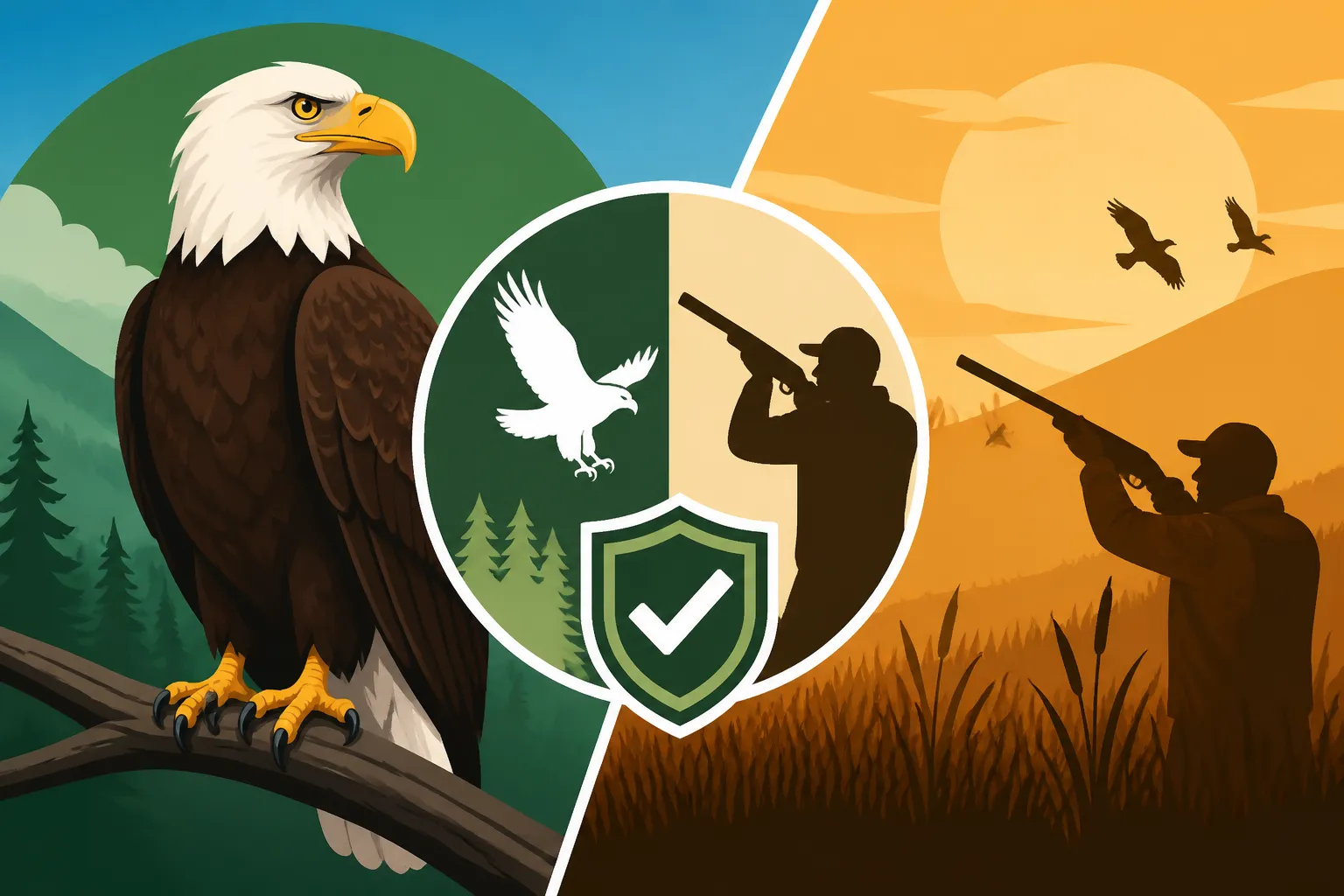
Encountering a bald eagle in the wild is truly a privilege, but it also carries a responsibility for hunters. Bald eagles are not game species; they are federally protected birds. This means there are strict laws governing their protection, and hunters must understand how these laws interact with their hunting activities. Ignorance of the law is never an excuse, and unintentional harm can still lead to serious consequences.
Federal and State Protections for Bald Eagles
The primary protection for bald eagles comes from two cornerstone federal laws: the Bald and Golden Eagle Protection Act (BGEPA) and the Migratory Bird Treaty Act (MBTA). Both acts make it illegal to "take" (which includes pursuing, shooting, shooting at, poisoning, wounding, killing, capturing, trapping, collecting, molesting, or disturbing) a bald eagle, its parts (feathers, eggs, nests), or its young. Penalties can be severe, including substantial fines and imprisonment. Even disturbing an eagle's nesting site, causing them to abandon it, can fall under "take."
New York State law further reinforces these federal protections. Our state laws prohibit harming protected species and destroying their habitats. While bald eagles have recovered to impressive numbers, they still retain these crucial protections. This isn't just about avoiding legal trouble; it's about respecting a species that was almost lost and plays a vital role in our ecosystems. As hunters, we are often among the most vocal conservationists, and understanding and adhering to these laws is a critical part of that ethos. When you're Scouting New York Public Land Before Season, it's good practice to keep an eye out for potential eagle nests, especially near large bodies of water.
Avoiding Accidental Harm and Disturbances
Accidental harm is the biggest concern for hunters. Here are some scenarios and crucial points to consider:
- Target Identification: This is paramount. Always be 100% positive of your target before you shoot. A flying bird could be mistaken for a game species if you're not careful, especially at a distance or in low light. Bald eagles are large, dark, and their distinctive white head and tail make them recognizable, but juvenile eagles lack the white head and can sometimes be confused with other large raptors like golden eagles or even some vultures. When waterfowl hunting, for instance, be absolutely certain of your target species before pulling the trigger. Using quality Optics for Adirondack and Catskill Timber can aid in identification.
- Lead Ammunition: While New York has specific rules regarding lead ammunition in certain areas (like within the Chronic Wasting Disease Containment Area), the broader issue for eagles revolves around lead poisoning from scavenging. Eagles are scavengers and will feed on gut piles or unrecovered game left in the field. If lead fragments are present in these carcasses or gut piles, eagles can ingest them, leading to lead poisoning, which is often fatal. This is why many conservation groups advocate for the use of non-toxic ammunition for hunting, especially in areas with high eagle populations.
- Disposing of Carcasses: If you harvest a deer or other big game, consider how you dispose of the carcass or gut pile. If you're in an area with eagles, either remove the gut pile entirely or ensure it's buried to prevent eagles and other scavengers from accessing potentially lead-contaminated meat. This small act of responsibility can make a big difference. For those using mapping tools like GoHunt, marking your kill site and considering the surrounding environment can help plan ethical carcass disposal.
- Nesting and Roosting Sites: Eagles are easily disturbed during nesting season. If you identify an active nest, maintain a respectful distance. Avoid unnecessary noise or activity that could cause the birds stress or lead them to abandon the nest. This is less of an issue during deer and bear hunting seasons which occur after the main nesting period, but it's important to be aware of if you're out scouting or during early fall seasons.
Table: Key Differences: Protected vs. Game Species
Understanding the distinction is vital for every responsible hunter.
| Feature | Protected Species (e.g., Bald Eagle) | Game Species (e.g., Deer, Turkey) |
|---|---|---|
| Legal Status | Federally and State protected; illegal to "take" | Regulated for hunting; specific seasons, bag limits, and methods |
| Hunting Season | None; hunting is prohibited year-round | Defined seasons (e.g., New York Deer Seasons by Zone, New York Spring Turkey Season Rules) |
| Bag Limit | Zero; no possession allowed (unless permitted for rehabilitation/research) | Varies by species, season, and Wildlife Management Unit |
| Ammunition | N/A (no hunting allowed) | Legal calibers/gauges as per regulation; non-toxic encouraged near eagles |
| Disturbance | Illegal to disturb nests, roosts, or feeding activities | Hunting activity is expected within legal limits |
| Carcass/Gut Pile | Potential for lead poisoning if scavenged from contaminated sources | Gut piles/carcasses can be left (check local rules for private land) |
Practical Tips for Hunters in Bald Eagle Country
For the dedicated New York hunter, sharing the woods and waters with bald eagles means an added layer of awareness and responsibility. It’s not about fear of legal repercussions, but about a deep respect for wildlife and the conservation efforts that brought these birds back. Integrating these practices into your routine will make you a more ethical and effective outdoorsperson.
Sharpening Your Bird Identification Skills
Being able to confidently identify a bald eagle in flight or perched is your first line of defense against accidental harm. This goes beyond just knowing what a mature eagle looks like. Juvenile bald eagles, often referred to as "juvenile bald eagles" until they get their distinct white head and tail at around 4-5 years old, can be tricky. Their plumage is mostly dark brown, often with splotchy white markings on their underwings and belly, sometimes mimicking a golden eagle or even a large hawk.
Here's what to look for:
- Size and Shape: Bald eagles are very large, with broad wings and a distinct head that extends further forward than their tail in flight. Their flight is powerful, with slow, deliberate wing beats or long, soaring glides.
- Flight Pattern: They often soar on thermals, holding their wings in a slight dihedral (a shallow 'V' shape).
- Location: While they can be seen anywhere, they are most commonly associated with large bodies of water. If you're hunting near a lake, a major river, or even a larger pond, your chances of seeing one increase significantly.
- Optics: Use your binoculars or spotting scope. Even if you’re focused on finding Deer Density by New York Wildlife Unit, take a moment to confirm the identity of any large bird you see before you even think about raising your gun or bow. Many hunters use mapping apps like GoHunt to mark wildlife sightings, and adding eagle locations can help build awareness of their presence in your hunting zones.
Ethical Considerations and Best Practices
Beyond strict legality, there are ethical responsibilities that come with being a hunter in New York, especially concerning protected species like bald eagles. We're stewards of the land, and that includes respecting all its inhabitants.
- Positive Identification is Non-Negotiable: This cannot be stressed enough. Never shoot at a target you haven't positively identified. If there's any doubt, err on the side of caution and do not shoot. This applies to all game, but it's critically important when large, protected birds are present. This principle is taught in New York Hunter Education Requirements for a reason.
- Consider Non-Toxic Ammunition: As mentioned, lead fragments in gut piles or unrecovered game can pose a serious threat to eagles and other scavengers. While not legally mandated statewide for all hunting, choosing non-toxic ammunition for your rifle, shotgun, or muzzleloader is an excellent ethical practice, particularly if you hunt in areas known for eagle activity. It's a choice that reflects a deeper commitment to conservation.
- Responsible Carcass Disposal: If you can, remove gut piles from areas where eagles are known to feed, or bury them deeply. If you're on private land, discuss this with the landowner. On public land, follow all regulations, but consider how your actions might impact local scavengers. For instance, if you’re Hunting Southern Tier Farmland Deer, and eagles are known in the area, a little extra effort with the gut pile goes a long way.
- Respecting Roosting and Nesting Sites: If you stumble upon an active eagle nest, admire it from a distance. Minimize noise and disturbance. If you plan to set up a treestand or ground blind, be mindful of potential eagle activity in the immediate vicinity. While eagles are majestic, they are still wild animals that deserve their space.
What to Do If You Find a Sick or Injured Eagle
Despite their recovery, bald eagles can still face challenges, including injuries from collisions, illness, or even lead poisoning. If you ever encounter a sick, injured, or deceased bald eagle while hunting, it's crucial to know what steps to take.
- Do Not Touch the Bird: Even if it appears docile, an injured eagle can be dangerous, and touching it could harm both you and the bird. Furthermore, there might be legal implications for possessing any part of a bald eagle, even if you find it.
- Report It Immediately: Contact the New York State Department of Environmental Conservation (DEC) or your local wildlife rehabilitator. Provide clear details about the location, the bird's condition, and any observations you've made (e.g., if it's tangled, appears to have a broken wing, or seems lethargic). The DEC has a system for handling such situations, and they are the best resource. You can often find contact information through their website or local offices. This is similar to how you would Reporting a Sick Animal in New York.
- Mark the Location: If possible and safe to do so, mark the location discreetly so you can guide officials back to the spot. Using your GoHunt app or a GPS unit to drop a pin is incredibly helpful for this.
- Stay Clear: After reporting, maintain a safe distance and wait for instructions from the authorities. Your role is to provide information and allow trained professionals to handle the situation.
The presence of bald eagles is a true gift to New York's wild spaces and to its hunting heritage. By being informed, vigilant, and ethical, hunters can continue to play a vital role in ensuring these magnificent birds thrive for generations to come.
Disclaimer
This article is for general informational purposes only and does not constitute professional advice. Laws, prices and regulations vary by location and change over time. Consult a qualified professional for guidance on your specific situation.