Illuminated Reticles for Dark Timber
One of the most frustrating moments a New York hunter can face is when legal shooting light arrives, a deer steps out of the thick timber, and you simply can't find your reticle against the animal's dark hide or the shadows of the forest. This guide is all about tackling that common problem head-on, exploring how illuminated reticles can be a game-changer for visibility in those crucial low-light situations within New York's dense woods.
The Challenge of Dark Timber and Low Light in New York
Hunting in New York means often finding yourself deep in dense, shadowed timber, whether it's the towering hardwoods of the Catskills, the thick spruce swamps of the Adirondacks, or the dense hemlock stands found across much of the Southern Tier. These environments are inherently challenging for optics, especially during the prime hunting hours of dawn and dusk, or on those classic overcast, drizzly November days we know all too well.
The struggle is real. You’ve put in the time scouting, located that perfect funnel or bedding area, and waited patiently. When that mature buck finally steps out from behind a stand of evergreens, moving silently through the shadows, you need every advantage you can get to make an ethical shot. But if your reticle disappears against the dark bark or the deer's body, all that effort can be for nothing. This isn't just an inconvenience; it can be the difference between a successful hunt and a missed opportunity.
The New York Hunter's Dilemma in Low Light
Think about a typical New York deer season. You're often out there well before sunrise, making your way to a stand, or staying put until the last legal minute of shooting light. Deer, being crepuscular creatures, are most active during these low-light periods. In a state like New York, with its diverse terrain, these low-light conditions are exacerbated by the natural environment itself.
Imagine sitting on a ridge overlooking a deep ravine in the Catskills, the sun not yet cresting the eastern peaks. That ravine is still shrouded in deep blue shadow, even as the sky above starts to lighten. A buck picks its way through the bottom, presenting a shot. Or consider a late-season hunt in the Adirondacks, where the heavy canopy of pine and spruce trees blocks out significant amounts of light, making noon feel like dusk. Add a layer of cloud cover, a light snowfall, or a heavy fog rolling in off one of the Finger Lakes, and suddenly even mid-day becomes a low-light nightmare. This is when deer are moving confidently, feeling secure in the gloom, and this is exactly when a traditional scope can let you down. You know the deer are there, you can see the deer, but can you aim accurately? This is the core of the dilemma. For more on navigating these woods, check out Reading a Ridge for Catskill Deer Movement or Finding Sign in Big Adirondack Timber.
Why Standard Reticles Disappear
Most conventional rifle scopes feature a fine, black reticle – often a Duplex or a similar crosshair pattern. These are fantastic in bright, open conditions where there's good contrast between the reticle and the background. However, once you introduce shadows, dark cover, or a low-light setting, that fine black line simply vanishes.
It’s like trying to find a black string on a black tablecloth. The reticle, designed for precision, becomes too fine to resolve against a dark backdrop. When a dark-bodied deer stands in front of a shadowed hemlock or a patch of thick brush, your crosshairs just blend in. Your eye struggles to distinguish the aiming point, leading to hesitation, an unsteady shot, or even the inability to take a shot at all. This isn't a problem with your eyesight; it's a limitation of the optical tool itself in specific conditions. The frustration comes from knowing the target is there, within range, but being unable to confidently place your shot. This loss of positive aiming point can be incredibly stressful in those brief, critical moments when a trophy, or even just some venison for the freezer, is at stake.
Understanding Illuminated Reticles
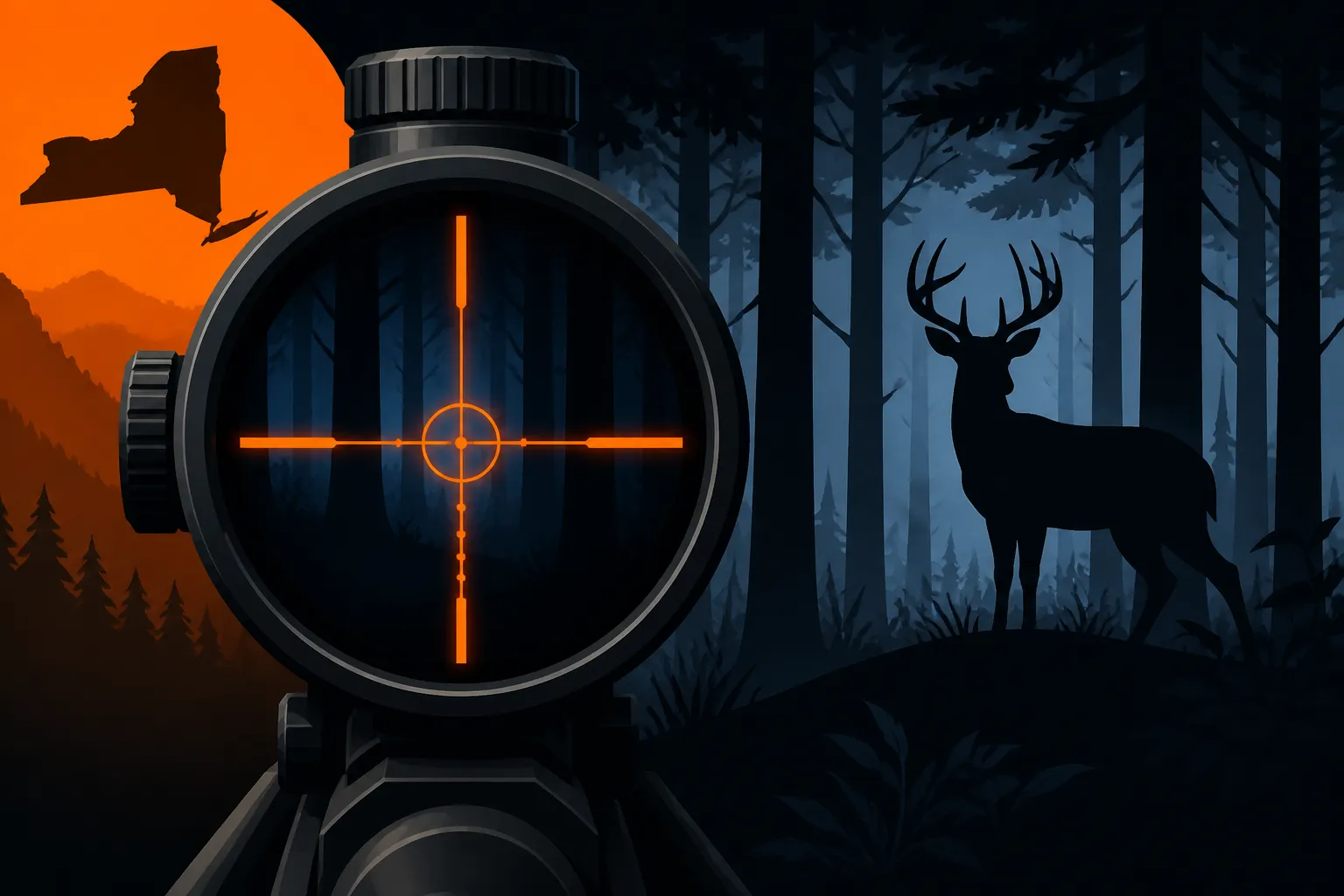
This is where illuminated reticles step in as a true game-changer for New York hunters. An illuminated reticle is precisely what it sounds like: a reticle that glows, making it visible against any background, regardless of lighting conditions. Instead of relying on ambient light and contrast, it generates its own light, ensuring you always have a clear, crisp aiming point.
Most illuminated reticles achieve this through a small LED light source that projects onto an etched glass reticle. This means that even if the battery fails, you still have a standard, non-illuminated black reticle as a backup. The benefits are immediately obvious, especially when you consider the varied and often challenging environments we hunt here in New York. From the thickest Adirondack spruce bogs to the deep cuts of the Southern Tier, an illuminated reticle can make all the difference.
Types of Illumination and Their Advantages
Illuminated reticles come in various forms, offering hunters different options to match their preferences and specific hunting conditions. The most common colors are red and green. Red illumination is traditionally popular, as the human eye perceives red well in low light, and it doesn't significantly impact night vision. Green, on the other hand, is also highly visible and can offer a different level of contrast for some individuals. The choice between red and green often comes down to personal preference.
Crucially, most quality illuminated reticles offer adjustable brightness settings. This is paramount. You need to be able to dial the illumination down to a barely visible glow for truly dark conditions, preventing "blooming" where the reticle appears too bright and overwhelms the target. Conversely, you might need a brighter setting for an overcast day where shadows are simply dim, not absolute black. Many modern optics, including those you might see reviewed on platforms like GoHunt, offer excellent illuminated reticle options with a wide range of brightness settings. Some even have an "off" position between each setting, allowing you to quickly find your preferred brightness without cycling through all options.
Beyond color and brightness, the reticle pattern itself can vary. You'll find illuminated versions of classic Duplex reticles, sophisticated Christmas tree style ballistic reticles for longer shots, or simple center dot systems. The key is that the vital aiming point – whether it's the entire crosshair or just a central dot – can be lit up, giving you that positive point of aim you desperately need.
How Illumination Helps in New York's Forests
Let's get specific about how an illuminated reticle can truly benefit a New York hunter. Imagine you're hunting deer in the Adirondack interior, patiently waiting in a stand overlooking a dense thicket of spruce and balsam. It's late afternoon, the sun is dipping, and the light is fading fast under the heavy canopy. A beautiful buck emerges from the evergreens, pausing just behind a patch of shadowy hemlocks. With a standard scope, those fine black crosshairs might completely disappear against the dark fur and even darker background. But with an illuminated reticle, a bright red or green dot or crosshair immediately pops into view, allowing you to quickly and confidently place your shot on the deer's shoulder. This decisive target acquisition can be the difference between connecting and missing, or worse, making a poor hit.
Another scenario: you're still-hunting a Catskill ridge, moving through deep timber on a heavily overcast day. A deer jumps from its bed and pauses briefly in a thick patch of brush, offering only a small window. In that split second, an illuminated reticle ensures you can acquire the aiming point without hesitation. It's not just about visibility; it's about speed and confidence when every second counts.
Beyond deer, consider Muzzleloader Deer Hunting in New York in December. The days are short, often overcast, and snowfall can further reduce ambient light. Keeping a muzzleloader dry in lake-effect snow is one challenge, but seeing your target through the scope is another. An illuminated reticle makes target acquisition much more reliable in these tough conditions. This ability to maintain a clear aiming point in poor light also significantly enhances safety, allowing for positive target identification and ensuring you only take shots you are confident in making.
Choosing and Using Your Illuminated Reticle Scope
Selecting the right illuminated reticle scope for your New York hunting adventures involves considering several practical factors. It’s not just about the "glow" itself, but how that illumination integrates with the overall performance and reliability of the optic in our challenging local conditions.
Key Features to Look For
When you're sifting through options, here are some critical features to prioritize:
- Battery Type and Accessibility: This might sound minor, but it's huge. Look for scopes that use common battery types (CR2032 is very popular) and have battery compartments that are easy to access in the field, even with gloved hands. Trying to replace a tiny, obscure battery in freezing temperatures on a rattling treestand in Hunting the Rut in the Southern Zone is no fun at all.
- Auto-Shutoff Features: This is a big one for battery life. Many quality scopes will automatically turn off the illumination after a certain period of inactivity (e.g., 2 hours). This can save your battery if you forget to turn it off after a long sit, which, let's be honest, happens to the best of us!
- Brightness Range: As mentioned, you need a wide range. The lowest settings should be barely visible for truly dark conditions, preventing eye strain and "blooming" of the reticle. The highest settings should be bright enough to be useful on a sunny, but heavily shadowed, day. Don't underestimate the need for both extremes.
- Durability and Weather Sealing: New York weather can be brutal – rain, snow, sleet, fog, and bitter cold are all par for the course. Your scope needs to be robustly built, nitrogen-purged, and O-ring sealed to prevent internal fogging and moisture ingress. This applies to the illumination module as well. Look for models with solid reputations for holding up in harsh environments. You might find detailed reviews of specific models and their durability on platforms like GoHunt.
- Etched Glass Reticle: This is almost standard now, but ensure the reticle is etched directly onto the glass, not just a wire. This means that if your battery fails completely, you still have a perfectly functional, traditional black reticle to fall back on. This provides crucial peace of mind when you're miles into the Adirondack Forest Preserve.
| Feature | Standard Reticle Scope | Illuminated Reticle Scope |
|---|---|---|
| Visibility | Excellent in bright light, poor in low light/dark cover | Excellent in all light conditions, especially low light |
| Aiming Point | Black, can disappear against dark backgrounds | Glows (red/green), stands out clearly against any background |
| Low-Light Use | Limited, requires strong contrast | Ideal, enhances target acquisition |
| Battery Dependent | No | Yes (for illumination), but usually has a passive backup |
| Cost | Generally lower | Generally higher |
| Complexity | Simple | Slightly more, with brightness controls, battery |
| Best For | Open country, bright days | Dense timber, dawn/dusk, overcast weather, Rifle Scopes for Low-Light Timber |
Field Tactics for Optimal Performance
Having an illuminated reticle is one thing; using it effectively is another. Here are some tactics for making the most of your investment:
- When to Turn It On/Off: Resist the urge to leave the illumination on all the time. Only activate it when you anticipate or encounter low-light conditions. Leaving it on drains the battery unnecessarily. Many hunters flick it on just before legal shooting light, or when they observe a deer entering a shadowy area, then turn it off once the light improves or the shot opportunity passes.
- Setting the Correct Brightness: This is key. A common mistake is setting the illumination too bright. If it's too bright, the reticle can "bloom," causing glare within the scope and making it harder to focus on your target, especially in very dark conditions. The ideal setting is the lowest possible brightness that still allows you to clearly see the reticle against your target. Practice this extensively. A reticle that is too bright can actually be more distracting than no illumination at all.
- Practice, Practice, Practice: You wouldn't hunt with a new rifle or bow without practicing, and the same goes for your illuminated reticle scope. Take it to the range or even just your backyard at dawn and dusk. Practice aiming at targets placed in shadows or against dark backdrops. This will help you find your preferred brightness settings and build muscle memory for activating the illumination quickly and silently. Test it in conditions similar to what you’d find when Hunting a Funnel Between Two Swamps or Hunting Southern Tier Farmland Deer.
- Spare Batteries are Non-Negotiable: Always, always carry spare batteries. Keep them in a waterproof container in your pack or even taped to the inside of your scope caps. Batteries can fail unexpectedly, especially in cold weather, and you don't want to be caught without a backup when that big buck finally steps out.
Maintenance and Considerations
An illuminated reticle scope, while incredibly useful, does require a bit more attention than its non-illuminated counterpart. Understanding these considerations will ensure your optic performs flawlessly throughout the New York hunting season.
Battery Management and Cold Weather
Batteries are the lifeblood of your illuminated reticle, and managing them effectively is paramount. As mentioned, carrying spare batteries is absolutely critical. But it’s not just about having them; it’s about where you store them, especially when hunting in the colder months.
New York winters can be brutal, and cold temperatures are notorious for rapidly draining battery life. A battery that works fine in October might be dead as a doornail on a frigid December morning during New York's Southern Zone Firearm Season or Hunting the Southern Zone Holiday Hunt. To mitigate this, consider carrying your spare batteries close to your body, perhaps in an inner pocket of your jacket, to keep them warm. This helps maintain their charge and ensures they’re ready for immediate use. When you’re out for Cold-Weather Sitting Strategy in New York, every little bit of preparation counts. Regularly check the charge of the battery currently in your scope before each hunt. Don't wait for it to die in the field.
Potential Downsides and Mitigations
While the benefits of an illuminated reticle are numerous, it’s also important to be aware of the potential downsides and how to mitigate them:
- Battery Failure: This is the most obvious drawback. If your battery dies or the illumination module malfunctions, you lose the primary benefit.
- Mitigation: This is why choosing a scope with an etched glass reticle is so important. You'll still have a standard, black reticle to use as a backup. Always carry spare batteries and check them regularly.
- Cost: Scopes with illuminated reticles generally cost more than comparable non-illuminated models.
- Mitigation: Consider the value it adds. The ability to make a confident, ethical shot in marginal light might be worth the extra investment for your specific hunting style and local conditions. Platforms like GoHunt can help you compare models across different price points to find the best value for your needs.
- Reticle Bloom/Glare: If the illumination is set too high, especially in very dark conditions, the reticle can appear to "bloom" or create internal glare, making it harder to focus on the target.
- Mitigation: Practice finding the lowest effective brightness setting for different light conditions. Most quality scopes have very fine adjustments to avoid this.
- Weight Increase: The illumination module and battery can add a small amount of weight to the scope.
- Mitigation: For most deer hunting scenarios, this weight increase is negligible. If you're ultralight backpacking into the deep wilderness, you might consider it, but for the vast majority of New York hunters, it won't be a significant factor.
- Complexity: An illuminated reticle adds another component to manage (brightness settings, battery).
- Mitigation: With a little practice, operating an illuminated reticle becomes second nature. The benefits far outweigh the slight increase in complexity for many hunters facing New York's challenging timber and low-light conditions.
Choosing and understanding your gear, right down to the intricacies of Illuminated Reticles for Dark Timber, makes you a more effective and ethical hunter.
Disclaimer
This article is for general informational purposes only and does not constitute professional advice. Laws, prices and regulations vary by location and change over time. Consult a qualified professional for guidance on your specific situation.