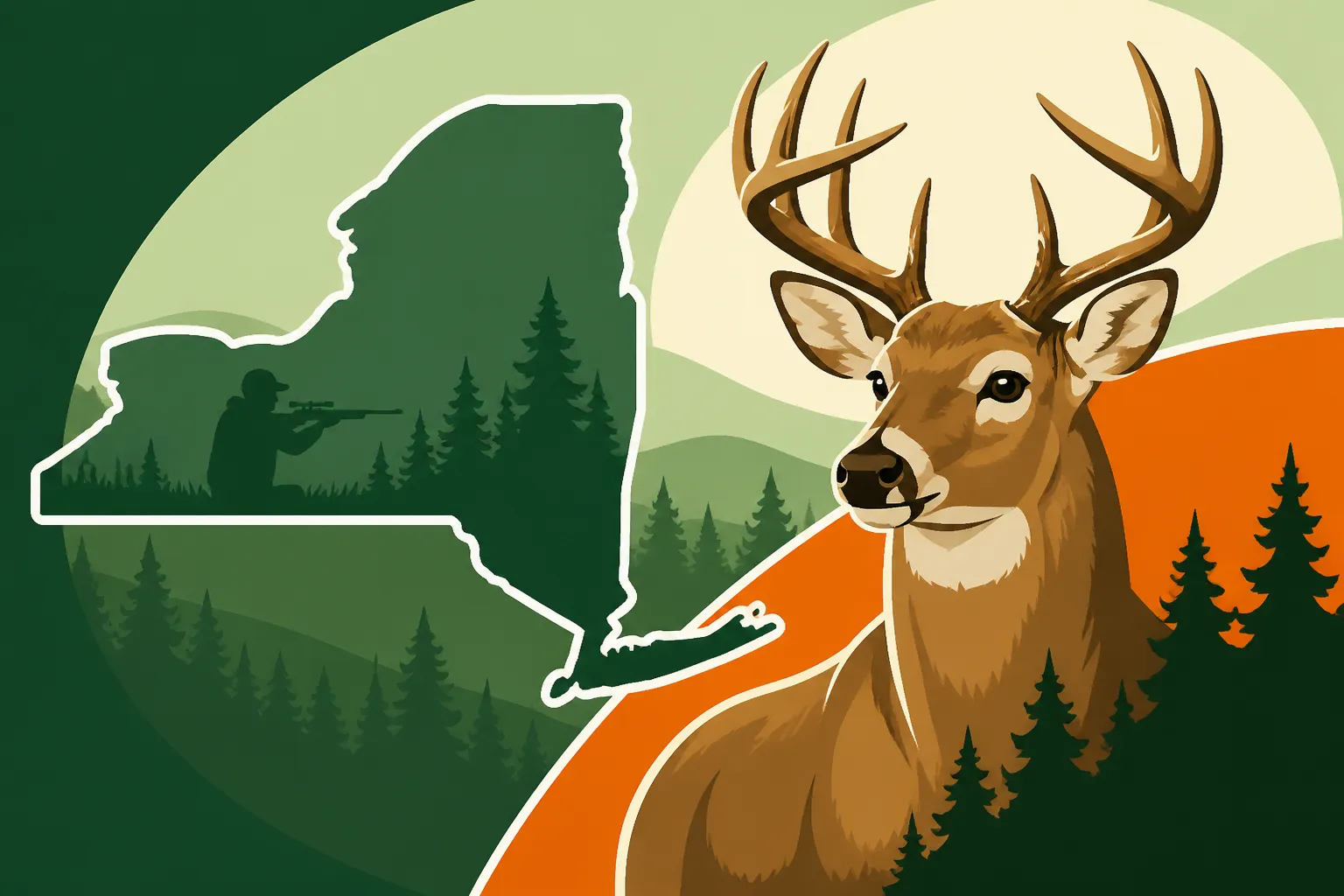
New York Annual Deer Harvest
It's easy to look at the overall deer harvest numbers for New York State and feel like they don't quite tell the full story of what you're seeing (or not seeing!) in your own neck of the woods. Many of us wonder if the statistics truly reflect our hunting experiences, whether we're trudging through the Adirondacks or sitting on a Finger Lakes field edge. This guide is here to shed light on the New York annual deer harvest, helping you understand what these crucial figures represent, how they're compiled, and how you can use this information to become a more informed and potentially more successful hunter.
Understanding the New York Annual Deer Harvest: What Do the Numbers Really Mean?
When the New York State Department of Environmental Conservation (DEC) releases its annual deer harvest report, it's more than just a tally of how many deer hunters took home. These numbers are a vital snapshot, a kind of health report for our white-tailed deer population, and they offer critical insights into both the health of the herd and the dynamics of hunting pressure across the state. For the seasoned hunter or the newcomer just learning about deer in our state, digging into these figures can transform how you approach your season.
Beyond Just a Number: Why Harvest Data Matters
The sheer volume of deer taken each year tells us a lot, but it's the trends over time, the breakdown by Wildlife Management Unit (WMU), and the distinction between antlered and antlerless deer that paint a truly useful picture. These statistics are the backbone of New York's deer management strategy. They help the DEC assess population levels, determine if antlerless quotas (through Deer Management Permits, or DMPs) are appropriate, and identify areas where the herd might be growing too fast or declining too rapidly. For instance, if the total harvest of antlerless deer is consistently low in a particular WMU, it might suggest that either the population is smaller than anticipated, or hunting pressure on does isn't as high as the DEC would like for population control. Conversely, a consistently high antlered harvest could indicate a robust buck population with good age structure, assuming hunters aren't just taking young bucks. Understanding these nuances helps us, as hunters, appreciate the broader ecological and management context of our sport. It's not just about filling a tag; it's about contributing to the sustained health of the herd and its habitat.
The Role of Hunters in Data Collection
You, the hunter, are an indispensable part of this data collection process, whether you realize it or not. Every time you successfully harvest a deer and then diligently report it, you're directly contributing to the accuracy of the annual deer harvest figures. This reporting is not just a formality; it's a legal requirement and a civic duty that fuels effective wildlife management. When you report a deer, you're providing information like the date of harvest, the WMU where it was taken, whether it was an antlered buck, antlerless deer, or a fawn, and the type of implement used (bow, crossbow, muzzleloader, or firearm). This granular data allows the DEC to dissect trends by weapon type, season segment, and specific geographic areas. Imagine the difficulty of managing a statewide deer herd without this crucial input from thousands of hunters each year. It would be like flying blind! It's why the emphasis on New York Deer Reporting Requirements is so strong, ensuring the data remains robust enough for informed decision-making.
Trends and Factors Influencing New York's Deer Harvest
New York's annual deer harvest numbers rarely remain static. They ebb and flow, reflecting a complex interplay of environmental conditions, human activity, and the inherent dynamics of the deer population itself. As hunters, observing these trends can help us anticipate what a given season might hold and adjust our strategies accordingly.
The Dance of Deer Populations and Hunter Effort
Deer populations are incredibly adaptable, but they are also subject to significant fluctuations. Factors like winter severity can dramatically impact survival rates, particularly for fawns and older deer. A brutal winter with deep snow and prolonged cold can lead to higher overwinter mortality, which in turn can suppress the following year's fawn crop and ultimately reduce the number of deer available for harvest a few years down the line. Conversely, mild winters can lead to booming populations.
Hunter effort also plays a massive role. If more hunters are in the woods, or if hunters are spending more days afield, the harvest numbers can go up, even if the deer population itself hasn't necessarily increased proportionally. The flip side is also true: if hunting participation declines, or if hunters face challenging conditions that limit their time in the field, the harvest might dip. Regulations, too, are critical. Changes in season lengths, bag limits, or the availability of New York Deer Management Permits Explained can directly impact the number of deer harvested. For example, if DMPs become more readily available in an area to address overpopulation, you'd likely see a bump in the antlerless harvest. Looking at the New York Deer Population Estimate alongside harvest trends can give you a clearer picture of whether harvest numbers reflect true population changes or shifts in hunter behavior and regulations.
Environmental Impacts and Disease
Beyond winter weather, a host of other environmental factors can influence deer health and, consequently, harvest numbers. The availability of natural food sources is paramount. Years with abundant mast crops (acorns, beechnuts) can lead to healthier, heavier deer, better fawn survival, and potentially higher success rates for hunters. Conversely, a poor mast year might force deer to browse less nutritious forage, making them more susceptible to disease and winter stress.
Disease outbreaks, while thankfully not widespread in New York, are another factor that wildlife managers constantly monitor. Epizootic Hemorrhagic Disease (EHD), for instance, can cause localized die-offs, particularly in the Southern Zone during late summer or early fall. While the overall statewide impact of EHD may be limited, a significant localized outbreak could certainly affect the harvest numbers in specific WMUs for a season or two. This is why vigilance regarding EHD Die-Offs in New York Deer is so important, and why hunters are encouraged to report any sick or dead deer they encounter. The specter of Chronic Wasting Disease (CWD) also looms, and while New York has largely avoided widespread wild CWD, the DEC's proactive measures, including strict carcass transport restrictions and testing, are designed to prevent it from impacting our herds and future harvests. Learning about Why New York Has Stayed Free of Wild CWD is a testament to these efforts.
Breaking Down the Harvest: Regional Differences and Management
New York is a geographically diverse state, and it's no surprise that the annual deer harvest looks very different depending on whether you're hunting the dense forests of the Adirondacks or the agricultural mosaic of the Southern Tier. These regional variations are not just interesting tidbits; they are fundamental to how deer populations are managed and how hunters should approach their seasons.
Southern Zone Versus Northern Zone Harvest Dynamics
The distinction between New York's Southern Zone and Northern Zone is absolutely crucial when discussing deer harvest. The Southern Zone, with its mix of agricultural lands, suburban fringes, and hardwood forests, generally supports higher deer densities and, consequently, sees a much larger overall deer harvest. Hunters in the Southern Zone often have more opportunities, longer seasons, and greater access to antlerless permits. Areas like the Finger Lakes Region and the Southern Tier are known for their productive deer habitat. The New York's Southern Zone Firearm Season is typically longer, and the liberal use of DMPs in many WMUs reflects the management goal of maintaining herd size in balance with the habitat and human tolerance levels.
In stark contrast, the Northern Zone, dominated by the vast Adirondack Forest Preserve, has a much lower deer density. The deep snows and harsh winters in this region naturally limit deer populations, and hunting opportunities can be more challenging. The New York's Northern Zone Firearm Season is shorter, and antlerless opportunities are generally more restricted. The management philosophy here often leans towards conservation and ensuring deer can thrive in a more challenging environment. Comparing the number of deer taken in a WMU like Allegany County (Southern Zone) to one in Franklin County (Northern Zone) would immediately highlight this stark difference in harvest dynamics. Tools like GoHunt can be incredibly useful for visualizing these regional harvest differences on a map, allowing you to quickly compare WMUs.
Deer Management Permits and Their Impact
Deer Management Permits, or DMPs, are the primary tool the DEC uses to regulate the antlerless deer harvest. These permits allow hunters to take additional antlerless deer beyond what their regular big game tag allows, and their availability varies widely by WMU. In areas where deer populations need to be reduced or stabilized, DMPs are issued more liberally. Conversely, in WMUs where populations are lower or managers want to see growth, DMP quotas might be very limited or even non-existent.
The impact of DMPs on the annual deer harvest is profound. They directly influence the number of does removed from the population, which is key to controlling herd growth and mitigating issues like deer-vehicle collisions or agricultural damage. For hunters, applying for and drawing DMPs (or utilizing the instant lottery in some WMUs) provides additional opportunities to fill the freezer and contribute to wildlife management goals. It's a system designed to balance hunter opportunity with ecological needs. If you're looking to maximize your antlerless harvest, understanding the DMP quotas for your preferred WMU is paramount, and applying for them early is always a good idea. Information on How Many DMPs You Can Apply For in 2026 or other years is vital for planning your season.
How Hunters Can Use Harvest Data for Better Success
For many hunters, the annual deer harvest report might seem like a dry collection of statistics. But with a bit of savvy, you can transform this information into a powerful tool that significantly improves your hunting strategy, helps you understand deer movement, and even predicts potential hotspots. It's about moving beyond just hoping for the best and starting to hunt with a data-driven approach.
Scouting Smarter with Data
One of the most valuable ways to use harvest data is to inform your scouting efforts. Instead of blindly wandering through the woods, you can analyze which WMUs consistently produce higher harvest numbers, particularly for mature bucks. This doesn't guarantee success, of course, but it points you toward areas with healthy deer populations and good hunter success rates.
For example, if you see that a particular WMU, or even a specific part of a WMU, consistently shows high antlered deer harvest over several years, it suggests that habitat, food sources, and potentially hunter access are favorable. You can then use this macro-level data to narrow down your focus for pre-season scouting. When you're using digital mapping tools, like the HuntFishNY app or a more advanced platform such as GoHunt, you can often overlay harvest data with public land boundaries, topography, and even aerial imagery. This allows you to visually identify prime areas—like certain state forests or wildlife management areas—that align with historical success. Maybe a specific block of timber adjacent to agricultural fields consistently shows a high harvest. That's a perfect place to start your boots-on-the-ground scouting, looking for historical sign, pinch points, and bedding areas.
Interpreting the Harvest Report for Your WMU
The real power of the annual harvest report comes when you delve into the specifics for your particular Wildlife Management Unit (WMU). Most reports break down the harvest by WMU, showing antlered bucks, antlerless deer, and even fawns taken, often categorized by weapon type.
Example: Hypothetical WMU Harvest Breakdown
| Harvest Category | Archery | Muzzleloader | Firearm | Total |
|---|---|---|---|---|
| Antlered Bucks | 150 | 40 | 280 | 470 |
| Antlerless Deer | 220 | 60 | 550 | 830 |
| Total Deer | 370 | 100 | 830 | 1300 |
Hypothetical Data for illustrative purposes.
What can this table tell you?
- Weapon Preference/Effectiveness: In this hypothetical WMU, firearms account for the largest portion of the harvest, which isn't uncommon during New York's Southern Zone Firearm Season. However, archery is still a significant contributor, suggesting good opportunities during the earlier bow season. If you're a bowhunter, seeing strong archery numbers confirms that deer are accessible before the firearm pressure.
- Antlered vs. Antlerless Ratio: Here, antlerless deer represent a higher percentage of the total harvest. This could indicate a healthy population needing management through DMPs, or simply that hunters are utilizing their antlerless tags effectively. If your goal is primarily antlerless deer for meat, this WMU looks promising.
- Trends Over Time: While this table is a single snapshot, imagine comparing it year after year. Is the antlered buck harvest increasing, decreasing, or stable? What about antlerless deer? A consistent decline in antlered bucks might suggest increased pressure on younger deer, while a stable or increasing antlered harvest could point to a good age structure in the buck population.
By comparing these numbers with historical data, you can discern trends in deer density by Deer Density by New York Wildlife Unit and hunter success. Perhaps the harvest is consistently higher in WMU 'X' than in WMU 'Y'. This information, coupled with detailed maps from resources like GoHunt or the Scouting New York Public Land Before Season guide, can help you make more informed decisions about where to focus your limited hunting time and energy. It helps you understand what to expect and where to set your expectations for the season. Remember, knowledge is power, and when it comes to hunting, informed decisions often lead to more rewarding experiences in the field.
Disclaimer
This article is for general informational purposes only and does not constitute professional advice. Laws, prices and regulations vary by location and change over time. Consult a qualified professional for guidance on your specific situation.