New York Nuisance Deer Damage Permits
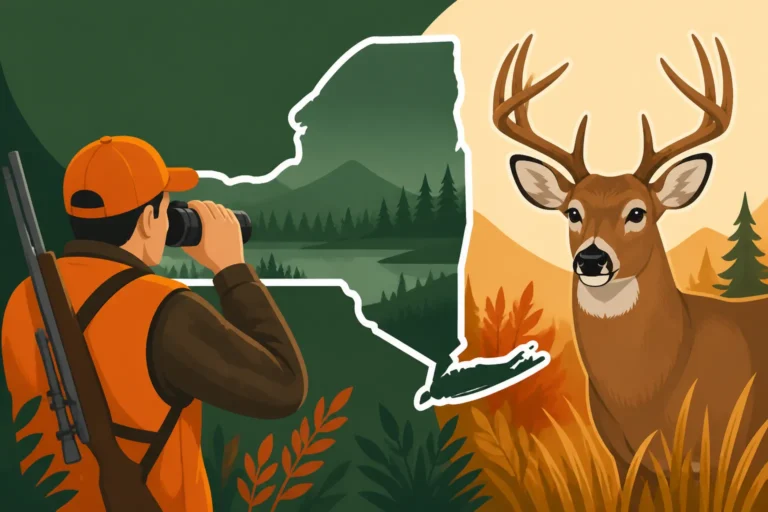
Dealing with deer can be a real headache, especially when they decide your carefully tended garden, valuable crops, or meticulously managed nursery stock is their personal buffet. Many New Yorkers, from backyard gardeners in the suburbs to large-scale farmers in the Southern Tier, face significant frustration and financial losses due to deer damage. This comprehensive guide is here to walk you through the specifics of New York's Nuisance Deer Damage Permits (NDDPs), a crucial tool for landowners when traditional hunting seasons just aren't cutting it.
Understanding the Problem: When Deer Become More Than Just Wildlife
For many of us who love the outdoors and appreciate New York's abundant wildlife, deer are a cherished part of the landscape. But there’s a point where appreciation turns into exasperation, particularly when deer numbers are high, and they start impacting your livelihood or property.
The Frustration of Crop and Property Damage
It’s easy for someone without a stake in the ground to say, “Oh, it’s just deer being deer.” But try telling that to a farmer who’s watched an entire field of corn or soybeans decimated overnight, or a nursery owner whose carefully cultivated saplings have been rubbed raw by bucks. The financial toll can be devastating. We're not talking about a few nibbled petunias here; we're talking about significant agricultural losses, damage to orchards, vineyards, and expensive ornamental landscaping.
Consider the fruit farmer in Ulster County whose young apple trees are repeatedly browsed, stunting their growth and reducing future yields. Or the market gardener in Saratoga County who loses a substantial portion of their sweet corn to hungry whitetails before it even ripens. These aren't minor inconveniences; they directly impact incomes and can jeopardize a farm's viability. Beyond agriculture, deer contribute to a shocking number of vehicle collisions annually across New York, especially during the rut. This constant threat to property, and sometimes even safety, is why the issue of deer damage is taken so seriously.
Why Traditional Hunting Seasons Aren't Always Enough
New York's regular deer hunting seasons, with their specific dates for archery, muzzleloader, and firearm hunting, along with carefully set bag limits and antler restrictions in some areas, are fantastic for managing the overall deer population statewide. They're designed to keep deer numbers healthy and in balance with the habitat, while providing incredible recreational opportunities for hunters. However, they aren't always designed to solve localized, intense damage issues.
Imagine a situation where a farmer needs to protect a high-value crop right now, but it’s still August, and the archery season won't open for weeks, let alone the firearm season in November. Or perhaps the damage is happening on a small, private parcel where hunting pressure is low, and even with legal hunting opportunities, enough deer aren't being removed to alleviate the specific problem. Sometimes, hunters can't access the specific fields or areas where the damage is most acute, or local ordinances restrict firearm use. That’s where the standard framework of deer season can fall short, leaving landowners feeling helpless as deer continue to destroy their investments. This gap is precisely what nuisance permits are designed to bridge.
What Are New York Nuisance Deer Damage Permits?
When the typical hunting calendar can't address acute deer problems, the New York State Department of Environmental Conservation (DEC) provides a specific mechanism: Nuisance Deer Damage Permits. These aren't just extra tags; they're a targeted response to documented, significant damage.
The DEC's Approach to Deer Control Beyond Regular Seasons
Nuisance Deer Damage Permits (NDDPs) are essentially a special authorization from the DEC for landowners, agricultural producers, or their designated agents to remove deer that are actively causing significant damage to property. This isn't for a few bites out of your hostas, or a buck rubbing on a single small tree. The damage must be substantial, documented, and often ongoing, impacting crops, nursery stock, orchards, vineyards, or other high-value property.
The purpose of an NDDP is very clear: it's a damage control measure. It allows for the removal of deer outside of, or in addition to, the established hunting seasons and bag limits. The DEC issues these permits after a careful review, understanding that these situations require a more direct and immediate intervention than what general hunting regulations can provide. Typically, these permits are for antlerless deer, focusing on reducing the reproductive potential and overall local population that is causing the problem. They are highly specific, outlining the number of deer that can be taken, the method of take, and the timeframe during which the permit is valid.
Eligibility and Application Process
So, who can actually apply for one of these crucial permits? Generally, eligibility is limited to landowners or operators who are experiencing genuine, verifiable damage to agricultural crops, commercial nurseries, orchards, vineyards, or similar high-value property. This isn't a permit for recreational hunting or for simply wanting fewer deer around your house. You have to prove that deer are causing significant and unacceptable economic or property damage.
The application process is thorough, and for good reason. It starts with contacting your local DEC regional office. They'll want to hear about the nature of the damage, its extent, and what steps you've already taken to mitigate the problem (like fencing, repellents, or encouraging regular season hunting). Expect a site visit from a DEC wildlife biologist or technician. They'll come out to your property to assess the damage firsthand, confirm its severity, and determine if an NDDP is truly warranted. This is where documentation becomes key. You should be prepared with photos of the damage, records of crop loss, estimates of financial impact, and a clear explanation of how the deer are causing the problem.
The DEC will then use this information, combined with their understanding of local deer populations and management goals, to decide if a permit will be issued. If approved, the permit will specify exactly how many deer can be taken, the dates of validity, the method of take (usually firearms, but conditions can vary), and often, that only antlerless deer may be harvested. Remember, this isn’t a quick fix or a guaranteed outcome; it’s a serious process designed to address serious problems. Planning ahead and documenting damage comprehensively can make a big difference. Tools like the GoHunt app, while primarily focused on public land, can sometimes offer insights into deer densities and harvest data in specific WMUs, which can indirectly support your understanding of local deer pressure when discussing with the DEC.
Practicalities and Considerations for Using NDDPs
Once you have a Nuisance Deer Damage Permit in hand, it’s not a free pass to simply remove deer however and whenever you wish. These permits come with very specific rules, regulations, and reporting requirements that are crucial to follow.
Rules, Regulations, and Reporting Requirements
The conditions attached to an NDDP are stringent, reflecting the DEC's commitment to responsible wildlife management. First and foremost, the permit will dictate the exact number of deer that can be removed. This isn't an open-ended authorization. It will also specify the dates during which the removal can occur, often targeting periods when the damage is most severe, like during crop maturation or when vulnerable nursery stock is present. In most cases, NDDPs are issued only for antlerless deer, as the goal is to reduce the breeding potential of the local population responsible for the damage.
The method of take is also usually specified, often allowing for firearms, even outside of regular firearm seasons or in areas where firearm hunting is typically restricted. This flexibility is essential for effective nuisance control. A critical aspect of these permits is the requirement for carcass disposal. In New York, deer taken under an NDDP cannot be wasted. They must typically be processed for human consumption, often requiring donation to a qualified food bank or other charitable organization, or kept for personal use by the permit holder. This helps ensure the animals are utilized ethically and prevents abuse of the permit system.
Finally, reporting is non-negotiable and usually comes with a very tight deadline. Every single deer taken under an NDDP must be reported to the DEC, usually within 24-48 hours of the harvest. This allows the DEC to track the removals, ensure compliance, and adjust their management strategies as needed. Failure to comply with any of these conditions, especially the reporting requirements, can lead to the immediate revocation of the permit and potential legal penalties. It's a serious responsibility, so make sure you understand every clause before acting. You can learn more about general New York Deer Reporting Requirements for regular season harvests, but NDDPs have their own specific process.
Integrating NDDPs with Broader Deer Management Strategies
While NDDPs provide immediate, targeted relief from deer damage, it’s important to view them as one tool in a larger deer management toolbox, not a standalone solution. They are reactive, designed to address an existing problem, but proactive measures are always preferable.
One of the most effective long-term strategies is to actively encourage hunting pressure on your property during regular seasons. Sometimes, simply allowing more hunters, or allowing them to fill extra New York Deer Management Permits Explained (DMPs), can significantly reduce local deer numbers over time. This includes allowing bowhunters early access during Bowhunting New York's Long Archery Season or making your land available during New York's Southern Zone Firearm Season. For landowners in specific WMUs, understanding options like Applying for a Fourth DMP in 2026 might be particularly useful to maximize deer harvest.
Beyond hunting, consider implementing physical deterrents if feasible. While often expensive, deer-proof fencing can be highly effective for protecting high-value crops or small plots. Repellents, scare tactics, and planting deer-resistant varieties can also play a role, though their effectiveness varies. The goal is to make your property less attractive to deer over the long term, reducing the chronic damage that leads to the need for nuisance permits. Integrating information from services like GoHunt regarding local deer populations or habitat analysis can help landowners identify areas of concern and inform both their permit applications and their broader deer management plans. NDDPs are a vital safety net, but a holistic approach combining hunting, deterrents, and habitat management will yield the best results.
Benefits and Challenges of Nuisance Permits
Like any management tool, Nuisance Deer Damage Permits have distinct advantages and potential drawbacks. Understanding both sides helps landowners make informed decisions and manage expectations.
The Upside: Targeted Relief and Damage Reduction
The most immediate and obvious benefit of an NDDP is the direct, targeted relief it offers. When deer are actively destroying crops or property, being able to remove the offending animals quickly can literally save a farmer's season or a nursery's inventory. It’s about providing a tangible solution to an urgent problem that regular hunting seasons simply aren’t equipped to handle due to their broad nature and fixed calendars.
For a landowner who has invested significant time, money, and effort into their agricultural enterprise, the ability to protect that investment from excessive deer browsing is invaluable. It transforms a feeling of helplessness into one of control, alleviating immense stress. Furthermore, many permits require that the harvested venison be donated. This means that even as deer are removed for nuisance control, the meat still serves a valuable purpose, often going to local food banks and providing nutritious protein to those in need. It's a way to turn an unfortunate necessity into a positive contribution to the community. This ethical utilization is a key component of New York's approach.
The Downside: Public Perception and Administrative Burden
While NDDPs are a necessary tool, they are not without their challenges. One of the primary concerns can be public perception. Hunting outside of established seasons, even under a legitimate permit, can sometimes be misunderstood by non-hunters or those unfamiliar with the specific nuances of wildlife management. It can unfortunately be misconstrued as "killing for sport" or wasteful, leading to potential backlash or negative public relations if not handled with discretion and transparency.
Another significant challenge is the administrative burden. For the landowner, the application process requires careful documentation of damage, time spent on site visits with DEC staff, and meticulous adherence to reporting requirements. This can be time-consuming and add to an already stressful situation. For the DEC, processing these permits involves diverting valuable staff resources for site assessments, permit issuance, and tracking, all of which take away from other vital conservation efforts.
Finally, while effective for immediate relief, NDDPs are often a temporary fix. Deer from surrounding areas can quickly move in to exploit newly available food sources, meaning the problem could re-emerge if broader population management or long-term deterrent strategies aren't also in place. They are a crucial symptomatic treatment but don't always address the root causes of overpopulation or habitat imbalance.
Comparing Nuisance Deer Damage Permits to Regular Hunting Seasons
To help clarify the distinctions, here's a table comparing Nuisance Deer Damage Permits with typical deer hunting during regular seasons in New York.
| Feature | Regular Hunting Season | Nuisance Deer Damage Permit (NDDP) |
|---|---|---|
| Purpose | Recreational harvest, general population management, sport. | Targeted removal of deer causing significant property/crop damage. |
| Timing | Fixed, pre-defined dates (archery, muzzleloader, firearm seasons). | Specific dates, often outside regular seasons, as authorized by permit. |
| Eligibility | Any licensed hunter with valid tags. | Landowners/operators experiencing documented, significant damage; requires DEC approval. |
| Bag Limit | Defined by regulation (e.g., 1 buck, 1-2 DMPs). | Specific number of deer (often antlerless) as stated on the permit. |
| Method of Take | Defined by season (bow, muzzleloader, rifle, shotgun). | Specified on permit; may include methods/locations not allowed in general season. |
| Reporting | Mandatory online/phone reporting to DEC after harvest. | Mandatory specific reporting to DEC as directed by permit, often with tighter deadlines. |
| Carcass Use | Personal consumption, donation, processing. | Mandatory utilization (personal consumption or donation) to prevent waste. |
| Legal Basis | NY Environmental Conservation Law, hunting regulations. | Specific permit issued by DEC under regulatory authority. |
Disclaimer
The information provided in this guide is for general informational purposes only and does not constitute legal advice. Hunting regulations and permit requirements in New York can change, and it is the responsibility of every hunter and landowner to consult the most current New York State Department of Environmental Conservation (DEC) regulations and local ordinances before engaging in any hunting activities or applying for permits. Always verify information directly with the DEC.