Otsego County Public Land for Deer
Hunting for deer in a new area, especially one with a mix of state forests and private parcels like Otsego County, can feel like trying to solve a puzzle with half the pieces missing. Many hunters get frustrated just trying to figure out where they can even legally set foot, let alone find a deer. This guide is here to help you cut through that confusion, giving you a detailed look at the public land options in Otsego County and how to approach them for a successful deer hunt.
Understanding Otsego County's Public Hunting Landscape
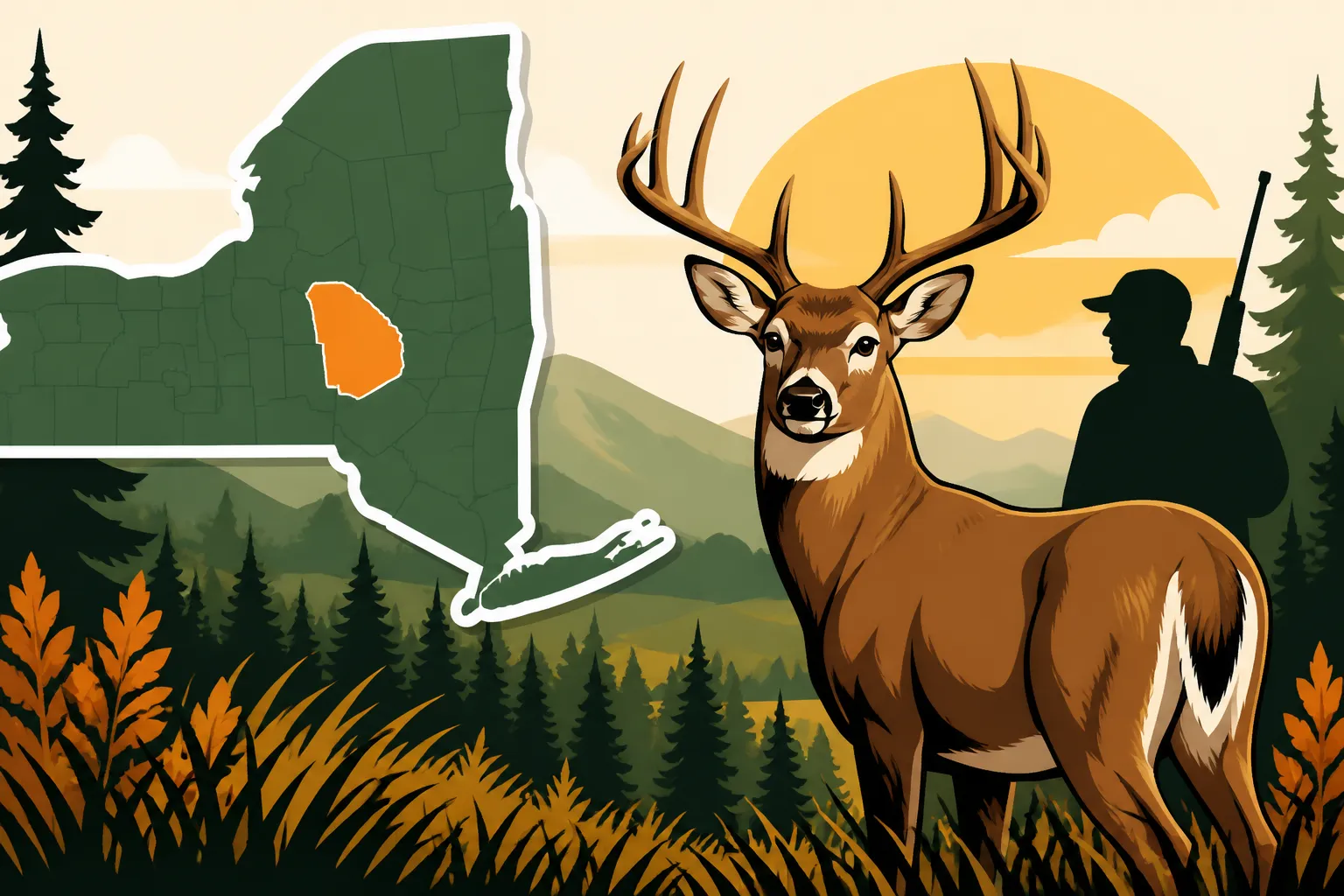
Otsego County, nestled in the central part of New York, offers a different kind of public land hunting experience than the vast wilderness of the Adirondacks or the steep, rugged Catskill High Peaks. Here, you’re often dealing with a mosaic of working farms, small towns, and scattered state forests. This means finding huntable public ground requires a bit more intentionality and a good understanding of the local lay of the land, but it certainly doesn't mean a lack of opportunity.
The Mix of State Forests and Other Public Access
Otsego County is primarily characterized by a network of New York State Forests. These lands are acquired and managed by the state for multiple uses, including timber production, recreation, and, thankfully for us, public hunting. Unlike some Wildlife Management Areas (WMAs) which are specifically managed for wildlife habitat and public access, State Forests often have a more natural, less intensively manipulated feel. This isn't a bad thing; it just means the habitat might be a bit more diverse and less predictable.
You'll find these state forests offering a blend of mature hardwoods like oak, maple, and cherry, interspersed with conifer plantations, old field successional growth, and often a network of old logging roads or trails. This varied habitat is excellent for deer, providing a mix of food, bedding cover, and travel corridors. However, it also means the deer aren't always concentrated in obvious spots, requiring a hunter to truly read the landscape. These parcels vary in size, from a few hundred acres to several thousand, offering enough room to roam without feeling overwhelmingly vast.
Navigating Property Boundaries and Access
One of the biggest frustrations for any hunter looking to explore new public land in areas like Otsego is the intermingling of public and private ownership. It's not uncommon to find a state forest parcel surrounded by private farms or residential properties. This can make simply getting to the public land a challenge, and once you're there, knowing where the public ends and private begins is absolutely critical. Straying onto private land without permission, even accidentally, is a quick way to lose your hunting privileges and damage the reputation of all hunters.
This is where modern mapping technology becomes your best friend. Tools like onX Hunt or GoHunt offer detailed satellite imagery layered with property boundaries, showing you precisely where public land begins and ends. Using these apps before you even leave home to scout potential entry points and parking areas is a game-changer. You can identify designated parking spots, but also potential walk-in access points that might require a longer trek but get you away from the crowds. Always remember to check for "posted" signs on adjacent private land and assume land is private unless clearly marked otherwise or verified by your mapping app. It also pays to identify distinct natural features like creeks, rock walls, or changes in timber type that coincide with property lines, giving you physical markers on the ground.
Key Public Land Opportunities in Otsego County
While Otsego County isn't home to enormous swaths of unbroken public land like the true wilderness areas, it boasts a good number of state forests that provide excellent deer hunting opportunities. These areas typically see less pressure than the highly popular destinations further north or west, offering a more tranquil, yet still productive, hunting experience.
Specific State Forests for Deer Hunting
Otsego County is dotted with several notable State Forests, each offering slightly different characteristics for the deer hunter. These areas are often tucked away, requiring a bit of driving on rural roads to access, but they consistently hold deer.
Texas Hill State Forest: This forest, located in the southern part of the county, is a classic example of Otsego's hunting opportunities. It features rolling terrain, mixed hardwood forests with plenty of mast-producing oaks and beeches, and some scattered conifer stands. Deer here often gravitate towards the thicker cover found in regenerating clear-cuts or dense hemlock groves, especially during colder weather or when hunting pressure increases. Access typically involves a few unpaved forest roads, which might require a vehicle with decent clearance, particularly after heavy rains or snow. Scouting the edges where the forest meets agricultural fields on private land can be very productive, as deer will often stage in the timber before moving out to feed.
Betty and Wilbur Davis State Park: While technically a state park, this area in the northern part of Otsego County permits hunting in designated zones during certain seasons. This can be a great option, as state parks are sometimes overlooked by hunters who assume no hunting is allowed. The terrain here is beautiful, with woodlands, open fields, and wetlands. It's crucial to consult the park-specific regulations on the DEC website or signage at the park, as rules can vary regarding hunting zones, methods, and even parking. The blend of open fields and timber provides a diverse habitat for deer, and the proximity to water sources can make certain areas highly attractive.
R.G. Sears State Forest: Situated near the western edge of the county, R.G. Sears State Forest is another solid choice. It offers a mix of northern hardwood forests, plantations, and some brushy areas. The terrain can be moderately steep in places, which can work to your advantage by deterring other hunters who prefer flatter ground. Focus on finding natural funnels, like saddles between ridges or narrow strips of timber connecting larger blocks of cover. Deer will use these travel corridors, especially during the rut. Checking for historical timber harvest areas can also be key, as the young growth provides excellent browse and bedding.
Considerations for Other Public Lands
While large WMAs are less common within Otsego County itself, it's worth noting that some smaller, scattered state parcels or even lands managed by local municipalities might occasionally offer hunting opportunities. These are often less publicized and may require more in-depth research or even local inquiries. It’s always best to check the official New York State Department of Environmental Conservation (DEC) website or utilize robust mapping platforms like onX Hunt to identify these smaller, potentially overlooked pieces of public ground. These hidden gems, though often smaller in acreage, can sometimes offer fantastic hunting with minimal competition if you put in the legwork to find them. Remember, any time you're on public land, understanding New York Hunter Education Requirements is paramount, ensuring you're up-to-date on all rules and safety protocols.
Strategies for Successful Deer Hunting on Otsego Public Land
Hunting Otsego County's public lands for deer requires a thoughtful approach, combining pre-season diligence with in-season adaptability. These aren't areas where you can simply show up opening morning and expect to trip over a buck; they demand respect for the land and the animal.
Scouting and Pre-Season Preparation
The foundation of any successful public land hunt is thorough scouting. This isn't just about walking around a week before the season; it’s an ongoing process. Start with digital scouting using satellite and topographical maps. Programs like onX Hunt allow you to pore over aerial photos, identify subtle terrain features, and mark potential hotspots from the comfort of your home. Look for benches on hillsides, saddles between ridge tops, thick thermal cover, and areas where different habitat types converge. Think like a deer: where would it feel safe, where would it eat, and how would it travel between those points? Reading Aerial Photos for Southern Tier Deer is an excellent skill to develop for this region.
Once you have some potential areas identified on your map, it’s time for boots-on-the-ground scouting. Visit these areas in the off-season, or at least a few weeks before the hunt. Look for deer sign: rub lines from past seasons, old scrapes, well-worn trails, and droppings. Pay attention to natural food sources like acorn flats, old apple orchards, and browse lines on saplings. Identify water sources, especially during dry periods. Don't just walk the obvious trails; push into the thick stuff, the areas that look uncomfortable for a human, because that's often where deer feel safest. Look for natural funnels – places where terrain or cover forces deer into a narrow travel path. A narrow strip of timber connecting two larger blocks of woods, a draw leading up a hillside, or the edge of a swamp could be prime. Scouting With the New York HuntFishNY App can also be a valuable tool for tracking your movements and marking discoveries in the field.
Adapting to Hunting Pressure and Terrain
Public land, by its very nature, means you're likely to encounter other hunters. The key to success is to recognize this and adapt your strategy rather than getting frustrated. Many hunters stick to the easy-access areas near parking lots or well-worn trails. This presents an opportunity for you. Don't be afraid to walk further, even an extra half-mile can get you away from the majority of pressure. Consider hunting areas with challenging terrain, such as steep slopes or dense, thorny brush that most people avoid. Deer use these less-accessible spots as sanctuaries.
Understanding wind and thermals is absolutely critical, especially in Otsego's rolling terrain. In hilly country, warm air rises during the day (updrafts) and cold air sinks at night (downdrafts). Deer use this to their advantage, often bedding high on a ridge during the day to catch rising thermals that carry scent from below, and moving to lower elevations in the evening as the thermals drop. You need to position yourself downwind of where you expect deer to travel or bed, using the thermals to your advantage. Wind and Thermals on a Catskill Ridge offers insights that are highly applicable to Otsego's landscape.
When it comes to actual hunting tactics, a combination of still-hunting and strategic stand placement can be effective. Still-Hunting Catskill Ridges provides valuable context on moving slowly and deliberately through timber, using cover to your advantage, and stopping frequently to scan and listen. For stand hunting, focus on those funnels, pinch points, or food sources you identified during scouting. Consider using portable treestands or even a saddle hunting setup to remain mobile and adapt to changing deer patterns or pressure. Treestand Setups in Adirondack Hardwoods offers principles that can be adapted to Otsego's diverse timber types.
Essential Gear and Regulations for Otsego Hunters
Successful hunting in Otsego County, like anywhere in New York, hinges on being properly equipped and fully compliant with all state and local regulations. Ignoring either can quickly turn a promising hunt into a frustrating, or even unlawful, experience.
Gear Considerations for Varied Terrain
The varied terrain and often unpredictable weather of Otsego County demand reliable gear. Start with footwear: comfortable, waterproof, and supportive boots are non-negotiable. You'll be doing a lot of walking, potentially through mud, over uneven ground, and across small streams. Boots for New York Swamps and Snow provides excellent guidance on choosing the right pair. Layered clothing is also key. New York autumns and winters can swing from mild to bitterly cold, often within the same day. Base layers, insulating mid-layers, and a waterproof/windproof outer shell will keep you comfortable and quiet. Consider wool or synthetic fabrics for their warmth-to-weight ratio and moisture-wicking properties. Clothing for a New York November is a must-read for anyone hunting in the shoulder seasons.
Beyond apparel, navigation tools are paramount. While a smartphone with a mapping app like onX Hunt is incredibly useful, don't rely solely on it. Batteries die, and cell service can be spotty in remote areas. Carry a physical map and compass, and know how to use them. A reliable headlamp for early morning walks in and late evening walks out is essential. For game recovery, a sharp, sturdy field dressing knife is critical, and a bone saw or gutless method knowledge can be a lifesaver. Field Dressing a Deer in Cold Weather covers important details. If you anticipate harvesting a deer deep in the woods, a deer cart or sled can make retrieval significantly easier, especially on those rolling hills. Dragging a Deer Off a Catskill Ridge offers practical advice on this often-challenging task.
Navigating New York's Hunting Regulations
Being a responsible and legal hunter means knowing and adhering to all of New York's hunting regulations. This starts with securing the correct licenses and permits. You'll need a basic New York State hunting license, and if you plan to hunt deer, you'll also need a Deer Management Permit (DMP) if you wish to harvest antlerless deer. Always confirm the specific season dates, bag limits, and allowed hunting implements for Otsego County (which falls within the Southern Zone for deer hunting). The DEC website is your official source for all regulatory information. New York Hunting Licenses and What They Cost details the various options available.
Beyond licenses, several other regulations deserve close attention. Make sure you understand the New York Deer Reporting Requirements – it's mandatory to report your harvest, often within 48 hours. Blaze orange is required during certain firearm seasons, and understanding How Much Blaze Orange New York Requires is crucial for your safety and compliance. While Otsego County generally allows centerfire rifles for deer hunting, always double-check any specific local restrictions, especially if hunting near towns or populated areas. Public lands typically have rules regarding treestand placement, baiting (which is generally prohibited for deer in New York), and trail camera usage, so consult specific State Forest or WMA rules before heading out.
| Otsego County State Forest/Park | Primary Habitat | Typical Terrain | Access Difficulty | Key Features for Deer |
|---|---|---|---|---|
| Texas Hill State Forest | Mixed Hardwoods, Conifers, Old Fields | Rolling, Moderate Hills | Moderate (Unpaved Roads) | Mast crops, thick cover, adjacent to farms |
| Betty and Wilbur Davis State Park | Woodlands, Open Fields, Wetlands | Rolling, Gentle Slopes | Easy (Paved Roads, Designated Parking) | Diverse food/water, potential overlooked areas |
| R.G. Sears State Forest | Northern Hardwoods, Plantations | Moderately Steep Ridges and Valleys | Moderate (Gravel Roads) | Natural funnels, good bedding cover, remote feel |
This article is for general informational purposes only and does not constitute professional advice. Laws, prices and regulations vary by location and change over time. Consult a qualified professional for guidance on your specific situation.