Bear Hunting Without Bait in New York
Hunting black bears in New York without the aid of bait can feel like a monumental challenge, especially when so many other states allow baiting or even hounds. The frustration of knowing you're up against a truly wild, intelligent animal in dense cover, relying purely on your woodsmanship, is real. But don't let that deter you! This comprehensive guide is dedicated to equipping you with the knowledge and strategies necessary to successfully pursue black bears in the Empire State, focusing on ethical, fair-chase methods that truly test and reward a hunter's skill.
Understanding New York's Black Bear Population and Regulations
Before you even step foot in the woods, it's absolutely crucial to have a solid grasp of New York's black bear population dynamics and, just as importantly, the specific regulations that govern bear hunting here. Unlike deer, where populations can vary wildly even between adjacent WMUs, bears tend to have broader ranges and different behavioral patterns that impact how and where you'll find them. Knowing the lay of the land, both ecologically and legally, is your first critical step.
Where New York Bears Roam
New York State boasts a healthy and expanding black bear population, a true conservation success story. You might be surprised to learn just how robust the numbers are and how widely they've dispersed. Historically, bears were primarily concentrated in the vast wilderness of the Adirondack and Catskill mountain regions. These areas remain strongholds, offering immense habitat and fantastic hunting opportunities. However, in recent decades, bears have steadily expanded their range, moving into central and western New York, and even the Hudson Valley. They're incredibly adaptable creatures, and as their populations have grown, they've ventured into areas with more fragmented forests and even agricultural land, following food sources.
Understanding New York's Black Bear Population and where these animals tend to concentrate can help you narrow down your hunting grounds. For instance, while the deep woods of Hamilton County in the Adirondacks might hold a lower density of bears per square mile compared to parts of Ulster County in the Catskills, the sheer amount of wilderness in the Adirondacks means more overall bear habitat. In the Southern Zone, bears are often found in the larger state forests and around agricultural edges where they can find protein-rich crops in summer and early fall. The key takeaway is that bears are no longer confined to just the "wild parts" of New York; they're truly statewide in many regions, offering opportunities for hunters closer to home.
Why Baiting is Illegal in New York
This is perhaps the biggest point of contention and a source of frustration for many hunters familiar with practices in other states. In New York, using bait to attract bears is strictly prohibited. This means no doughnuts, no dog food, no sweet treats, no corn piles – nothing that intentionally draws bears to a specific location for hunting purposes. For those who grew up hunting in states where baiting is a common, even traditional, method, this can feel like an unfair restriction. It forces a completely different approach to bear hunting, one that relies more heavily on scouting, tracking, and understanding natural food sources and travel patterns.
The rationale behind New York's stance on baiting is multifaceted, primarily focusing on maintaining the wild character of the hunt and minimizing potential negative interactions between bears and humans. The state wants to ensure that hunters are pursuing bears in their natural environment, exhibiting natural behaviors, rather than conditioning them to associate humans with easy food. This policy also aims to reduce the risk of habituating bears to human-provided food, which can lead to nuisance bear issues in residential areas, a problem we’re already seeing increase as bear populations expand. So, while it adds a layer of complexity to your hunt, understanding Why Baiting Bears Is Illegal in New York is essential. It means you're truly hunting a wild animal, on its terms, which many find to be an even more rewarding challenge.
Season Dates and Reporting Requirements
New York's bear season structure can be a bit tricky, often running concurrently with deer seasons in different zones, and sometimes even offering special early bear seasons. It's not a one-size-fits-all calendar, which can be confusing for hunters trying to plan their hunts. Generally, the season is divided between the Northern and Southern Zones, with specific opening and closing dates for archery, muzzleloader, and regular firearm seasons. For example, some areas might have a lengthy archery season starting in September, followed by a shorter muzzleloader season, and then the general firearm season. The specific dates can vary year to year, so always check the current DEC hunting regulations guide.
An early bear season, typically in September in the Southern Zone, can be a fantastic opportunity. Bears are still actively feeding to put on weight for winter, and their patterns around natural food sources are often more predictable. However, warm weather also means extra challenges for meat care. Knowing the New York Bear Season by Zone is paramount. Beyond season dates, accurate harvest reporting is a mandatory and critical part of bear management. Every successful bear hunter must report their kill to the DEC, typically online or via phone, by a specified deadline. Furthermore, the DEC often requires hunters to submit a premolar tooth from their harvested bear. This tooth provides invaluable data on the bear's age, which helps biologists monitor population health and make informed management decisions. Don't forget this step; it's a vital contribution to conservation efforts, and failing to do so can result in penalties. Always make sure to adhere to the New York Bear Tooth Reporting Rule.
Scouting for Natural Bear Food Sources
Since baiting isn't an option, your success in New York bear hunting hinges almost entirely on your ability to find and interpret natural food sources. Bears are incredibly food-driven, especially in the fall as they prepare for hibernation. If you can locate what they're eating, you're halfway to finding the bears themselves. This means serious, year-round scouting – not just a week before the season opens.
Key Food Preferences Throughout the Season
Bears are omnivores, meaning they eat just about anything, but their diet changes significantly with the seasons and the availability of specific foods. In spring, after denning, they're often found gorging on tender, new growth, grass, and carrion. As summer progresses, they shift to berries like blueberries, raspberries, and blackberries, often frequenting clear-cuts, old fields, and forest edges where these plants thrive. But it's in the late summer and fall that their diet becomes most crucial for hunters. This is when they transition to hard mast, primarily acorns and beechnuts, and soft mast like apples and cherries.
Understanding these preferences and the timing of their availability is key. A banner acorn crop year in the Catskills, for instance, might mean bears are spread out across the ridges, gorging on the abundant nuts. Conversely, a poor mast year could concentrate them more heavily around other consistent food sources, such as persistent apple orchards or isolated patches of wild berries. They also love corn and other agricultural crops if they can access them without too much human disturbance. Thinking like a bear means constantly evaluating what’s ripe, what’s available, and where the best concentration of calories can be found.
Locating Mast Crops and Berry Patches
Finding these crucial food sources isn't always easy, especially in vast tracts of public land. It requires diligent effort and a keen eye. Start by studying maps, looking for areas with diverse tree species – ridges with oak trees (both red and white) are goldmines, as are areas with American beech. When you're out in the woods, look up! Inspect the canopy for tell-tale signs of mast production. For acorns, you'll see the nuts themselves, or the caps dropped below. For beechnuts, look for the small, prickly burrs. These trees can be very localized, so finding a good cluster is like hitting the jackpot.
Berry patches are often found in more open areas, like recent logging cuts, power lines, or the edges of clearings. Old, abandoned apple orchards can also be magnets for bears, sometimes found deep within state forests where old homesteads once stood. These are often forgotten gems that offer a consistent food source year after year. Modern tools like the GoHunt app or satellite imagery can be incredibly helpful for identifying potential mast-producing ridges or old clearings before you even set foot in the woods. They allow you to virtually scout vast areas, saving valuable time and focusing your on-the-ground efforts on the most promising spots. Don't neglect scouting for Hunting Bears Over Natural Food Sources as this truly is the cornerstone of bait-free bear hunting.
Identifying Sign Around Food Sources
Once you've located a promising food source, the next step is to confirm that bears are actually using it. Bears leave plenty of sign, and learning to interpret it effectively will tell you not only that they are present but also how recently, and sometimes even how many, have been feeding there.
Look for:
- Scat: This is perhaps the most obvious sign. Bear scat can vary greatly depending on their diet. If they're eating berries, it will be purple and seedy. If it's acorns, it will be chunky with nut fragments. Fresh scat is shiny and moist, while older scat is dull and dry. The size of the scat can also give you a clue about the size of the bear.
- Tracks: Bear tracks are distinctive, especially their large hind footprints, which often resemble human feet. Look for them in soft soil around springs, stream beds, or muddy trails leading into or out of a food source. Fresh tracks will have sharp edges; older tracks will be rounded and weathered.
- Feeding Sign: For acorns or beechnuts, look for torn-up leaves and disturbed ground under trees where bears have been rooting around. For apple trees, look for broken branches or apples chewed on and dropped beneath the tree. You might also find claw marks on the bark where a bear has climbed to reach fruit higher up.
- Marking Trees: Bears often rub trees, especially evergreens, and sometimes chew on them or leave claw marks to mark their territory or simply rub against them. These "bear trees" can be found along travel routes leading to and from food.
- Day Beds: In thick cover near a preferred food source, you might find flattened areas in tall grass or brush where a bear has bedded down for the day. These are generally well-concealed and offer a glimpse into their daily routines.
The more fresh sign you find, the higher your chances are of encountering a bear in that area.
Strategies for Still-Hunting and Spot-and-Stalk Bears
Without the static draw of a bait pile, bear hunting in New York becomes a dynamic game of cat and mouse. You're no longer waiting for them to come to you; you're actively seeking them out in their natural environment. This demands a mastery of quiet movement and keen observation, often split between two primary tactics: still-hunting and spot-and-stalk.
Mastering Still-Hunting in Dense Cover
Still-hunting is arguably the most common and effective method for pursuing bears in the dense forests of New York, especially in areas like the Catskill or Adirondack mountains where thick timber and rolling terrain limit visibility. This isn't about sitting in a stand; it's about moving incredibly slowly, taking a few steps, then pausing and observing for minutes at a time. Think of it as hunting at a snail's pace, letting the woods reveal themselves to you.
The key to successful still-hunting is to be acutely aware of your surroundings – not just for bears, but for everything. You're looking for subtle movements, a flash of black, the flick of an ear, or an odd shape that doesn't quite belong. Pay attention to the sounds too: the crunch of an acorn, a rustle in the leaves that isn't the wind, or even the sound of breathing. Bears have incredible senses, particularly their nose, so playing the wind is non-negotiable. Always try to hunt into the wind or with a crosswind. Focus your efforts on known travel corridors, edges of thick cover, and especially around active food sources you've scouted. The goal is to surprise the bear, or at least encounter it before it knows you're there. This method requires immense patience and discipline, but it can be incredibly rewarding when you finally catch that glimpse of black fur through the trees.
Effective Spot-and-Stalk in Openings and Edges
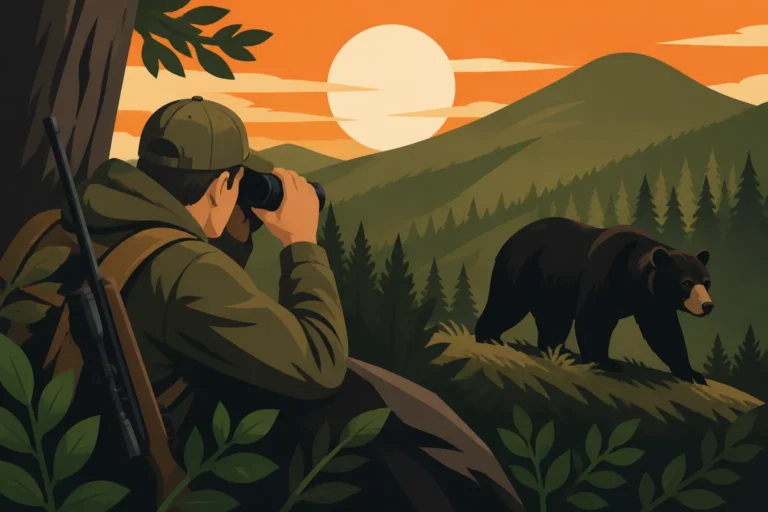
While New York's forests are often dense, there are situations where a spot-and-stalk approach can be highly effective. This tactic is best suited for areas with more open visibility, such as recent timber cuts, natural clearings, power line easements, logging roads, or the edges of large agricultural fields where bears might be feeding. The strategy involves finding an elevated vantage point – a ridge, a hill, or even a strategically placed tree – and systematically glassing promising areas, particularly during the early morning and late evening hours when bears are most active.
Once a bear is spotted, the real challenge begins: executing a silent, downwind stalk to get within shooting range. This often means navigating tricky terrain, avoiding noisy leaves, and staying hidden from the bear's excellent eyesight. Bears are not colorblind, but they don't see color the way humans do; they excel at detecting movement. So, moving slowly and deliberately, using cover to break up your outline, is essential. For instance, Spot-and-Stalk Tactics for Catskill Bears might involve using the broken terrain of the mountains to your advantage, slipping from one ridge to the next, always mindful of the wind and thermals. This is an exciting, active form of hunting that demands both physical stamina and mental fortitude. Tools like a good pair of binoculars and a quality spotting scope become indispensable here, allowing you to thoroughly check distant patches for feeding or bedding bears.
Reading Bear Behavior and Movement Patterns
Successful bait-free bear hunting isn't just about finding food or moving quietly; it's about understanding the animal itself. Bears, despite their large size, are incredibly elusive and intelligent. Learning to read their behavior and anticipate their movements will dramatically increase your odds. Bears are largely crepuscular, meaning they are most active at dawn and dusk, but they can move at any time of day, especially if undisturbed.
Their daily routine often revolves around feeding, bedding, and traveling between the two. In the morning, after feeding, they'll typically move into thick cover to bed down for the day, often on north-facing slopes in warmer weather or south-facing slopes in colder conditions. They'll use dense conifer thickets, laurel patches, or blowdowns for security. As evening approaches, they'll stir and begin moving back towards their preferred feeding areas. Look for predictable travel routes – faint trails through the underbrush, saddles between ridges, or paths along stream beds. These are their highways. Understanding how factors like weather (bears often move more after a rain, or during cooler temperatures) and hunting pressure (bears become more nocturnal and secretive with increased human presence) influence their movements is vital. Paying attention to details like which way tracks are oriented or the freshness of scat can help you determine if a bear is heading towards or away from a particular area, informing your next move.
Setting Up Ambushes Near Travel Corridors
Since you can't rely on bait to bring bears to you, a smart hunter will identify where bears are naturally traveling and set up an ambush. This tactic is about intercepting a bear moving from a bedding area to a food source, or vice versa, leveraging their predictable habits. It requires careful scouting and an understanding of the terrain.
Identifying Funnels and Pinch Points
Bears, like most wildlife, prefer the path of least resistance. They’ll use natural funnels and pinch points in the landscape to move from one area to another. A funnel is any feature that concentrates animal movement. This could be a narrow strip of timber connecting two larger woodlots, a saddle on a ridge line, a shallow creek crossing, or a thick transition zone between a clear-cut and mature forest. Anywhere the terrain naturally constricts movement is a potential funnel.
Pinch points are even more specific, where movement is funneled into a very small, defined area. Think of a rock outcrop that forces animals around one side, or a narrow gap in a dense rhododendron thicket. These are prime locations to set up a stand or ground blind. Using topographical maps and satellite imagery, like the ones available on the GoHunt platform, can help you identify these features from home. Then, on the ground, you'll need to confirm bear activity by looking for tracks, scat, and rubs. Often, these funnels will also be littered with deer sign, as deer utilize similar travel patterns. Locating a good funnel or pinch point where bears are consistently moving through is a significant advantage in bait-free hunting.
Stand and Ground Blind Placement Considerations
Once you've identified a promising travel corridor or pinch point, careful stand or ground blind placement is critical. Your setup needs to offer a clear shot, conceal your presence, and be positioned to take advantage of the prevailing wind direction.
For tree stands, look for mature, sturdy trees that offer good concealment from multiple angles. Consider the sun's position throughout the day to avoid being silhouetted or having the sun glare into your eyes. Place your stand slightly downwind of the anticipated travel path, giving your scent cone time to disperse before it reaches the bear. Also, think about your entry and exit routes; you want to be able to get to and from your stand without spooking any animals in the area. For example, when you're considering Treestand Setups in Adirondack Hardwoods, you're often looking at big, straight timber, which makes finding a good stand tree easier, but you still need to think about access and wind.
Ground blinds can be effective, especially in areas with dense undergrowth or along field edges. The key is to make them blend in seamlessly with the natural environment. Brush them in heavily with local vegetation, making them look like a natural part of the landscape. Again, position the blind downwind and ensure you have a clear shooting lane. A significant advantage of a ground blind is that it contains your scent better than a treestand, but it also limits your field of view and requires bears to be closer for a good shot. Always consider the terrain, expected shot distance, and the bear's approach angle when making your final decision on placement.
Playing the Wind and Thermals
This cannot be stressed enough: the wind is your single biggest ally or worst enemy when hunting bears without bait. Bears have an incredible sense of smell, far superior to deer, and if they catch your scent, your hunt is over before it even begins. Always, always, always hunt with the wind in your favor, meaning your scent is blowing away from where you expect the bear to come from.
In mountainous or hilly terrain, you also need to understand thermals. Thermals are air currents that rise as the air warms in the morning and fall as the air cools in the evening. In the morning, as the sun heats the ground, air rises, carrying your scent uphill. In the evening, as the air cools, it sinks, carrying your scent downhill. This means if you're hunting a ridge line, an evening stand might be best positioned high up, allowing your scent to fall over open ground. A morning stand might be better lower down, allowing your scent to rise over you. Understanding these dynamics is critical for stand placement, especially in places like the Catskills or Adirondacks. Check a local weather forecast for wind direction, and consider using a wind checker (a small squeeze bottle of powder) every few minutes while on stand to confirm wind direction and thermal shifts. Even a slight shift can ruin a well-planned ambush.
Essential Gear for New York Bear Hunters
Successful bear hunting, especially without bait, relies not just on strategy but also on having the right tools for the job. From your weapon to navigation, every piece of gear plays a role in your safety, comfort, and success in the rugged New York wilderness.
Weapon Choices and Caliber Considerations
New York allows a variety of weapons for bear hunting, including rifles, shotguns with slugs, muzzleloaders, and bows/crossbows. The best choice often depends on the terrain you're hunting and your personal preference.
- Rifles: For rifle hunters, choosing the right caliber is crucial. Bears are tough animals, and proper bullet placement combined with adequate energy is vital for a quick, humane kill. While a .270 Winchester can certainly get the job done with the right bullet, many bear hunters prefer something with a bit more punch, like a .30-06 Springfield, .300 Winchester Magnum, or a .308 Winchester. The key is to use a quality, heavy-for-caliber bullet designed for deep penetration and controlled expansion. Understanding Rifle Calibers for New York Bear is important to ensure you're ethical and effective. Always confirm that your chosen rifle caliber is legal for the specific area you're hunting, as some parts of New York are "shotgun/muzzleloader only" zones.
- Shotguns with Slugs: In shotgun-only zones, a 12-gauge or 20-gauge slug gun is your go-to. Modern sabot slugs fired from a rifled barrel can be incredibly accurate out to 150 yards or more. Practice with your chosen slug to understand its capabilities and limitations.
- Muzzleloaders: Muzzleloaders offer a unique challenge and are highly effective. For bears, a .50 caliber or larger is recommended, using a heavy sabot or conical bullet. Keeping your powder dry in New York's often damp fall weather is a key consideration.
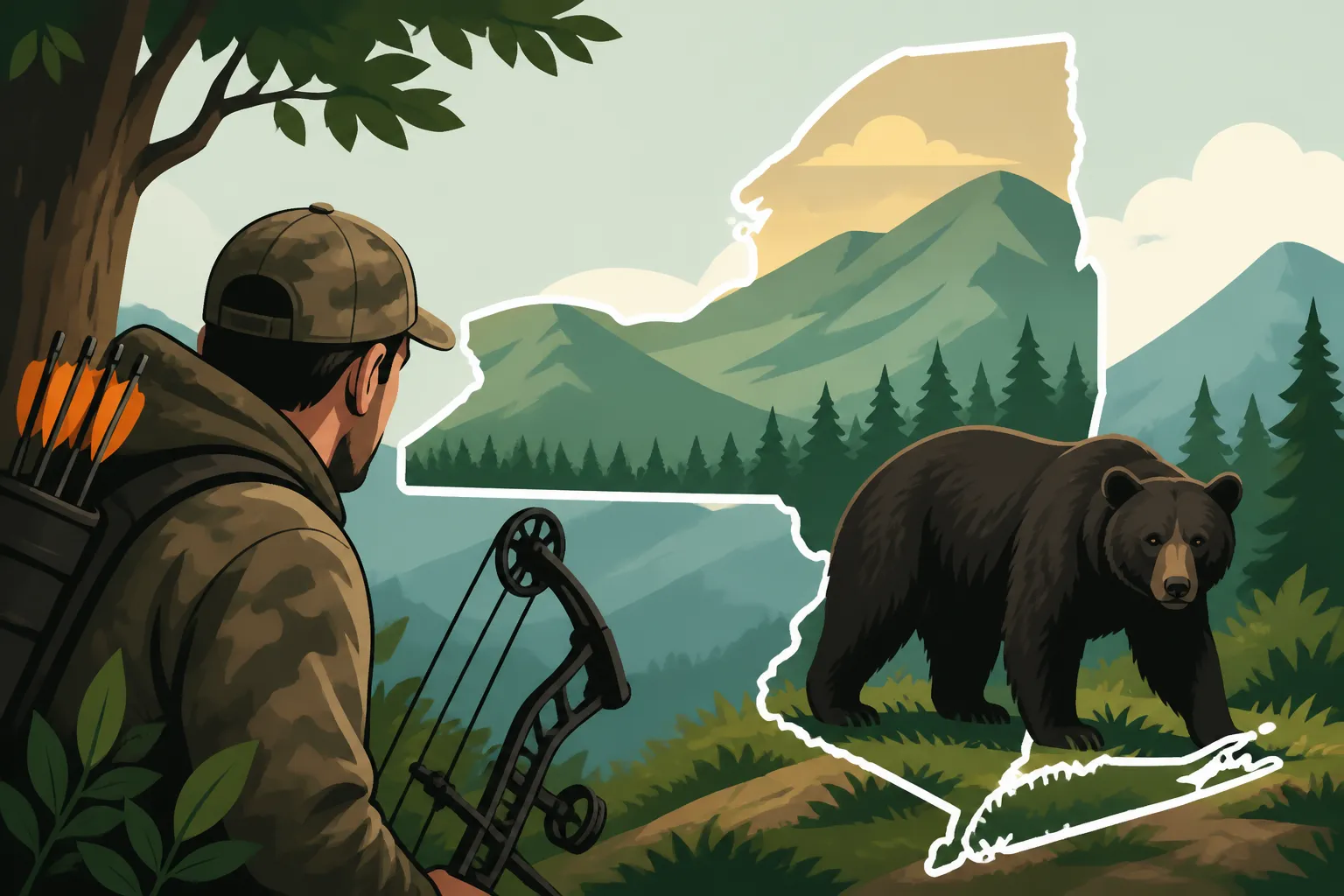
- Bows and Crossbows: Archery hunting for bears is a thrilling challenge. You'll need a stout bow and heavy arrows tipped with durable, sharp broadheads designed for maximum penetration. A minimum draw weight is required, so ensure your setup complies with New York's regulations.
Regardless of your weapon, practice extensively. You need to be confident in your shot placement under pressure, as bear hunting often presents fleeting opportunities in difficult conditions.
Optics for Spotting and Identifying
Good optics are indispensable for bait-free bear hunting, especially if you're doing any spot-and-stalk or hunting larger clearings.
- Binoculars: A quality pair of 8×42 or 10×42 binoculars is a non-negotiable item. They allow you to meticulously scan dense cover, pick apart distant shadows, and identify a bear before it sees you. Look for binoculars with excellent low-light performance, as bears are often most active during dawn and dusk. Brands like Vortex, Leupold, and Maven offer excellent options for various budgets.
- Spotting Scope: If you're primarily hunting large, open areas from a stationary vantage point, a spotting scope can be incredibly useful for confirming details at extreme distances, allowing you to discern if that distant black lump is a bear, a stump, or something else entirely.
- Rifle Scope: For rifle hunters, a variable power scope with good light transmission is essential. A 3-9×40 or 2.5-10×42 is often a versatile choice for the varied terrain in New York, offering both wide field of view for close encounters and enough magnification for longer shots. An illuminated reticle can be a significant advantage in low light conditions common in dense timber or early morning/late evening hunts.
Navigation, Safety, and Meat Care Equipment
Beyond your weapon and optics, a range of other gear is critical for a safe and successful bear hunt.
- Navigation: New York's public lands, especially the Adirondacks, can be vast and confusing. A reliable GPS unit or a smartphone app like GoHunt with downloaded maps is crucial. Always carry a compass and a physical map as a backup. Knowing how to use them, even with digital tools, is a fundamental skill.
- Safety Gear: A quality first-aid kit, a whistle, a headlamp with spare batteries, and a fire starter are absolute must-haves. Hunting bears often means hunting in remote, rugged terrain, and you need to be prepared for emergencies. Blaze orange or pink is required during certain seasons, so ensure you have enough visible clothing. Bear spray, while not typically needed for an aggressive charge from a black bear, can offer peace of mind, particularly if you're hunting alone in thick cover.
- Packs: You'll need a comfortable daypack for your essentials, and if you're deep in the backcountry, a larger frame pack might be necessary to haul out meat. Think about Packs Built for a Multi-Day Backcountry Hunt even for day hunts if you anticipate needing to pack out a heavy load.
- Meat Care: After the shot, getting the bear handled quickly is paramount, especially if temperatures are warm. Carry a sharp, sturdy field dressing knife, game bags to protect the meat, and rope for dragging or hanging. Even if you plan to gutless field dress, having the right tools makes the process much more efficient and clean.
Tracking and Recovery After the Shot
Hitting a bear and watching it disappear into thick cover is one of the most nerve-wracking moments in hunting. Bear hides are thick, and their fat layers can quickly seal a wound, making blood trailing notoriously difficult. A systematic approach to tracking and recovery is essential to ensure a successful retrieval.
Initial Steps After a Shot
The moments immediately following a shot on a bear are critical, and it's easy for emotions to take over. Resist the urge to immediately rush after the animal. Take a deep breath, and mentally replay the shot. Pay close attention to:
- Sound: Did you hear a distinct "thwack" of a solid hit, or a softer, less impactful sound?
- Bear's Reaction: How did the bear react? Did it mule-kick, hunch up, or run off with its tail tucked? A bear that instantly hunches or shows a "death run" might indicate a good hit, while a bear that simply bounds away without much reaction could be lightly wounded or missed entirely.
- Escape Route: Mark the exact spot where the bear was standing when you shot it, and try to pinpoint the direction it ran. Use a landmark – a distinct tree, a rock, or even a piece of flagging tape tied to a branch – so you can find the spot later.
Give the bear time. This is often the hardest part, but it's crucial. For a questionable hit or if you suspect a gut shot, waiting at least 4-6 hours, or even overnight if conditions allow (cool temperatures, no rain), can make all the difference. A wounded bear that is pushed too soon will often run further and harder, making recovery much more difficult. For a confirmed good hit, 30-60 minutes is usually sufficient.
Blood Trailing Strategies in Tough Terrain
Black bear blood trails are often sparse and challenging to follow, especially in dense New York cover. Their thick fur and propensity for clotting can make finding blood difficult. Be prepared for a slow, methodical process.
Start at the point of impact. Look for any initial blood, hair (color and length can give clues about where on the bear it was hit), or bone fragments. Small, dark red spots typically indicate a muscle hit, while bright red, frothy blood suggests a lung hit. Dark, watery blood with stomach contents points to a gut shot. Mark every spot of blood you find with flagging tape, small pieces of toilet paper, or a bright marker. This creates a breadcrumb trail and allows you to confirm the bear's direction of travel.
Move slowly, on hands and knees if necessary, looking not just at the ground but also at brush and tree trunks higher up – bears often bleed higher up their body when running through thick cover. If the trail goes cold, expand your search in circles or grids from the last known blood spot. Bears, when wounded, will often try to go downhill towards water, or seek the densest, nastiest cover they can find to bed down. Enlisting a friend or two to help can make the process faster and more efficient, but ensure everyone knows how to move slowly and quietly, focusing on the trail, not on making noise. Patience is key. Remember that Tracking a Deer in Fresh New York Snow provides similar principles, even if the quarry is different.
Handling a Bear After the Shot and Tagging
Once you've successfully recovered your bear, the work isn't over. Proper field care is essential to preserve the meat and hide, especially given that New York's bear seasons can occur in warmer weather.
First, immediately tag your bear with your carcass tag, securely fastened to the animal, as required by New York law. Take photos, record the harvest location, and note the time. Then, begin field dressing. Bears have a thick layer of fat, which insulates the meat and can cause it to spoil quickly if not cooled. Get the guts out as soon as possible. Some hunters prefer to quarter bears in the field, especially larger ones, to facilitate cooling and transport. If you're hunting in warmer temperatures, consider taking extra steps like packing ice into the chest cavity or getting the meat to a cooler as quickly as possible. The goal is to get the body heat out of the animal as fast as you can.
Dragging a bear can be a monumental task, especially from a steep ravine or deep in the Adirondacks. Consider bringing a sturdy game cart or a heavy-duty sled if snow is on the ground. If you've quartered the bear, a good frame pack will be invaluable for hauling out the meat. This is where your pre-hunt fitness training truly pays off. Remember to adhere to all Handling a Bear After the Shot guidelines. Don't forget that required tooth sample! Cut a premolar from the lower jaw, dry it, and send it to the DEC as instructed. It's a small but vital contribution to black bear management.
Public Land Bear Hunting Hotspots in New York
New York offers an incredible amount of public land for bear hunting, but not all public land is created equal. Knowing where to focus your efforts can make a huge difference, especially when you’re relying on natural movement and food sources.
Adirondack and Catskill Forest Preserves
The Adirondack and Catskill Forest Preserves are the undisputed jewels of New York's public hunting lands for bears. These vast tracts of "forever wild" land offer millions of acres of challenging yet rewarding bear habitat.
- Adirondack Forest Preserve: The Adirondacks, covering approximately 6 million acres (nearly half of which is public), is home to a robust bear population, particularly in the central and western regions. Hunting here means embracing true wilderness. Expect rugged terrain, thick conifer stands mixed with hardwoods, and remote areas that see very little human pressure. Finding bears often involves extensive scouting for mast crops on ridges or berry patches in old clear-cuts. The sheer size of The Adirondack Forest Preserve means bears have plenty of room to roam and remain elusive. Hunters willing to hike deep into the backcountry, away from trailheads and popular recreation spots, often find success. Areas around Cranberry Lake, the Moose River Plains Wild Forest, and the western slopes of the High Peaks Wilderness can be productive, but every hunter needs to put in the legwork to find their own honey hole.
- Catskill Forest Preserve: To the south, the Catskill Forest Preserve, comprising over 700,000 acres of public land, is another prime bear hunting destination. The Catskills tend to have higher bear densities in certain areas compared to parts of the Adirondacks. The terrain is steep and broken, characterized by hardwood ridges, thick laurel and rhododendron patches, and deep ravines. Bears here often feed heavily on acorns and beechnuts. Look for areas with a good mix of mature hardwoods for food and dense cover for bedding. Towns like Hunter, Shandaken, and Denning in Ulster and Greene Counties are often good starting points. Similar to the Adirondacks, getting away from roads and popular hiking trails is key to finding less-pressured bears. Hunters skilled in Still-Hunting Catskill Ridges can do very well here, especially when targeting those steep slopes where bears love to travel.
State Forests and Wildlife Management Areas
Beyond the grand Forest Preserves, New York also has a wealth of smaller, yet highly productive, public hunting opportunities in its State Forests and Wildlife Management Areas (WMAs). These areas are often more accessible and can hold excellent bear populations, especially as bears continue to expand their range.
- State Forests: Distributed across the state, especially in the Southern Tier, Finger Lakes, and Central New York, State Forests typically range from a few hundred to several thousand acres. These lands are managed for multiple uses, including timber production, which often creates diverse habitat with new growth, old cuts, and mature stands – perfect for bears. Look for State Forests that border agricultural lands, as bears will often venture into corn or oat fields for easy calories before retreating to the security of the timber. Examples include the Pharsalia Woods State Forest in Chenango County or the Tioga State Forest. These areas often have extensive trail systems and logging roads, making access easier but also potentially increasing hunting pressure.
- Wildlife Management Areas (WMAs): WMAs are specifically managed by the DEC for wildlife habitat and public recreation, including hunting. These areas are designed to support healthy wildlife populations and often have excellent habitat diversity. While some WMAs are smaller, others like Connecticut Hill WMA near Ithaca or Allegany State Park (which has specific hunting zones) offer substantial acreage. WMAs can be fantastic for bear hunting, especially if they have good mast production or abundant berry patches. However, due to their dedicated management and sometimes easier access, they can also see significant hunting pressure, particularly on opening day. Always check specific WMA regulations, as some may have restrictions on vehicle use or stand placement. Using the New York HuntFishNY app or the GoHunt app can help locate these areas and understand their boundaries.
Understanding Hunting Pressure and Finding Seclusion
No matter where you choose to hunt on public land in New York, understanding and mitigating hunting pressure is vital for bait-free bear hunting. Bears are highly intelligent and adapt quickly to human presence. Areas with heavy hunting pressure will often see bears become more nocturnal, move into thicker, nastier cover, or relocate entirely.
To find seclusion and increase your odds, consider these tactics:
- Walk Further: This is the golden rule of public land hunting. Most hunters won't venture more than a mile or two from a road or parking area. The further you're willing to walk, the greater your chances of finding undisturbed bears.
- Embrace the Nasty: Bears love dense, difficult-to-navigate cover – think thick conifer swamps, dense laurel or rhododendron thickets, or areas with extensive blowdowns. While these areas are challenging to hunt, they offer security to bears and are often avoided by other hunters.
- Hunt Mid-Week: If your schedule allows, hunting on weekdays will almost always encounter less pressure than weekends, especially in easily accessible areas.
- Scout Beyond Obvious Spots: Don't just scout the easily accessed edges. Use topographical maps to identify remote corners, deep valleys, or isolated ridges that might be difficult for others to reach.
- Leverage Technology: Mapping applications like GoHunt allow you to drop waypoints, mark signs, and plan routes to avoid easy access points, directing you to those hard-to-reach pockets of public land where bears feel safer.
By combining solid scouting with a strategy to escape the crowds, you can significantly improve your chances of encountering a New York black bear on public land.
Common Challenges and Overcoming Them
Hunting bears without bait in New York is a deeply rewarding endeavor, but it's not without its unique set of challenges. From dense foliage to managing unexpected encounters, being prepared for these obstacles is part of the experience.
Dealing with Thick Cover and Low Visibility
One of the most persistent frustrations for New York bear hunters is the sheer density of the cover. Whether you're in a regenerating clear-cut in a State Forest, a rhododendron thicket in the Catskills, or a spruce-fir swamp in the Adirondacks, visibility can often be measured in yards, not dozens of yards. This makes spotting bears incredibly difficult, and often your first indication of a bear is a rustle in the leaves just before it vanishes.
Overcoming this requires a shift in mindset and tactics. Instead of trying to see far, focus on seeing well up close. Slow down your pace to an almost excruciating crawl when still-hunting. Use your binoculars to pick apart every shadow, every unusual shape, even at close range. Bears are masters of camouflage, and a black bear in deep shade can simply look like another shadow. Pay attention to auditory cues – a branch breaking, a sneeze, or the quiet rustle of a large animal moving. When setting up an ambush, prioritize shooting lanes over expansive views. You might only get a small window, so make sure it's clear and you're ready to shoot accurately. Choosing a rifle scope with a wider field of view at lower magnification can also be beneficial in these close-quarters situations, allowing you to quickly acquire a target.
Managing Bear Encounters and Safety
While black bears are generally shy and avoid humans, encounters are always a possibility, especially if you're hunting in dense bear habitat. It's important to understand bear behavior and how to react safely. The vast majority of black bear encounters are not aggressive, but rather the bear either ignoring you or running away. However, surprises can happen, particularly if you stumble upon a sow with cubs or a bear on a fresh kill.
Your primary safety tool is awareness. Make noise periodically when walking through thick cover to announce your presence. This often gives bears time to detect you and move off before you even see them. If you do encounter a bear:
- Don't Run: Running can trigger a chase response.
- Stand Your Ground and Speak Firmly: Make yourself look big, raise your arms, and speak in a strong, authoritative voice.
- Back Away Slowly: If the bear doesn't react aggressively, slowly back away while continuing to face the bear.
- Bear Spray: Consider carrying bear spray, particularly in dense areas or if you feel uneasy. It's a non-lethal deterrent that can be highly effective in a close encounter.
- Never Get Between a Sow and Cubs: This is the most dangerous situation. Give them a wide berth.
Being prepared for Bear Encounters Around Catskill Cabins or in the remote Adirondack interior means understanding and respecting these powerful animals. Most importantly, avoid creating a situation where a bear feels cornered or threatened.
Patience and Persistence in Bait-Free Hunting
Perhaps the greatest challenge in bait-free bear hunting in New York is the mental game: maintaining patience and persistence. You won't have the luxury of sitting over a known food source where bears are conditioned to visit. You'll be covering vast amounts of ground, often seeing little to no bear sign, and facing long stretches of quiet in the woods. It's easy to get discouraged.
This is where the true character of a hunter is tested. Embrace the process. Enjoy the scouting, the learning, and the time spent in the magnificent New York wilderness. Every mile hiked, every ridge glassed, every piece of scat found is a step closer to success. A successful bear hunt without bait is a testament to your woodsmanship, your dedication, and your ability to adapt to the animal's natural patterns. It may take multiple trips, multiple seasons, and a significant amount of effort, but the feeling of earning that bear through pure skill and determination is unparalleled. Keep learning, keep scouting, and keep hunting. Your persistence will eventually pay off.
Disclaimer
Please note: Hunting regulations and seasons can change frequently. Always consult the most current New York State Department of Environmental Conservation (DEC) hunting regulations guide before heading afield. This guide is for informational purposes only and does not supersede official DEC regulations.