Night Hunting Rules for New York Coyotes
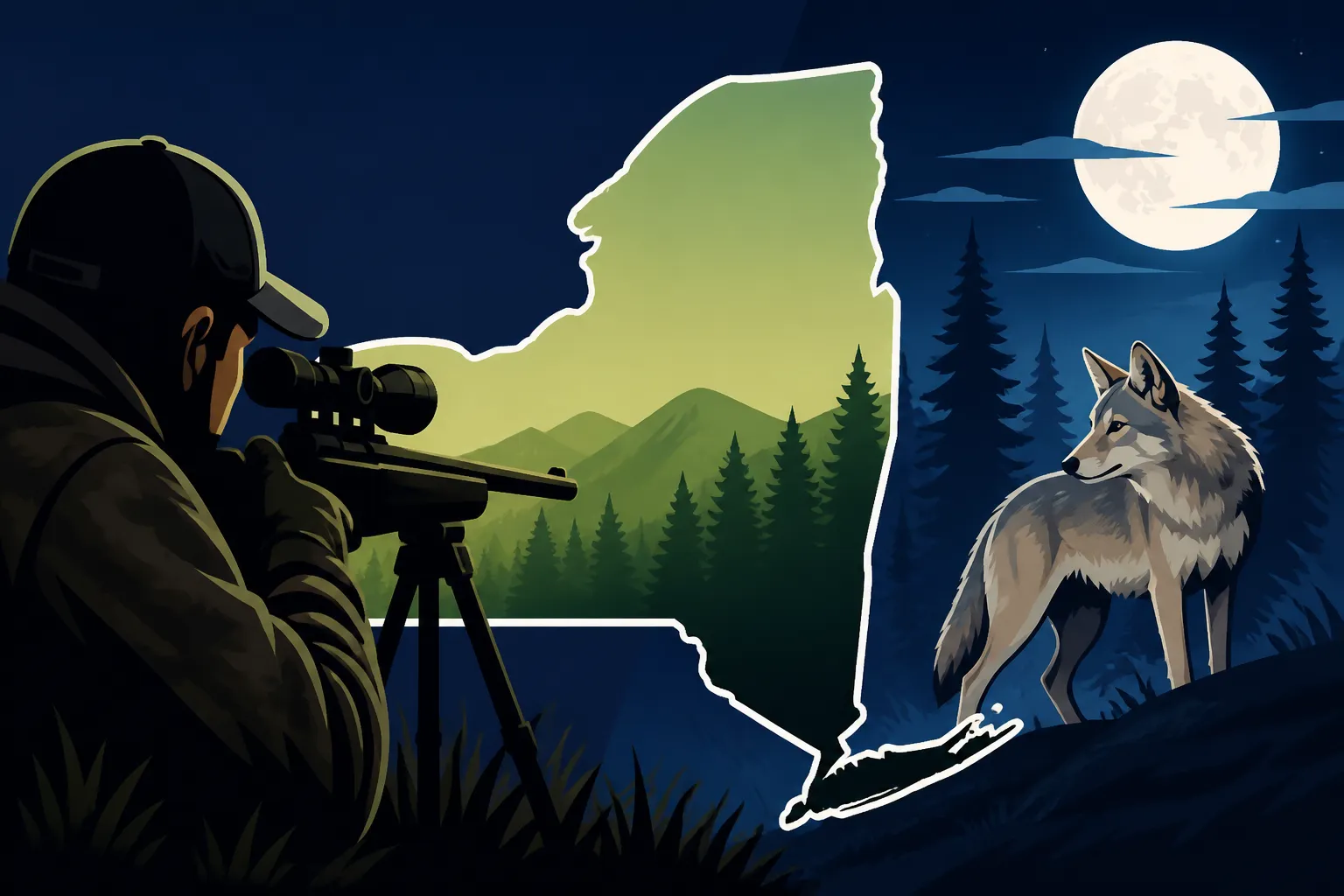
The silent shadow that stalks New York’s woods and fields, the coyote, has become a significant presence for many hunters and landowners. Dealing with these intelligent predators often brings up questions about legal hunting methods, especially when the sun goes down. If you've ever felt frustrated by the restrictions or confusion surrounding night hunting for coyotes in our state, this guide is here to untangle the rules, help you understand the specific regulations, and offer practical advice for a safe and successful hunt after dark.
Understanding New York's Legal Framework for Night Coyote Hunting
Coyote hunting in New York is a year-round pursuit, a testament to their adaptable nature and the challenges they can pose to local deer and small game populations. However, hunting after sunset isn't as straightforward as daytime hunting, and for good reason. The New York State Department of Environmental Conservation (DEC) has specific rules in place to ensure public safety and ethical hunting practices. It’s not just about what you can hunt, but how and when you can pursue them. Many hunters find the nuances of these regulations baffling, especially when trying to decipher the distinction between general hunting hours and those specifically carved out for coyotes.
General Coyote Hunting Seasons and Hours
First off, let's talk about the standard. New York's general legal shooting hours for most game species, including deer, typically run from sunrise to sunset. This is a pretty universal rule you learn in hunter education. However, coyotes are a special case because of their predatory nature and the potential impact they can have on other wildlife. The DEC acknowledges this by allowing a much broader hunting window for coyotes. Outside of big game seasons, coyotes can generally be hunted 24 hours a day.
This open-ended season means you can legally pursue coyotes during daylight hours, but also into the night. It's crucial to understand that while the season for coyotes is open year-round, the method of hunting at night, especially with artificial lights, is where the specific rules kick in. This distinction often trips up even experienced hunters. Just because you can hunt them at night doesn't mean you can use any equipment you want. For a deeper dive into general predator hunting, you might find our guide on Predator and Furbearer Hunting in New York helpful.
Specific Night Hunting Permits and Endorsements
Here's where it gets a little more complex and where many hunters realize they might need more than just their standard hunting license. To hunt coyotes at night using artificial lights, you generally need an annual Night Hunting Permit from the DEC. This isn't something that comes automatically with your basic New York Hunting Licenses and What They Cost. It’s a separate application process, and it requires you to be at least 18 years old and possess a valid New York State hunting license.
The purpose of this permit is primarily for safety and control. Hunting in the dark introduces a host of additional risks, and the DEC wants to ensure that those engaging in it are aware of the regulations and potential hazards. You can’t just decide to grab a flashlight and head out; you need the proper authorization. The application usually involves affirming your understanding of the rules, particularly concerning property boundaries, firearm use, and light source restrictions. Always check the current DEC regulations or use an app like GoHunt to ensure you have the most up-to-date information before heading out after dark.
Regional Variations and Local Ordinances
While the DEC sets statewide rules, local ordinances can sometimes add another layer of complexity. This is especially true in more populated areas or near towns. Some municipalities might have restrictions on discharging firearms at night, or even on hunting in general within certain zones, regardless of state regulations for coyotes. You need to be aware of any local laws that might supersede or add to the state rules.
For example, a rural town might have different noise ordinances than a suburban community, which could impact how and when you can call coyotes at night. Always check with the local town or county clerk's office, or the local law enforcement agency, if you're unsure about specific property or area restrictions. Don't assume that just because it's legal statewide, it's legal everywhere. The use of mapping tools, like those found on GoHunt or the Scouting With the New York HuntFishNY App, can be invaluable here for identifying public lands versus private, and even highlighting potential municipal boundaries. Knowing these boundaries is critical to avoiding accidental trespass or running afoul of local laws.
Permitted Equipment and Methods for Night Hunting
Once you understand the general legal framework, the next big question is always about the gear. Night hunting coyotes isn't like deer hunting; it requires specialized equipment and a precise understanding of what's allowed. Many hunters are eager to use the latest technology, but the DEC has specific guidelines on what's permissible, particularly regarding artificial lights and electronic calls. This is where most hunters, especially those new to night predator control, get confused.
Light Sources and Their Restrictions
This is arguably the most critical aspect of night coyote hunting regulations. You can use an artificial light to locate, call, and shoot coyotes at night in New York State, but there are stringent rules. The light source must be carried by the hunter, and it cannot be attached to a vehicle. This means no driving around shining a spotlight out the window and shooting from the road – that’s poaching.
Furthermore, the type and power of the light are often regulated. While the specific lumens or beam patterns aren't usually defined, the intent is clear: the light is an aid to safely identify and target the animal, not to create an unfair advantage by blinding or cornering it. Many night hunters opt for powerful LED spotlights or headlamps with red or green filters, as these colors are less likely to spook coyotes and also help preserve the hunter's night vision. Make sure your light source is easily controllable and doesn't interfere with your ability to safely handle your firearm. This is especially important for safety, which we'll discuss more later.
Legal Firearms and Ammunition
The firearms you can use for night hunting coyotes largely align with what's allowed for general small game and predator hunting. Centerfire rifles, shotguns, and handguns are all typically permissible. However, you need to be acutely aware of specific firearm restrictions that might apply in certain areas, particularly those designated as Shotgun/Muzzleloader/Bow Only zones. While coyotes aren't deer, the general safety rules for firearm discharge, such as distances from dwellings or roads, still apply. For details on general firearm rules, consult our guide on New York Legal Firearms for Deer Hunting as a reference, keeping in mind that coyote rules might differ slightly.
Ammunition choice is also important. While lead ammunition is generally permitted for coyotes, some areas or properties might encourage or even require non-toxic shot, especially if waterfowl hunting is also present on the property. Always use ammunition appropriate for the firearm and capable of a clean kill. Overpenetration is a serious concern at night, as you can’t see what’s behind your target. This leads us to consider safety zones even more stringently after dark.
Electronic Calls and Decoys
Electronic calls are incredibly effective tools for coyote hunting, day or night, and are perfectly legal in New York State for coyotes. Unlike some other states or for certain game animals, using an electronic call to lure in a coyote is not considered unethical or illegal here. These devices can produce a wide range of sounds, from distress calls of rabbits or fawns to challenge howls and barks, mimicking the natural communication of coyotes. Our cluster post on Coyote Calling in a New York Winter offers some great insights into effective calling strategies.
Decoys, both static and motion-activated, are also legal and can be highly effective when combined with calling. A simple fur-covered dummy or a motorized decoy that simulates a wounded animal can draw a coyote's attention away from the hunter, allowing for a better shot opportunity. When hunting at night, motion decoys can be particularly useful in conjunction with your light source to draw the coyote's gaze and fix it on a safe target zone, away from the hunter. Just remember to pack extra batteries, as cold New York nights can drain them quickly!
Best Practices and Safety Considerations for Night Hunts
Night hunting, while exciting and often productive, comes with inherent risks that demand a higher level of awareness and preparation. It's not just about what's legal; it's about what's responsible. Ignoring these safety measures can turn a thrilling hunt into a dangerous situation, for yourself, your hunting partners, and the public.
Scouting and Landowner Permissions
Never, ever embark on a night hunt on unfamiliar ground. Scouting during daylight hours is absolutely essential. You need to know the terrain, identify potential obstacles like fences, ravines, or waterways, and understand the property boundaries. What looks like a clear field in the dark might have hidden dips, rocks, or even old farm equipment. An app like GoHunt, which shows property lines and topo maps, is invaluable here. Before you step out, confirm your chosen area is well within legal and safe bounds.
Furthermore, if you are hunting on private land, written landowner permission is non-negotiable for night hunting. Verbal permission for daytime hunting might suffice for some, but at night, misunderstandings can escalate quickly. The landowner needs to be fully aware that you will be on their property after dark, potentially discharging firearms and using lights. A signed permission slip indicating dates, times, and the activity (night coyote hunting) is your best defense against any legal issues or neighbor complaints. Remember that even if you have permission for hunting deer, it doesn't automatically cover night hunting for coyotes.
Ethical Considerations and Shot Placement
Ethical hunting dictates that you should only take shots that offer a high probability of a clean, humane kill. This principle becomes even more critical at night. Target identification is paramount. In the dark, even with a powerful light, distinguishing a coyote from a domestic dog or even another protected furbearer can be challenging. Always use binoculars (even if not specifically "night vision" capable, they can help in the light beam) to confirm your target before placing your crosshairs.
Shot placement is also key. Unlike deer, which offer a larger kill zone, coyotes are smaller and can be incredibly resilient. Aim for the vital organs – the heart and lungs – which are typically located behind the front shoulder. A clean shot is not only humane but also reduces the chance of a lost animal, which is much harder to track in the dark. Be prepared to follow up on a shot immediately, and carry a good tracking light. The last thing you want is a wounded animal disappearing into the darkness.
Navigating the Dark and Emergency Preparedness
Navigating unfamiliar terrain in the dark is disorienting, even with a light. Always carry a reliable GPS unit or a smartphone with a robust mapping app like GoHunt, and make sure it's fully charged with downloaded offline maps. Knowing your entry and exit points, and being able to find them again, is crucial. If you're with a partner, establish clear communication protocols, perhaps using two-way radios, and never separate too far.
Beyond navigation, consider general emergency preparedness. A small first-aid kit, extra batteries for all electronic devices, a powerful backup flashlight, and even emergency signaling devices like a whistle or satellite messenger are not overkill. Tell someone where you are going and when you expect to return. New York nights, especially in winter, can be brutally cold. Dress in layers, opting for materials like wool that retain warmth even when wet. For tips on cold-weather gear, check out our guide on Cold-Weather Sitting Strategy in New York. A minor mishap, like a twisted ankle, can become a serious situation quickly when temperatures drop.
The Role of Coyotes in New York's Ecosystem
Understanding why we hunt coyotes, especially at night, goes beyond just the thrill of the chase. Coyotes play a complex and sometimes controversial role in New York's diverse ecosystems, and managing their populations is an ongoing discussion among wildlife biologists, farmers, and hunters alike.
Population Trends and Management Goals
Coyotes weren't always a dominant predator in New York. They expanded their range into the state over the last century, adapting remarkably well to various habitats, from deep woods to suburban fringes. Today, How Many Coyotes New York Has is a constantly debated question, but there's no doubt their numbers are robust. The DEC generally classifies coyotes as a "furbearer" and allows hunting year-round partly to help manage their populations, which can otherwise grow unchecked in many areas.
The management goals often revolve around balancing the ecological role of coyotes as predators with their impact on livestock, pets, and other game species. Hunting, including night hunting, serves as one tool in this management strategy, helping to mitigate conflicts and maintain a healthier balance within the ecosystem. It's not about eradication, but about responsible population control.
Impact on Deer and Small Game
This is often the primary motivator for many hunters to pursue coyotes. Coyotes are opportunistic predators, and while they primarily target small mammals like rabbits and rodents, they will absolutely prey on deer, especially fawns, and also turkeys. In areas with high coyote densities, fawn recruitment rates (the number of fawns surviving to adulthood) can sometimes be suppressed, leading to concerns about local deer herd health. Our analysis of New York Predator Impact on Fawn Recruitment delves deeper into this dynamic.
Similarly, ground-nesting birds like turkeys and pheasants can suffer from coyote predation on nests and poults. For hunters who invest time and effort into managing deer or turkey populations on their land, coyote control can feel like a necessary component of habitat and wildlife management. Night hunting, particularly with calling strategies that mimic distress sounds, can be an effective way to target these problem predators.
Public Perception and Hunter Opportunities
Public perception of coyotes is highly varied. Some see them as vital components of the wild, helping to keep rodent populations in check. Others, especially farmers or rural homeowners who have lost livestock or pets, view them as significant threats. This diverse perception often influences local discussions about hunting methods and seasons.
For hunters, coyote hunting offers a unique challenge and opportunity. It's a chance to hone predator hunting skills, learn about animal behavior, and contribute to wildlife management. Night hunting, in particular, adds an extra layer of excitement and requires immense skill and patience. With the right legal permits and adherence to safety, it provides a different kind of hunting experience that connects you to the wild in a profound way. For those looking to learn more about specific tactics, our guide on Coyote Calling in New York Farm Country is a great resource.
| Aspect of Night Coyote Hunting | General Rule/Requirement in NY | Important Considerations |
|---|---|---|
| Hunting Hours | Year-round, 24 hours/day | Requires Night Hunting Permit for artificial lights. |
| Night Hunting Permit | Required for using artificial lights | Apply annually, must be 18+ with valid hunting license. |
| Light Sources | Permitted | Must be carried by hunter, not attached to vehicle. |
| Firearms | Rifles, shotguns, handguns | Adhere to local discharge rules & firearm zone restrictions. |
| Ammunition | Generally lead, check local requirements | Use appropriate caliber for humane kill; consider overpenetration. |
| Electronic Calls | Legal | Highly effective for luring coyotes. |
| Decoys | Legal | Motion decoys can distract and fix attention. |
| Landowner Permission | Required in writing for private land | Essential to avoid trespass and legal issues. |
| Scouting | Crucial | Day-light scouting identifies hazards, boundaries. |
| Safety Gear | GPS, first-aid, extra lights, comms | Absolutely essential for navigation and emergencies. |
Disclaimer
Please remember that hunting regulations can change. It is always your responsibility as a hunter to consult the most current New York State Department of Environmental Conservation (DEC) hunting regulations guide, available on their official website or through their mobile applications, before heading afield. This guide is intended for informational purposes only and should not be considered a substitute for official legal advice or current DEC regulations. Stay safe and hunt responsibly!