Hunting Steep Finger Lakes Gorges
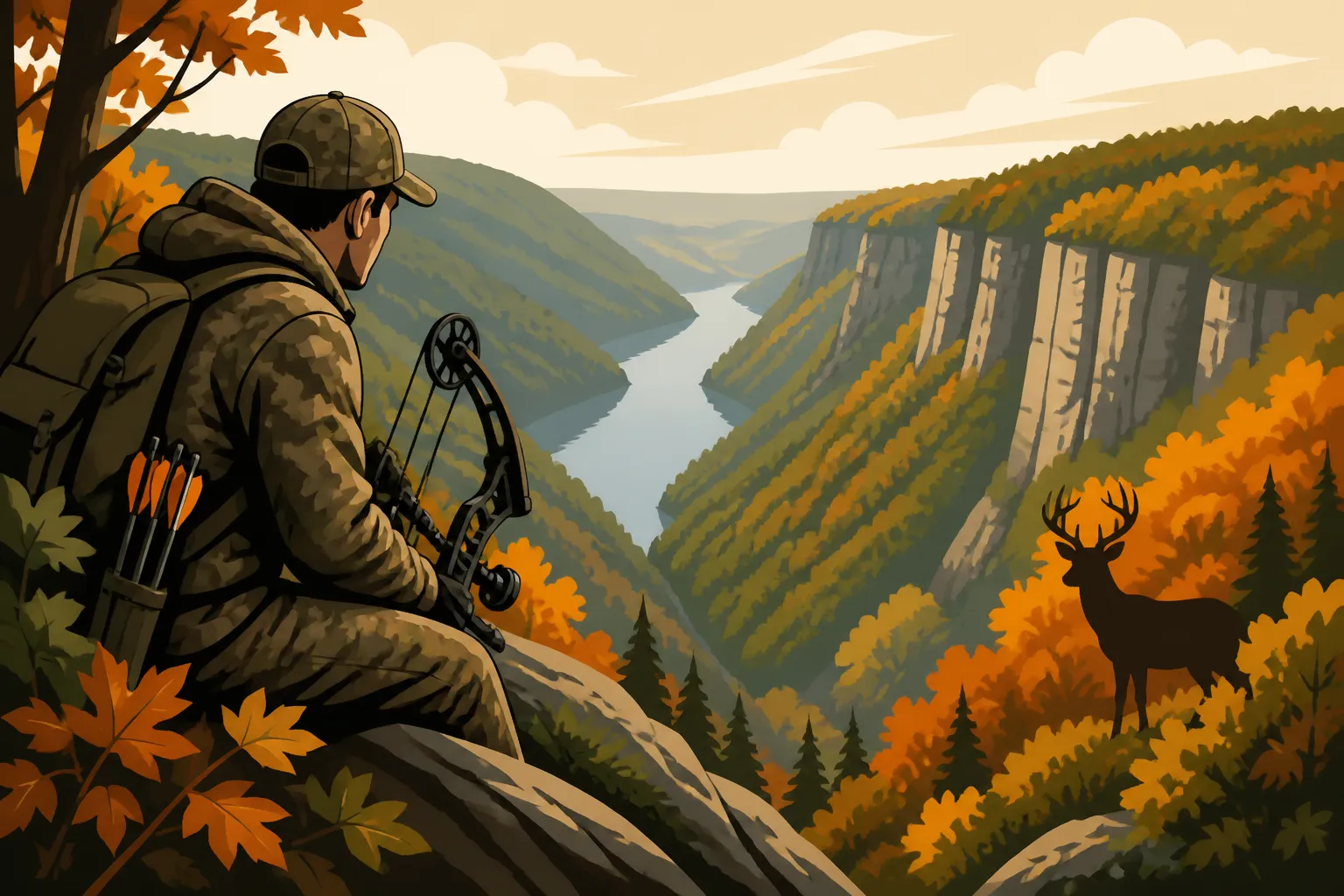
Hunting the steep, winding gorges of New York's Finger Lakes region presents a truly unique and often daunting challenge for deer hunters. These deep, dramatic ravines, carved by ancient glaciers and flowing water, offer incredible beauty but also incredibly difficult terrain, demanding specialized tactics and gear. If you've ever found yourself staring down into one, wondering how on earth you'd get a deer out, let alone hunt it effectively, you're not alone. This guide aims to break down the complexities of hunting these formidable landscapes, providing practical strategies to help you navigate, hunt, and successfully recover game from the depths of the Finger Lakes gorges.
Understanding the Unique Challenges of Finger Lakes Gorges
The Finger Lakes region is known for its stunning scenery, but for hunters, those picturesque gorges translate into some of the most physically demanding and tactically intricate hunting grounds in the state. These aren't your typical rolling hardwoods; we're talking about sheer drops, rock faces, and incredibly dense undergrowth, all requiring a different approach.
Navigating the Extreme Topography
Imagine trying to walk upright through a vertical maze. That's often what it feels like to navigate the Finger Lakes gorges. The slopes can be incredibly steep, making a simple walk feel like a full-body workout. Compounding this, the ground is frequently unstable, comprised of loose shale, slick mud, or moss-covered rocks, especially near stream beds. A misstep here isn't just uncomfortable; it can be dangerous, leading to slips, falls, or even serious injury. This extreme topography means that every step needs to be deliberate, and a quick, quiet approach, often a cornerstone of still-hunting, becomes a masterclass in slow, careful movement. You'll spend more time securing your footing than scanning for deer, and that's okay. Recognizing this inherent difficulty is the first step in successful gorge hunting.
The sheer physical exertion required is another major factor. What might be a mile walk on flat ground could feel like three miles in a gorge, especially if you're loaded down with gear. This impacts not only your ability to cover ground but also your energy levels, which can affect your focus and decision-making throughout the hunt. Furthermore, egress points are often limited. You might descend into a promising section only to find yourself funneled into an impassable choke point, forcing a long, arduous backtrack. It’s crucial to know your planned entry and exit routes intimately and always have a backup.
Predicting Deer Movement in Vertical Habitat
Deer, like all animals, are creatures of efficiency. Even in rugged terrain, they'll find the path of least resistance. However, what constitutes "easy" for a deer accustomed to these steep inclines is very different from what we might consider easy. Instead of wide-open trails, you'll find deer utilizing subtle benches, natural ramps, and game trails that cling precariously to the side of a ravine. These narrow corridors become superhighways for deer moving between bedding areas on the high ground and feeding areas often found along the gorge bottoms or adjacent agricultural fields.
During the rut, these patterns can become even more pronounced. Bucks will cruise these benches and ravines, checking for does, using the topography to their advantage. Understanding Hunting the Rut in the Southern Zone can offer insights into deer behavior that translate to these specific challenges. The key is to identify these hidden travel routes. Look for signs of frequent use like rubs, scrapes, and heavily matted down vegetation in unexpected places—not just at the top or bottom, but halfway up a seemingly impassable slope. Deer also use these deep cuts for escape cover, plunging into the shadows when pressured, knowing that most predators (including humans) are less likely to follow.
Managing Scent and Thermals in Unique Drainages
Scent control and understanding thermals are critical in any hunting scenario, but in the Finger Lakes gorges, they become an entirely different beast. The deep, canyon-like structures create microclimates and unpredictable air currents that can foil even the most meticulous scent management efforts. Thermals, which are air currents created by temperature changes, typically rise in the morning as the sun warms the ground and fall in the evening as the air cools. In a gorge, these effects are amplified and often channeled.
Imagine the sun hitting one side of a gorge earlier than the other. The air on the sunny side might start rising, while the shaded side still has cold air sinking. This creates swirling, unpredictable currents that can carry your scent in multiple directions simultaneously. A common frustration is setting up with what seems like a perfect wind, only to have a thermal shift half an hour later and bust you. Learning Wind and Thermals on a Catskill Ridge can provide a good foundation, as the principles of steep terrain apply, but be prepared for even more variability in these narrow, deep cuts. Checking localized weather forecasts and using a wind checker constantly will be your best friend, but even then, expect the unexpected. This environment demands adaptability and a willingness to adjust your setup on the fly.
Essential Gear and Preparations for Gorge Hunting
Successfully hunting these steep ravines isn't just about tactics; it's heavily dependent on having the right equipment and being thoroughly prepared. Skimping on gear here isn't just uncomfortable, it's a safety hazard.
Specialized Footwear and Traction
Your boots are arguably the most important piece of gear you'll carry into a Finger Lakes gorge. Standard hunting boots, while fine for flat woods, often lack the ankle support, rigidity, and aggressive traction needed for these slippery, uneven slopes. You need something that can grip wet rock, loose soil, and slick leaves with confidence. Look for boots with stiff soles that can handle side-hilling without your foot rolling. Brands like Kenetrek or Schnee's, known for their mountain hunting boots, offer the kind of robust support and aggressive lug patterns that are ideal.
Consider waterproofness a non-negotiable. Gorges are often damp, with seeps and small streams running through them, so a reliable waterproof membrane is essential to keep your feet dry and warm. Even more critical is traction. Boots featuring Vibram soles or similar deep, multi-directional lugs are paramount. Some hunters even opt for screw-in cleats or aftermarket traction devices like Kahtoola Microspikes in particularly icy or muddy conditions, especially during late-season hunts. Remember, a slip can lead to a fall, and a fall in a gorge can mean a serious injury or a very long, difficult self-rescue.
Here's a quick comparison of footwear features for gorge hunting:
| Feature | Standard Hunting Boots (Typical) | Gorge Hunting Boots (Ideal) |
|---|---|---|
| Sole Rigidity | Moderate flex, good for walking | Stiff to very stiff, excellent for stability on uneven terrain |
| Traction | General-purpose lugs, suitable for mild terrain | Aggressive, multi-directional lugs (e.g., Vibram), excels on rock/mud |
| Ankle Support | Moderate | High, rigid cuff for superior ankle stability |
| Waterproofness | Often water-resistant or moderately waterproof | Fully waterproof (Gore-Tex or similar membrane) is essential |
| Weight | Varies, can be lighter | Often heavier due to robust construction |
| Comfort | Prioritizes comfort for walking on varied but generally level ground | Prioritizes support and protection, requires break-in |
Climbing and Safety Equipment
When you venture into terrain this extreme, you need to think about more than just your firearm or bow. Safety equipment moves from optional to essential. If you plan on using a treestand in a gorge, which can be an incredibly effective tactic for ambushing deer on benches, a full-body safety harness is non-negotiable. Even a short fall can have catastrophic consequences in steep, rocky terrain. Ensure you understand Safety Harnesses and Lifelines and use them religiously, from the moment your feet leave the ground until they touch it again.
Additionally, consider a quality rope or cordage. A 50-100 foot section of static climbing rope can be invaluable for lowering gear, creating handlines in tricky spots, or even assisting in game recovery. It's not for climbing without proper training, but for utility, it’s a lifesaesaver. A sturdy walking stick or trekking poles can also significantly improve stability, reducing fatigue and preventing falls, especially on descents or when traversing loose ground. A lightweight folding saw or pruners can help clear small shooting lanes or improve access to a stand site, particularly when you're trying to be as discreet as possible.
Optics and Navigation Tools
In these deep, often shaded environments, good optics are paramount. A quality pair of binoculars, ideally 8×42 or 10×42, will help you pick apart dense cover and identify deer at a distance in low light conditions, which are common within the gorges. The shadows can be deceptive, making it hard to discern a deer from a stump. A decent rangefinder is also invaluable, as judging distances in steep, broken terrain can be incredibly difficult. Knowing the exact yardage to potential shooting lanes or landmarks can make all the difference.
For navigation, don't rely solely on your phone. While apps like GoHunt offer incredible detail, cell service is often nonexistent in the bottom of these gorges. A dedicated GPS unit or a fully downloaded offline map on your phone (which GoHunt excels at) is critical. Before you head out, spend significant time Reading Aerial Photos for Southern Tier Deer and marking potential routes, bedding areas, escape covers, and most importantly, safe entry and exit points. Know your terrain, mark waypoints frequently, and always have a compass and a physical map as a backup. Getting disoriented in a gorge can turn a challenging hunt into a dangerous situation quickly.
Tactical Approaches for Hunting Steep Gorges
Hunting these unique landscapes requires a blend of careful planning, strategic movement, and precise setup. You can't just wander in and expect success; the gorges demand respect and a calculated approach.
Scouting for Vertical Travel Corridors
This is where your pre-season work truly pays off. Forget about flatland scouting methods; gorge scouting is a whole different ballgame. You're looking for those subtle features that deer exploit to move efficiently through steep terrain. Start by studying aerial maps (using a tool like GoHunt's detailed satellite imagery). Look for benches, sometimes called "deer highways" or "shelves," that cut across the face of the slope. These horizontal strips of relatively flat ground, even if narrow, are prime travel routes. Identify where these benches connect to the top of the gorge, descend to the bottom, or lead to saddles or small draws.
Pay close attention to finger ridges or subtle spurs that jut out into the gorge. Deer will often follow the contours of these features to avoid the steepest climbs. Also, look for old logging roads, erosion cuts, or even subtle changes in vegetation density that create natural funnels or less strenuous paths. These are all potential vertical travel corridors. Once you've identified these on a map, you need to put boots on the ground, carefully, to confirm them. Search for physical deer sign – tracks, droppings, rubs, and scrapes – directly on these benches and ridges. You'll often find more sign here than down at the very bottom or top, indicating active travel. Understanding Scouting New York Public Land Before Season becomes even more critical in such challenging environments.
Still-Hunting the Breaks and Benches
Still-hunting is a highly effective, albeit physically demanding, tactic in the Finger Lakes gorges. It involves moving slowly and deliberately, pausing frequently to observe, listen, and scan your surroundings. Instead of pushing hard, you're easing your way through the habitat, trying to catch deer off guard. Focus your efforts on the benches and breaks you identified during scouting. These are the areas where deer are most likely to be moving or bedding.
When still-hunting, emphasize silence over speed. Every step on loose shale, dry leaves, or wet moss can be noisy. Take your time, test your footing, and move with purpose. Use the contours of the terrain to your advantage, keeping an eye out for deer above you on the next bench or below you in a thicket. The dense cover often found in gorges means close-quarters encounters are common, so be ready to shoot quickly. Remember to constantly check the wind and thermals, which can swirl unpredictably, even on a slow, quiet stalk. Your goal is to move like a ghost, blending with the environment, covering ground where deer are most comfortable traveling.
Setting Up for Ambush on Key Funnels
Given the steep terrain and the way deer are funneled into specific travel corridors, ambush hunting from a treestand or ground blind can be incredibly productive. The key is identifying those critical pinch points or funnels. This could be where a wide gorge narrows, forcing deer into a tighter path, or where several benches converge into a single, less steep access point. Natural springs, seeps, or specific food sources along the gorge bottom can also create hubs of activity, drawing deer from all directions.
When setting up a stand or blind, concealment is vital. Use the natural contours and vegetation to break up your outline. Remember that deer in gorges are often looking up and down the slopes, not just horizontally. A well-placed treestand or saddle setup on a bench overlooking a heavily used travel route can offer an elevated advantage. Consider Treestand Setups in Adirondack Hardwoods principles, adapting them to the more precarious footholds and variable winds of the gorges. Always approach and exit your stand site carefully, considering how your scent and noise will be carried by the swirling thermals. Early morning and late afternoon are prime times, as deer are often moving between bedding and feeding areas. During the middle of the day, deer might bed down on secluded benches or thick points within the gorge, making still-hunting more effective.
Overcoming the Recovery Challenge
Let's be realistic: getting a deer out of a Finger Lakes gorge is often harder than getting it down. This is where many hunters face their biggest physical and logistical hurdles. Don't underestimate this part of the hunt; planning for recovery starts the moment you decide to hunt these challenging areas.
Planning for a Difficult Pack-Out
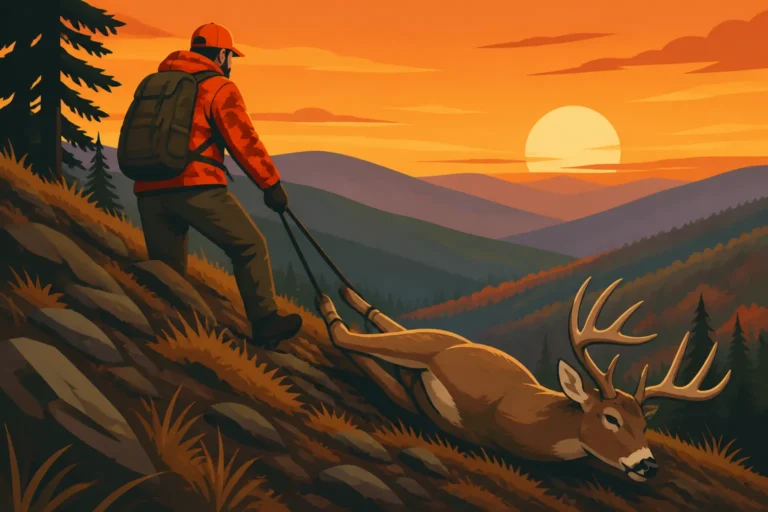
Imagine dropping a deer 300 feet down a near-vertical slope. Now imagine trying to drag or carry it back up. This is the brutal reality of gorge hunting. Before you even pull the trigger, you need to have a recovery plan. Scout potential recovery routes when you're looking for hunting spots. Are there any gentler slopes, old logging roads, or accessible creek beds that could aid in extraction? Sometimes, the path of least resistance for a wounded deer is down, which means you'll be recovering it from the absolute bottom.
Consider bringing a partner or at least having one on call. Trying to drag a deer out of a gorge solo is not only incredibly difficult but also dangerous. Equip yourself with a sturdy game cart (if the terrain allows even a semblance of a trail), a heavy-duty drag rope, or ideally, a frame pack. Many successful gorge hunters choose to field dress and quarter their deer on the spot to reduce weight and make it more manageable for a frame pack. This means carrying boning knives, game bags, and perhaps even a lightweight tarp to keep meat clean. For tips on managing the post-harvest work, read about Dragging a Deer Off a Catskill Ridge. This is a task that will test your physical and mental limits, so be prepared with water, snacks, and a strong will.
Field Dressing and Meat Preservation in Tough Terrain
The moment of truth arrives, and you've got a deer down in a steep gorge. Your first priority, beyond congratulations, is ethical meat care. Field dressing quickly is crucial, especially during warmer early archery seasons. However, doing so on a steep slope presents its own challenges. Finding a relatively flat, stable spot can be difficult. Work cautiously, ensuring your footing and knife handling are secure. You definitely don't want to slip with a sharp knife in hand.
If you plan to quarter the animal to pack it out, do it methodically. Game bags are essential to protect the meat from dirt, insects, and debris. Consider bringing a lightweight tarp or ground cloth to lay the meat on. If you're several hours from your vehicle, especially on a warmer day, packing out the tenderloins and backstraps first might be a smart move, then returning for the heavier quarters once you've had a break or called for assistance. The cooler temperatures of late season hunts offer a little more grace, allowing more time for a thoughtful recovery plan, but even then, expeditious handling is best. For general advice, see Field Dressing a Deer in Cold Weather. Always remember, the challenge of the recovery is part of the experience of hunting these magnificent, wild places.
Disclaimer
Hunting is an inherently dangerous activity. Always prioritize safety, adhere to all New York State hunting regulations, and ensure you have the proper licenses and permits. This guide provides general information and recommendations; individual situations may vary. The author and publisher are not responsible for any accidents, injuries, or legal infractions that may occur. Consult the New York State Department of Environmental Conservation (DEC) for the most current rules and regulations.