New York Small Game and Furbearers
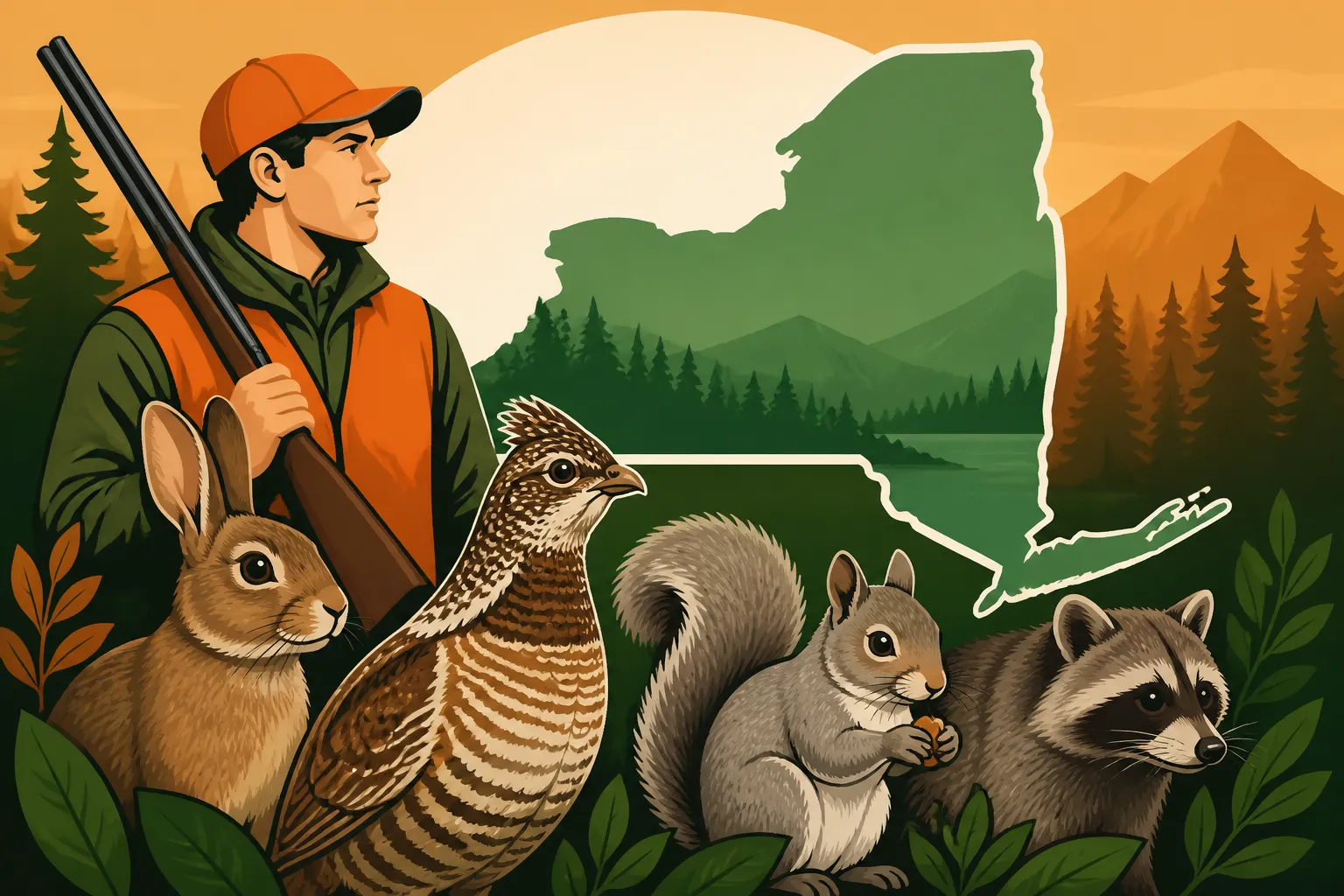
It's easy to get caught up in the excitement of deer season, planning every detail from scouting big buck sign to perfecting your calling sequences. But if you're only focusing on whitetails and bears, you're missing out on a whole other world of hunting opportunities right here in New York! This guide is all about shining a light on the often-overlooked, yet incredibly rewarding, pursuits of small game and furbearer hunting, helping you discover new challenges and extend your time afield well beyond the big game seasons.
Understanding New York's Small Game Hunting Opportunities
For many, "hunting" immediately conjures images of majestic deer or powerful bears. But New York offers such a rich tapestry of wildlife, and delving into small game and furbearers can truly transform your understanding of the outdoors and hone your hunting skills in new ways. It's a chance to explore different habitats, learn new tactics, and experience the thrill of the chase without the pressure of a single, big-game tag.
A Diverse Array of Quarry
When we talk about small game in New York, we're discussing a fantastic variety of animals. Think about the quick-witted cottontail rabbits darting through brush piles, the elusive snowshoe hares blending into snowy landscapes, or the ever-present squirrels chattering away in the hardwood canopy. These aren't just target practice; they're intelligent, challenging animals that demand a different approach than their larger counterparts. Each species offers a unique hunt, from the fast-paced action of chasing rabbits with dogs to the patient art of still-hunting squirrels.
Then there are the furbearers, a group that brings an entirely different dimension to the hunting experience. Coyotes, foxes, and even bobcats present a more strategic, often high-stakes game. Their keen senses and cautious nature require advanced calling techniques, precise stand placement, and a deep understanding of their behavior. These hunts are less about filling a freezer (though their pelts and even some meat can be utilized) and more about the challenge, the tactical chess match between hunter and hunted, and the satisfaction of outsmarting a truly wild animal.
Extending Your Time Afield
One of the biggest advantages of pursuing small game and furbearers is how much it extends your hunting calendar. When deer season wraps up in late December, many hunters pack away their gear and wait patiently for spring turkey. But New York's small game and furbearer seasons often run deep into winter, providing fantastic opportunities to be out in the woods during months when many others are indoors. Imagine a crisp January morning, fresh snow on the ground, and the excitement of tracking rabbits or calling in a coyote. This isn't just "off-season" hunting; it's prime time for these species, offering unique challenges and serene winter landscapes that big game hunters rarely experience.
It’s also an excellent way to introduce new hunters, especially youth, to the sport without the intensity of a big game pursuit. The action can be more frequent, the physical demands often lighter, and the learning curve more gradual. Learning how to move quietly, read sign, and handle a firearm safely are all skills perfectly honed during a small game hunt. Plus, there’s nothing quite like sharing a thermos of hot cocoa with a young hunter after a successful rabbit foray, teaching them about woodcraft and patience. It truly builds a foundation for a lifelong passion for the outdoors.
Chasing New York's Cottontail Rabbits and Snowshoe Hares
If you're looking for fast-paced, action-packed hunting, cottontail rabbits and snowshoe hares are fantastic choices. They're abundant across much of New York and provide excellent sport, especially when the weather turns cold.
Habitat and Habits of Cottontails
New York's cottontail rabbits are primarily creatures of dense cover. You'll find them in brushy fields, briar thickets, overgrown fencerows, abandoned orchards, and the edges of timber where agricultural fields meet the woods. They thrive in areas with plenty of escape routes and food sources. Think about those transitional zones, where a cut hayfield meets a dense hedgerow, or a neglected farm corner where multiflora rose and honeysuckle have taken over. These spots provide both protection from predators and a consistent diet of grasses, clover, and the tender shoots of various woody plants.
Cottontails are most active during dawn and dusk, but they'll be out and about during daylight hours, especially on overcast days or during the late fall and winter when they need to feed more. In cold weather, they’ll often be found hunkered down in thick cover to stay warm. A common frustration for new rabbit hunters is finding them – they’re masters of concealment. Without a good dog, you’ll be doing a lot of slow, systematic pushing through the densest cover you can find. Remember, rabbits often "hole up" in burrows or brush piles, so don't expect them to run out into the open every time. Learning to identify prime rabbit habitat is key, and the Reading Aerial Photos for Southern Tier Deer tactics can sometimes be adapted for small game too, focusing on those dense, brushy spots.
Snowshoe Hare Hunting in Winter
Snowshoe hares, sometimes called "varying hares" because of their seasonal coat change, offer a distinct hunting experience compared to cottontails. While cottontails prefer more open, brushy habitats, snowshoe hares are denizens of the deep woods, particularly conifer thickets, cedar swamps, and dense young growth common in places like the Adirondacks or Tug Hill Plateau. Their large, fur-covered feet act like natural snowshoes, allowing them to navigate deep snow with ease, which is exactly when their white winter coats make them incredibly difficult to spot.
Hunting snowshoes is often a true winter pursuit. You'll need to trek into more remote, snow-covered terrain. The best way to find them is to look for their distinct track patterns in fresh snow – a triangular arrangement with two large hind foot prints side-by-side, and two smaller front prints behind them. Like cottontails, they are often hunted effectively with hounds that can unravel their winding trails. Without dogs, it becomes a patient game of still-hunting through thick cover, pausing often to scan for their camouflaged forms, or pushing through likely areas hoping to jump one. The quiet solitude of a winter forest, combined with the sudden flush of a hare, makes for an unforgettable hunt.
Gear and Tactics for Rabbit Hunting
When it comes to gear for rabbit hunting, simplicity is often best. A good, reliable shotgun is your primary tool, typically a 12 or 20 gauge, with an improved cylinder or modified choke to handle fast-flushing targets at close range. #6 shot is a common choice. Don't forget your blaze orange – it's crucial for safety, especially when hunting with a group or dogs. Durable, briar-resistant brush pants or chaps are practically a necessity if you plan on diving into thickets. For more specific guidance, you might find tips in Rabbit Hunting Thick New York Brush helpful.
Tactically, there are two main approaches: still-hunting and hunting with dogs. Still-hunting involves slowly walking through prime cover, pausing frequently to scan for movement. The key here is patience and keen observation. Rabbits will often hold tight until you’re practically on top of them before bursting out. When hunting with dogs, particularly beagles, the experience is transformed. The dogs work the cover, sniffing out rabbits and, once a rabbit is jumped, they'll chase it, typically running in a large circle. Your job is to position yourself along known rabbit runways or likely crossing points and be ready for a quick shot when the rabbit comes back around. It's an incredibly exciting and social way to hunt, and for insights into this, check out Running Beagles on New York Cottontails.
Squirrel Hunting in New York's Hardwoods
Squirrel hunting is a timeless tradition, a perfect entry point for new hunters, and a deeply satisfying pursuit for seasoned outdoors enthusiasts. New York's abundant hardwood forests are teeming with these bushy-tailed acrobats, offering consistent action and delicious table fare.
Grey and Fox Squirrels: Know Your Target
In New York, you'll primarily encounter two species of squirrels: the eastern gray squirrel and the fox squirrel. Gray squirrels are by far the most common, found in nearly every woodlot, city park, and suburban backyard across the state. They're typically gray with a white belly, though melanistic (black) variants are also common in some areas, particularly in parts of Western New York and the Southern Tier. These guys are active, vocal, and often provide plenty of opportunities for action.
Fox squirrels are less common in New York, with their range largely concentrated in the western and central parts of the state, extending into portions of the Hudson Valley. They are significantly larger than gray squirrels, often exhibiting a reddish-brown or rusty orange coloration on their undersides and tail. Fox squirrels tend to be a bit more solitary and less numerous than their gray counterparts, and they often prefer more open timber with less dense understory. Identifying which species you're hunting can add another layer of appreciation to the experience, as their behaviors can differ subtly.
Locating Squirrel Hotspots
Finding squirrels is all about finding their food sources. New York's oak, hickory, beech, and even maple trees are key. In early fall, acorns, hickory nuts, and beechnuts are prime targets. Later in the season, after the initial nut drop, squirrels will shift their focus to buried caches or even tree buds and fungi. Look for "cuttings" – the tell-tale piles of gnawed nut shells and fragments – at the base of nut-bearing trees. These are sure signs that squirrels are actively feeding in the area. Often, a good spot for Squirrel Hunting a New York Oak Ridge is also a prime location for squirrels.
Water sources can also concentrate squirrels, especially during dry periods. Along creeks, near ponds, or in damp hollows, you'll often find more activity. Don't overlook abandoned farmsteads with old apple trees or overgrown stone walls; these can be squirrel magnets. Scouting before your hunt, much like you would for deer, pays dividends. A quick walk through a promising woodlot, scanning for cuttings and active squirrel nests (dreys), can tell you a lot about the squirrel density and where to focus your efforts. A good pair of binoculars can help you spot subtle movements high in the canopy or identify key feeding trees.
Still-Hunting and Stalking Tactics
Patience and stealth are your best friends when squirrel hunting. Still-hunting involves moving incredibly slowly through the woods, stopping frequently (often for 5-10 minutes at a time) to scan the trees and ground for movement. Let your eyes do the work. Squirrels are masters of freezing in place, pressing themselves flat against a tree trunk, or circling to the opposite side of a tree. Often, it's the flick of a tail or the slight twitch of an ear that gives them away. You'll be surprised how many you spot simply by waiting them out.
Another effective tactic is stalking. Once you spot a squirrel, try to move quietly into a position for a shot. If it circles the tree, try slowly moving around the tree yourself, or have a partner circle the other way to try and push it back into view. When hunting alone, sometimes tapping the tree trunk or tossing a small stone can cause the squirrel to reposition, offering a shot. Rifles, particularly a .22 caliber, are excellent for squirrel hunting due to their accuracy and quiet report. However, many hunters also enjoy the challenge of a shotgun for fast-moving targets. Remember, the quiet woods of New York provide ample opportunities for this kind of patient, observant hunting. Don't forget to keep an eye out for other game – often, the same areas that hold squirrels also hold deer, and it's great scouting. Learning Reading Cuttings Under an Oak can certainly improve your chances.
Beyond Birds: The World of New York Furbearer Hunting
While small game like rabbits and squirrels offer a classic experience, New York's furbearers present a whole new level of challenge. These animals are typically more elusive, more cunning, and require specialized tactics, making their pursuit incredibly rewarding for those who embrace the learning curve.
Coyotes: A Challenging Predator Hunt
Coyotes are perhaps the most popular furbearer to hunt in New York, and for good reason: they are abundant across the state, provide an exciting and demanding hunt, and their populations benefit from responsible management. You'll find them everywhere from the wild reaches of the Adirondacks to the agricultural lands of the Southern Tier and even surprisingly close to suburban areas. Hunting coyotes is a tactical game of wits, often involving specialized calls to bring these wary predators into range.
The biggest frustration with coyote hunting is their intelligence and wariness. They've learned to avoid humans, and they have incredibly keen senses of smell, hearing, and sight. Successful coyote hunting often means paying meticulous attention to wind direction, choosing stand locations that offer good visibility but also concealment, and mastering various calling techniques. Whether you're using electronic calls mimicking rabbit distress or hand calls imitating coyote howls, the goal is to trigger their predatory instinct or territorial response. Learning Coyote Calling in a New York Winter can be incredibly effective, especially when food sources are scarce. The rush of seeing a coyote approach your setup is truly unparalleled.
Foxes: Red and Gray Pursuits
New York is home to both red foxes and gray foxes, and hunting them offers a slightly different challenge than coyotes. Red foxes are typically found in more open country, agricultural areas, and mixed woodlands, often preferring to hunt in fields and meadows. They are known for their distinctive reddish-orange coats and bushy white-tipped tails. Gray foxes, on the other hand, are more associated with dense woods, thick brush, and rocky terrain, and are unique among canids for their ability to climb trees. Their coat is grizzled gray with rusty highlights.
Like coyotes, foxes are incredibly wary and possess excellent senses. Calling tactics are similar, often using small rodent or bird distress calls, but the cadence and volume might be different to appeal to a fox's specific predatory behaviors. Stand placement is critical, focusing on areas with good cover for the hunter but open lanes for shots, often near fencerows, field edges, or dense brush lines where foxes travel. While not as numerous as coyotes, successful fox hunting is a true testament to a hunter's patience and stealth. Their beautiful pelts are also a sought-after trophy.
Bobcat Opportunities in Specific Zones
Bobcats are the wild card of New York's furbearers – elusive, beautiful, and incredibly challenging to hunt. While they are present across much of the state, their populations are often densest in the larger, wilder tracts of the Adirondacks, Catskills, and some parts of the Southern Tier. Hunting bobcats requires specific permits and is usually restricted to certain Wildlife Management Units (WMUs) and seasons, so checking current regulations is paramount.
The tactics for bobcats often overlap with coyote and fox hunting: calling (distress calls, especially rabbit or bird), stealth, and careful stand placement. However, bobcats are even more secretive and nocturnal than canids, making them exceptionally difficult to call in during daylight hours. Many successful bobcat hunters spend countless hours scouting, identifying travel corridors, and looking for signs like tracks or scat. It’s a pursuit that demands ultimate patience and dedication, but the reward of glimpsing, let alone harvesting, one of these magnificent wild cats is a truly special experience. Make sure you understand all the specifics regarding New York Trapping Seasons and Tagging if you plan to pursue them, as trapping is often a more effective method for bobcats.
Small Game & Furbearer Seasons and Regulations
Navigating hunting regulations can sometimes feel like trying to untangle a ball of yarn, but it's crucial for ethical and legal hunting. New York's Department of Environmental Conservation (DEC) publishes a comprehensive hunting and trapping guide annually, and it's your go-to source for the most up-to-date rules.
Key Season Dates and Bag Limits
The beauty of small game and furbearer hunting in New York is the extended seasons. Many species, like squirrels and rabbits, often have seasons that open in September and run all the way through February or even into March. This means you can be in the woods for many months beyond the deer seasons. Coyote season is typically open almost year-round in many areas, though specific hunting methods or areas might have limitations. Fox seasons also usually run for an extended period through the fall and winter.
Bag limits vary significantly by species. For gray and fox squirrels, you might have a generous daily bag limit, while cottontail rabbits and snowshoe hares also have fairly liberal limits. Furbearers like coyotes often have no bag limit, encouraging hunters to help manage their populations, especially in areas where they might impact deer or farm animals. However, species like bobcats have much more restrictive bag limits, sometimes just one per hunter per year, and often require specific carcass tagging or reporting. Always double-check the current New York Small Game and Upland Bird Seasons to ensure you're hunting within the legal window and limits.
Licensing and Permit Requirements
Before you even think about heading afield, you need to make sure your paperwork is in order. For most small game and furbearer hunting, you'll need a valid New York State hunting license. If you're a resident, you'll want to look into New York Resident Hunting License Options, and non-residents will need to check New York Nonresident Hunting License Options. This base license covers many small game species. However, for certain furbearers like bobcats, you'll often need an additional permit or tag, which may have its own application process and fees.
It's also worth noting that if you plan to hunt migratory birds that fall under the "small game" umbrella, like woodcock or snipe (which overlap with upland bird hunting), you’ll need HIP (Harvest Information Program) certification and possibly a federal duck stamp, even though they're not ducks or geese. While these aren't traditional "small game" for many, it's good to be aware. Always carry your license and any required permits with you while hunting, whether as a physical copy or stored digitally on an app like GoHunt, which can help keep your information organized.
Special Considerations: Night Hunting and Trapping
New York has specific rules regarding night hunting, particularly for coyotes and foxes. While most hunting occurs during daylight hours, coyotes can be legally hunted at night in New York, with certain restrictions on equipment (like artificial lights) and often requiring specific county or town ordinances to be checked. This adds another layer of challenge and excitement, but safety is paramount when hunting in the dark. For full details on this, you'll want to review Night Hunting Rules for New York Coyotes.
Trapping is another method for pursuing furbearers like coyotes, foxes, and bobcats, and it falls under a separate set of regulations and requires a different license – a New York Trapping License. Trapping seasons can differ from hunting seasons, and there are strict rules about trap types, trap size, set locations, and checking traps. It's a highly regulated activity designed to be ethical and effective. While this guide focuses on hunting, understanding the broader furbearer management picture, including New York Trapping Seasons and Tagging, is valuable for any outdoors enthusiast.
Here's a quick look at some general season dates for popular small game and furbearers, though always check the current DEC Hunting & Trapping Guide for exact dates in your specific zone:
| Species | General Season Start | General Season End | Daily Bag Limit (Hunting) |
|---|---|---|---|
| Gray & Fox Squirrel | Early Sept. | Late Feb. | 6 |
| Cottontail Rabbit | Mid-Sept. | Mid-March | 6 |
| Snowshoe Hare | Mid-Sept. | Mid-March | 3 |
| Red & Gray Fox | Late Oct. | Mid-Feb. | No limit |
| Coyote | Oct. | Late Sept. (Year-round in some areas) | No limit |
| Bobcat | Late Oct./Early Nov. | Mid-Feb. (WMU specific, permit required) | 1 |
Note: These dates are general and vary by zone/WMU and year. Always consult the official NYS DEC hunting regulations.
Essential Gear and Techniques for Success
Just like big game hunting, success in small game and furbearer pursuits often comes down to having the right gear and understanding how to use it effectively. You don't need a fortune, but smart choices make a big difference.
Firearms and Ammunition Choices
For small game like rabbits and squirrels, versatility is key. Many hunters opt for a .22 caliber rimfire rifle for squirrels because of its accuracy, quiet report, and inexpensive ammunition. A good scope (say, 2-7x or 3-9x) will help immensely with precise headshots that preserve meat. For rabbits, a shotgun is often preferred for fast-moving targets in thick cover. A 12 or 20 gauge with an improved cylinder or modified choke and #6 shot is a common and effective setup. Some hunters even prefer a .410 for squirrels, adding an extra layer of challenge.
When moving to furbearers like coyotes and foxes, flatter-shooting, higher-powered rifles come into play. A .223 Remington, .204 Ruger, or even a .243 Winchester are popular choices for their accuracy and reach. For closer shots in dense areas, a shotgun loaded with buckshot can also be effective. The choice often depends on the terrain you're hunting. In wide-open farm fields, a rifle is almost a necessity, while in brushy areas like some of New York State Forest Hunting land, a shotgun might offer quicker target acquisition. Always use ammunition appropriate for the game and ensure your firearm is sighted in correctly.
Calls, Decoys, and Optics
Calling is absolutely essential for furbearer hunting, and increasingly popular for small game too. For coyotes and foxes, you'll want a variety of distress calls (rabbit, fawn, bird) and possibly some territorial howls. Electronic callers like those offered by FoxPro or Lucky Duck are very popular because they offer a wide range of realistic sounds and can be placed away from the hunter. Hand calls are more traditional and require skill but can be incredibly effective. For squirrels, a simple squirrel call (either a hand-operated or mouth call) can sometimes get a shy squirrel to bark or chatter, revealing its position.
Decoys can also play a role, especially for predators. A small, moving decoy, like a rabbit ear twitcher, can draw a coyote's attention away from your hiding spot. For optics, a good pair of binoculars (8x or 10x) is invaluable for spotting small game in dense cover or scanning for incoming predators. A rangefinder is also helpful for determining shot distances, especially when hunting with a rifle. Don't underestimate the value of a quality headlamp for walking into or out of your hunting spot in the dark, especially when Hunting After a Poor Acorn Year and needing to cover more ground.
Clothing and Field Preparedness
Comfort and safety are paramount. For small game hunting, you’ll be doing a lot of walking, so comfortable, supportive boots are essential. Briar-resistant pants or chaps will save your legs from countless scratches and tears when pushing through thick cover. Layered clothing is always a good idea, as conditions can change rapidly in New York, especially during fall and winter. Wool or synthetic base layers that wick moisture are crucial. Don't forget your blaze orange vest or hat – it's often legally required and always a smart safety choice, especially when hunting with others or in areas with high hunter traffic.
For furbearer hunting, concealment is often key. Camouflage clothing that blends with the specific habitat you're hunting is important, as is a face mask or paint. Scent control is also critical for wary predators; consider scent-eliminating sprays or washing your clothes in scent-free detergent. A comfortable, quiet seat or pad for long calling stands will make a big difference. And always carry a small backpack with essentials: water, snacks, a first-aid kit, a knife, and navigation tools. The GoHunt app can be incredibly useful for offline maps and understanding land boundaries, which is particularly helpful when navigating diverse public lands like New York Wildlife Management Areas.
Conservation and Management of New York's Small Game and Furbearers
The vibrant populations of small game and furbearers we enjoy in New York are not by accident; they are the result of dedicated conservation efforts and thoughtful management strategies. As hunters, understanding and supporting these efforts is crucial for the future of our sport.
DEC Efforts and Population Trends
The New York State Department of Environmental Conservation (DEC) plays a pivotal role in monitoring and managing small game and furbearer populations. They conduct surveys, collect harvest data, and analyze habitat conditions to set science-based hunting and trapping seasons and limits. For example, squirrel and rabbit populations are generally robust, benefiting from a wide range of habitats across the state. The DEC monitors these species to ensure sustainable harvest levels, allowing healthy populations to thrive year after year.
Furbearer populations, particularly coyotes, have expanded significantly in New York over the last century, adapting to various landscapes. The DEC manages these populations through regulated hunting and trapping, which helps maintain ecological balance and mitigate potential conflicts with livestock or other wildlife. For bobcats, which have more specific habitat requirements and lower population densities, the DEC implements more conservative harvest limits and closely monitors their numbers through research and hunter/trapper reporting. While you might sometimes hear anecdotal concerns about New York Ruffed Grouse Decline or other species, the DEC is constantly working to understand these trends and adjust management as needed.
Hunter's Role in Sustainable Populations
As hunters, we are critical partners in conservation. Our license fees directly fund wildlife management programs, research, and habitat acquisition. Beyond financial contributions, responsible hunting practices are essential. This includes adhering strictly to all regulations, reporting harvests when required (which provides valuable data to the DEC), and practicing ethical sportsmanship. Taking only what you need, making clean kills, and respecting private land boundaries are all part of being a responsible hunter.
Furthermore, hunters often act as the "eyes and ears" in the field, reporting unusual wildlife sightings, disease outbreaks, or habitat changes to the DEC. This boots-on-the-ground intelligence is incredibly valuable for wildlife managers. By participating in small game and furbearer hunting, we not only enjoy the outdoors but also contribute to the health and sustainability of these valuable wildlife resources. It's about being part of something bigger, ensuring that future generations can also experience the thrill of Hunting the Southern Zone Holiday Hunt or the quiet satisfaction of a successful squirrel hunt. The GoHunt platform often integrates with state DEC data, making it easier for hunters to stay informed and compliant.
Disclaimer
Please remember that hunting regulations, season dates, and bag limits can change annually. Always consult the most current New York State Department of Environmental Conservation (DEC) Hunting and Trapping Regulations Guide before heading into the field. This article is for informational purposes only and does not supersede official regulations.